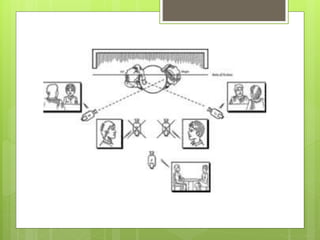
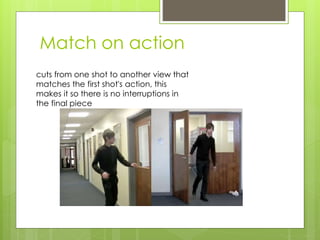
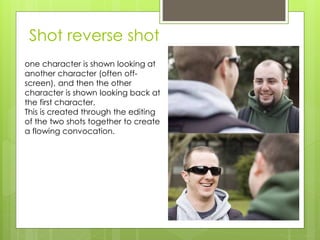
Continuity editing techniques such as match on action, shot reverse shot, and following the 180-degree rule help provide a seamless viewing experience for the audience. Match on action cuts between shots that show the same action without interruption. Shot reverse shot alternates between characters looking at each other. The 180-degree rule orients the audience by maintaining the same left/right relationships between characters in a scene across different shots. These techniques ensure the audience understands spatial relationships and follows the flow of a conversation or scene without confusion.