CASE STUDY OF WATER
POLLUTION
1. What is Water Pollution
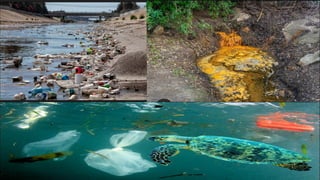
Water pollution is the mixing of
harmful substances (like chemicals,
waste, or plastics) into water bodies.
It makes water unsafe for humans,
animals, and plants.
Causes loss of water quality and
harms aquatic life.
2. Types of Water Pollution
 Surface Water Pollution: Contamination
of rivers, lakes, and ponds by waste,
sewage, and chemicals.
 Groundwater Pollution: Pollutants seep
into soil and mix with underground water
sources.
 Marine Pollution: Dumping of plastic, oil
spills, and industrial waste into seas and
oceans.
3. Causes of Water
Pollution
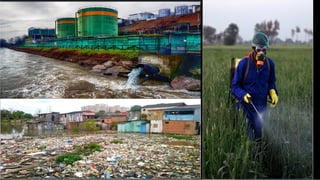
 Industrial: Discharge of toxic chemicals,
dyes, and heavy metals from factories.
 Domestic: Disposal of sewage,
detergents, and household waste into
water bodies.
 Agricultural: Runoff of fertilizers,
pesticides, and animal waste from farms.
4. Importance of Studying
This Case
Helps in understanding the sources
and effects of pollution on the
environment.
Encourages responsible water use
and waste management.
Promotes sustainable practices to
protect clean water for the future.
INDUSTRIAL
WATER POLLUTION
1. INDUSTRIAL WASTE INTO
RIVERS
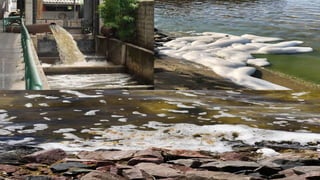
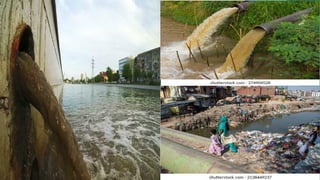
 Industries discharge untreated effluents directly
into rivers.
 Contains toxic chemicals, heavy metals and oils.
 Causes change in water colour, odor and
temperature.
 Reduces oxygen level in water.
 Major threat to human health and ecosystem.
2. CASE EXAMPLES : GANGA
& SABARMATI RIVER
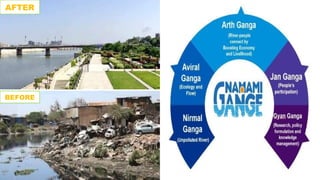
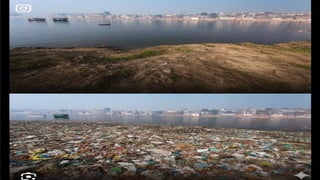
 Ganga River Mission (Namami Gange) :
 Focus on cleaning sewage & industrial waste,
restoring biodiversity.
 Sabarmati Riverfront Project :
 Treatment plants set up, relocation of industries,
revival of riverfront for public use.
 Showcases government initiatives against industrial
pollution.
AFTER
BEFORE
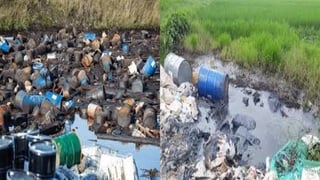
3. CHEMICALS RELEASED
 Heavy metals: Lead, mercury, arsenic.
 Toxic chemicals: Cyanide, phenols, pesticides.
 Organic waste: Oils, detergents, dyes.
 Thermal pollution: Hot water discharge from
factories affecting river temperature
4. Impact on Aquatic Life
 Reduced oxygen causes fish deaths.
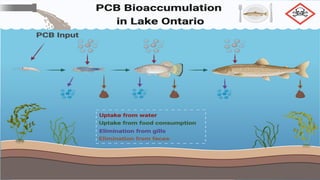
 Bioaccumulation of toxins in aquatic
organisms.
 Loss of biodiversity in rivers.
 Disruption of breeding cycles & food
chains.
5. Solutions: Industrial Waste
Management
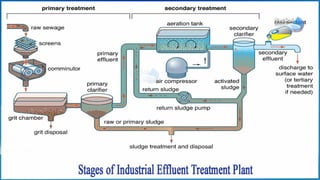
 Mandatory Effluent Treatment Plants (ETPs) .
 Zero liquid discharge (ZLD) systems in industries.
 Recycling & reusing treated water.
 Strict laws & monitoring of industrial
discharges.
 Corporate responsibility & public awareness.
Water Pollution Due To
Agricultural Activities
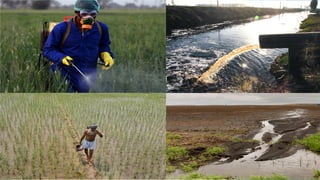
1. Introduction
 Agriculture is very important for food and
the economy, but it also creates pollution.
 Modern farming methods harm the
environment by affecting soil, water, and
air.
 Agricultural pollution is becoming a serious
threat to both nature and human health.
2. Causes
 Farmers often use too many fertilizers and
pesticides, which pollute soil and water.
 Improper disposal of animal waste and farm
leftovers adds to pollution.
 Over-irrigation and cutting of forests for
farming damage land and ecosystems.
3. Effects
 Fertilizers and pesticides enter rivers and lakes,
causing eutrophication and killing aquatic life.
 Continuous chemical use reduces soil fertility and
makes it less productive.
 Burning residues and livestock release gases that
increase air pollution and climate change.
 Contaminated water and food cause serious human
health problems like cancer and respiratory diseases.
4. Case Study (Punjab)
 In Punjab, heavy use of fertilizers and
pesticides has polluted groundwater with
nitrates.
 Many villages face unsafe drinking water
and rising health issues.
 The region is even called the “Cancer
Belt” due to the higher number of cancer
cases.
5. Solutions & Conclusion
 Organic farming and natural methods can
reduce chemical pollution.
 Proper waste management and avoiding
stubble burning reduce environmental damage.
 Government rules and farmer awareness
programs are needed for sustainable farming.
 Sustainable farming is the key to protecting
the environment and ensuring food security.
Domestic Wastewater
1. Sewage and Household Waste
in Water
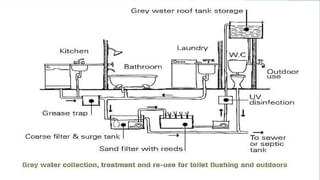
 Domestic wastewater comes from homes - kitchens,
bathrooms, and laundry.
 It contains soap, detergents, food particles, and human
waste.
 When dumped untreated, it pollutes nearby rivers and
ponds.
 Wastewater reduces oxygen levels in water bodies.
 Harmful bacteria and chemicals affect aquatic life.
 Proper disposal and treatment are necessary to prevent
pollution.
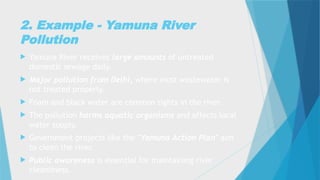
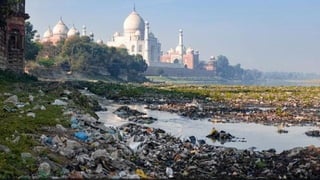
2. Example - Yamuna River
Pollution
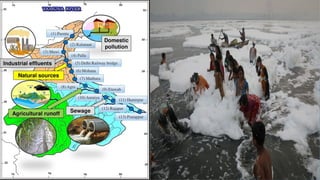
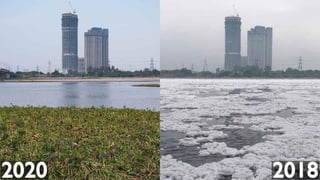
 Yamuna River receives large amounts of untreated
domestic sewage daily.
 Major pollution from Delhi, where most wastewater is
not treated properly.
 Foam and black water are common sights in the river.
 The pollution harms aquatic organisms and affects local
water supply.
 Government projects like the "Yamuna Action Plan" aim
to clean the river.
 Public awareness is essential for maintaining river
cleanliness.
3. Health Effects on Local
Population
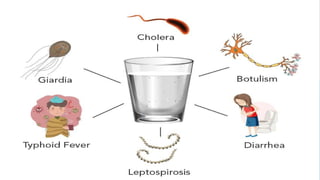
 Polluted domestic water can spread diseases like cholera
and typhoid.
 Contaminated water affects children and elderly the most.
 Skin infections and stomach problems are common near
polluted rivers.
 Bad odor and insects make living conditions worse.
 Unsafe water reduces overall quality of life and
productivity.
 Clean water is essential for community health.
4. Lack of Proper Sewage
Treatment
 Many cities lack enough sewage treatment plants (STPs).
 Existing STPs often work below capacity or are poorly
maintained.
 Wastewater flows directly into rivers and lakes without
treatment.
 Urban growth increases sewage faster than treatment
capacity.
 Need for modern technology and government support.
 Proper planning can reduce domestic water pollution
drastically.
5. Steps to Reduce Domestic
Pollution
 Avoid throwing garbage, oil, or plastic into
drains.
 Use eco-friendly detergents and soaps.
 Support rainwater harvesting and wastewater
reuse.
 Ensure household connections to sewage
systems.
 Participate in local river clean-up drives.
 Educate others about clean water importance.
Major Rivers Affected by
Water Pollution
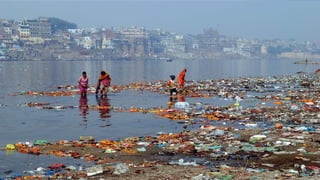
1. The Ganges River
 Problem: Massive amounts of untreated
human sewage.
 Source: Cities along the river banks (e.g.,
Varanasi).
 Impact: Widespread waterborne diseases
(cholera, typhoid); oxygen depletion kills
aquatic life.
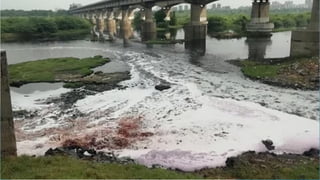
2. Sabarmati River
 Problem: Extreme discharge of industrial
chemicals and untreated sewage.
 Source: Industrial estates and insufficient
city sewage treatments in Ahmedabad
 Impact: One of India's most polluted river
stretches; high heavy metal levels;
contaminates groundwater and farm crops.
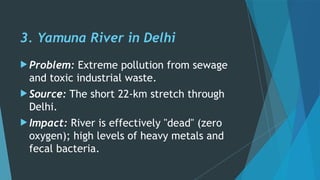
3. Yamuna River in Delhi
 Problem: Extreme pollution from sewage
and toxic industrial waste.
 Source: The short 22-km stretch through
Delhi.
 Impact: River is effectively "dead" (zero
oxygen); high levels of heavy metals and
fecal bacteria.
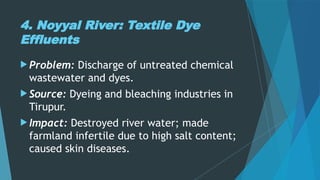
4. Noyyal River: Textile Dye
Effluents
 Problem: Discharge of untreated chemical
wastewater and dyes.
 Source: Dyeing and bleaching industries in
Tirupur.
 Impact: Destroyed river water; made
farmland infertile due to high salt content;
caused skin diseases.
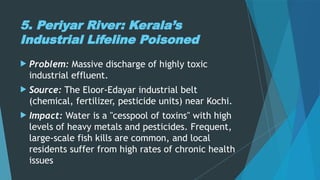
5. Periyar River: Kerala’s
Industrial Lifeline Poisoned
 Problem: Massive discharge of highly toxic
industrial effluent.
 Source: The Eloor-Edayar industrial belt
(chemical, fertilizer, pesticide units) near Kochi.
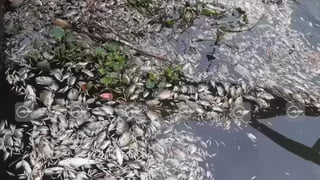
 Impact: Water is a "cesspool of toxins" with high
levels of heavy metals and pesticides. Frequent,
large-scale fish kills are common, and local
residents suffer from high rates of chronic health
issues
Effects Of Water
Pollution
1. On Human Health
Causes waterborne diseases (cholera,
typhoid, diarrhea).
Long-term exposure cancer, kidney
→
damage, neurological issues.
Unsafe drinking water affects millions
worldwide.
Children are most vulnerable to polluted
water.
2. On Aquatic Ecosystems
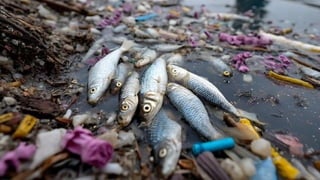
 Fish and aquatic species die due to lack of
oxygen.
 Algal blooms reduce sunlight and kill
underwater plants.
 Loss of biodiversity in rivers, lakes, and oceans.
 Food chain imbalance (toxic chemicals in fish).
 Destruction of coral reefs and wetlands.
3. On Economy
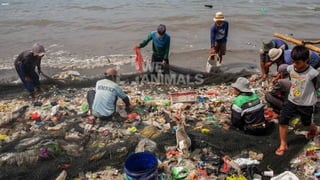
 Fisheries collapse loss of livelihood for
→
communities.
 Tourism declines in polluted river and beach
areas.
 Higher water treatment costs for industries and
cities.
 Agricultural productivity drops due to polluted
irrigation.
 Heavy financial losses in healthcare and
infrastructure.
4. On Climate & Environment
 Polluted water worsens global water scarcity.
 Changes natural rainfall patterns and local
climate.
 Loss of wetlands reduces natural flood
→
control.
 Soil degradation due to contaminated irrigation.
 Increases vulnerability to droughts and floods.
5. Importance of Clean Water
 Clean water = basic human right and necessity.
 Supports healthy ecosystems and biodiversity.
 Essential for safe drinking, cooking, and
hygiene.
 Strengthens economy (fisheries, agriculture,
industries).
 Key for sustainable future and climate
resilience.
Government & NGO
Efforts
1. Indian Government Initiatives
 Objective: Reduce plastic pollution through producer
responsibility.
 Law: Governed by Plastic Waste Management Rules, 2016
(amended 2022-24).
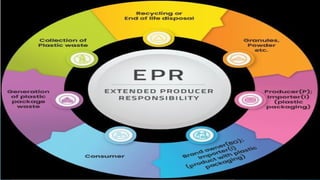
 EPR Concept: Producers must collect & recycle plastic equal to
what they sell.
 Registration: All producers register & report on the national EPR
portal.
 Types Covered: Rigid, flexible, multilayered & compostable
plastics.
 Goal: Promote recycling, circular economy & eco-friendly
packaging.
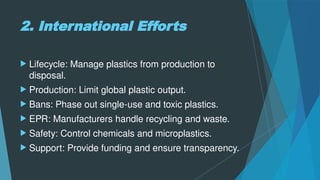
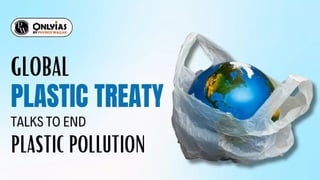
2. International Efforts
 Lifecycle: Manage plastics from production to
disposal.
 Production: Limit global plastic output.
 Bans: Phase out single-use and toxic plastics.
 EPR: Manufacturers handle recycling and waste.
 Safety: Control chemicals and microplastics.
 Support: Provide funding and ensure transparency.
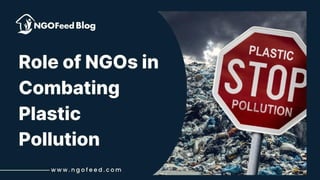
3. Role Of NGOs & Community
Projects
 Awareness & Education: Teach communities about
reducing, segregating, and recycling plastic.
 Local Collection & Recycling: Support waste
pickers and set up community-level plastic
collection/recycling.
 EPR Support: Help companies meet EPR
obligations by channeling waste to recyclers.
 Innovation & Advocacy: Pilot eco-friendly solutions
and push for better plastic policies.
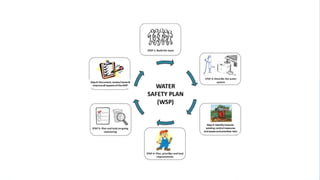
4. Progress Achieved So Far
 WHO Guidelines - Safe drinking water standards.
 UN SDG 6 - Sustainable water & sanitation.
 International Conventions - Fair use & pollution control.
 Water Act 1974 - Regulates water pollution in India.
 BIS & Environment Act - Drinking water quality standards.
 Water Safety Principles - Monitor, treat, prevent pollution,
ensure access.
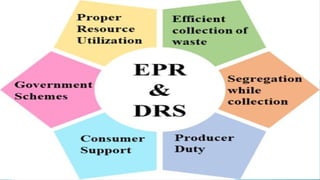
5. Laws & Regulations For Water
Safety
 EPR enforced - Producers handle waste.
 Recycling up - More facilities active.
 Single-use cut - Plastic bans in place.
 Producer action - Take-back & eco-packaging.
 Public involved - Awareness & participation.
 Monitoring strong - Better tracking
Summary
 Water pollution affects all aspects of life - health,
environment, and economy.
 Major causes include industrial and domestic waste,
sewages and plastics and weak management.
 Rivers like Ganga and Yamuna show urgent need for
intervention.
 Awareness and enforcement are still weak.
 Pollution control must be continuous, not occasional.
 Clean water is not just a resource - it's our shared
responsibility and hope.
Public awareness
 Reduce single-use plastics and chemicals.
 Treat water before discharge - at home and industry.
 Local communities can make real change through
awareness and action.
 Conserve water daily - small habits matter.
 Speak up about environmental issues in your community.
 Practical learning - like water testing, eco-clubs, and clean
drives - builds real understanding.
 Protecting water = protecting life.
Education to youths and
next gen
 Today's youth are tomorrow's environmental leaders.
 Schools should include water conservation in their
curriculum.
 Practical learning - like water testing, eco-clubs, and clean
drives - builds real understanding.
 Early education creates habits like water conservation and
waste reduction
 Educating youth about water pollution builds lifelong
responsibility.
 Future generations must inherit clean water, not polluted
rivers.
Future Vision and
Technology Usage
 A Sustainable Tomorrow"
 Future cities uses Al and loT sensors to monitor water quality in real
time.
 Cities powered by green technology, no toxic waste.
 Every home practicing water recycling.
 Industries operating under strict eco-friendly laws.
 Nanotechnology filters can remove microplastics and heavy metals
efficiently
 Satellites and drones are used to monitor large bodies of water for
pollution indicators such as algal blooms and oil spills
 With education and innovation, this dream can become reality.
https://youtu.be/HQTUWK7
CM-Y?si=ZYqnBEpJeH_xjJn
q
THANK YOU

evs presentation on water pollution .pptx

  • 1.
    CASE STUDY OFWATER POLLUTION
  • 2.
    1. What isWater Pollution Water pollution is the mixing of harmful substances (like chemicals, waste, or plastics) into water bodies. It makes water unsafe for humans, animals, and plants. Causes loss of water quality and harms aquatic life.
  • 3.
    2. Types ofWater Pollution  Surface Water Pollution: Contamination of rivers, lakes, and ponds by waste, sewage, and chemicals.  Groundwater Pollution: Pollutants seep into soil and mix with underground water sources.  Marine Pollution: Dumping of plastic, oil spills, and industrial waste into seas and oceans.
  • 5.
    3. Causes ofWater Pollution  Industrial: Discharge of toxic chemicals, dyes, and heavy metals from factories.  Domestic: Disposal of sewage, detergents, and household waste into water bodies.  Agricultural: Runoff of fertilizers, pesticides, and animal waste from farms.
  • 7.
    4. Importance ofStudying This Case Helps in understanding the sources and effects of pollution on the environment. Encourages responsible water use and waste management. Promotes sustainable practices to protect clean water for the future.
  • 8.
  • 9.
    1. INDUSTRIAL WASTEINTO RIVERS  Industries discharge untreated effluents directly into rivers.  Contains toxic chemicals, heavy metals and oils.  Causes change in water colour, odor and temperature.  Reduces oxygen level in water.  Major threat to human health and ecosystem.
  • 11.
    2. CASE EXAMPLES: GANGA & SABARMATI RIVER  Ganga River Mission (Namami Gange) :  Focus on cleaning sewage & industrial waste, restoring biodiversity.  Sabarmati Riverfront Project :  Treatment plants set up, relocation of industries, revival of riverfront for public use.  Showcases government initiatives against industrial pollution.
  • 12.
  • 13.
    3. CHEMICALS RELEASED Heavy metals: Lead, mercury, arsenic.  Toxic chemicals: Cyanide, phenols, pesticides.  Organic waste: Oils, detergents, dyes.  Thermal pollution: Hot water discharge from factories affecting river temperature
  • 15.
    4. Impact onAquatic Life  Reduced oxygen causes fish deaths.  Bioaccumulation of toxins in aquatic organisms.  Loss of biodiversity in rivers.  Disruption of breeding cycles & food chains.
  • 17.
    5. Solutions: IndustrialWaste Management  Mandatory Effluent Treatment Plants (ETPs) .  Zero liquid discharge (ZLD) systems in industries.  Recycling & reusing treated water.  Strict laws & monitoring of industrial discharges.  Corporate responsibility & public awareness.
  • 19.
    Water Pollution DueTo Agricultural Activities
  • 20.
    1. Introduction  Agricultureis very important for food and the economy, but it also creates pollution.  Modern farming methods harm the environment by affecting soil, water, and air.  Agricultural pollution is becoming a serious threat to both nature and human health.
  • 21.
    2. Causes  Farmersoften use too many fertilizers and pesticides, which pollute soil and water.  Improper disposal of animal waste and farm leftovers adds to pollution.  Over-irrigation and cutting of forests for farming damage land and ecosystems.
  • 22.
    3. Effects  Fertilizersand pesticides enter rivers and lakes, causing eutrophication and killing aquatic life.  Continuous chemical use reduces soil fertility and makes it less productive.  Burning residues and livestock release gases that increase air pollution and climate change.  Contaminated water and food cause serious human health problems like cancer and respiratory diseases.
  • 23.
    4. Case Study(Punjab)  In Punjab, heavy use of fertilizers and pesticides has polluted groundwater with nitrates.  Many villages face unsafe drinking water and rising health issues.  The region is even called the “Cancer Belt” due to the higher number of cancer cases.
  • 25.
    5. Solutions &Conclusion  Organic farming and natural methods can reduce chemical pollution.  Proper waste management and avoiding stubble burning reduce environmental damage.  Government rules and farmer awareness programs are needed for sustainable farming.  Sustainable farming is the key to protecting the environment and ensuring food security.
  • 26.
  • 27.
    1. Sewage andHousehold Waste in Water  Domestic wastewater comes from homes - kitchens, bathrooms, and laundry.  It contains soap, detergents, food particles, and human waste.  When dumped untreated, it pollutes nearby rivers and ponds.  Wastewater reduces oxygen levels in water bodies.  Harmful bacteria and chemicals affect aquatic life.  Proper disposal and treatment are necessary to prevent pollution.
  • 30.
    2. Example -Yamuna River Pollution  Yamuna River receives large amounts of untreated domestic sewage daily.  Major pollution from Delhi, where most wastewater is not treated properly.  Foam and black water are common sights in the river.  The pollution harms aquatic organisms and affects local water supply.  Government projects like the "Yamuna Action Plan" aim to clean the river.  Public awareness is essential for maintaining river cleanliness.
  • 33.
    3. Health Effectson Local Population  Polluted domestic water can spread diseases like cholera and typhoid.  Contaminated water affects children and elderly the most.  Skin infections and stomach problems are common near polluted rivers.  Bad odor and insects make living conditions worse.  Unsafe water reduces overall quality of life and productivity.  Clean water is essential for community health.
  • 35.
    4. Lack ofProper Sewage Treatment  Many cities lack enough sewage treatment plants (STPs).  Existing STPs often work below capacity or are poorly maintained.  Wastewater flows directly into rivers and lakes without treatment.  Urban growth increases sewage faster than treatment capacity.  Need for modern technology and government support.  Proper planning can reduce domestic water pollution drastically.
  • 37.
    5. Steps toReduce Domestic Pollution  Avoid throwing garbage, oil, or plastic into drains.  Use eco-friendly detergents and soaps.  Support rainwater harvesting and wastewater reuse.  Ensure household connections to sewage systems.  Participate in local river clean-up drives.  Educate others about clean water importance.
  • 39.
    Major Rivers Affectedby Water Pollution
  • 40.
    1. The GangesRiver  Problem: Massive amounts of untreated human sewage.  Source: Cities along the river banks (e.g., Varanasi).  Impact: Widespread waterborne diseases (cholera, typhoid); oxygen depletion kills aquatic life.
  • 42.
    2. Sabarmati River Problem: Extreme discharge of industrial chemicals and untreated sewage.  Source: Industrial estates and insufficient city sewage treatments in Ahmedabad  Impact: One of India's most polluted river stretches; high heavy metal levels; contaminates groundwater and farm crops.
  • 44.
    3. Yamuna Riverin Delhi  Problem: Extreme pollution from sewage and toxic industrial waste.  Source: The short 22-km stretch through Delhi.  Impact: River is effectively "dead" (zero oxygen); high levels of heavy metals and fecal bacteria.
  • 46.
    4. Noyyal River:Textile Dye Effluents  Problem: Discharge of untreated chemical wastewater and dyes.  Source: Dyeing and bleaching industries in Tirupur.  Impact: Destroyed river water; made farmland infertile due to high salt content; caused skin diseases.
  • 48.
    5. Periyar River:Kerala’s Industrial Lifeline Poisoned  Problem: Massive discharge of highly toxic industrial effluent.  Source: The Eloor-Edayar industrial belt (chemical, fertilizer, pesticide units) near Kochi.  Impact: Water is a "cesspool of toxins" with high levels of heavy metals and pesticides. Frequent, large-scale fish kills are common, and local residents suffer from high rates of chronic health issues
  • 50.
  • 51.
    1. On HumanHealth Causes waterborne diseases (cholera, typhoid, diarrhea). Long-term exposure cancer, kidney → damage, neurological issues. Unsafe drinking water affects millions worldwide. Children are most vulnerable to polluted water.
  • 53.
    2. On AquaticEcosystems  Fish and aquatic species die due to lack of oxygen.  Algal blooms reduce sunlight and kill underwater plants.  Loss of biodiversity in rivers, lakes, and oceans.  Food chain imbalance (toxic chemicals in fish).  Destruction of coral reefs and wetlands.
  • 55.
    3. On Economy Fisheries collapse loss of livelihood for → communities.  Tourism declines in polluted river and beach areas.  Higher water treatment costs for industries and cities.  Agricultural productivity drops due to polluted irrigation.  Heavy financial losses in healthcare and infrastructure.
  • 57.
    4. On Climate& Environment  Polluted water worsens global water scarcity.  Changes natural rainfall patterns and local climate.  Loss of wetlands reduces natural flood → control.  Soil degradation due to contaminated irrigation.  Increases vulnerability to droughts and floods.
  • 59.
    5. Importance ofClean Water  Clean water = basic human right and necessity.  Supports healthy ecosystems and biodiversity.  Essential for safe drinking, cooking, and hygiene.  Strengthens economy (fisheries, agriculture, industries).  Key for sustainable future and climate resilience.
  • 61.
  • 62.
    1. Indian GovernmentInitiatives  Objective: Reduce plastic pollution through producer responsibility.  Law: Governed by Plastic Waste Management Rules, 2016 (amended 2022-24).  EPR Concept: Producers must collect & recycle plastic equal to what they sell.  Registration: All producers register & report on the national EPR portal.  Types Covered: Rigid, flexible, multilayered & compostable plastics.  Goal: Promote recycling, circular economy & eco-friendly packaging.
  • 64.
    2. International Efforts Lifecycle: Manage plastics from production to disposal.  Production: Limit global plastic output.  Bans: Phase out single-use and toxic plastics.  EPR: Manufacturers handle recycling and waste.  Safety: Control chemicals and microplastics.  Support: Provide funding and ensure transparency.
  • 66.
    3. Role OfNGOs & Community Projects  Awareness & Education: Teach communities about reducing, segregating, and recycling plastic.  Local Collection & Recycling: Support waste pickers and set up community-level plastic collection/recycling.  EPR Support: Help companies meet EPR obligations by channeling waste to recyclers.  Innovation & Advocacy: Pilot eco-friendly solutions and push for better plastic policies.
  • 68.
    4. Progress AchievedSo Far  WHO Guidelines - Safe drinking water standards.  UN SDG 6 - Sustainable water & sanitation.  International Conventions - Fair use & pollution control.  Water Act 1974 - Regulates water pollution in India.  BIS & Environment Act - Drinking water quality standards.  Water Safety Principles - Monitor, treat, prevent pollution, ensure access.
  • 70.
    5. Laws &Regulations For Water Safety  EPR enforced - Producers handle waste.  Recycling up - More facilities active.  Single-use cut - Plastic bans in place.  Producer action - Take-back & eco-packaging.  Public involved - Awareness & participation.  Monitoring strong - Better tracking
  • 72.
    Summary  Water pollutionaffects all aspects of life - health, environment, and economy.  Major causes include industrial and domestic waste, sewages and plastics and weak management.  Rivers like Ganga and Yamuna show urgent need for intervention.  Awareness and enforcement are still weak.  Pollution control must be continuous, not occasional.  Clean water is not just a resource - it's our shared responsibility and hope.
  • 73.
    Public awareness  Reducesingle-use plastics and chemicals.  Treat water before discharge - at home and industry.  Local communities can make real change through awareness and action.  Conserve water daily - small habits matter.  Speak up about environmental issues in your community.  Practical learning - like water testing, eco-clubs, and clean drives - builds real understanding.  Protecting water = protecting life.
  • 74.
    Education to youthsand next gen  Today's youth are tomorrow's environmental leaders.  Schools should include water conservation in their curriculum.  Practical learning - like water testing, eco-clubs, and clean drives - builds real understanding.  Early education creates habits like water conservation and waste reduction  Educating youth about water pollution builds lifelong responsibility.  Future generations must inherit clean water, not polluted rivers.
  • 76.
    Future Vision and TechnologyUsage  A Sustainable Tomorrow"  Future cities uses Al and loT sensors to monitor water quality in real time.  Cities powered by green technology, no toxic waste.  Every home practicing water recycling.  Industries operating under strict eco-friendly laws.  Nanotechnology filters can remove microplastics and heavy metals efficiently  Satellites and drones are used to monitor large bodies of water for pollution indicators such as algal blooms and oil spills  With education and innovation, this dream can become reality.
  • 78.
  • 79.