Evidence Table

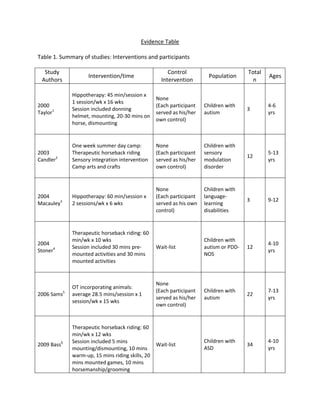
Table 1. Summary of studies: Interventions and participants

  Study                                                Control                         Total
                    Intervention/time                                  Population              Ages
 Authors                                            Intervention                         n

             Hippotherapy: 45 min/session x
                                                  None
             1 session/wk x 16 wks
2000                                              (Each participant   Children with            4-6
             Session included donning                                                  3
Taylor1                                           served as his/her   autism                   yrs
             helmet, mounting, 20-30 mins on
                                                  own control)
             horse, dismounting


             One week summer day camp:            None                Children with
2003         Therapeutic horseback riding         (Each participant   sensory                  5-13
                                                                                       12
Candler2     Sensory integration intervention     served as his/her   modulation               yrs
             Camp arts and crafts                 own control)        disorder


                                                  None                Children with
2004         Hippotherapy: 60 min/session x       (Each participant   language-
                                                                                       3       9-12
Macauley3    2 sessions/wk x 6 wks                served as his own   learning
                                                  control)            disabilities


             Therapeutic horseback riding: 60
             min/wk x 10 wks                                          Children with
2004                                                                                           4-10
             Session included 30 mins pre-        Wait-list           autism or PDD-   12
Stoner4                                                                                        yrs
             mounted activities and 30 mins                           NOS
             mounted activities


                                                  None
             OT incorporating animals:
                                                  (Each participant   Children with            7-13
2006 Sams5   average 28.5 mins/session x 1                                             22
                                                  served as his/her   autism                   yrs
             session/wk x 15 wks
                                                  own control)


             Therapeutic horseback riding: 60
             min/wk x 12 wks
             Session included 5 mins                                  Children with            4-10
2009 Bass6                                        Wait-list                            34
             mounting/dismounting, 10 mins                            ASD                      yrs
             warm-up, 15 mins riding skills, 20
             mins mounted games, 10 mins
             horsemanship/grooming
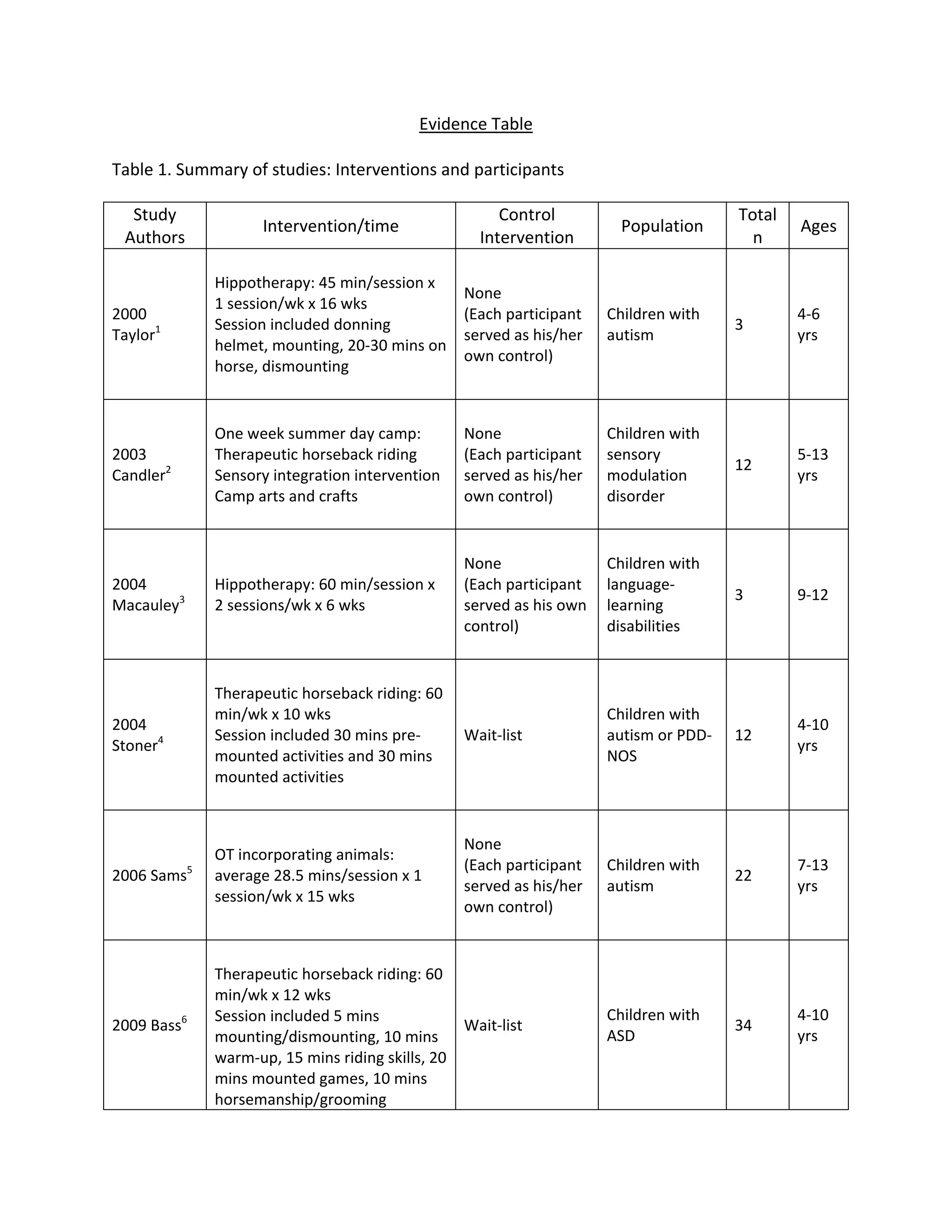
Table 2. Summary of Studies: Research methods

                                                       Level of   Treatment              Control Rx
Study Authors             Research Design                                         Rx n
                                                       Evidence    Duration                  n

2000 Taylor1        Single subject A-B-B design   IV              16 wks      3          0


                    One-Group Pretest-Posttest
                2
2003 Candler        Design                        IV              1 wk        12         0
                    O1 X O2


                    One-Group Pretest-Posttest
2004 Macauley3      Design                        IV              6 wks       3          0
                    O1 X O2


                    Pretest-Posttest Control
                    Group Design
2004 Stoner4                                      II              10 wks      6          6
                    R O1 X O2
                       O1 O2


                    One-Group Pretest-Posttest
            5
2006 Sams           Design                        IV              15 wks      22         0
                    O1 X O2


                    Pretest-Posttest Control
            6       Group Design
2009 Bass                                         III             12 wks      19         15
                    R O1 X O2
                       O1 O2
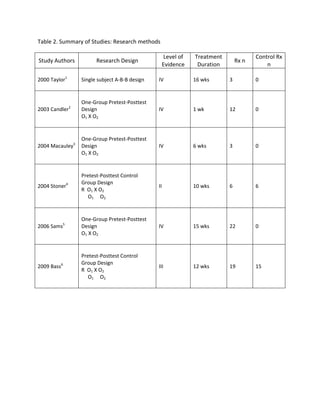
Table 3. Summary of Studies: Outcomes, measures, and results

  Study           Outcome of         Measurement Tool           Result    Clin    Statistics    Level of
 Authors           Interest                                              Signif                Evidence
2000
              Motivation/Volition   PVQ                         +        NR       NS           IV
Taylor1


                                    COPM (modified for
                                                                         NR                    IV
2003          Occupational          summer camp setting)
Candler2      performance             - Performance             +                 p=.001
                                      - Satisfaction            +                 p=.001


                                    21-item questionnaire                NR                    IV
2004          Speech and
                                      - parents                 +                 p<.000
Macauley3     language abilities
                                      - participants            -                 p<.02


                                    SP
2004                                                            +
              Sensory processing    1 question with 3                    NR       NR           II
Stoner4                                                         +
                                    possible answers


2006          Social interactions   Number of behaviors         +        large    p<.01
                                                                                               IV
Sams5         Language use          Number of behaviors         +        small    p<.05


                                    SRS                         +        none     p=.017
2009 Bass6    Social functioning                                                               III
                                    SP                          +        small    p<.01


Legend for Table 3

PVQ        Pediatric Volitional Questionnaire               +        Result favored animal therapy
COPM       Canadian Occupational Performance                -        Result did not favor animal
           Measure                                                   therapy
SP         Sensory Profile                                  NR       Not reported
SRS        Sensory Responsiveness Scale                     ND       No difference
                                                            NS       Not significant
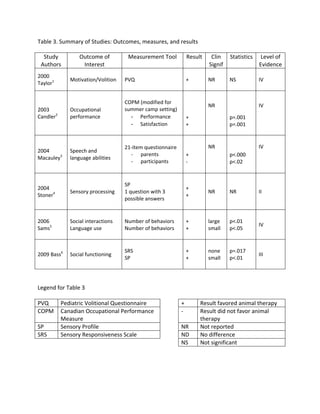
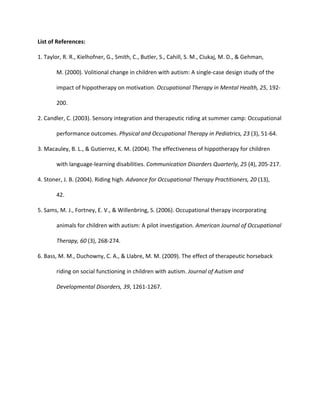
List of References:

1. Taylor, R. R., Kielhofner, G., Smith, C., Butler, S., Cahill, S. M., Ciukaj, M. D., & Gehman,

        M. (2000). Volitional change in children with autism: A single-case design study of the

        impact of hippotherapy on motivation. Occupational Therapy in Mental Health, 25, 192-

        200.

2. Candler, C. (2003). Sensory integration and therapeutic riding at summer camp: Occupational

        performance outcomes. Physical and Occupational Therapy in Pediatrics, 23 (3), 51-64.

3. Macauley, B. L., & Gutierrez, K. M. (2004). The effectiveness of hippotherapy for children

        with language-learning disabilities. Communication Disorders Quarterly, 25 (4), 205-217.

4. Stoner, J. B. (2004). Riding high. Advance for Occupational Therapy Practitioners, 20 (13),

        42.

5. Sams, M. J., Fortney, E. V., & Willenbring, S. (2006). Occupational therapy incorporating

        animals for children with autism: A pilot investigation. American Journal of Occupational

        Therapy, 60 (3), 268-274.

6. Bass, M. M., Duchowny, C. A., & Llabre, M. M. (2009). The effect of therapeutic horseback

        riding on social functioning in children with autism. Journal of Autism and

        Developmental Disorders, 39, 1261-1267.

Evidence Table

  • 1.
    Evidence Table Table 1.Summary of studies: Interventions and participants Study Control Total Intervention/time Population Ages Authors Intervention n Hippotherapy: 45 min/session x None 1 session/wk x 16 wks 2000 (Each participant Children with 4-6 Session included donning 3 Taylor1 served as his/her autism yrs helmet, mounting, 20-30 mins on own control) horse, dismounting One week summer day camp: None Children with 2003 Therapeutic horseback riding (Each participant sensory 5-13 12 Candler2 Sensory integration intervention served as his/her modulation yrs Camp arts and crafts own control) disorder None Children with 2004 Hippotherapy: 60 min/session x (Each participant language- 3 9-12 Macauley3 2 sessions/wk x 6 wks served as his own learning control) disabilities Therapeutic horseback riding: 60 min/wk x 10 wks Children with 2004 4-10 Session included 30 mins pre- Wait-list autism or PDD- 12 Stoner4 yrs mounted activities and 30 mins NOS mounted activities None OT incorporating animals: (Each participant Children with 7-13 2006 Sams5 average 28.5 mins/session x 1 22 served as his/her autism yrs session/wk x 15 wks own control) Therapeutic horseback riding: 60 min/wk x 12 wks Session included 5 mins Children with 4-10 2009 Bass6 Wait-list 34 mounting/dismounting, 10 mins ASD yrs warm-up, 15 mins riding skills, 20 mins mounted games, 10 mins horsemanship/grooming
  • 2.
    Table 2. Summaryof Studies: Research methods Level of Treatment Control Rx Study Authors Research Design Rx n Evidence Duration n 2000 Taylor1 Single subject A-B-B design IV 16 wks 3 0 One-Group Pretest-Posttest 2 2003 Candler Design IV 1 wk 12 0 O1 X O2 One-Group Pretest-Posttest 2004 Macauley3 Design IV 6 wks 3 0 O1 X O2 Pretest-Posttest Control Group Design 2004 Stoner4 II 10 wks 6 6 R O1 X O2 O1 O2 One-Group Pretest-Posttest 5 2006 Sams Design IV 15 wks 22 0 O1 X O2 Pretest-Posttest Control 6 Group Design 2009 Bass III 12 wks 19 15 R O1 X O2 O1 O2
  • 3.
    Table 3. Summaryof Studies: Outcomes, measures, and results Study Outcome of Measurement Tool Result Clin Statistics Level of Authors Interest Signif Evidence 2000 Motivation/Volition PVQ + NR NS IV Taylor1 COPM (modified for NR IV 2003 Occupational summer camp setting) Candler2 performance - Performance + p=.001 - Satisfaction + p=.001 21-item questionnaire NR IV 2004 Speech and - parents + p<.000 Macauley3 language abilities - participants - p<.02 SP 2004 + Sensory processing 1 question with 3 NR NR II Stoner4 + possible answers 2006 Social interactions Number of behaviors + large p<.01 IV Sams5 Language use Number of behaviors + small p<.05 SRS + none p=.017 2009 Bass6 Social functioning III SP + small p<.01 Legend for Table 3 PVQ Pediatric Volitional Questionnaire + Result favored animal therapy COPM Canadian Occupational Performance - Result did not favor animal Measure therapy SP Sensory Profile NR Not reported SRS Sensory Responsiveness Scale ND No difference NS Not significant
  • 4.
    List of References: 1.Taylor, R. R., Kielhofner, G., Smith, C., Butler, S., Cahill, S. M., Ciukaj, M. D., & Gehman, M. (2000). Volitional change in children with autism: A single-case design study of the impact of hippotherapy on motivation. Occupational Therapy in Mental Health, 25, 192- 200. 2. Candler, C. (2003). Sensory integration and therapeutic riding at summer camp: Occupational performance outcomes. Physical and Occupational Therapy in Pediatrics, 23 (3), 51-64. 3. Macauley, B. L., & Gutierrez, K. M. (2004). The effectiveness of hippotherapy for children with language-learning disabilities. Communication Disorders Quarterly, 25 (4), 205-217. 4. Stoner, J. B. (2004). Riding high. Advance for Occupational Therapy Practitioners, 20 (13), 42. 5. Sams, M. J., Fortney, E. V., & Willenbring, S. (2006). Occupational therapy incorporating animals for children with autism: A pilot investigation. American Journal of Occupational Therapy, 60 (3), 268-274. 6. Bass, M. M., Duchowny, C. A., & Llabre, M. M. (2009). The effect of therapeutic horseback riding on social functioning in children with autism. Journal of Autism and Developmental Disorders, 39, 1261-1267.