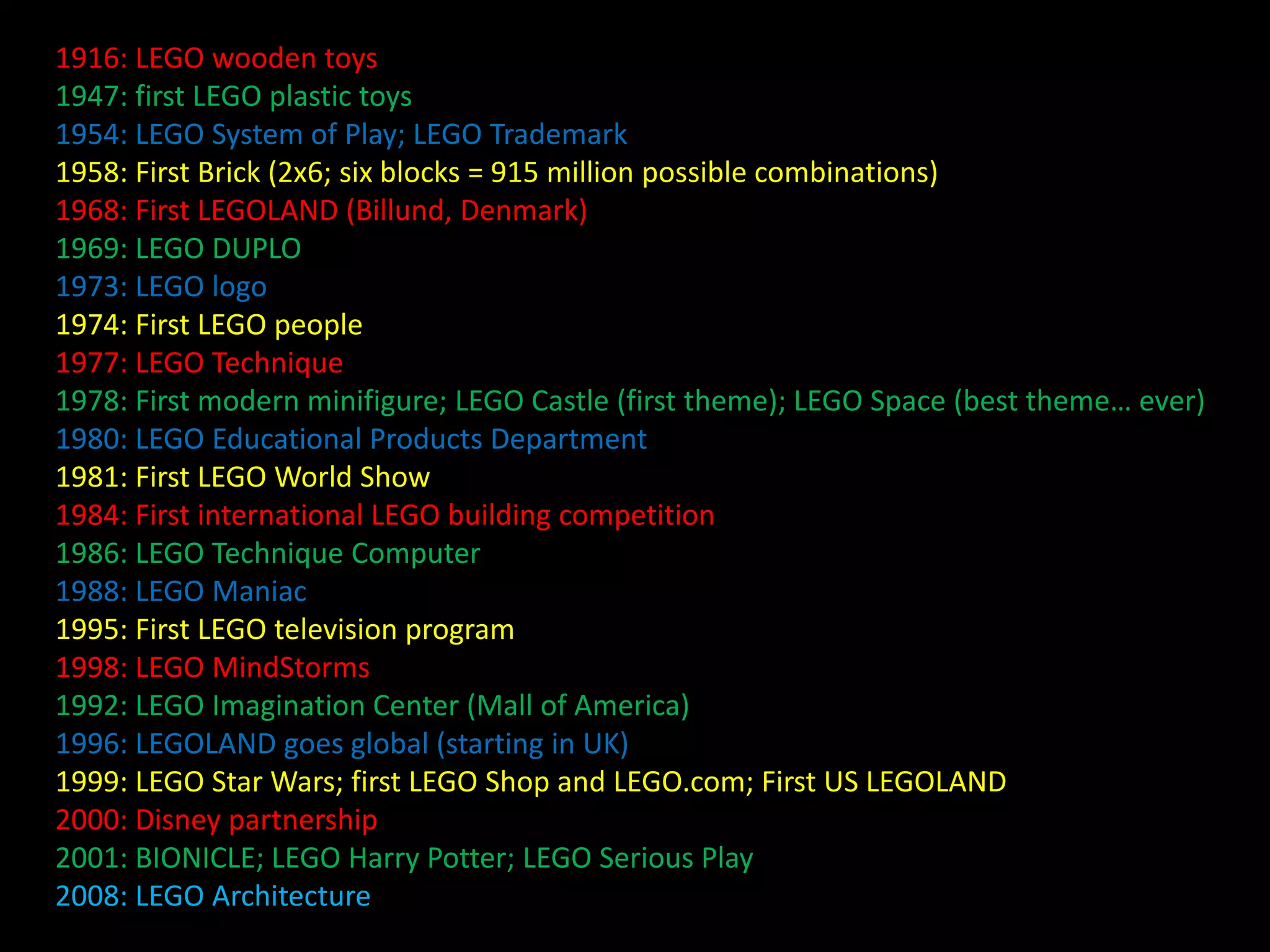
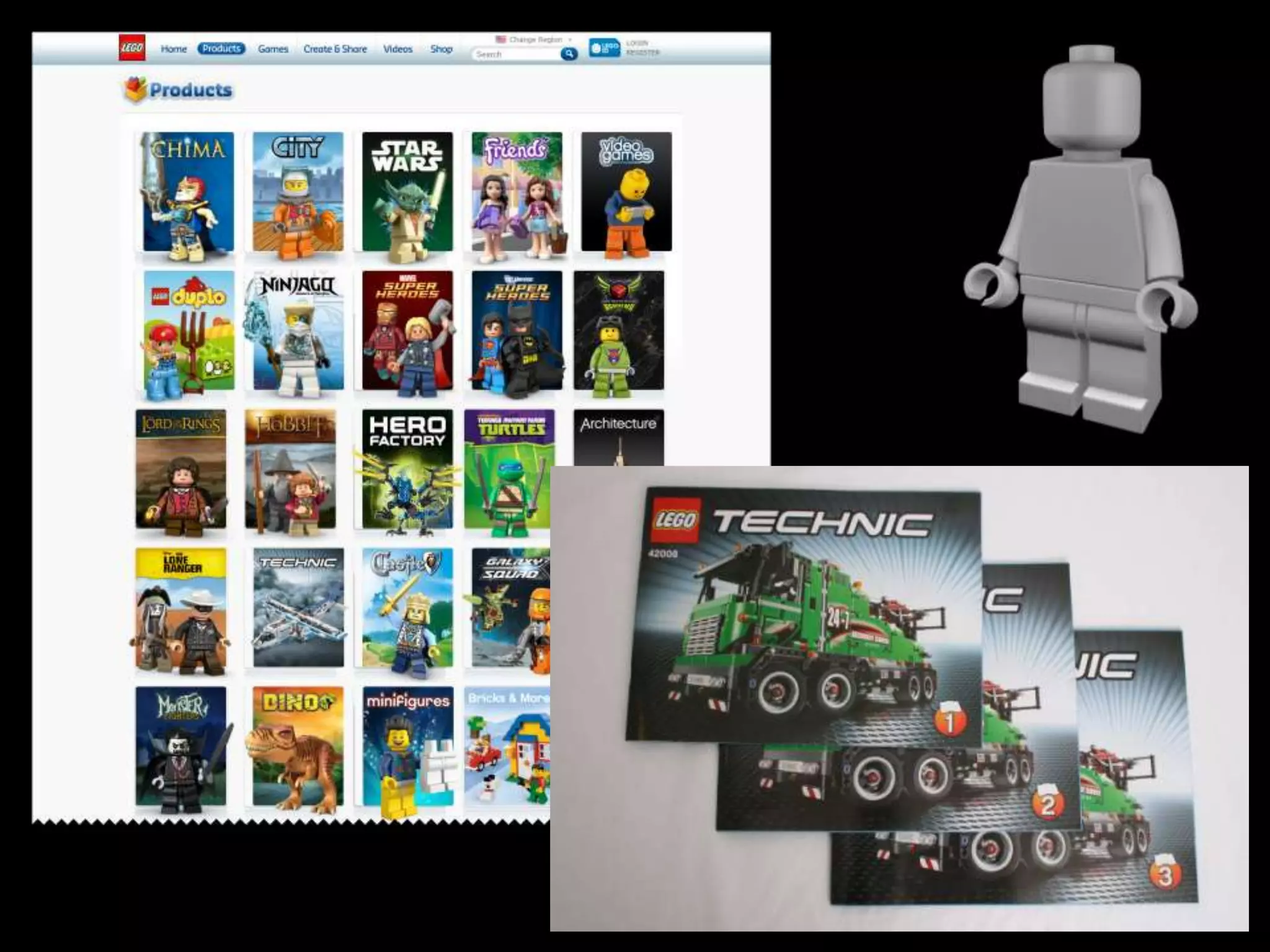
1916: LEGO wooden toys
1947: first LEGO plastic toys
1954: LEGO System of Play; LEGO Trademark
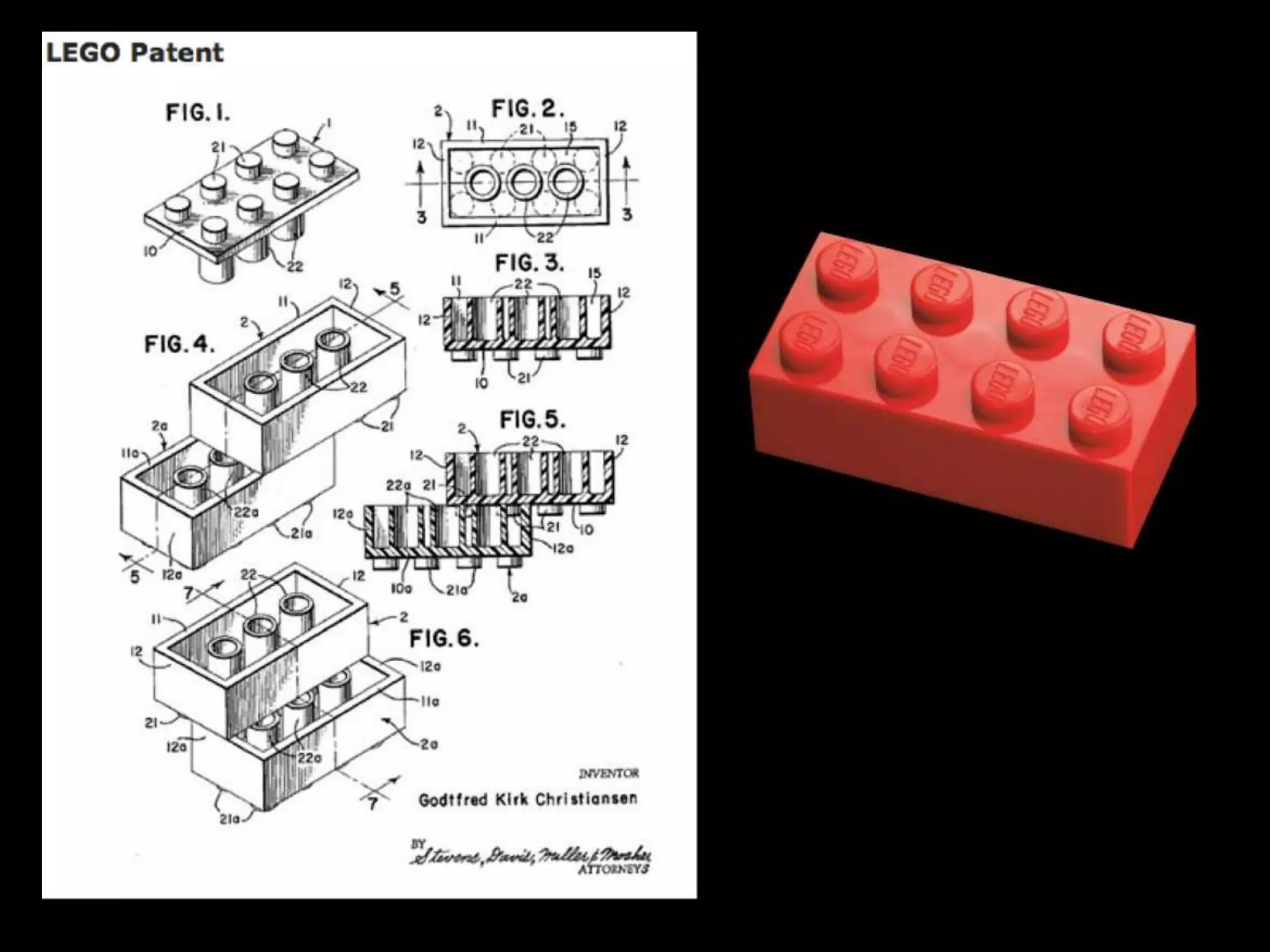
1958: First Brick (2x6; six blocks = 915 million possible combinations)
1968: First LEGOLAND (Billund, Denmark)
1969: LEGO DUPLO
1973: LEGO logo
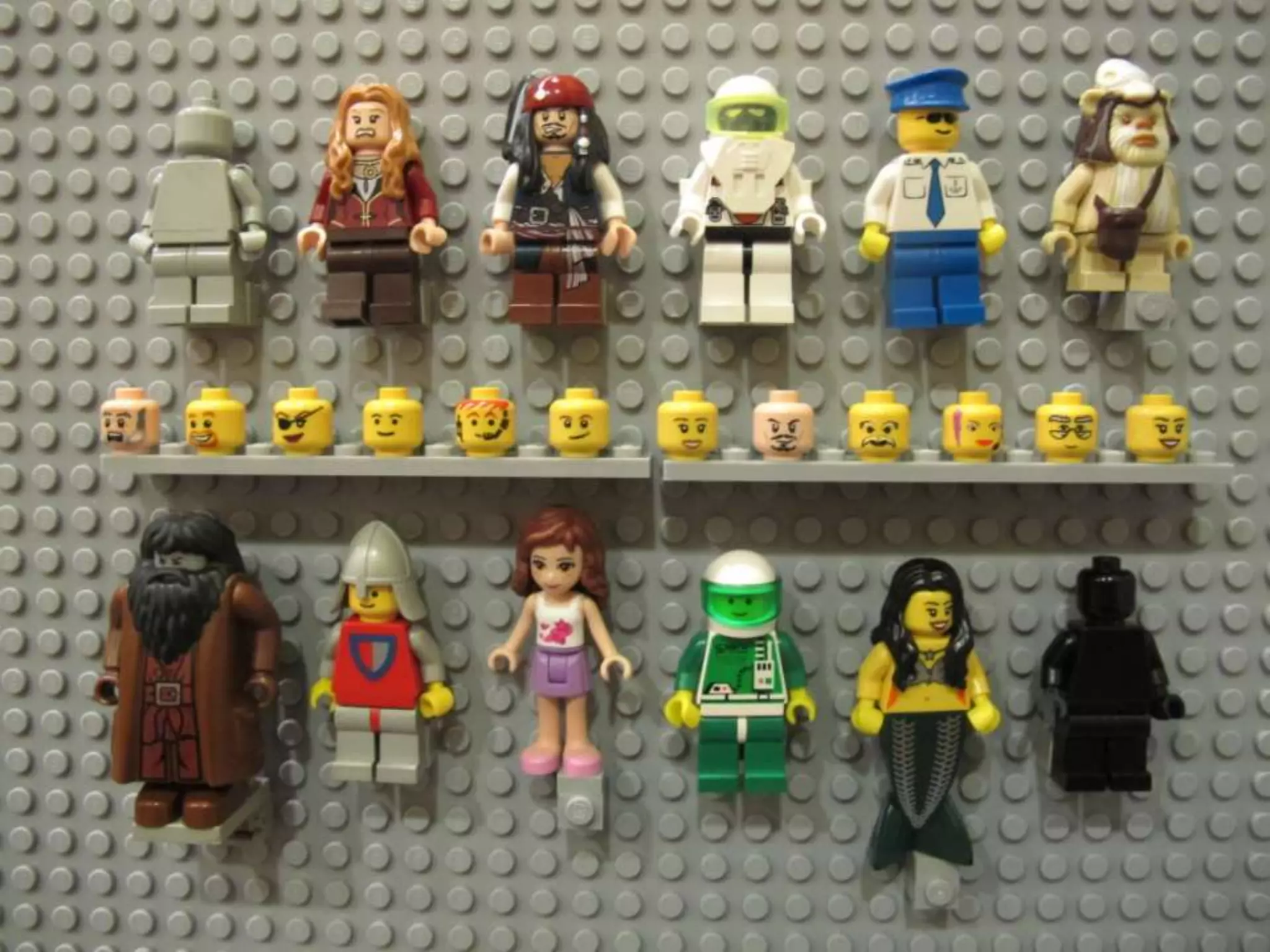
1974: First LEGO people
1977: LEGO Technique
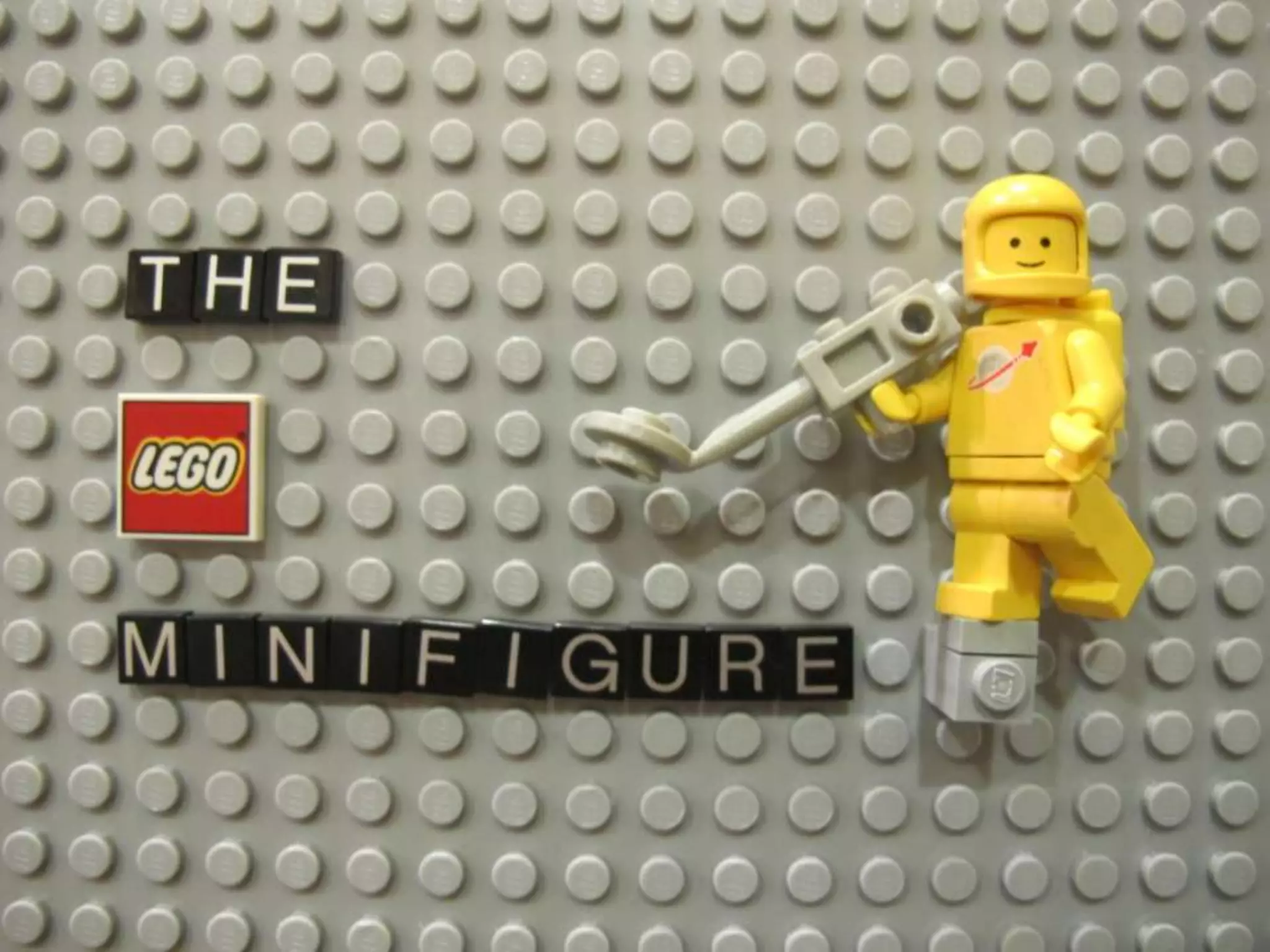
1978: First modern minifigure; LEGO Castle (first theme); LEGO Space (best theme… ever)
1980: LEGO Educational Products Department
1981: First LEGO World Show
1984: First international LEGO building competition
1986: LEGO Technique Computer
1988: LEGO Maniac
1995: First LEGO television program
1998: LEGO MindStorms
1992: LEGO Imagination Center (Mall of America)
1996: LEGOLAND goes global (starting in UK)
1999: LEGO Star Wars; first LEGO Shop and LEGO.com; First US LEGOLAND
2000: Disney partnership
2001: BIONICLE; LEGO Harry Potter; LEGO Serious Play
2008: LEGO Architecture
LEGO Group Vision
The LEGO Group's vision is to invent the future of play and LEGO Education's
interpretation of that is to bring the most innovative solutions to classrooms in order to
transform the way that learning takes place.
By providing the best digital and physical resources for hands-on and creative learning
experiences, LEGO Education believes that teachers and students will experience a new
way to learn that is more effective, engaging and motivating.
LEGO Group Mission
The LEGO Group's Mission is to Inspire and Develop the Builders of Tomorrow' and LEGO
Education's interpretation of this is to bring solutions to educators that will enable their
students to succeed. We know that teachers are expected to deliver specific learning
outcomes and measurable results and LEGO Education strives to create solutions that
answer to those needs.
LEGO is used by professional educators, trainers and engineers
LEGO Serious Play and similar programs offer LEGO-based programs
LEGO Educational Products Department:
make learning Engaging, Relevant, Hands-On, Creative

LEGO loves software and web developers and software and web developers love LEGO
My favorite exercise:
1. Get a bunch of noobs from different disciplines in a room (ideally one or more PMs,
UXers, designers, RAs/BAs, and testers, plus any leadership/stakeholders)
2. Stick them in a room with a bunch of paper, pens, and LEGO

3. Force them to switch roles (all of them, no one gets to play safe)
4. Give them an assignment and a time limit then put them to work
5. Be sure to leave ample time for a debrief/hot wash after the exercise
With enough people, you can do multiple teams and present models and related artifacts
after the exercise.
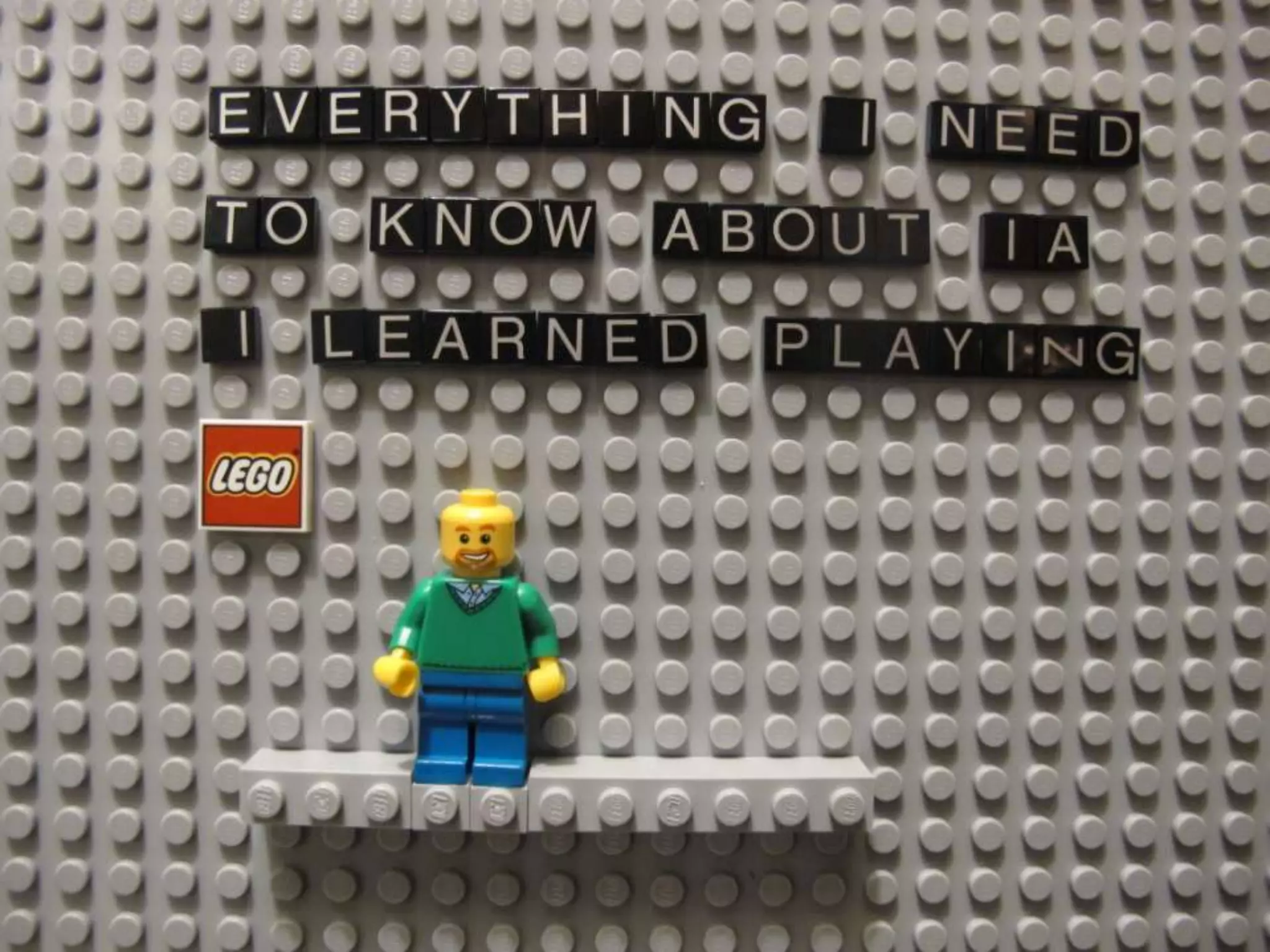
Everything I Need To Know About IA/UX I Learned Playing LEGO

Everything I Need To Know About IA/UX I Learned Playing LEGO

  • 4.
    1916: LEGO woodentoys 1947: first LEGO plastic toys 1954: LEGO System of Play; LEGO Trademark 1958: First Brick (2x6; six blocks = 915 million possible combinations) 1968: First LEGOLAND (Billund, Denmark) 1969: LEGO DUPLO 1973: LEGO logo 1974: First LEGO people 1977: LEGO Technique 1978: First modern minifigure; LEGO Castle (first theme); LEGO Space (best theme… ever) 1980: LEGO Educational Products Department 1981: First LEGO World Show 1984: First international LEGO building competition 1986: LEGO Technique Computer 1988: LEGO Maniac 1995: First LEGO television program 1998: LEGO MindStorms 1992: LEGO Imagination Center (Mall of America) 1996: LEGOLAND goes global (starting in UK) 1999: LEGO Star Wars; first LEGO Shop and LEGO.com; First US LEGOLAND 2000: Disney partnership 2001: BIONICLE; LEGO Harry Potter; LEGO Serious Play 2008: LEGO Architecture
  • 6.
    LEGO Group Vision TheLEGO Group's vision is to invent the future of play and LEGO Education's interpretation of that is to bring the most innovative solutions to classrooms in order to transform the way that learning takes place. By providing the best digital and physical resources for hands-on and creative learning experiences, LEGO Education believes that teachers and students will experience a new way to learn that is more effective, engaging and motivating. LEGO Group Mission The LEGO Group's Mission is to Inspire and Develop the Builders of Tomorrow' and LEGO Education's interpretation of this is to bring solutions to educators that will enable their students to succeed. We know that teachers are expected to deliver specific learning outcomes and measurable results and LEGO Education strives to create solutions that answer to those needs.
  • 7.
    LEGO is usedby professional educators, trainers and engineers LEGO Serious Play and similar programs offer LEGO-based programs LEGO Educational Products Department: make learning Engaging, Relevant, Hands-On, Creative LEGO loves software and web developers and software and web developers love LEGO
  • 28.
    My favorite exercise: 1.Get a bunch of noobs from different disciplines in a room (ideally one or more PMs, UXers, designers, RAs/BAs, and testers, plus any leadership/stakeholders) 2. Stick them in a room with a bunch of paper, pens, and LEGO 3. Force them to switch roles (all of them, no one gets to play safe) 4. Give them an assignment and a time limit then put them to work 5. Be sure to leave ample time for a debrief/hot wash after the exercise With enough people, you can do multiple teams and present models and related artifacts after the exercise.