Similarities:
3rd example
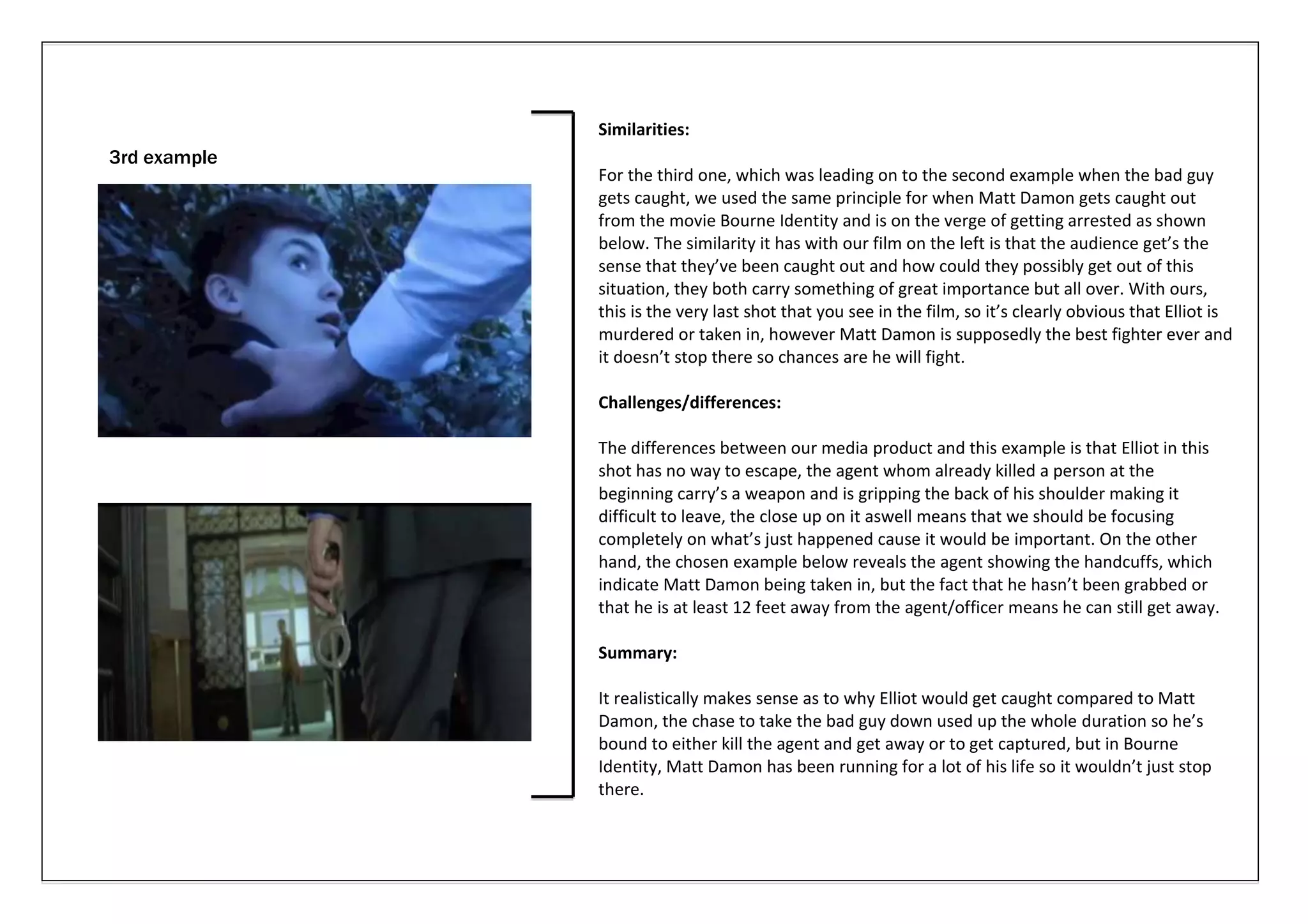
              For the third one, which was leading on to the second example when the bad guy
              gets caught, we used the same principle for when Matt Damon gets caught out
              from the movie Bourne Identity and is on the verge of getting arrested as shown
              below. The similarity it has with our film on the left is that the audience get’s the
              sense that they’ve been caught out and how could they possibly get out of this
              situation, they both carry something of great importance but all over. With ours,
              this is the very last shot that you see in the film, so it’s clearly obvious that Elliot is
              murdered or taken in, however Matt Damon is supposedly the best fighter ever and
              it doesn’t stop there so chances are he will fight.

              Challenges/differences:

              The differences between our media product and this example is that Elliot in this
              shot has no way to escape, the agent whom already killed a person at the
              beginning carry’s a weapon and is gripping the back of his shoulder making it
              difficult to leave, the close up on it aswell means that we should be focusing
              completely on what’s just happened cause it would be important. On the other
              hand, the chosen example below reveals the agent showing the handcuffs, which
              indicate Matt Damon being taken in, but the fact that he hasn’t been grabbed or
              that he is at least 12 feet away from the agent/officer means he can still get away.

              Summary:

              It realistically makes sense as to why Elliot would get caught compared to Matt
              Damon, the chase to take the bad guy down used up the whole duration so he’s
              bound to either kill the agent and get away or to get captured, but in Bourne
              Identity, Matt Damon has been running for a lot of his life so it wouldn’t just stop
              there.

Evaluation1 part3

  • 1.
    Similarities: 3rd example For the third one, which was leading on to the second example when the bad guy gets caught, we used the same principle for when Matt Damon gets caught out from the movie Bourne Identity and is on the verge of getting arrested as shown below. The similarity it has with our film on the left is that the audience get’s the sense that they’ve been caught out and how could they possibly get out of this situation, they both carry something of great importance but all over. With ours, this is the very last shot that you see in the film, so it’s clearly obvious that Elliot is murdered or taken in, however Matt Damon is supposedly the best fighter ever and it doesn’t stop there so chances are he will fight. Challenges/differences: The differences between our media product and this example is that Elliot in this shot has no way to escape, the agent whom already killed a person at the beginning carry’s a weapon and is gripping the back of his shoulder making it difficult to leave, the close up on it aswell means that we should be focusing completely on what’s just happened cause it would be important. On the other hand, the chosen example below reveals the agent showing the handcuffs, which indicate Matt Damon being taken in, but the fact that he hasn’t been grabbed or that he is at least 12 feet away from the agent/officer means he can still get away. Summary: It realistically makes sense as to why Elliot would get caught compared to Matt Damon, the chase to take the bad guy down used up the whole duration so he’s bound to either kill the agent and get away or to get captured, but in Bourne Identity, Matt Damon has been running for a lot of his life so it wouldn’t just stop there.