To create our documentary we used a huge variety of different media technologies
   to help make it look as professional as we could. Software played a big part in
   putting everything together and helping us to plan and keep track of where we
   were up to. We used web browsers such as Mozilla Firefox and Internet Explorer
   to get our secondary research. We used Mozilla Firefox plug-ins to download and
   transfer the videos from the internet. Microsoft Word was also used mostly for
   the planning and research stages to record and keep track of what we were
   using. The snipping tool was also used to help get screenshots and pictures easily
   and successfully.
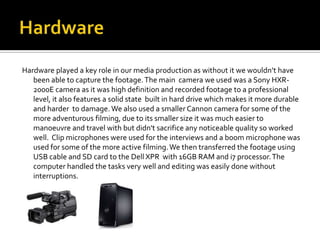
Hardware played a key role in our media production as without it we wouldn’t have
   been able to capture the footage. The main camera we used was a Sony HXR-
   2000E camera as it was high definition and recorded footage to a professional
   level, it also features a solid state built in hard drive which makes it more durable
   and harder to damage. We also used a smaller Cannon camera for some of the
   more adventurous filming, due to its smaller size it was much easier to
   manoeuvre and travel with but didn't sacrifice any noticeable quality so worked
   well. Clip microphones were used for the interviews and a boom microphone was
   used for some of the more active filming. We then transferred the footage using
   USB cable and SD card to the Dell XPR with 16GB RAM and i7 processor. The
   computer handled the tasks very well and editing was easily done without
   interruptions.
Finally we used some web based resources to gather information and transfer
   data, for example we used Sound Cloud to transfer our radio advertisements
   onto blogger, Also Slide Share has been used to upload this PowerPoint. YouTube
   played a key role in our documentary as we got our archive footage from there
   and also used it to upload our documentary for feedback purposes. The website
   Topdocumentaries.org was also used in the early stages to watch and research
   other documentaries.

Evaluation

  • 2.
    To create ourdocumentary we used a huge variety of different media technologies to help make it look as professional as we could. Software played a big part in putting everything together and helping us to plan and keep track of where we were up to. We used web browsers such as Mozilla Firefox and Internet Explorer to get our secondary research. We used Mozilla Firefox plug-ins to download and transfer the videos from the internet. Microsoft Word was also used mostly for the planning and research stages to record and keep track of what we were using. The snipping tool was also used to help get screenshots and pictures easily and successfully.
  • 3.
    Hardware played akey role in our media production as without it we wouldn’t have been able to capture the footage. The main camera we used was a Sony HXR- 2000E camera as it was high definition and recorded footage to a professional level, it also features a solid state built in hard drive which makes it more durable and harder to damage. We also used a smaller Cannon camera for some of the more adventurous filming, due to its smaller size it was much easier to manoeuvre and travel with but didn't sacrifice any noticeable quality so worked well. Clip microphones were used for the interviews and a boom microphone was used for some of the more active filming. We then transferred the footage using USB cable and SD card to the Dell XPR with 16GB RAM and i7 processor. The computer handled the tasks very well and editing was easily done without interruptions.
  • 4.
    Finally we usedsome web based resources to gather information and transfer data, for example we used Sound Cloud to transfer our radio advertisements onto blogger, Also Slide Share has been used to upload this PowerPoint. YouTube played a key role in our documentary as we got our archive footage from there and also used it to upload our documentary for feedback purposes. The website Topdocumentaries.org was also used in the early stages to watch and research other documentaries.