
Spain and Italy
in eurozone
crisis
SPAIN
• The 2008–2013 Spanish financial crisis began
as part of the European sovereign debt crisis.
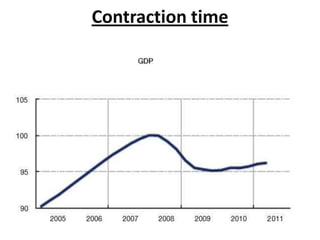
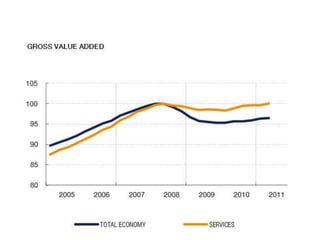
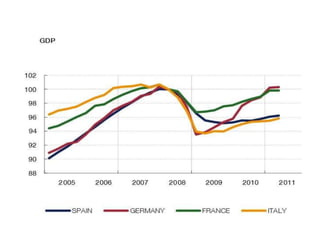
• Spain went into recession in 2008 Q2 and
remained there until 2010 Q1, when a modest
recovery ensued that came unstuck in the
second half of 2011 again it continue to rise
from 2012 onwards, as the sovereign debt
crisis heightened and spread to an increasingly
large number of countries.
• Spain continued the path of economic growth till 2004
but there were some fundamental problems already
evident in the economy:
 Spain's huge trade deficit (which reached a staggering 10%
of the country's GDP by the summer of 2008).
 The "loss of competitiveness against its main trading
partners“.
 An inflation rate which had been traditionally higher than
those of its European partners.
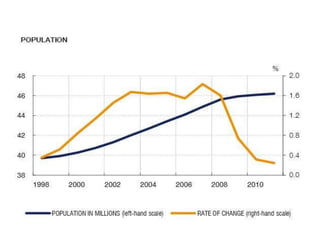
 Especially affected by house price increases of 150% from
1998.
 A growing family indebtedness (115%) chiefly related to
the Spanish Real Estate boom and rocketing oil prices.
• In Spain, the crisis was generated by:
Long-term loans (commonly issued for 40 years)
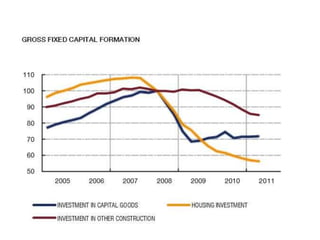
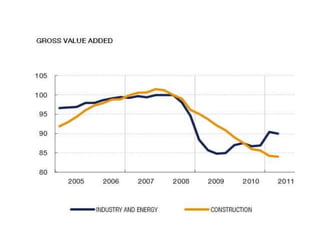
The building market crash, included the
bankruptcy of major companies.
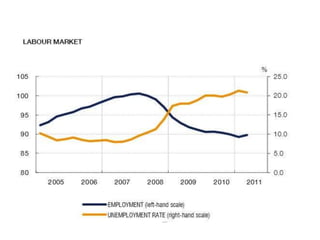
Particularly severe increase in
unemployment, which rose to 29.16% by April
2013.

• The economy contracted 3.7% in 2009 and
again in 2010 by 0.1%. It grew by 0.7% in
2011. By the Q1 of 2012, Spain was officially
in recession once again.
Contraction time
Property bubble
• The residential real estate bubble in Spain saw real
estate prices rise 200% from 1996 to 2007.

• In a country with 16.5 million families, 22–24
million houses and 3–4 million empty houses. From
all the houses built over the 2001–2007 period, "no
less than 28%" were vacant as of late 2008.
Prices
• Spain has to import all of its fossil
fuels, added much pressure to the inflation
rate.
• Thus, in June 2008 the inflation rate reached a
high of 5.00%.
• This led to rise in prices, implementation of
austerity measures and extremely high
unemployment.
Spanish banking system
• Spanish banks were very conservative in rules. But became
liberal during property bubble.
• Banks helped many congress representatives to own
multiple number of houses which left banks with big debts.

• Banks had lent to construction companies heavily until
they got bankrupt and ultimately banks also.
• In May 2012 credit ratings of several Spanish banks were
downgraded, some to "junk" status.
• On 25 May it announced that it would require a bailout of
23.5€ billion to cover losses from failed mortgages.
Huge unemployment
• During the period October 2007 – October 2008 Spain
had its unemployment rate climb 37%.
• Spain have two tiers of labor force privileged and
unprivileged.
• June 2013, is overstated. Subtracting students and
young mothers not looking for jobs, the actual number
of young unemployed labors is closer to 22%.
• Young people are leaving Spain in search of job.
Roughly about 68% are willing to do so.
Bail out of Spain
• On 9 June 2012 the Eurogroup announced
intentions to provide up to 100,000 million
euro to the Fund for Orderly Bank
Restructuring to the Spanish government.
• EU Economy and Euro Commissioner Olli Rehn
told a news conference on 13th November
2013 that the Spanish financial market had
stabilized, liquidity of banks had improved
and deposits were rising.
ITALY
• After joining eurozone, from January 2002 all
coins and notes of Italy changed from Lira to
euro.
• Exports got reduced and currency started
devaluating more since then.
• Italy is the third largest economy of the Eurozone
holds the largest public debt (over €2
trillion), which has been growing at an
astonishing pace, particularly as a ratio to GDP
(130%).
Causes
• Debt
country's national debt weighs in at roughly 120%
the size of its GDP, or about $2.6 trillion.
2nd largest debt .

• Productivity
The IMF found that Italy suffered from excessive
regulation and a dearth of R&D spending.
The economy is dominated by small and medium
sized businesses so, its capital markets are poorly
developed.
Young Italians, have an unemployment rate above
27%.
• Government and Mafia
Weak governance.
Increasing corruption and weak-biased rules.
More than 15% of Italy's economy happens in the
shadows.
Government forcing citizens to pay heavy taxes.

• South Italy
GDP per capita in the North and center is more
than 40% higher than the south.
Unemployment, crime, and black market labor are
also concentrated in the South.
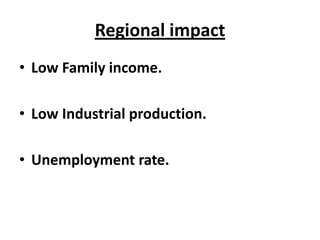
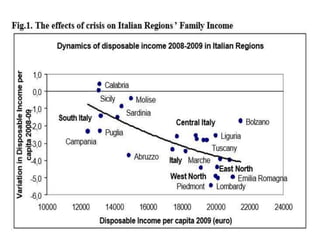
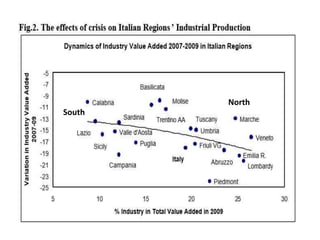
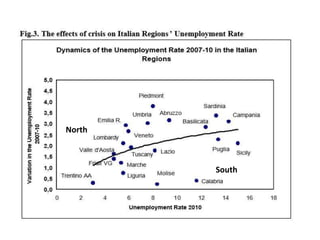
Regional impact
• Low Family income.
• Low Industrial production.
• Unemployment rate.
North
South
North

South
Bailout
• The Bank of Italy has approved €3.9bn in loans
to fund a deeply controversial state bailout of
the world’s oldest bank, Monte dei Paschi di
Siena.
• Monte dei Paschi, founded in 1472, faces
losses of up to €720m over a series of
trades, several of which are now under
internal investigation.
Eurozone spain and italy

Eurozone spain and italy

  • 1.
    Spain and Italy ineurozone crisis
  • 2.
    SPAIN • The 2008–2013Spanish financial crisis began as part of the European sovereign debt crisis. • Spain went into recession in 2008 Q2 and remained there until 2010 Q1, when a modest recovery ensued that came unstuck in the second half of 2011 again it continue to rise from 2012 onwards, as the sovereign debt crisis heightened and spread to an increasingly large number of countries.
  • 3.
    • Spain continuedthe path of economic growth till 2004 but there were some fundamental problems already evident in the economy:  Spain's huge trade deficit (which reached a staggering 10% of the country's GDP by the summer of 2008).  The "loss of competitiveness against its main trading partners“.  An inflation rate which had been traditionally higher than those of its European partners.  Especially affected by house price increases of 150% from 1998.  A growing family indebtedness (115%) chiefly related to the Spanish Real Estate boom and rocketing oil prices.
  • 4.
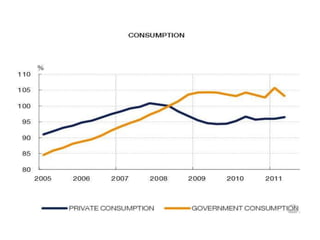
    • In Spain,the crisis was generated by: Long-term loans (commonly issued for 40 years) The building market crash, included the bankruptcy of major companies. Particularly severe increase in unemployment, which rose to 29.16% by April 2013. • The economy contracted 3.7% in 2009 and again in 2010 by 0.1%. It grew by 0.7% in 2011. By the Q1 of 2012, Spain was officially in recession once again.
  • 5.
  • 13.
    Property bubble • Theresidential real estate bubble in Spain saw real estate prices rise 200% from 1996 to 2007. • In a country with 16.5 million families, 22–24 million houses and 3–4 million empty houses. From all the houses built over the 2001–2007 period, "no less than 28%" were vacant as of late 2008.
  • 14.
    Prices • Spain hasto import all of its fossil fuels, added much pressure to the inflation rate. • Thus, in June 2008 the inflation rate reached a high of 5.00%. • This led to rise in prices, implementation of austerity measures and extremely high unemployment.
  • 15.
    Spanish banking system •Spanish banks were very conservative in rules. But became liberal during property bubble. • Banks helped many congress representatives to own multiple number of houses which left banks with big debts. • Banks had lent to construction companies heavily until they got bankrupt and ultimately banks also. • In May 2012 credit ratings of several Spanish banks were downgraded, some to "junk" status. • On 25 May it announced that it would require a bailout of 23.5€ billion to cover losses from failed mortgages.
  • 16.
    Huge unemployment • Duringthe period October 2007 – October 2008 Spain had its unemployment rate climb 37%. • Spain have two tiers of labor force privileged and unprivileged. • June 2013, is overstated. Subtracting students and young mothers not looking for jobs, the actual number of young unemployed labors is closer to 22%. • Young people are leaving Spain in search of job. Roughly about 68% are willing to do so.
  • 17.
    Bail out ofSpain • On 9 June 2012 the Eurogroup announced intentions to provide up to 100,000 million euro to the Fund for Orderly Bank Restructuring to the Spanish government. • EU Economy and Euro Commissioner Olli Rehn told a news conference on 13th November 2013 that the Spanish financial market had stabilized, liquidity of banks had improved and deposits were rising.
  • 18.
    ITALY • After joiningeurozone, from January 2002 all coins and notes of Italy changed from Lira to euro. • Exports got reduced and currency started devaluating more since then. • Italy is the third largest economy of the Eurozone holds the largest public debt (over €2 trillion), which has been growing at an astonishing pace, particularly as a ratio to GDP (130%).
  • 19.
    Causes • Debt country's nationaldebt weighs in at roughly 120% the size of its GDP, or about $2.6 trillion. 2nd largest debt . • Productivity The IMF found that Italy suffered from excessive regulation and a dearth of R&D spending. The economy is dominated by small and medium sized businesses so, its capital markets are poorly developed. Young Italians, have an unemployment rate above 27%.
  • 20.
    • Government andMafia Weak governance. Increasing corruption and weak-biased rules. More than 15% of Italy's economy happens in the shadows. Government forcing citizens to pay heavy taxes. • South Italy GDP per capita in the North and center is more than 40% higher than the south. Unemployment, crime, and black market labor are also concentrated in the South.
  • 21.
    Regional impact • LowFamily income. • Low Industrial production. • Unemployment rate.
  • 23.
  • 24.
  • 25.
    Bailout • The Bankof Italy has approved €3.9bn in loans to fund a deeply controversial state bailout of the world’s oldest bank, Monte dei Paschi di Siena. • Monte dei Paschi, founded in 1472, faces losses of up to €720m over a series of trades, several of which are now under internal investigation.