Ethical Issues Raised by Pervasive
Health Data Sharing
T.J. Kasperbauer
June 12, 2017
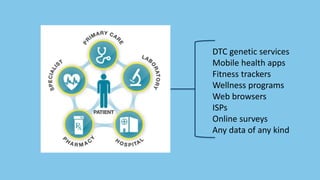
DTC genetic services
Mobile health apps
Fitness trackers
Wellness programs
Web browsers
ISPs
Online surveys
Any data of any kind
What should the health industry do
about pervasive health data sharing?
Not Our Problem
Outside of the doctor-
patient relationship.
Not Our Problem
It’s a consumer issue. Talk to
the FTC.
We have enough of our own
internal privacy problems.
1. Health care and medical research suffers.
2. Health data is at risk!
There Are Good Reasons to Get Involved
Netflix, AOL, etc.
Genetic databases (Gymrek et al., 2013)
Washington state health records (Sweeney, 2013)
Canada’s Adverse Reaction Database (El Emam et al., 2013)
Health Data at Risk
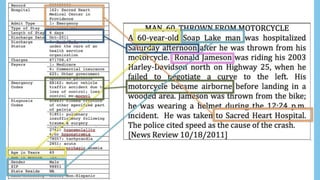
De-identification is inadequate
What if the health industry took a
proactive role in finding and
controlling health-related data?
Ethical Concerns
This is very different from the traditional doctor-
patient relationship.
Potentially autonomy-reducing/paternalistic.
Surveillance concerns
Data breaches become
much more significant.
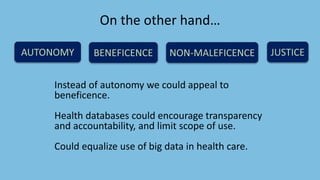
On the other hand…
Instead of autonomy we could appeal to
beneficence.
Health databases could encourage transparency
and accountability, and limit scope of use.
Could equalize use of big data in health care.
A lot hinges on how data is obtained and used.
Health industry control can incentivize better
protection against exploitation.

Ethics and sharing health data

  • 1.
    Ethical Issues Raisedby Pervasive Health Data Sharing T.J. Kasperbauer June 12, 2017
  • 2.
    DTC genetic services Mobilehealth apps Fitness trackers Wellness programs Web browsers ISPs Online surveys Any data of any kind
  • 3.
    What should thehealth industry do about pervasive health data sharing?
  • 5.
    Not Our Problem Outsideof the doctor- patient relationship.
  • 6.
    Not Our Problem It’sa consumer issue. Talk to the FTC. We have enough of our own internal privacy problems.
  • 7.
    1. Health careand medical research suffers. 2. Health data is at risk! There Are Good Reasons to Get Involved
  • 8.
    Netflix, AOL, etc. Geneticdatabases (Gymrek et al., 2013) Washington state health records (Sweeney, 2013) Canada’s Adverse Reaction Database (El Emam et al., 2013) Health Data at Risk
  • 10.
  • 11.
    What if thehealth industry took a proactive role in finding and controlling health-related data?
  • 12.
    Ethical Concerns This isvery different from the traditional doctor- patient relationship. Potentially autonomy-reducing/paternalistic.
  • 13.
    Surveillance concerns Data breachesbecome much more significant.
  • 14.
    On the otherhand… Instead of autonomy we could appeal to beneficence. Health databases could encourage transparency and accountability, and limit scope of use. Could equalize use of big data in health care.
  • 15.
    A lot hingeson how data is obtained and used. Health industry control can incentivize better protection against exploitation.

Editor's Notes

  • #2 We now share data with lots of people. Some if it’s directly health info. WebMD, online surveys, genetic services, wearables, medical apps, etc. Also lots of sharing that allows inferences about our health info. Google, ISPs, etc. know more about our health than health care providers. These all raise enormous privacy issues, but they’re outside of the purview of health industry privacy protections. So what should be done? Who should take responsibility?
  • #9 According to Sweeney (2010), roughly half of all health data exchanges don’t fall under HIPAA. De-identification is inadequate. These databases met minimal standards. Need something more ambitious. Impairs health care Lots of unused data that could be helpful Health data is at risk
  • #11 Over the long-term, de-identification techniques won’t be able to keep up with data sharing habits. The problem is what’s out there, not what health IT does in here.
  • #12 Propose that health industry develop centralized database for all health info, even inferential knowledge based on mobile health apps, ISPs, google searches, genetic tests, etc.
  • #13 No longer about what the patient is explicitly sharing with health care provider. Unlikely that the patient would ultimately have control over how the info is used. If others are already legally using the info, no reason to think health care provider is more limited.
  • #15 Tradeoff between patient control and optimal use. A balance seems possible. Consumer databases are more problematic Health database for all would reduce price of use. Shouldn’t have to pay for privacy. Already enhancing cyber security and privacy of health IT systems
  • #16 Will have choice over whether to do this with or without patient consent, and with or without granting them some control over the data. If monetized, and still outside of control of health professionals, seems problematic. Health industry could leverage their position to enact more stringent policies against exploitation and misuse of health data