
The Major Factors that
                    Affect Second Language
ESOL Area Cluster           Learning
Meeting Term 4
21/11/12


Name: Sonya Van Schaijik

Twitter: @vanschaijik

School: Newmarket School

City/ Country: Auckland, New Zealand

Role: e-learning lead teacher, ESOL teacher
                                              1
My background
1998                         2000
                             CLESOL Steering
National Diploma of TESSOL
                             Committee
 2003
 ESOL Verifier for the         Advisory Board for
 Ministry of Education         the Graduate
                               Diploma of TESSOL

            201                     2013
            1


                                    2
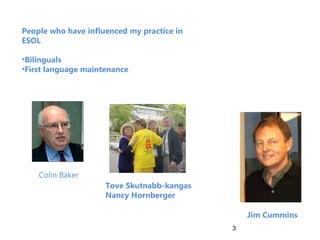
People who have influenced my practice in
ESOL

•Bilinguals
•First language maintenance


    Colin Baker
                     Tove Skutnabb-kangas
                     Nancy Hornberger

                                                Jim Cummins
                                            3
Aiono Fanaafi
Stephen May                   Patisepa Tuafuti


                              4
The idea for my inquiry


      Rod Ellis                        Sue Gray


Identifying the factors

CALPS in L1
Instrumental Motivation to learning a second language
Middle class backgrounds
Female
ESOL teacher working alongside the classroom teacher


                                                  5
How long it takes to learn a language.       Virginia P. Collier


                                         6
SOLO taxonomy – HOT tools


                                                     Pam Hook
             John Biggs                              @arti_choke


 Structured Observed Learning Observation – learning framework
 Hooked on Thinking Tools


                                                 7
Daily recording and checking of
  reading log
  Ongoing regular assessment and this
  was fed back to the learners
  Working with them in class as part of
  the class programme.


The experience of mastery is the most important factor
determining a person's self-efficacy.
                                          8
The biggest challenges

•Time
•Staying focussed on the task
•Being accountable for my learners progress

Tracking the data


                                              9
Where to next

The inquiry enhanced the quality of teaching.

I could see the children’s progress.
It allowed me to build closer relationships with the children.
I was able to identify my next steps.


                                                        10
Self-efficacy is the measure of one's own competence to
complete tasks and reach goals


                                                     Albert Bandura
I would like to leave you with.......

Withdrawal versus working in class


According to the Ministry of Education ‘one of the most effective
approaches is to fund an extra teacher to work alongside teachers in the
classroom, giving in-class support so that the English language learners can
learn alongside their peers.’


                                                          12
Learn to greet your children in their languages.


CALPs

SOLOtaxonomy

Self Efficacy


                                                    13
Some useful links.


http://www.wikispaces.com/user/view/ulimasao

http://www.newmarket.school.nz/Home/


                                               14

Esol cluster

  • 1.
    The Major Factorsthat Affect Second Language ESOL Area Cluster Learning Meeting Term 4 21/11/12 Name: Sonya Van Schaijik Twitter: @vanschaijik School: Newmarket School City/ Country: Auckland, New Zealand Role: e-learning lead teacher, ESOL teacher 1
  • 2.
    My background 1998 2000 CLESOL Steering National Diploma of TESSOL Committee 2003 ESOL Verifier for the Advisory Board for Ministry of Education the Graduate Diploma of TESSOL 201 2013 1 2
  • 3.
    People who haveinfluenced my practice in ESOL •Bilinguals •First language maintenance Colin Baker Tove Skutnabb-kangas Nancy Hornberger Jim Cummins 3
  • 4.
    Aiono Fanaafi Stephen May Patisepa Tuafuti 4
  • 5.
    The idea formy inquiry Rod Ellis Sue Gray Identifying the factors CALPS in L1 Instrumental Motivation to learning a second language Middle class backgrounds Female ESOL teacher working alongside the classroom teacher 5
  • 6.
    How long ittakes to learn a language. Virginia P. Collier 6
  • 7.
    SOLO taxonomy –HOT tools Pam Hook John Biggs @arti_choke Structured Observed Learning Observation – learning framework Hooked on Thinking Tools 7
  • 8.
    Daily recording andchecking of reading log Ongoing regular assessment and this was fed back to the learners Working with them in class as part of the class programme. The experience of mastery is the most important factor determining a person's self-efficacy. 8
  • 9.
    The biggest challenges •Time •Stayingfocussed on the task •Being accountable for my learners progress Tracking the data 9
  • 10.
    Where to next Theinquiry enhanced the quality of teaching. I could see the children’s progress. It allowed me to build closer relationships with the children. I was able to identify my next steps. 10
  • 11.
    Self-efficacy is themeasure of one's own competence to complete tasks and reach goals Albert Bandura
  • 12.
    I would liketo leave you with....... Withdrawal versus working in class According to the Ministry of Education ‘one of the most effective approaches is to fund an extra teacher to work alongside teachers in the classroom, giving in-class support so that the English language learners can learn alongside their peers.’ 12
  • 13.
    Learn to greetyour children in their languages. CALPs SOLOtaxonomy Self Efficacy 13
  • 14.