ESFDesign Labs
Safety Procedures
General Safety Procedures
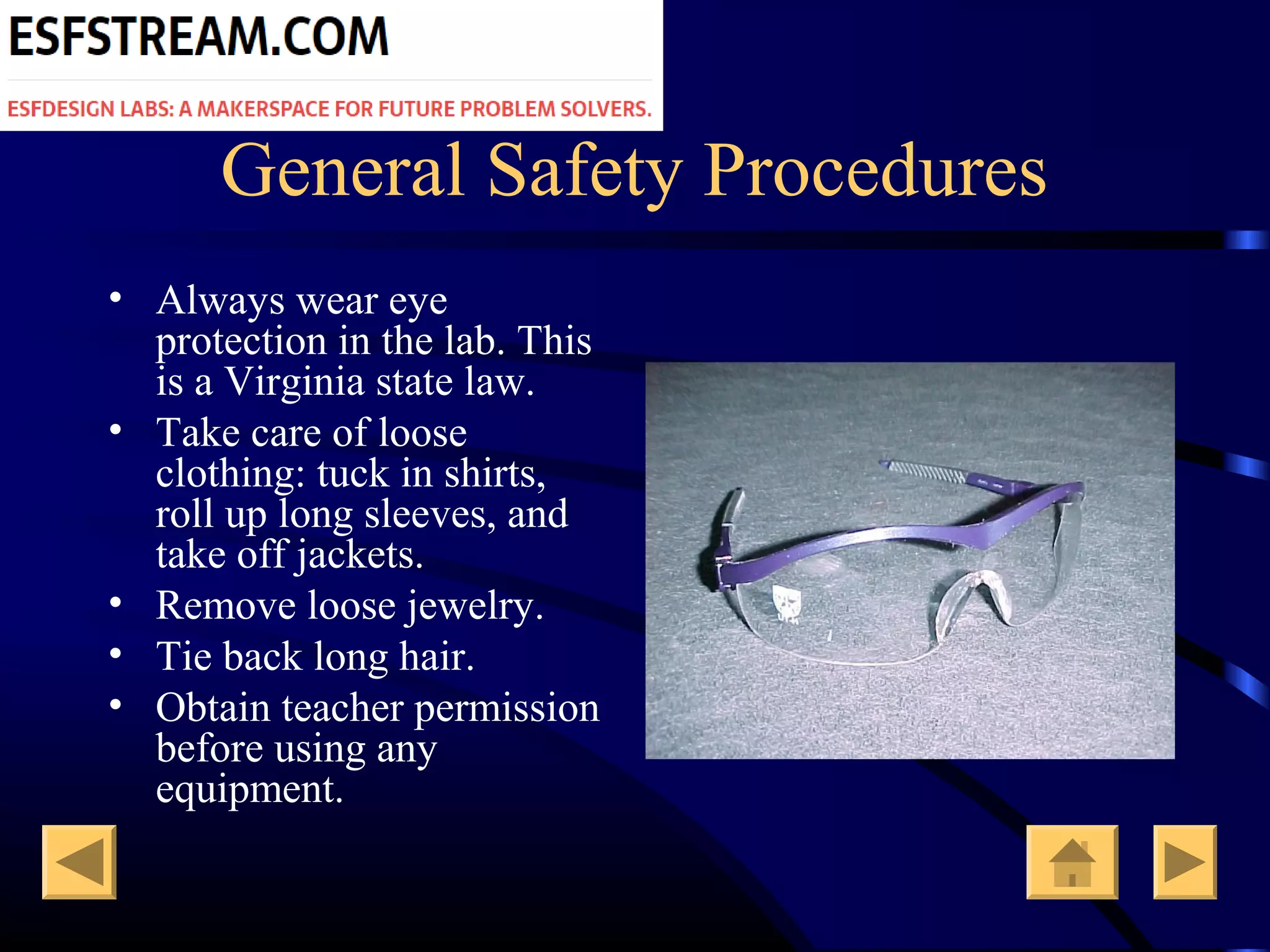
• Always wear eye
protection in the lab. This
is a Virginia state law.
• Take care of loose
clothing: tuck in shirts,
roll up long sleeves, and
take off jackets.
• Remove loose jewelry.
• Tie back long hair.
• Obtain teacher permission
before using any
equipment.
General Safety Procedures
• Do not use equipment unless you
know how it works – ask your
teacher for help if you are not sure.
• If anything breaks or appears to be
working incorrectly tell your
teacher.
• All equipment must be turned off if
the teacher leaves the lab.
• Report all injuries to the teacher
immediately.
• Remember the ABC’s of safety:
Always Be Careful.
General Safety Procedures
• No playing around or running
in the lab.
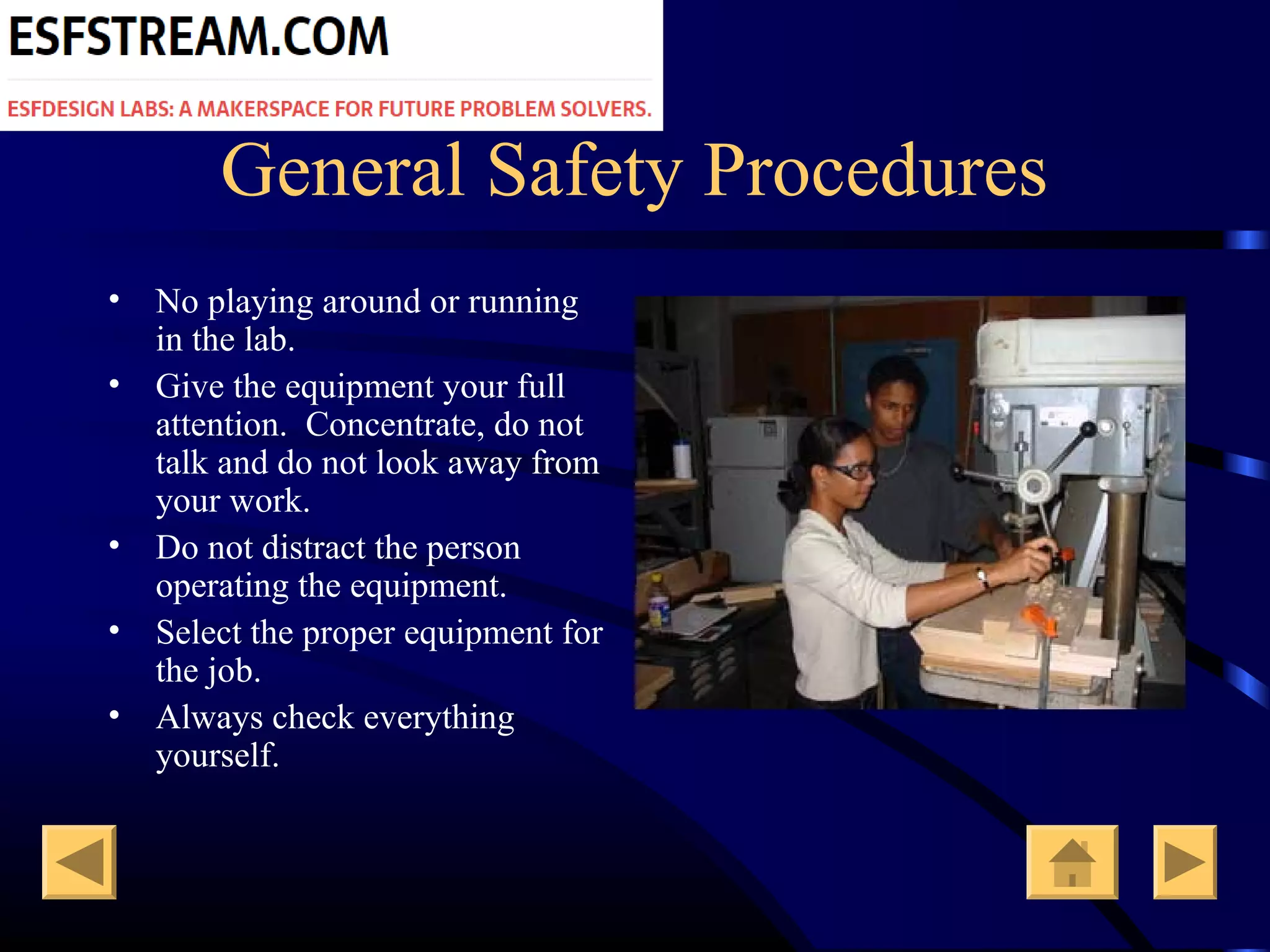
• Give the equipment your full
attention. Concentrate, do not
talk and do not look away from
your work.
• Do not distract the person
operating the equipment.
• Select the proper equipment for
the job.
• Always check everything
yourself.
General Safety Procedures
• Make all adjustments to the equipment
safety guards before the equipment is
turned on.
• Always turn equipment off when you are
finished and be sure it has come to a
complete stop before you walk away.
• Observe the work zone; the work zone is
the area that has been marked on the
floor around each piece of equipment.
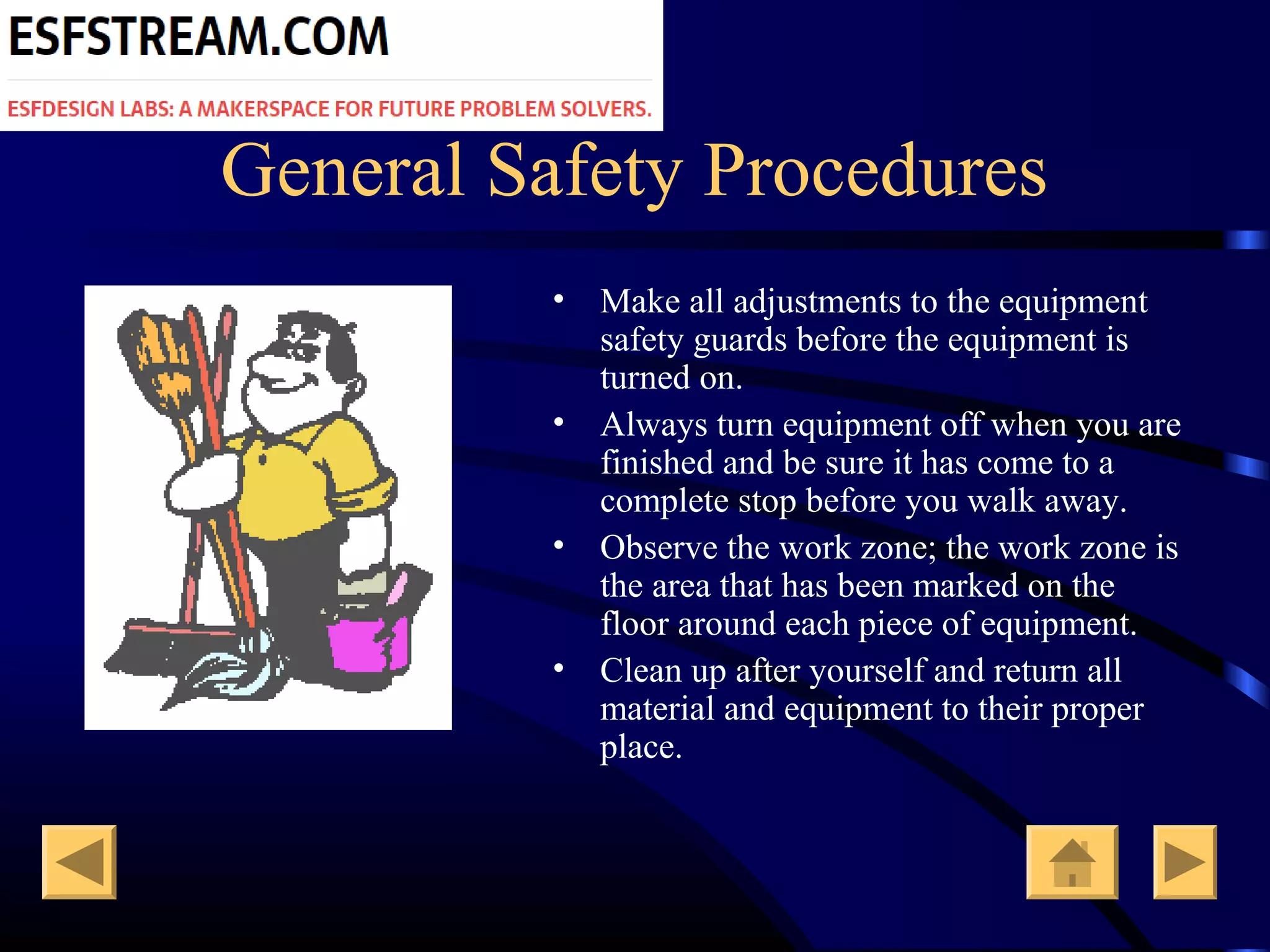
• Clean up after yourself and return all
material and equipment to their proper
place.
Band Saw Safety Procedures
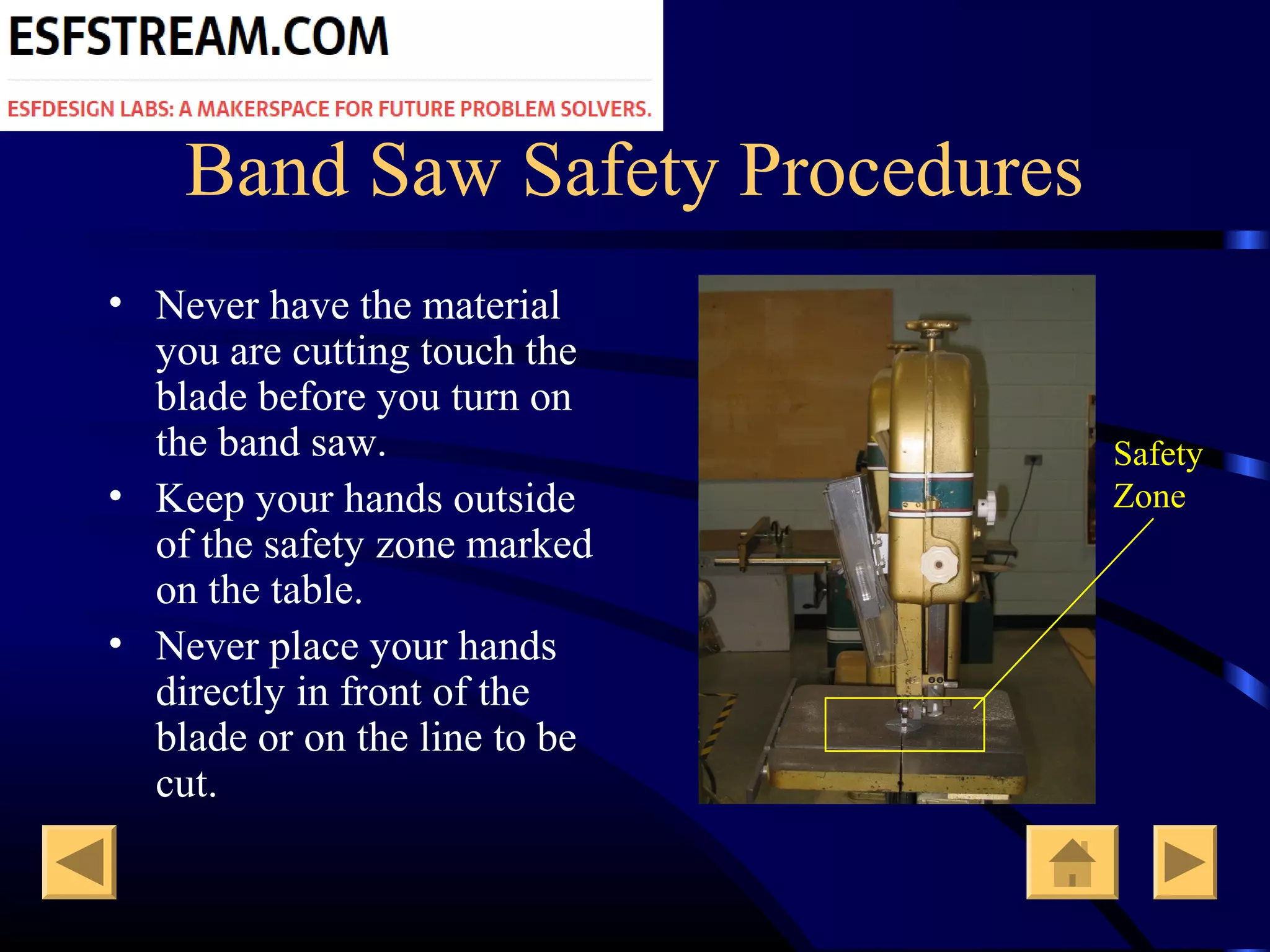
• Follow all general safety
rules before operating the
band saw.
• Measure accurately and
mark your material where
it is to be cut.
• Adjust the blade guide ¼
inch above the material
being cut before turning
on the band saw.
Click for a
Larger View
Band Saw Safety Procedures
• Never have the material
you are cutting touch the
blade before you turn on
the band saw.
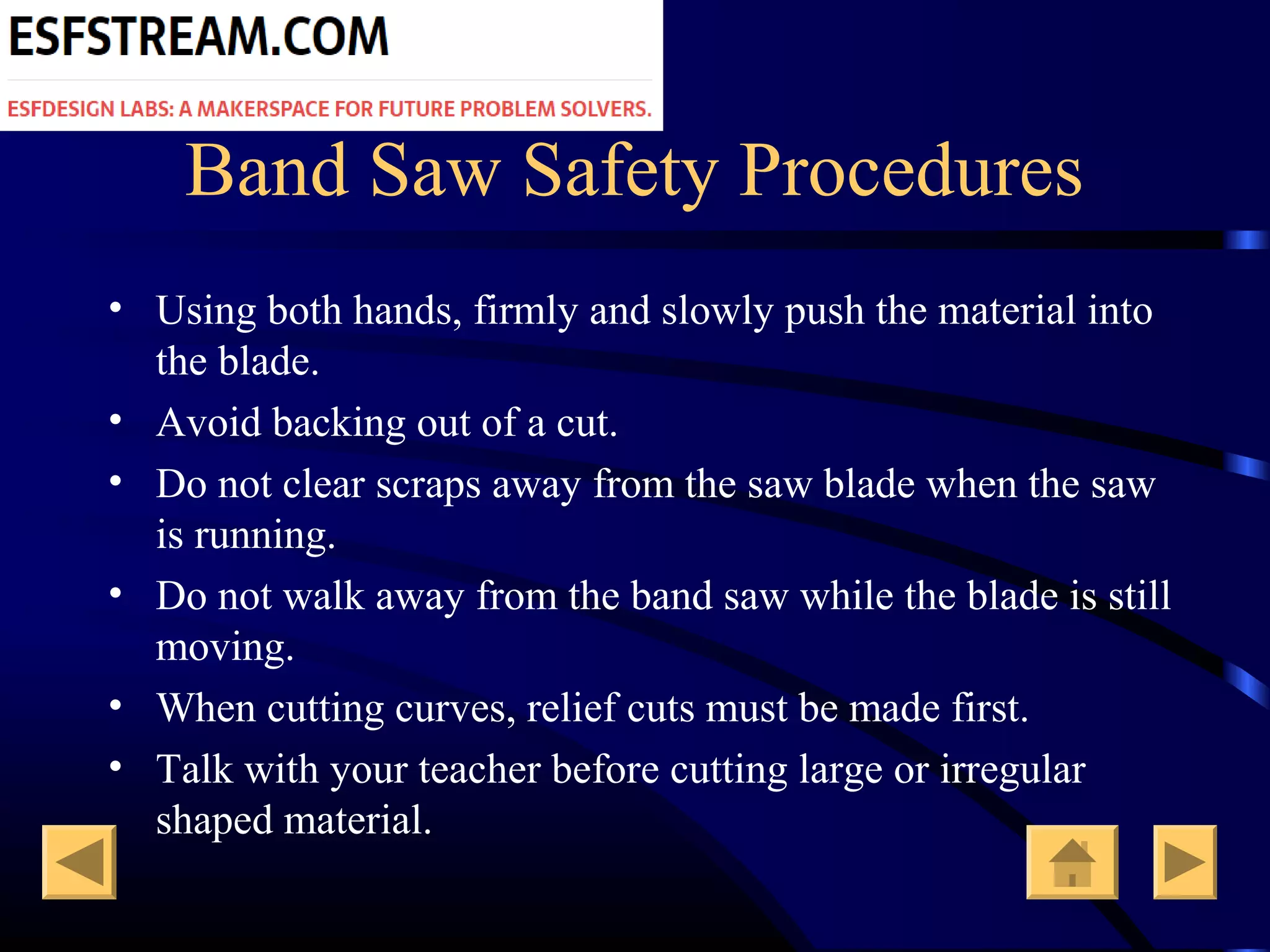
• Keep your hands outside
of the safety zone marked
on the table.
• Never place your hands
directly in front of the
blade or on the line to be
cut.
Safety
Zone
Band Saw Safety Procedures
• Using both hands, firmly and slowly push the material into
the blade.
• Avoid backing out of a cut.
• Do not clear scraps away from the saw blade when the saw
is running.
• Do not walk away from the band saw while the blade is still
moving.
• When cutting curves, relief cuts must be made first.
• Talk with your teacher before cutting large or irregular
shaped material.
Jig/Scroll Saw Safety Procedures
• Follow all general safety rules
before operating the jig/ scroll saw.
• Measure accurately and mark
material to be cut.
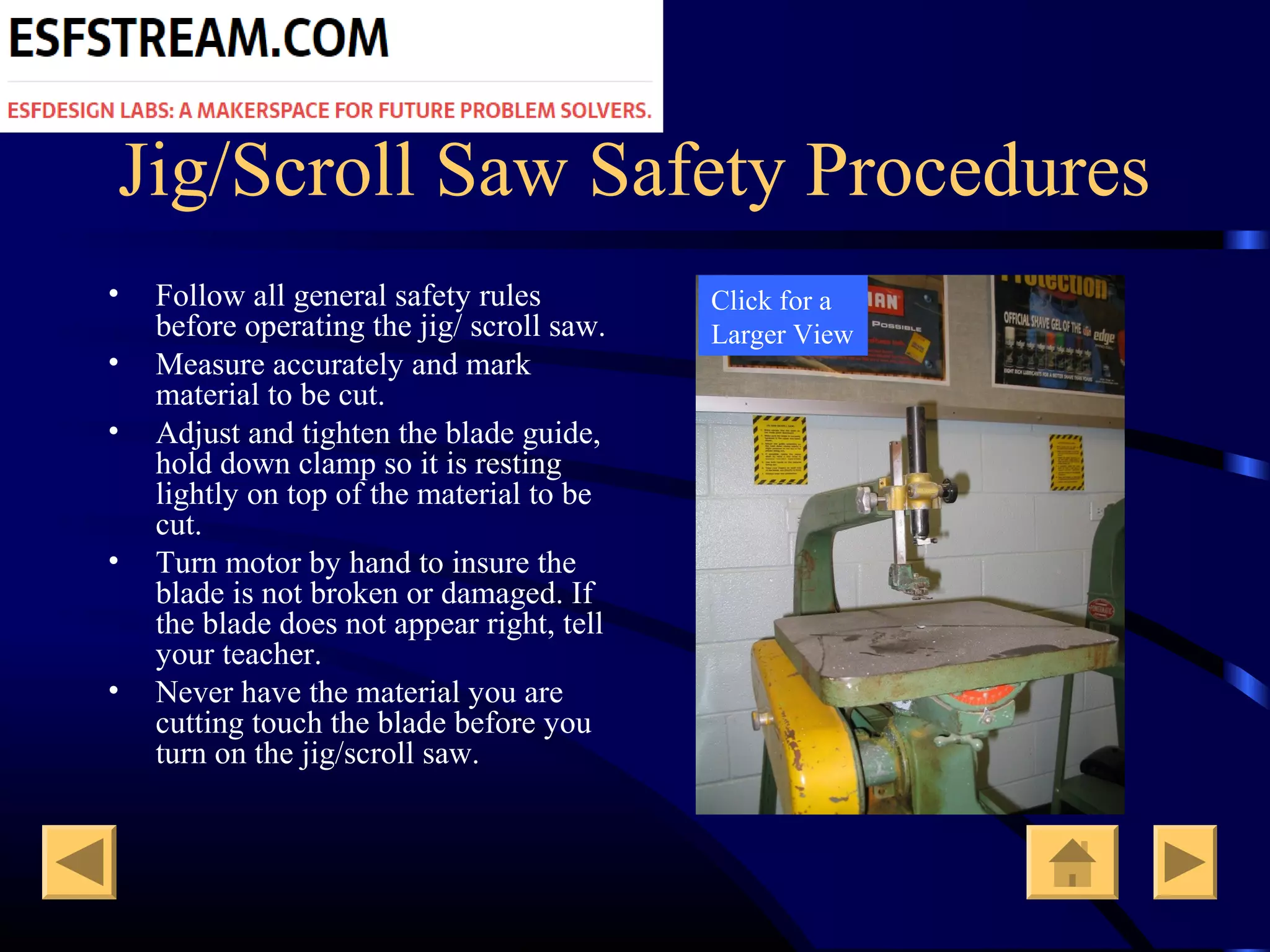
• Adjust and tighten the blade guide,
hold down clamp so it is resting
lightly on top of the material to be
cut.
• Turn motor by hand to insure the
blade is not broken or damaged. If
the blade does not appear right, tell
your teacher.
• Never have the material you are
cutting touch the blade before you
turn on the jig/scroll saw.
Click for a
Larger View
Jig/Scroll Saw Safety Procedures
• Keep your hands outside the safety zone marked on the
table.
• Using both hands, apply downward pressure and slowly
guide the material into the blade keeping fingers away
from the line you marked on the material.
• Do not clear scraps away from the saw blade when the saw
is running.
• Do not walk away from the jig/scroll saw while the blade
is still moving.
• Talk with your teacher before cutting large or irregular
shaped material.
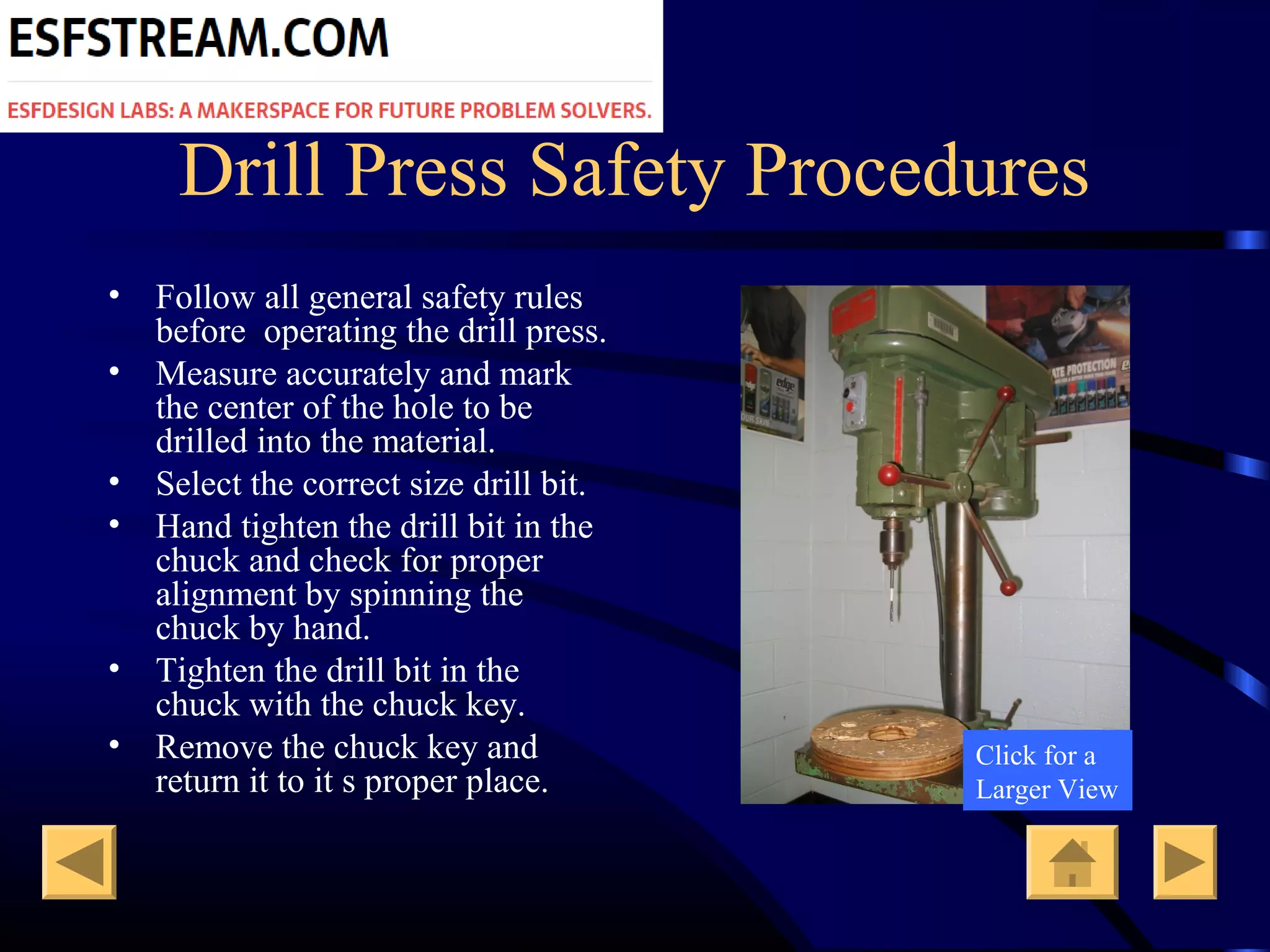
Drill Press Safety Procedures
• Follow all general safety rules
before operating the drill press.
• Measure accurately and mark
the center of the hole to be
drilled into the material.
• Select the correct size drill bit.
• Hand tighten the drill bit in the
chuck and check for proper
alignment by spinning the
chuck by hand.
• Tighten the drill bit in the
chuck with the chuck key.
• Remove the chuck key and
return it to it s proper place.
Click for a
Larger View
Drill Press Safety Procedures
• Place material on the table of
the drill press. Adjust table to
correct height.
• Align center mark on the
material with center of the drill
bit.
• Hold material securely on the
table with your left hand, some
material my need to be
clamped to the table. Check
with your teacher.
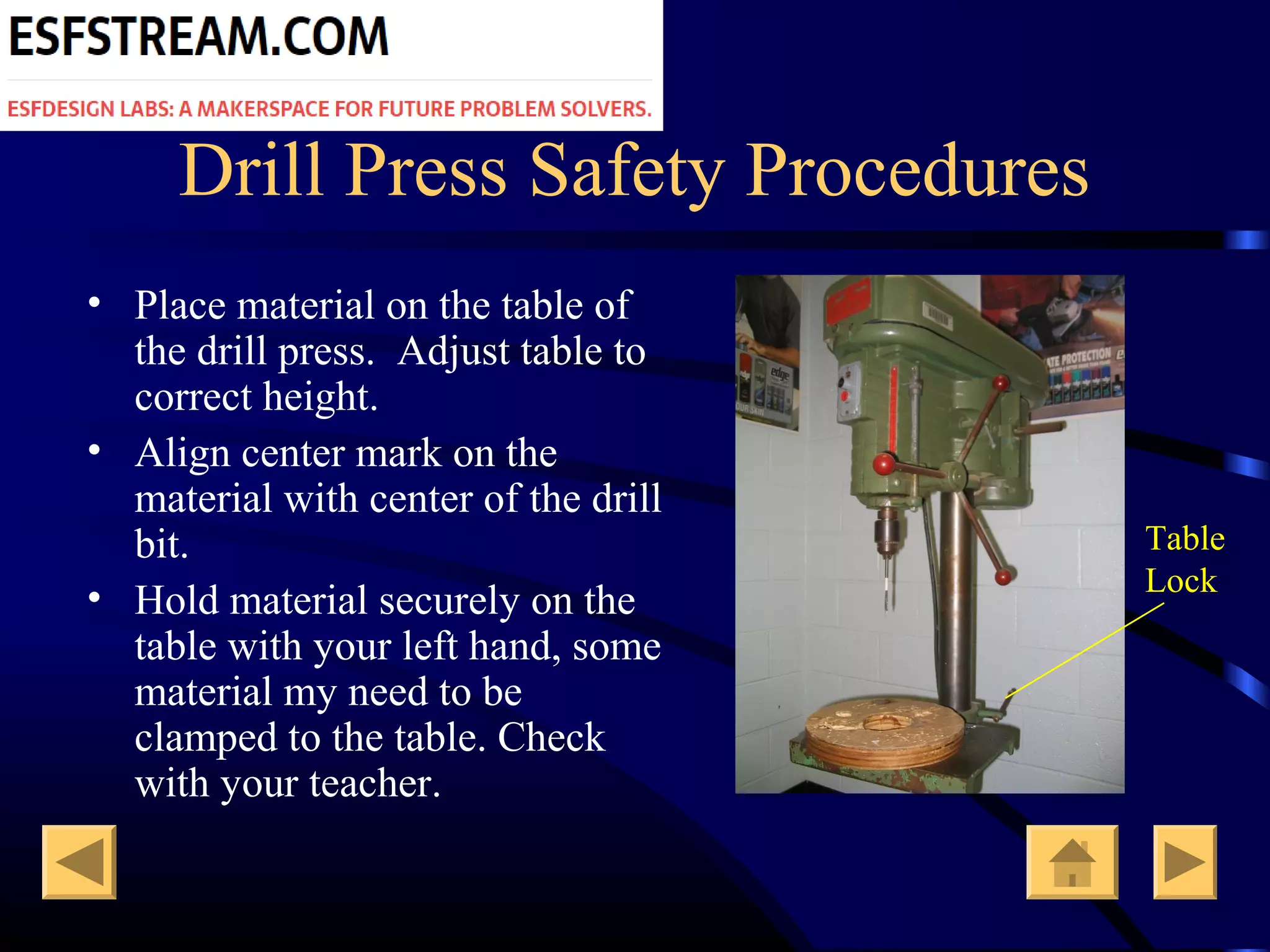
Table
Lock
Drill Press Safety Procedures
• Turn power on and place your right
hand on the feed wheel and apply
slow, even pressure to the feed
wheel while drilling into the
material.
• If the material gets caught in the
drill bit and starts to spin- turn off
power and stand back- do not try to
stop the material with your hands.
Tell your teacher.
• Be careful when removing the drill
bit because the drill bit may be hot
form the friction between the
material and the drill bit.
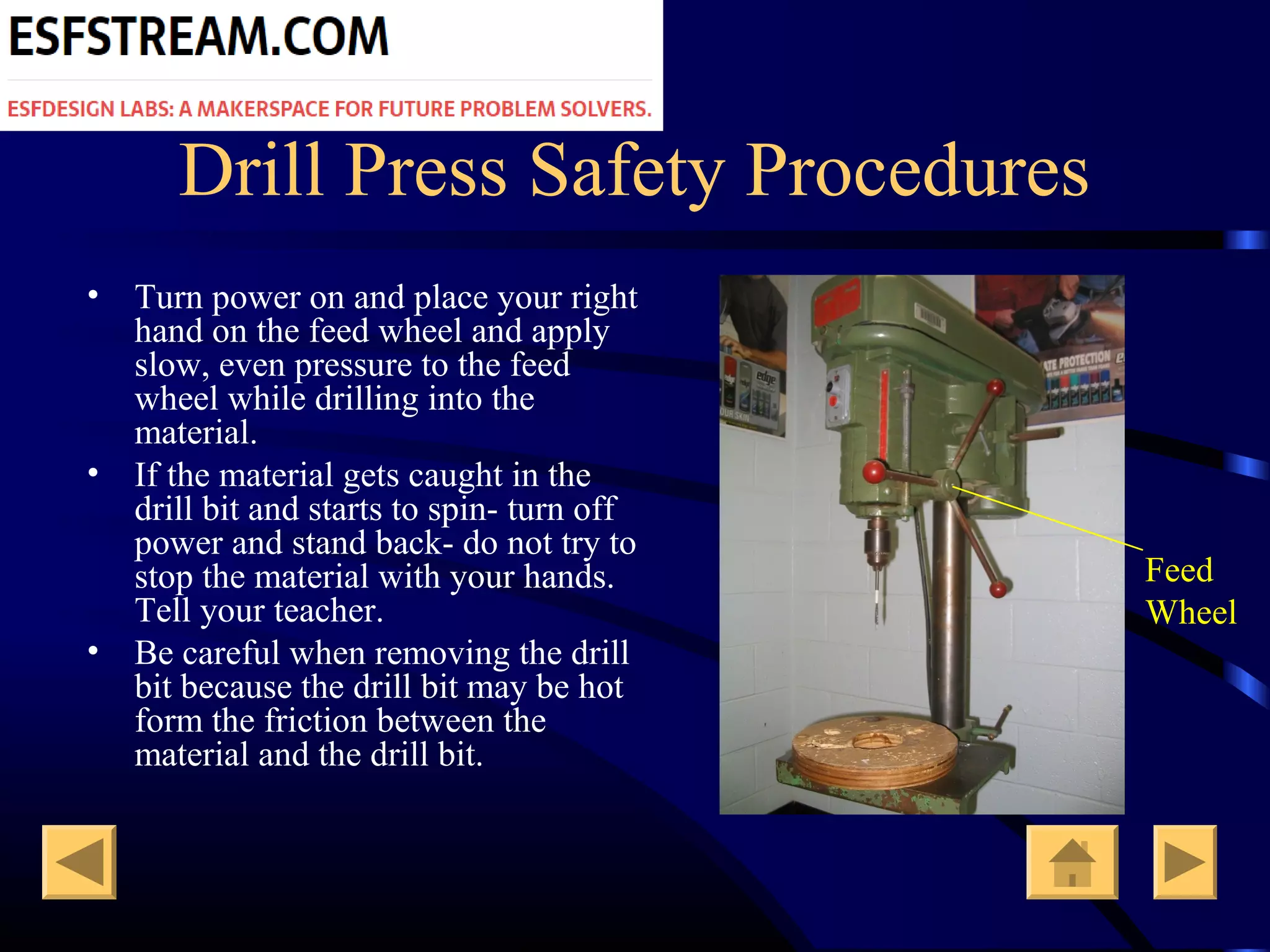
Feed
Wheel
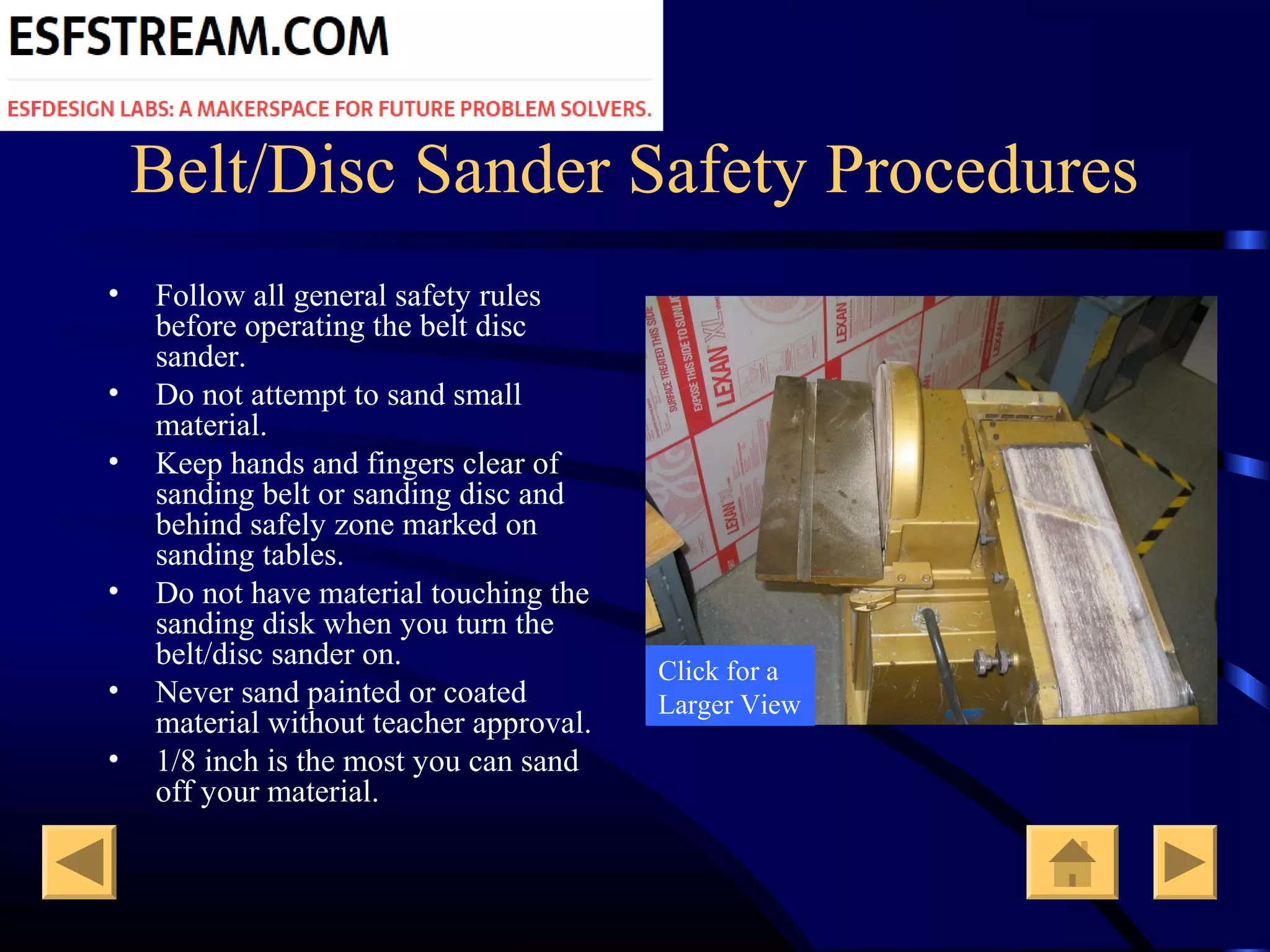
Belt/Disc Sander Safety Procedures
• Follow all general safety rules
before operating the belt disc
sander.
• Do not attempt to sand small
material.
• Keep hands and fingers clear of
sanding belt or sanding disc and
behind safely zone marked on
sanding tables.
• Do not have material touching the
sanding disk when you turn the
belt/disc sander on.
• Never sand painted or coated
material without teacher approval.
• 1/8 inch is the most you can sand
off your material.
Click for a
Larger View
Belt/Disc Sander Safety Procedures
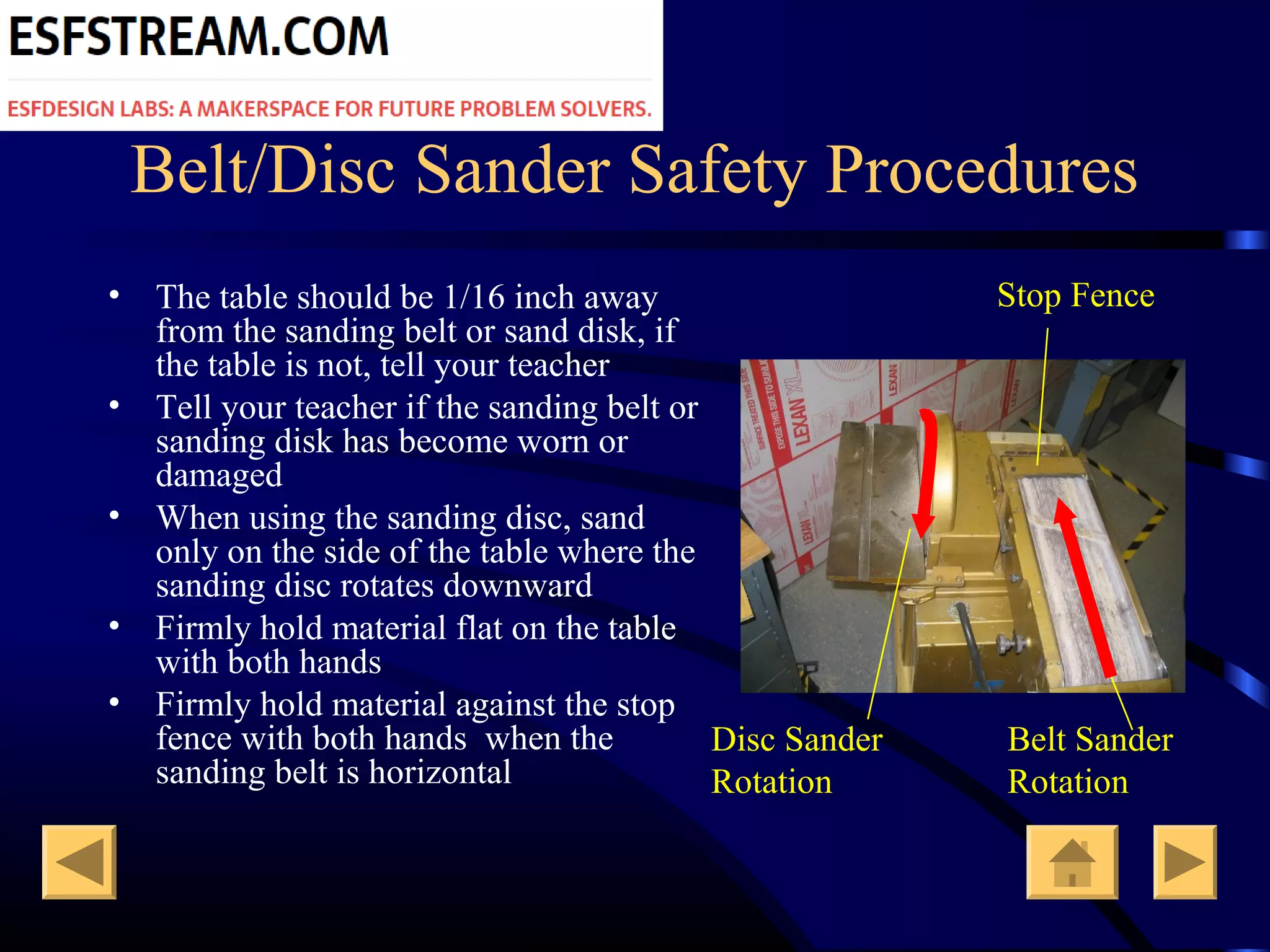
• The table should be 1/16 inch away
from the sanding belt or sand disk, if
the table is not, tell your teacher
• Tell your teacher if the sanding belt or
sanding disk has become worn or
damaged
• When using the sanding disc, sand
only on the side of the table where the
sanding disc rotates downward
• Firmly hold material flat on the table
with both hands
• Firmly hold material against the stop
fence with both hands when the
sanding belt is horizontal
Stop Fence
Disc Sander
Rotation
Belt Sander
Rotation
Belt/Disc Sander Safety Procedures
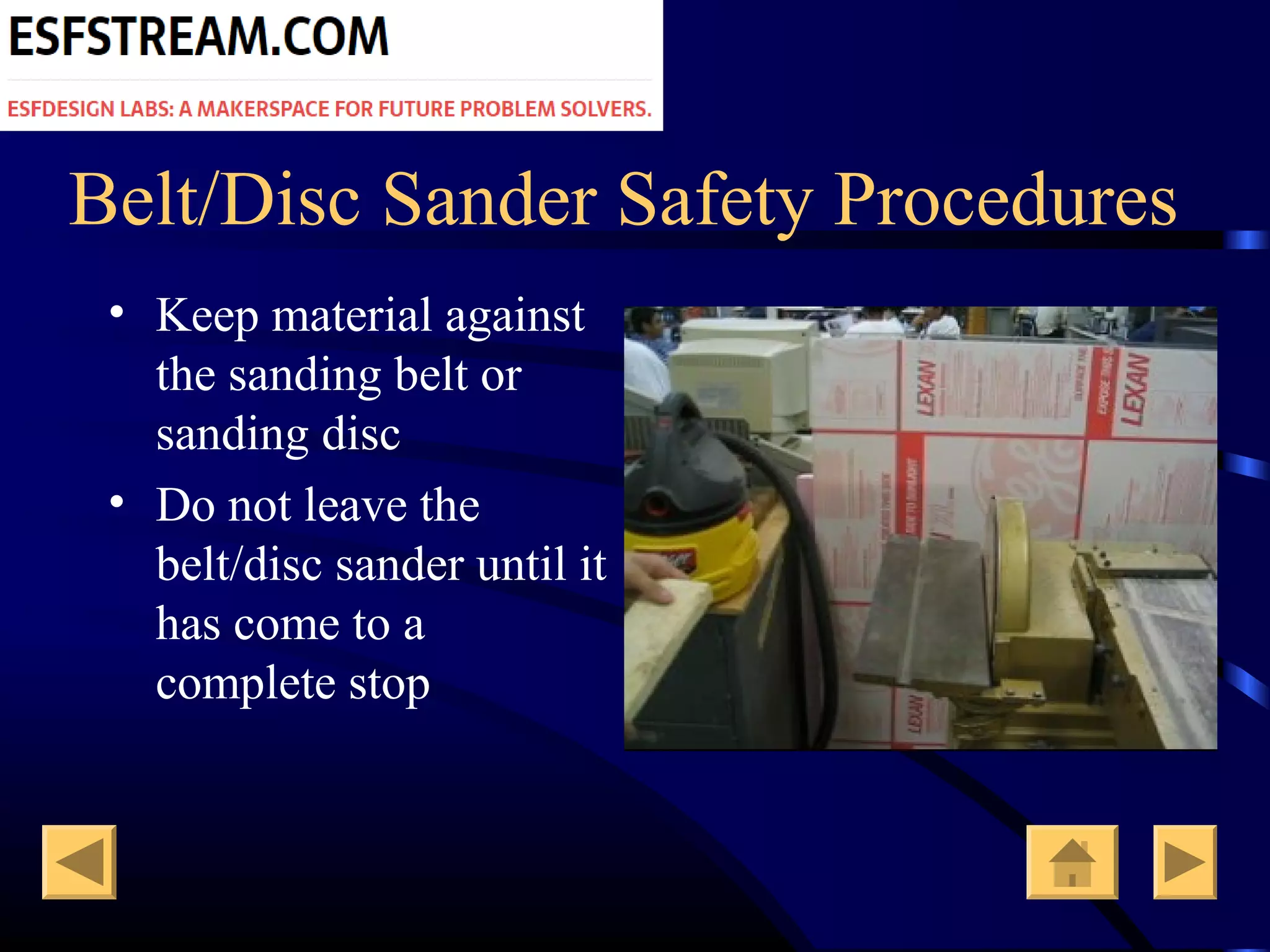
• Keep material against
the sanding belt or
sanding disc
• Do not leave the
belt/disc sander until it
has come to a
complete stop
ESFDesign Labs
Safety Procedures
~The End~

ESFDesign Labs General Machine Safety

  • 1.
  • 2.
    General Safety Procedures •Always wear eye protection in the lab. This is a Virginia state law. • Take care of loose clothing: tuck in shirts, roll up long sleeves, and take off jackets. • Remove loose jewelry. • Tie back long hair. • Obtain teacher permission before using any equipment.
  • 3.
    General Safety Procedures •Do not use equipment unless you know how it works – ask your teacher for help if you are not sure. • If anything breaks or appears to be working incorrectly tell your teacher. • All equipment must be turned off if the teacher leaves the lab. • Report all injuries to the teacher immediately. • Remember the ABC’s of safety: Always Be Careful.
  • 4.
    General Safety Procedures •No playing around or running in the lab. • Give the equipment your full attention. Concentrate, do not talk and do not look away from your work. • Do not distract the person operating the equipment. • Select the proper equipment for the job. • Always check everything yourself.
  • 5.
    General Safety Procedures •Make all adjustments to the equipment safety guards before the equipment is turned on. • Always turn equipment off when you are finished and be sure it has come to a complete stop before you walk away. • Observe the work zone; the work zone is the area that has been marked on the floor around each piece of equipment. • Clean up after yourself and return all material and equipment to their proper place.
  • 6.
    Band Saw SafetyProcedures • Follow all general safety rules before operating the band saw. • Measure accurately and mark your material where it is to be cut. • Adjust the blade guide ¼ inch above the material being cut before turning on the band saw. Click for a Larger View
  • 7.
    Band Saw SafetyProcedures • Never have the material you are cutting touch the blade before you turn on the band saw. • Keep your hands outside of the safety zone marked on the table. • Never place your hands directly in front of the blade or on the line to be cut. Safety Zone
  • 8.
    Band Saw SafetyProcedures • Using both hands, firmly and slowly push the material into the blade. • Avoid backing out of a cut. • Do not clear scraps away from the saw blade when the saw is running. • Do not walk away from the band saw while the blade is still moving. • When cutting curves, relief cuts must be made first. • Talk with your teacher before cutting large or irregular shaped material.
  • 9.
    Jig/Scroll Saw SafetyProcedures • Follow all general safety rules before operating the jig/ scroll saw. • Measure accurately and mark material to be cut. • Adjust and tighten the blade guide, hold down clamp so it is resting lightly on top of the material to be cut. • Turn motor by hand to insure the blade is not broken or damaged. If the blade does not appear right, tell your teacher. • Never have the material you are cutting touch the blade before you turn on the jig/scroll saw. Click for a Larger View
  • 10.
    Jig/Scroll Saw SafetyProcedures • Keep your hands outside the safety zone marked on the table. • Using both hands, apply downward pressure and slowly guide the material into the blade keeping fingers away from the line you marked on the material. • Do not clear scraps away from the saw blade when the saw is running. • Do not walk away from the jig/scroll saw while the blade is still moving. • Talk with your teacher before cutting large or irregular shaped material.
  • 11.
    Drill Press SafetyProcedures • Follow all general safety rules before operating the drill press. • Measure accurately and mark the center of the hole to be drilled into the material. • Select the correct size drill bit. • Hand tighten the drill bit in the chuck and check for proper alignment by spinning the chuck by hand. • Tighten the drill bit in the chuck with the chuck key. • Remove the chuck key and return it to it s proper place. Click for a Larger View
  • 12.
    Drill Press SafetyProcedures • Place material on the table of the drill press. Adjust table to correct height. • Align center mark on the material with center of the drill bit. • Hold material securely on the table with your left hand, some material my need to be clamped to the table. Check with your teacher. Table Lock
  • 13.
    Drill Press SafetyProcedures • Turn power on and place your right hand on the feed wheel and apply slow, even pressure to the feed wheel while drilling into the material. • If the material gets caught in the drill bit and starts to spin- turn off power and stand back- do not try to stop the material with your hands. Tell your teacher. • Be careful when removing the drill bit because the drill bit may be hot form the friction between the material and the drill bit. Feed Wheel
  • 14.
    Belt/Disc Sander SafetyProcedures • Follow all general safety rules before operating the belt disc sander. • Do not attempt to sand small material. • Keep hands and fingers clear of sanding belt or sanding disc and behind safely zone marked on sanding tables. • Do not have material touching the sanding disk when you turn the belt/disc sander on. • Never sand painted or coated material without teacher approval. • 1/8 inch is the most you can sand off your material. Click for a Larger View
  • 15.
    Belt/Disc Sander SafetyProcedures • The table should be 1/16 inch away from the sanding belt or sand disk, if the table is not, tell your teacher • Tell your teacher if the sanding belt or sanding disk has become worn or damaged • When using the sanding disc, sand only on the side of the table where the sanding disc rotates downward • Firmly hold material flat on the table with both hands • Firmly hold material against the stop fence with both hands when the sanding belt is horizontal Stop Fence Disc Sander Rotation Belt Sander Rotation
  • 16.
    Belt/Disc Sander SafetyProcedures • Keep material against the sanding belt or sanding disc • Do not leave the belt/disc sander until it has come to a complete stop
  • 17.