ES6 JavaScript
Rob Lund
Classes
class Panel {
constructor() {
// make the thing
}
addItem(toAdd) {
// add the item
}
}
Arrow Functions
arrayOfSomeStuff.filter(item => item < 20)
toggle.addEventListener('click', (evt) => {
// toggle the toggle
})
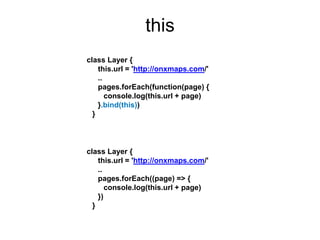
this
class Layer {
this.url = 'http://onxmaps.com/'
..
pages.forEach(function(page) {
console.log(this.url + page)
}.bind(this))
}
class Layer {
this.url = 'http://onxmaps.com/'
..
pages.forEach((page) => {
console.log(this.url + page)
})
}
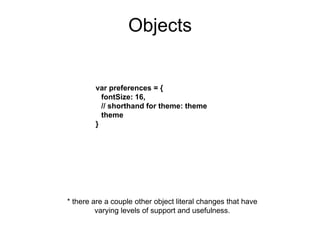
Objects
var preferences = {
fontSize: 16,
// shorthand for theme: theme
theme
}
* there are a couple other object literal changes that have
varying levels of support and usefulness.
Template Strings
`using the backticks`
`now supports
multiline
strings`
`added ${adjective} support for interpolation`
Destructuring
var [name, type] = ['rob', 'shoe']
var {label, activity} = getActivity()
var [title, , link] = ['señor', 'rob', 'http://...']
function findAccount({name: customerName}) {
console.log(customerName)
}
Parameter Handling
// defaults
function getBook(title, version = 1) { .. }
// rest or splat operator
function addShoes(color, ...attributes) {
// attributes is an array containing parameters 2+
attributes.forEach(..)
}
// spread operator
function removeItem(name, type, element) { .. }
removeItem(...['walrus', 'shoe', panelElement])
// spread can also be used in other areas, like
// array or object literals (eg. simple concat)
var allLayers = [layer1, layer2, ...everythingElse]
const & let
// block-scoped read only values
const name = 'walrus'
// block-scoped variable values
let uri = '/account/'
Do not become part of the window object like var
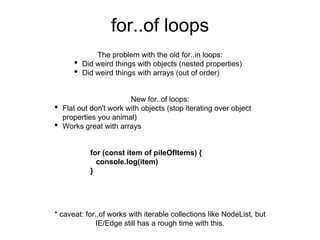
for..of loops
for (const item of pileOfItems) {
console.log(item)
}
The problem with the old for..in loops:
• Did weird things with objects (nested properties)
• Did weird things with arrays (out of order)
New for..of loops:
• Flat out don't work with objects (stop iterating over object
properties you animal)
• Works great with arrays
* caveat: for..of works with iterable collections like NodeList, but
IE/Edge still has a rough time with this.
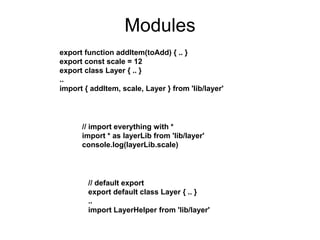
Modules
export function addItem(toAdd) { .. }
export const scale = 12
export class Layer { .. }
..
import { addItem, scale, Layer } from 'lib/layer'
// import everything with *
import * as layerLib from 'lib/layer'
console.log(layerLib.scale)
// default export
export default class Layer { .. }
..
import LayerHelper from 'lib/layer'
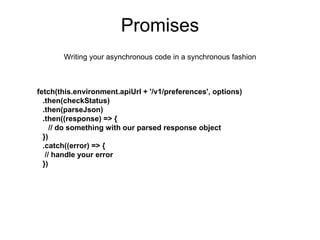
Promises
fetch(this.environment.apiUrl + '/v1/preferences', options)
.then(checkStatus)
.then(parseJson)
.then((response) => {
// do something with our parsed response object
})
.catch((error) => {
// handle your error
})
Writing your asynchronous code in a synchronous fashion
Other
• Map, Set data structures
• New helpful Math APIs
• Unicode variables and matching
• Generators
Thanks.
(Happy Valentine's Day)

ES6 Primer

  • 1.
  • 2.
    Classes class Panel { constructor(){ // make the thing } addItem(toAdd) { // add the item } }
  • 3.
    Arrow Functions arrayOfSomeStuff.filter(item =>item < 20) toggle.addEventListener('click', (evt) => { // toggle the toggle })
  • 4.
    this class Layer { this.url= 'http://onxmaps.com/' .. pages.forEach(function(page) { console.log(this.url + page) }.bind(this)) } class Layer { this.url = 'http://onxmaps.com/' .. pages.forEach((page) => { console.log(this.url + page) }) }
  • 5.
    Objects var preferences ={ fontSize: 16, // shorthand for theme: theme theme } * there are a couple other object literal changes that have varying levels of support and usefulness.
  • 6.
    Template Strings `using thebackticks` `now supports multiline strings` `added ${adjective} support for interpolation`
  • 7.
    Destructuring var [name, type]= ['rob', 'shoe'] var {label, activity} = getActivity() var [title, , link] = ['señor', 'rob', 'http://...'] function findAccount({name: customerName}) { console.log(customerName) }
  • 8.
    Parameter Handling // defaults functiongetBook(title, version = 1) { .. } // rest or splat operator function addShoes(color, ...attributes) { // attributes is an array containing parameters 2+ attributes.forEach(..) } // spread operator function removeItem(name, type, element) { .. } removeItem(...['walrus', 'shoe', panelElement]) // spread can also be used in other areas, like // array or object literals (eg. simple concat) var allLayers = [layer1, layer2, ...everythingElse]
  • 9.
    const & let //block-scoped read only values const name = 'walrus' // block-scoped variable values let uri = '/account/' Do not become part of the window object like var
  • 10.
    for..of loops for (constitem of pileOfItems) { console.log(item) } The problem with the old for..in loops: • Did weird things with objects (nested properties) • Did weird things with arrays (out of order) New for..of loops: • Flat out don't work with objects (stop iterating over object properties you animal) • Works great with arrays * caveat: for..of works with iterable collections like NodeList, but IE/Edge still has a rough time with this.
  • 11.
    Modules export function addItem(toAdd){ .. } export const scale = 12 export class Layer { .. } .. import { addItem, scale, Layer } from 'lib/layer' // import everything with * import * as layerLib from 'lib/layer' console.log(layerLib.scale) // default export export default class Layer { .. } .. import LayerHelper from 'lib/layer'
  • 12.
    Promises fetch(this.environment.apiUrl + '/v1/preferences',options) .then(checkStatus) .then(parseJson) .then((response) => { // do something with our parsed response object }) .catch((error) => { // handle your error }) Writing your asynchronous code in a synchronous fashion
  • 13.
    Other • Map, Setdata structures • New helpful Math APIs • Unicode variables and matching • Generators
  • 14.