Green Business Models
Setting the scene…
11 December 2013
Key statements
Green business models (GBM) contain a promising
economic as well as green potential
The elusiveness of the GBM concept is a significant
barrier for its further dissemination

Page 2

Green Business Models
Page 3

Green Business Models
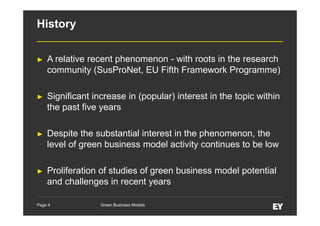
History
►

A relative recent phenomenon - with roots in the research
community (SusProNet, EU Fifth Framework Programme)

►

Significant increase in (popular) interest in the topic within
the past five years

►

Despite the substantial interest in the phenomenon, the
level of green business model activity continues to be low

►

Proliferation of studies of green business model potential
and challenges in recent years

Page 4

Green Business Models
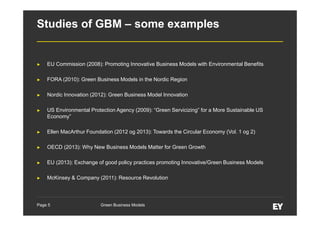
Studies of GBM – some examples

►

EU Commission (2008): Promoting Innovative Business Models with Environmental Benefits

►

FORA (2010): Green Business Models in the Nordic Region

►

Nordic Innovation (2012): Green Business Model Innovation

►

US Environmental Protection Agency (2009): “Green Servicizing” for a More Sustainable US
Economy”

►

Ellen MacArthur Foundation (2012 og 2013): Towards the Circular Economy (Vol. 1 og 2)

►

OECD (2013): Why New Business Models Matter for Green Growth

►

EU (2013): Exchange of good policy practices promoting Innovative/Green Business Models

►

McKinsey & Company (2011): Resource Revolution

Page 5

Green Business Models
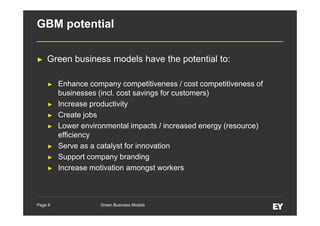
GBM potential
►

Green business models have the potential to:
►

►
►
►

►
►
►

Page 6

Enhance company competitiveness / cost competitiveness of
businesses (incl. cost savings for customers)
Increase productivity
Create jobs
Lower environmental impacts / increased energy (resource)
efficiency
Serve as a catalyst for innovation
Support company branding
Increase motivation amongst workers

Green Business Models
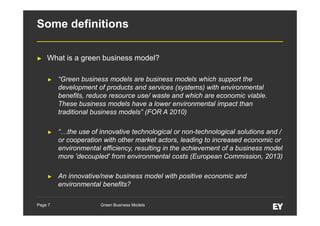
Some definitions
►

What is a green business model?
►

“Green business models are business models which support the
development of products and services (systems) with environmental
benefits, reduce resource use/ waste and which are economic viable.
These business models have a lower environmental impact than
traditional business models” (FOR A 2010)

►

“…the use of innovative technological or non-technological solutions and /
or cooperation with other market actors, leading to increased economic or
environmental efficiency, resulting in the achievement of a business model
more 'decoupled' from environmental costs (European Commission, 2013)

►

An innovative/new business model with positive economic and
environmental benefits?

Page 7

Green Business Models
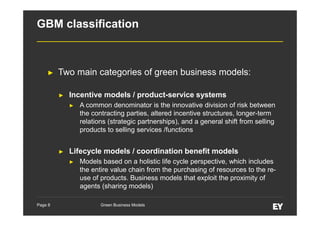
GBM classification

►

Two main categories of green business models:
►

Incentive models / product-service systems
►

►

Lifecycle models / coordination benefit models
►

Page 8

A common denominator is the innovative division of risk between
the contracting parties, altered incentive structures, longer-term
relations (strategic partnerships), and a general shift from selling
products to selling services /functions

Models based on a holistic life cycle perspective, which includes
the entire value chain from the purchasing of resources to the reuse of products. Business models that exploit the proximity of
agents (sharing models)
Green Business Models
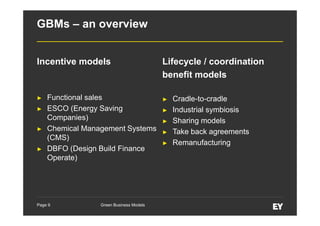
GBMs – an overview
Incentive models

►
►

►

►

Functional sales
ESCO (Energy Saving
Companies)
Chemical Management Systems
(CMS)
DBFO (Design Build Finance
Operate)

Page 9

Green Business Models

Lifecycle / coordination
benefit models
►
►
►
►
►

Cradle-to-cradle
Industrial symbiosis
Sharing models
Take back agreements
Remanufacturing
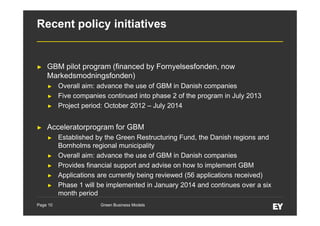
Recent policy initiatives

►

GBM pilot program (financed by Fornyelsesfonden, now
Markedsmodningsfonden)
►
►
►

►

Overall aim: advance the use of GBM in Danish companies
Five companies continued into phase 2 of the program in July 2013
Project period: October 2012 – July 2014

Acceleratorprogram for GBM
►

►
►
►
►

Page 10

Established by the Green Restructuring Fund, the Danish regions and
Bornholms regional municipality
Overall aim: advance the use of GBM in Danish companies
Provides financial support and advise on how to implement GBM
Applications are currently being reviewed (56 applications received)
Phase 1 will be implemented in January 2014 and continues over a six
month period
Green Business Models
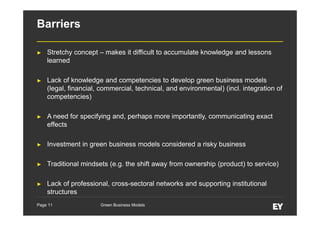
Barriers
►

Stretchy concept – makes it difficult to accumulate knowledge and lessons
learned

►

Lack of knowledge and competencies to develop green business models
(legal, financial, commercial, technical, and environmental) (incl. integration of
competencies)

►

A need for specifying and, perhaps more importantly, communicating exact
effects

►

Investment in green business models considered a risky business

►

Traditional mindsets (e.g. the shift away from ownership (product) to service)

►

Lack of professional, cross-sectoral networks and supporting institutional
structures

Page 11

Green Business Models
Contact information

Guri Weihe | Manager
EY P/S
Gyngemose Parkvej 50
2860 Søborg
Denmark
Cell: +45 5158 2897 | Office: +45 7010 8050 |
Mail: guri.weihe@dk.ey.com
Website: http://www.ey.com

Page 12

Green Business Models

Ernst&young

  • 1.
    Green Business Models Settingthe scene… 11 December 2013
  • 2.
    Key statements Green businessmodels (GBM) contain a promising economic as well as green potential The elusiveness of the GBM concept is a significant barrier for its further dissemination Page 2 Green Business Models
  • 3.
  • 4.
    History ► A relative recentphenomenon - with roots in the research community (SusProNet, EU Fifth Framework Programme) ► Significant increase in (popular) interest in the topic within the past five years ► Despite the substantial interest in the phenomenon, the level of green business model activity continues to be low ► Proliferation of studies of green business model potential and challenges in recent years Page 4 Green Business Models
  • 5.
    Studies of GBM– some examples ► EU Commission (2008): Promoting Innovative Business Models with Environmental Benefits ► FORA (2010): Green Business Models in the Nordic Region ► Nordic Innovation (2012): Green Business Model Innovation ► US Environmental Protection Agency (2009): “Green Servicizing” for a More Sustainable US Economy” ► Ellen MacArthur Foundation (2012 og 2013): Towards the Circular Economy (Vol. 1 og 2) ► OECD (2013): Why New Business Models Matter for Green Growth ► EU (2013): Exchange of good policy practices promoting Innovative/Green Business Models ► McKinsey & Company (2011): Resource Revolution Page 5 Green Business Models
  • 6.
    GBM potential ► Green businessmodels have the potential to: ► ► ► ► ► ► ► Page 6 Enhance company competitiveness / cost competitiveness of businesses (incl. cost savings for customers) Increase productivity Create jobs Lower environmental impacts / increased energy (resource) efficiency Serve as a catalyst for innovation Support company branding Increase motivation amongst workers Green Business Models
  • 7.
    Some definitions ► What isa green business model? ► “Green business models are business models which support the development of products and services (systems) with environmental benefits, reduce resource use/ waste and which are economic viable. These business models have a lower environmental impact than traditional business models” (FOR A 2010) ► “…the use of innovative technological or non-technological solutions and / or cooperation with other market actors, leading to increased economic or environmental efficiency, resulting in the achievement of a business model more 'decoupled' from environmental costs (European Commission, 2013) ► An innovative/new business model with positive economic and environmental benefits? Page 7 Green Business Models
  • 8.
    GBM classification ► Two maincategories of green business models: ► Incentive models / product-service systems ► ► Lifecycle models / coordination benefit models ► Page 8 A common denominator is the innovative division of risk between the contracting parties, altered incentive structures, longer-term relations (strategic partnerships), and a general shift from selling products to selling services /functions Models based on a holistic life cycle perspective, which includes the entire value chain from the purchasing of resources to the reuse of products. Business models that exploit the proximity of agents (sharing models) Green Business Models
  • 9.
    GBMs – anoverview Incentive models ► ► ► ► Functional sales ESCO (Energy Saving Companies) Chemical Management Systems (CMS) DBFO (Design Build Finance Operate) Page 9 Green Business Models Lifecycle / coordination benefit models ► ► ► ► ► Cradle-to-cradle Industrial symbiosis Sharing models Take back agreements Remanufacturing
  • 10.
    Recent policy initiatives ► GBMpilot program (financed by Fornyelsesfonden, now Markedsmodningsfonden) ► ► ► ► Overall aim: advance the use of GBM in Danish companies Five companies continued into phase 2 of the program in July 2013 Project period: October 2012 – July 2014 Acceleratorprogram for GBM ► ► ► ► ► Page 10 Established by the Green Restructuring Fund, the Danish regions and Bornholms regional municipality Overall aim: advance the use of GBM in Danish companies Provides financial support and advise on how to implement GBM Applications are currently being reviewed (56 applications received) Phase 1 will be implemented in January 2014 and continues over a six month period Green Business Models
  • 11.
    Barriers ► Stretchy concept –makes it difficult to accumulate knowledge and lessons learned ► Lack of knowledge and competencies to develop green business models (legal, financial, commercial, technical, and environmental) (incl. integration of competencies) ► A need for specifying and, perhaps more importantly, communicating exact effects ► Investment in green business models considered a risky business ► Traditional mindsets (e.g. the shift away from ownership (product) to service) ► Lack of professional, cross-sectoral networks and supporting institutional structures Page 11 Green Business Models
  • 12.
    Contact information Guri Weihe| Manager EY P/S Gyngemose Parkvej 50 2860 Søborg Denmark Cell: +45 5158 2897 | Office: +45 7010 8050 | Mail: guri.weihe@dk.ey.com Website: http://www.ey.com Page 12 Green Business Models