● Erik Erikson’stheory of psychosocial
development is one of the best-known theories
of personality in psychology.
● Much like Sigmund Freud, Erikson believed
that personality develops in a series of
stages.
● Unlike Freud’s theory of psychosexual
stages, Erikson’s theory describes the
impact of social experience across the
whole lifespan.
3.
● One ofthe main elements of Erikson’s psychosocial
stage theory is the development of ego identity.
● Ego identity is the conscious sense of self that we
develop through social interaction.
● According to Erikson, our ego identity is
constantly changing due to new experience and
information we acquire in our daily
interactions with others.
● In addition to ego identity, Erikson also believed
4.
● Each stagein Erikson’s theory is
concerned with becoming competent in an
area of life.
● If the stage is handled well, the person will feel
a sense of mastery, which he sometimes
referred to as ego strength or ego quality
● If the stage is managed poorly, the person will
emerge with a sense of inadequacy.
5.
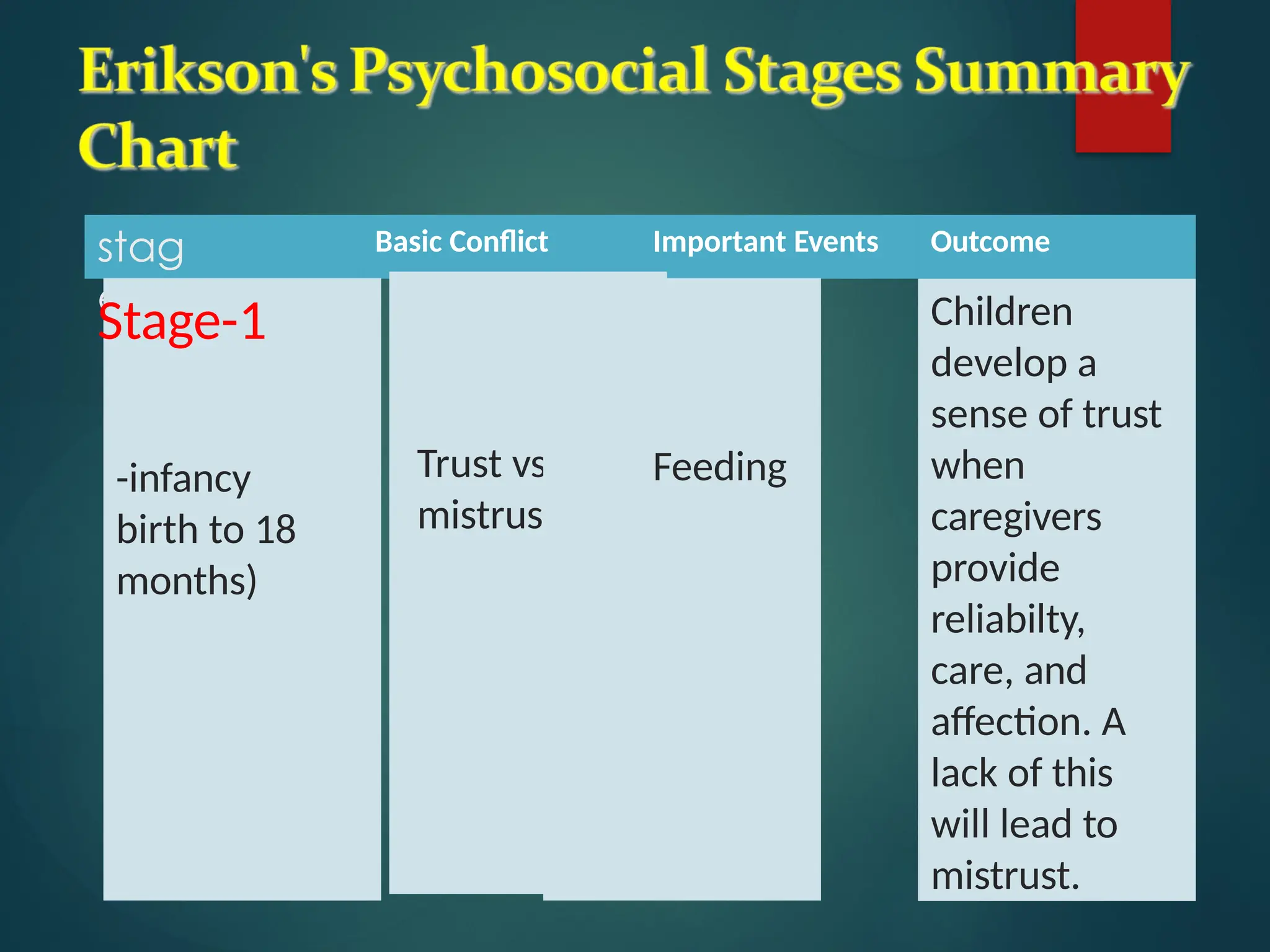
stag
e
Basic Conflict ImportantEvents Outcome
Stage-1
-infancy
birth to 18
months)
Trust vs.
mistrustt
Feeding
Children
develop a
sense of trust
when
caregivers
provide
reliabilty,
care, and
affection. A
lack of this
will lead to
mistrust.
6.
Stage-2
Early
Childhood (2
)to 3years
Autonomy vs.
Shame and
Doubt
Toilet Training
Children need
to develop a
sense of
personal
control over
physical skills
and a sense of
independence.
Success leads
to feelings of
autonomy,
failure results
in feelings of
shame and
.doubt
7.
Stage-3
Preschool
(3 to 5years)
Initiative vs.
Guilt
Exploration
Children need
to begin
asserting
control and
power over the
environment.
Success in this
stage leads to a
sense of
purpose.
Children who
try to exert too
much power
experience
disapproval,
resulting in a
sense of guilt.
8.
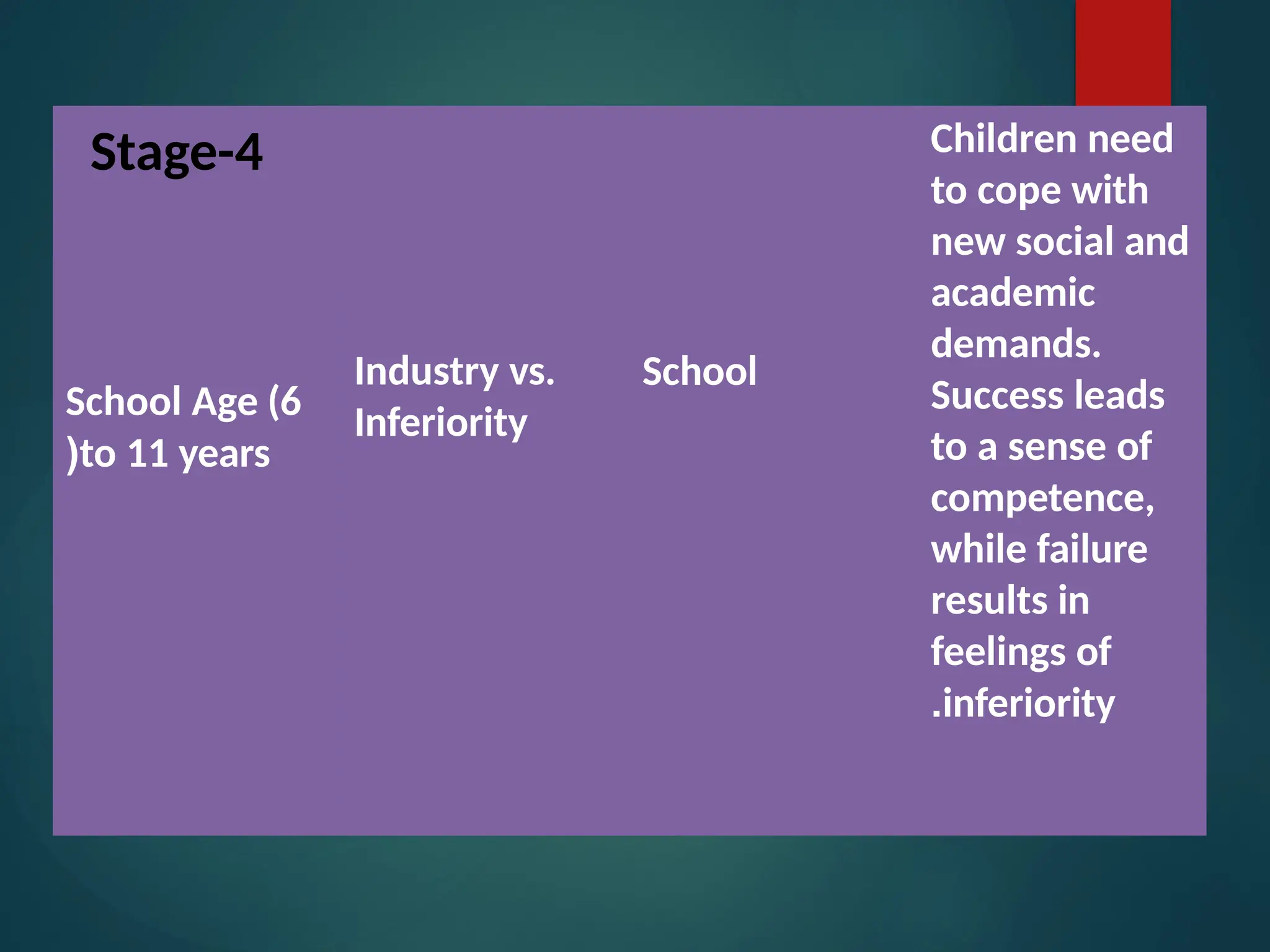
Stage-4
School Age (6
)to11 years
Industry vs.
Inferiority
School
Children need
to cope with
new social and
academic
demands.
Success leads
to a sense of
competence,
while failure
results in
feelings of
.inferiority
9.
Stage-5
Adolescenc
e (12 to18
years)
Identity
vs.
Role
Confusion
Social
Relationships
Teens needs to
develop a sense of
self and personal
identity. Success
leads to an ability
to stay true to
yourself, while
failure leads to role
confusion and a
weak sense of self.
10.
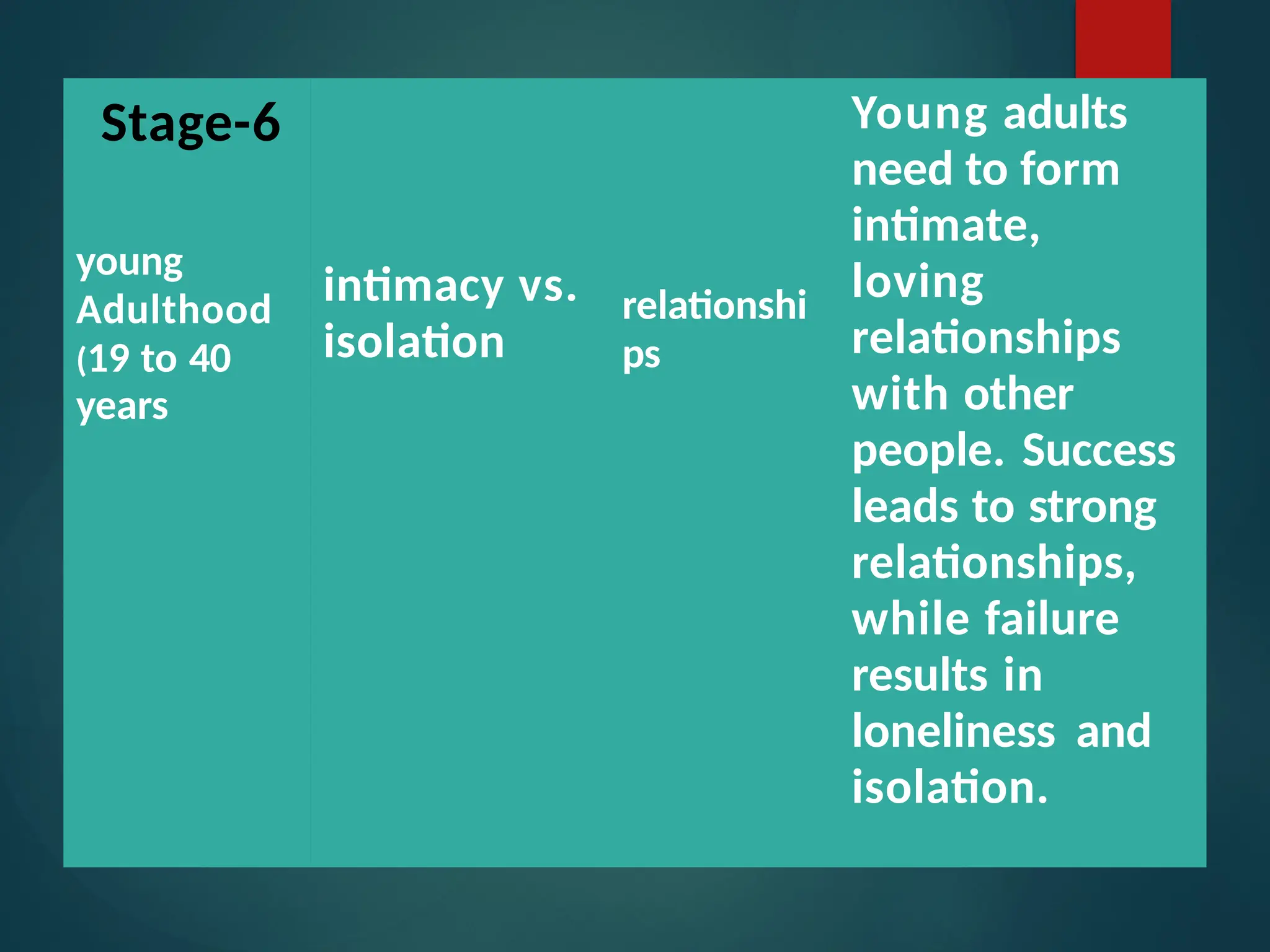
Stage-6
young
Adulthood
(19 to 40
years
intimacyvs.
isolation
relationshi
ps
Young adults
need to form
intimate,
loving
relationships
with other
people. Success
leads to strong
relationships,
while failure
results in
loneliness and
isolation.
11.
Sta
ge-
7
Middle
Adulthoo
d (40 to
)65years
Generativity
vs. Stagnation
Work and
Parenthood
Adults need to create
or nurture things that
will outlast them,
often by having
children or creating a
positive change that
benefits other people.
Success leads to
feelings of usefulness
and accomplishment,
while failure results in
shallow involvement
.in the world
12.
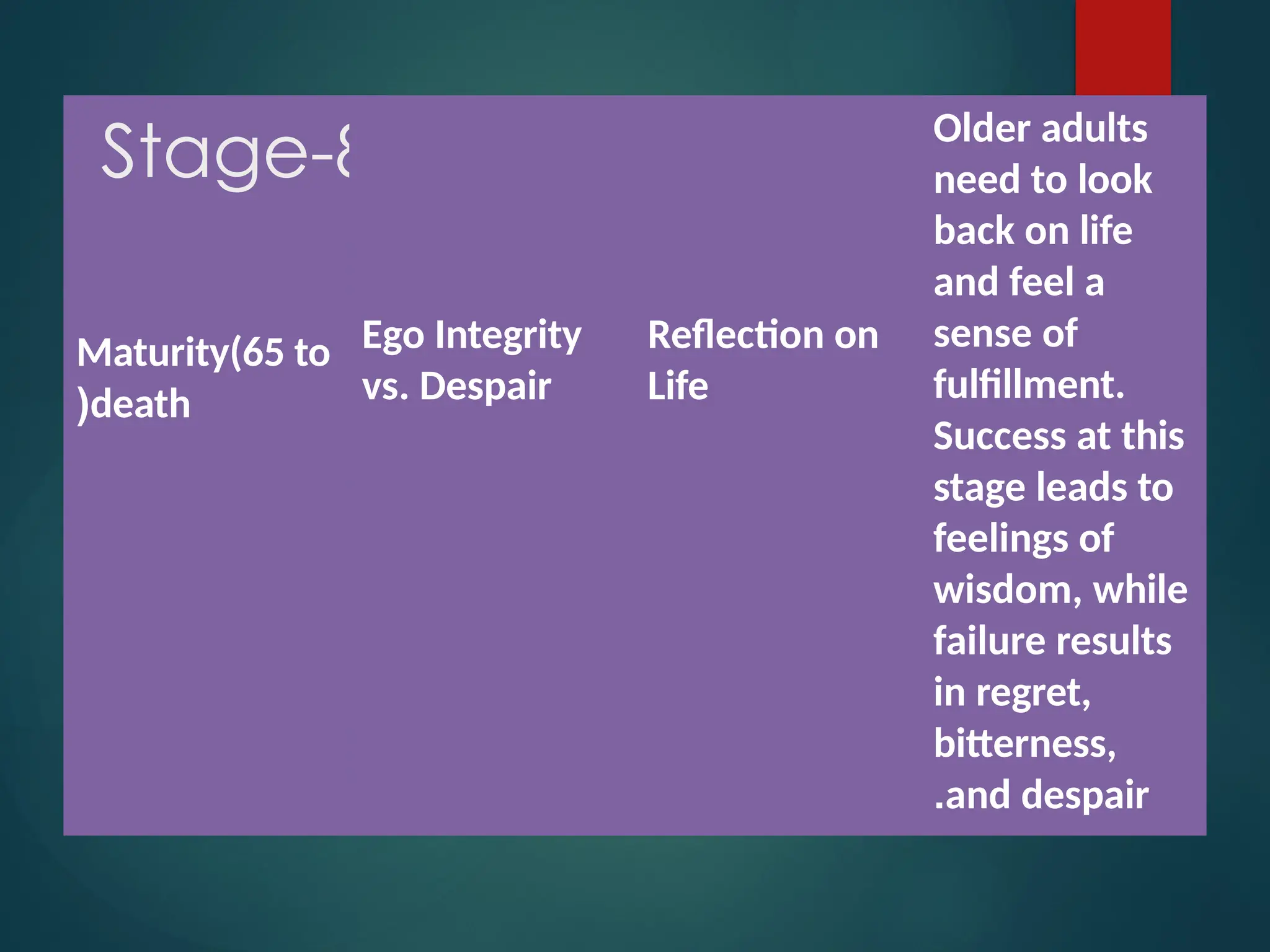
Stage-8
Maturity(65 to
)death
Ego Integrity
vs.Despair
Reflection on
Life
Older adults
need to look
back on life
and feel a
sense of
fulfillment.
Success at this
stage leads to
feelings of
wisdom, while
failure results
in regret,
bitterness,
.and despair