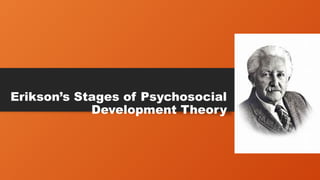
Erikson’s Stages of Psychosocial
Development Theory
Erik Erikson’s theory of psychosocial development outlines eight
stages that span from infancy to late adulthood. Each stage is
characterized by a specific conflict or challenge, and the
outcome of each stage affects an individual’s psychological
growth and future development. Successful resolution of these
conflicts leads to the development of a healthy personality and
strong sense of self. Unsuccessful resolution can result in
challenges in later stages of life.
The focus of Erikson’s theory is on the interaction
between an individual and their social environment,
emphasizing how each stage of life is shaped by
social relationships and cultural factors. Erikson
believed that psychological development is lifelong,
with each stage presenting a unique challenge that
needs to be resolved to move successfully to the
next stage. The theory highlights the importance of
social and emotional development, and the
resolution of conflicts impacts identity, self-esteem,
and relationships with others.
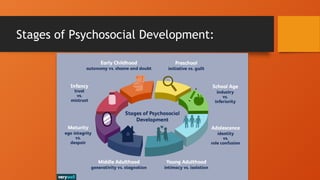
Stages of Psychosocial Development:
Trust vs. Mistrust (Infancy, 0-1 year):
Conflict: Whether or not the infant can trust their caregivers to provide safety and care.
Resolution: Successful resolution leads to a sense of trust in the world and in others.
Autonomy vs. Shame and Doubt (Toddlerhood, 1-3 years):
Conflict: Developing a sense of autonomy, or independence, while avoiding feelings of
shame and doubt.
Resolution: Encouragement of independence leads to confidence, while overprotection can
lead to self-doubt.
Initiative vs. Guilt (Preschool, 3-6 years):
Conflict: The desire to initiate activities and interact with others vs. the fear of making
mistakes.
Resolution: Successful resolution leads to initiative and a sense of purpose, while failure
can lead to guilt.
Industry vs. Inferiority (School Age, 6-12 years):
Conflict: The challenge of learning new skills and feeling competent vs. feelings of inadequacy.
Resolution: Success leads to a sense of industry and accomplishment, while failure results in feelings
of inferiority.
Identity vs. Role Confusion (Adolescence, 12-18 years):
Conflict: The struggle to develop a personal identity and sense of self, often through
exploration of roles and values.
Resolution: Successful resolution leads to a strong sense of identity; failure may lead to
confusion and instability.
Intimacy vs. Isolation (Young Adulthood, 18-40 years):
Conflict: The challenge of forming deep, meaningful relationships with others.
Resolution: Success leads to intimate relationships, while failure results in isolation and
loneliness.
Generativity vs. Stagnation (Middle Adulthood, 40-65 years):
Conflict: The desire to contribute to society and future generations vs. feeling
stuck or unproductive.
Resolution: Success leads to feelings of accomplishment and generativity, while
failure may lead to stagnation.
Integrity vs. Despair (Late Adulthood, 65+ years):
Conflict: Reflection on one’s life and the sense of whether it was meaningful and
fulfilling vs. regret and despair.
Resolution: Successful resolution leads to a sense of integrity and wisdom;
failure leads to despair and dissatisfaction
Example of Applying the Theory:
Imagine a teenager named Sarah, aged 16, who is struggling with her identity
(Stage 5: Identity vs. Role Confusion). She feels unsure about her career goals, her
friendships, and her values. As a result, she experiences confusion about her role in
the world and often changes her plans or social groups. However, after spending
some time reflecting, exploring different interests, and having open conversations
with trusted adults and friends, Sarah begins to develop a clearer sense of who she
is and what she values. She chooses a career path in psychology and feels more
secure in her identity. This successful resolution of the identity crisis helps her move
into young adulthood with confidence, ready to form intimate relationships and
pursue her goals (Stage 6: Intimacy vs. Isolation). In this case, Sarah’s ability to
navigate the identity crisis successfully leads to greater self-assurance and a
foundation for future stages of development.

erikson's theory personal development.pptx

  • 2.
    Erikson’s Stages ofPsychosocial Development Theory
  • 3.
    Erik Erikson’s theoryof psychosocial development outlines eight stages that span from infancy to late adulthood. Each stage is characterized by a specific conflict or challenge, and the outcome of each stage affects an individual’s psychological growth and future development. Successful resolution of these conflicts leads to the development of a healthy personality and strong sense of self. Unsuccessful resolution can result in challenges in later stages of life.
  • 4.
    The focus ofErikson’s theory is on the interaction between an individual and their social environment, emphasizing how each stage of life is shaped by social relationships and cultural factors. Erikson believed that psychological development is lifelong, with each stage presenting a unique challenge that needs to be resolved to move successfully to the next stage. The theory highlights the importance of social and emotional development, and the resolution of conflicts impacts identity, self-esteem, and relationships with others.
  • 5.
  • 6.
    Trust vs. Mistrust(Infancy, 0-1 year): Conflict: Whether or not the infant can trust their caregivers to provide safety and care. Resolution: Successful resolution leads to a sense of trust in the world and in others. Autonomy vs. Shame and Doubt (Toddlerhood, 1-3 years): Conflict: Developing a sense of autonomy, or independence, while avoiding feelings of shame and doubt. Resolution: Encouragement of independence leads to confidence, while overprotection can lead to self-doubt. Initiative vs. Guilt (Preschool, 3-6 years): Conflict: The desire to initiate activities and interact with others vs. the fear of making mistakes. Resolution: Successful resolution leads to initiative and a sense of purpose, while failure can lead to guilt.
  • 7.
    Industry vs. Inferiority(School Age, 6-12 years): Conflict: The challenge of learning new skills and feeling competent vs. feelings of inadequacy. Resolution: Success leads to a sense of industry and accomplishment, while failure results in feelings of inferiority. Identity vs. Role Confusion (Adolescence, 12-18 years): Conflict: The struggle to develop a personal identity and sense of self, often through exploration of roles and values. Resolution: Successful resolution leads to a strong sense of identity; failure may lead to confusion and instability. Intimacy vs. Isolation (Young Adulthood, 18-40 years): Conflict: The challenge of forming deep, meaningful relationships with others. Resolution: Success leads to intimate relationships, while failure results in isolation and loneliness.
  • 8.
    Generativity vs. Stagnation(Middle Adulthood, 40-65 years): Conflict: The desire to contribute to society and future generations vs. feeling stuck or unproductive. Resolution: Success leads to feelings of accomplishment and generativity, while failure may lead to stagnation. Integrity vs. Despair (Late Adulthood, 65+ years): Conflict: Reflection on one’s life and the sense of whether it was meaningful and fulfilling vs. regret and despair. Resolution: Successful resolution leads to a sense of integrity and wisdom; failure leads to despair and dissatisfaction
  • 9.
    Example of Applyingthe Theory: Imagine a teenager named Sarah, aged 16, who is struggling with her identity (Stage 5: Identity vs. Role Confusion). She feels unsure about her career goals, her friendships, and her values. As a result, she experiences confusion about her role in the world and often changes her plans or social groups. However, after spending some time reflecting, exploring different interests, and having open conversations with trusted adults and friends, Sarah begins to develop a clearer sense of who she is and what she values. She chooses a career path in psychology and feels more secure in her identity. This successful resolution of the identity crisis helps her move into young adulthood with confidence, ready to form intimate relationships and pursue her goals (Stage 6: Intimacy vs. Isolation). In this case, Sarah’s ability to navigate the identity crisis successfully leads to greater self-assurance and a foundation for future stages of development.