ERGOT POISONING
THE STORY OF A PARASITIC
FUNGUS
MADE BY
DR.MEMOONA AMJID
Roll no 88
Contents of
this lecture:
 Source
 Life cycle
 Occurrence
 Signs in plants
 Ergot alkaloids
 Mechanism of action
 Signs and symptoms of poisoning
 Discovery of ergotism
 Fatality
 Treatment
 Post mortem appearance
 ML Aspects
Source:
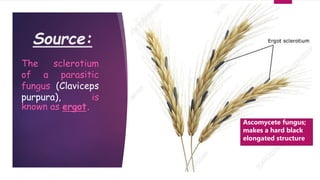
The sclerotium
of a parasitic
fungus (Claviceps
purpura), is
known as ergot.
Ascomycete fungus;
makes a hard black
elongated structure
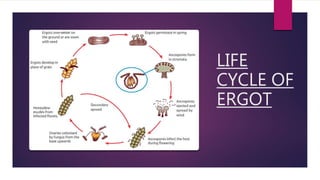
LIFE
CYCLE OF
ERGOT
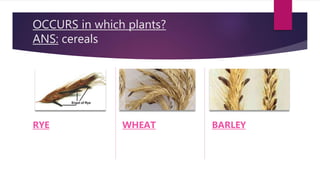
OCCURS in which plants?
ANS: cereals
RYE WHEAT BARLEY
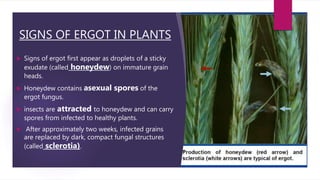
SIGNS OF ERGOT IN PLANTS
 Signs of ergot first appear as droplets of a sticky
exudate (called honeydew) on immature grain
heads.
 Honeydew contains asexual spores of the
ergot fungus.
 insects are attracted to honeydew and can carry
spores from infected to healthy plants.
 After approximately two weeks, infected grains
are replaced by dark, compact fungal structures
(called sclerotia).
ERGOT
ALKALOIDES
PRESENTLY THERE
ARE 40 KNOWN
ERGOT ALKALOIDS
PRODUCED BY
VARIOUS CLAVICEPS
STRAINS.
ACTIVE
PRINCIPLES OF
ERGOT
ERGOTOXIN
ERGOTAMINE
ERGOMETRINE
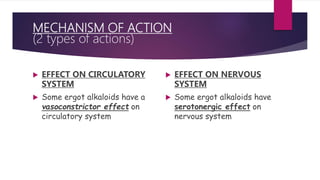
MECHANISM OF ACTION
(2 types of actions)
 EFFECT ON CIRCULATORY
SYSTEM
 Some ergot alkaloids have a
vasoconstrictor effect on
circulatory system
 EFFECT ON NERVOUS
SYSTEM
 Some ergot alkaloids have
serotonergic effect on
nervous system
Signs AND Symptoms of
ERGOT POISONING
(ACUTE AND CHRONIC)
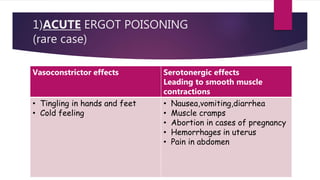
1)ACUTE ERGOT POISONING
(rare case)
Vasoconstrictor effects Serotonergic effects
Leading to smooth muscle
contractions
• Tingling in hands and feet
• Cold feeling
• Nausea,vomiting,diarrhea
• Muscle cramps
• Abortion in cases of pregnancy
• Hemorrhages in uterus
• Pain in abdomen
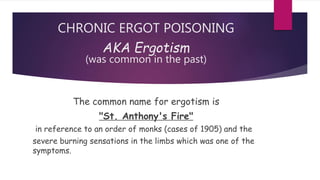
CHRONIC ERGOT POISONING
AKA Ergotism
(was common in the past)
The common name for ergotism is
"St. Anthony's Fire"
in reference to an order of monks (cases of 1905) and the
severe burning sensations in the limbs which was one of the
symptoms.
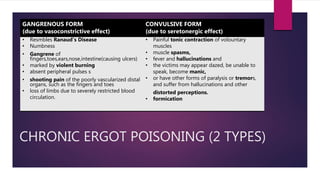
CHRONIC ERGOT POISONING (2 TYPES)
GANGRENOUS FORM
(due to vasoconstrictive effect)
CONVULSIVE FORM
(due to seretonergic effect)
• Resmbles Ranaud's Disease
• Numbness
• Gangrene of
fingers,toes,ears,nose,intestine(causing ulcers)
• marked by violent burning
• absent peripheral pulses s
• shooting pain of the poorly vascularized distal
organs, such as the fingers and toes
• loss of limbs due to severely restricted blood
circulation.
• Painful tonic contraction of volountary
muscles
• muscle spasms,
• fever and hallucinations and
• the victims may appear dazed, be unable to
speak, become manic,
• or have other forms of paralysis or tremors,
and suffer from hallucinations and other
distorted perceptions.
• formication
DISCOVERY OF
ERGOTISM
Saint Anthony's
fire
In 1722, A Russian Tzar Peter the Great was
thwarted in his campaign against the Ottoman Empire
as his army, traveling down the Terek steppe, were
struck by ergotism and were forced to retreat in
order to find edible grains. A diary entry from the
time describes that as soon as people ate the
poisoned bread they became dizzy, with such strong
nerve contractions that those who did not die from
the first day found their hands and feet falling off,
akin to frostbite. The epidemic was known as Saint
Anthony's fire or ignis sacer,
FATAL DOSE: 1g
FATAL PERIOD: one to several days
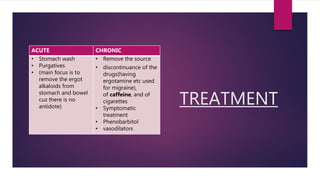
TREATMENT
ACUTE CHRONIC
• Stomach wash
• Purgatives
• (main focus is to
remove the ergot
alkaloids from
stomach and bowel
cuz there is no
antidote)
• Remove the source
• discontinuance of the
drugs(having
ergotamine etc used
for migraine),
of caffeine, and of
cigarettes
• Symptomatic
treatment
• Phenobarbitol
• vasodilators
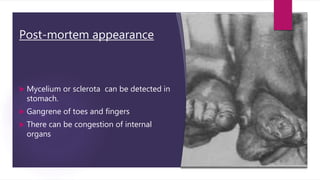
Post-mortem appearance
 Mycelium or sclerota can be detected in
stomach.
 Gangrene of toes and fingers
 There can be congestion of internal
organs
MEDICOLEGAL SIGNIFICANCE
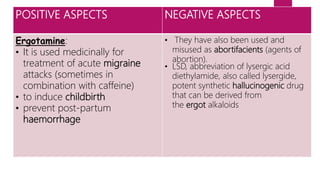
POSITIVE ASPECTS NEGATIVE ASPECTS
Ergotamine:
• It is used medicinally for
treatment of acute migraine
attacks (sometimes in
combination with caffeine)
• to induce childbirth
• prevent post-partum
haemorrhage
• They have also been used and
misused as abortifacients (agents of
abortion).
• LSD, abbreviation of lysergic acid
diethylamide, also called lysergide,
potent synthetic hallucinogenic drug
that can be derived from
the ergot alkaloids
Ergot Poisoning

Ergot Poisoning

  • 1.
    ERGOT POISONING THE STORYOF A PARASITIC FUNGUS MADE BY DR.MEMOONA AMJID Roll no 88
  • 2.
    Contents of this lecture: Source  Life cycle  Occurrence  Signs in plants  Ergot alkaloids  Mechanism of action  Signs and symptoms of poisoning  Discovery of ergotism  Fatality  Treatment  Post mortem appearance  ML Aspects
  • 3.
    Source: The sclerotium of aparasitic fungus (Claviceps purpura), is known as ergot. Ascomycete fungus; makes a hard black elongated structure
  • 4.
  • 5.
    OCCURS in whichplants? ANS: cereals RYE WHEAT BARLEY
  • 6.
    SIGNS OF ERGOTIN PLANTS  Signs of ergot first appear as droplets of a sticky exudate (called honeydew) on immature grain heads.  Honeydew contains asexual spores of the ergot fungus.  insects are attracted to honeydew and can carry spores from infected to healthy plants.  After approximately two weeks, infected grains are replaced by dark, compact fungal structures (called sclerotia).
  • 7.
    ERGOT ALKALOIDES PRESENTLY THERE ARE 40KNOWN ERGOT ALKALOIDS PRODUCED BY VARIOUS CLAVICEPS STRAINS.
  • 8.
  • 9.
    MECHANISM OF ACTION (2types of actions)  EFFECT ON CIRCULATORY SYSTEM  Some ergot alkaloids have a vasoconstrictor effect on circulatory system  EFFECT ON NERVOUS SYSTEM  Some ergot alkaloids have serotonergic effect on nervous system
  • 10.
    Signs AND Symptomsof ERGOT POISONING (ACUTE AND CHRONIC)
  • 11.
    1)ACUTE ERGOT POISONING (rarecase) Vasoconstrictor effects Serotonergic effects Leading to smooth muscle contractions • Tingling in hands and feet • Cold feeling • Nausea,vomiting,diarrhea • Muscle cramps • Abortion in cases of pregnancy • Hemorrhages in uterus • Pain in abdomen
  • 12.
    CHRONIC ERGOT POISONING AKAErgotism (was common in the past) The common name for ergotism is "St. Anthony's Fire" in reference to an order of monks (cases of 1905) and the severe burning sensations in the limbs which was one of the symptoms.
  • 13.
    CHRONIC ERGOT POISONING(2 TYPES) GANGRENOUS FORM (due to vasoconstrictive effect) CONVULSIVE FORM (due to seretonergic effect) • Resmbles Ranaud's Disease • Numbness • Gangrene of fingers,toes,ears,nose,intestine(causing ulcers) • marked by violent burning • absent peripheral pulses s • shooting pain of the poorly vascularized distal organs, such as the fingers and toes • loss of limbs due to severely restricted blood circulation. • Painful tonic contraction of volountary muscles • muscle spasms, • fever and hallucinations and • the victims may appear dazed, be unable to speak, become manic, • or have other forms of paralysis or tremors, and suffer from hallucinations and other distorted perceptions. • formication
  • 14.
  • 15.
    Saint Anthony's fire In 1722,A Russian Tzar Peter the Great was thwarted in his campaign against the Ottoman Empire as his army, traveling down the Terek steppe, were struck by ergotism and were forced to retreat in order to find edible grains. A diary entry from the time describes that as soon as people ate the poisoned bread they became dizzy, with such strong nerve contractions that those who did not die from the first day found their hands and feet falling off, akin to frostbite. The epidemic was known as Saint Anthony's fire or ignis sacer,
  • 16.
    FATAL DOSE: 1g FATALPERIOD: one to several days
  • 17.
    TREATMENT ACUTE CHRONIC • Stomachwash • Purgatives • (main focus is to remove the ergot alkaloids from stomach and bowel cuz there is no antidote) • Remove the source • discontinuance of the drugs(having ergotamine etc used for migraine), of caffeine, and of cigarettes • Symptomatic treatment • Phenobarbitol • vasodilators
  • 18.
    Post-mortem appearance  Myceliumor sclerota can be detected in stomach.  Gangrene of toes and fingers  There can be congestion of internal organs
  • 19.
  • 20.
    POSITIVE ASPECTS NEGATIVEASPECTS Ergotamine: • It is used medicinally for treatment of acute migraine attacks (sometimes in combination with caffeine) • to induce childbirth • prevent post-partum haemorrhage • They have also been used and misused as abortifacients (agents of abortion). • LSD, abbreviation of lysergic acid diethylamide, also called lysergide, potent synthetic hallucinogenic drug that can be derived from the ergot alkaloids