Public Managers addressing difficult challenges with powerful conversations and social technologiesSmarter, Better, Surprising Gov: Sparking your Network for Higher PerformanceMichael .Lennon@adlenn.comCreative Commons Attribution-Share Alike 3.0 United States License.
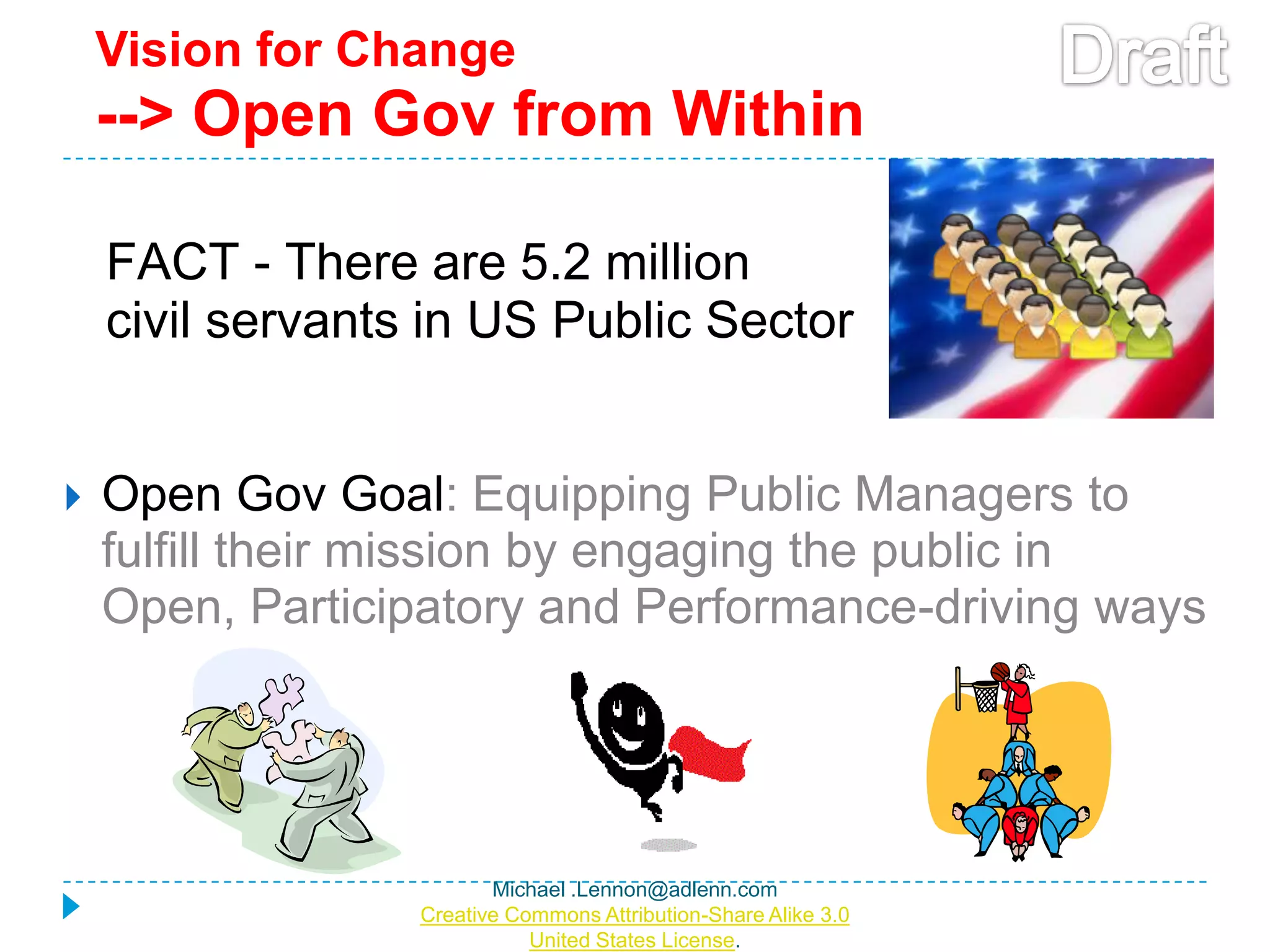
Vision for Change --> Open Gov from WithinFACT - There are 5.2 million civil servants in US Public Sector Open Gov Goal: Equipping Public Managers to fulfill their mission by engaging the public in Open, Participatory and Performance-driving waysPart 2Michael .Lennon@adlenn.comCreative Commons Attribution-Share Alike 3.0 United States License.
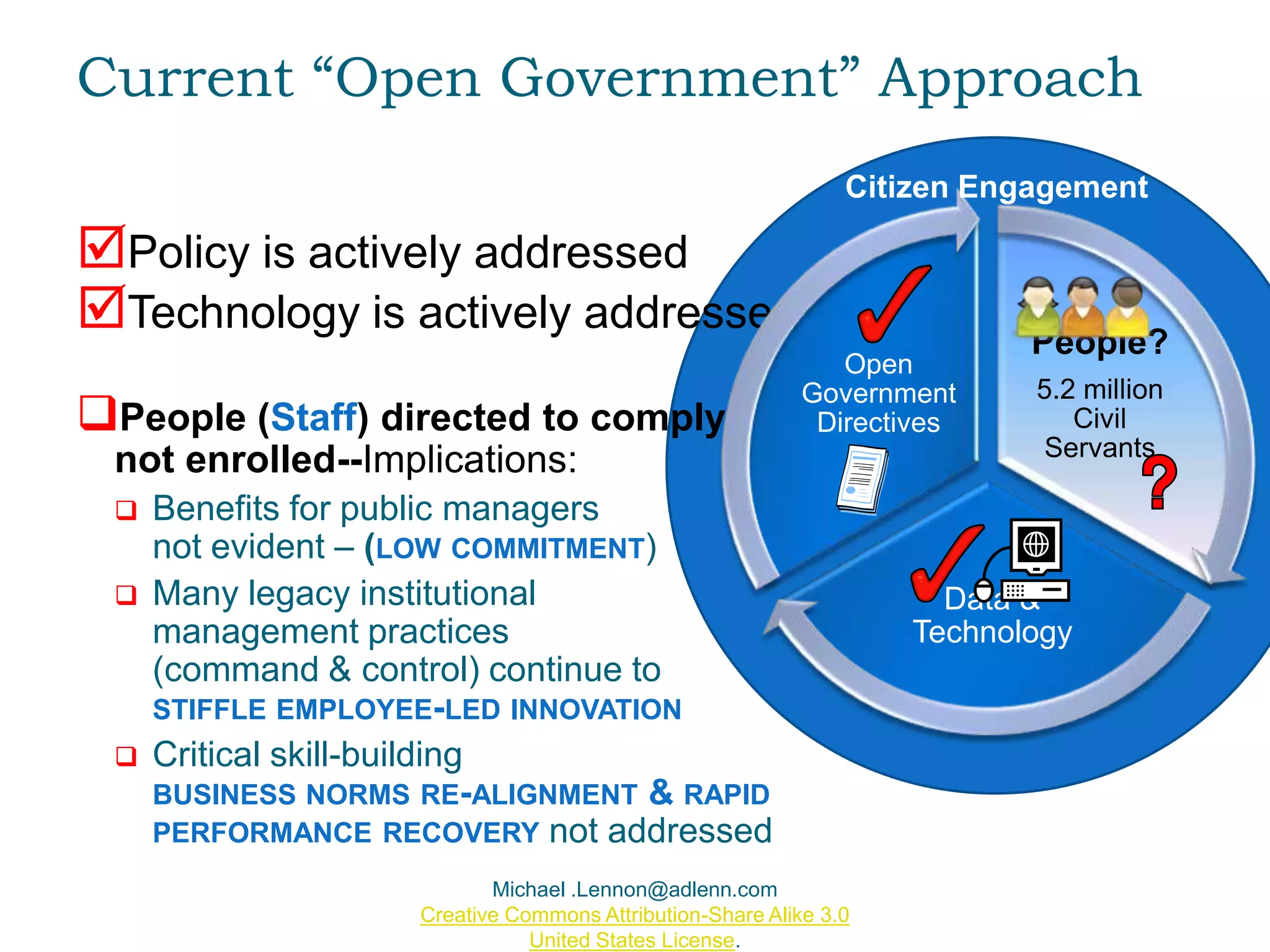
Current “Open Government” ApproachCitizen EngagementPolicy is actively addressed
Technology is actively addressed
People (Staff) directed to comply, not enrolled--Implications:
Benefits for public managers not evident – (low commitment)
Many legacy institutional management practices (command & control) continue tostiffle employee-led innovation
Critical skill-building business norms re-alignment & rapid performance recoverynot addressedMichael .Lennon@adlenn.comCreative Commons Attribution-Share Alike 3.0 United States License.
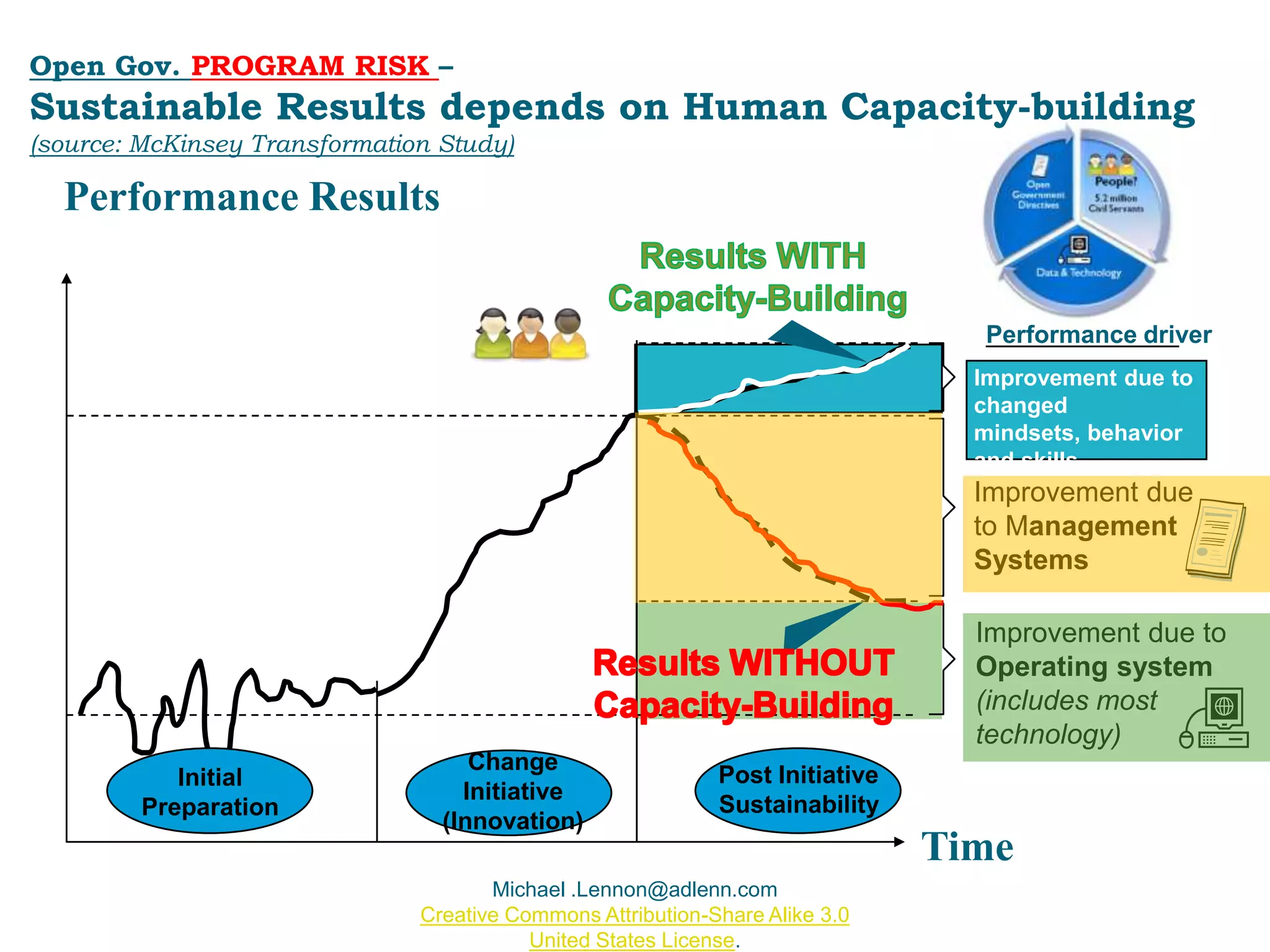
Post InitiativeSustainabilityChange Initiative(Innovation)Initial PreparationOpen Gov. PROGRAM RISK – Sustainable Results depends on Human Capacity-building(source: McKinsey Transformation Study)Performance ResultsResults WITH Capacity-BuildingPerformance driverImprovement due to changed mindsets, behavior and skillsImprovement due to Management SystemsImprovement due to  Operating system (includes most technology) Results WITHOUTCapacity-BuildingPart 1TimeMichael .Lennon@adlenn.comCreative Commons Attribution-Share Alike 3.0 United States License.
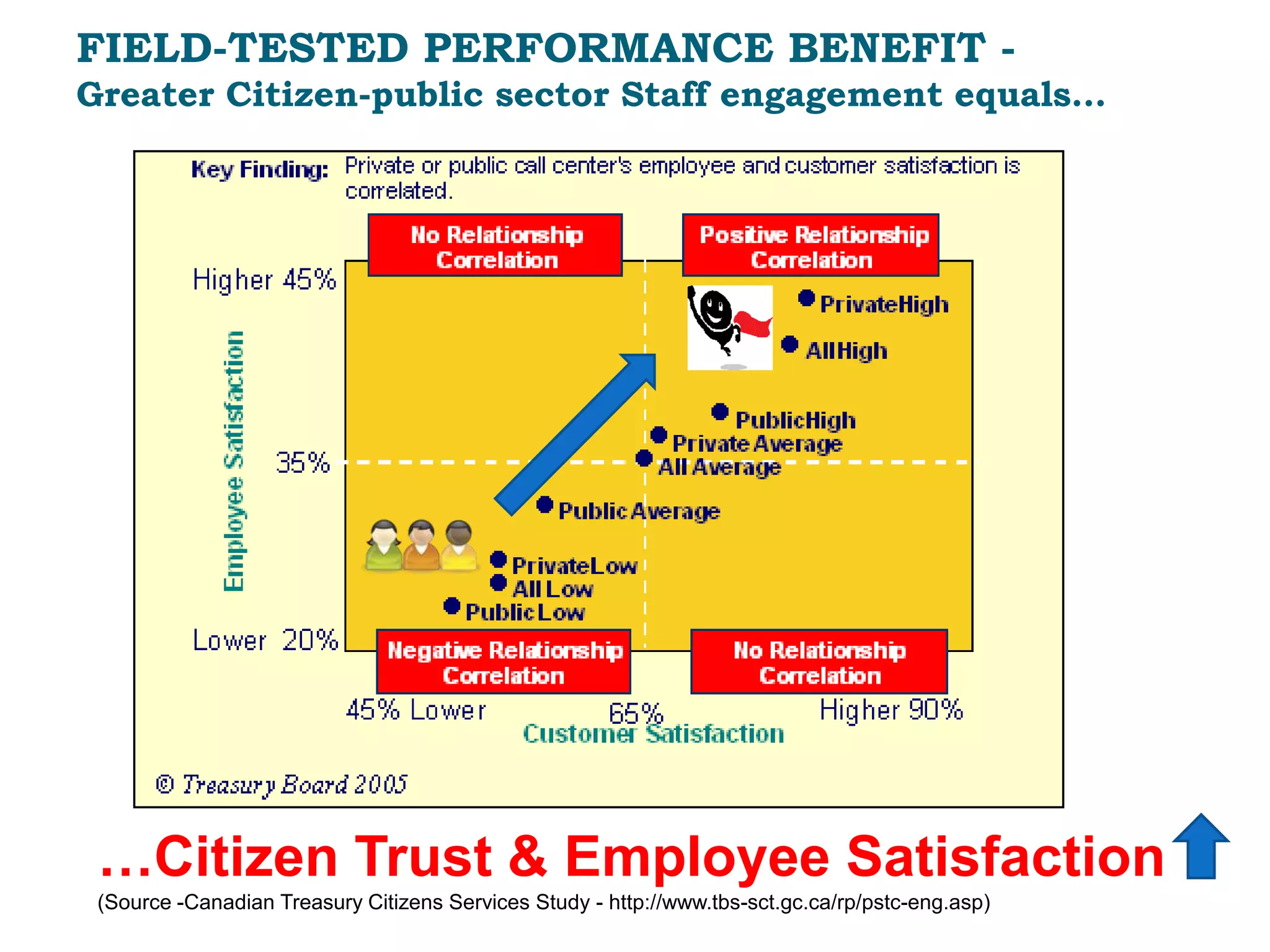
FIELD-TESTED PERFORMANCE BENEFIT -Greater Citizen-public sector Staff engagement equals…Part 1…Citizen Trust & Employee Satisfaction (Source -Canadian Treasury Citizens Services Study - http://www.tbs-sct.gc.ca/rp/pstc-eng.asp)
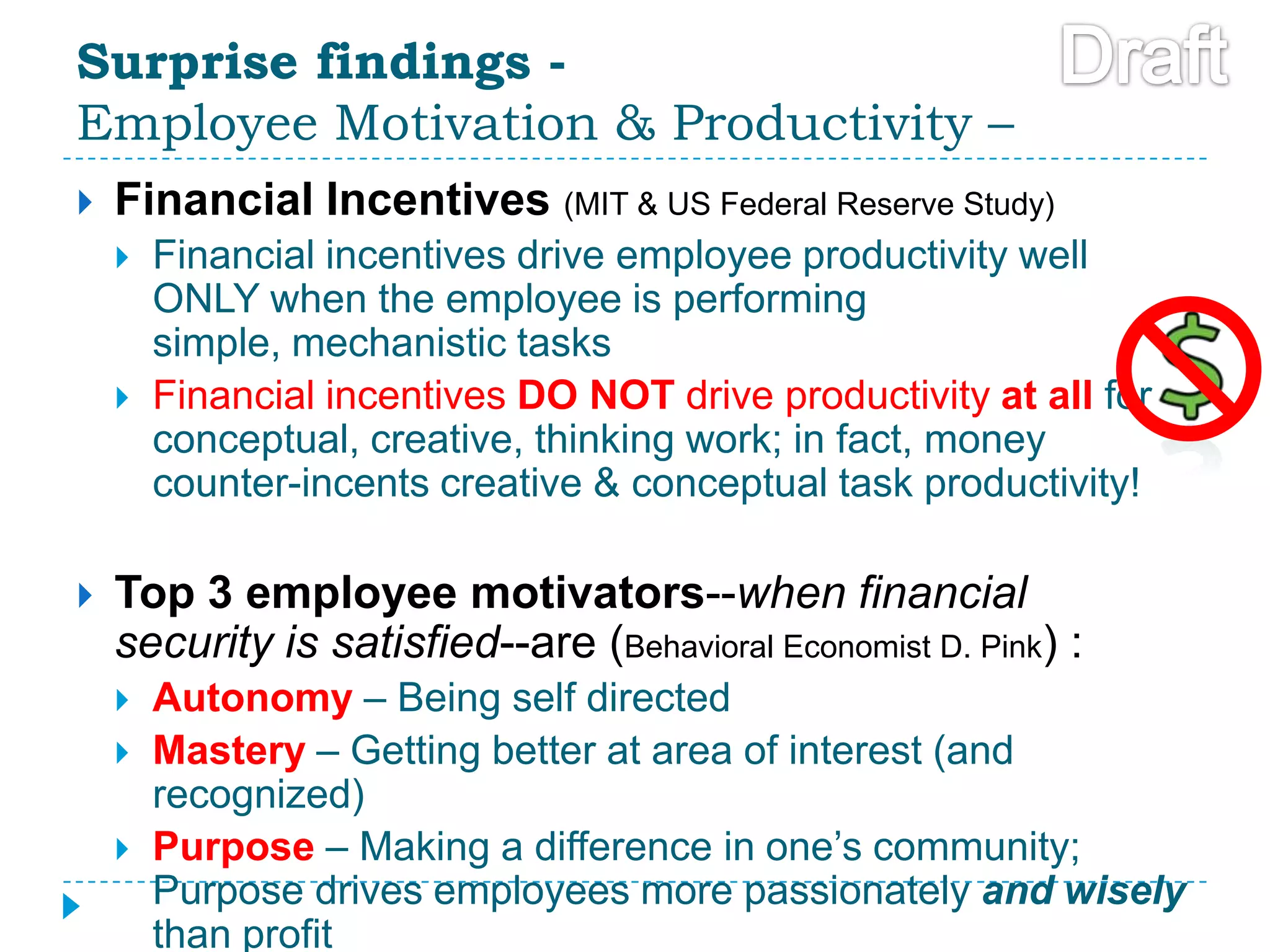
Surprise findings -Employee Motivation & Productivity –Financial Incentives (MIT & US Federal Reserve Study)Financial incentives drive employee productivity well ONLY when the employee is performing simple, mechanistic tasksFinancial incentives DO NOT drive productivity at all for conceptual, creative, thinking work; in fact, money counter-incents creative & conceptual task productivity!Top 3 employee motivators--when financial security is satisfied--are (Behavioral Economist D. Pink) :  Autonomy – Being self directedMastery– Getting better at area of interest (and recognized)Purpose– Making a difference in one’s community; Purpose drives employees more passionately and wiselythan profit
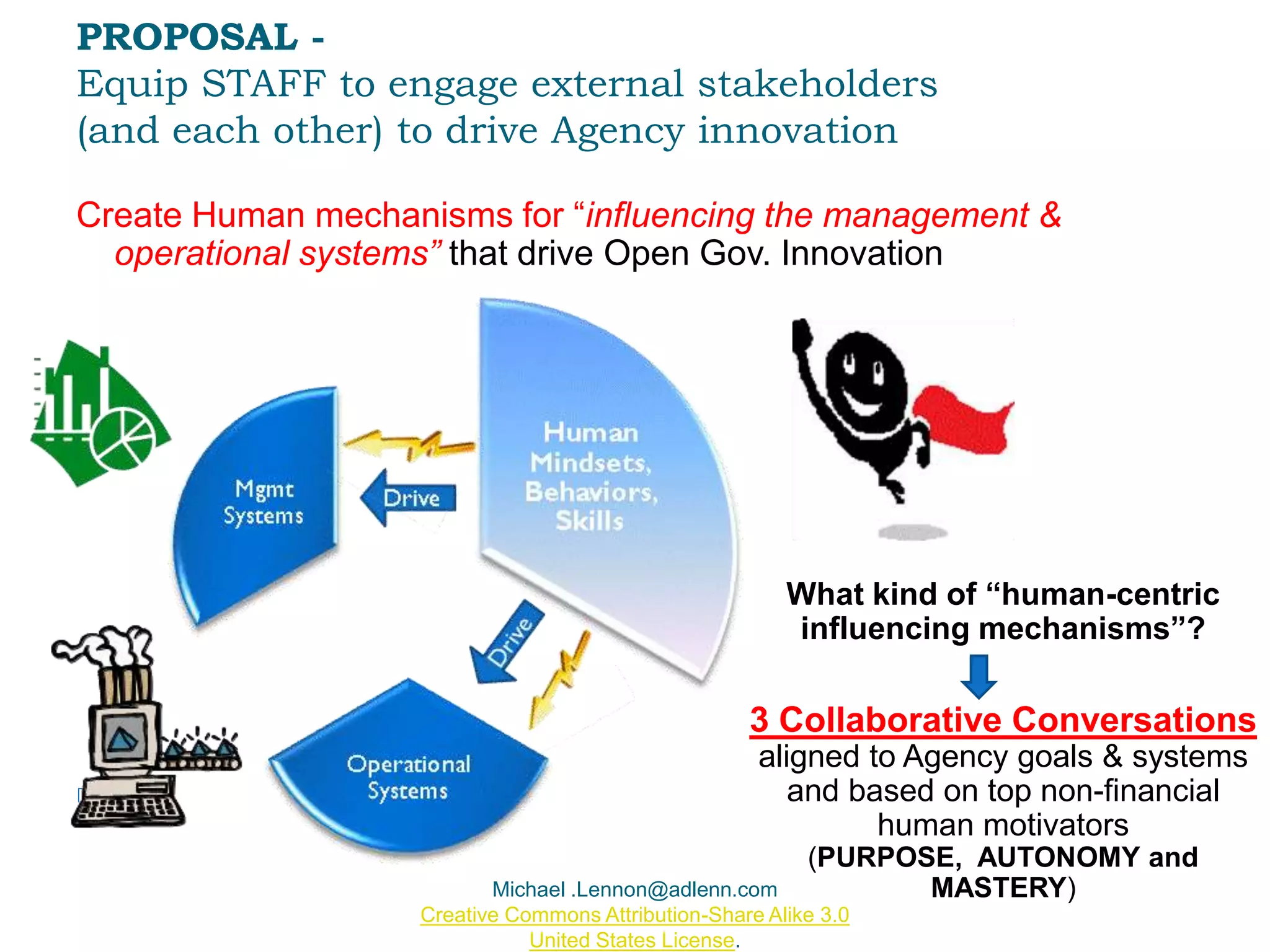
PROPOSAL - Equip STAFF to engage external stakeholders (and each other) to drive Agency innovationCreate Human mechanisms for “influencing the management & operational systems” that driveOpen Gov. InnovationWhat kind of “human-centric influencing mechanisms”?3 Collaborative Conversations aligned to Agency goals & systems and based on top non-financial human motivators (PURPOSE,  AUTONOMY and MASTERY)Part 1Michael .Lennon@adlenn.comCreative Commons Attribution-Share Alike 3.0 United States License.
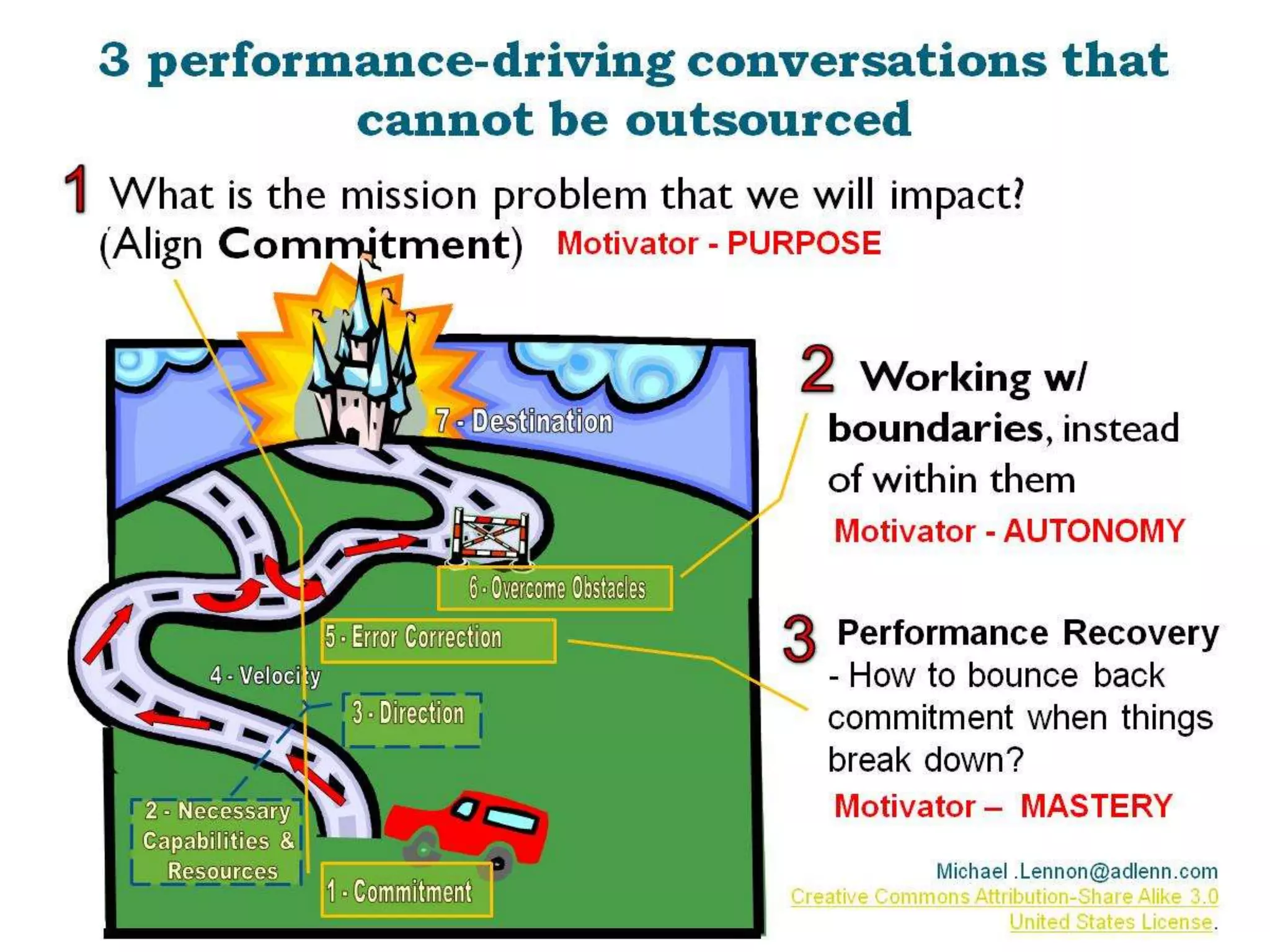
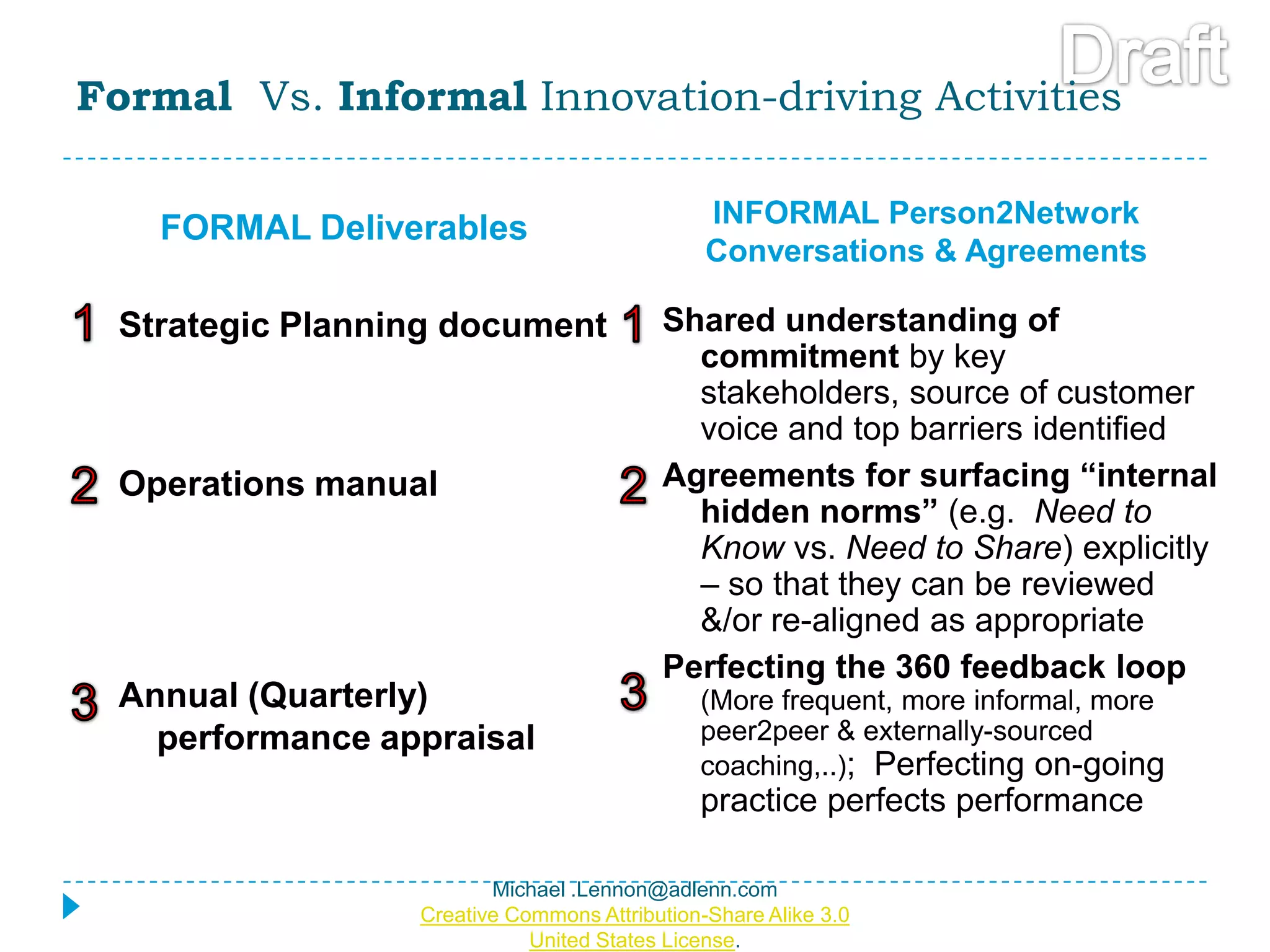
Formal  Vs. Informal Innovation-driving ActivitiesFORMAL DeliverablesINFORMAL Person2Network Conversations & Agreements11Strategic Planning documentOperations manual Annual (Quarterly) performance appraisalShared understanding of commitment by key stakeholders, source of customer voice and top barriers identifiedAgreements for surfacing “internal hidden norms”(e.g.  Need to Know vs. Need to Share) explicitly – so that they can be reviewed &/or re-aligned as appropriatePerfecting the 360 feedback loop (More frequent, more informal, more peer2peer & externally-sourced coaching,..);  Perfecting on-going practice perfects performance  2233Part 2Michael .Lennon@adlenn.comCreative Commons Attribution-Share Alike 3.0 United States License.
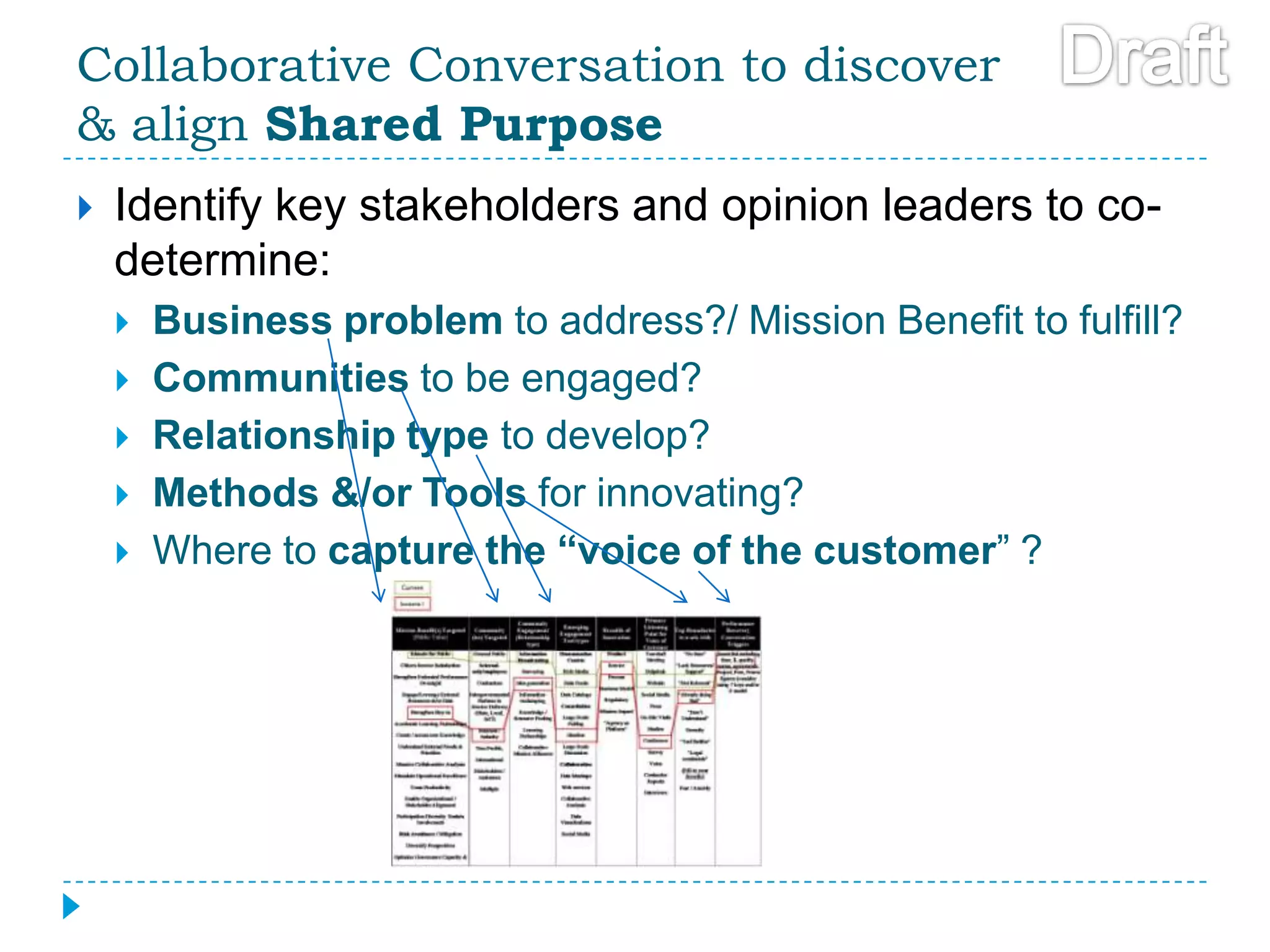
Collaborative Conversation to discover & align Shared PurposeIdentify key stakeholders and opinion leaders to co-determine:Business problem to address?/ Mission Benefit to fulfill?Communities to be engaged?Relationship type to develop?Methods &/or Tools for innovating?Where to capture the “voice of the customer” ?

Equipping the Public Manager - Approach Summary

  • 1.
    Public Managers addressingdifficult challenges with powerful conversations and social technologiesSmarter, Better, Surprising Gov: Sparking your Network for Higher PerformanceMichael .Lennon@adlenn.comCreative Commons Attribution-Share Alike 3.0 United States License.
  • 2.
    Vision for Change--> Open Gov from WithinFACT - There are 5.2 million civil servants in US Public Sector Open Gov Goal: Equipping Public Managers to fulfill their mission by engaging the public in Open, Participatory and Performance-driving waysPart 2Michael .Lennon@adlenn.comCreative Commons Attribution-Share Alike 3.0 United States License.
  • 3.
    Current “Open Government”ApproachCitizen EngagementPolicy is actively addressed
  • 4.
  • 5.
    People (Staff) directedto comply, not enrolled--Implications:
  • 6.
    Benefits for publicmanagers not evident – (low commitment)
  • 7.
    Many legacy institutionalmanagement practices (command & control) continue tostiffle employee-led innovation
  • 8.
    Critical skill-building businessnorms re-alignment & rapid performance recoverynot addressedMichael .Lennon@adlenn.comCreative Commons Attribution-Share Alike 3.0 United States License.
  • 9.
    Post InitiativeSustainabilityChange Initiative(Innovation)InitialPreparationOpen Gov. PROGRAM RISK – Sustainable Results depends on Human Capacity-building(source: McKinsey Transformation Study)Performance ResultsResults WITH Capacity-BuildingPerformance driverImprovement due to changed mindsets, behavior and skillsImprovement due to Management SystemsImprovement due to Operating system (includes most technology) Results WITHOUTCapacity-BuildingPart 1TimeMichael .Lennon@adlenn.comCreative Commons Attribution-Share Alike 3.0 United States License.
  • 10.
    FIELD-TESTED PERFORMANCE BENEFIT-Greater Citizen-public sector Staff engagement equals…Part 1…Citizen Trust & Employee Satisfaction (Source -Canadian Treasury Citizens Services Study - http://www.tbs-sct.gc.ca/rp/pstc-eng.asp)
  • 11.
    Surprise findings -EmployeeMotivation & Productivity –Financial Incentives (MIT & US Federal Reserve Study)Financial incentives drive employee productivity well ONLY when the employee is performing simple, mechanistic tasksFinancial incentives DO NOT drive productivity at all for conceptual, creative, thinking work; in fact, money counter-incents creative & conceptual task productivity!Top 3 employee motivators--when financial security is satisfied--are (Behavioral Economist D. Pink) : Autonomy – Being self directedMastery– Getting better at area of interest (and recognized)Purpose– Making a difference in one’s community; Purpose drives employees more passionately and wiselythan profit
  • 12.
    PROPOSAL - EquipSTAFF to engage external stakeholders (and each other) to drive Agency innovationCreate Human mechanisms for “influencing the management & operational systems” that driveOpen Gov. InnovationWhat kind of “human-centric influencing mechanisms”?3 Collaborative Conversations aligned to Agency goals & systems and based on top non-financial human motivators (PURPOSE, AUTONOMY and MASTERY)Part 1Michael .Lennon@adlenn.comCreative Commons Attribution-Share Alike 3.0 United States License.
  • 14.
    Formal Vs.Informal Innovation-driving ActivitiesFORMAL DeliverablesINFORMAL Person2Network Conversations & Agreements11Strategic Planning documentOperations manual Annual (Quarterly) performance appraisalShared understanding of commitment by key stakeholders, source of customer voice and top barriers identifiedAgreements for surfacing “internal hidden norms”(e.g. Need to Know vs. Need to Share) explicitly – so that they can be reviewed &/or re-aligned as appropriatePerfecting the 360 feedback loop (More frequent, more informal, more peer2peer & externally-sourced coaching,..); Perfecting on-going practice perfects performance 2233Part 2Michael .Lennon@adlenn.comCreative Commons Attribution-Share Alike 3.0 United States License.
  • 15.
    Collaborative Conversation todiscover & align Shared PurposeIdentify key stakeholders and opinion leaders to co-determine:Business problem to address?/ Mission Benefit to fulfill?Communities to be engaged?Relationship type to develop?Methods &/or Tools for innovating?Where to capture the “voice of the customer” ?
  • 16.
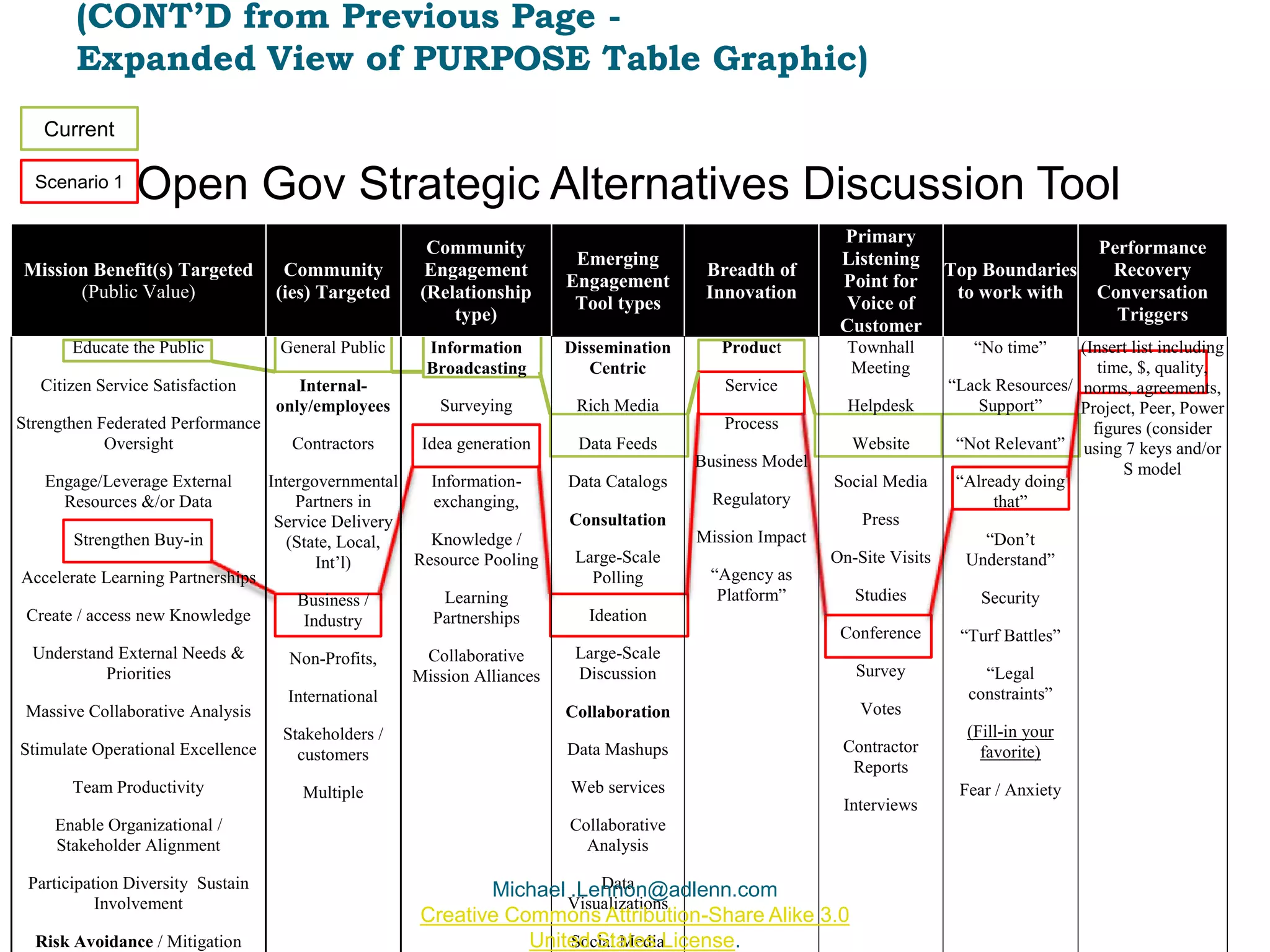
    (CONT’D from PreviousPage - Expanded View of PURPOSE Table Graphic) Open Gov Strategic Alternatives Discussion Tool .CurrentScenario 1Part 2Michael .Lennon@adlenn.comCreative Commons Attribution-Share Alike 3.0 United States License.
  • 17.
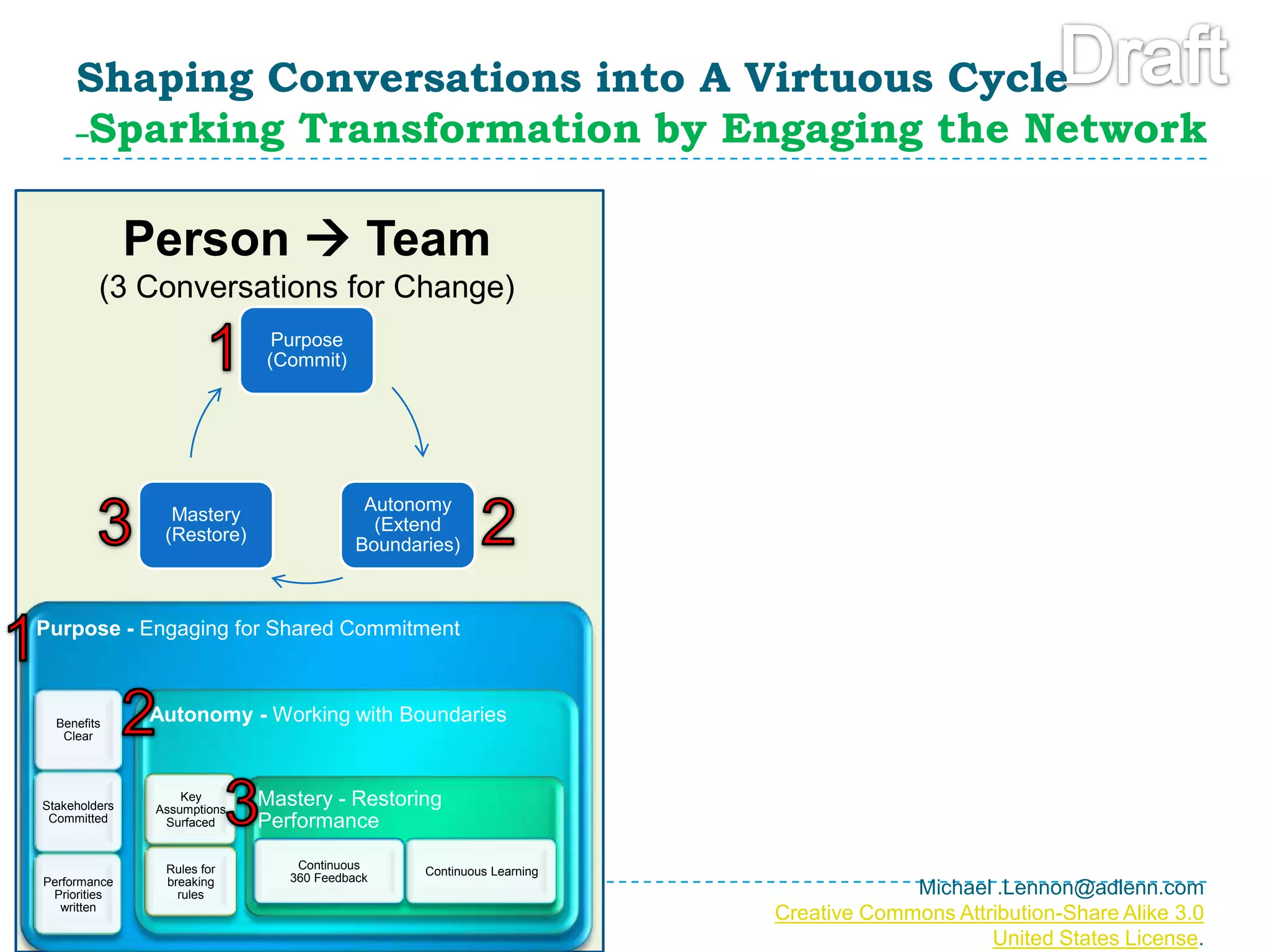
    Shaping Conversations intoA Virtuous Cycle –Sparking Transformation by Engaging the NetworkPerson  Team (3 Conversations for Change)123123Part 2Michael .Lennon@adlenn.comCreative Commons Attribution-Share Alike 3.0 United States License.
  • 18.
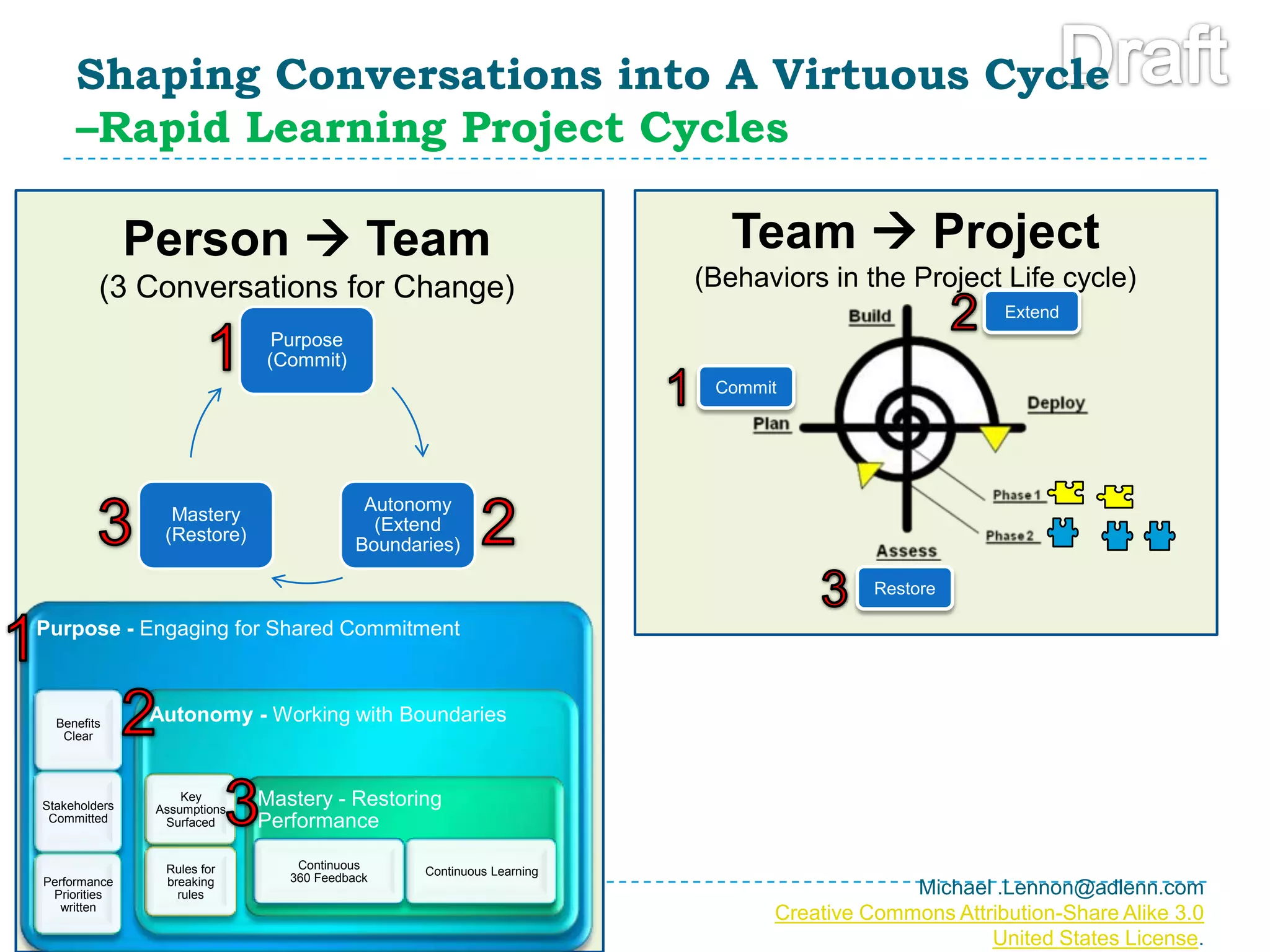
    Shaping Conversations intoA Virtuous Cycle –Rapid Learning Project CyclesTeam  Project(Behaviors in the Project Life cycle)Person  Team (3 Conversations for Change)2Extend11Commit233Restore123Part 2Michael .Lennon@adlenn.comCreative Commons Attribution-Share Alike 3.0 United States License.
  • 19.
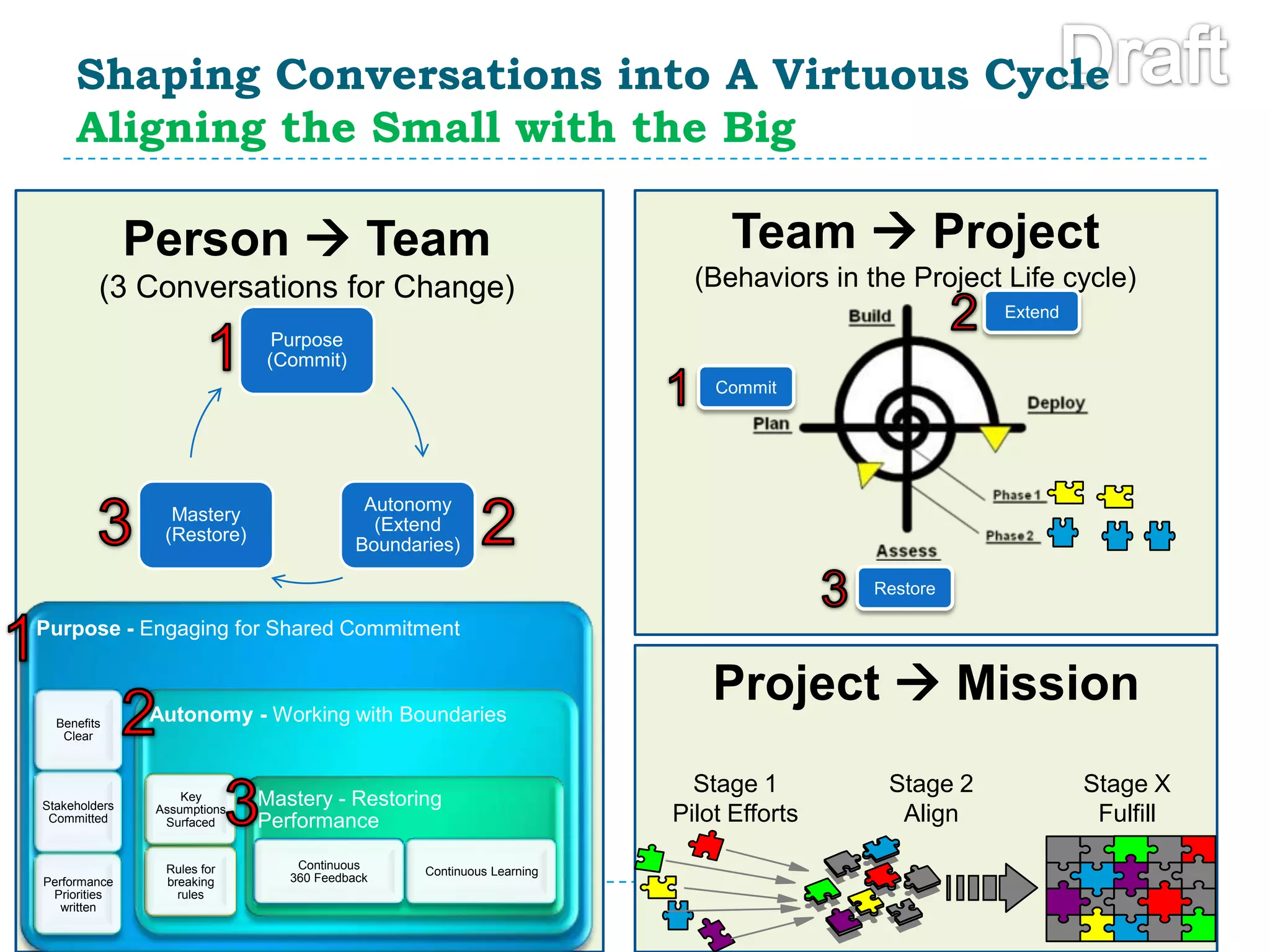
    Shaping Conversations intoA Virtuous Cycle Aligning the Small with the BigTeam  Project(Behaviors in the Project Life cycle)Person  Team (3 Conversations for Change)2Extend11Commit233Restore1Project  Mission23Stage 1Pilot EffortsStage 2AlignStage XFulfill
  • 20.
    For more informationPoint of ContactMichael LennonMichael.Lennon@adlenn.com202-246-6865@mlennon123Michael .Lennon@adlenn.comCreative Commons Attribution-Share Alike 3.0 United States License.