Using ePRO in Adaptive Trial Design CBI 4 th  PRO Conference Dwight Cooper Global Director, Technical Services PHT Corporation (617) 973-1838 [email_address] 28 May 2009
Using ePRO in Adaptive Trial Design Traditional ePRO Trial Design Adaptive Trial Designs Types of Designs Barriers to Use Benefits ePRO Provides
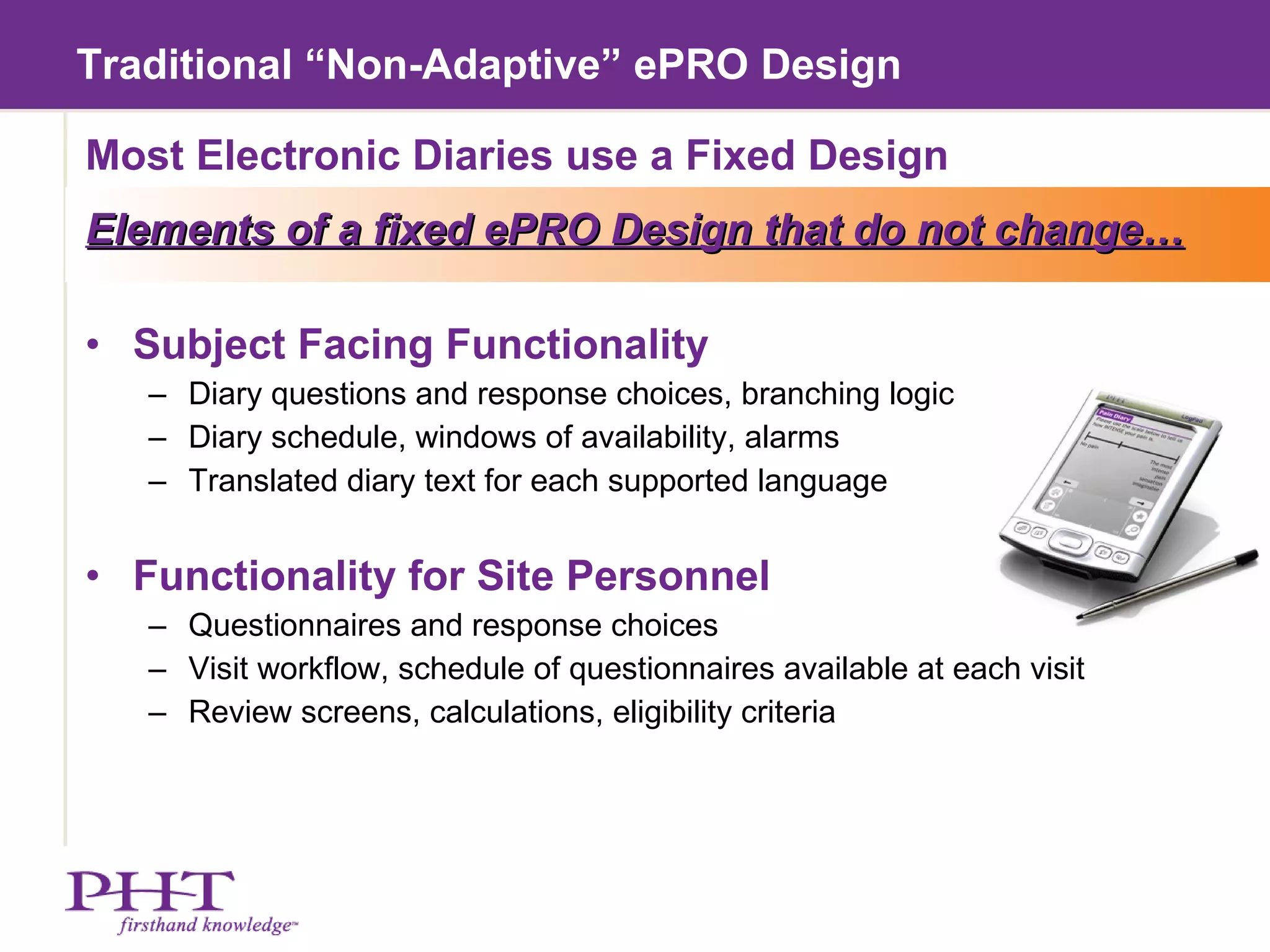
Traditional “Non-Adaptive” ePRO Design Most Electronic Diaries use a Fixed Design Elements of a fixed ePRO Design that do not change… Subject Facing Functionality Diary questions and response choices, branching logic Diary schedule, windows of availability, alarms Translated diary text for each supported language Functionality for Site Personnel Questionnaires and response choices Visit workflow, schedule of questionnaires available at each visit Review screens, calculations, eligibility criteria
Adapting ePRO Design via Mid Study Changes The original design can be modified via Software Updates Common Examples of Mid-Study Changes… Protocol Amendment More Frequent Data Collection; e.g. weekly diary merged into evening diary Global Expansion of Trial New Countries, Languages Increase Subject Number Range Incorporate Feedback from Sites and Subjects Add more Rescue Medication choices Update Instructions to Improve Comprehension and Usability
Adaptive Trial Design What is it? An adaptive trial design is flexible to accommodate anticipated changes during the study by analyzing data as it is collected How does it work? Interim analyses are performed to evaluate whether to adapt the trial design What is the advantage? Decision making occurs within the study before all data are collected rather than after study completion
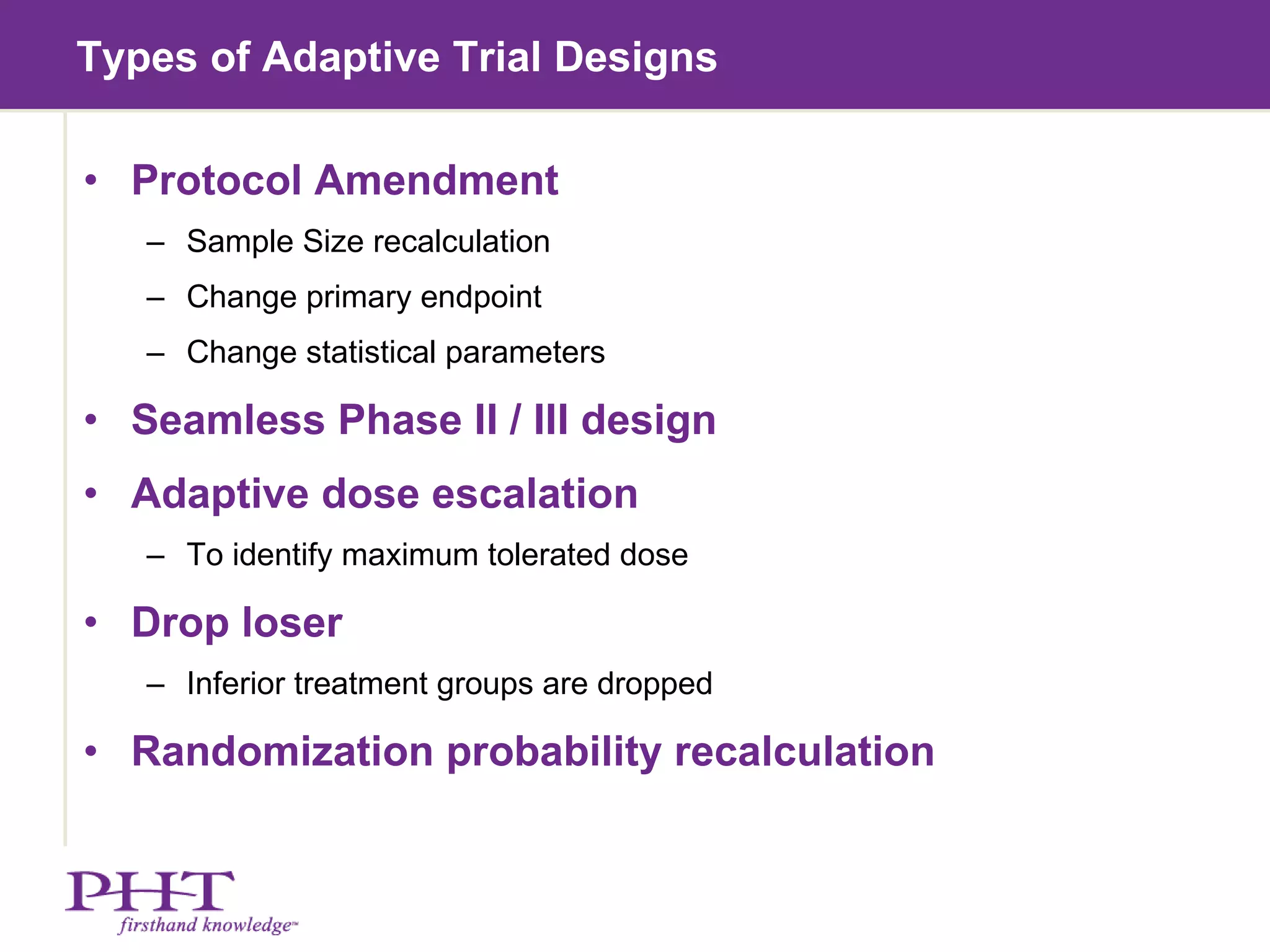
Types of Adaptive Trial Designs Protocol Amendment Sample Size recalculation Change primary endpoint Change statistical parameters Seamless Phase II / III design Adaptive dose escalation To identify maximum tolerated dose Drop loser Inferior treatment groups are dropped Randomization probability recalculation
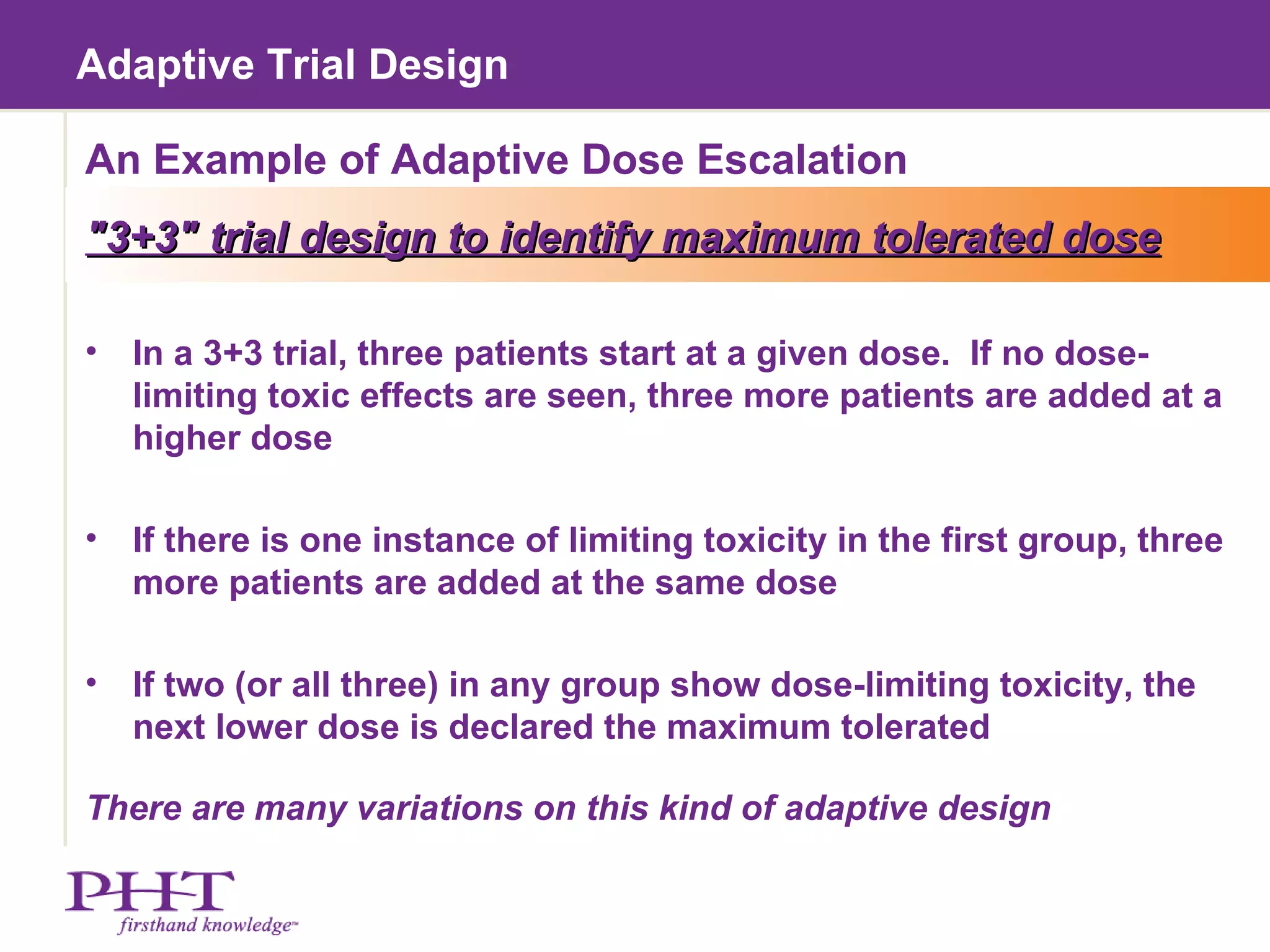
Adaptive Trial Design An Example of Adaptive Dose Escalation "3+3" trial design to identify maximum tolerated dose In a 3+3 trial, three patients start at a given dose.  If no dose-limiting toxic effects are seen, three more patients are added at a higher dose If there is one instance of limiting toxicity in the first group, three more patients are added at the same dose If two (or all three) in any group show dose-limiting toxicity, the next lower dose is declared the maximum tolerated There are many variations on this kind of adaptive design
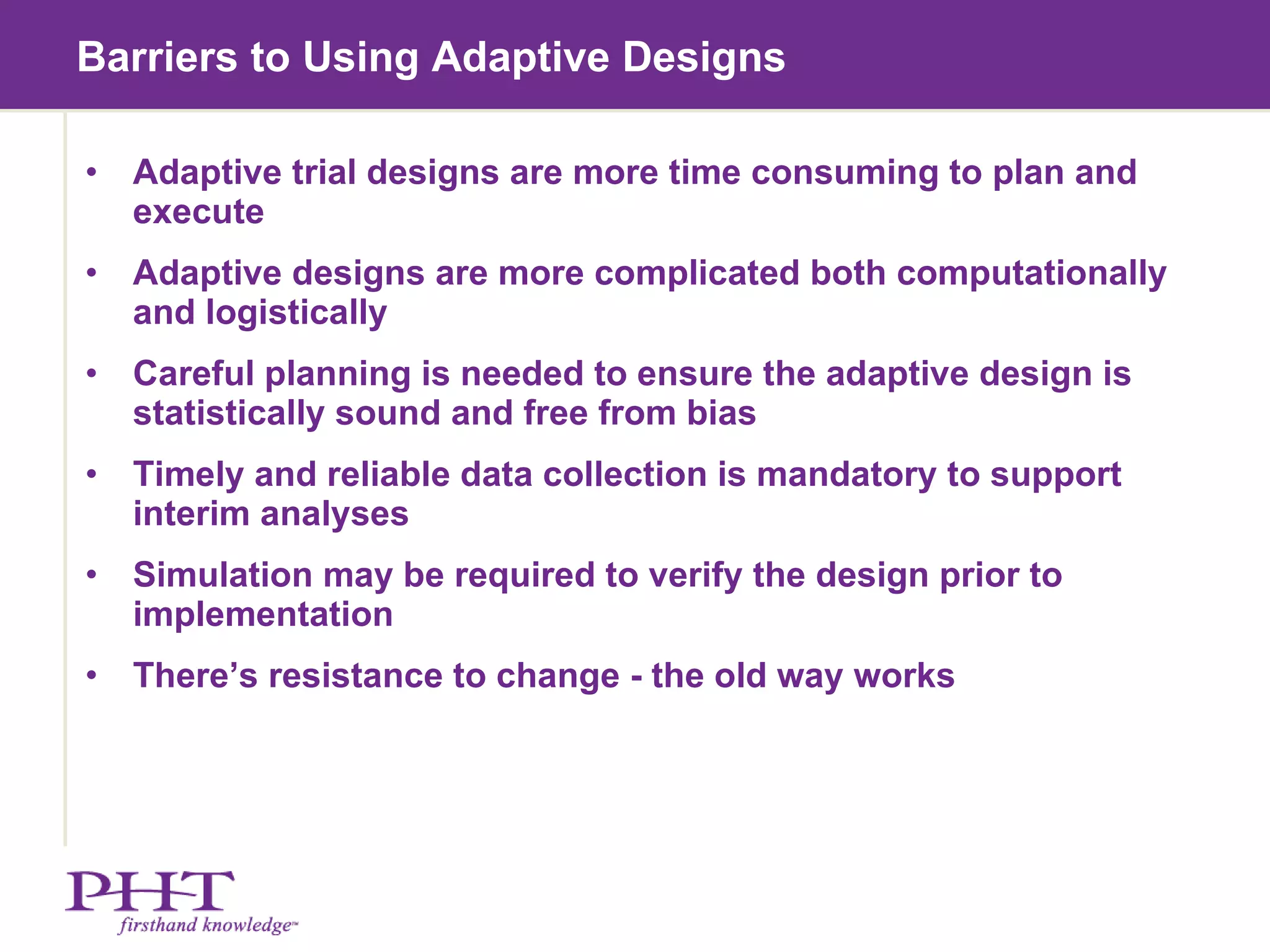
Barriers to Using Adaptive Designs  Adaptive trial designs are more time consuming to plan and execute Adaptive designs are more complicated both computationally and logistically Careful planning is needed to ensure the adaptive design is statistically sound and free from bias Timely and reliable data collection is mandatory to support interim analyses Simulation may be required to verify the design prior to implementation There’s resistance to change - the old way works
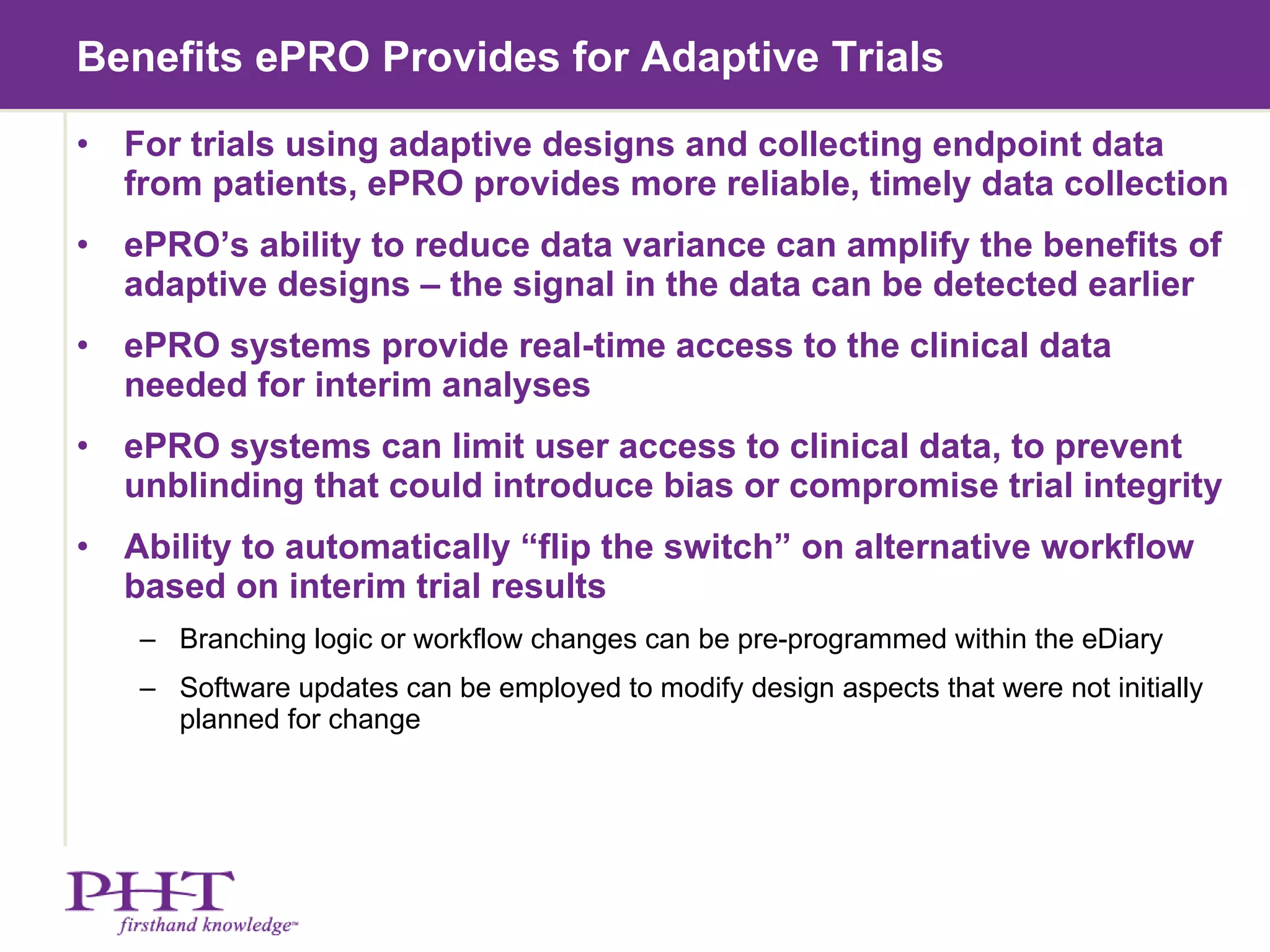
Benefits ePRO Provides for Adaptive Trials  For trials using adaptive designs and collecting endpoint data from patients, ePRO provides more reliable, timely data collection ePRO’s ability to reduce data variance can amplify the benefits of adaptive designs – the signal in the data can be detected earlier ePRO systems provide real-time access to the clinical data needed for interim analyses ePRO systems can limit user access to clinical data, to prevent unblinding that could introduce bias or compromise trial integrity  Ability to automatically “flip the switch” on alternative workflow based on interim trial results Branching logic or workflow changes can be pre-programmed within the eDiary Software updates can be employed to modify design aspects that were not initially planned for change
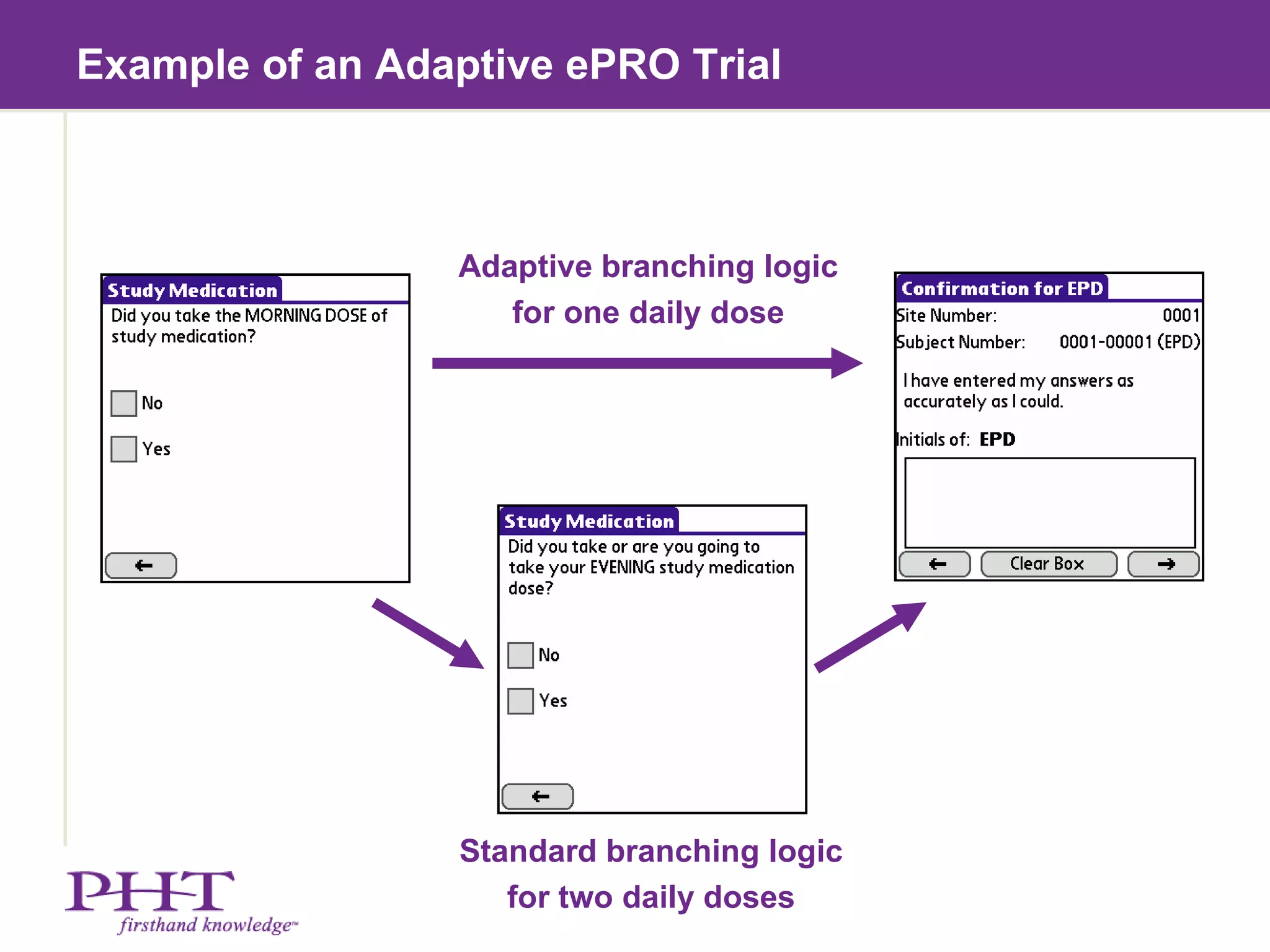
Example of an Adaptive ePRO Trial Adaptive Frequency  of  Dosing  Evening Diary includes two separate responses for intake of Morning and Evening Study Medication Adaptive design can trigger branching logic in Evening Diary Interim Analysis performed to determine if Study Medication should be taken once or twice daily Adaptive design can suppress collection of Evening Study Medication response
Example of an Adaptive ePRO Trial Adaptive branching logic for one daily dose Standard branching logic for two daily doses

ePro Adaptive Design

  • 1.
    Using ePRO inAdaptive Trial Design CBI 4 th PRO Conference Dwight Cooper Global Director, Technical Services PHT Corporation (617) 973-1838 [email_address] 28 May 2009
  • 2.
    Using ePRO inAdaptive Trial Design Traditional ePRO Trial Design Adaptive Trial Designs Types of Designs Barriers to Use Benefits ePRO Provides
  • 3.
    Traditional “Non-Adaptive” ePRODesign Most Electronic Diaries use a Fixed Design Elements of a fixed ePRO Design that do not change… Subject Facing Functionality Diary questions and response choices, branching logic Diary schedule, windows of availability, alarms Translated diary text for each supported language Functionality for Site Personnel Questionnaires and response choices Visit workflow, schedule of questionnaires available at each visit Review screens, calculations, eligibility criteria
  • 4.
    Adapting ePRO Designvia Mid Study Changes The original design can be modified via Software Updates Common Examples of Mid-Study Changes… Protocol Amendment More Frequent Data Collection; e.g. weekly diary merged into evening diary Global Expansion of Trial New Countries, Languages Increase Subject Number Range Incorporate Feedback from Sites and Subjects Add more Rescue Medication choices Update Instructions to Improve Comprehension and Usability
  • 5.
    Adaptive Trial DesignWhat is it? An adaptive trial design is flexible to accommodate anticipated changes during the study by analyzing data as it is collected How does it work? Interim analyses are performed to evaluate whether to adapt the trial design What is the advantage? Decision making occurs within the study before all data are collected rather than after study completion
  • 6.
    Types of AdaptiveTrial Designs Protocol Amendment Sample Size recalculation Change primary endpoint Change statistical parameters Seamless Phase II / III design Adaptive dose escalation To identify maximum tolerated dose Drop loser Inferior treatment groups are dropped Randomization probability recalculation
  • 7.
    Adaptive Trial DesignAn Example of Adaptive Dose Escalation "3+3" trial design to identify maximum tolerated dose In a 3+3 trial, three patients start at a given dose. If no dose-limiting toxic effects are seen, three more patients are added at a higher dose If there is one instance of limiting toxicity in the first group, three more patients are added at the same dose If two (or all three) in any group show dose-limiting toxicity, the next lower dose is declared the maximum tolerated There are many variations on this kind of adaptive design
  • 8.
    Barriers to UsingAdaptive Designs Adaptive trial designs are more time consuming to plan and execute Adaptive designs are more complicated both computationally and logistically Careful planning is needed to ensure the adaptive design is statistically sound and free from bias Timely and reliable data collection is mandatory to support interim analyses Simulation may be required to verify the design prior to implementation There’s resistance to change - the old way works
  • 9.
    Benefits ePRO Providesfor Adaptive Trials For trials using adaptive designs and collecting endpoint data from patients, ePRO provides more reliable, timely data collection ePRO’s ability to reduce data variance can amplify the benefits of adaptive designs – the signal in the data can be detected earlier ePRO systems provide real-time access to the clinical data needed for interim analyses ePRO systems can limit user access to clinical data, to prevent unblinding that could introduce bias or compromise trial integrity Ability to automatically “flip the switch” on alternative workflow based on interim trial results Branching logic or workflow changes can be pre-programmed within the eDiary Software updates can be employed to modify design aspects that were not initially planned for change
  • 10.
    Example of anAdaptive ePRO Trial Adaptive Frequency of Dosing Evening Diary includes two separate responses for intake of Morning and Evening Study Medication Adaptive design can trigger branching logic in Evening Diary Interim Analysis performed to determine if Study Medication should be taken once or twice daily Adaptive design can suppress collection of Evening Study Medication response
  • 11.
    Example of anAdaptive ePRO Trial Adaptive branching logic for one daily dose Standard branching logic for two daily doses