Clinical Practice   Initial Management of Epilepsy Jacqueline A. French, M.D., and Timothy A. Pedley, M.D. N Engl J Med Volume 359(2):166-176 July 10, 2008
A 29-year-old woman presents for evaluation. The previous evening, her husband, who was in the next room, heard unusual sounds and found her lying on the bed looking dazed. She was confused for a few minutes but quickly returned to normal. On questioning, she recalls an unwitnessed event about 1 month previously; at that time, she awoke feeling mildly confused, had sore muscles, and discovered she had bitten her tongue. How should she be evaluated and treated? Case Vignette
The Clinical Problem Strategies and Evidence Diagnosis Evaluation Pharmacologic Therapy Adverse Effects Choice of Antiepileptic Drugs in Women Concurrent Medical Conditions Monitoring Areas of Uncertainty Guidelines from Professional Societies Conclusions and Recommendations Outline
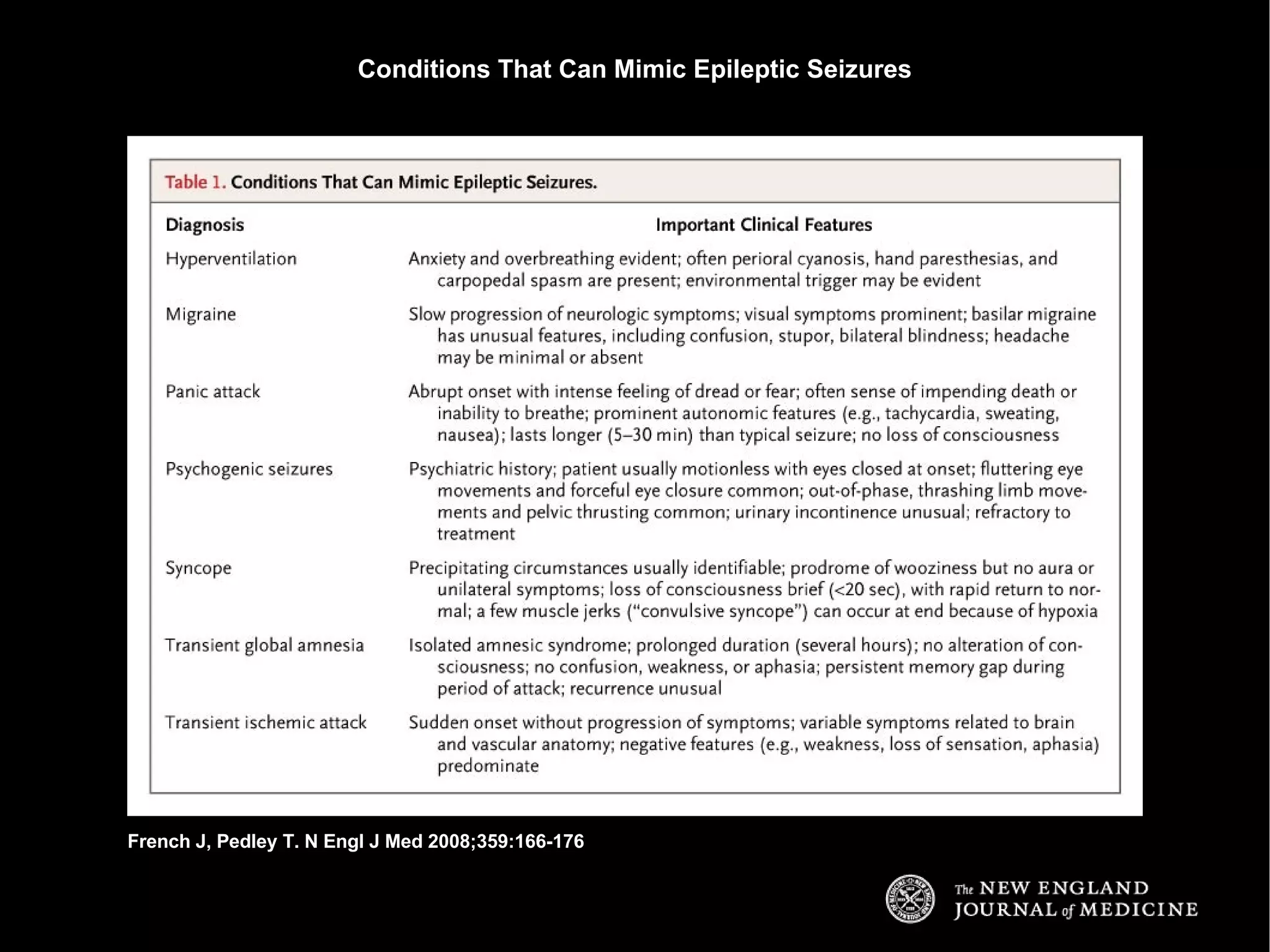
Conditions That Can Mimic Epileptic Seizures French J, Pedley T. N Engl J Med 2008;359:166-176
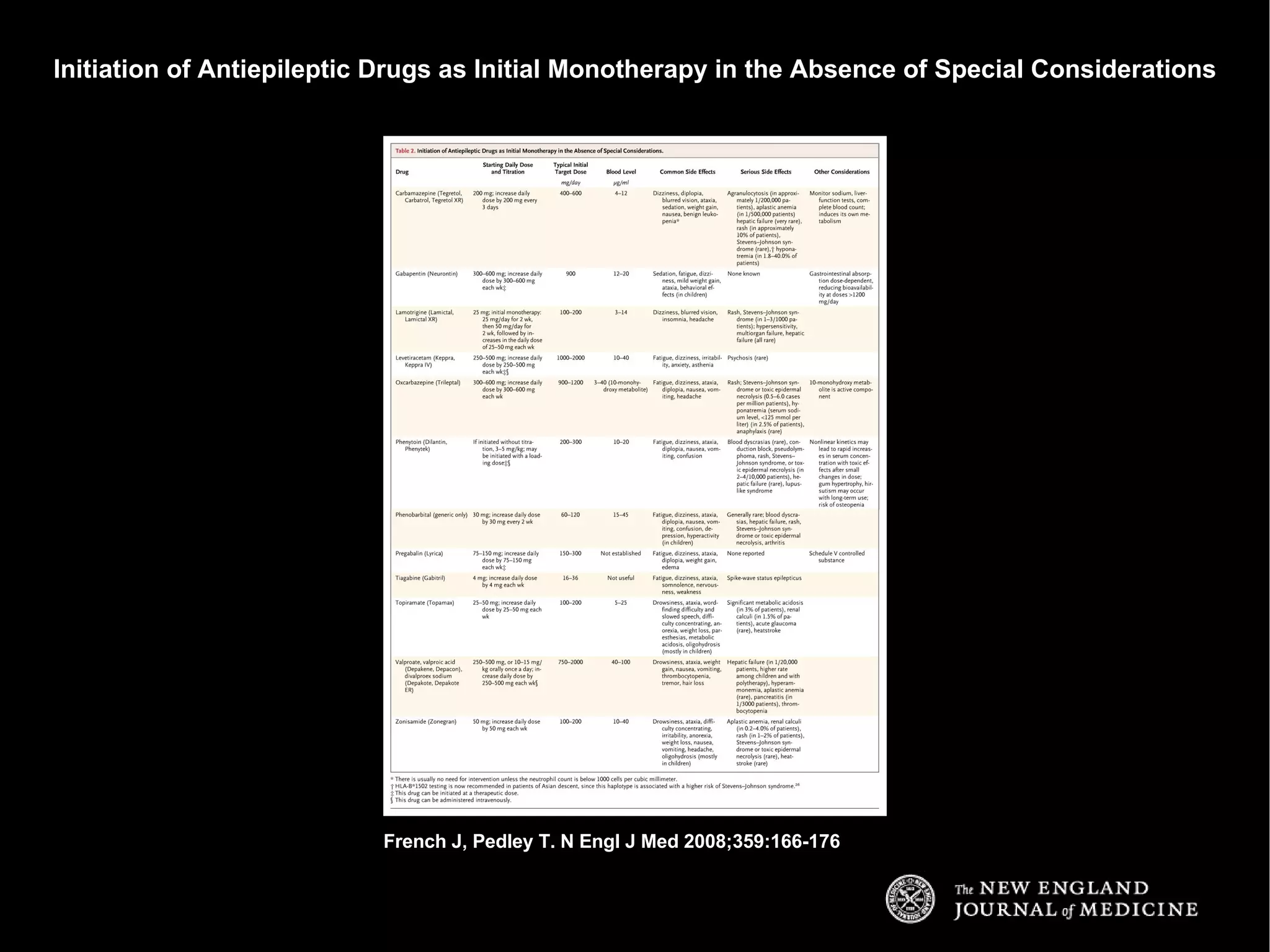
Initiation of Antiepileptic Drugs as Initial Monotherapy in the Absence of Special Considerations French J, Pedley T. N Engl J Med 2008;359:166-176
Factors Affecting the Choice of Antiepileptic Drugs in Specific Patient Populations French J, Pedley T. N Engl J Med 2008;359:166-176
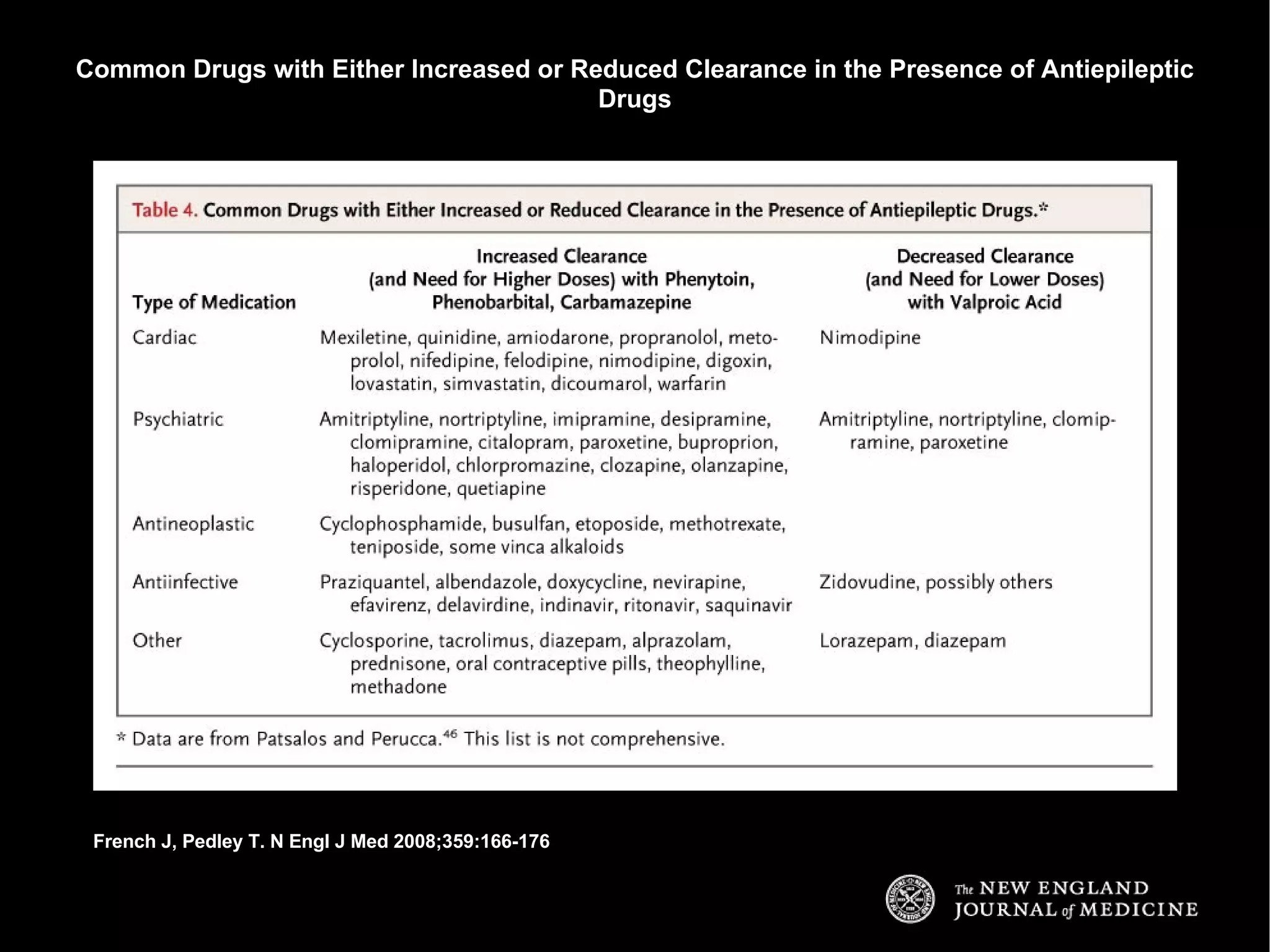
Common Drugs with Either Increased or Reduced Clearance in the Presence of Antiepileptic Drugs French J, Pedley T. N Engl J Med 2008;359:166-176
The patient described in the vignette has had two probable seizures, one witnessed and the other suggested by history, and it is therefore appropriate to initiate antiepileptic drug therapy. Evaluation would include a thorough neurologic examination, EEG, and brain MRI, but treatment would not be dependent on abnormal findings. If the EEG and MRI are normal, there is insufficient information to classify the seizures definitively as being partial or generalized, so a broad-spectrum antiepileptic drug is preferable. Conclusions and Recommendations
If the patient uses, or plans to use, an oral contraceptive pill, it would be preferable to avoid antiepileptic drugs that will increase the clearance of oral contraceptive pills; oral contraceptive pills with a higher estrogen content, which are commonly recommended in this setting, may carry increased health risks. Valproate should also be avoided because of the risk of teratogenicity. We would consider lamotrigine or levetiracetam to be preferred options for initial treatment in this patient; as always, this recommendation should be predicated on individual patient characteristics. Conclusions and Recommendations

Epilepsia Nejm

  • 1.
    Clinical Practice Initial Management of Epilepsy Jacqueline A. French, M.D., and Timothy A. Pedley, M.D. N Engl J Med Volume 359(2):166-176 July 10, 2008
  • 2.
    A 29-year-old womanpresents for evaluation. The previous evening, her husband, who was in the next room, heard unusual sounds and found her lying on the bed looking dazed. She was confused for a few minutes but quickly returned to normal. On questioning, she recalls an unwitnessed event about 1 month previously; at that time, she awoke feeling mildly confused, had sore muscles, and discovered she had bitten her tongue. How should she be evaluated and treated? Case Vignette
  • 3.
    The Clinical ProblemStrategies and Evidence Diagnosis Evaluation Pharmacologic Therapy Adverse Effects Choice of Antiepileptic Drugs in Women Concurrent Medical Conditions Monitoring Areas of Uncertainty Guidelines from Professional Societies Conclusions and Recommendations Outline
  • 4.
    Conditions That CanMimic Epileptic Seizures French J, Pedley T. N Engl J Med 2008;359:166-176
  • 5.
    Initiation of AntiepilepticDrugs as Initial Monotherapy in the Absence of Special Considerations French J, Pedley T. N Engl J Med 2008;359:166-176
  • 6.
    Factors Affecting theChoice of Antiepileptic Drugs in Specific Patient Populations French J, Pedley T. N Engl J Med 2008;359:166-176
  • 7.
    Common Drugs withEither Increased or Reduced Clearance in the Presence of Antiepileptic Drugs French J, Pedley T. N Engl J Med 2008;359:166-176
  • 8.
    The patient describedin the vignette has had two probable seizures, one witnessed and the other suggested by history, and it is therefore appropriate to initiate antiepileptic drug therapy. Evaluation would include a thorough neurologic examination, EEG, and brain MRI, but treatment would not be dependent on abnormal findings. If the EEG and MRI are normal, there is insufficient information to classify the seizures definitively as being partial or generalized, so a broad-spectrum antiepileptic drug is preferable. Conclusions and Recommendations
  • 9.
    If the patientuses, or plans to use, an oral contraceptive pill, it would be preferable to avoid antiepileptic drugs that will increase the clearance of oral contraceptive pills; oral contraceptive pills with a higher estrogen content, which are commonly recommended in this setting, may carry increased health risks. Valproate should also be avoided because of the risk of teratogenicity. We would consider lamotrigine or levetiracetam to be preferred options for initial treatment in this patient; as always, this recommendation should be predicated on individual patient characteristics. Conclusions and Recommendations