ENVIRONMENTAL VARIABLES
AS CATEGORY OF KEY
SUCCESS VARIABLES
BY MARKO LUCAS HUPA B.A LGM, MPA
POWER POINT PRESENTATION
QUESTION
 Since the organization operates in
a complex socio-economic and
political environment it becomes
necessary to identify
environmental variables as
category of key success variables.
Discuss
PRESENTATION COVERAGE
 Key success variables
 Environmental variables
 Environmental variables as a part/category of
key success variables
What are key success
variables?
 Bruno and Leidecker (1984) have defined key
success variables as “those characteristics,
conditions or variables that, when properly
sustained, maintained, or managed, can have a
significant impact on the success of a firm
competing in particular industry
 Limited number of areas in which results, if they
are satisfactory, will ensure successful competitive
performance for the organization (Rockart, 1979)
 Are critical factors/activities required for ensuring
the success of the organization.
CONT…..
 The notion of Key success variables was first
introduced by Daniel in (1961) and popularized
by Rockart in (1979) with the idea there are
few factors which are decisive for the success
of organization and these factors can be
ascertained so as to achieve overall success
of organization.
 Key success factors involves few areas where
things must go right for the organization to
flourish and for managers goals to be attained
(Bullen & Rockart, Pg.7)
Sources of key success
variables
 Rockart 1979, distinguishes between five
sources of critical success factors;
 The industry
 Competitive strategy
 Environmental factors
 Temporal factors
 Managerial position
Environmental variables
 It involves set of forces surrounding an
organization that have potential to affect the
way it operates
 However the organization can adapt to their
threats and influence by using controllable mix
element from the environment.
 Environmental variables can be general
environment or task environment
Categories of Environmental
variables
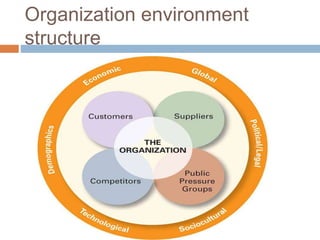
 General Environmental variables consists;-
 Political environment
 Technological environment
 Demographic environment
 Economic environment
 Social cultural environment
Cont…
 Task environment
 Customers
 Competitors
 Suppliers
Organization environment
structure
Political environment
 It refers to the government laws, regulations
and policies and activities which are designed
to influence organizations indirectly and set
boundaries on what they can or cannot do.
Technological environment
 New development are made in every
organizations in terms of innovative approach
in forming new products, it also requires a
company to stay ahead and update their
technology as it becomes outdated.
Economic Environment
 Economic environment includes the impact of
economic factors like interest rates, inflation,
monetary & fiscal policy, taxes and wage rates.
Demographic factors
 Demography it concern with the population of
the people such as their age, sex, marital
status occupation, and family.
 Understanding the nature of population in the
business it can help you to forecast future
trend and consumption of your product
Social -cultural environment
 These are some important factors that
organizations must analyze. It includes society
lifestyle, beliefs and culture
 These factors play an important role because
they determine the kind of goods, services and
standards that society values.
 Identifying society values may help you to
determine what kind of goods to produce.
Customers
 Since customers are the ones who acquire an
organization products and services it is
important to ensure there is:
 New innovations on products and services
 New methods of marketing
Competitors
 Competitors refers to the numbers of similar
products, brands, marketers in your industry
who produce same products as you do.
 It is important to know all the competitors, their
organization size, marketing strategies and
technology
 For example a company may purchase its
competitors products for the purpose of
analyzing its quality and construction
techniques.
Suppliers
 Suppliers are organizations that provides
resources for other organizations.
 An organization so as to ensure its continuity
should avoid depending on a single supplier.
 Building long term trusting relationship
between the organization and its supplier.
Conclusion
 If there is positive response towards
environmental variables they become part and
parcel of key success variables since when
you take them into account they will help you
to monitor and control the situation, respond
with the threats and forecast the future.
 However the adaptability of the threats will
depend on the capacity of organization.
END
THANK YOU FOR LISTEN

Environmental variables and key success variables

  • 1.
    ENVIRONMENTAL VARIABLES AS CATEGORYOF KEY SUCCESS VARIABLES BY MARKO LUCAS HUPA B.A LGM, MPA POWER POINT PRESENTATION
  • 2.
    QUESTION  Since theorganization operates in a complex socio-economic and political environment it becomes necessary to identify environmental variables as category of key success variables. Discuss
  • 3.
    PRESENTATION COVERAGE  Keysuccess variables  Environmental variables  Environmental variables as a part/category of key success variables
  • 4.
    What are keysuccess variables?  Bruno and Leidecker (1984) have defined key success variables as “those characteristics, conditions or variables that, when properly sustained, maintained, or managed, can have a significant impact on the success of a firm competing in particular industry  Limited number of areas in which results, if they are satisfactory, will ensure successful competitive performance for the organization (Rockart, 1979)  Are critical factors/activities required for ensuring the success of the organization.
  • 5.
    CONT…..  The notionof Key success variables was first introduced by Daniel in (1961) and popularized by Rockart in (1979) with the idea there are few factors which are decisive for the success of organization and these factors can be ascertained so as to achieve overall success of organization.  Key success factors involves few areas where things must go right for the organization to flourish and for managers goals to be attained (Bullen & Rockart, Pg.7)
  • 6.
    Sources of keysuccess variables  Rockart 1979, distinguishes between five sources of critical success factors;  The industry  Competitive strategy  Environmental factors  Temporal factors  Managerial position
  • 7.
    Environmental variables  Itinvolves set of forces surrounding an organization that have potential to affect the way it operates  However the organization can adapt to their threats and influence by using controllable mix element from the environment.  Environmental variables can be general environment or task environment
  • 8.
    Categories of Environmental variables General Environmental variables consists;-  Political environment  Technological environment  Demographic environment  Economic environment  Social cultural environment
  • 9.
    Cont…  Task environment Customers  Competitors  Suppliers
  • 10.
  • 11.
    Political environment  Itrefers to the government laws, regulations and policies and activities which are designed to influence organizations indirectly and set boundaries on what they can or cannot do.
  • 12.
    Technological environment  Newdevelopment are made in every organizations in terms of innovative approach in forming new products, it also requires a company to stay ahead and update their technology as it becomes outdated.
  • 13.
    Economic Environment  Economicenvironment includes the impact of economic factors like interest rates, inflation, monetary & fiscal policy, taxes and wage rates.
  • 14.
    Demographic factors  Demographyit concern with the population of the people such as their age, sex, marital status occupation, and family.  Understanding the nature of population in the business it can help you to forecast future trend and consumption of your product
  • 15.
    Social -cultural environment These are some important factors that organizations must analyze. It includes society lifestyle, beliefs and culture  These factors play an important role because they determine the kind of goods, services and standards that society values.  Identifying society values may help you to determine what kind of goods to produce.
  • 16.
    Customers  Since customersare the ones who acquire an organization products and services it is important to ensure there is:  New innovations on products and services  New methods of marketing
  • 17.
    Competitors  Competitors refersto the numbers of similar products, brands, marketers in your industry who produce same products as you do.  It is important to know all the competitors, their organization size, marketing strategies and technology  For example a company may purchase its competitors products for the purpose of analyzing its quality and construction techniques.
  • 18.
    Suppliers  Suppliers areorganizations that provides resources for other organizations.  An organization so as to ensure its continuity should avoid depending on a single supplier.  Building long term trusting relationship between the organization and its supplier.
  • 19.
    Conclusion  If thereis positive response towards environmental variables they become part and parcel of key success variables since when you take them into account they will help you to monitor and control the situation, respond with the threats and forecast the future.  However the adaptability of the threats will depend on the capacity of organization.
  • 20.