Semester : II
Course No. : VAC-121
Credit Hrs. : 3(2+1)
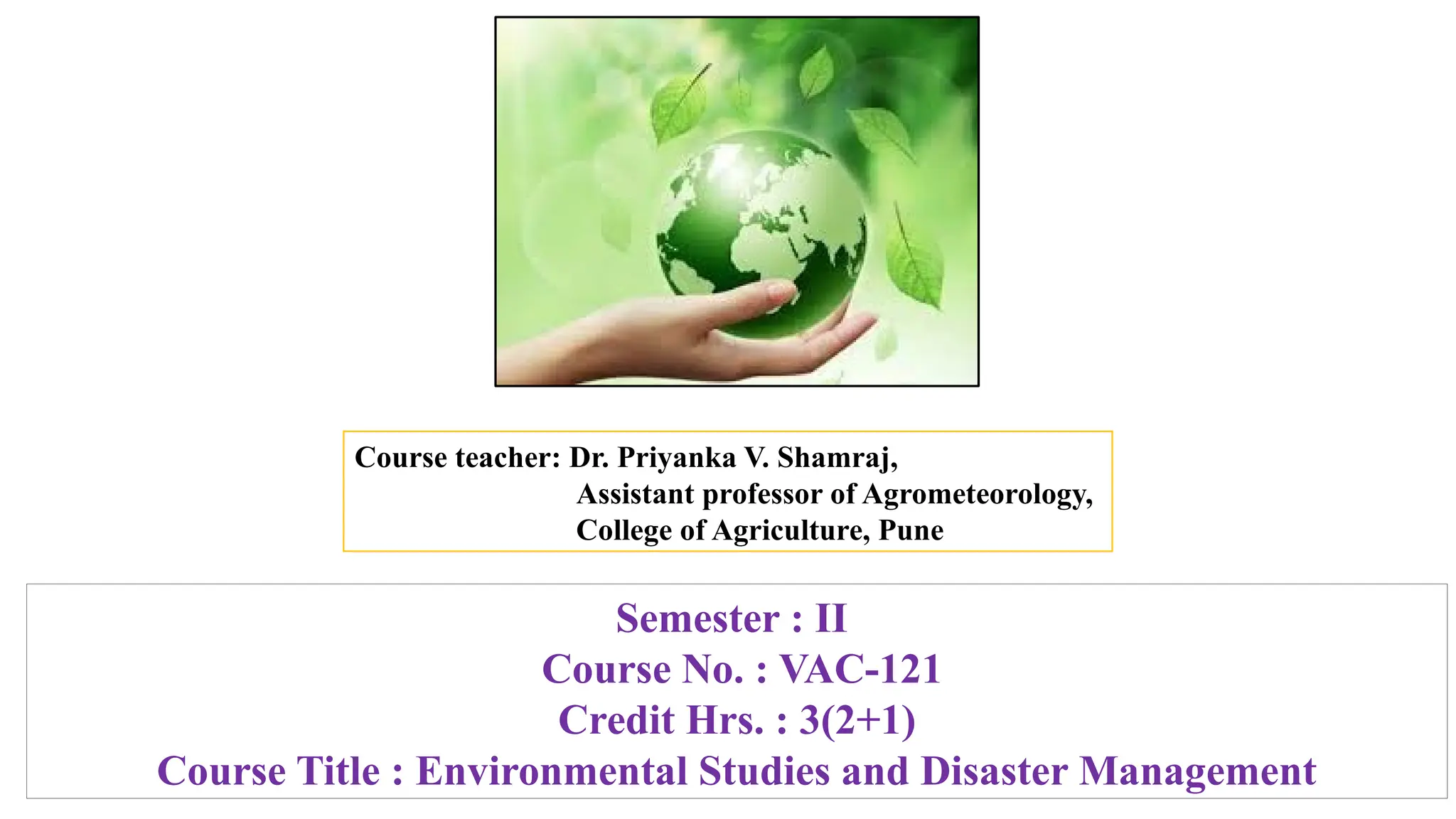
Course Title : Environmental Studies and Disaster Management
Course teacher: Dr. Priyanka V. Shamraj,
Assistant professor of Agrometeorology,
College of Agriculture, Pune
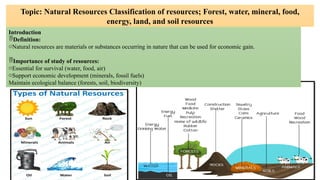
Topic: Natural Resources Classification of resources; Forest, water, mineral, food,
energy, land, and soil resources
Introduction
Definition:
oNatural resources are materials or substances occurring in nature that can be used for economic gain.
Importance of study of resources:
oEssential for survival (water, food, air)
oSupport economic development (minerals, fossil fuels)
Maintain ecological balance (forests, soil, biodiversity)
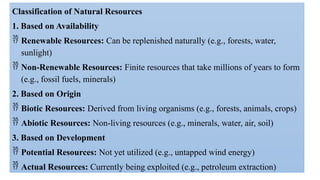
Classification of Natural Resources
1. Based on Availability
 Renewable Resources: Can be replenished naturally (e.g., forests, water,
sunlight)
 Non-Renewable Resources: Finite resources that take millions of years to form
(e.g., fossil fuels, minerals)
2. Based on Origin
 Biotic Resources: Derived from living organisms (e.g., forests, animals, crops)
 Abiotic Resources: Non-living resources (e.g., minerals, water, air, soil)
3. Based on Development
 Potential Resources: Not yet utilized (e.g., untapped wind energy)
 Actual Resources: Currently being exploited (e.g., petroleum extraction)
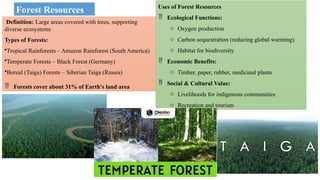
Definition: Large areas covered with trees, supporting
diverse ecosystems
Types of Forests:
•Tropical Rainforests – Amazon Rainforest (South America)
•Temperate Forests – Black Forest (Germany)
•Boreal (Taiga) Forests – Siberian Taiga (Russia)
 Forests cover about 31% of Earth's land area
Uses of Forest Resources
 Ecological Functions:
o Oxygen production
o Carbon sequestration (reducing global warming)
o Habitat for biodiversity
 Economic Benefits:
o Timber, paper, rubber, medicinal plants
 Social & Cultural Value:
o Livelihoods for indigenous communities
o Recreation and tourism
Forest Resources
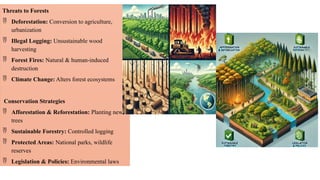
Threats to Forests
 Deforestation: Conversion to agriculture,
urbanization
 Illegal Logging: Unsustainable wood
harvesting
 Forest Fires: Natural & human-induced
destruction
 Climate Change: Alters forest ecosystems
Conservation Strategies
 Afforestation & Reforestation: Planting new
trees
 Sustainable Forestry: Controlled logging
 Protected Areas: National parks, wildlife
reserves
 Legislation & Policies: Environmental laws
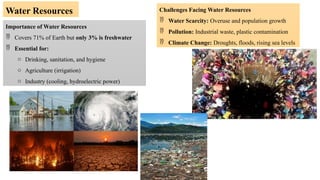
Importance of Water Resources
 Covers 71% of Earth but only 3% is freshwater
 Essential for:
o Drinking, sanitation, and hygiene
o Agriculture (irrigation)
o Industry (cooling, hydroelectric power)
Challenges Facing Water Resources
 Water Scarcity: Overuse and population growth
 Pollution: Industrial waste, plastic contamination
 Climate Change: Droughts, floods, rising sea levels
Water Resources
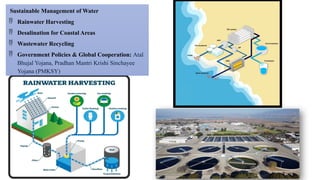
Sustainable Management of Water
 Rainwater Harvesting
 Desalination for Coastal Areas
 Wastewater Recycling
 Government Policies & Global Cooperation: Atal
Bhujal Yojana, Pradhan Mantri Krishi Sinchayee
Yojana (PMKSY)
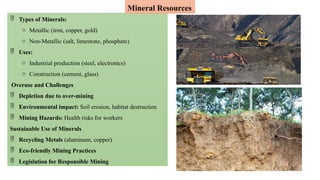
 Types of Minerals:
o Metallic (iron, copper, gold)
o Non-Metallic (salt, limestone, phosphate)
 Uses:
o Industrial production (steel, electronics)
o Construction (cement, glass)
Overuse and Challenges
 Depletion due to over-mining
 Environmental impact: Soil erosion, habitat destruction
 Mining Hazards: Health risks for workers
Sustainable Use of Minerals
 Recycling Metals (aluminum, copper)
 Eco-friendly Mining Practices
 Legislation for Responsible Mining
Mineral Resources
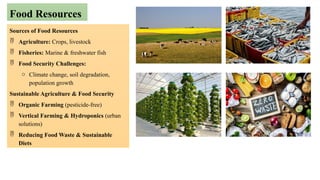
Food Resources
Sources of Food Resources
 Agriculture: Crops, livestock
 Fisheries: Marine & freshwater fish
 Food Security Challenges:
o Climate change, soil degradation,
population growth
Sustainable Agriculture & Food Security
 Organic Farming (pesticide-free)
 Vertical Farming & Hydroponics (urban
solutions)
 Reducing Food Waste & Sustainable
Diets
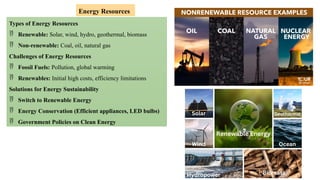
Types of Energy Resources
 Renewable: Solar, wind, hydro, geothermal, biomass
 Non-renewable: Coal, oil, natural gas
Challenges of Energy Resources
 Fossil Fuels: Pollution, global warming
 Renewables: Initial high costs, efficiency limitations
Solutions for Energy Sustainability
 Switch to Renewable Energy
 Energy Conservation (Efficient appliances, LED bulbs)
 Government Policies on Clean Energy
Energy Resources
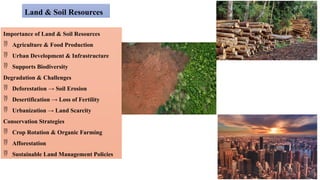
Importance of Land & Soil Resources
 Agriculture & Food Production
 Urban Development & Infrastructure
 Supports Biodiversity
Degradation & Challenges
 Deforestation → Soil Erosion
 Desertification → Loss of Fertility
 Urbanization → Land Scarcity
Conservation Strategies
 Crop Rotation & Organic Farming
 Afforestation
 Sustainable Land Management Policies
Land & Soil Resources
Future of Natural Resources
Human Impact & Future Challenges
 Population Growth → More Demand
 Climate Change → Alters Resource Availability
 Industrialization → Pollution & Waste
Global Conservation Initiatives
 United Nations Sustainable Development Goals (SDGs)
 Kyoto Protocol & Paris Agreement
 Environmental Laws & Carbon Footprint Reduction
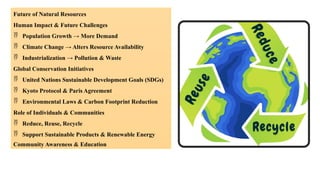
Role of Individuals & Communities
 Reduce, Reuse, Recycle
 Support Sustainable Products & Renewable Energy
Community Awareness & Education
Environmental science and disaster management

Environmental science and disaster management

  • 1.
    Semester : II CourseNo. : VAC-121 Credit Hrs. : 3(2+1) Course Title : Environmental Studies and Disaster Management Course teacher: Dr. Priyanka V. Shamraj, Assistant professor of Agrometeorology, College of Agriculture, Pune
  • 2.
    Topic: Natural ResourcesClassification of resources; Forest, water, mineral, food, energy, land, and soil resources Introduction Definition: oNatural resources are materials or substances occurring in nature that can be used for economic gain. Importance of study of resources: oEssential for survival (water, food, air) oSupport economic development (minerals, fossil fuels) Maintain ecological balance (forests, soil, biodiversity)
  • 3.
    Classification of NaturalResources 1. Based on Availability  Renewable Resources: Can be replenished naturally (e.g., forests, water, sunlight)  Non-Renewable Resources: Finite resources that take millions of years to form (e.g., fossil fuels, minerals) 2. Based on Origin  Biotic Resources: Derived from living organisms (e.g., forests, animals, crops)  Abiotic Resources: Non-living resources (e.g., minerals, water, air, soil) 3. Based on Development  Potential Resources: Not yet utilized (e.g., untapped wind energy)  Actual Resources: Currently being exploited (e.g., petroleum extraction)
  • 4.
    Definition: Large areascovered with trees, supporting diverse ecosystems Types of Forests: •Tropical Rainforests – Amazon Rainforest (South America) •Temperate Forests – Black Forest (Germany) •Boreal (Taiga) Forests – Siberian Taiga (Russia)  Forests cover about 31% of Earth's land area Uses of Forest Resources  Ecological Functions: o Oxygen production o Carbon sequestration (reducing global warming) o Habitat for biodiversity  Economic Benefits: o Timber, paper, rubber, medicinal plants  Social & Cultural Value: o Livelihoods for indigenous communities o Recreation and tourism Forest Resources
  • 5.
    Threats to Forests Deforestation: Conversion to agriculture, urbanization  Illegal Logging: Unsustainable wood harvesting  Forest Fires: Natural & human-induced destruction  Climate Change: Alters forest ecosystems Conservation Strategies  Afforestation & Reforestation: Planting new trees  Sustainable Forestry: Controlled logging  Protected Areas: National parks, wildlife reserves  Legislation & Policies: Environmental laws
  • 6.
    Importance of WaterResources  Covers 71% of Earth but only 3% is freshwater  Essential for: o Drinking, sanitation, and hygiene o Agriculture (irrigation) o Industry (cooling, hydroelectric power) Challenges Facing Water Resources  Water Scarcity: Overuse and population growth  Pollution: Industrial waste, plastic contamination  Climate Change: Droughts, floods, rising sea levels Water Resources
  • 7.
    Sustainable Management ofWater  Rainwater Harvesting  Desalination for Coastal Areas  Wastewater Recycling  Government Policies & Global Cooperation: Atal Bhujal Yojana, Pradhan Mantri Krishi Sinchayee Yojana (PMKSY)
  • 8.
     Types ofMinerals: o Metallic (iron, copper, gold) o Non-Metallic (salt, limestone, phosphate)  Uses: o Industrial production (steel, electronics) o Construction (cement, glass) Overuse and Challenges  Depletion due to over-mining  Environmental impact: Soil erosion, habitat destruction  Mining Hazards: Health risks for workers Sustainable Use of Minerals  Recycling Metals (aluminum, copper)  Eco-friendly Mining Practices  Legislation for Responsible Mining Mineral Resources
  • 9.
    Food Resources Sources ofFood Resources  Agriculture: Crops, livestock  Fisheries: Marine & freshwater fish  Food Security Challenges: o Climate change, soil degradation, population growth Sustainable Agriculture & Food Security  Organic Farming (pesticide-free)  Vertical Farming & Hydroponics (urban solutions)  Reducing Food Waste & Sustainable Diets
  • 10.
    Types of EnergyResources  Renewable: Solar, wind, hydro, geothermal, biomass  Non-renewable: Coal, oil, natural gas Challenges of Energy Resources  Fossil Fuels: Pollution, global warming  Renewables: Initial high costs, efficiency limitations Solutions for Energy Sustainability  Switch to Renewable Energy  Energy Conservation (Efficient appliances, LED bulbs)  Government Policies on Clean Energy Energy Resources
  • 11.
    Importance of Land& Soil Resources  Agriculture & Food Production  Urban Development & Infrastructure  Supports Biodiversity Degradation & Challenges  Deforestation → Soil Erosion  Desertification → Loss of Fertility  Urbanization → Land Scarcity Conservation Strategies  Crop Rotation & Organic Farming  Afforestation  Sustainable Land Management Policies Land & Soil Resources
  • 12.
    Future of NaturalResources Human Impact & Future Challenges  Population Growth → More Demand  Climate Change → Alters Resource Availability  Industrialization → Pollution & Waste Global Conservation Initiatives  United Nations Sustainable Development Goals (SDGs)  Kyoto Protocol & Paris Agreement  Environmental Laws & Carbon Footprint Reduction Role of Individuals & Communities  Reduce, Reuse, Recycle  Support Sustainable Products & Renewable Energy Community Awareness & Education