Steve Westgarth
Entity Framework - to the Unit of Work Design Pattern and Beyond
Software Developer
Lets start at the beginning
Classic ASP
Lets start at the beginning
ASP.NET Web Forms
Major Issues
• Undefined Application Architecture with lack of Separation of
Concerns (SoC)
• Complex Pages with Performance issues.
• Lack of abstraction with least control over HTML.
• Limited support for testing and SEO.
• Lack of Re-usability and minimal parallel Development.
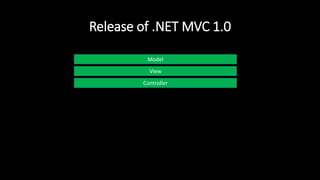
13th March 2009 – A great day for developers
Model
View
Controller
Release of .NET MVC 1.0
var MVC = new MassiveViewController();
Demo
Major Issues
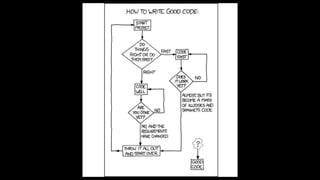
• Limited Programming / Coding Standards / Agreed Best Practice
• Difficult to Unit Test
• View Controller Bloat
• Difficult to debug
• Difficult to maintain
• Working together is challenging
• Code slow and not responsive
• ….
We Need a Design Pattern!
Separation of Concerns
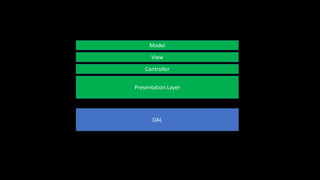
DAL
Presentation Layer
Model
View
Controller
Improvements We Made
• Strongly Typed Models
• Static Helper Methods for Transforming Model Objects
• DAL Extension Methods
• Model Annotations
• Introduction of a Base Controller
• Agreed Folder Structure
• Dependency Injection
Demo
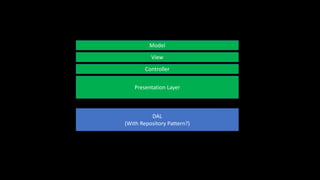
DAL
(With Repository Pattern?)
Presentation Layer
Model
View
Controller
What’s the Purpose of a Repository Pattern?
• Good for Testing
• Loose Coupling (Easy to Upgrade to New Framework Versions)
• Easily Extend Database Functionality
• Clean Architecture – Independent of Frameworks
• Ability to remove some abilities / features of EF
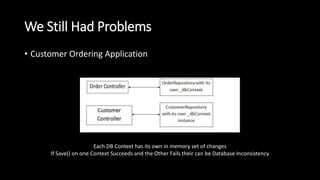
We Still Had Problems
• Customer Ordering Application
Each DB Context has its own in memory set of changes
If Save() on one Context Succeeds and the Other Fails their can be Database Inconsistency
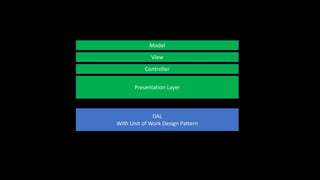
DAL
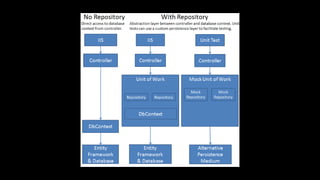
With Unit of Work Design Pattern
Presentation Layer
Model
View
Controller
Unit of Work Design Pattern
• Single Transaction – Minimizing Database Calls
• Creates an abstraction layer between the database and the
application
• Facilitates Automated Unit Testing
Demo
SOLID Principles
The first 5 principles of Object Orientated Design
S ingle Responsibility
Each class has one job to do
Open / Closed
Open for Extension but Closed for Modification
L iskov substitution
If S is a subtype of T, then objects of type T may be replaced with objects of type S without altering any of the
desirable properties of T
I nterface Segregation
No client should be forced to depend on methods it does not use
Dependency Inversion
High-level modules should not depend on low-level modules. Both should depend on abstractions.
Abstractions should not depend on details. Details should depend on abstractions.
Unit of Work Violates a Number of SOLID
Principles
• Nominal Abstraction – Its still closely coupled with Entity Framework
• The DBContext Entity makes it all the way into the application layer
• Violates the Single Responsibility Principle
• Leads to Opaque Dependancies, all dependancies are hard coded into
the UnitOfWork Class making it difficult to extend.
• Violates the Open / Closed Principle
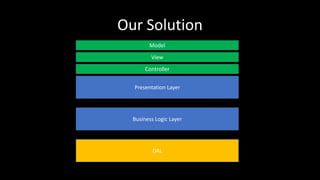
DAL
Presentation Layer
Model
View
Controller
Business Logic Layer
Our Solution
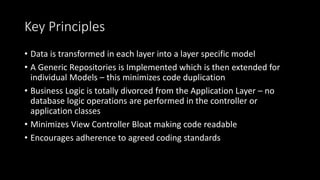
Key Principles
• Data is transformed in each layer into a layer specific model
• A Generic Repositories is Implemented which is then extended for
individual Models – this minimizes code duplication
• Business Logic is totally divorced from the Application Layer – no
database logic operations are performed in the controller or
application classes
• Minimizes View Controller Bloat making code readable
• Encourages adherence to agreed coding standards
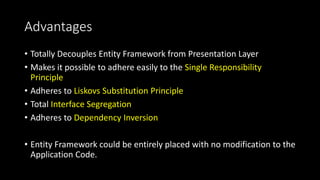
Advantages
• Totally Decouples Entity Framework from Presentation Layer
• Makes it possible to adhere easily to the Single Responsibility
Principle
• Adheres to Liskovs Substitution Principle
• Total Interface Segregation
• Adheres to Dependency Inversion
• Entity Framework could be entirely placed with no modification to the
Application Code.
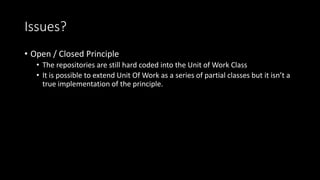
Issues?
• Open / Closed Principle
• The repositories are still hard coded into the Unit of Work Class
• It is possible to extend Unit Of Work as a series of partial classes but it isn’t a
true implementation of the principle.
To Summarise
• Do you have an agreed Design Pattern In Your Company? When did
you last challenge the accepted norm?
• Adhere to the Solid Principles, it makes for cleaner code
• If you use Unit of Work – consider how you can make it better
• If you don’t use Unit of Work explore its merits …. And then consider
how you can make it better.
Steve Westgarth
Entity Framework - to the Unit of Work Design Pattern and Beyond
Code @ github.com/stephenwestgarth/DesignPattern.git
@stevewestgarth on Twitter
Software Developer
Android and iOS Conference
www.codemobile.co.uk
Use Discount Code DOTNETNOTTS to get 25% off

Entity Framework: To the Unit of Work Design Pattern and Beyond

  • 1.
    Steve Westgarth Entity Framework- to the Unit of Work Design Pattern and Beyond Software Developer
  • 2.
    Lets start atthe beginning Classic ASP
  • 3.
    Lets start atthe beginning ASP.NET Web Forms
  • 4.
    Major Issues • UndefinedApplication Architecture with lack of Separation of Concerns (SoC) • Complex Pages with Performance issues. • Lack of abstraction with least control over HTML. • Limited support for testing and SEO. • Lack of Re-usability and minimal parallel Development.
  • 5.
    13th March 2009– A great day for developers
  • 6.
  • 8.
    var MVC =new MassiveViewController();
  • 9.
  • 10.
    Major Issues • LimitedProgramming / Coding Standards / Agreed Best Practice • Difficult to Unit Test • View Controller Bloat • Difficult to debug • Difficult to maintain • Working together is challenging • Code slow and not responsive • ….
  • 12.
    We Need aDesign Pattern!
  • 13.
  • 14.
  • 15.
    Improvements We Made •Strongly Typed Models • Static Helper Methods for Transforming Model Objects • DAL Extension Methods • Model Annotations • Introduction of a Base Controller • Agreed Folder Structure • Dependency Injection
  • 16.
  • 17.
  • 18.
    What’s the Purposeof a Repository Pattern? • Good for Testing • Loose Coupling (Easy to Upgrade to New Framework Versions) • Easily Extend Database Functionality • Clean Architecture – Independent of Frameworks • Ability to remove some abilities / features of EF
  • 19.
    We Still HadProblems • Customer Ordering Application Each DB Context has its own in memory set of changes If Save() on one Context Succeeds and the Other Fails their can be Database Inconsistency
  • 20.
    DAL With Unit ofWork Design Pattern Presentation Layer Model View Controller
  • 22.
    Unit of WorkDesign Pattern • Single Transaction – Minimizing Database Calls • Creates an abstraction layer between the database and the application • Facilitates Automated Unit Testing
  • 23.
  • 25.
    SOLID Principles The first5 principles of Object Orientated Design
  • 26.
    S ingle Responsibility Eachclass has one job to do Open / Closed Open for Extension but Closed for Modification L iskov substitution If S is a subtype of T, then objects of type T may be replaced with objects of type S without altering any of the desirable properties of T I nterface Segregation No client should be forced to depend on methods it does not use Dependency Inversion High-level modules should not depend on low-level modules. Both should depend on abstractions. Abstractions should not depend on details. Details should depend on abstractions.
  • 27.
    Unit of WorkViolates a Number of SOLID Principles • Nominal Abstraction – Its still closely coupled with Entity Framework • The DBContext Entity makes it all the way into the application layer • Violates the Single Responsibility Principle • Leads to Opaque Dependancies, all dependancies are hard coded into the UnitOfWork Class making it difficult to extend. • Violates the Open / Closed Principle
  • 28.
  • 29.
    Key Principles • Datais transformed in each layer into a layer specific model • A Generic Repositories is Implemented which is then extended for individual Models – this minimizes code duplication • Business Logic is totally divorced from the Application Layer – no database logic operations are performed in the controller or application classes • Minimizes View Controller Bloat making code readable • Encourages adherence to agreed coding standards
  • 30.
    Advantages • Totally DecouplesEntity Framework from Presentation Layer • Makes it possible to adhere easily to the Single Responsibility Principle • Adheres to Liskovs Substitution Principle • Total Interface Segregation • Adheres to Dependency Inversion • Entity Framework could be entirely placed with no modification to the Application Code.
  • 31.
    Issues? • Open /Closed Principle • The repositories are still hard coded into the Unit of Work Class • It is possible to extend Unit Of Work as a series of partial classes but it isn’t a true implementation of the principle.
  • 32.
    To Summarise • Doyou have an agreed Design Pattern In Your Company? When did you last challenge the accepted norm? • Adhere to the Solid Principles, it makes for cleaner code • If you use Unit of Work – consider how you can make it better • If you don’t use Unit of Work explore its merits …. And then consider how you can make it better.
  • 33.
    Steve Westgarth Entity Framework- to the Unit of Work Design Pattern and Beyond Code @ github.com/stephenwestgarth/DesignPattern.git @stevewestgarth on Twitter Software Developer
  • 34.
    Android and iOSConference www.codemobile.co.uk Use Discount Code DOTNETNOTTS to get 25% off