Enterprise Design Patterns Intro
Designing your app the correct way – SSW Module 1725
Module Overview
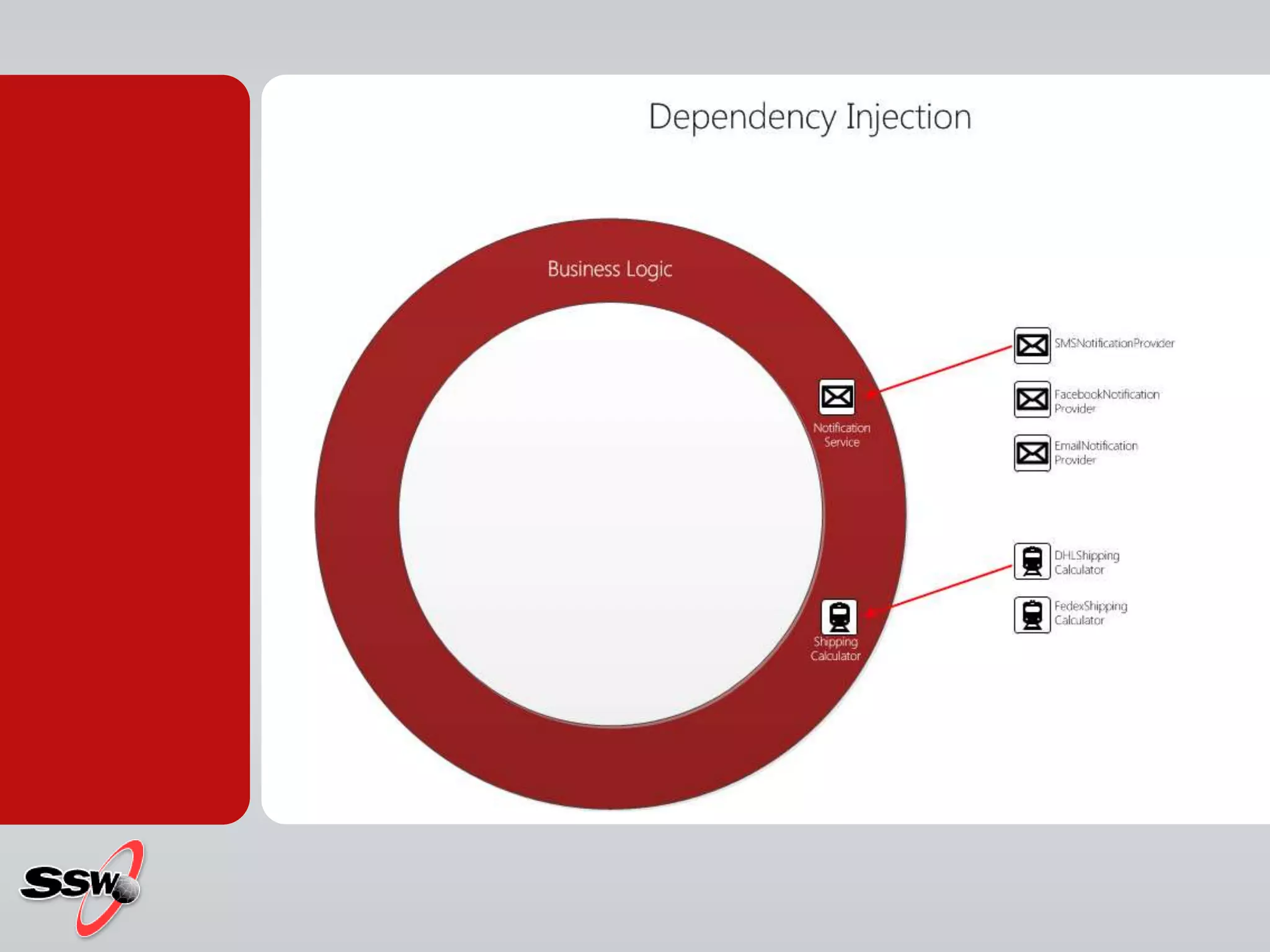
1. Intro to Dependency Injection
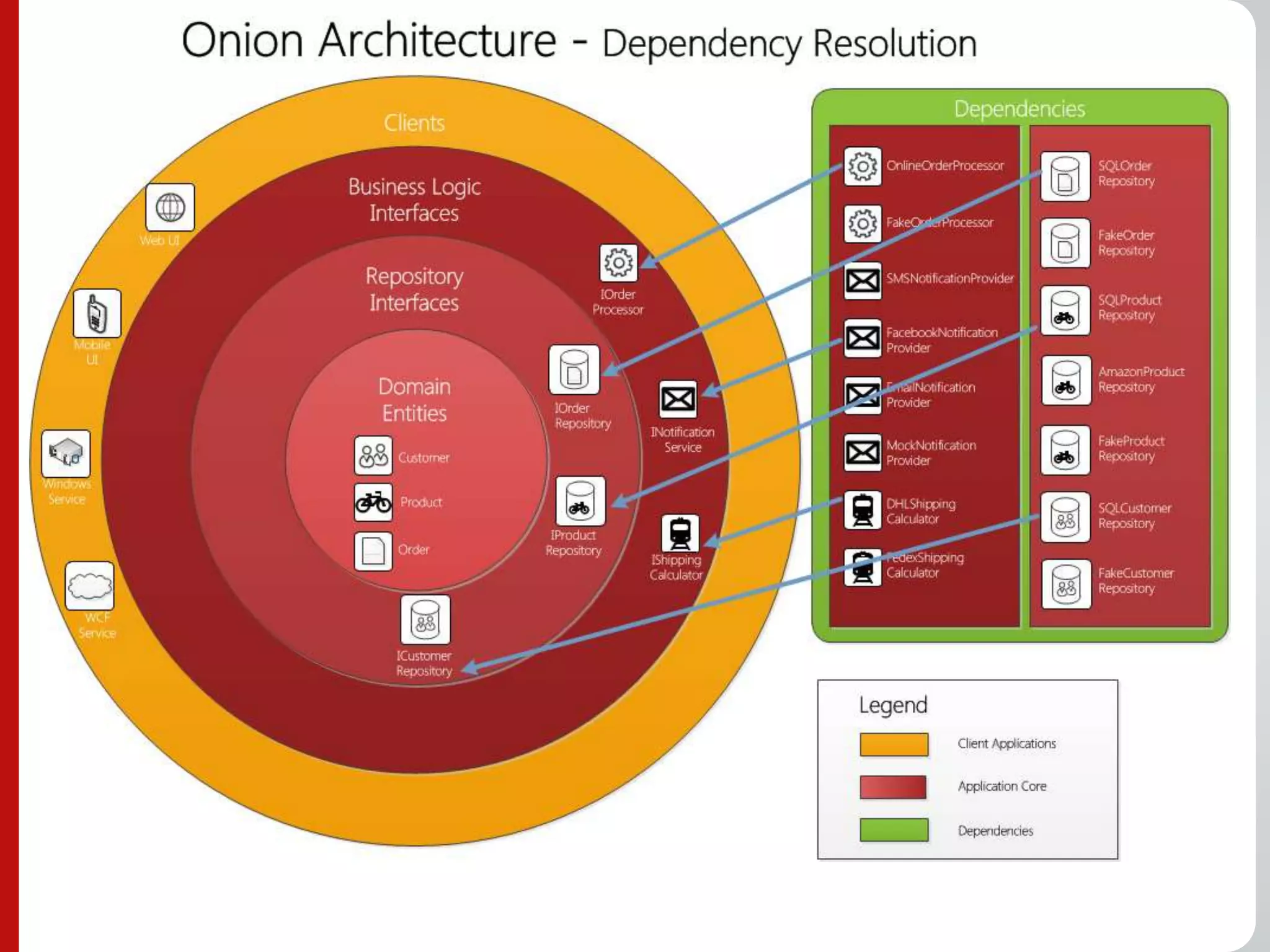
2. Intro to the Onion Architecture
3. Intro to Enterprise Data Access
a) Repository Pattern
b) Unit of Work Pattern
4. View Models
Are you using Dependency Injection?
 Tried it?
 Like it?
 Used it in a project?
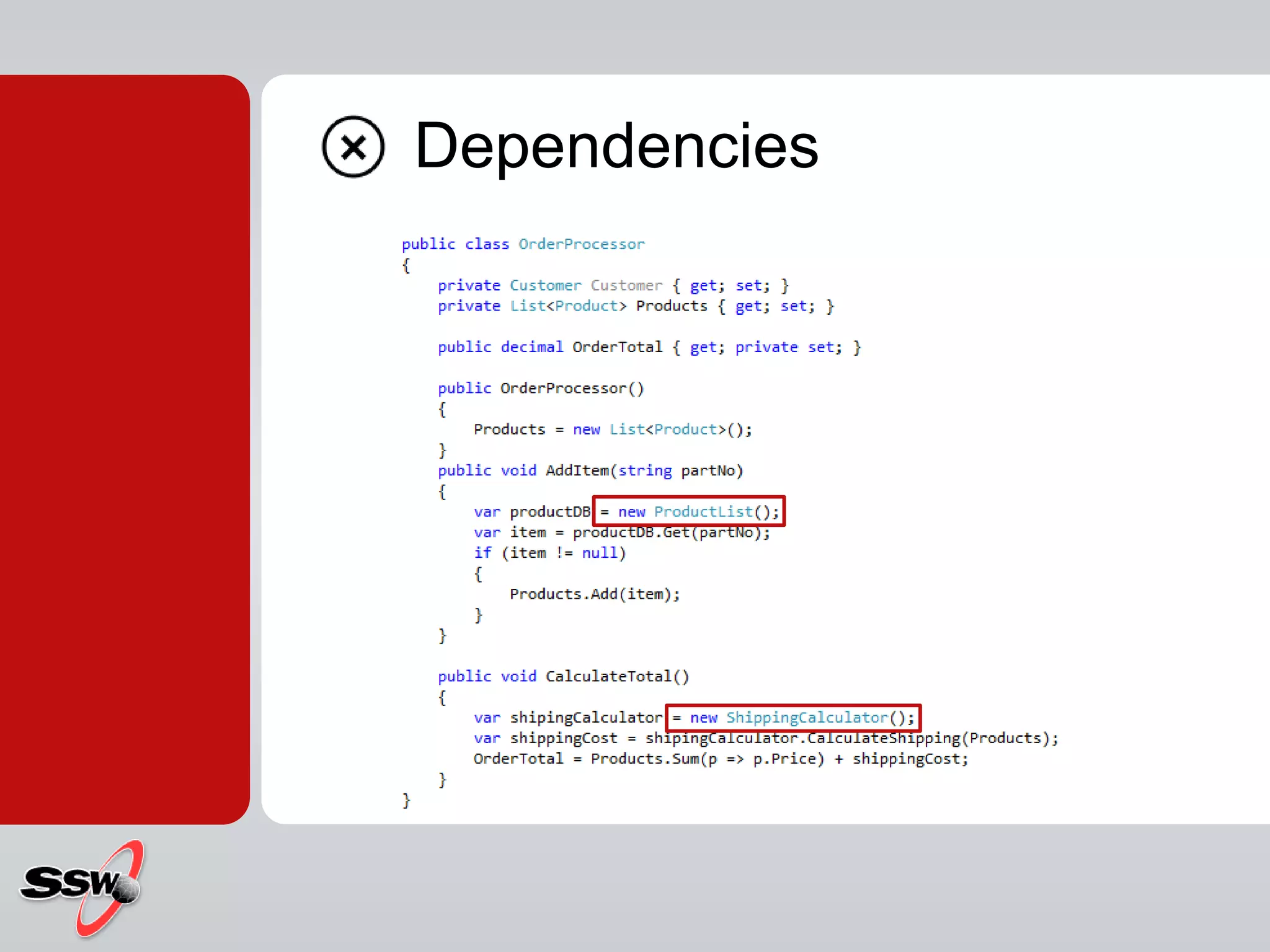
Dependencies
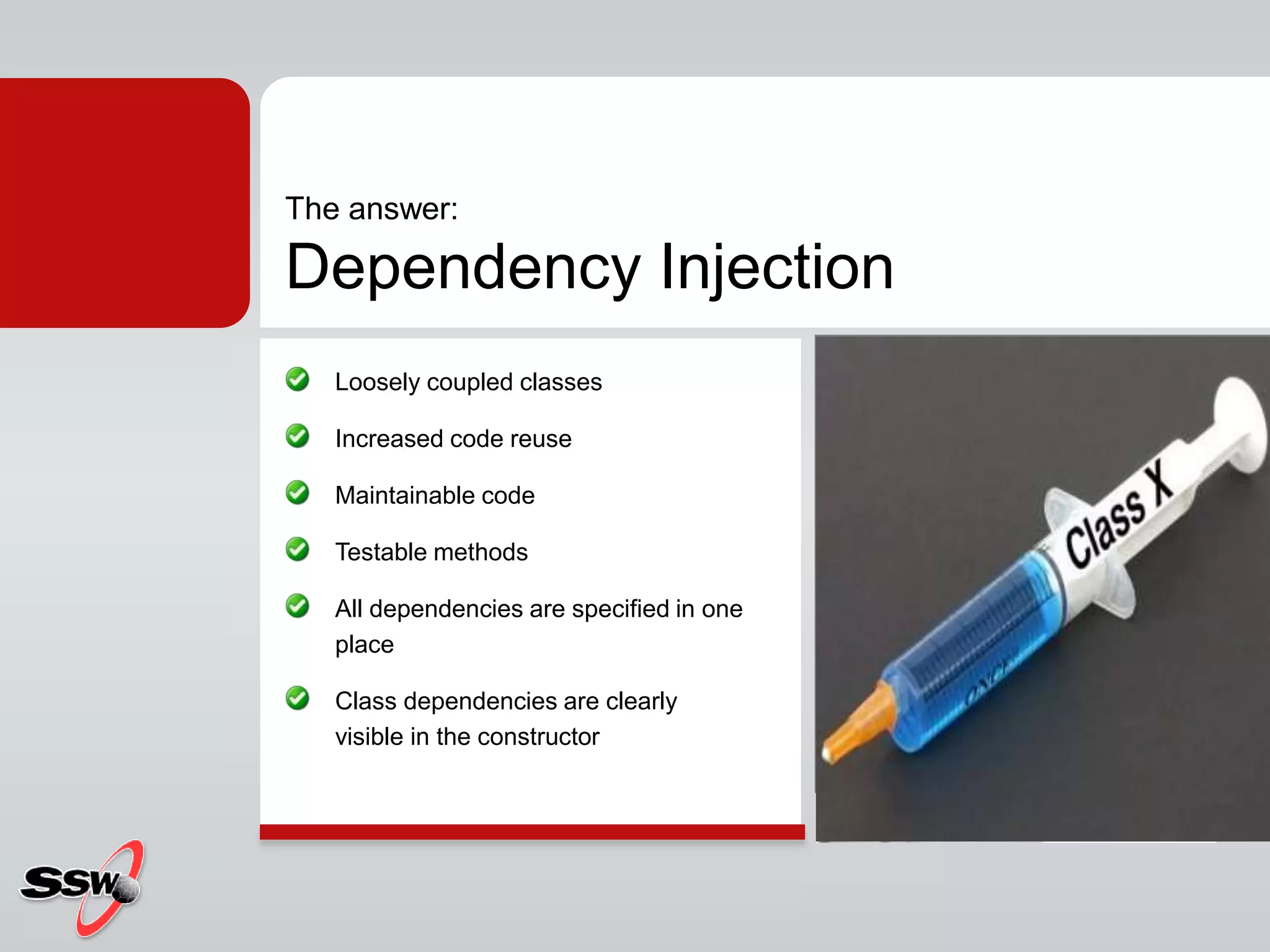
The answer:
Dependency Injection
Loosely coupled classes
Increased code reuse
Maintainable code
Testable methods
All dependencies are specified in one
place
Class dependencies are clearly
visible in the constructor
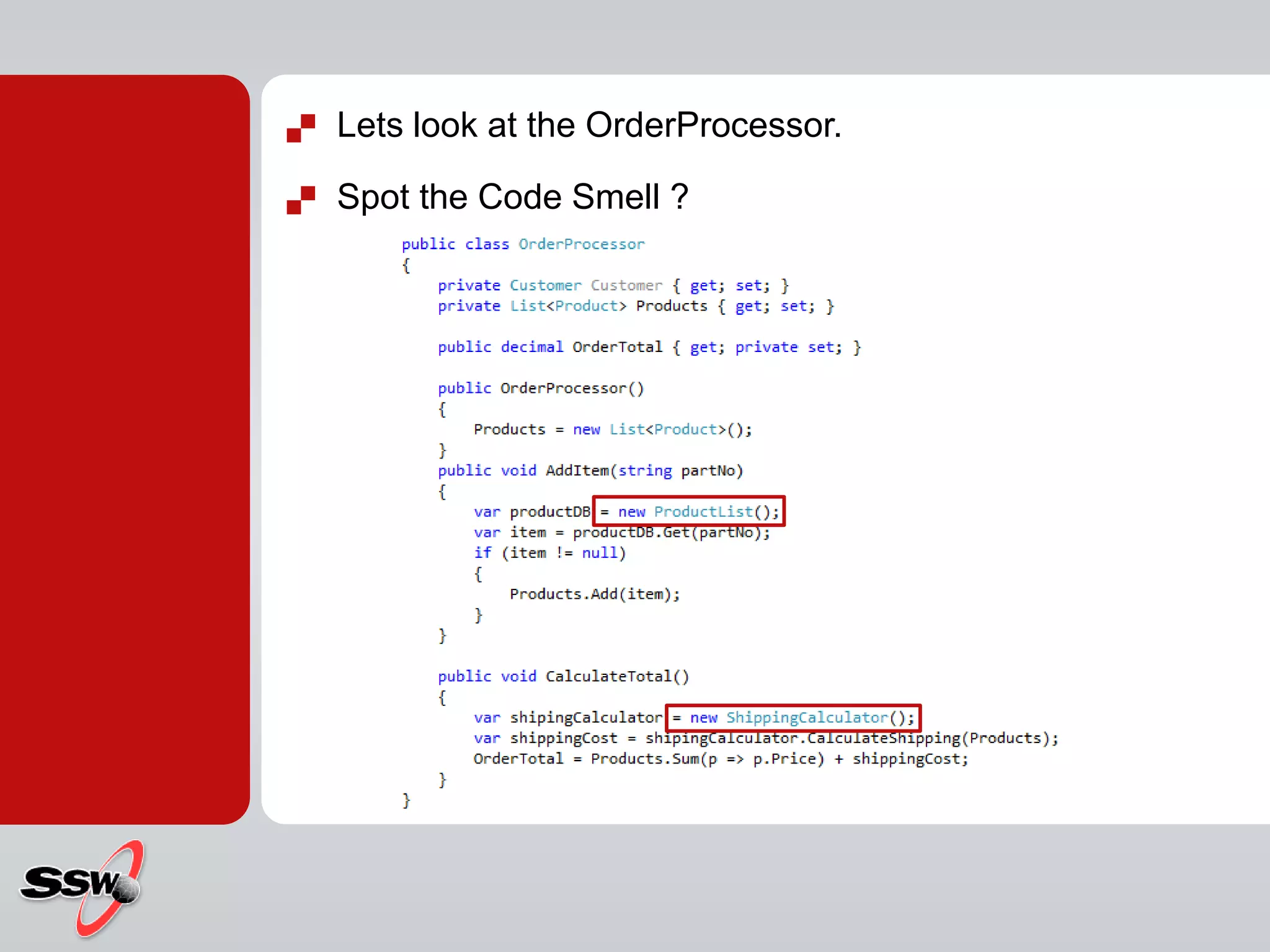
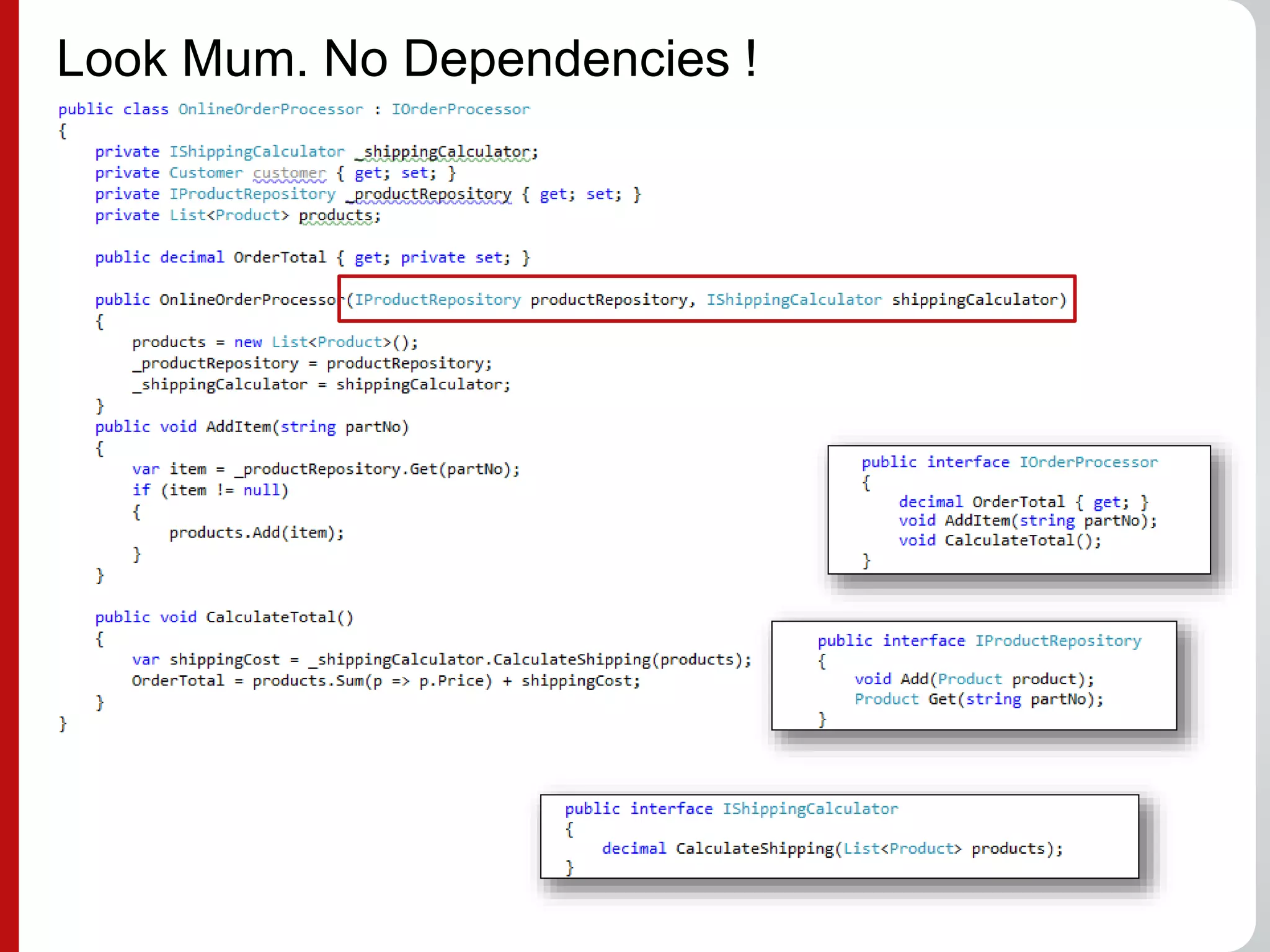
 Lets look at the OrderProcessor.
 Spot the Code Smell ?
Look Mum. No Dependencies !
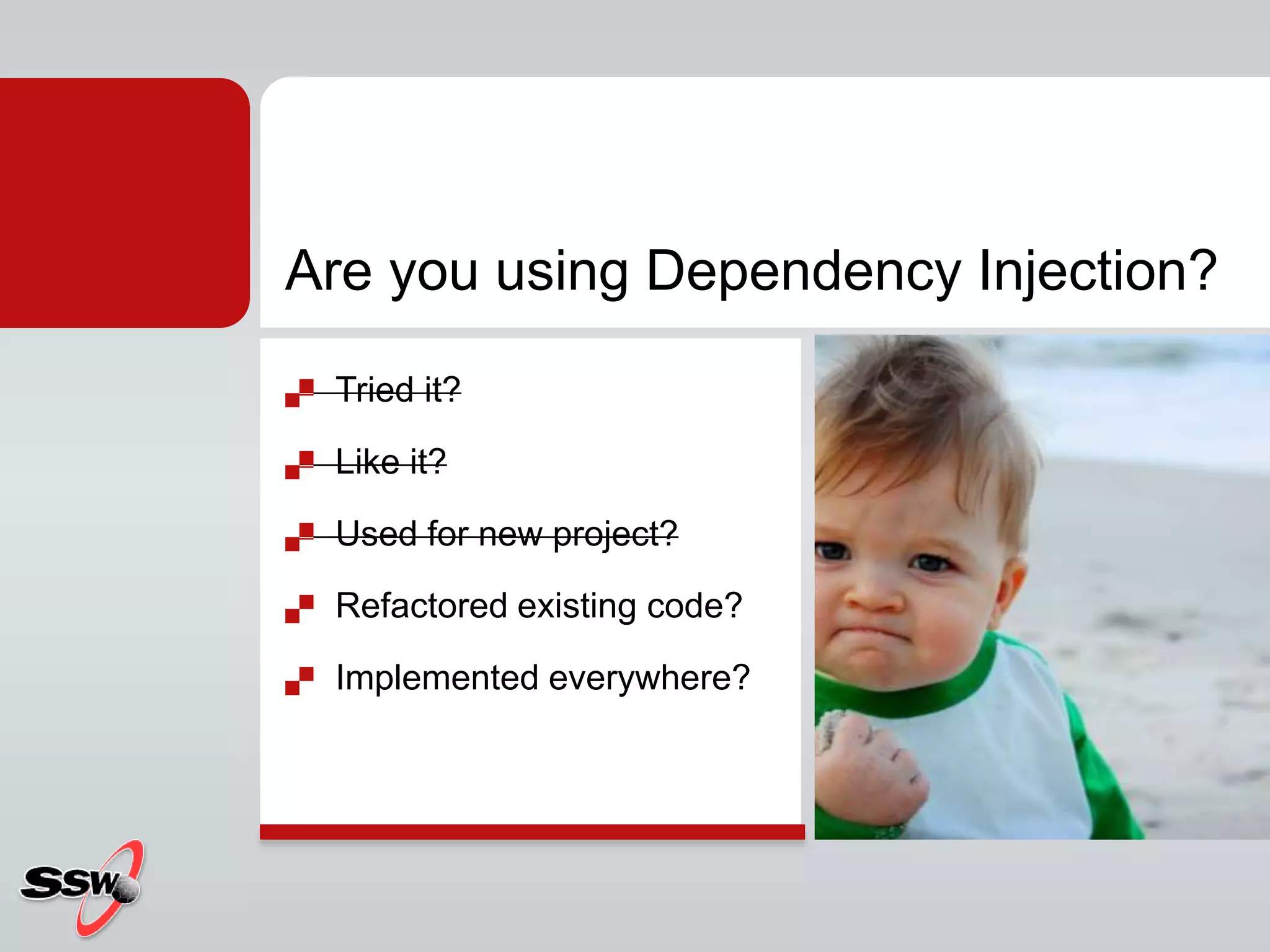
Are you using Dependency Injection?
 Tried it?
 Like it?
 Used for new project?
 Refactored existing code?
 Implemented everywhere?
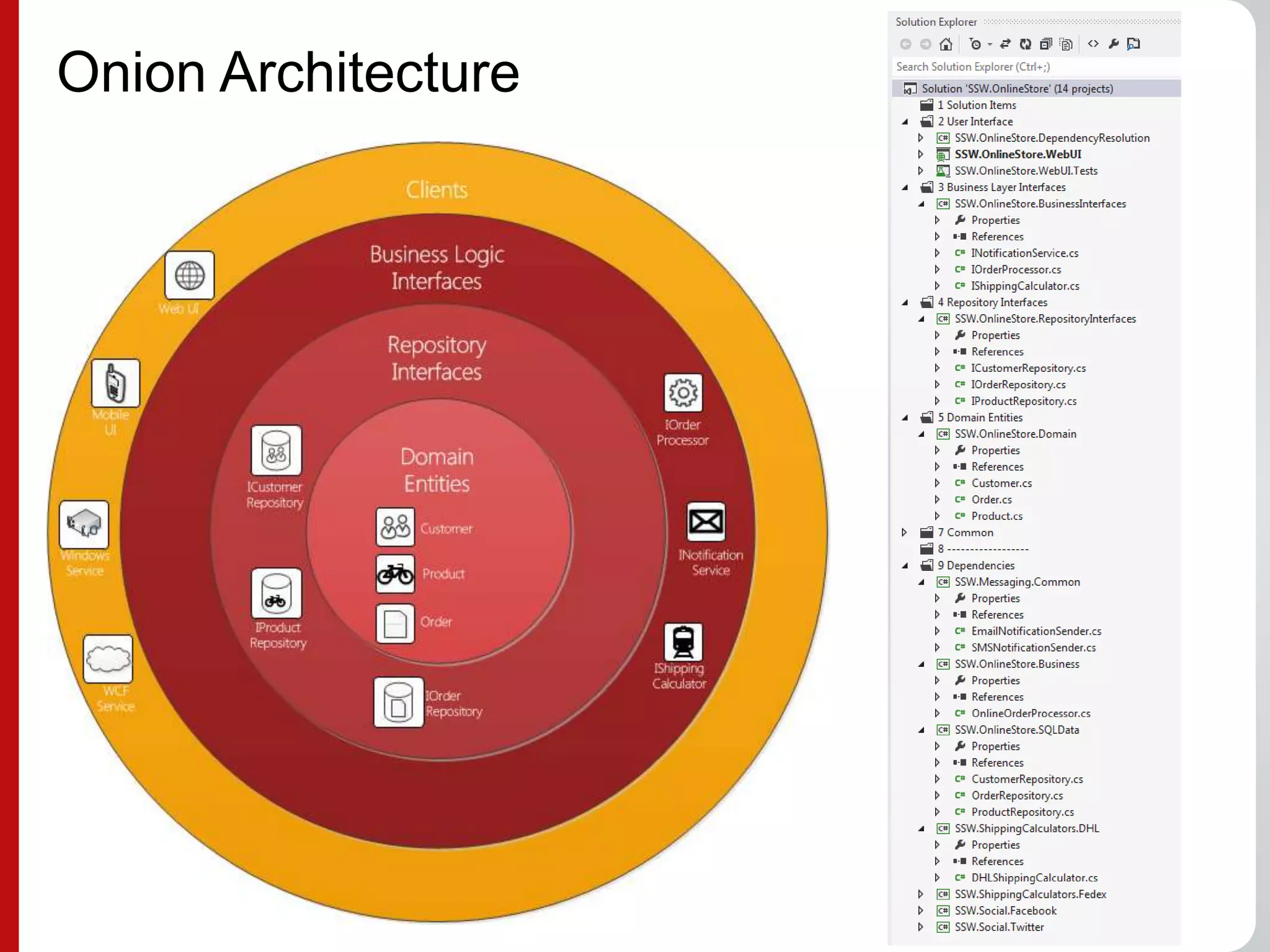
Onion Architecture
Enterprise Data Access Patterns
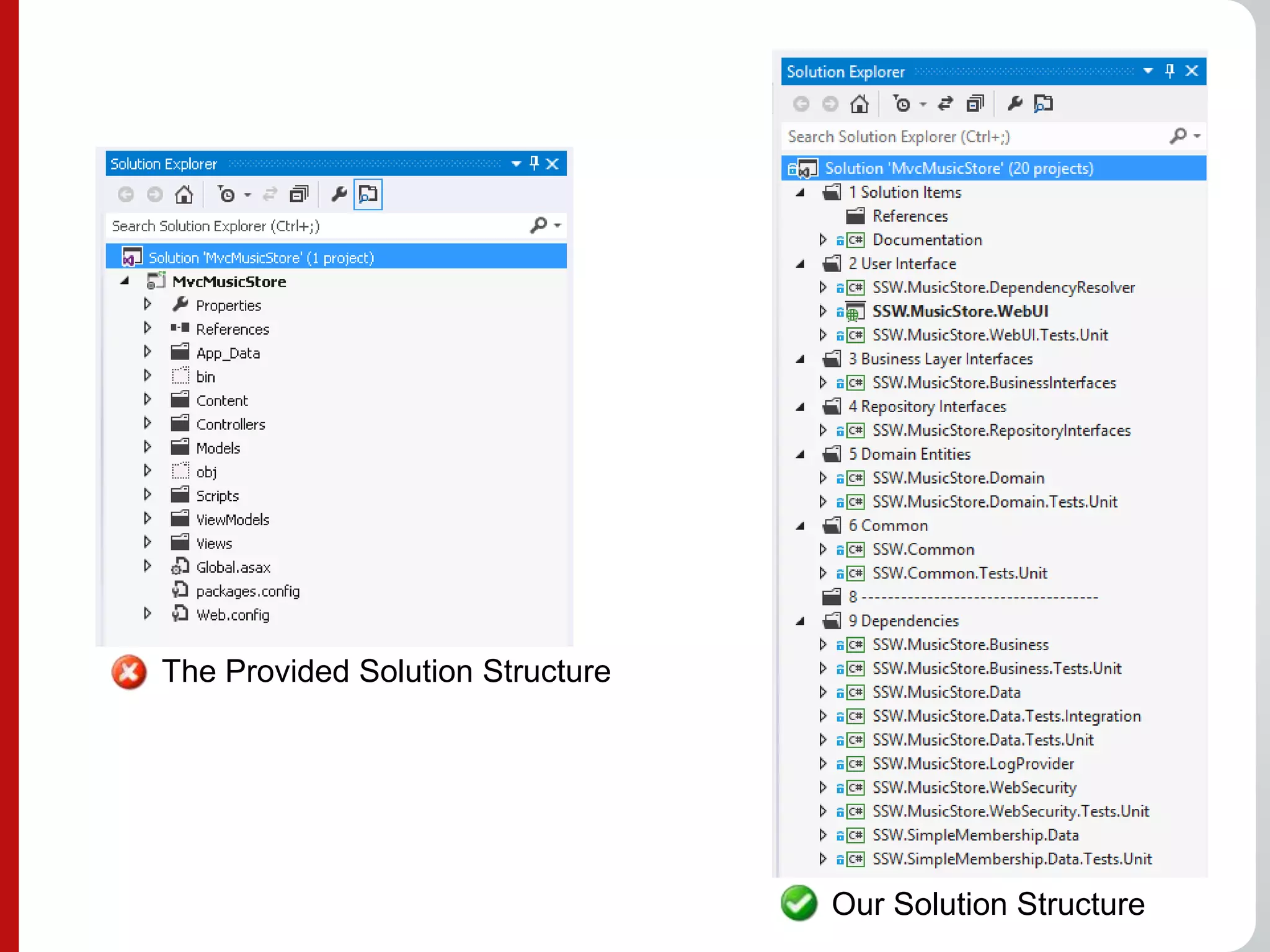
The Provided Solution Structure
Our Solution Structure
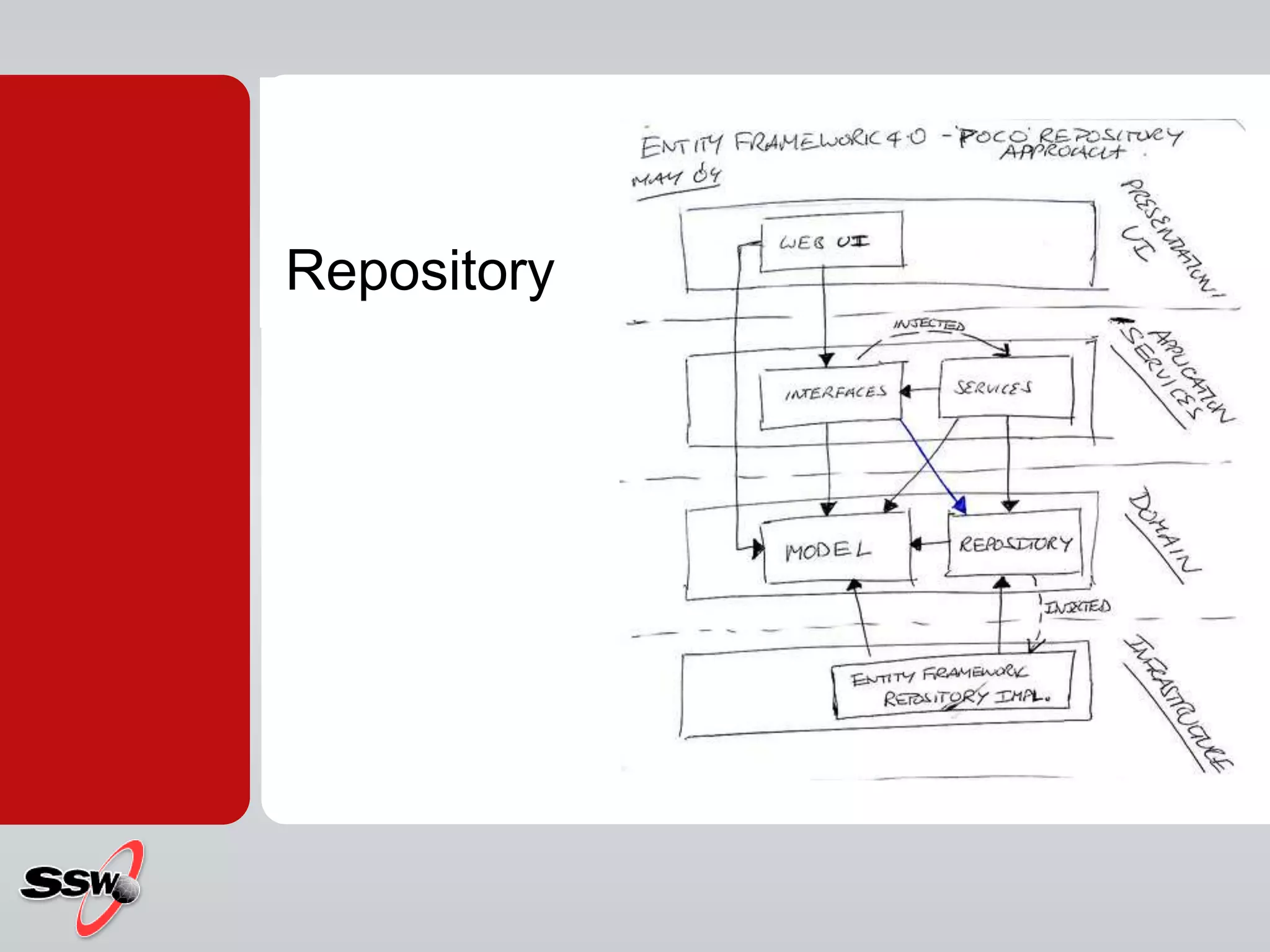
Repository
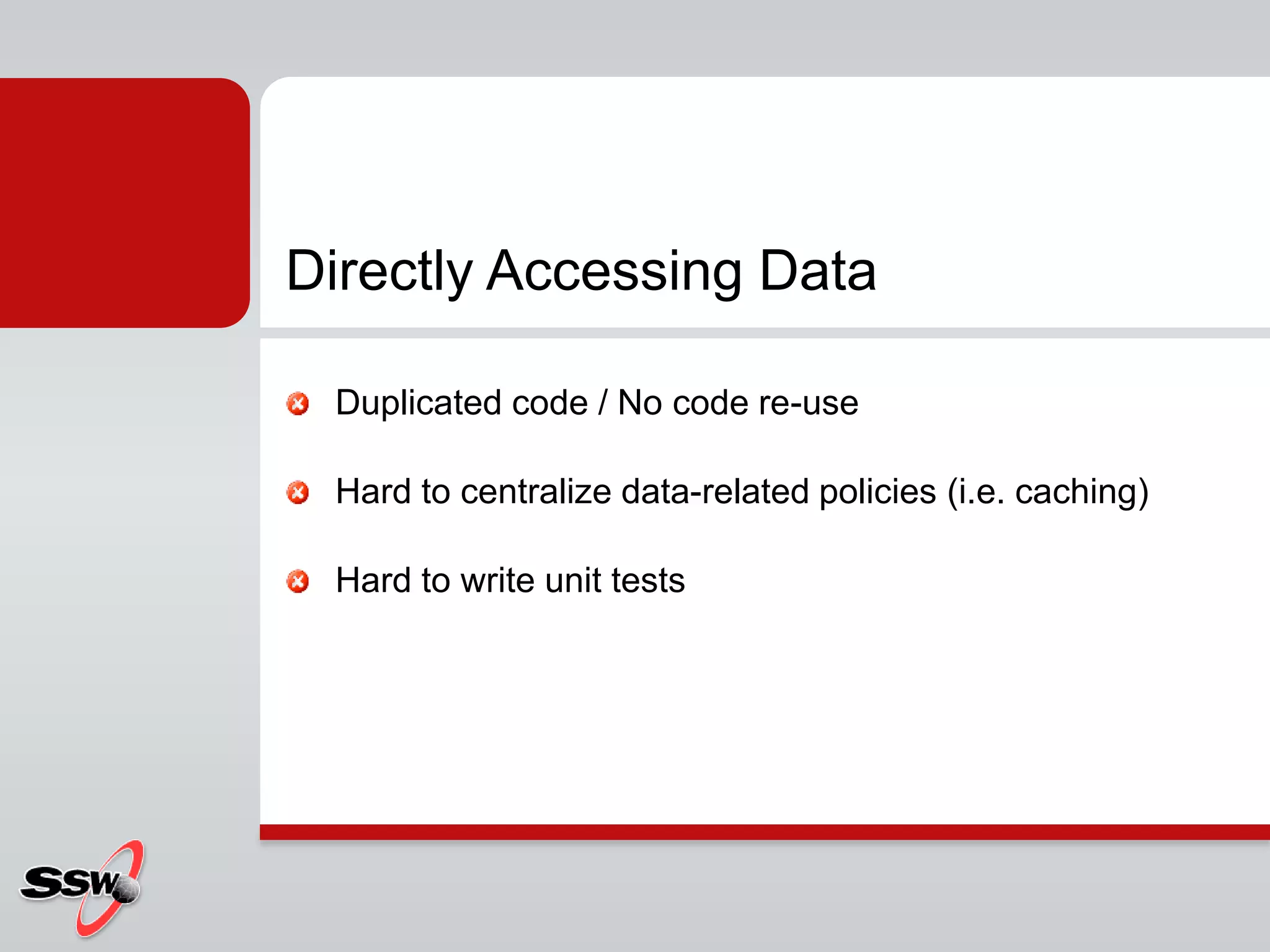
Directly Accessing Data
Duplicated code / No code re-use
Hard to centralize data-related policies (i.e. caching)
Hard to write unit tests
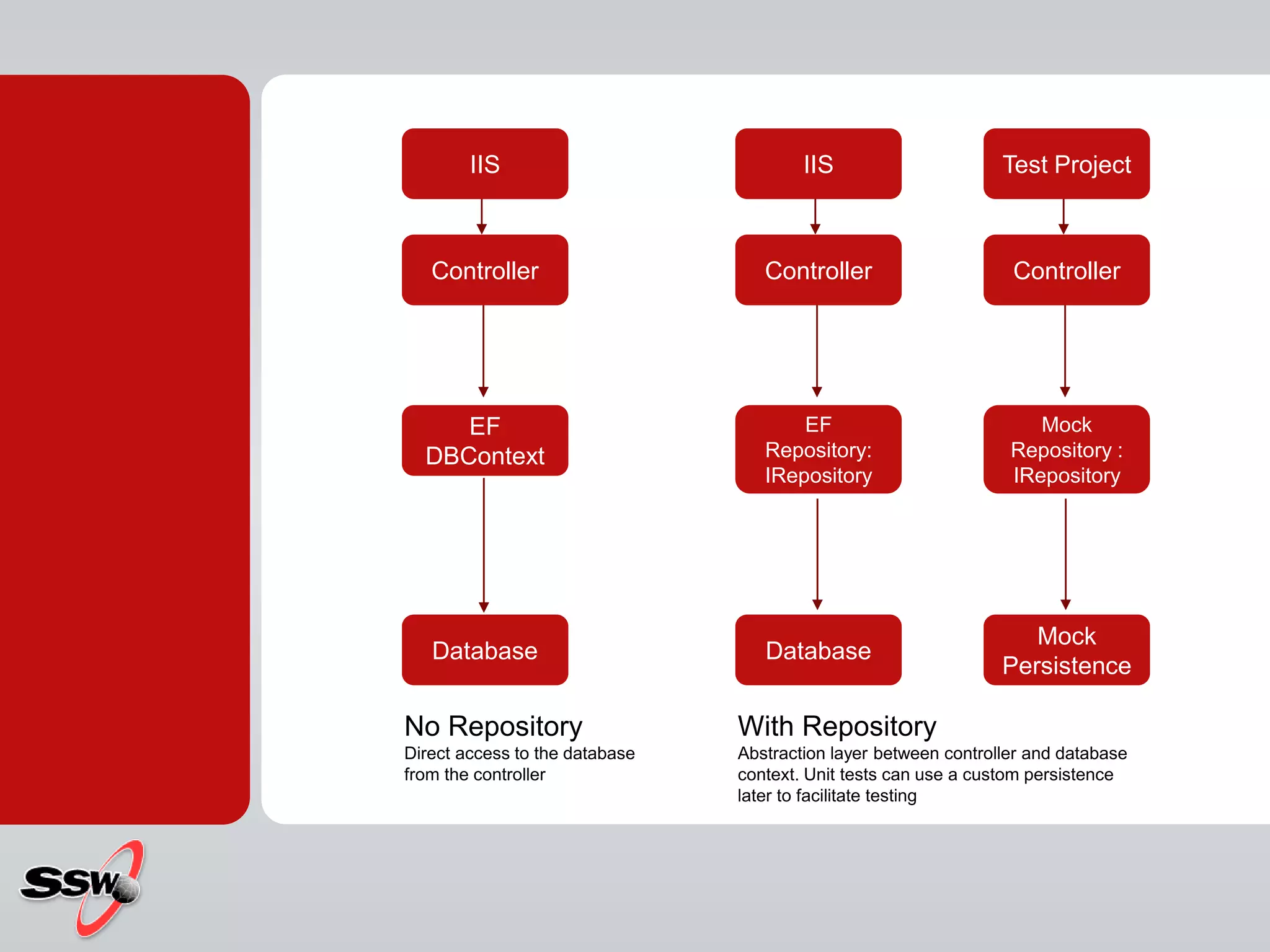
IIS
Controller
EF
DBContext
Database
No Repository
Direct access to the database
from the controller
IIS
Controller
EF
Repository:
IRepository
Database
With Repository
Abstraction layer between controller and database
context. Unit tests can use a custom persistence
later to facilitate testing
Test Project
Controller
Mock
Repository :
IRepository
Mock
Persistence
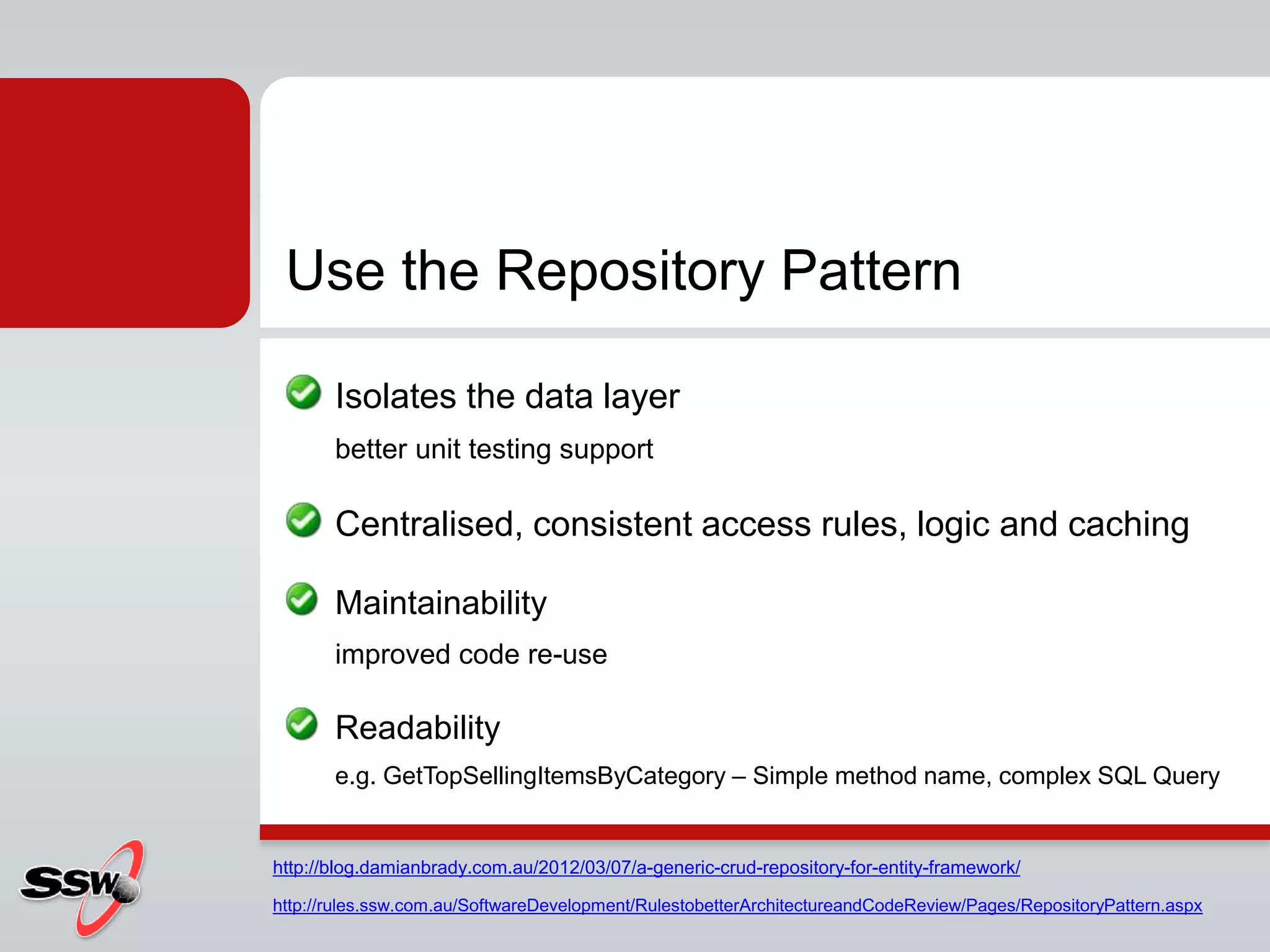
Use the Repository Pattern
Isolates the data layer
better unit testing support
Centralised, consistent access rules, logic and caching
Maintainability
improved code re-use
Readability
e.g. GetTopSellingItemsByCategory – Simple method name, complex SQL Query
http://blog.damianbrady.com.au/2012/03/07/a-generic-crud-repository-for-entity-framework/
http://rules.ssw.com.au/SoftwareDevelopment/RulestobetterArchitectureandCodeReview/Pages/RepositoryPattern.aspx
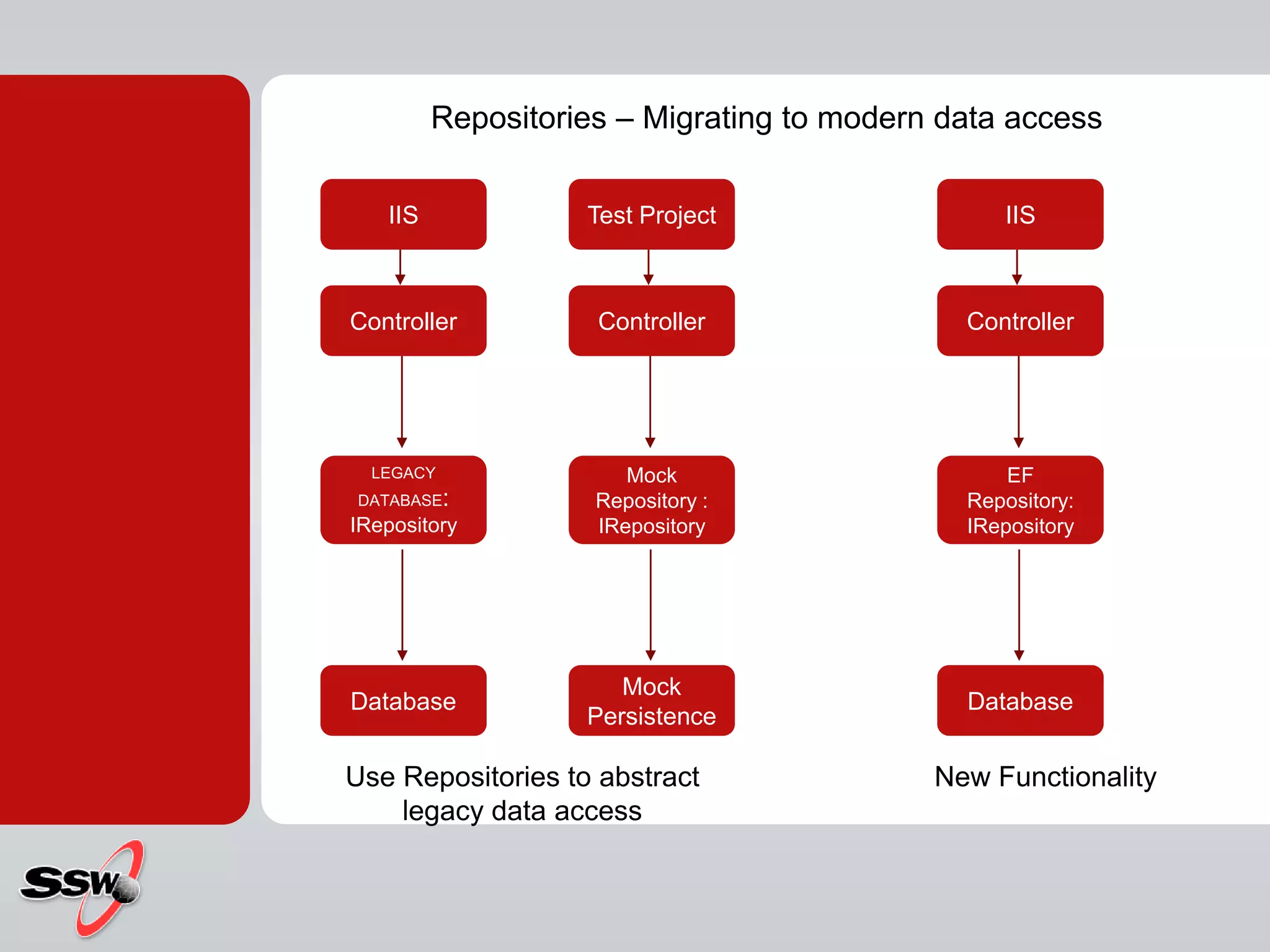
IIS
Controller
LEGACY
DATABASE:
IRepository
Database
Use Repositories to abstract
legacy data access
Test Project
Controller
Mock
Repository :
IRepository
Mock
Persistence
IIS
Controller
EF
Repository:
IRepository
Database
New Functionality
Repositories – Migrating to modern data access
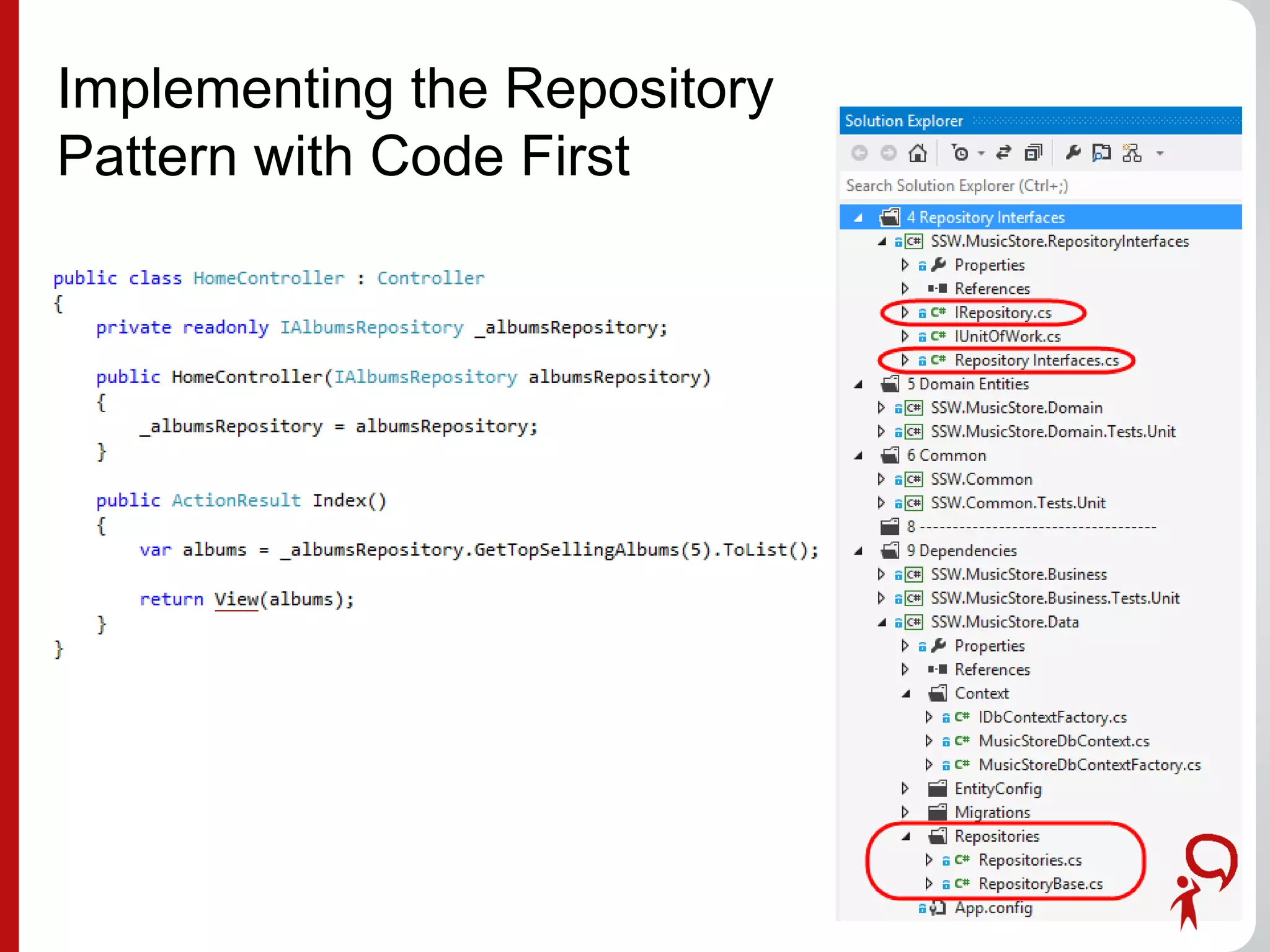
Implementing the Repository
Pattern with Code First
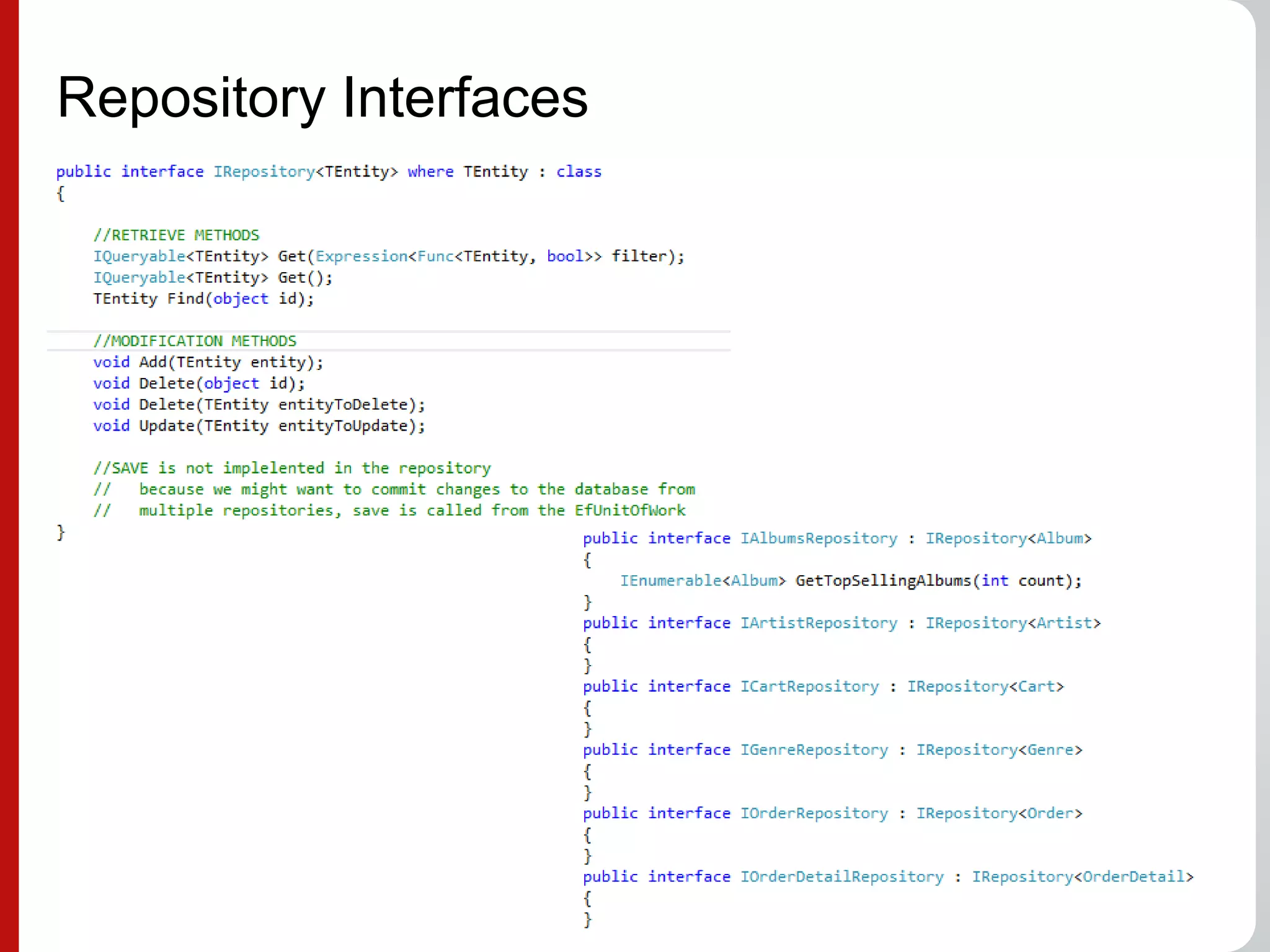
Repository Interfaces
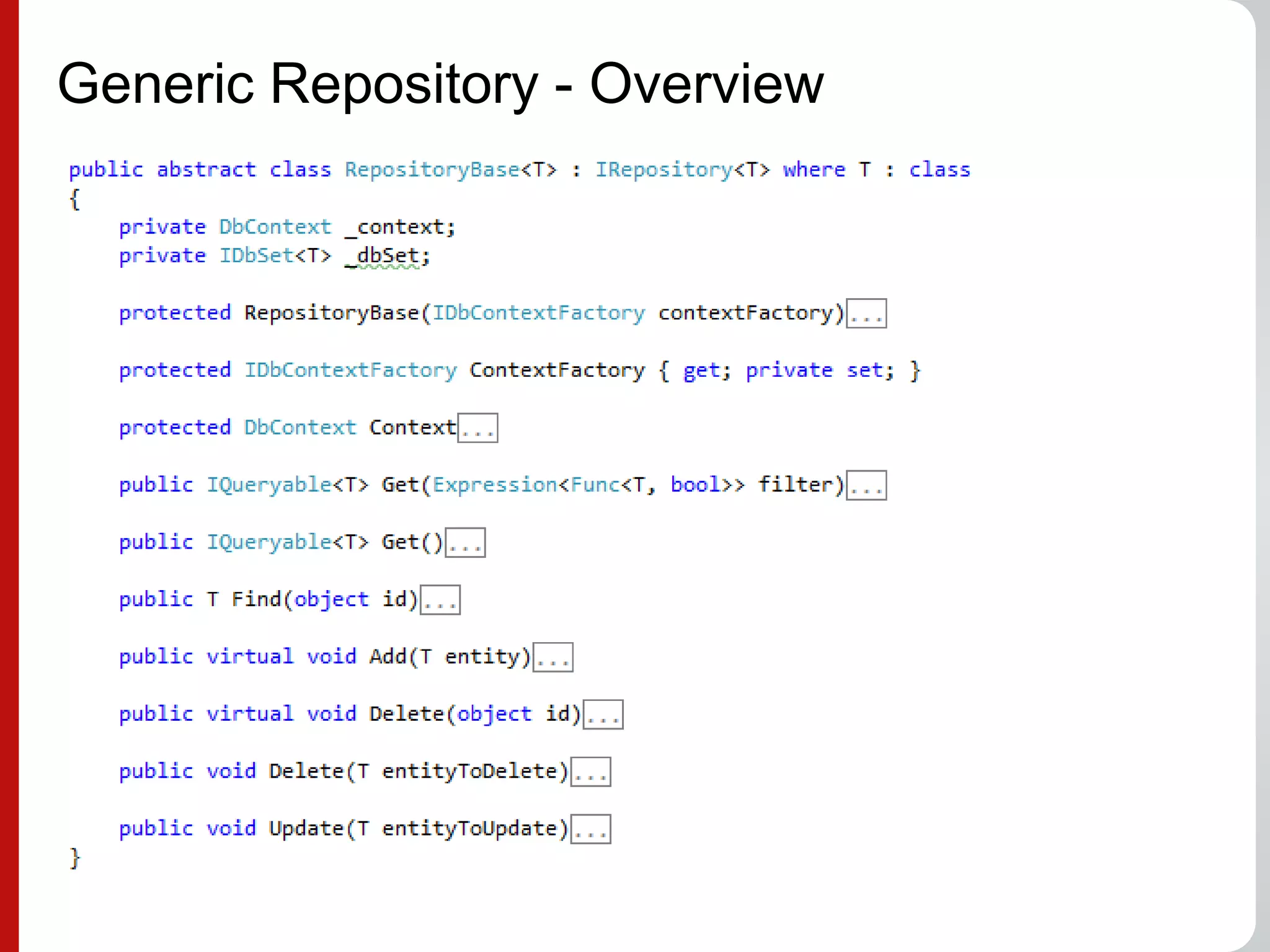
Generic Repository - Overview
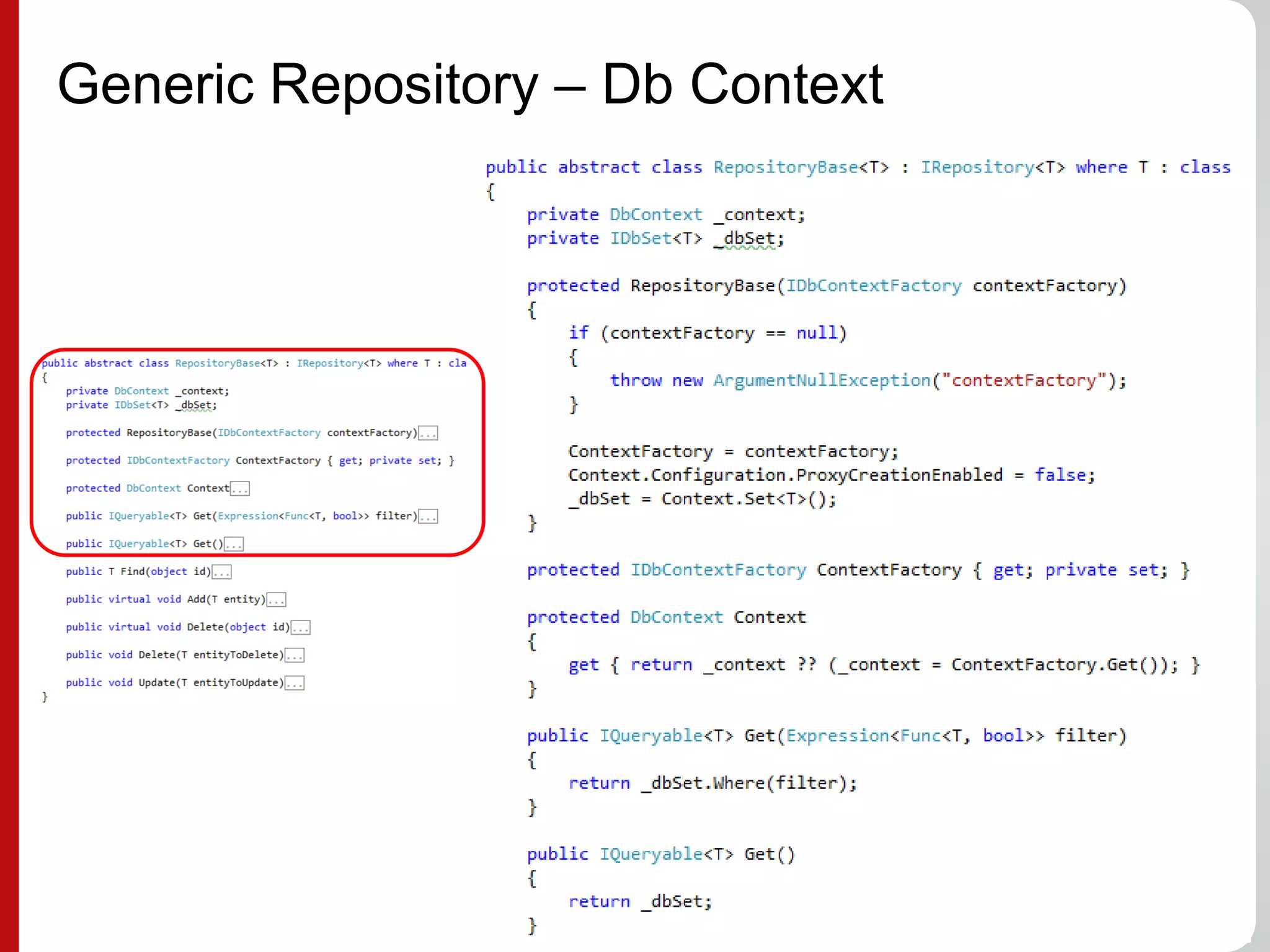
Generic Repository – Db Context
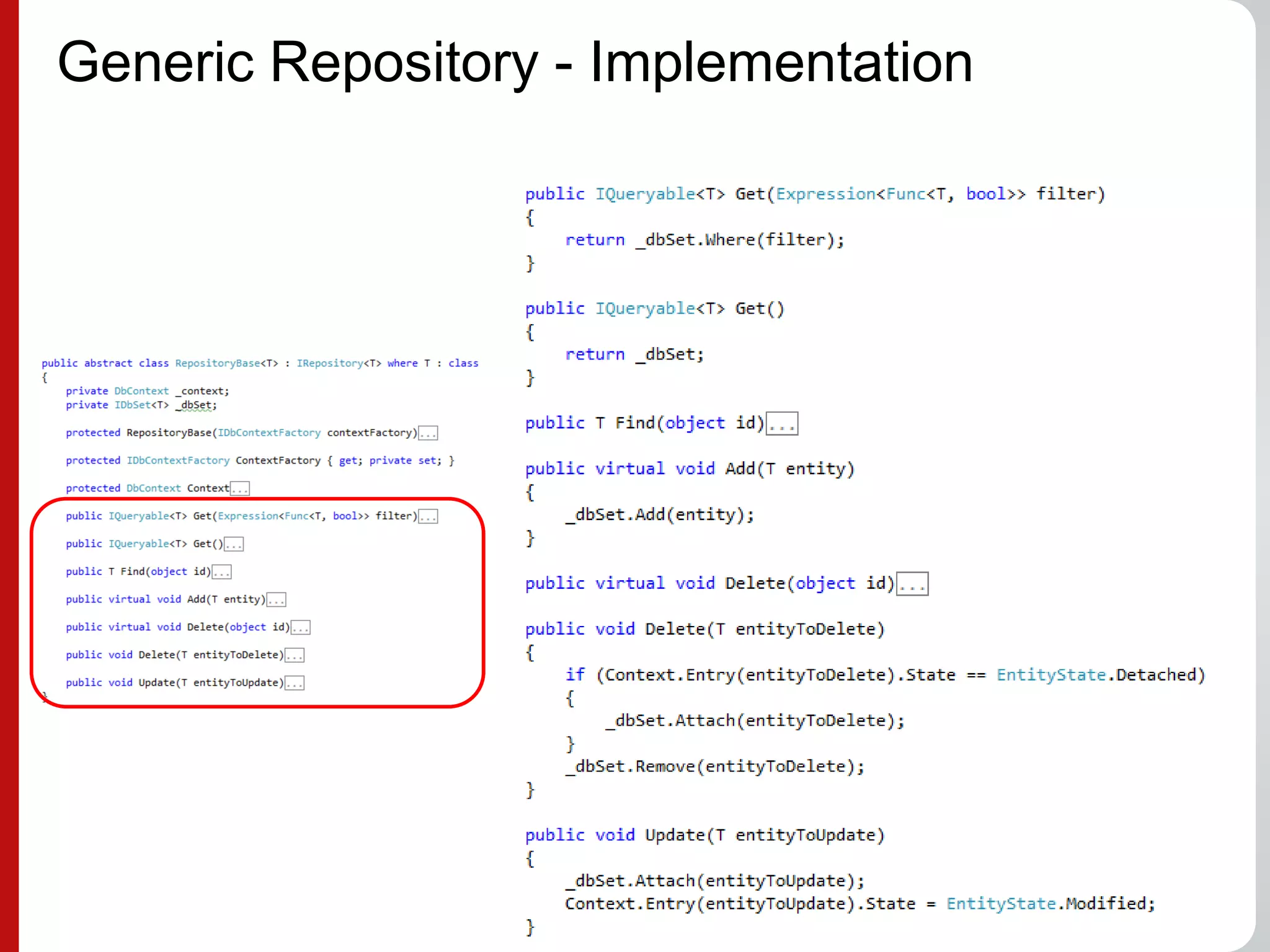
Generic Repository - Implementation
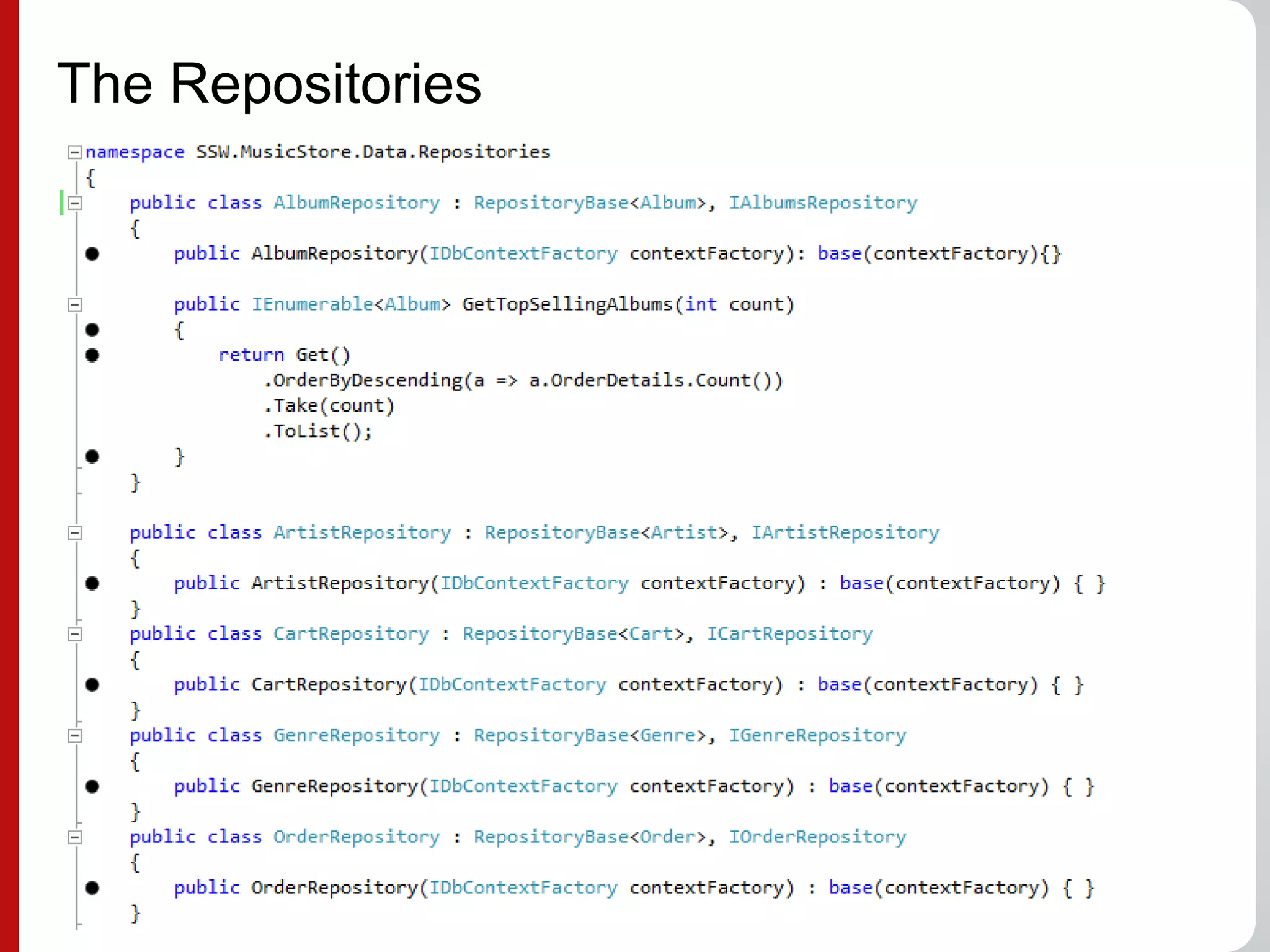
The Repositories
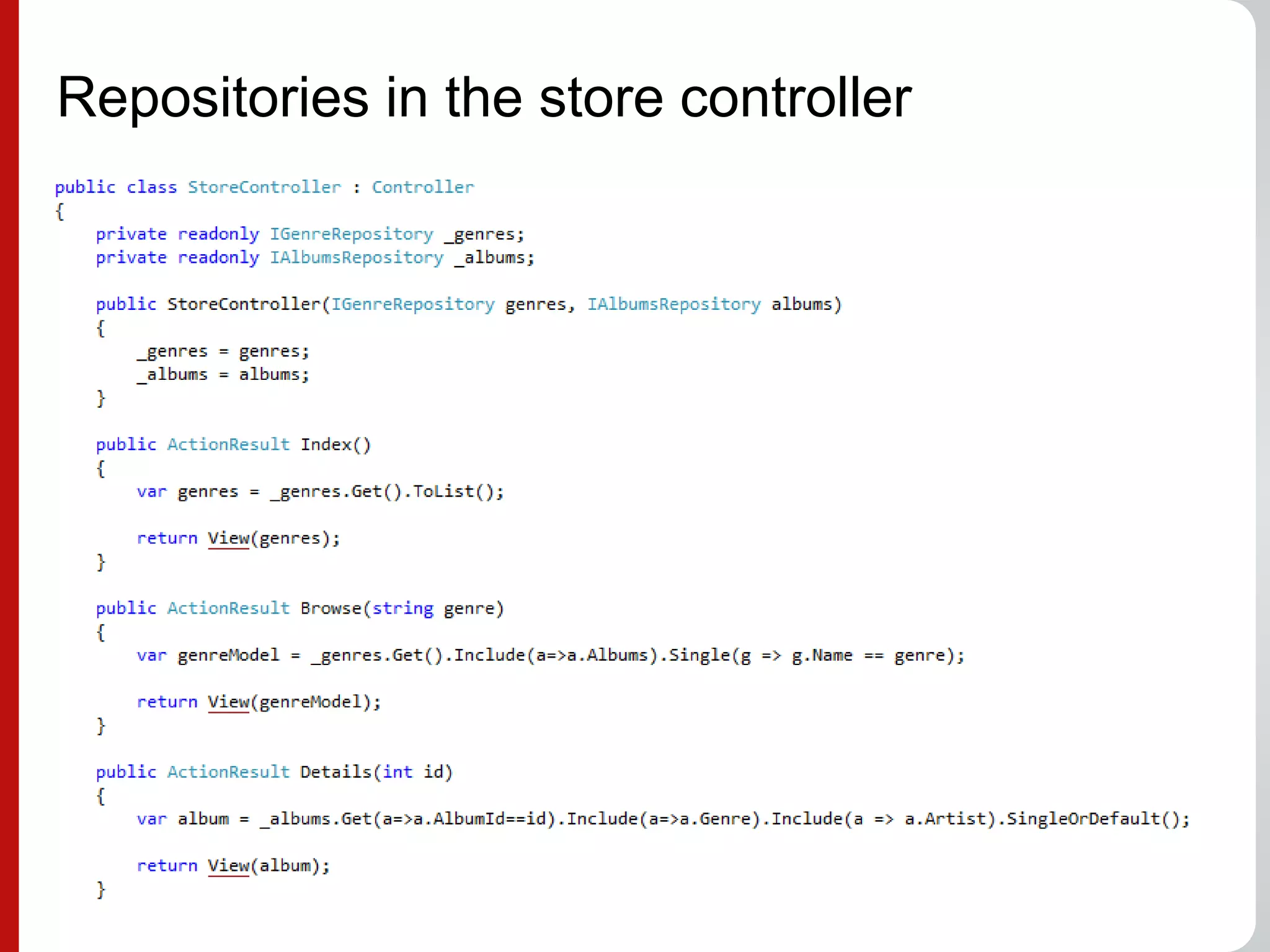
Repositories in the store controller
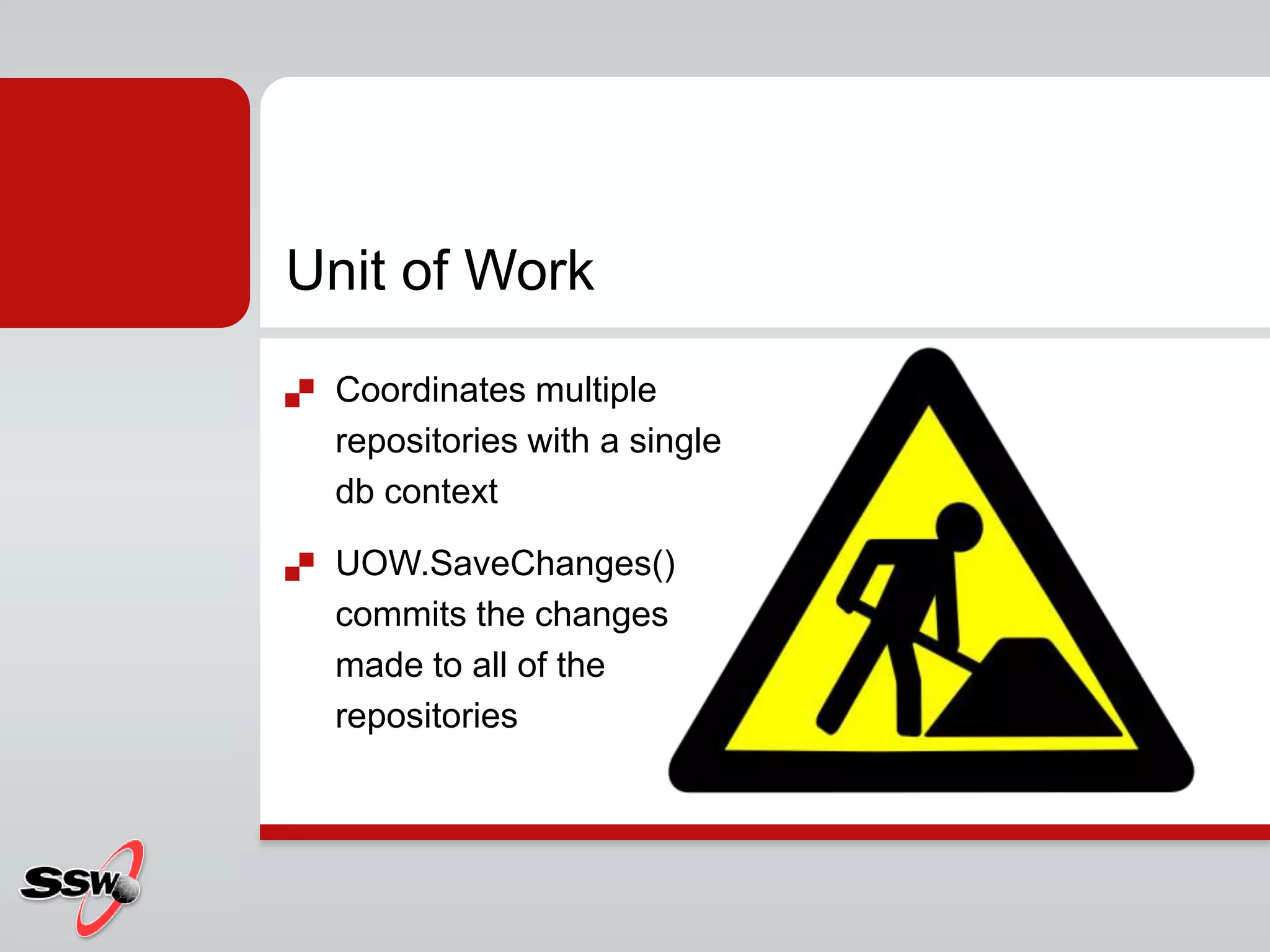
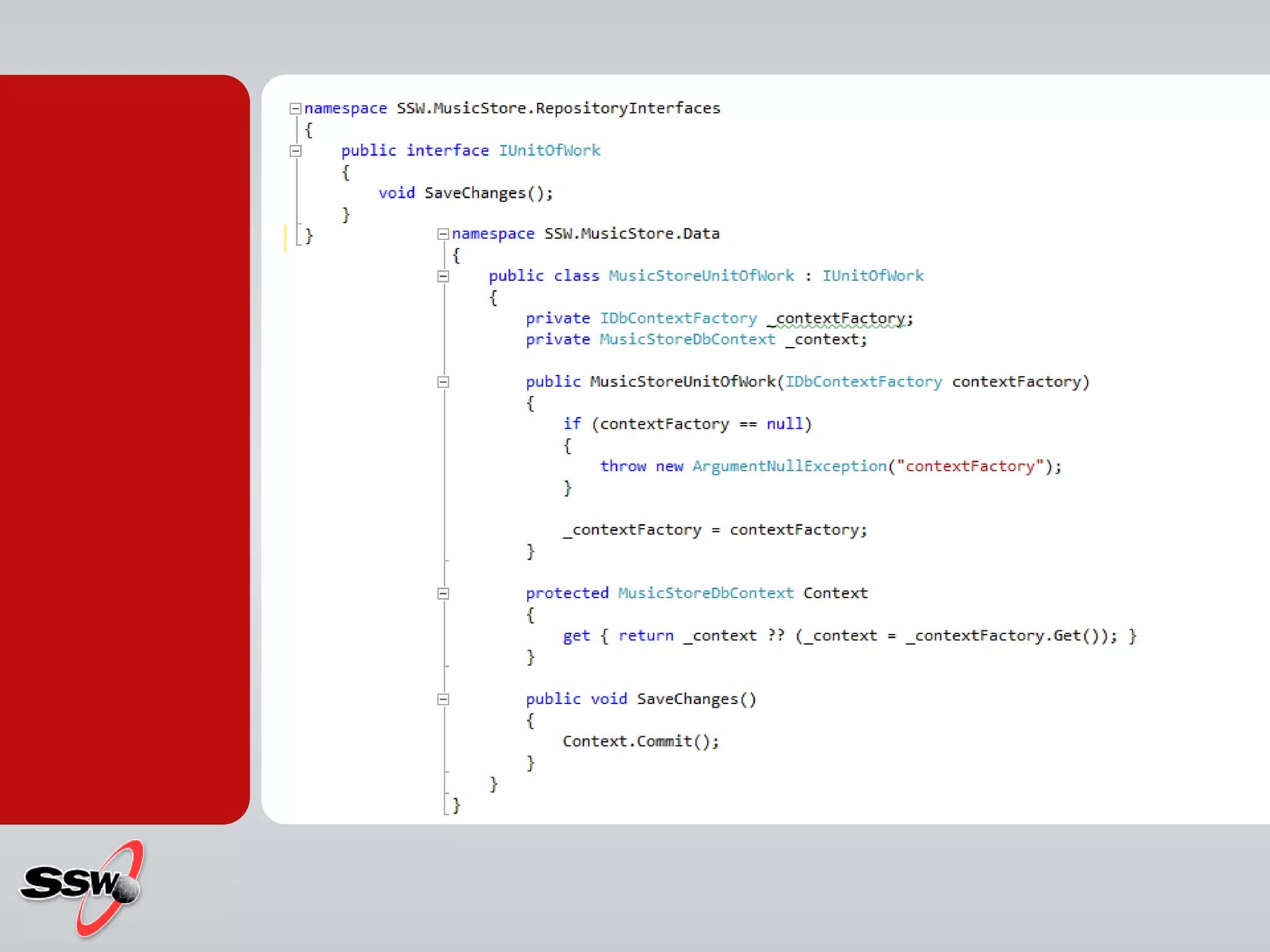
Unit of Work
 Coordinates multiple
repositories with a single
db context
 UOW.SaveChanges()
commits the changes
made to all of the
repositories
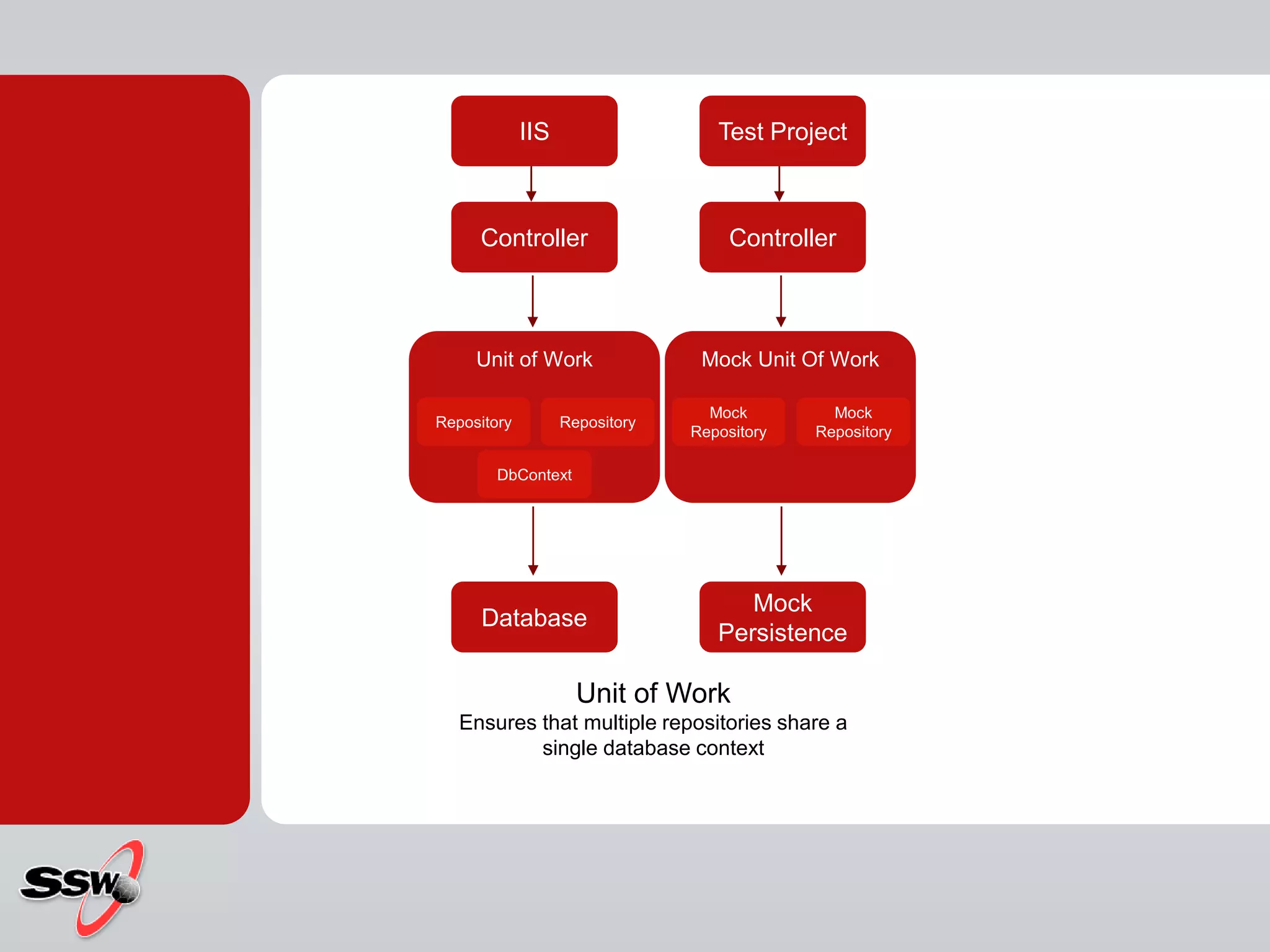
IIS
Controller
Unit of Work
Database
Unit of Work
Ensures that multiple repositories share a
single database context
Test Project
Controller
Mock Unit Of Work
Mock
Persistence
Repository
Mock
Repository
Repository
Mock
Repository
DbContext
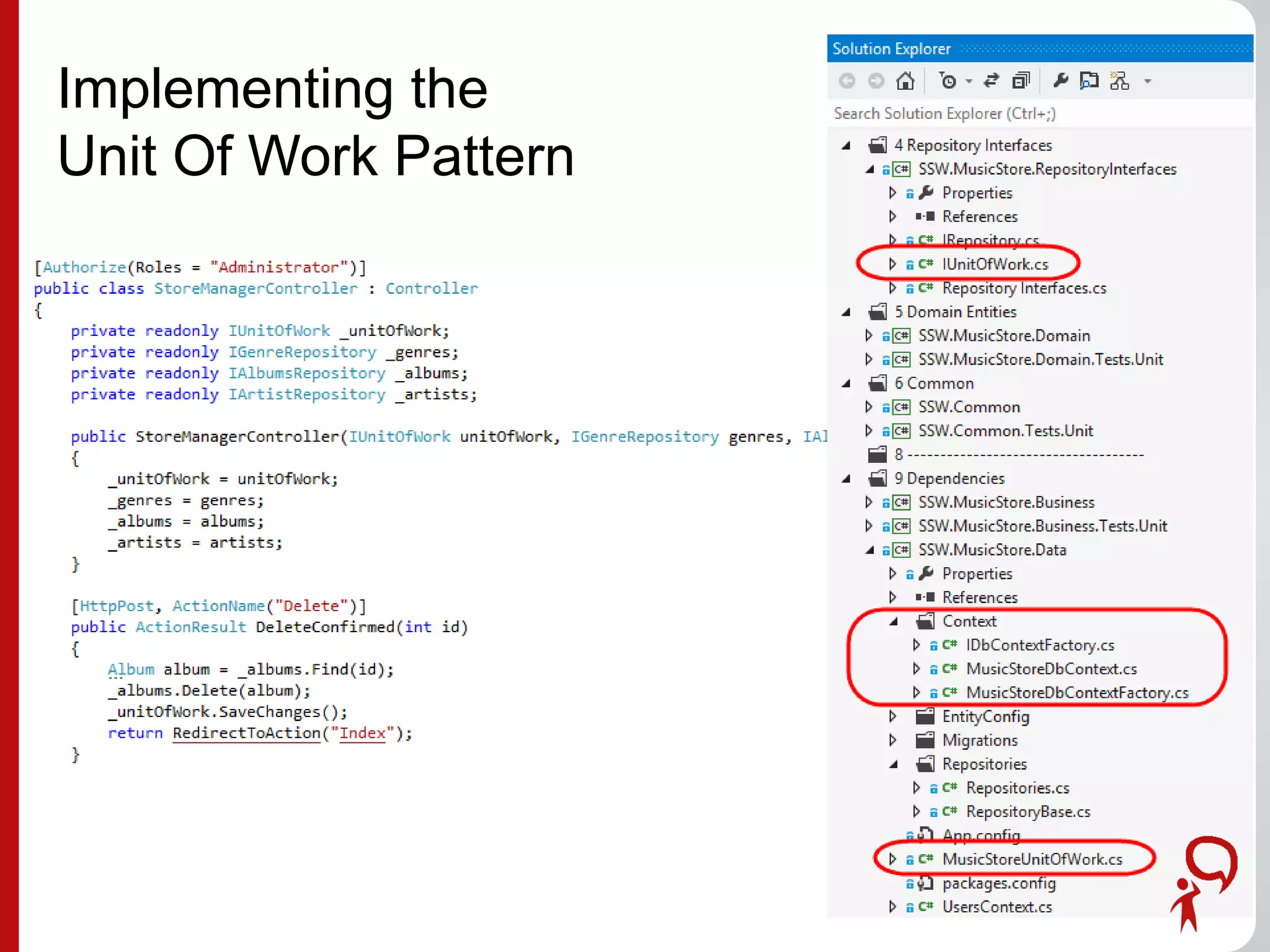
Implementing the
Unit Of Work Pattern
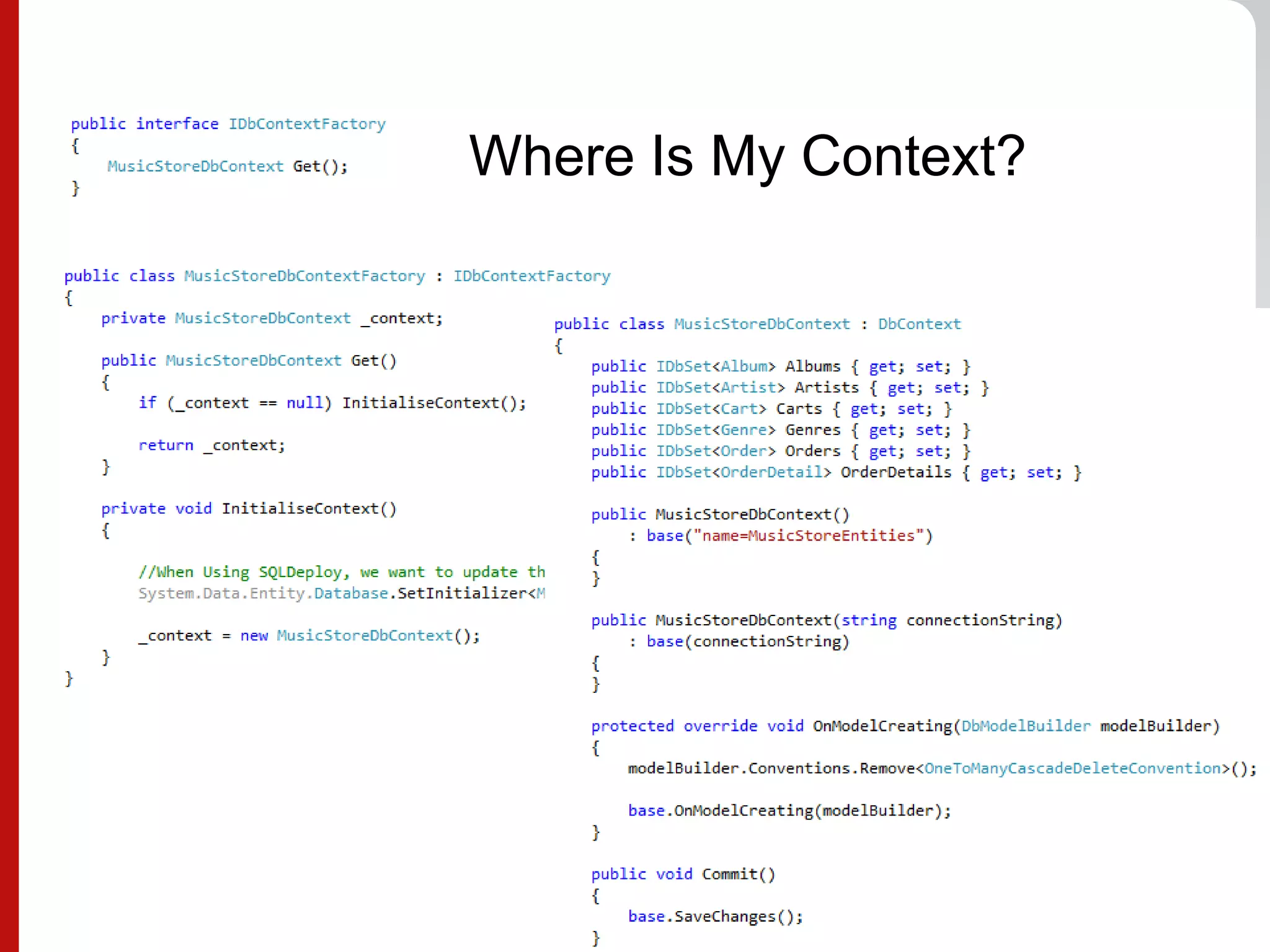
Where Is My Context?
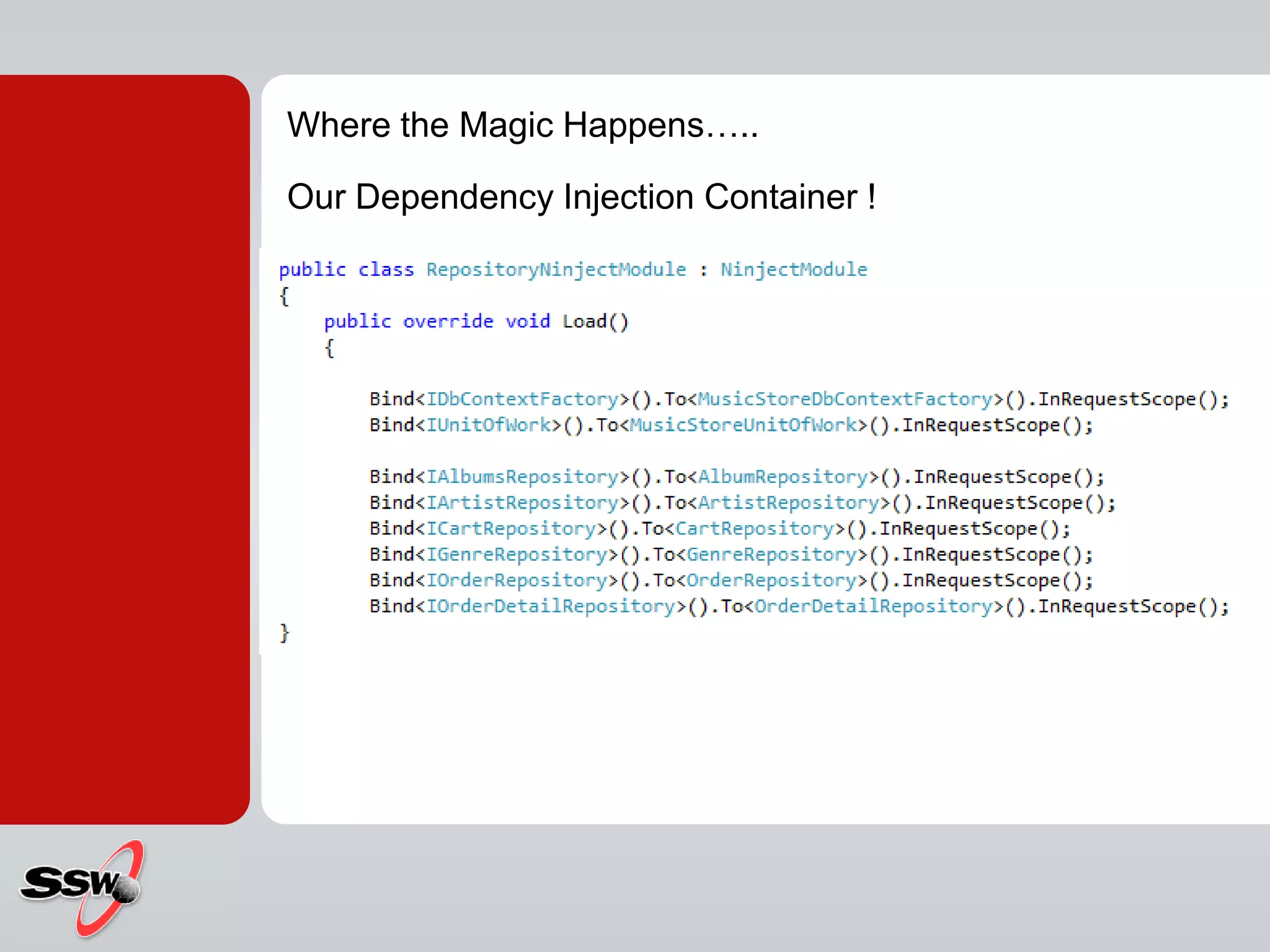
Where the Magic Happens…..
Our Dependency Injection Container !
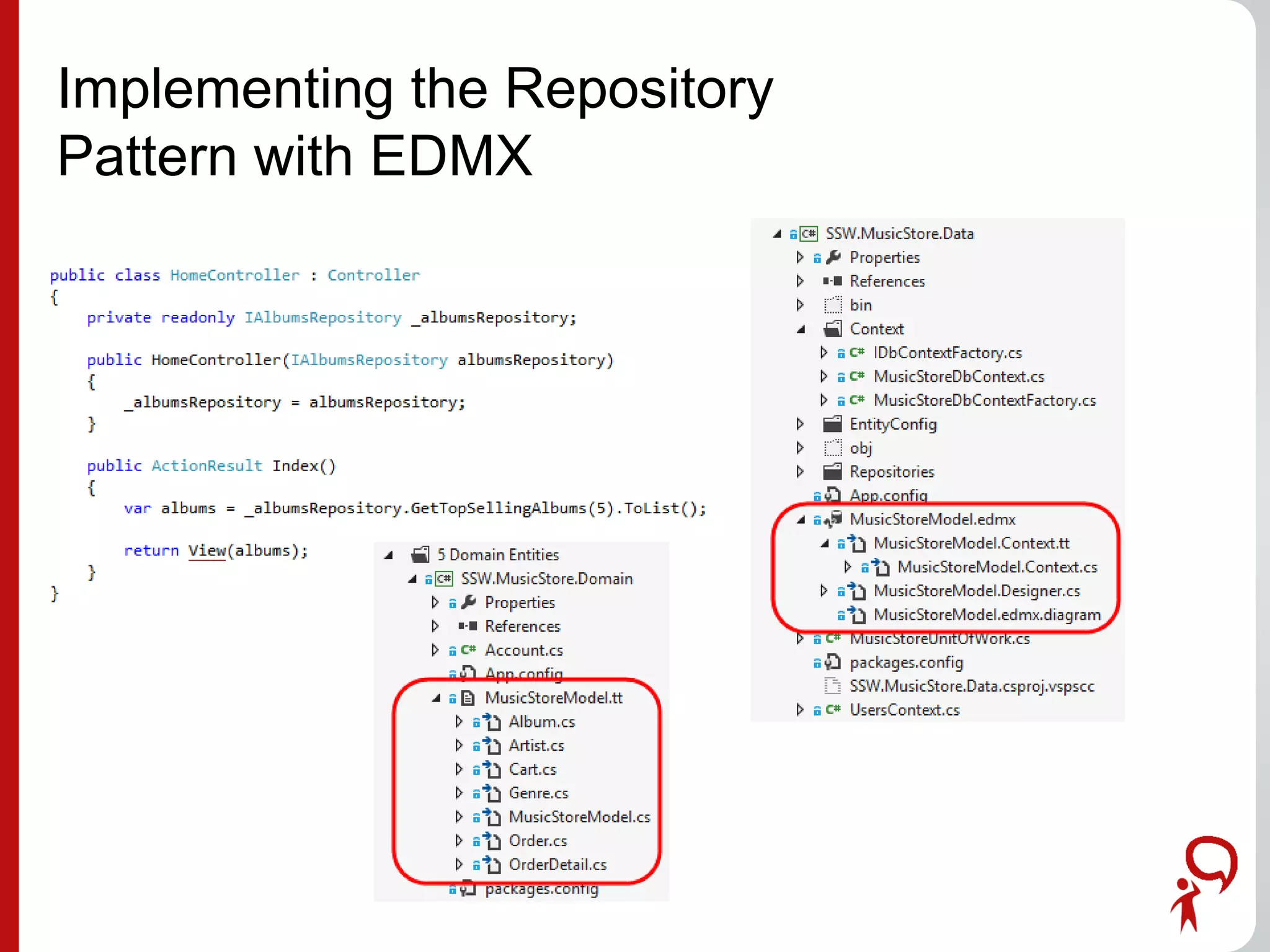
Implementing the Repository
Pattern with EDMX
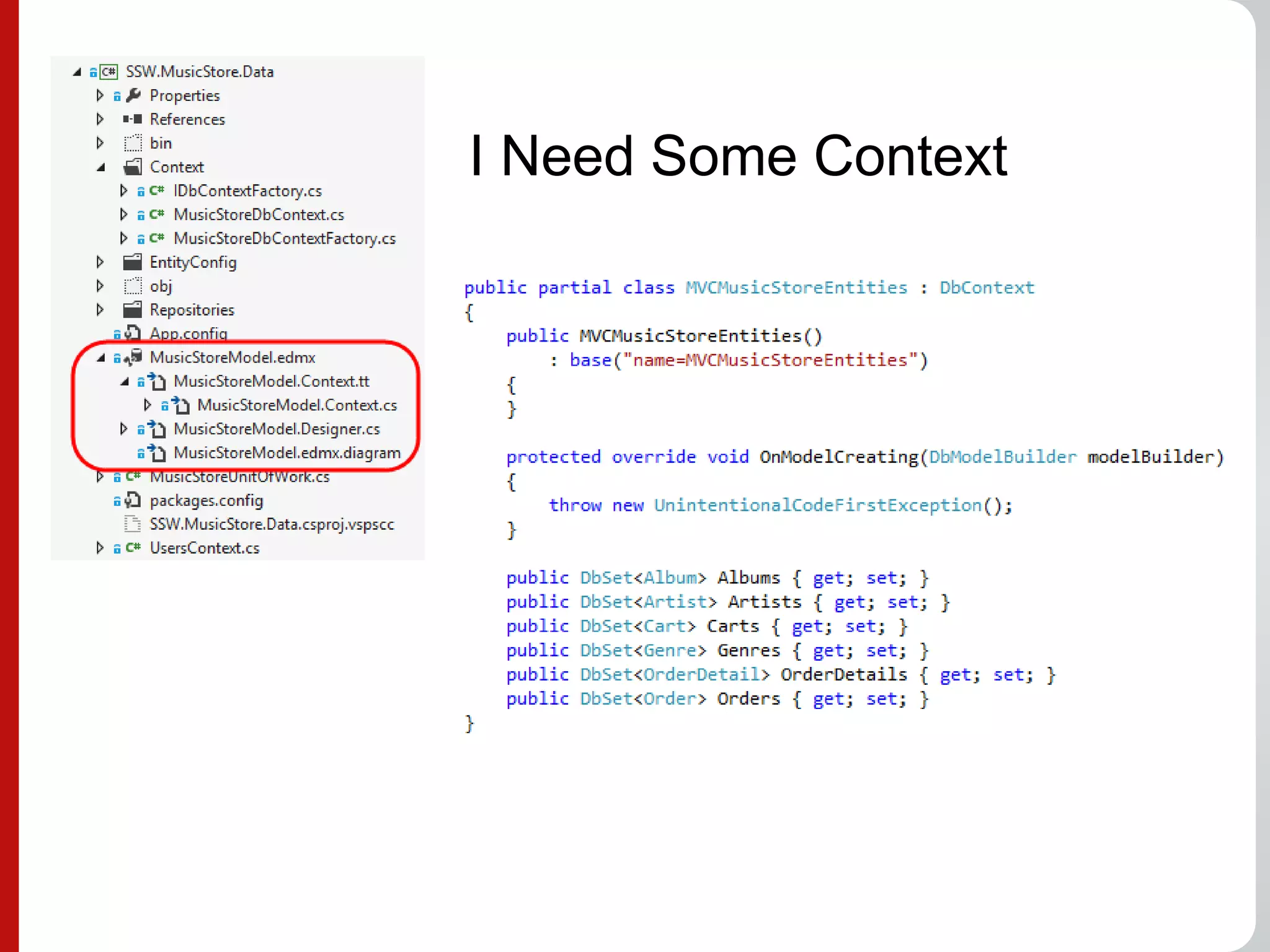
I Need Some Context
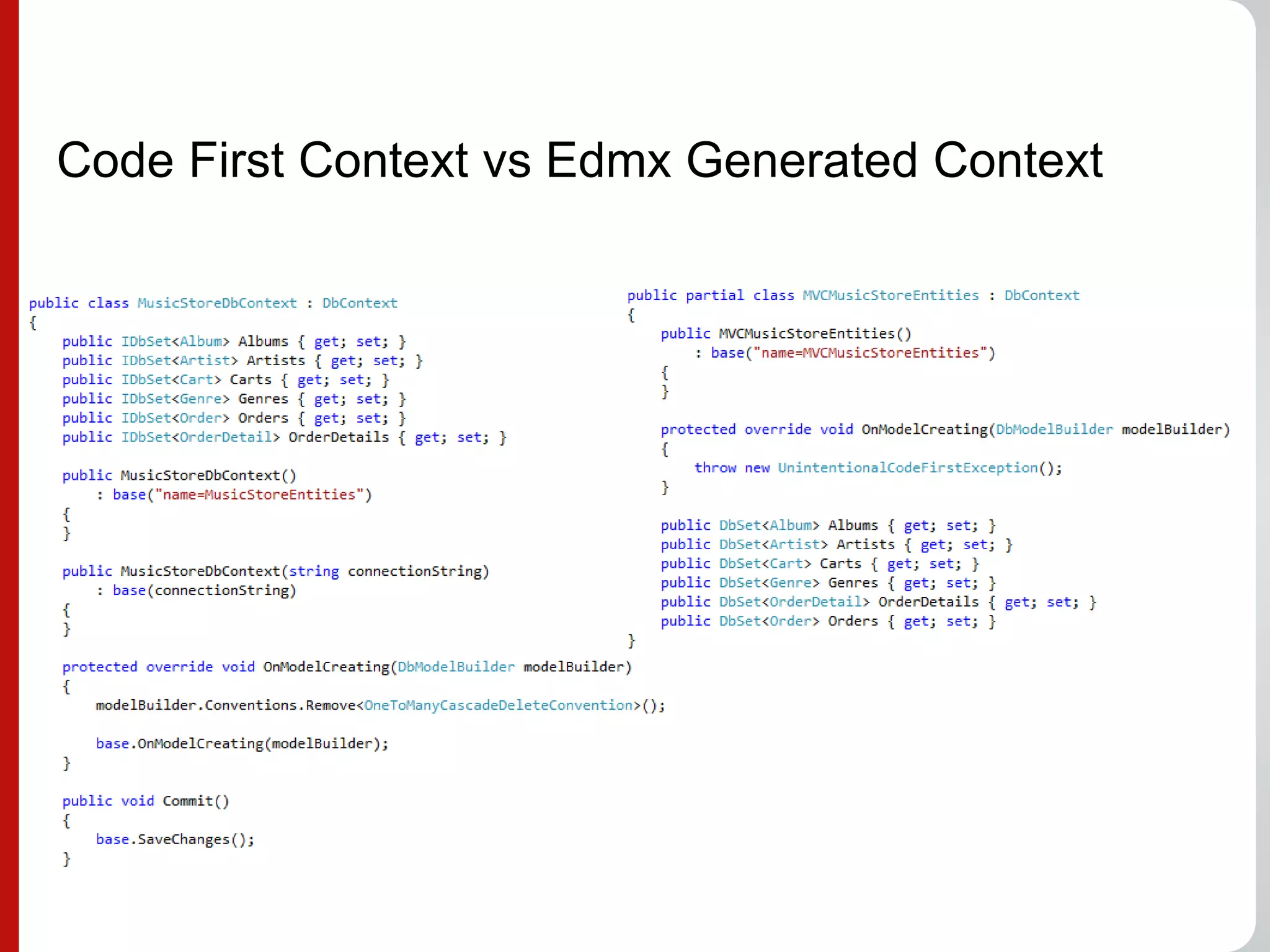
Code First Context vs Edmx Generated Context
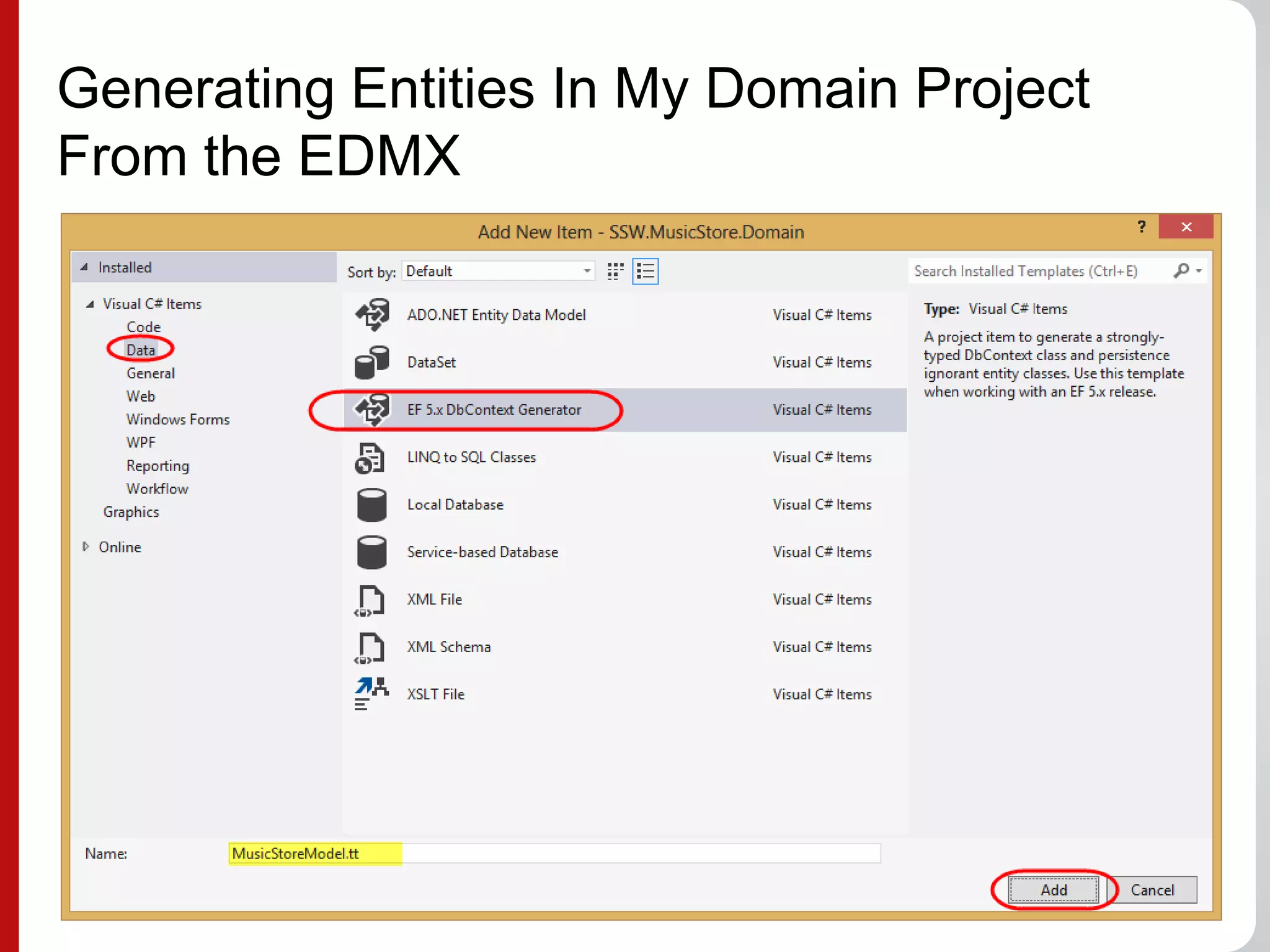
Generating Entities In My Domain Project
From the EDMX
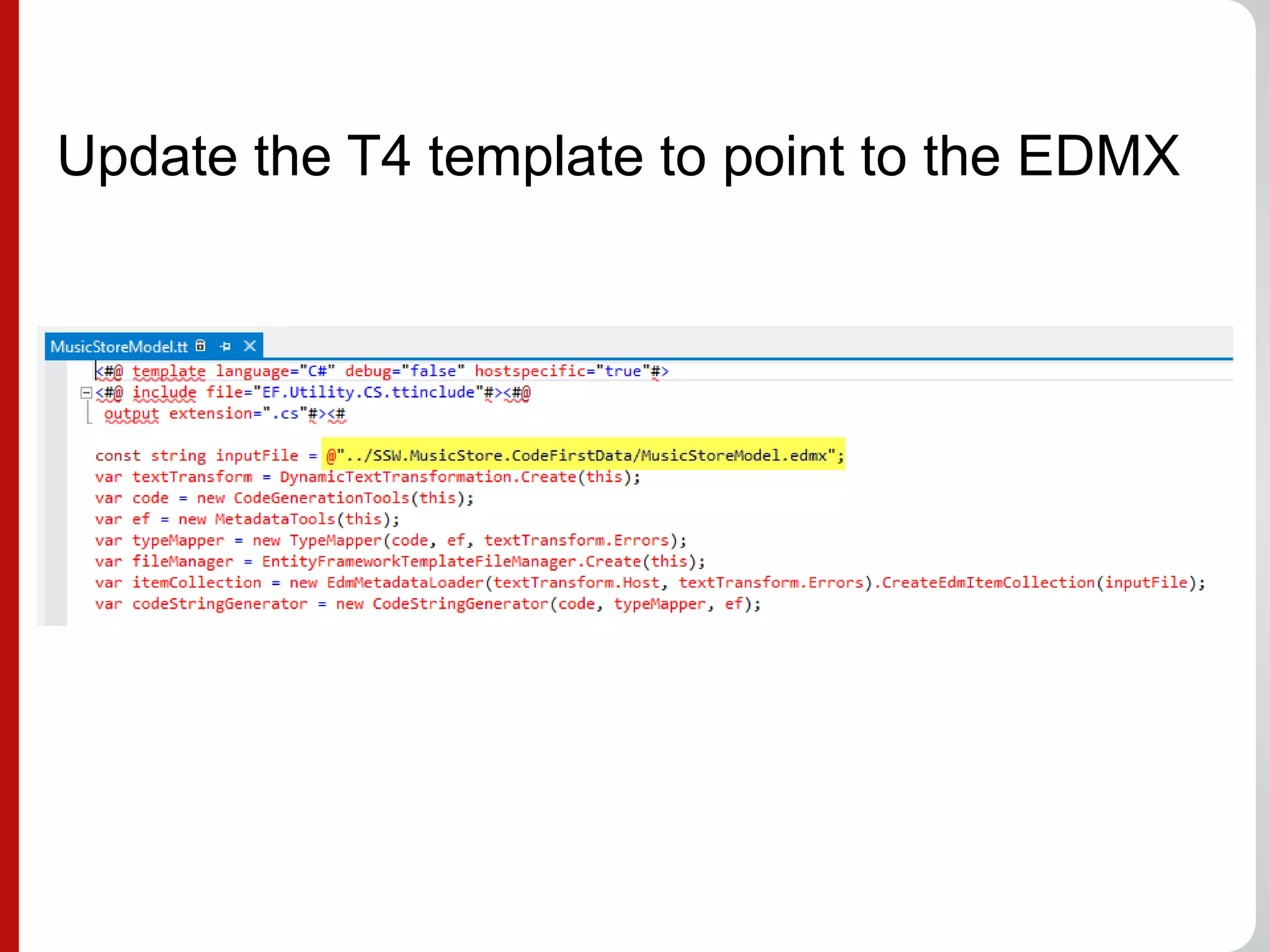
Update the T4 template to point to the EDMX
DB First - Repository + Unit of Work
 Entity Framework 4 instructions:
http://blogs.msdn.com/b/adonet/archive/2009/05/21/poco-in-the-entity-
framework-part-1-the-experience.aspx
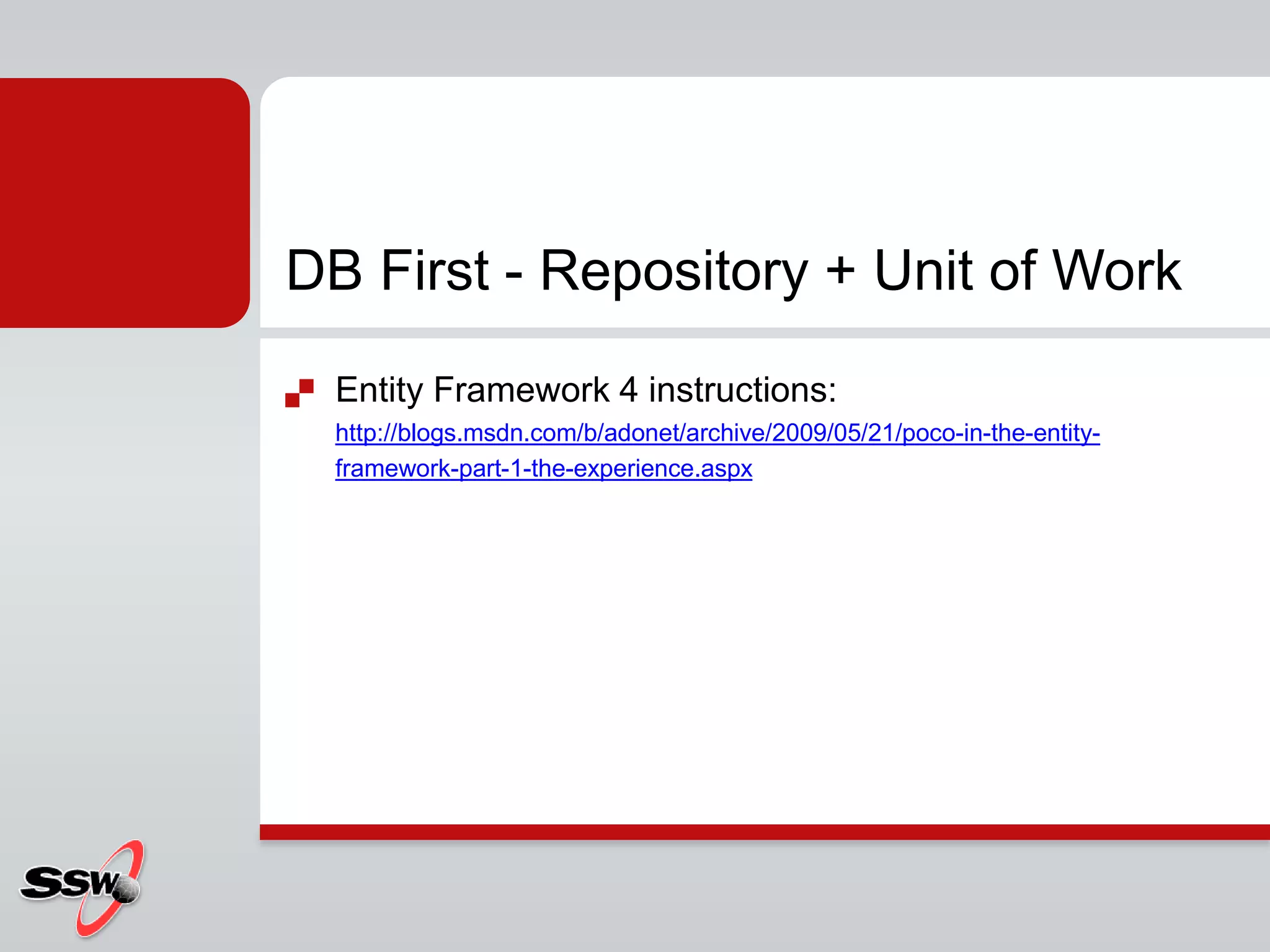
View Models
 models that describe a view
 pass data from a controller to a view.
 provides a convenient way of representing
complex view data
Benefits of View Models
 Remove logic from your views – viewmodels are easily
unit tested
 Security – remove properties from models you don’t
want in the view
 Loose coupling –views are not coupled to the domain
 DataAnnotations describe the model
Summary
1. Intro to Dependency Injection
2. Intro to the Onion Architecture
3. Intro to Enterprise Data Access
a) Repository Pattern
b) Unit of Work Pattern
4. View Models

An Introduction to Enterprise Design Patterns