Technology Enhanced Learning Symposium

Wednesday, 6 March 2013 from 13:00 to
            17:00 (GMT)
   Effective feedback
   Technology enhanced
    learning
   Individual student
    learning needs
   Entrepreneurship /
    Enterprise
   Use of audio files
       Assignment brief
       Tutorials
   PGCEL
   Review of
    equipment
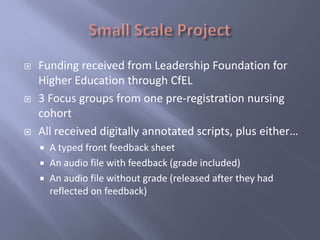
   Funding received from Leadership Foundation for
    Higher Education through CfEL
   3 Focus groups from one pre-registration nursing
    cohort
   All received digitally annotated scripts, plus either…
       A typed front feedback sheet
       An audio file with feedback (grade included)
       An audio file without grade (released after they had
        reflected on feedback)
   Format of feedback
   Digital annotation
   Feedback content
   Reflective response
   Enterprise / entrepreneurial skills
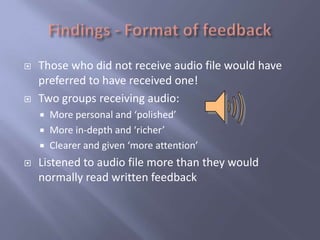
   Those who did not receive audio file would have
    preferred to have received one!
   Two groups receiving audio:
       More personal and ‘polished’
       More in-depth and ‘richer’
       Clearer and given ‘more attention’
   Listened to audio file more than they would
    normally read written feedback
   More likely to take note of audio than written
   Made notes around audio file
   Future – only one preferred written
   Better than hand written - clearer
   Link between audio-file and digital comments
    useful. Less obvious with typed sheet and
    annotation group
   Less personal than hand written, but this depends
    on whether hand written is decipherable
   Content biggest impact on progression and
    development, rather than format
   Positive comments appreciated, especially
    elaboration on ‘good point’ or ‘’
   Audio-files allow for greater expansion on feedback,
    that is difficult to cover in written
    Audio-files enhance the nature of the feedback
   ‘I did ok but could have done better, now give me
    the grade!’
   If the whole group had to do this, and all grades
    released at the same time, they would be ok with
    this
   Having to make a response, created more
    consideration of comments
   Quick release of grade after comments received
    was appreciated
   Anxiety provoking wait outweighs benefit of
    reflection
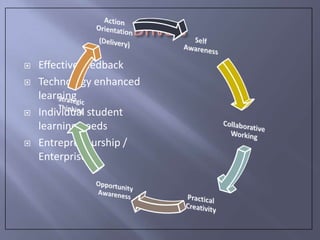
   Self awareness
       Feedback in all groups made them more aware of their
        learning needs
       Audio groups – this was more ‘evident’ due to being more
        personalised – interacted more, especially delayed grade
        group
   Collaborative working
     Typed = clearer comments, which they discussed more
      with peers
     Audio (including grade) did not discuss with peers as
      much, due to audio being comprehensive
     Audio (delayed grade) discussed more with their peers
   Practical Creativity
     Realised the importance of need for logical and cohesive
      flow to work from feedback
     Identified need to read more literature and compare and
      contrast (different ways of doing this)
     Time management identified as an issue
     Audio group (delayed grade) noted the above more than
      others, and they needed to work harder next time
     The ‘practical’ way of preparing to submit more evident
      than ‘creativity’ in participants’ eyes
   Opportunity Awareness
       Additional prompts identified need to seek further help
        with work (e.g. student support, literature searching,
        accessing library, critical analysis). Audio groups felt
        format allowed for greater expansion on these points
       Audio group (delayed grade) took opportunity to discuss
        feedback with peers more then before, but did not see
        this as ‘collaborative working’
       Audio format makes it more personalised, and therefore
        more likely to act on opportunities available
   Strategic Thinking
       Identified need to plan more, as opposed to ‘Strategic
        thinking’
   Action Orientation
     Many students had already acted upon the feedback
     Audio (delayed grade) seemed to be more active in
      addressing feedback than other groups
   It can take longer…but….
   Recording average of audio-file took 4 minutes,
    whereas typing sheet took 8!
   Not for everyone
   Be careful where you record and where it is played!
   Make notes
   More tech = more in-depth? (marker perspective)
   Content is more important than format
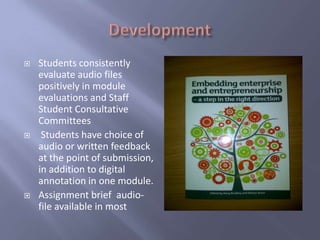
   Students consistently
    evaluate audio files
    positively in module
    evaluations and Staff
    Student Consultative
    Committees
    Students have choice of
    audio or written feedback
    at the point of submission,
    in addition to digital
    annotation in one module.
   Assignment brief audio-
    file available in most

Enterprising feedback

  • 1.
    Technology Enhanced LearningSymposium Wednesday, 6 March 2013 from 13:00 to 17:00 (GMT)
  • 2.
    Effective feedback  Technology enhanced learning  Individual student learning needs  Entrepreneurship / Enterprise
  • 3.
    Use of audio files  Assignment brief  Tutorials  PGCEL  Review of equipment
  • 4.
    Funding received from Leadership Foundation for Higher Education through CfEL  3 Focus groups from one pre-registration nursing cohort  All received digitally annotated scripts, plus either…  A typed front feedback sheet  An audio file with feedback (grade included)  An audio file without grade (released after they had reflected on feedback)
  • 5.
    Format of feedback  Digital annotation  Feedback content  Reflective response  Enterprise / entrepreneurial skills
  • 6.
    Those who did not receive audio file would have preferred to have received one!  Two groups receiving audio:  More personal and ‘polished’  More in-depth and ‘richer’  Clearer and given ‘more attention’  Listened to audio file more than they would normally read written feedback
  • 7.
    More likely to take note of audio than written  Made notes around audio file  Future – only one preferred written
  • 8.
    Better than hand written - clearer  Link between audio-file and digital comments useful. Less obvious with typed sheet and annotation group  Less personal than hand written, but this depends on whether hand written is decipherable
  • 9.
    Content biggest impact on progression and development, rather than format  Positive comments appreciated, especially elaboration on ‘good point’ or ‘’  Audio-files allow for greater expansion on feedback, that is difficult to cover in written  Audio-files enhance the nature of the feedback
  • 10.
    ‘I did ok but could have done better, now give me the grade!’  If the whole group had to do this, and all grades released at the same time, they would be ok with this  Having to make a response, created more consideration of comments  Quick release of grade after comments received was appreciated  Anxiety provoking wait outweighs benefit of reflection
  • 11.
    Self awareness  Feedback in all groups made them more aware of their learning needs  Audio groups – this was more ‘evident’ due to being more personalised – interacted more, especially delayed grade group
  • 12.
    Collaborative working  Typed = clearer comments, which they discussed more with peers  Audio (including grade) did not discuss with peers as much, due to audio being comprehensive  Audio (delayed grade) discussed more with their peers
  • 13.
    Practical Creativity  Realised the importance of need for logical and cohesive flow to work from feedback  Identified need to read more literature and compare and contrast (different ways of doing this)  Time management identified as an issue  Audio group (delayed grade) noted the above more than others, and they needed to work harder next time  The ‘practical’ way of preparing to submit more evident than ‘creativity’ in participants’ eyes
  • 14.
    Opportunity Awareness  Additional prompts identified need to seek further help with work (e.g. student support, literature searching, accessing library, critical analysis). Audio groups felt format allowed for greater expansion on these points  Audio group (delayed grade) took opportunity to discuss feedback with peers more then before, but did not see this as ‘collaborative working’  Audio format makes it more personalised, and therefore more likely to act on opportunities available
  • 15.
    Strategic Thinking  Identified need to plan more, as opposed to ‘Strategic thinking’  Action Orientation  Many students had already acted upon the feedback  Audio (delayed grade) seemed to be more active in addressing feedback than other groups
  • 16.
    It can take longer…but….  Recording average of audio-file took 4 minutes, whereas typing sheet took 8!  Not for everyone  Be careful where you record and where it is played!  Make notes  More tech = more in-depth? (marker perspective)  Content is more important than format
  • 17.
    Students consistently evaluate audio files positively in module evaluations and Staff Student Consultative Committees  Students have choice of audio or written feedback at the point of submission, in addition to digital annotation in one module.  Assignment brief audio- file available in most

Editor's Notes

  • #7 Based upon assignment brief experience and comments from each other