Tips and tricks
English Language Examinations
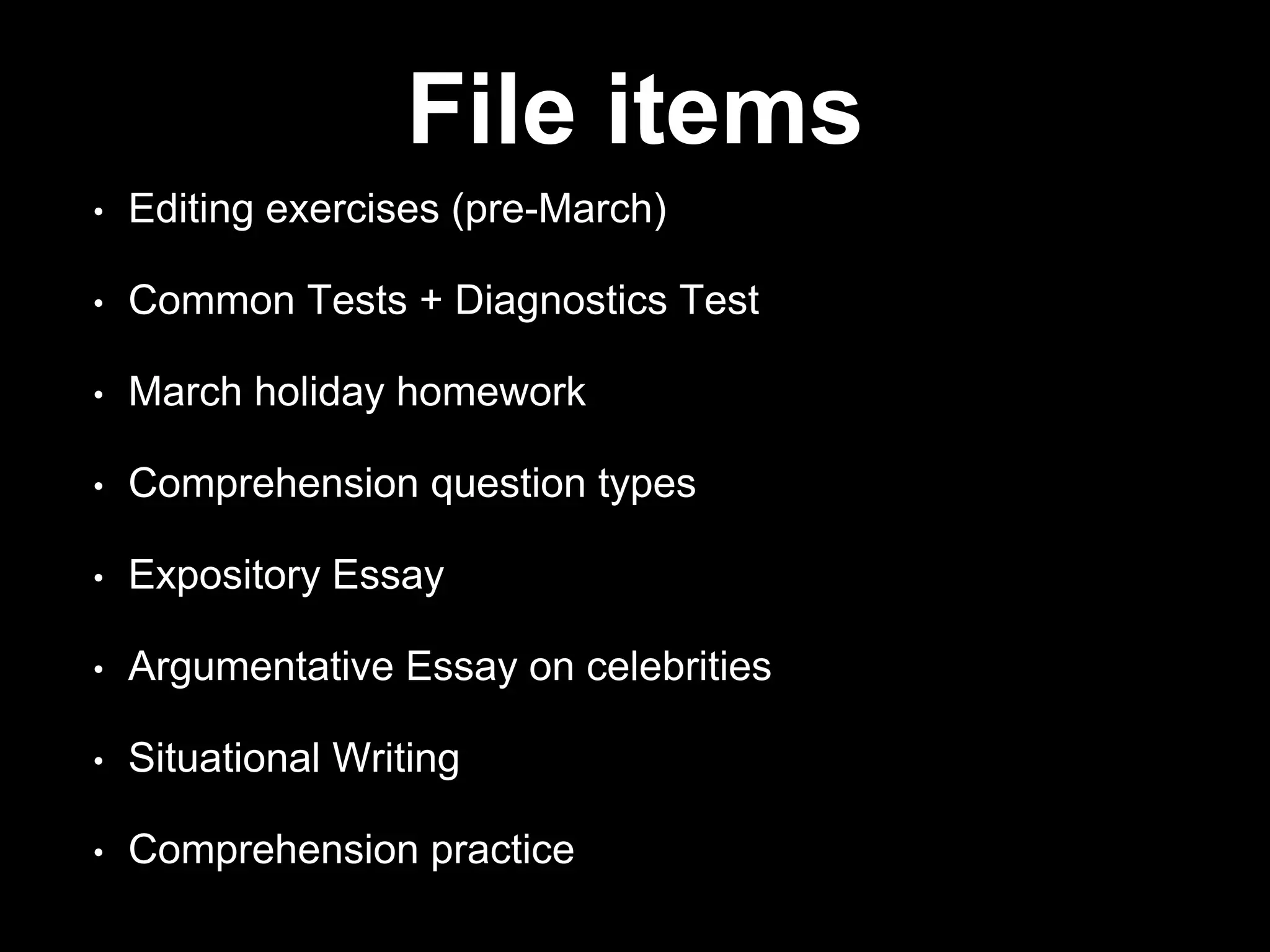
File items
• Editing exercises (pre-March)
• Common Tests + Diagnostics Test
• March holiday homework
• Comprehension question types
• Expository Essay
• Argumentative Essay on celebrities
• Situational Writing
• Comprehension practice
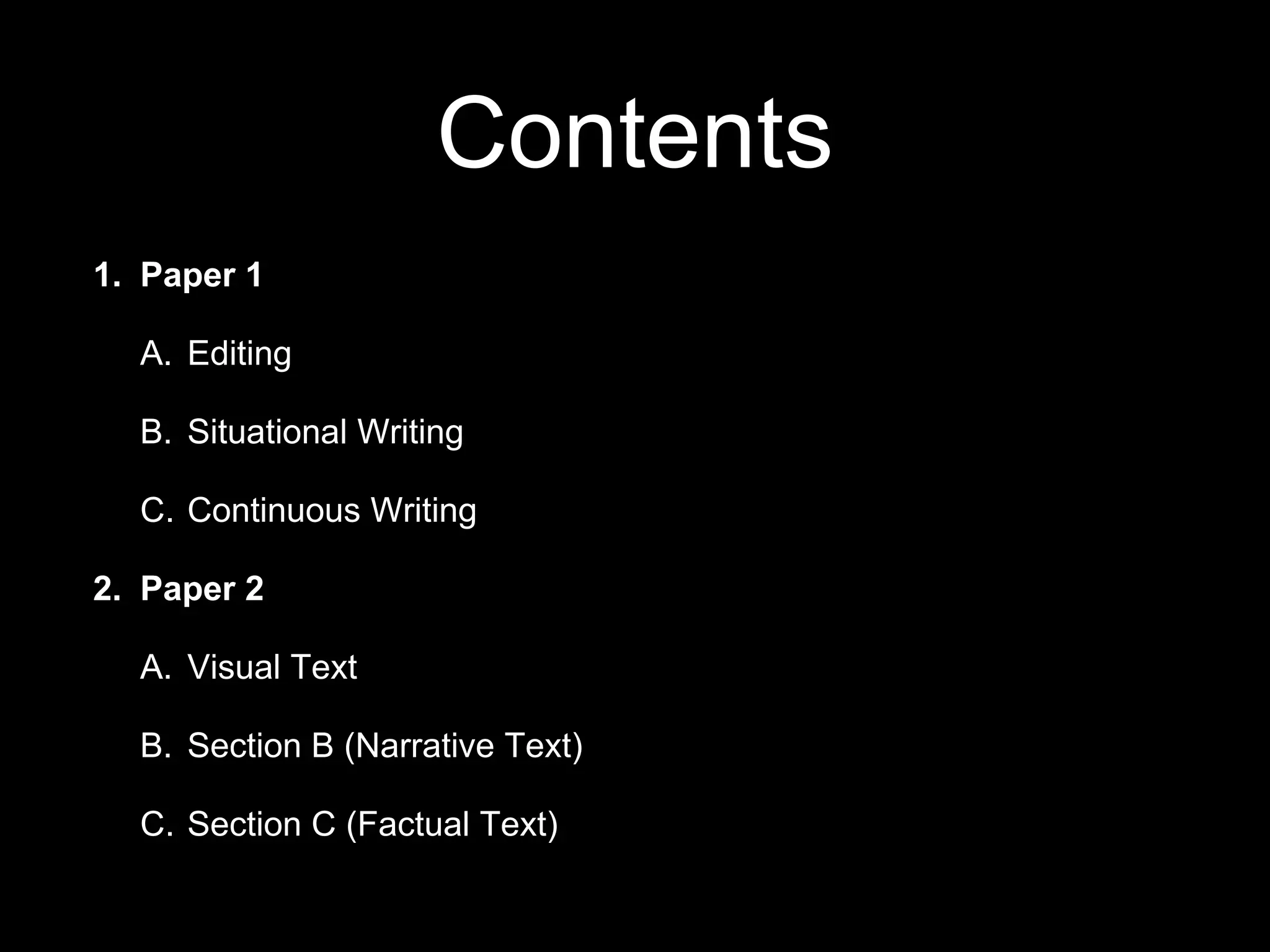
Contents
1. Paper 1
A. Editing
B. Situational Writing
C. Continuous Writing
2. Paper 2
A. Visual Text
B. Section B (Narrative Text)
C. Section C (Factual Text)
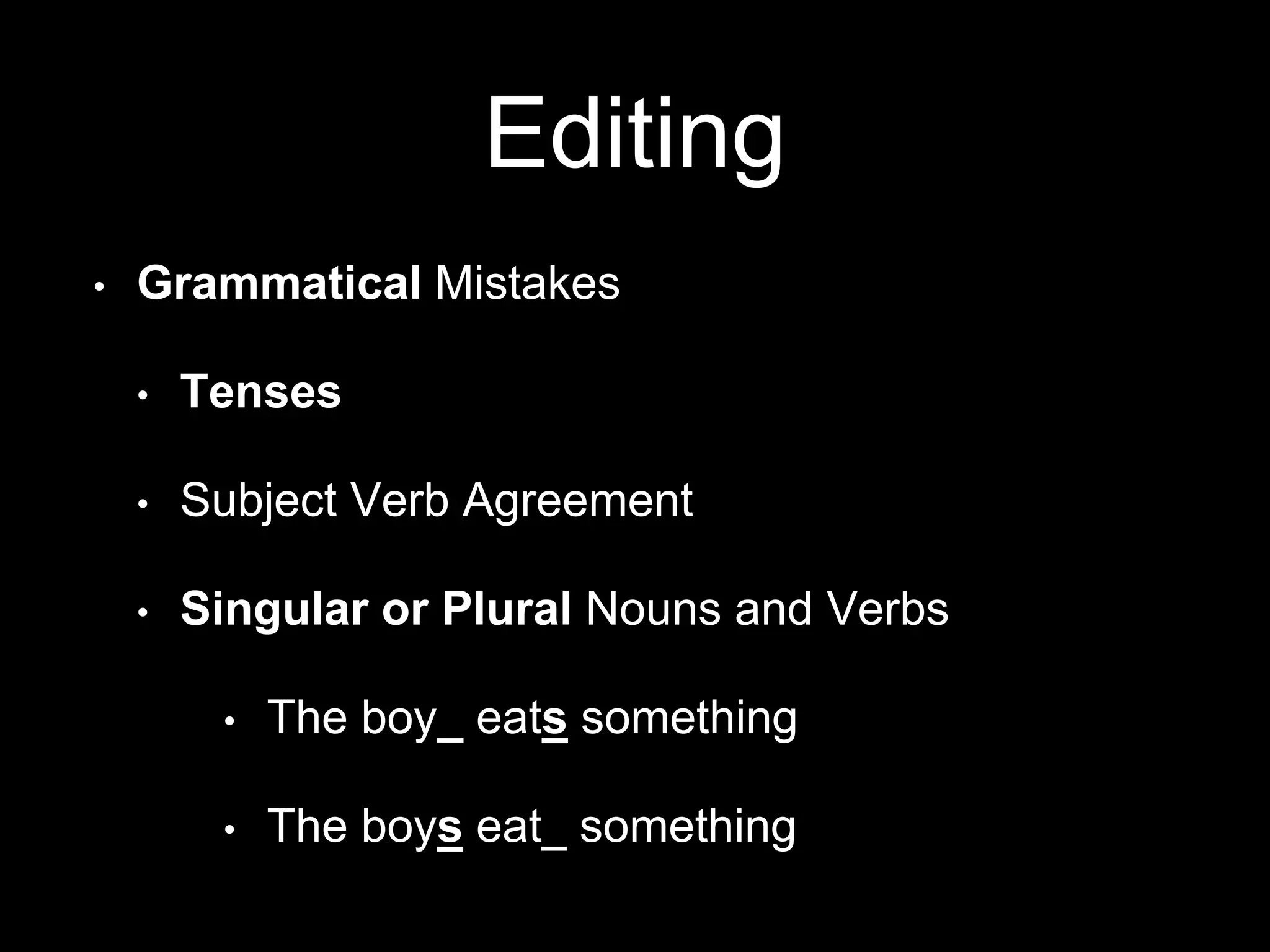
Editing
• Grammatical Mistakes
• Tenses
• Subject Verb Agreement
• Singular or Plural Nouns and Verbs
• The boy_ eats something
• The boys eat_ something
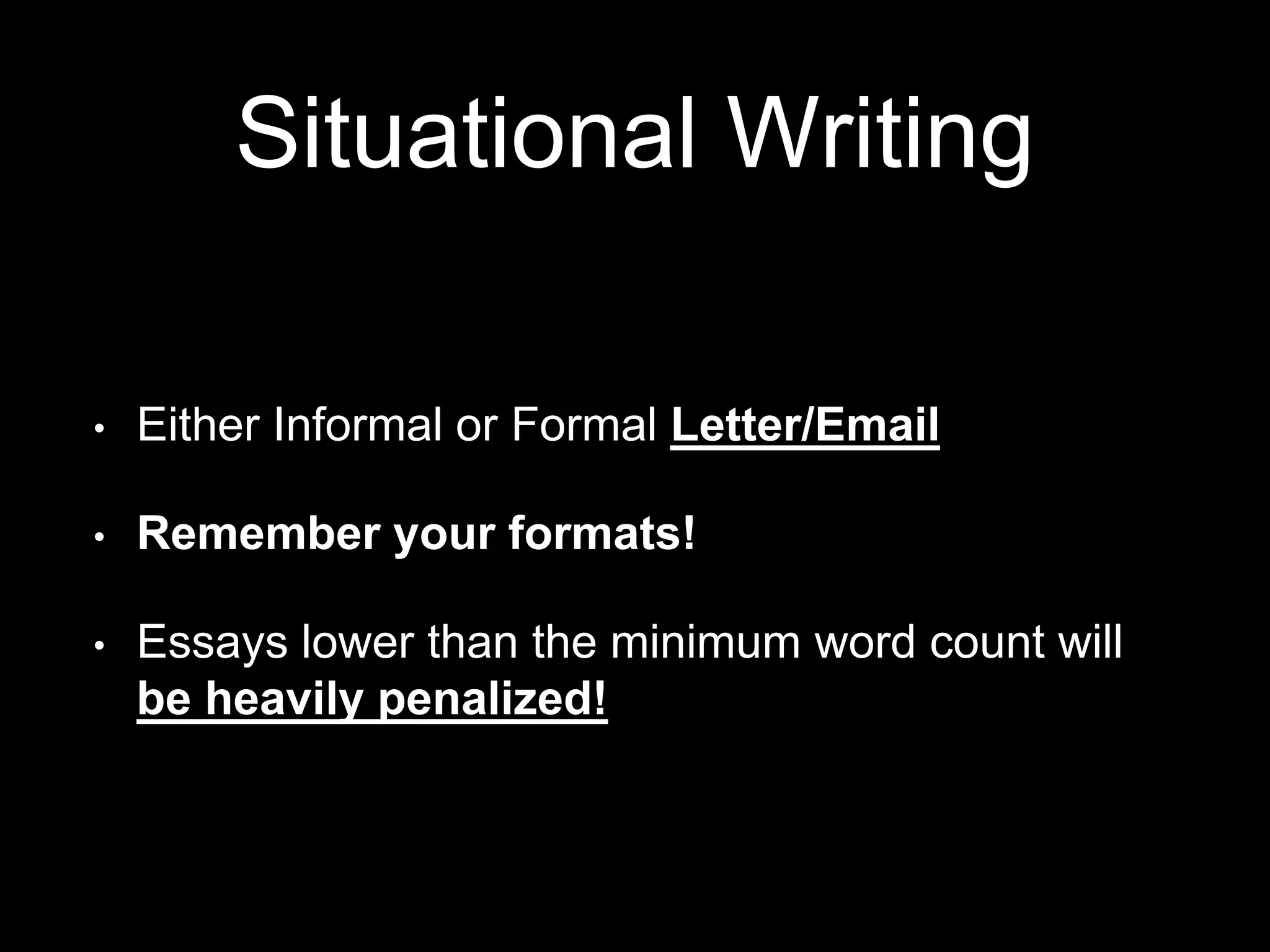
• Either Informal or Formal Letter/Email
• Remember your formats!
• Essays lower than the minimum word count will
be heavily penalized!
Situational Writing
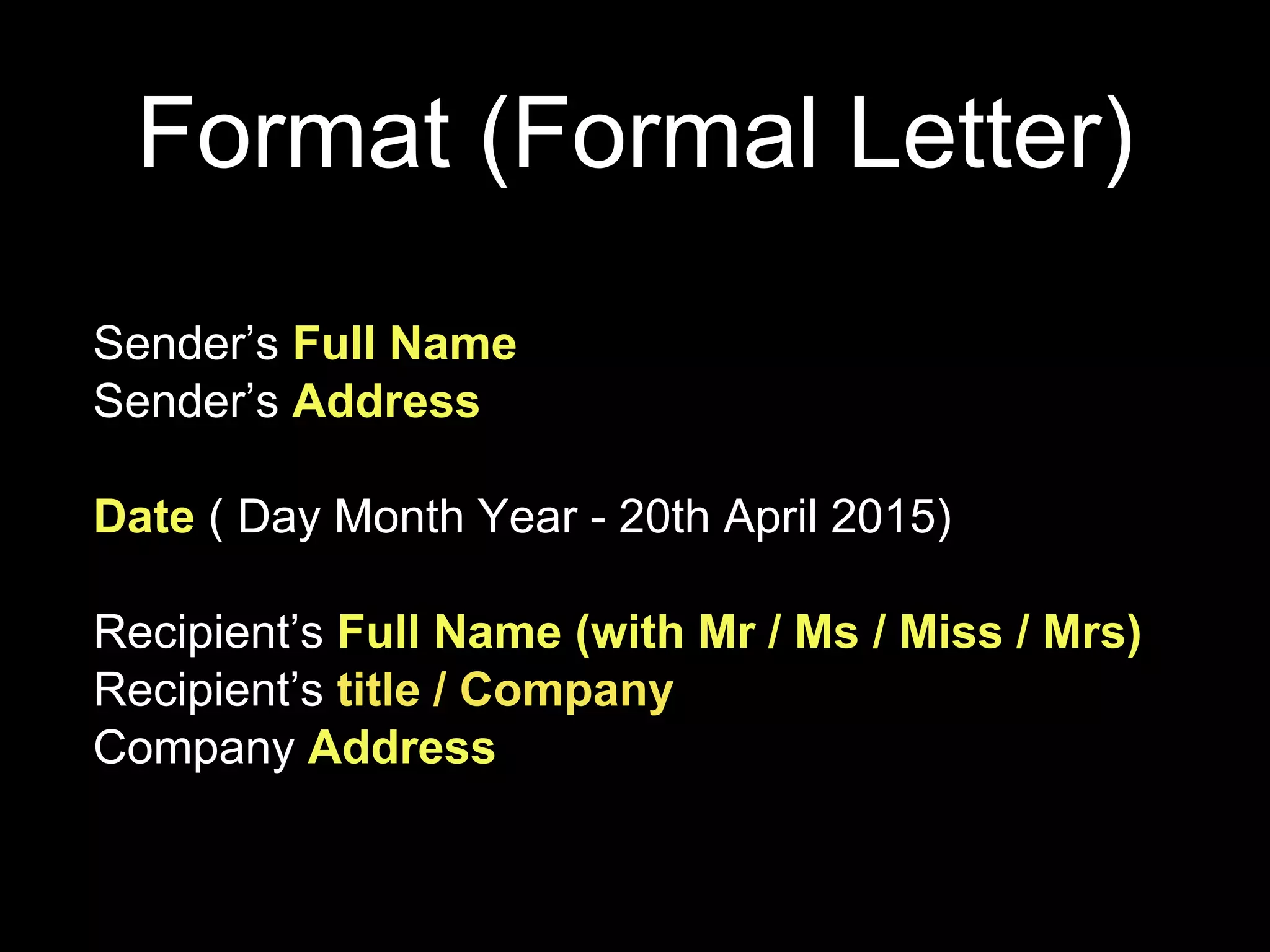
Format (Formal Letter)
Sender’s Full Name
Sender’s Address
Date ( Day Month Year - 20th April 2015)
Recipient’s Full Name (with Mr / Ms / Miss / Mrs)
Recipient’s title / Company
Company Address
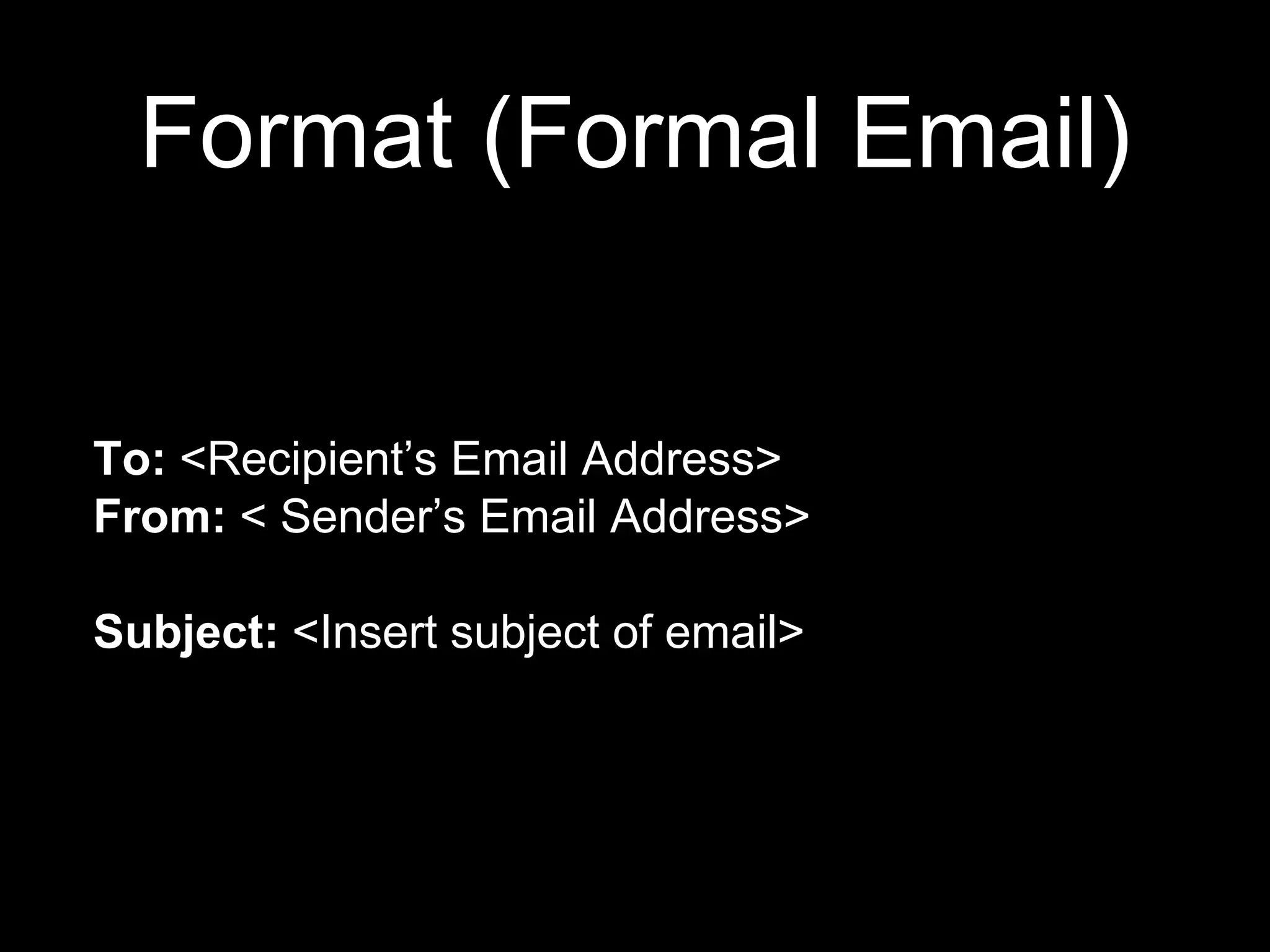
Format (Formal Email)
To: <Recipient’s Email Address>
From: < Sender’s Email Address>
Subject: <Insert subject of email>
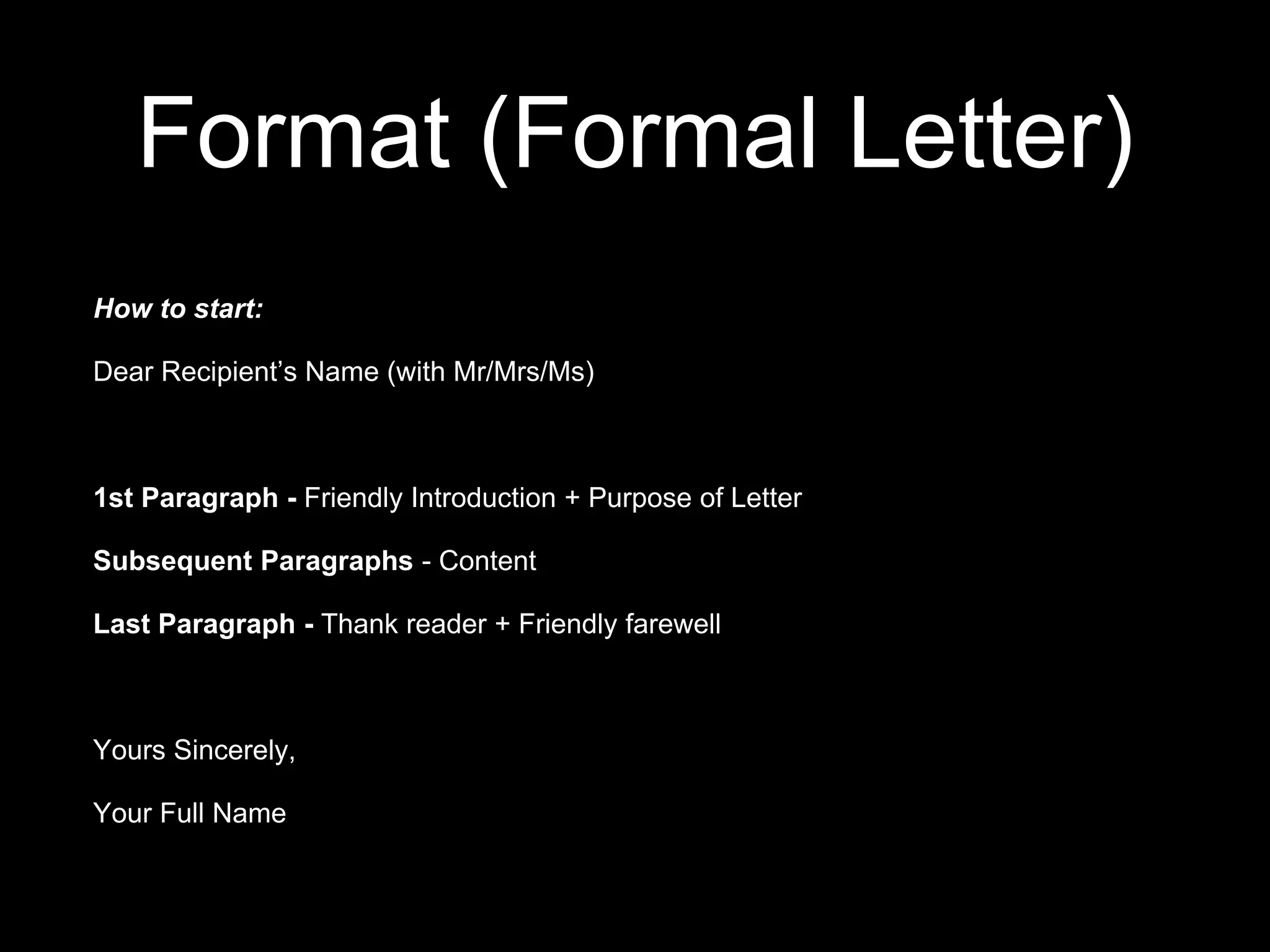
Format (Formal Letter)
How to start:
Dear Recipient’s Name (with Mr/Mrs/Ms)
1st Paragraph - Friendly Introduction + Purpose of Letter
Subsequent Paragraphs - Content
Last Paragraph - Thank reader + Friendly farewell
Yours Sincerely,
Your Full Name
Continuous Writing
• Any combination of essay types:
• Argumentative
• Expository
• Narrative
• Essays lower than the minimum word count will
be heavily penalized!
Key points to remember
Argumentative Essays
• Always have a stand
• Your purpose is to convince
• 3 supporting points (paragraphs)
• 1 counter-argument
Key points to remember
Expository Essays
• Have to consider all possible points of view.
• Your purpose is to explain
• 3 supporting points (paragraphs)
Key points to remember
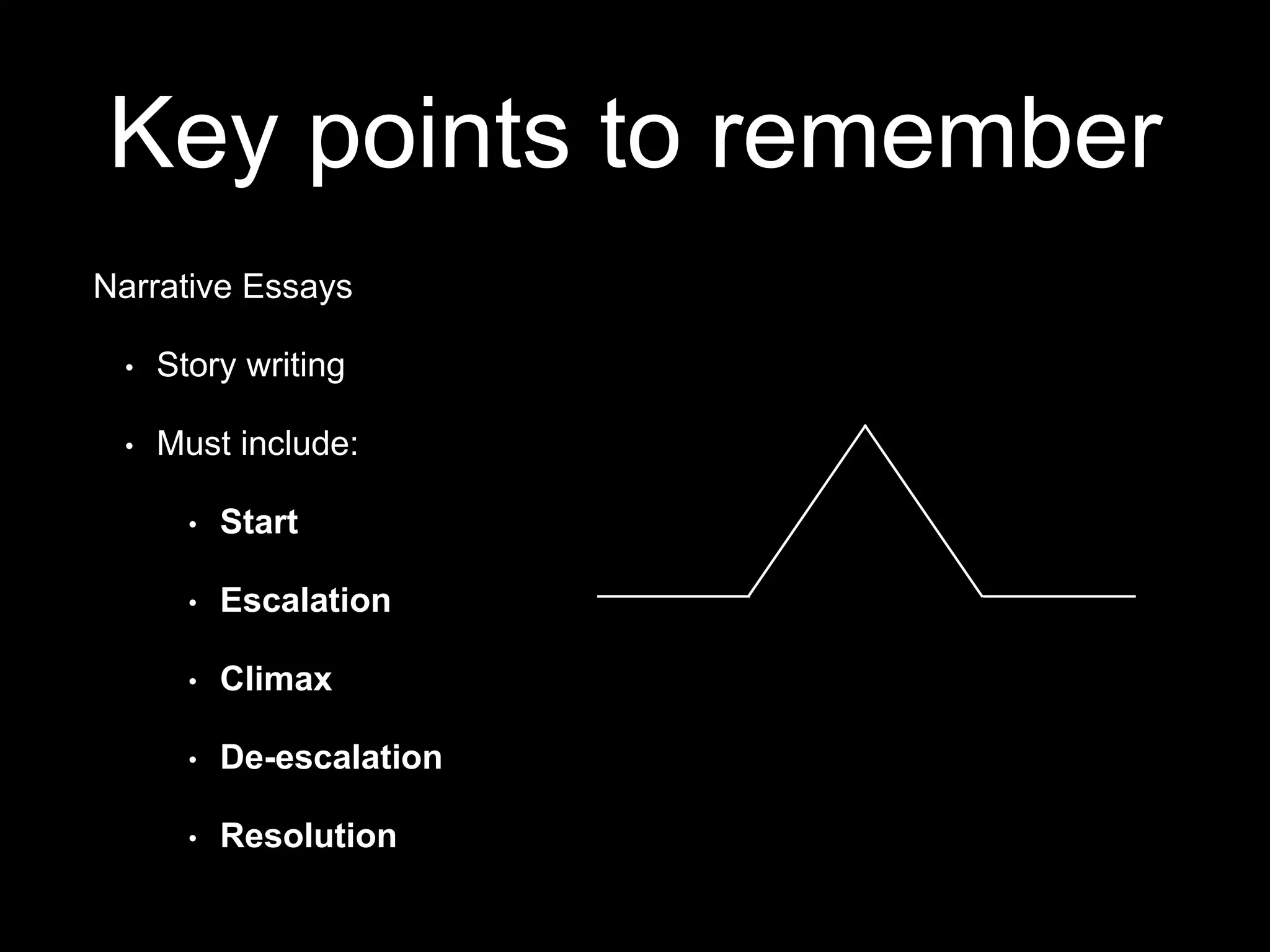
Narrative Essays
• Story writing
• Must include:
• Start
• Escalation
• Climax
• De-escalation
• Resolution
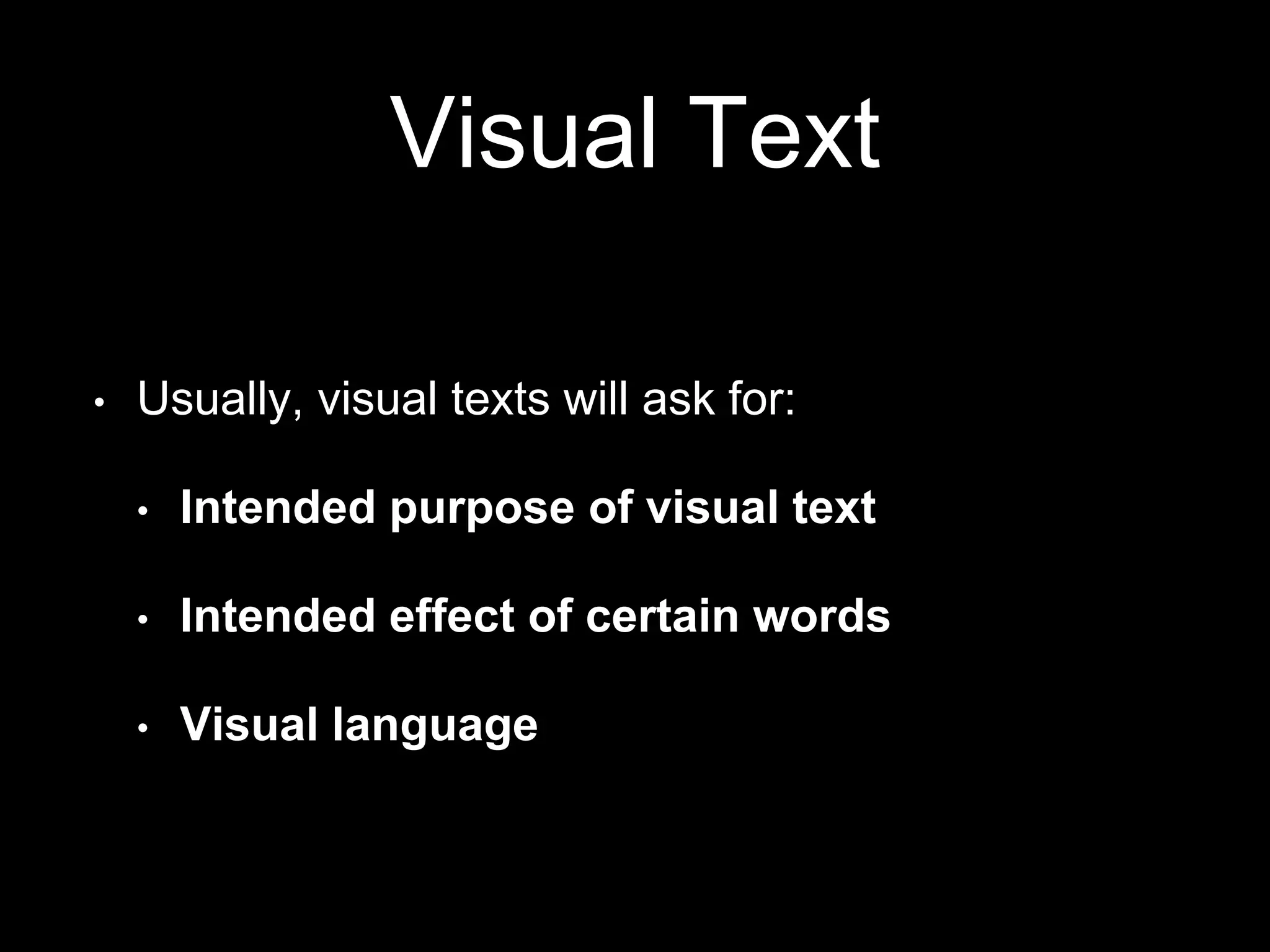
Visual Text
• Usually, visual texts will ask for:
• Intended purpose of visual text
• Intended effect of certain words
• Visual language
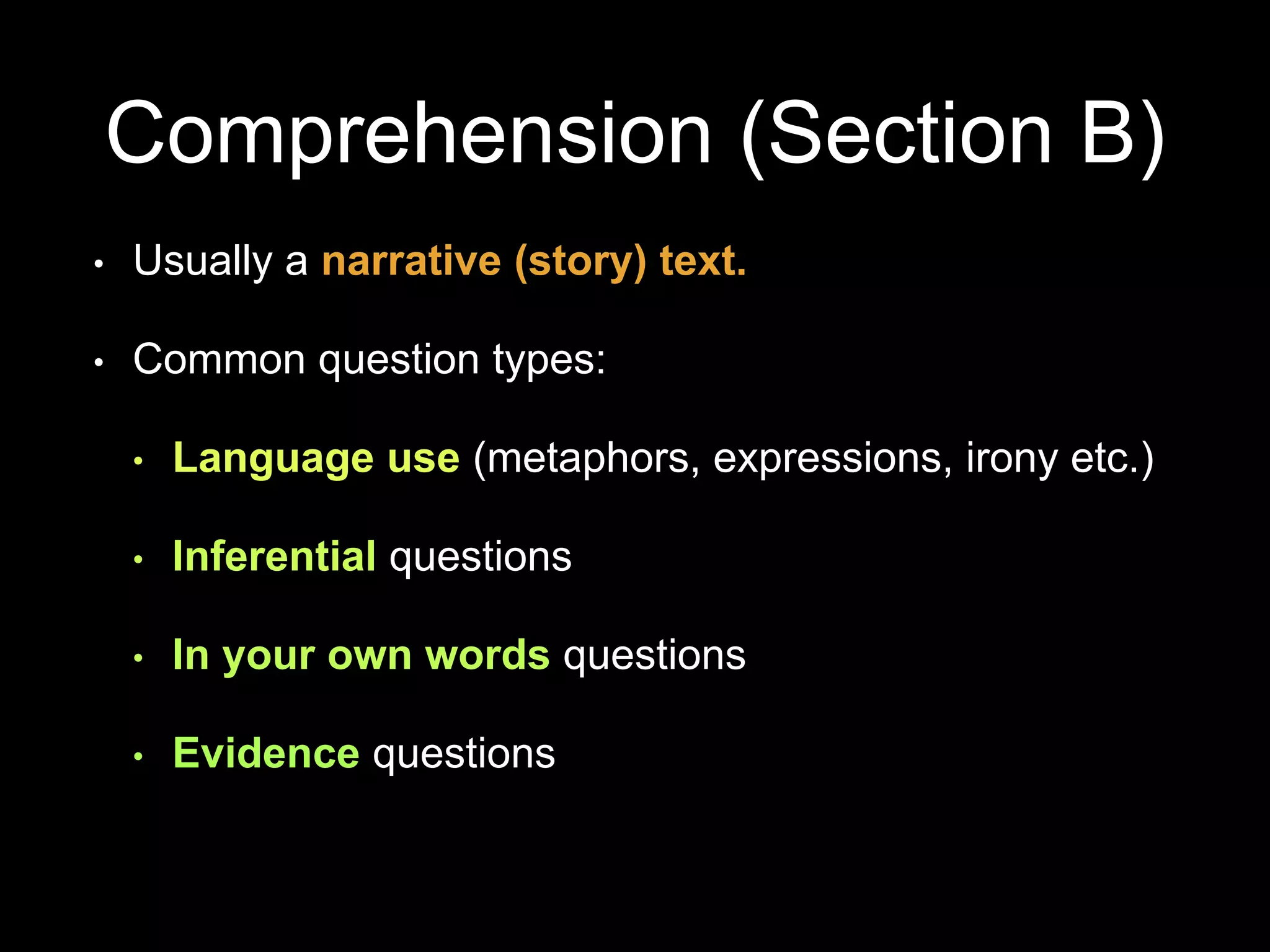
Comprehension (Section B)
• Usually a narrative (story) text.
• Common question types:
• Language use (metaphors, expressions, irony etc.)
• Inferential questions
• In your own words questions
• Evidence questions
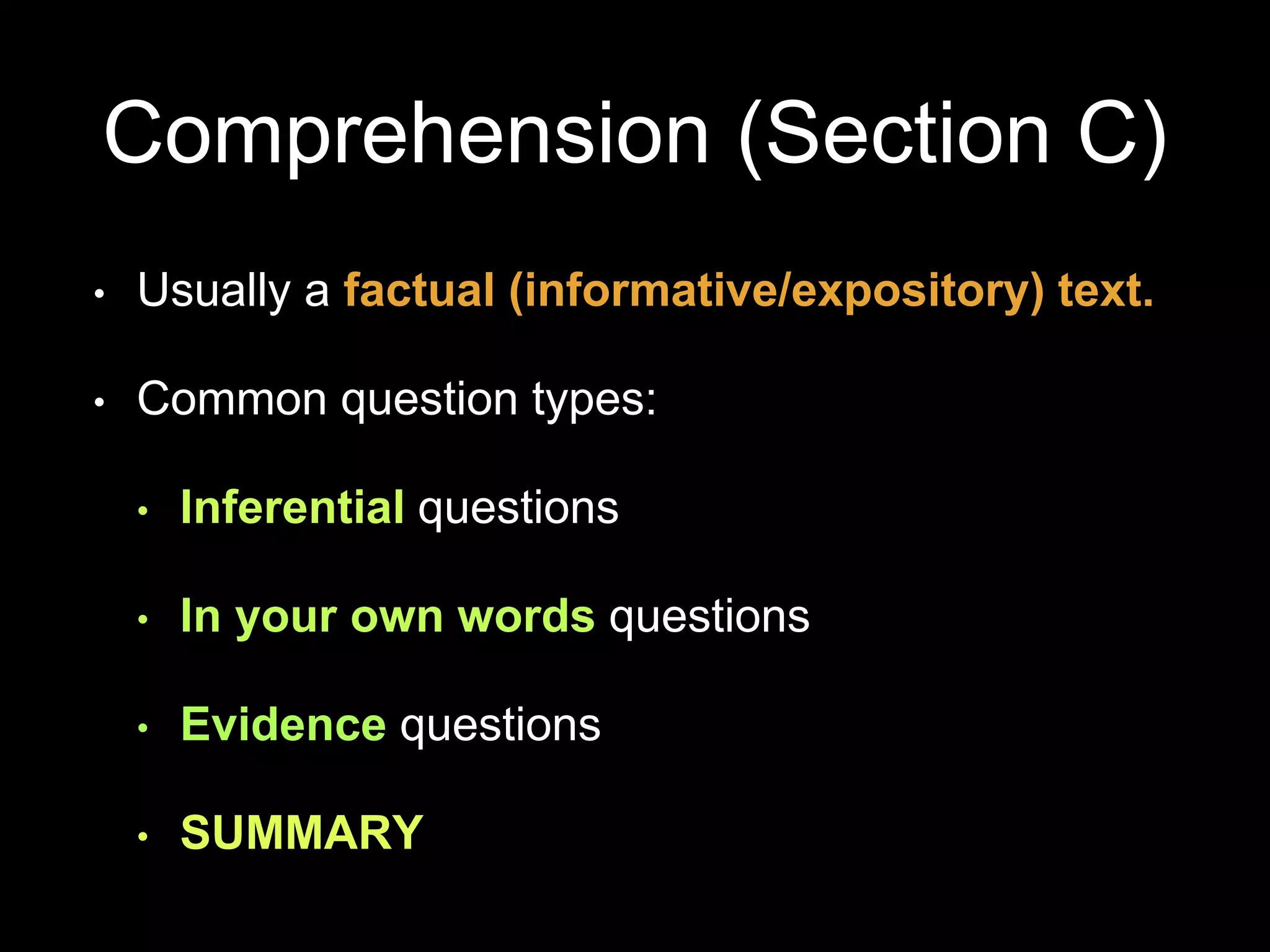
Comprehension (Section C)
• Usually a factual (informative/expository) text.
• Common question types:
• Inferential questions
• In your own words questions
• Evidence questions
• SUMMARY
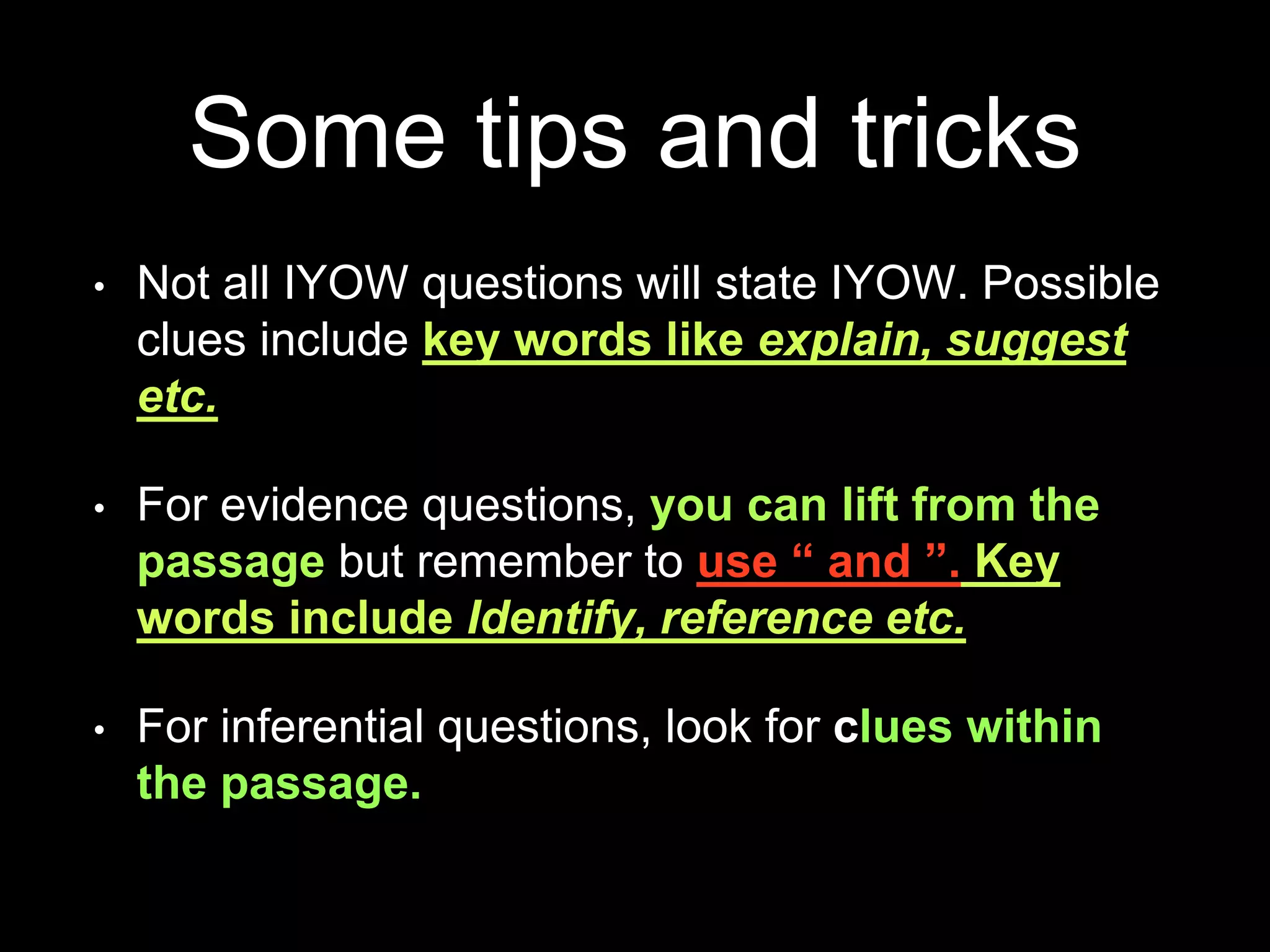
Some tips and tricks
• Not all IYOW questions will state IYOW. Possible
clues include key words like explain, suggest
etc.
• For evidence questions, you can lift from the
passage but remember to use “ and ”. Key
words include Identify, reference etc.
• For inferential questions, look for clues within
the passage.
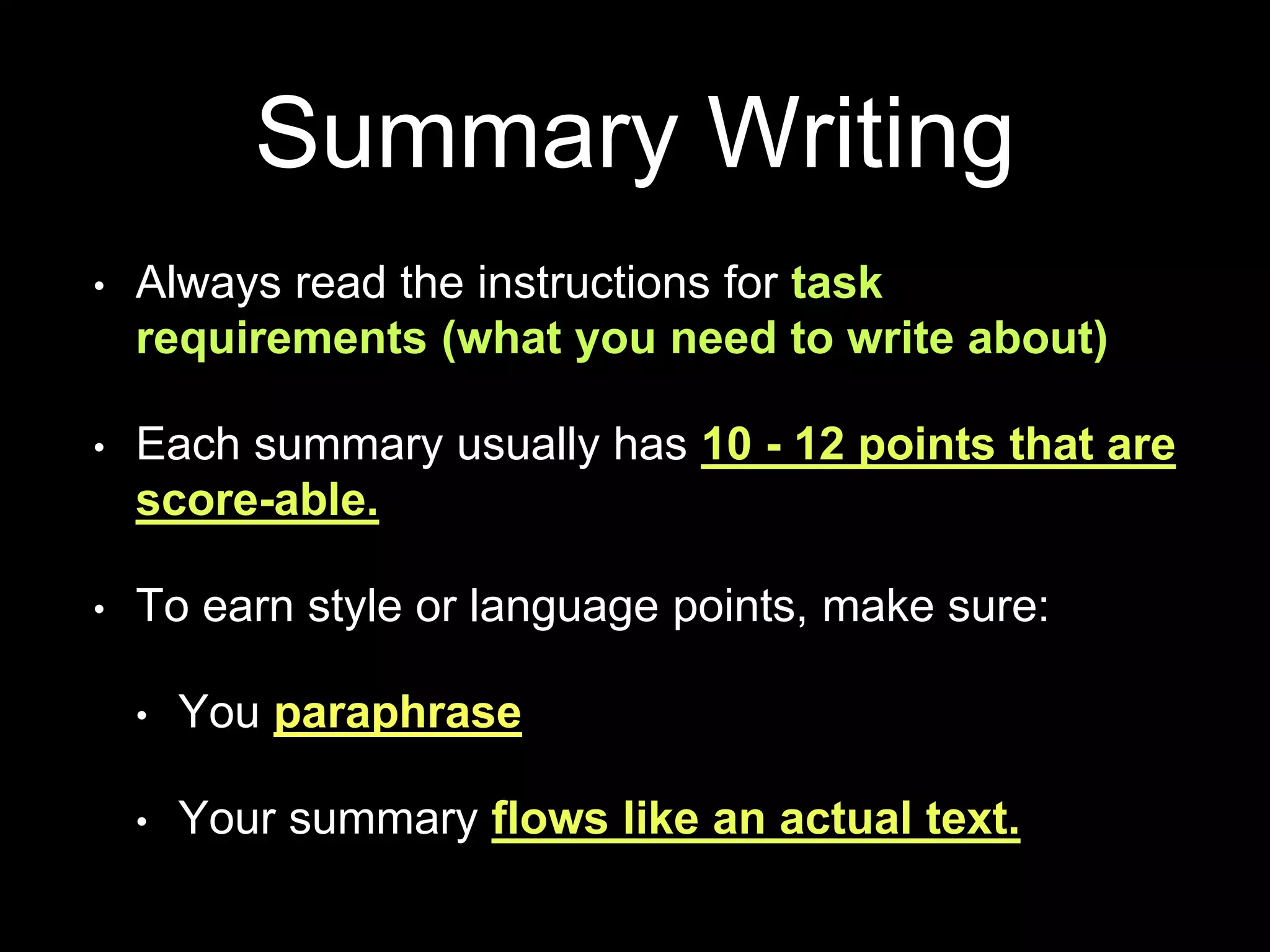
Summary Writing
• Always read the instructions for task
requirements (what you need to write about)
• Each summary usually has 10 - 12 points that are
score-able.
• To earn style or language points, make sure:
• You paraphrase
• Your summary flows like an actual text.

English Language exam prep tips and tricks

  • 1.
    Tips and tricks EnglishLanguage Examinations
  • 2.
    File items • Editingexercises (pre-March) • Common Tests + Diagnostics Test • March holiday homework • Comprehension question types • Expository Essay • Argumentative Essay on celebrities • Situational Writing • Comprehension practice
  • 3.
    Contents 1. Paper 1 A.Editing B. Situational Writing C. Continuous Writing 2. Paper 2 A. Visual Text B. Section B (Narrative Text) C. Section C (Factual Text)
  • 4.
    Editing • Grammatical Mistakes •Tenses • Subject Verb Agreement • Singular or Plural Nouns and Verbs • The boy_ eats something • The boys eat_ something
  • 5.
    • Either Informalor Formal Letter/Email • Remember your formats! • Essays lower than the minimum word count will be heavily penalized! Situational Writing
  • 6.
    Format (Formal Letter) Sender’sFull Name Sender’s Address Date ( Day Month Year - 20th April 2015) Recipient’s Full Name (with Mr / Ms / Miss / Mrs) Recipient’s title / Company Company Address
  • 7.
    Format (Formal Email) To:<Recipient’s Email Address> From: < Sender’s Email Address> Subject: <Insert subject of email>
  • 8.
    Format (Formal Letter) Howto start: Dear Recipient’s Name (with Mr/Mrs/Ms) 1st Paragraph - Friendly Introduction + Purpose of Letter Subsequent Paragraphs - Content Last Paragraph - Thank reader + Friendly farewell Yours Sincerely, Your Full Name
  • 9.
    Continuous Writing • Anycombination of essay types: • Argumentative • Expository • Narrative • Essays lower than the minimum word count will be heavily penalized!
  • 10.
    Key points toremember Argumentative Essays • Always have a stand • Your purpose is to convince • 3 supporting points (paragraphs) • 1 counter-argument
  • 11.
    Key points toremember Expository Essays • Have to consider all possible points of view. • Your purpose is to explain • 3 supporting points (paragraphs)
  • 12.
    Key points toremember Narrative Essays • Story writing • Must include: • Start • Escalation • Climax • De-escalation • Resolution
  • 13.
    Visual Text • Usually,visual texts will ask for: • Intended purpose of visual text • Intended effect of certain words • Visual language
  • 14.
    Comprehension (Section B) •Usually a narrative (story) text. • Common question types: • Language use (metaphors, expressions, irony etc.) • Inferential questions • In your own words questions • Evidence questions
  • 15.
    Comprehension (Section C) •Usually a factual (informative/expository) text. • Common question types: • Inferential questions • In your own words questions • Evidence questions • SUMMARY
  • 16.
    Some tips andtricks • Not all IYOW questions will state IYOW. Possible clues include key words like explain, suggest etc. • For evidence questions, you can lift from the passage but remember to use “ and ”. Key words include Identify, reference etc. • For inferential questions, look for clues within the passage.
  • 17.
    Summary Writing • Alwaysread the instructions for task requirements (what you need to write about) • Each summary usually has 10 - 12 points that are score-able. • To earn style or language points, make sure: • You paraphrase • Your summary flows like an actual text.