EngineeringEthics
Guiding Principles and Real-World Applications in Engineering
Management
TREY
research
EngineeringEthics
Engineering and ethics are two foundational pillars that underpin the very essence of
the engineering profession.
Engineering
• the art and science of applying technical
knowledge, creativity, and innovation to solve
real-world problems.
• the driving force behind technological
advancements, infrastructure development, and
countless innovations that shape our modern
world.
Ethics
• serves as the moral compass that guides the
conduct of professionals in any field.
• the unwavering dedication to doing what is
right, just, and responsible.
Add a footer 2
TREY
research
• Engineering and Ethics, converge in the arena of
engineering management, where technical
expertise meets leadership
• Engineering management fills the gap between
academic understanding and real-world
application.
• We examine the ethical principles that guide
engineering practices within the context of
engineering management.
EngineeringEthicsin
EngineeringManagement
Navigating Moral Compass in Engineering
Leadership
3
TREY
research
EngineeringEthicsinEngineering
Management
Navigating Moral Compass in Engineering Leadership
• Engineering managers play a pivotal role as the
custodians of ethical responsibility, ensuring that
their teams not only meet technical objectives but
also uphold the highest ethical standards.
• Exploring the core principles of engineering ethics
and drawing insights from a case study, we seek to
illuminate how these principles are deeply embedded
in the engineering management landscape.
4
TREY
research
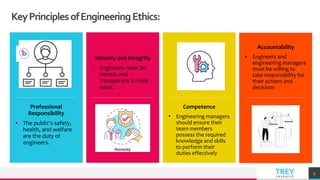
KeyPrinciplesofEngineeringEthics:
Professional
Responsibility
• The public's safety,
health, and welfare
are the duty of
engineers.
Honesty and Integrity
• Engineers must be
honest and
transparent in their
work.
Competence
• Engineering managers
should ensure their
team members
possess the required
knowledge and skills
to perform their
duties effectively
Accountability
• Engineers and
engineering managers
must be willing to
take responsibility for
their actions and
decisions
5
TREY
research
KeyPrinciplesofEngineeringEthics:
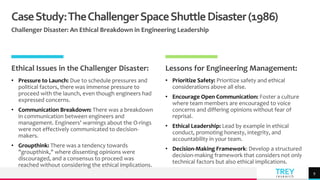
Sustainability
• Ethical engineering
management
involves considering
the long-term
environmental and
societal impact of
engineering projects
Confidentiality
• Engineering
managers should
respect the
confidentiality of
sensitive information
6
TREY
research
CaseStudy:
The Challenger Space Shuttle Disaster (1986)
7
TREY
research
Full screen image with caption
lorem ipsum dolor sit amet
8
The Challenger Space Shuttle
Disaster (1986)
A terrible and well-known
example of unethical
management in engineering is
the Challenger catastrophe.
Despite worries that the O-rings,
a crucial part of the solid rocket
boosters, had not been
sufficiently tested in cold
weather, the Challenger was
launched anyway.
TREY
research
CaseStudy:TheChallengerSpaceShuttleDisaster(1986)
Challenger Disaster: An Ethical Breakdown in Engineering Leadership
Ethical Issues in the Challenger Disaster:
• Pressure to Launch: Due to schedule pressures and
political factors, there was immense pressure to
proceed with the launch, even though engineers had
expressed concerns.
• Communication Breakdown: There was a breakdown
in communication between engineers and
management. Engineers' warnings about the O-rings
were not effectively communicated to decision-
makers.
• Groupthink: There was a tendency towards
"groupthink," where dissenting opinions were
discouraged, and a consensus to proceed was
reached without considering the ethical implications.
Lessons for Engineering Management:
• Prioritize Safety: Prioritize safety and ethical
considerations above all else.
• Encourage Open Communication: Foster a culture
where team members are encouraged to voice
concerns and differing opinions without fear of
reprisal.
• Ethical Leadership: Lead by example in ethical
conduct, promoting honesty, integrity, and
accountability in your team.
• Decision-Making Framework: Develop a structured
decision-making framework that considers not only
technical factors but also ethical implications.
9
TREY
research
Conclusion:
Engineering Ethics: The Cornerstone of
Responsible Engineering Management
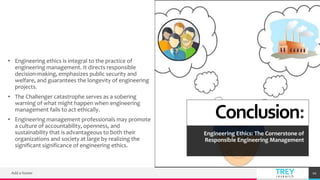
• Engineering ethics is integral to the practice of
engineering management. It directs responsible
decision-making, emphasizes public security and
welfare, and guarantees the longevity of engineering
projects.
• The Challenger catastrophe serves as a sobering
warning of what might happen when engineering
management fails to act ethically.
• Engineering management professionals may promote
a culture of accountability, openness, and
sustainability that is advantageous to both their
organizations and society at large by realizing the
significant significance of engineering ethics.
Add a footer 10
TREY
research
ThankYou
By: Jeremy Pierre C. Tecson
11

Engineering Ethics Principles and Real life Applications

  • 1.
    EngineeringEthics Guiding Principles andReal-World Applications in Engineering Management
  • 2.
    TREY research EngineeringEthics Engineering and ethicsare two foundational pillars that underpin the very essence of the engineering profession. Engineering • the art and science of applying technical knowledge, creativity, and innovation to solve real-world problems. • the driving force behind technological advancements, infrastructure development, and countless innovations that shape our modern world. Ethics • serves as the moral compass that guides the conduct of professionals in any field. • the unwavering dedication to doing what is right, just, and responsible. Add a footer 2
  • 3.
    TREY research • Engineering andEthics, converge in the arena of engineering management, where technical expertise meets leadership • Engineering management fills the gap between academic understanding and real-world application. • We examine the ethical principles that guide engineering practices within the context of engineering management. EngineeringEthicsin EngineeringManagement Navigating Moral Compass in Engineering Leadership 3
  • 4.
    TREY research EngineeringEthicsinEngineering Management Navigating Moral Compassin Engineering Leadership • Engineering managers play a pivotal role as the custodians of ethical responsibility, ensuring that their teams not only meet technical objectives but also uphold the highest ethical standards. • Exploring the core principles of engineering ethics and drawing insights from a case study, we seek to illuminate how these principles are deeply embedded in the engineering management landscape. 4
  • 5.
    TREY research KeyPrinciplesofEngineeringEthics: Professional Responsibility • The public'ssafety, health, and welfare are the duty of engineers. Honesty and Integrity • Engineers must be honest and transparent in their work. Competence • Engineering managers should ensure their team members possess the required knowledge and skills to perform their duties effectively Accountability • Engineers and engineering managers must be willing to take responsibility for their actions and decisions 5
  • 6.
    TREY research KeyPrinciplesofEngineeringEthics: Sustainability • Ethical engineering management involvesconsidering the long-term environmental and societal impact of engineering projects Confidentiality • Engineering managers should respect the confidentiality of sensitive information 6
  • 7.
  • 8.
    TREY research Full screen imagewith caption lorem ipsum dolor sit amet 8 The Challenger Space Shuttle Disaster (1986) A terrible and well-known example of unethical management in engineering is the Challenger catastrophe. Despite worries that the O-rings, a crucial part of the solid rocket boosters, had not been sufficiently tested in cold weather, the Challenger was launched anyway.
  • 9.
    TREY research CaseStudy:TheChallengerSpaceShuttleDisaster(1986) Challenger Disaster: AnEthical Breakdown in Engineering Leadership Ethical Issues in the Challenger Disaster: • Pressure to Launch: Due to schedule pressures and political factors, there was immense pressure to proceed with the launch, even though engineers had expressed concerns. • Communication Breakdown: There was a breakdown in communication between engineers and management. Engineers' warnings about the O-rings were not effectively communicated to decision- makers. • Groupthink: There was a tendency towards "groupthink," where dissenting opinions were discouraged, and a consensus to proceed was reached without considering the ethical implications. Lessons for Engineering Management: • Prioritize Safety: Prioritize safety and ethical considerations above all else. • Encourage Open Communication: Foster a culture where team members are encouraged to voice concerns and differing opinions without fear of reprisal. • Ethical Leadership: Lead by example in ethical conduct, promoting honesty, integrity, and accountability in your team. • Decision-Making Framework: Develop a structured decision-making framework that considers not only technical factors but also ethical implications. 9
  • 10.
    TREY research Conclusion: Engineering Ethics: TheCornerstone of Responsible Engineering Management • Engineering ethics is integral to the practice of engineering management. It directs responsible decision-making, emphasizes public security and welfare, and guarantees the longevity of engineering projects. • The Challenger catastrophe serves as a sobering warning of what might happen when engineering management fails to act ethically. • Engineering management professionals may promote a culture of accountability, openness, and sustainability that is advantageous to both their organizations and society at large by realizing the significant significance of engineering ethics. Add a footer 10
  • 11.