Introduction To Engineering Ethics
Paul Shih, P.E.
26 March 2007
Defining Ethics
 Ethics - synonyms for “morally correct” or
justified - set of justified moral principles of
obligation, rights, and ideals
 Ethics - particular beliefs or attitudes
concerning morality
 Ethics - area of study or inquiry – an activity
of understanding moral values, resolving
moral issues, and justifying moral judgments
What are moral values? What is morality?
 Dictionary – concerns right and wrong,
good and bad, the rules that ought to be
followed.
 Morality – about reasons centered in
respect for other people as well as
ourselves, reasons that involve their good
as well as our own.
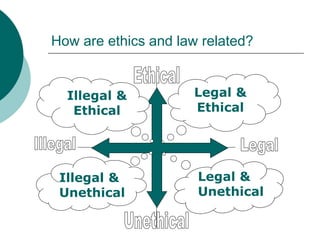
How are ethics and law related?
Legal &
Ethical
Illegal &
Ethical
Illegal &
Unethical
Legal &
Unethical
Developing a Well-Reasoned
Response to a Moral Dilemma
 Moral dilemmas are situations in which two
or more moral obligations, duties, rights,
goods, or ideals come into conflict with one
another.
 How does one decide whether a response is
well-reasoned? What criteria apply? Can
we reliably judge?
Examples of Unethical Business Conduct:
1. Worldcom (1983~2002) Case – over 5
billion dollars in losses and cover up on
expenses.
2. Enron (1985~2002) Case - over 3
billion dollars in fraud and losses.
3. China Rebar (1959~2006) Case – over
12 billion dollars in fraud and losses
Engineering Ethics
 Why Ethics should be important to you
as an engineer
 What resources are available to help you
make ethical decisions when confronted
with a moral dilemma
Engineering Ethics
 Engineering ethics is the study of the moral
values, issues, and decisions involved in
engineering practice.
 responsibilities
 ideals
 character traits
 social policies
 relationships desirable from individuals and
corporations engaged in engineering.
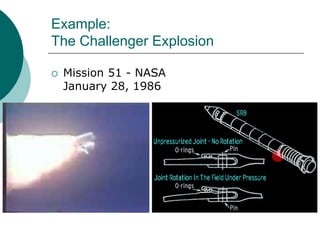
Example:
The Challenger Explosion
 Mission 51 - NASA
January 28, 1986
Whistle Blowing
 Ask yourself – “Do you have what it
takes to stop something unethical at
work?”
 As an ethical engineer, are you
prepared to blow the whistle when
you act as the last defense line?
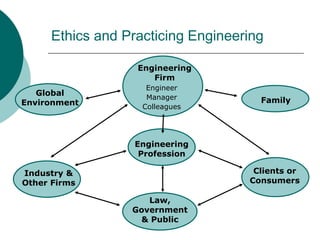
Ethics and Practicing Engineering
Family
Global
Environment
Clients or
Consumers
Engineering
Profession
Law,
Government
& Public
Industry &
Other Firms
Engineering
Firm
Engineer
Manager
Colleagues
Engineering Code of Ethics
 Some professional organizations have
addressed the complexity of moral issues in
their fields by developing codes of ethics.
 Professional codes of ethics consist
primarily of principles of responsibility that
delineate how to promote the public good.
 Rituals such as the “Iron Ring”.
Roles of Codes
 Shared Standards
 Positive Support to Act Ethically
 Guidance Concerning Obligations
 Motivation
 Education
 Deterrence and Discipline
 Professional Image
NSPE Code of Ethics for Engineers
Preamble
I. Fundamental Canons
II. Rules of Practice
III. Professional Obligations
Fundamental Canon
 Engineers, in the fulfillment of their
professional duties, shall:
1. Hold paramount the safety, health and
welfare of the public.
2. Perform services only in areas of their
competence.
3. Issue public statements only in an
objective and truthful manner.
Fundamental Canon
4. Act for each employer or client as faithful
agents or trustees.
5. Avoid deceptive acts.
6. Conduct themselves honorably,
responsibly, ethically, and lawfully so as to
enhance the honor, reputation, and
usefulness of the profession.
Q&A

fdocuments.in_introduction-to-engineering-ethics.ppt

  • 1.
    Introduction To EngineeringEthics Paul Shih, P.E. 26 March 2007
  • 2.
    Defining Ethics  Ethics- synonyms for “morally correct” or justified - set of justified moral principles of obligation, rights, and ideals  Ethics - particular beliefs or attitudes concerning morality  Ethics - area of study or inquiry – an activity of understanding moral values, resolving moral issues, and justifying moral judgments
  • 3.
    What are moralvalues? What is morality?  Dictionary – concerns right and wrong, good and bad, the rules that ought to be followed.  Morality – about reasons centered in respect for other people as well as ourselves, reasons that involve their good as well as our own.
  • 4.
    How are ethicsand law related? Legal & Ethical Illegal & Ethical Illegal & Unethical Legal & Unethical
  • 5.
    Developing a Well-Reasoned Responseto a Moral Dilemma  Moral dilemmas are situations in which two or more moral obligations, duties, rights, goods, or ideals come into conflict with one another.  How does one decide whether a response is well-reasoned? What criteria apply? Can we reliably judge?
  • 6.
    Examples of UnethicalBusiness Conduct: 1. Worldcom (1983~2002) Case – over 5 billion dollars in losses and cover up on expenses. 2. Enron (1985~2002) Case - over 3 billion dollars in fraud and losses. 3. China Rebar (1959~2006) Case – over 12 billion dollars in fraud and losses
  • 7.
    Engineering Ethics  WhyEthics should be important to you as an engineer  What resources are available to help you make ethical decisions when confronted with a moral dilemma
  • 8.
    Engineering Ethics  Engineeringethics is the study of the moral values, issues, and decisions involved in engineering practice.  responsibilities  ideals  character traits  social policies  relationships desirable from individuals and corporations engaged in engineering.
  • 9.
    Example: The Challenger Explosion Mission 51 - NASA January 28, 1986
  • 10.
    Whistle Blowing  Askyourself – “Do you have what it takes to stop something unethical at work?”  As an ethical engineer, are you prepared to blow the whistle when you act as the last defense line?
  • 11.
    Ethics and PracticingEngineering Family Global Environment Clients or Consumers Engineering Profession Law, Government & Public Industry & Other Firms Engineering Firm Engineer Manager Colleagues
  • 12.
    Engineering Code ofEthics  Some professional organizations have addressed the complexity of moral issues in their fields by developing codes of ethics.  Professional codes of ethics consist primarily of principles of responsibility that delineate how to promote the public good.  Rituals such as the “Iron Ring”.
  • 13.
    Roles of Codes Shared Standards  Positive Support to Act Ethically  Guidance Concerning Obligations  Motivation  Education  Deterrence and Discipline  Professional Image
  • 14.
    NSPE Code ofEthics for Engineers Preamble I. Fundamental Canons II. Rules of Practice III. Professional Obligations
  • 15.
    Fundamental Canon  Engineers,in the fulfillment of their professional duties, shall: 1. Hold paramount the safety, health and welfare of the public. 2. Perform services only in areas of their competence. 3. Issue public statements only in an objective and truthful manner.
  • 16.
    Fundamental Canon 4. Actfor each employer or client as faithful agents or trustees. 5. Avoid deceptive acts. 6. Conduct themselves honorably, responsibly, ethically, and lawfully so as to enhance the honor, reputation, and usefulness of the profession.
  • 17.