Activity No. 1 Engineering Profession
Engineer Origin
- The word engineer was derived in Latin word “Ingenium”, which means Natural
talent or Cleverness. Until the 18th century the engineer job was acquired as war
engines or even who built the important outstanding fortress and weaponry.
Engineering through chemistry “Marie Curie”
- French-Polish scientist Marie Curie discover the element Polonium and Radium.
She was awarded with 2 Nobel prizes in Science for her dedication and invention
on such elements that truly a monumental effect to science community.
Laser
- The first laser was invented in California in 1960s. Theodore Maiman developed
the first working laser at Hughes Research Lab. The laser was stand for light
amplification by stimulated emission of radiation, laser was widely used now as
connection for our TV and even internet connection. And also, can use as
weaponry for defense purposes and also the sights for the weaponry that values
precision and accuracy.
Microscope
- There is no clear who invented the first microscope but, it is an engineering
marvelous when it became prominent. The Dutch spectacle maker Zacharias
Janssen (b. 1585) is credited with making one of the earliest compound
microscopes (ones that used two lenses) around 1600. Now, most advance
microscope can magnify even the intensify reaction of atoms and nuclear fusion of
2 atomic sub-atomic particles. A guaranteed splendid on such quintessential
capacity to acquire a result for science.
Electric Battery
- In ancient Greece, Thales discovered that when he rubbed amber, an electric
charge was produced. This discovery gave rise to the concept of electricity. In
addition, a jar that was 2,000 years old and was found in Baghdad in 1938 is
thought to be the world's earliest example of a battery. It gave off 1.1 volts.
Alessandro Volta created the current battery in 1800 with the development of his
voltaic pile. The voltaic pile may be able to generate a steady and dependable
supply of electricity. When Volta observed an electrical interaction between two
metals that were submerged in an acidic solution in 1794, he began his research.
He developed his battery based on this idea, which consisted of alternating rings
made of copper and zinc that were submerged in an electrolyte.
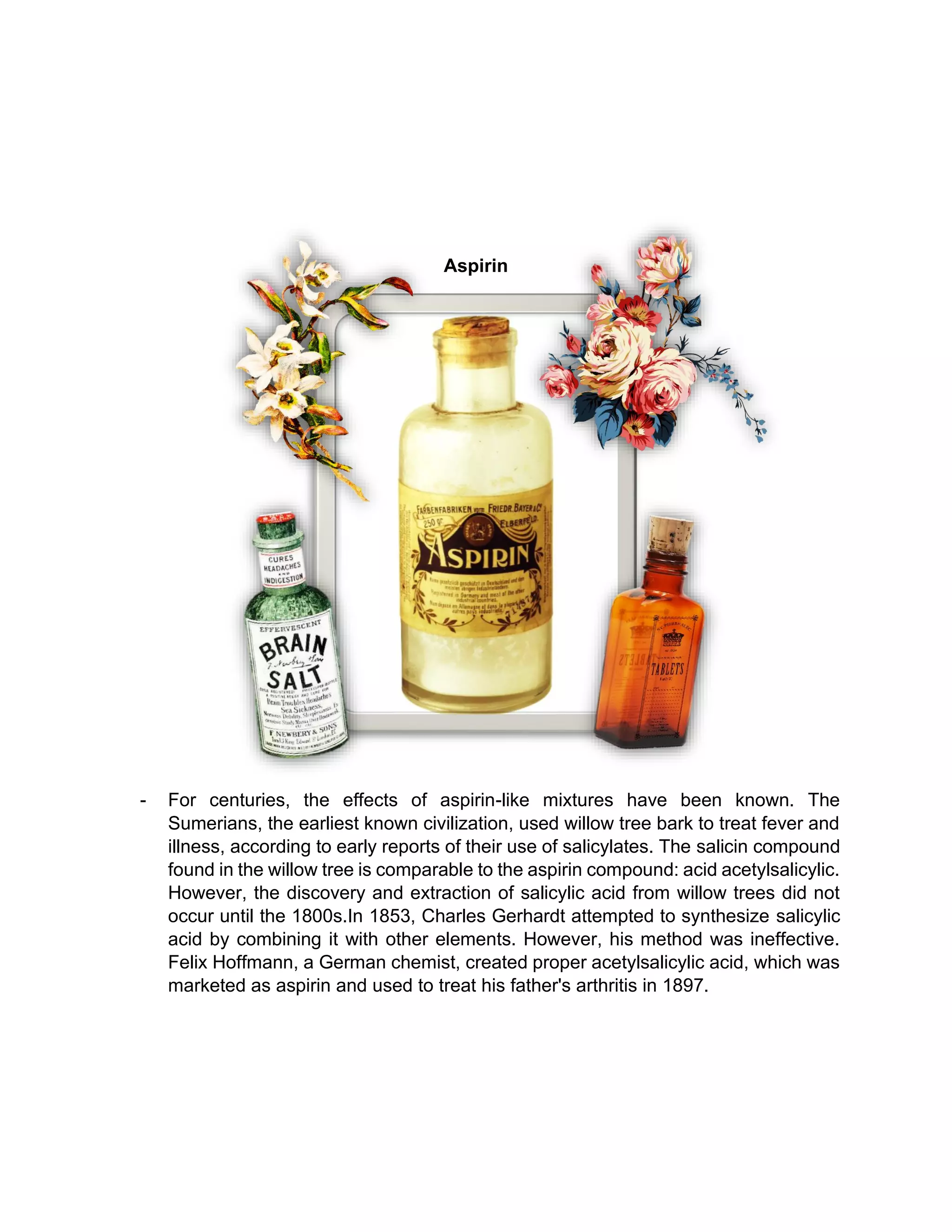
Aspirin
- For centuries, the effects of aspirin-like mixtures have been known. The
Sumerians, the earliest known civilization, used willow tree bark to treat fever and
illness, according to early reports of their use of salicylates. The salicin compound
found in the willow tree is comparable to the aspirin compound: acid acetylsalicylic.
However, the discovery and extraction of salicylic acid from willow trees did not
occur until the 1800s.In 1853, Charles Gerhardt attempted to synthesize salicylic
acid by combining it with other elements. However, his method was ineffective.
Felix Hoffmann, a German chemist, created proper acetylsalicylic acid, which was
marketed as aspirin and used to treat his father's arthritis in 1897.
Coffee Pot
- Coffee drinkers had to chew their coffee before the coffee pot was invented
because it contained grounds. In 1806, Benjamin Thompson created a percolating
coffee pot with a metallic sleeve that helped strain all the grounds, making the
beverage a refreshing beverage rather than a meal made of liquid. After serving in
the Bavarian army, where he helped the soldiers improve their diets, Thompson
invented the coffee pot. During the 19th century, Thompson, a British inventor and
physicist, was instrumental in the development of thermodynamics thanks to his
innovations and difficulties in establishing physical theory.
Telegraph
- In 1832, Pavel Schilling created the first electromagnetic telegraph, making him
the first person to apply the concept of binary systems to the transmission of
signals. By sending seven letters per minute with induction pulses in 1833, Carl
Gauss was able to establish a telegraph network along the German railroad in
1835. In Elderton in 1836, Dr. David Alter created the first electric telegraph, but
he was unable to develop a workable system. Samuel Morse came up with a better
device in 1837.On January 11, 1938, he and his friend Alfred Vail were successful
in developing Morse code and sending the first telegraph message over a distance
of two miles. Later, he was successful in transmitting a second message over 44
miles from Washington to Baltimore.
Coca-Cola
- Dr. John Pemberton changed his tonic headache and stimulant formula in 1886 to
create Pemberton's French Wine Coca, which is the beginning of Coca-Cola's
history. Dr. Pemberton came up with a Coca-Cola syrup, which he took to Jacob's
pharmacy, where it was tested, and they sold it for five cents per glass. Dr.
Pemberton came up with the name "Coca-Cola" with the help of Frank Robinson.
It refers to the two main "medicinal" ingredients in the original recipe: coca leaves
and kola nuts are what are used to make cocaine. Before he passed away, Dr.
Pemberton sold his final share of the business to Asa G. Candler, who managed
to take full control of the beverage. Dr. Pemberton also sold a portion of his
company. The Coca-Cola Company was founded by Mr. Candler, his brother John,
and other associates. Until 1929, Coca-Cola contained traces of cocaine.
Jell-O
- After the failure of his syrup manufacturing business in 1897, a man by the name
of Pearl Wait made the decision to switch careers in the food industry. Pearl
added some fruit syrup to gelatin, which had been invented in the 1600s.Wait
developed a brand-new product dubbed Jell-O as a result. Pearl tried to sell his
new product, but Francis Woodward bought the patent because he wasn't
interested. Jell-O was introduced to the market by a number of chefs in the
1900s.In 1902, Woodward began promoting his product as the "Best American
Dessert. “Jell-O is still very popular today.

Engineering Discovery through Centuries

  • 1.
    Activity No. 1Engineering Profession Engineer Origin - The word engineer was derived in Latin word “Ingenium”, which means Natural talent or Cleverness. Until the 18th century the engineer job was acquired as war engines or even who built the important outstanding fortress and weaponry.
  • 2.
    Engineering through chemistry“Marie Curie” - French-Polish scientist Marie Curie discover the element Polonium and Radium. She was awarded with 2 Nobel prizes in Science for her dedication and invention on such elements that truly a monumental effect to science community.
  • 3.
    Laser - The firstlaser was invented in California in 1960s. Theodore Maiman developed the first working laser at Hughes Research Lab. The laser was stand for light amplification by stimulated emission of radiation, laser was widely used now as connection for our TV and even internet connection. And also, can use as weaponry for defense purposes and also the sights for the weaponry that values precision and accuracy.
  • 4.
    Microscope - There isno clear who invented the first microscope but, it is an engineering marvelous when it became prominent. The Dutch spectacle maker Zacharias Janssen (b. 1585) is credited with making one of the earliest compound microscopes (ones that used two lenses) around 1600. Now, most advance microscope can magnify even the intensify reaction of atoms and nuclear fusion of 2 atomic sub-atomic particles. A guaranteed splendid on such quintessential capacity to acquire a result for science.
  • 5.
    Electric Battery - Inancient Greece, Thales discovered that when he rubbed amber, an electric charge was produced. This discovery gave rise to the concept of electricity. In addition, a jar that was 2,000 years old and was found in Baghdad in 1938 is thought to be the world's earliest example of a battery. It gave off 1.1 volts. Alessandro Volta created the current battery in 1800 with the development of his voltaic pile. The voltaic pile may be able to generate a steady and dependable supply of electricity. When Volta observed an electrical interaction between two metals that were submerged in an acidic solution in 1794, he began his research. He developed his battery based on this idea, which consisted of alternating rings made of copper and zinc that were submerged in an electrolyte.
  • 6.
    Aspirin - For centuries,the effects of aspirin-like mixtures have been known. The Sumerians, the earliest known civilization, used willow tree bark to treat fever and illness, according to early reports of their use of salicylates. The salicin compound found in the willow tree is comparable to the aspirin compound: acid acetylsalicylic. However, the discovery and extraction of salicylic acid from willow trees did not occur until the 1800s.In 1853, Charles Gerhardt attempted to synthesize salicylic acid by combining it with other elements. However, his method was ineffective. Felix Hoffmann, a German chemist, created proper acetylsalicylic acid, which was marketed as aspirin and used to treat his father's arthritis in 1897.
  • 7.
    Coffee Pot - Coffeedrinkers had to chew their coffee before the coffee pot was invented because it contained grounds. In 1806, Benjamin Thompson created a percolating coffee pot with a metallic sleeve that helped strain all the grounds, making the beverage a refreshing beverage rather than a meal made of liquid. After serving in the Bavarian army, where he helped the soldiers improve their diets, Thompson invented the coffee pot. During the 19th century, Thompson, a British inventor and physicist, was instrumental in the development of thermodynamics thanks to his innovations and difficulties in establishing physical theory.
  • 8.
    Telegraph - In 1832,Pavel Schilling created the first electromagnetic telegraph, making him the first person to apply the concept of binary systems to the transmission of signals. By sending seven letters per minute with induction pulses in 1833, Carl Gauss was able to establish a telegraph network along the German railroad in 1835. In Elderton in 1836, Dr. David Alter created the first electric telegraph, but he was unable to develop a workable system. Samuel Morse came up with a better device in 1837.On January 11, 1938, he and his friend Alfred Vail were successful in developing Morse code and sending the first telegraph message over a distance of two miles. Later, he was successful in transmitting a second message over 44 miles from Washington to Baltimore.
  • 9.
    Coca-Cola - Dr. JohnPemberton changed his tonic headache and stimulant formula in 1886 to create Pemberton's French Wine Coca, which is the beginning of Coca-Cola's history. Dr. Pemberton came up with a Coca-Cola syrup, which he took to Jacob's pharmacy, where it was tested, and they sold it for five cents per glass. Dr. Pemberton came up with the name "Coca-Cola" with the help of Frank Robinson. It refers to the two main "medicinal" ingredients in the original recipe: coca leaves and kola nuts are what are used to make cocaine. Before he passed away, Dr. Pemberton sold his final share of the business to Asa G. Candler, who managed to take full control of the beverage. Dr. Pemberton also sold a portion of his company. The Coca-Cola Company was founded by Mr. Candler, his brother John, and other associates. Until 1929, Coca-Cola contained traces of cocaine.
  • 10.
    Jell-O - After thefailure of his syrup manufacturing business in 1897, a man by the name of Pearl Wait made the decision to switch careers in the food industry. Pearl added some fruit syrup to gelatin, which had been invented in the 1600s.Wait developed a brand-new product dubbed Jell-O as a result. Pearl tried to sell his new product, but Francis Woodward bought the patent because he wasn't interested. Jell-O was introduced to the market by a number of chefs in the 1900s.In 1902, Woodward began promoting his product as the "Best American Dessert. “Jell-O is still very popular today.