Energy Unit Review
with Turning Point clickers
1. The energy of moving
electrons.
A.
B.
C.
D.
E.
F.
G.

mechanical energy
heat energy
chemical energy
radiant energy
electrical energy
sound energy
nuclear energy
2. The energy of an object’s
vibrations. The energy is passed
on to the matter (air, liquid or
solid) surrounding the object.
A.
B.
C.
D.
E.
F.
G.

mechanical energy
heat energy
chemical energy
radiant energy
electrical energy
sound energy
nuclear energy
3. The energy of movement.
A.
B.
C.
D.
E.
F.
G.

mechanical energy
heat energy
chemical energy
radiant energy
electrical energy
sound energy
nuclear energy
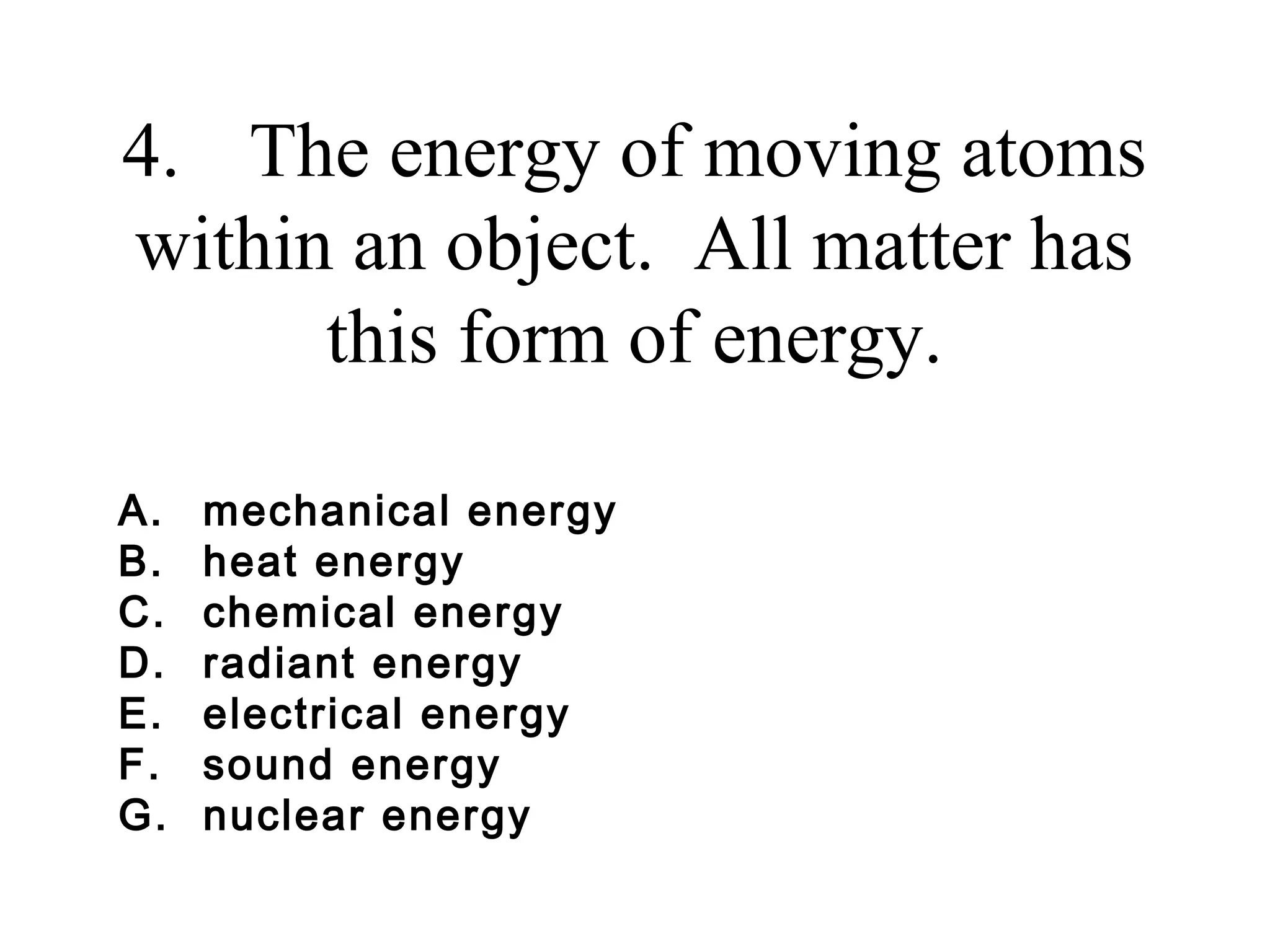
4. The energy of moving atoms
within an object. All matter has
this form of energy.
A.
B.
C.
D.
E.
F.
G.

mechanical energy
heat energy
chemical energy
radiant energy
electrical energy
sound energy
nuclear energy
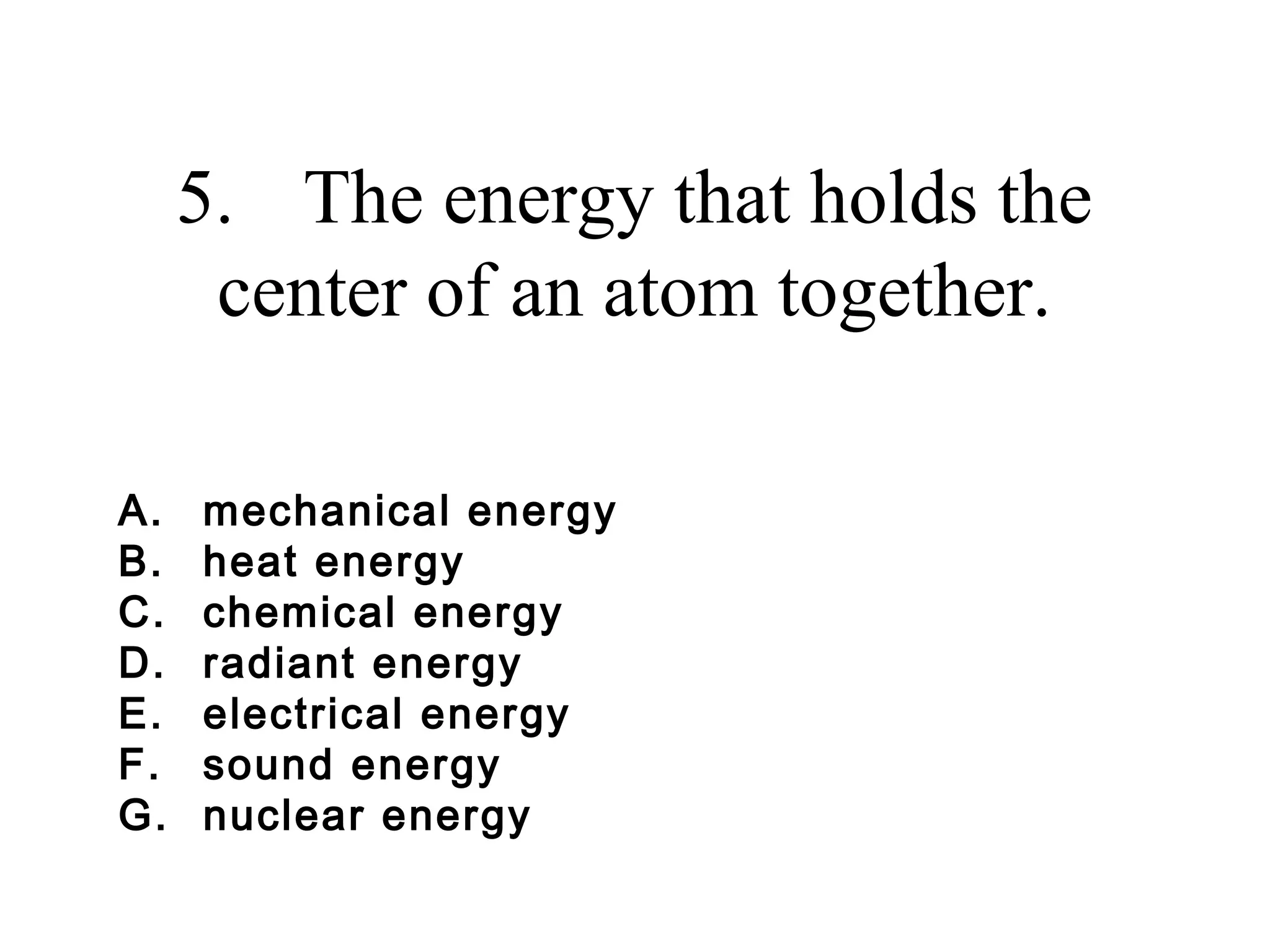
5. The energy that holds the
center of an atom together.
A.
B.
C.
D.
E.
F.
G.

mechanical energy
heat energy
chemical energy
radiant energy
electrical energy
sound energy
nuclear energy
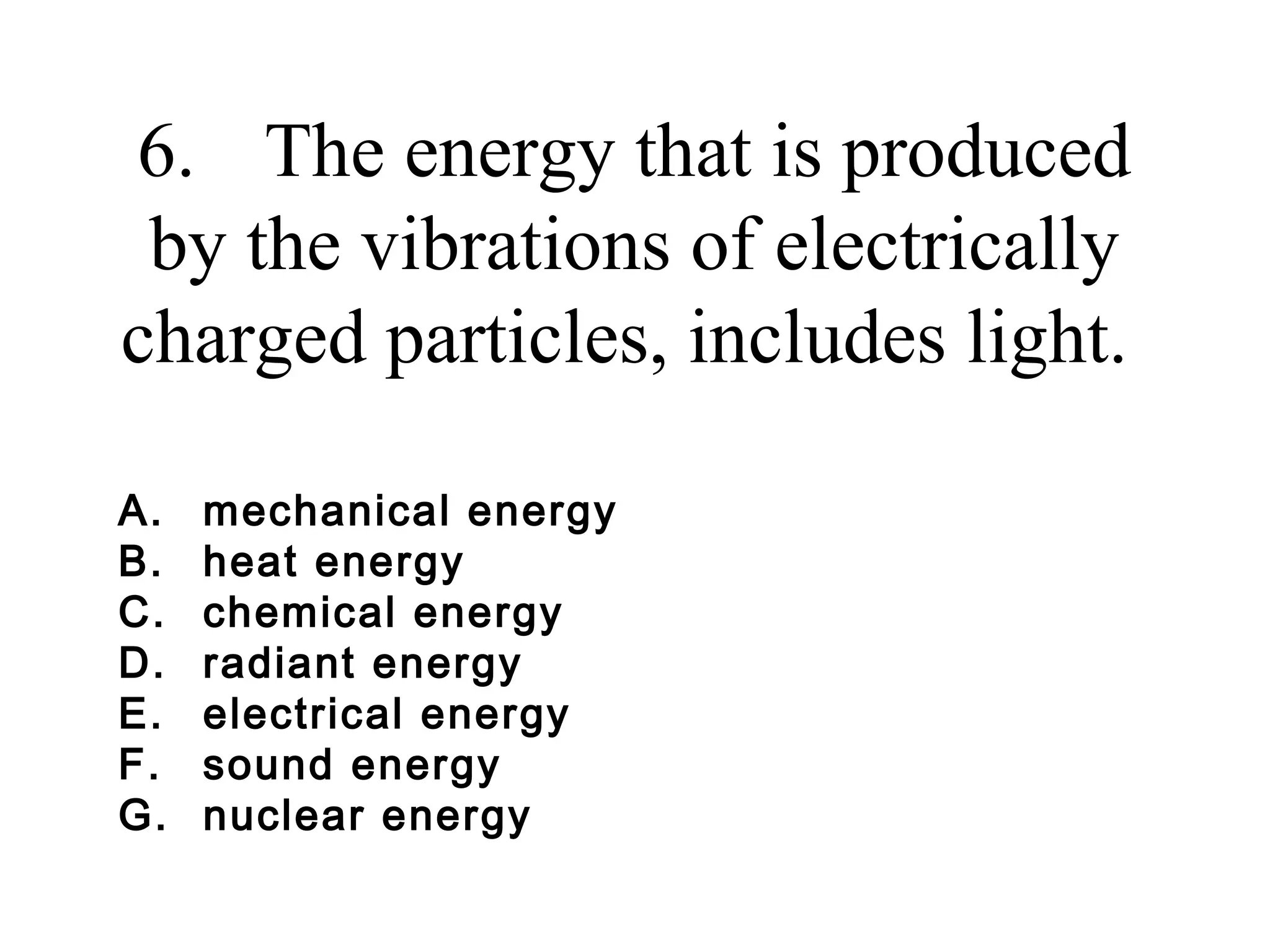
6. The energy that is produced
by the vibrations of electrically
charged particles, includes light.
A.
B.
C.
D.
E.
F.
G.

mechanical energy
heat energy
chemical energy
radiant energy
electrical energy
sound energy
nuclear energy
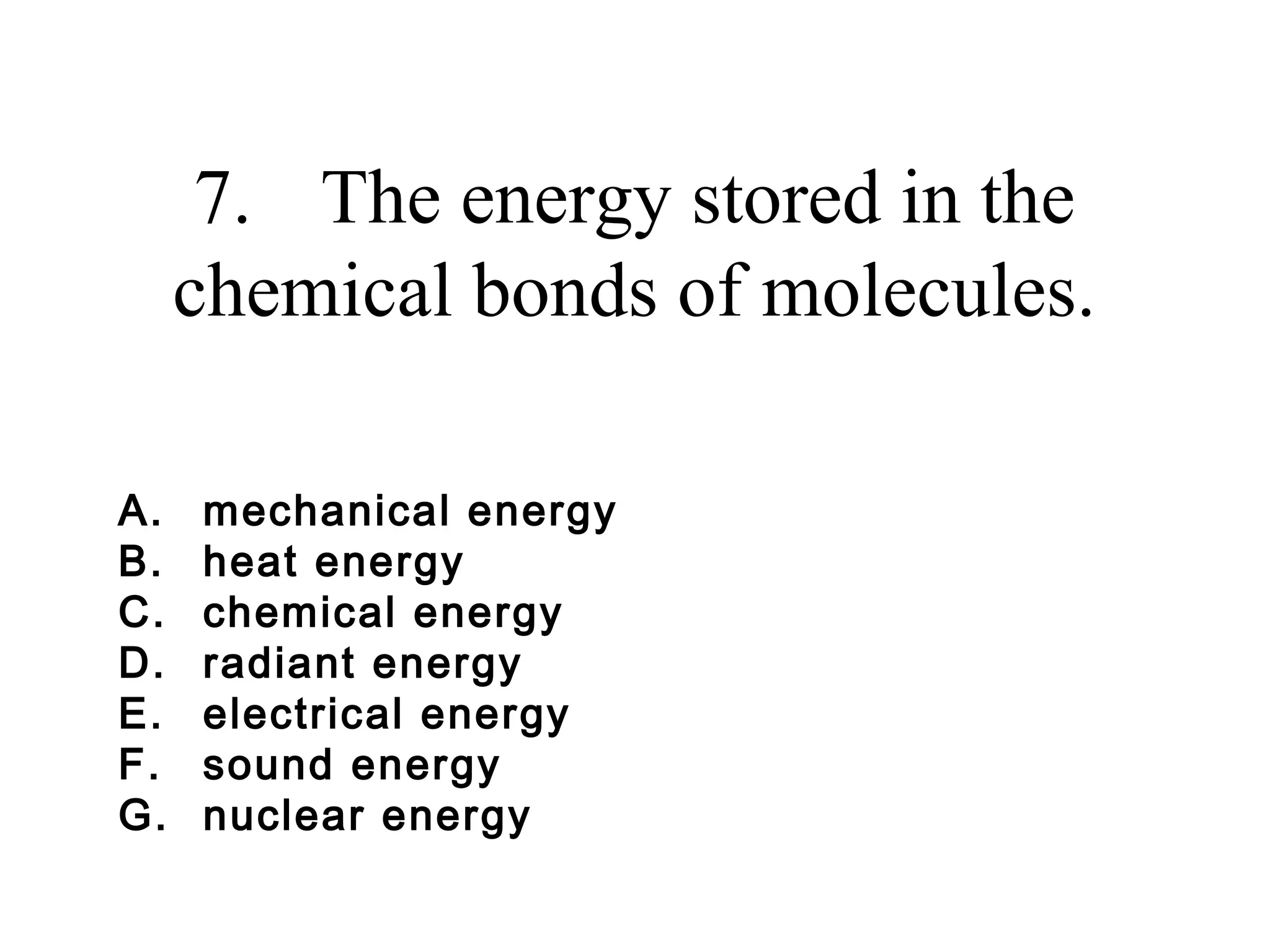
7. The energy stored in the
chemical bonds of molecules.
A.
B.
C.
D.
E.
F.
G.

mechanical energy
heat energy
chemical energy
radiant energy
electrical energy
sound energy
nuclear energy
8. The form of energy that
powers the sun.
A.
B.
C.
D.
E.
F.
G.

mechanical energy
heat energy
chemical energy
radiant energy
electrical energy
sound energy
nuclear energy
9. The form of energy that is
stored in the food we eat.
A.
B.
C.
D.
E.
F.
G.

mechanical energy
heat energy
chemical energy
radiant energy
electrical energy
sound energy
nuclear energy
10. Includes visible light, x-rays,
and radio waves.
A.
B.
C.
D.
E.
F.
G.

mechanical energy
heat energy
chemical energy
radiant energy
electrical energy
sound energy
nuclear energy
11. Increasing the amount of this
energy can make something
change from being a solid to a
liquid, or from a liquid to a gas.
A.
B.
C.
D.
E.
F.
G.

mechanical energy
heat energy
chemical energy
radiant energy
electrical energy
sound energy
nuclear energy
12. In every machine that uses
mechanical energy, some energy
is converted to this form of
energy.
A.
B.
C.
D.
E.
F.
G.

mechanical energy
heat energy
chemical energy
radiant energy
electrical energy
sound energy
nuclear energy
13. The Bearette’s singing.
A.
B.
C.
D.
E.
F.
G.

mechanical energy
heat energy
chemical energy
radiant energy
electrical energy
sound energy
nuclear energy
14. The microwaves that are used
to cook food in a microwave oven.
A.
B.
C.
D.
E.
F.
G.

mechanical energy
heat energy
chemical energy
radiant energy
electrical energy
sound energy
nuclear energy
15. The amount of kinetic energy
that a curling stone has
depends on what two things?
A.
B.
C.
D.

speed and mass
speed and how muscular the sweepers are
speed and height
mass and height
QuickTime™ and a
TIFF (Uncompressed) decompressor
are needed to see this picture.
16. A boulder’s gravitational
potential energy depends on
what two things?
A.
B.
C.
D.

speed and mass
mass and height
speed and height
density and speed

QuickTime™ and a
TIFF (Uncompressed) decompressor
are needed to see this picture.
17. On a pendulum, when does
the pendulum weight (bob)
have the most kinetic
energy?
A. At the top of the swing.
B. Halfway down as it is picking
up speed.
C. At the bottom of the swing.
D. Halfway up before it runs out
of speed.

QuickTime™ and a
TIFF (Uncompressed) decompressor
are needed to see this picture.
18. A vacuum cleaner is an
example of these energy
conversions.
A.
B.
C.
D.

mechanical -> electrical.
electrical -> mechanical and nuclear.
electrical -> mechanical and heat.
chemical -> mechanical and heat.

Energy unit review

  • 1.
    Energy Unit Review withTurning Point clickers
  • 2.
    1. The energyof moving electrons. A. B. C. D. E. F. G. mechanical energy heat energy chemical energy radiant energy electrical energy sound energy nuclear energy
  • 3.
    2. The energyof an object’s vibrations. The energy is passed on to the matter (air, liquid or solid) surrounding the object. A. B. C. D. E. F. G. mechanical energy heat energy chemical energy radiant energy electrical energy sound energy nuclear energy
  • 4.
    3. The energyof movement. A. B. C. D. E. F. G. mechanical energy heat energy chemical energy radiant energy electrical energy sound energy nuclear energy
  • 5.
    4. The energyof moving atoms within an object. All matter has this form of energy. A. B. C. D. E. F. G. mechanical energy heat energy chemical energy radiant energy electrical energy sound energy nuclear energy
  • 6.
    5. The energythat holds the center of an atom together. A. B. C. D. E. F. G. mechanical energy heat energy chemical energy radiant energy electrical energy sound energy nuclear energy
  • 7.
    6. The energythat is produced by the vibrations of electrically charged particles, includes light. A. B. C. D. E. F. G. mechanical energy heat energy chemical energy radiant energy electrical energy sound energy nuclear energy
  • 8.
    7. The energystored in the chemical bonds of molecules. A. B. C. D. E. F. G. mechanical energy heat energy chemical energy radiant energy electrical energy sound energy nuclear energy
  • 9.
    8. The formof energy that powers the sun. A. B. C. D. E. F. G. mechanical energy heat energy chemical energy radiant energy electrical energy sound energy nuclear energy
  • 10.
    9. The formof energy that is stored in the food we eat. A. B. C. D. E. F. G. mechanical energy heat energy chemical energy radiant energy electrical energy sound energy nuclear energy
  • 11.
    10. Includes visiblelight, x-rays, and radio waves. A. B. C. D. E. F. G. mechanical energy heat energy chemical energy radiant energy electrical energy sound energy nuclear energy
  • 12.
    11. Increasing theamount of this energy can make something change from being a solid to a liquid, or from a liquid to a gas. A. B. C. D. E. F. G. mechanical energy heat energy chemical energy radiant energy electrical energy sound energy nuclear energy
  • 13.
    12. In everymachine that uses mechanical energy, some energy is converted to this form of energy. A. B. C. D. E. F. G. mechanical energy heat energy chemical energy radiant energy electrical energy sound energy nuclear energy
  • 14.
    13. The Bearette’ssinging. A. B. C. D. E. F. G. mechanical energy heat energy chemical energy radiant energy electrical energy sound energy nuclear energy
  • 15.
    14. The microwavesthat are used to cook food in a microwave oven. A. B. C. D. E. F. G. mechanical energy heat energy chemical energy radiant energy electrical energy sound energy nuclear energy
  • 16.
    15. The amountof kinetic energy that a curling stone has depends on what two things? A. B. C. D. speed and mass speed and how muscular the sweepers are speed and height mass and height QuickTime™ and a TIFF (Uncompressed) decompressor are needed to see this picture.
  • 17.
    16. A boulder’sgravitational potential energy depends on what two things? A. B. C. D. speed and mass mass and height speed and height density and speed QuickTime™ and a TIFF (Uncompressed) decompressor are needed to see this picture.
  • 18.
    17. On apendulum, when does the pendulum weight (bob) have the most kinetic energy? A. At the top of the swing. B. Halfway down as it is picking up speed. C. At the bottom of the swing. D. Halfway up before it runs out of speed. QuickTime™ and a TIFF (Uncompressed) decompressor are needed to see this picture.
  • 19.
    18. A vacuumcleaner is an example of these energy conversions. A. B. C. D. mechanical -> electrical. electrical -> mechanical and nuclear. electrical -> mechanical and heat. chemical -> mechanical and heat.

Editor's Notes