ENERGY SECURITY IN
TRANSITION REGION
Chloé Le Coq Elena Paltseva
SITE SITE
Paris II-Panthéon-Assas New Economic School, Moscow
SITE Development Day
The Long Shadow of Transition: The State of Democracy in Eastern Europe
Nov 12 2019
Our Focus
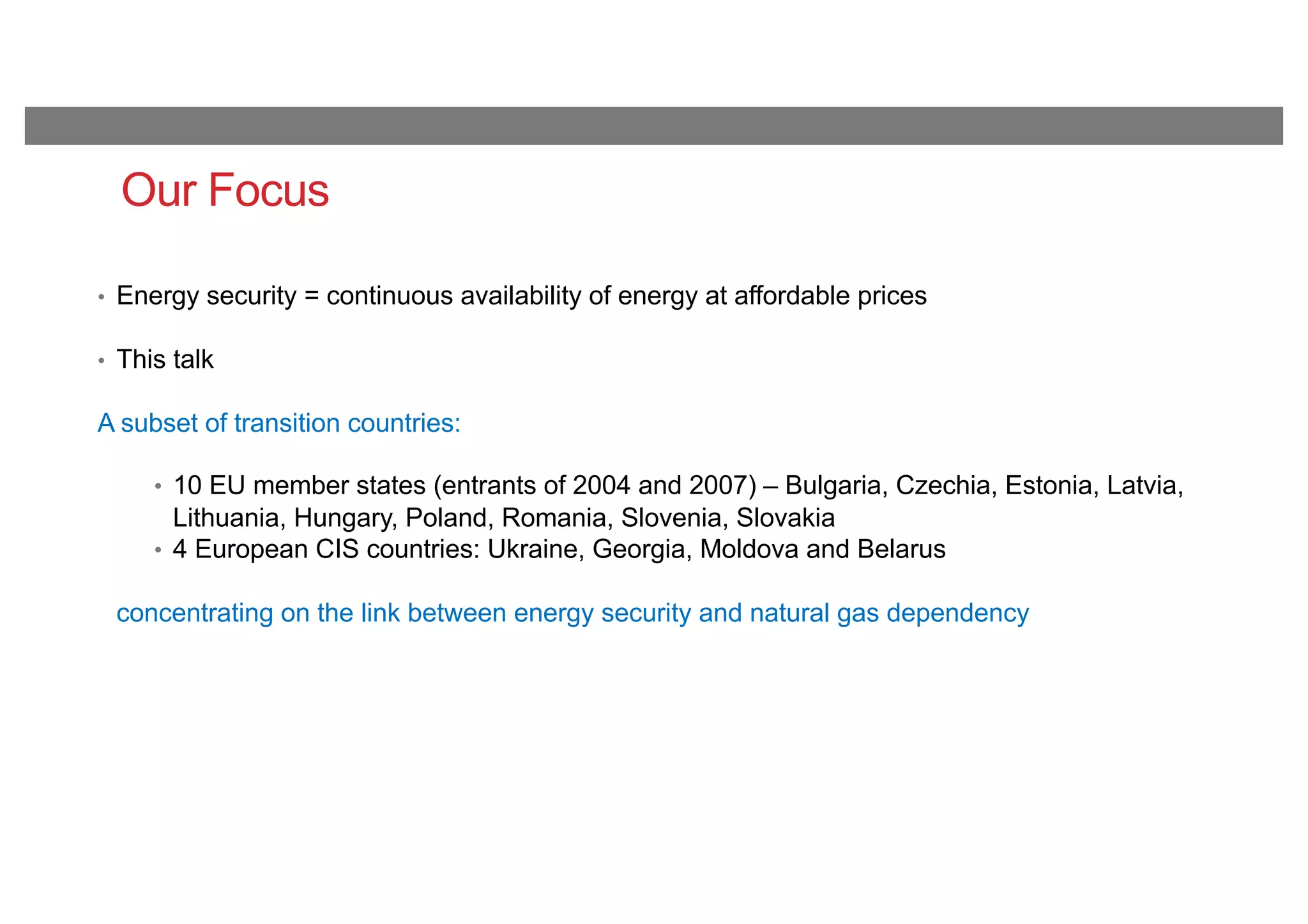
• Energy security = continuous availability of energy at affordable prices
• This talk
A subset of transition countries:
• 10 EU member states (entrants of 2004 and 2007) – Bulgaria, Czechia, Estonia, Latvia,
Lithuania, Hungary, Poland, Romania, Slovenia, Slovakia
• 4 European CIS countries: Ukraine, Georgia, Moldova and Belarus
concentrating on the link between energy security and natural gas dependency
Energy security and natural gas
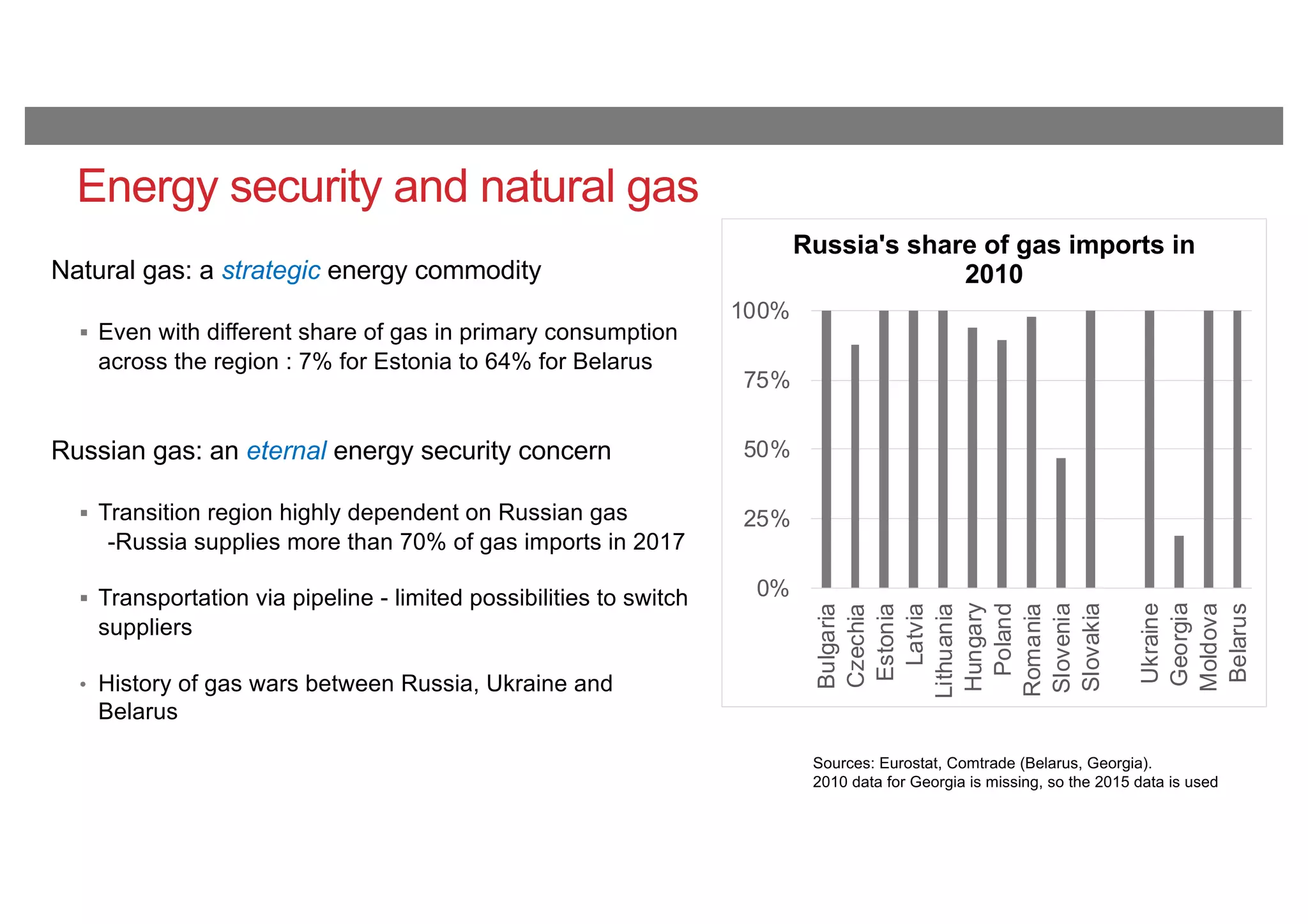
Natural gas: a strategic energy commodity
§ Even with different share of gas in primary consumption
across the region : 7% for Estonia to 64% for Belarus
Russian gas: an eternal energy security concern
§ Transition region highly dependent on Russian gas
-Russia supplies more than 70% of gas imports in 2017
§ Transportation via pipeline - limited possibilities to switch
suppliers
• History of gas wars between Russia, Ukraine and
Belarus
0%
25%
50%
75%
100%
Bulgaria
Czechia
Estonia
Latvia
Lithuania
Hungary
Poland
Romania
Slovenia
Slovakia
Ukraine
Georgia
Moldova
Belarus
Russia's share of gas imports in
2010
Sources: Eurostat, Comtrade (Belarus, Georgia).
2010 data for Georgia is missing, so the 2015 data is used
0%
25%
50%
75%
100%
Bulgaria
C
zechiaEstoniaLatvia
Lithuania
H
ungaryPoland
R
om
ania
Slovenia
Slovakia
U
kraine
G
eorgia
M
oldovaBelarus
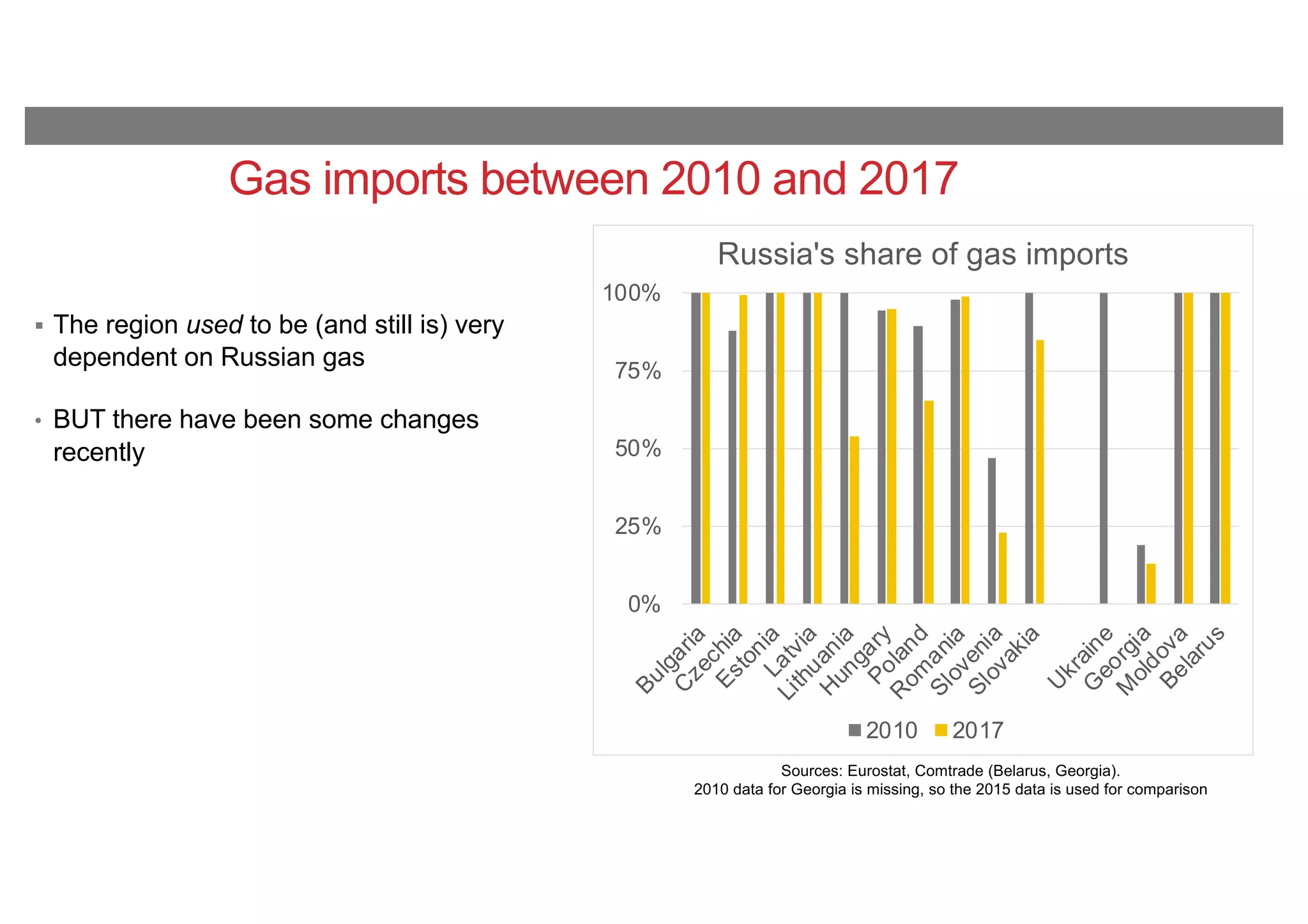
Russia's share of gas imports
2010 2017
Gas imports between 2010 and 2017
§ The region used to be (and still is) very
dependent on Russian gas
• BUT there have been some changes
recently
Sources: Eurostat, Comtrade (Belarus, Georgia).
2010 data for Georgia is missing, so the 2015 data is used for comparison
0%
25%
50%
75%
100%
Bulgaria
C
zechiaEstoniaLatvia
Lithuania
H
ungaryPoland
R
om
ania
Slovenia
Slovakia
U
kraine
G
eorgia
M
oldovaBelarus
Russia's share of gas imports
2010 2017
Gas imports between 2010 and 2017
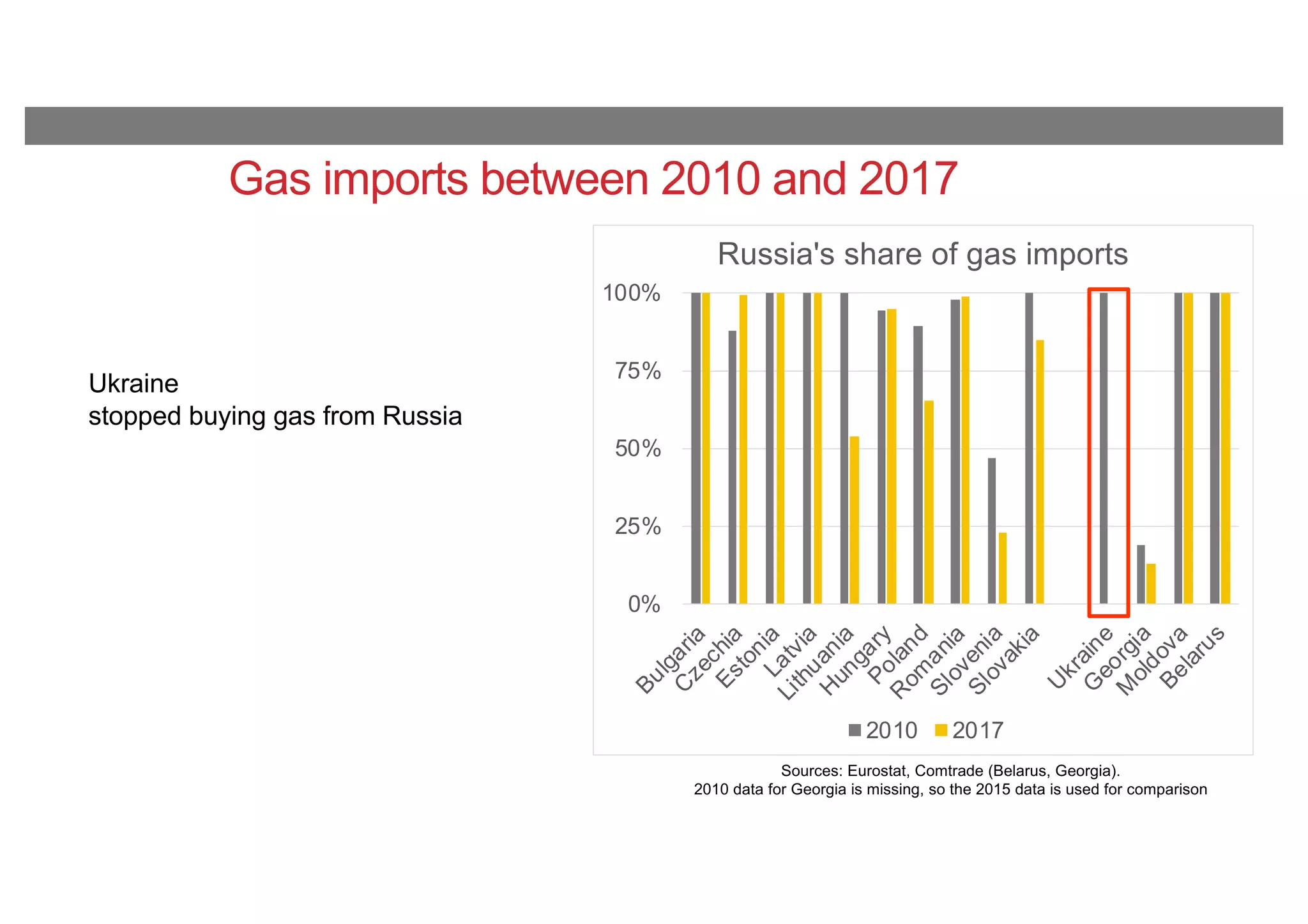
Ukraine
stopped buying gas from Russia
Sources: Eurostat, Comtrade (Belarus, Georgia).
2010 data for Georgia is missing, so the 2015 data is used for comparison
0%
25%
50%
75%
100%
Bulgaria
C
zechiaEstoniaLatvia
Lithuania
H
ungaryPoland
R
om
ania
Slovenia
Slovakia
U
kraine
G
eorgia
M
oldovaBelarus
Russia's share of gas imports
2010 2017
Gas imports between 2010 and 2017
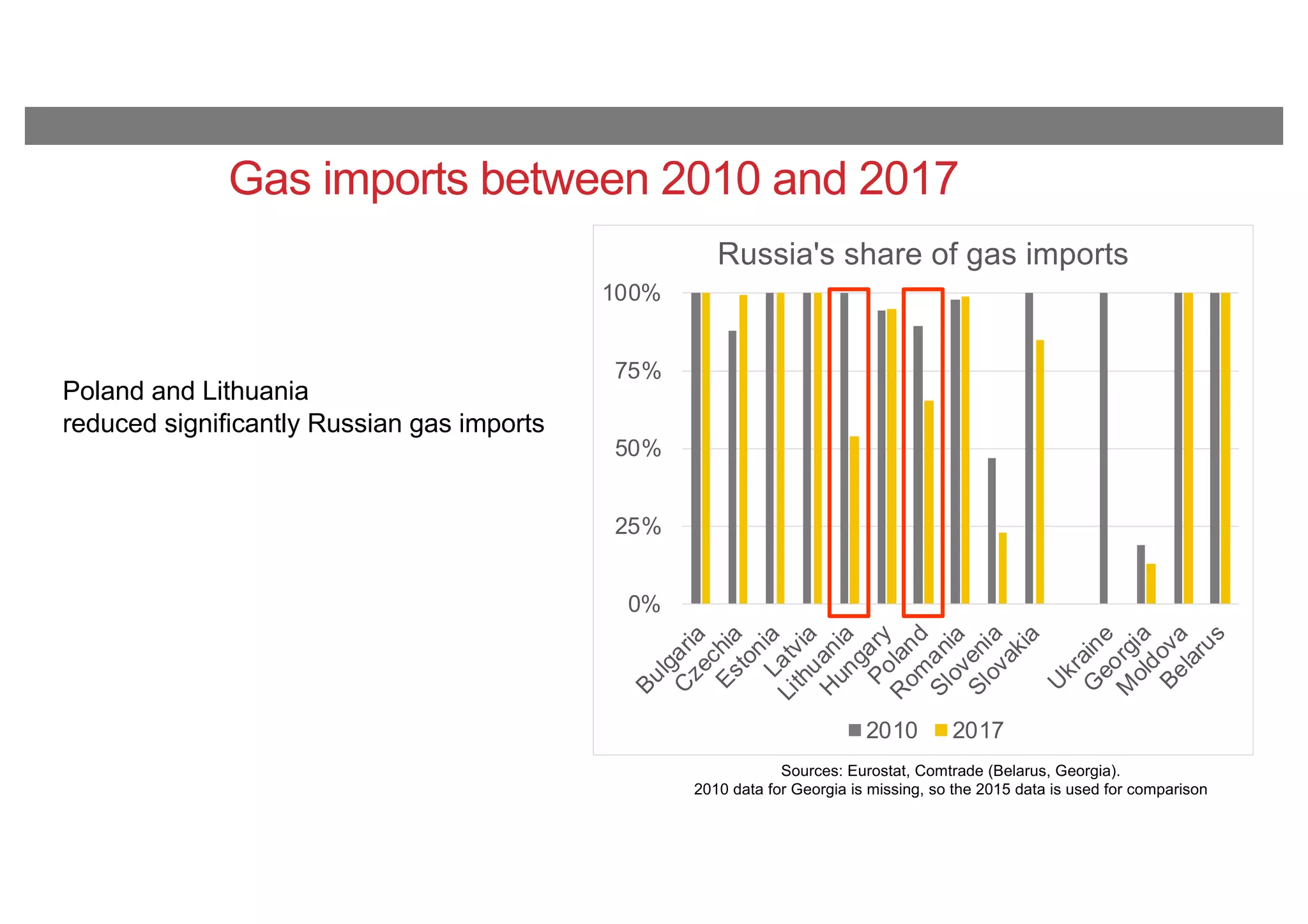
Poland and Lithuania
reduced significantly Russian gas imports
Sources: Eurostat, Comtrade (Belarus, Georgia).
2010 data for Georgia is missing, so the 2015 data is used for comparison
Ukraine, the change of gas provider
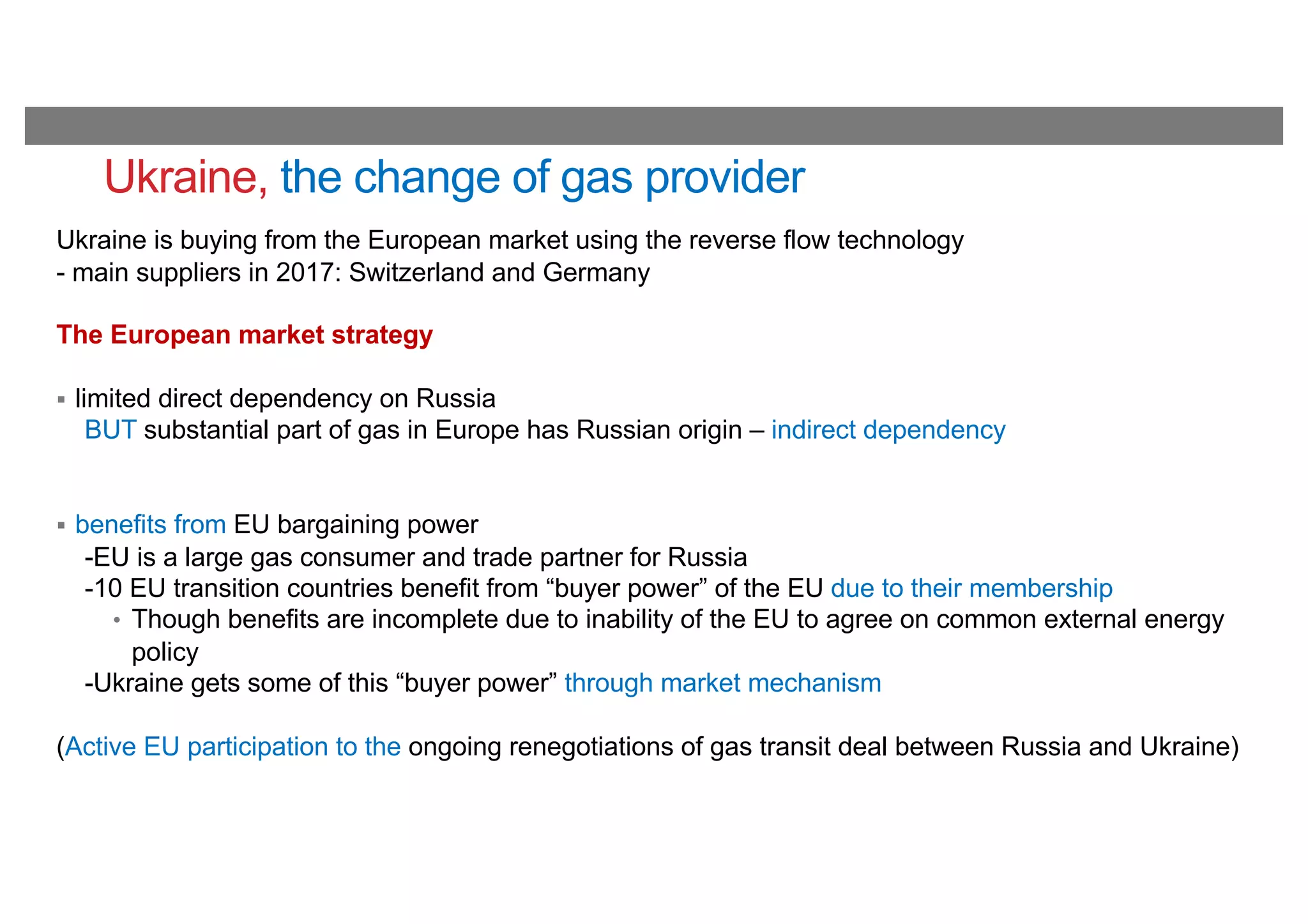
Ukraine is buying from the European market using the reverse flow technology
- main suppliers in 2017: Switzerland and Germany
The European market strategy
§ limited direct dependency on Russia
BUT substantial part of gas in Europe has Russian origin – indirect dependency
§ benefits from EU bargaining power
-EU is a large gas consumer and trade partner for Russia
-10 EU transition countries benefit from “buyer power” of the EU due to their membership
• Though benefits are incomplete due to inability of the EU to agree on common external energy
policy
-Ukraine gets some of this “buyer power” through market mechanism
(Active EU participation to the ongoing renegotiations of gas transit deal between Russia and Ukraine)
Poland and Lithuania, the investment choice
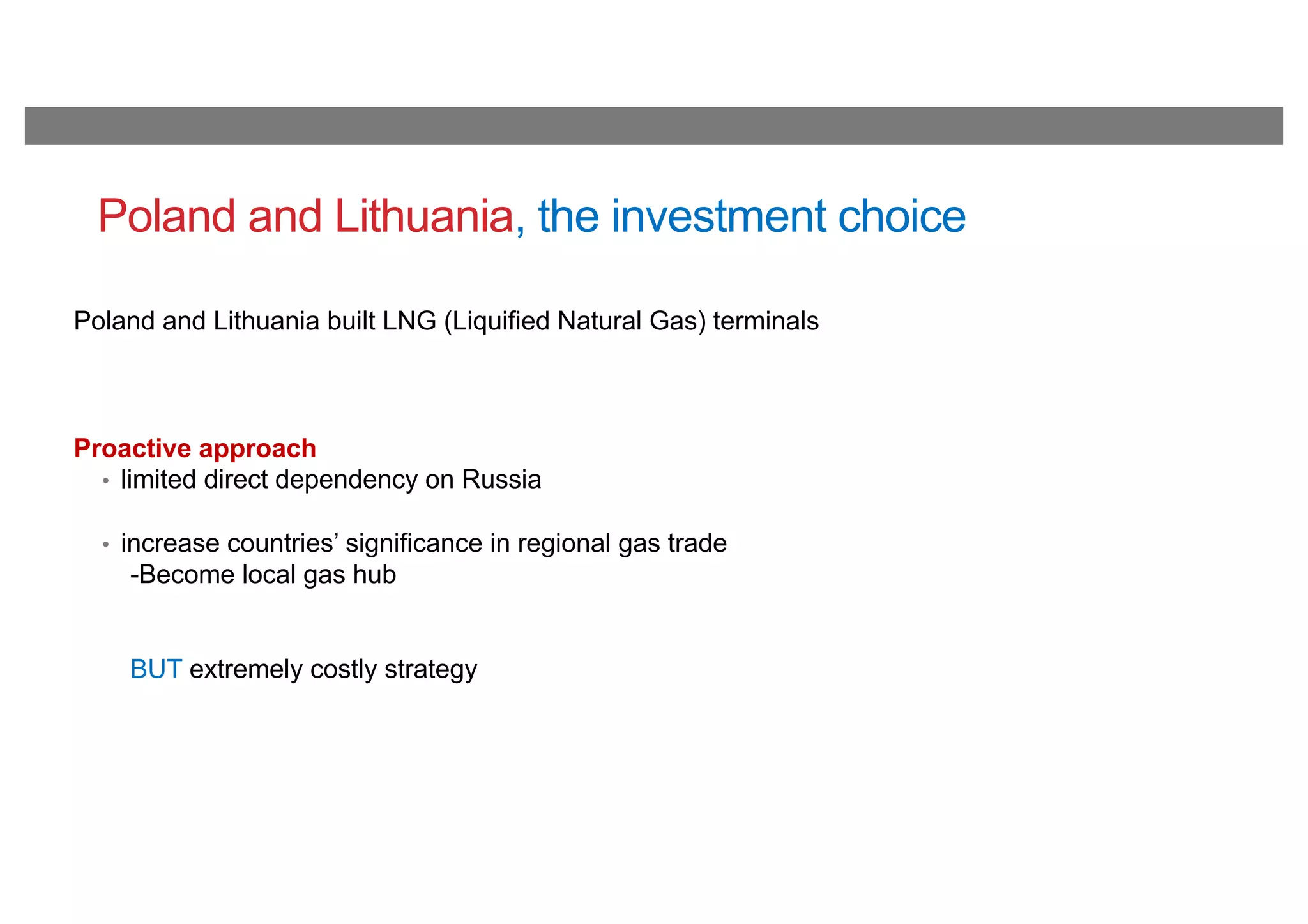
Poland and Lithuania built LNG (Liquified Natural Gas) terminals
Proactive approach
• limited direct dependency on Russia
• increase countries’ significance in regional gas trade
-Become local gas hub
BUT extremely costly strategy
Summing up
§ Better energy security of the region, in particular reduced exposure to Russian gas
§ Improvements made possible due to technological breakthroughs
-Reverse flow technology: Ukraine benefits from EU bargaining power via the market
-LNG: Poland and Lithuania diversify sources of imports
§ Downsides
-these solutions are costly to implement
-gas they provide is likely to be more expensive than the one from Russia
-LNG is only feasible for the countries with a sea access
-while gas is better than coal and oil in terms of CO2 emissions, the environmental concern is not
entirely absent (decarbonization)
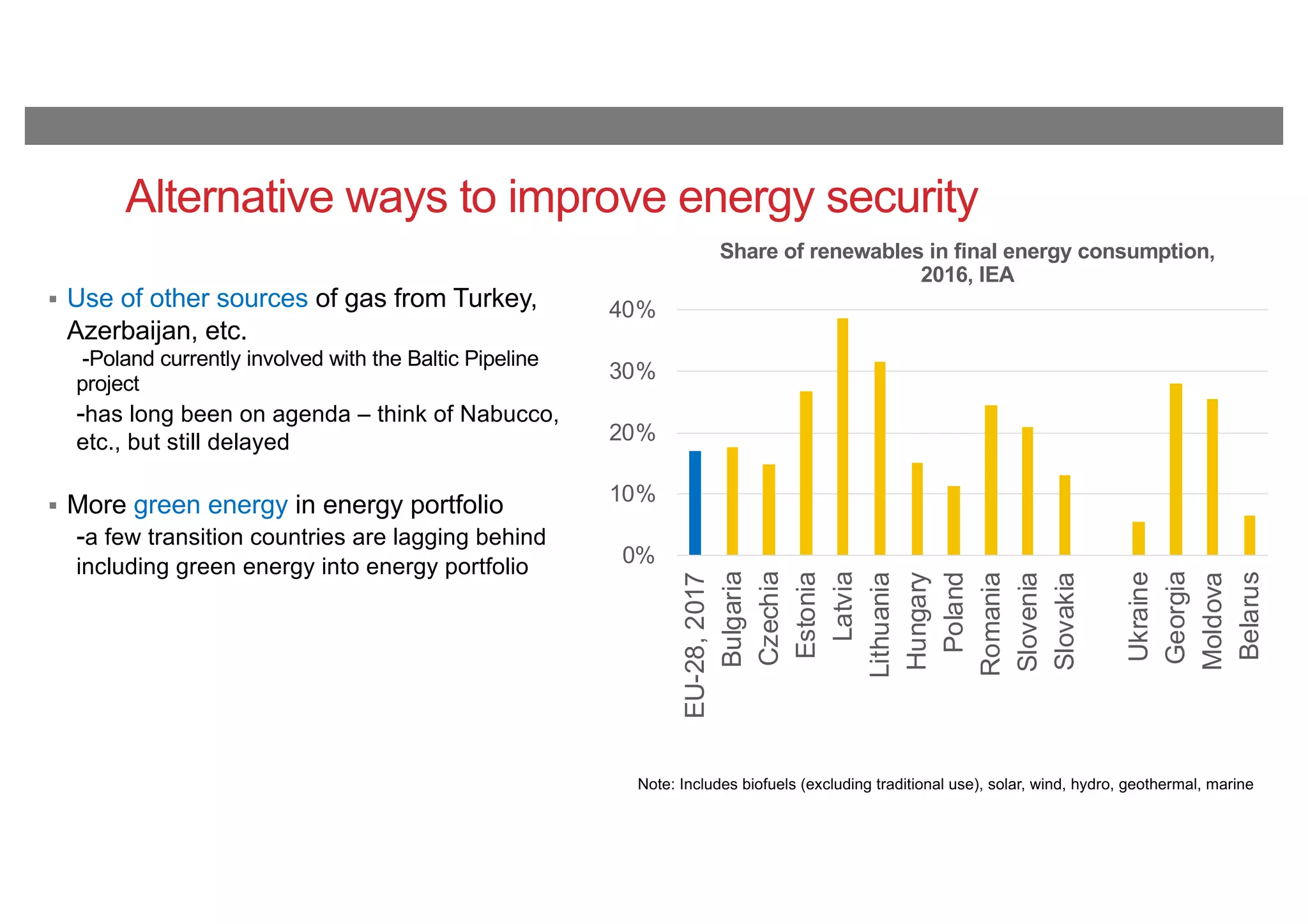
Alternative ways to improve energy security
§ Use of other sources of gas from Turkey,
Azerbaijan, etc.
-Poland currently involved with the Baltic Pipeline
project
-has long been on agenda – think of Nabucco,
etc., but still delayed
§ More green energy in energy portfolio
-a few transition countries are lagging behind
including green energy into energy portfolio
Note: Includes biofuels (excluding traditional use), solar, wind, hydro, geothermal, marine
0%
10%
20%
30%
40%
EU-28,2017
Bulgaria
Czechia
Estonia
Latvia
Lithuania
Hungary
Poland
Romania
Slovenia
Slovakia
Ukraine
Georgia
Moldova
Belarus
Share of renewables in final energy consumption,
2016, IEA
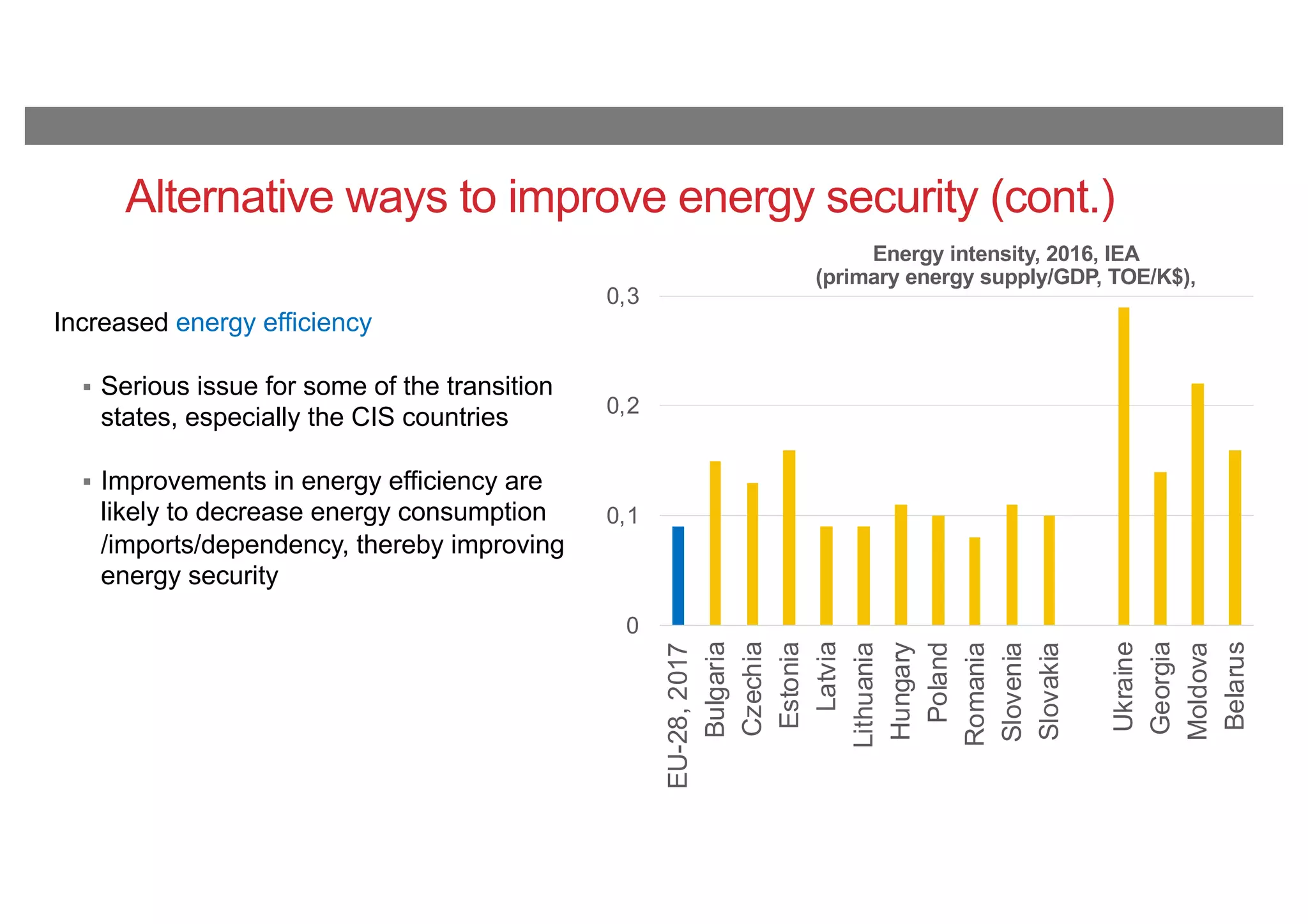
Alternative ways to improve energy security (cont.)
Increased energy efficiency
§ Serious issue for some of the transition
states, especially the CIS countries
§ Improvements in energy efficiency are
likely to decrease energy consumption
/imports/dependency, thereby improving
energy security
0
0,1
0,2
0,3
EU-28,2017
Bulgaria
Czechia
Estonia
Latvia
Lithuania
Hungary
Poland
Romania
Slovenia
Slovakia
Ukraine
Georgia
Moldova
Belarus
Energy intensity, 2016, IEA
(primary energy supply/GDP, TOE/K$),
THANK YOU!
Chloe.LeCoq@hhs.se

Energy Security in Transition Region

  • 1.
    ENERGY SECURITY IN TRANSITIONREGION Chloé Le Coq Elena Paltseva SITE SITE Paris II-Panthéon-Assas New Economic School, Moscow SITE Development Day The Long Shadow of Transition: The State of Democracy in Eastern Europe Nov 12 2019
  • 2.
    Our Focus • Energysecurity = continuous availability of energy at affordable prices • This talk A subset of transition countries: • 10 EU member states (entrants of 2004 and 2007) – Bulgaria, Czechia, Estonia, Latvia, Lithuania, Hungary, Poland, Romania, Slovenia, Slovakia • 4 European CIS countries: Ukraine, Georgia, Moldova and Belarus concentrating on the link between energy security and natural gas dependency
  • 3.
    Energy security andnatural gas Natural gas: a strategic energy commodity § Even with different share of gas in primary consumption across the region : 7% for Estonia to 64% for Belarus Russian gas: an eternal energy security concern § Transition region highly dependent on Russian gas -Russia supplies more than 70% of gas imports in 2017 § Transportation via pipeline - limited possibilities to switch suppliers • History of gas wars between Russia, Ukraine and Belarus 0% 25% 50% 75% 100% Bulgaria Czechia Estonia Latvia Lithuania Hungary Poland Romania Slovenia Slovakia Ukraine Georgia Moldova Belarus Russia's share of gas imports in 2010 Sources: Eurostat, Comtrade (Belarus, Georgia). 2010 data for Georgia is missing, so the 2015 data is used
  • 4.
    0% 25% 50% 75% 100% Bulgaria C zechiaEstoniaLatvia Lithuania H ungaryPoland R om ania Slovenia Slovakia U kraine G eorgia M oldovaBelarus Russia's share ofgas imports 2010 2017 Gas imports between 2010 and 2017 § The region used to be (and still is) very dependent on Russian gas • BUT there have been some changes recently Sources: Eurostat, Comtrade (Belarus, Georgia). 2010 data for Georgia is missing, so the 2015 data is used for comparison
  • 5.
    0% 25% 50% 75% 100% Bulgaria C zechiaEstoniaLatvia Lithuania H ungaryPoland R om ania Slovenia Slovakia U kraine G eorgia M oldovaBelarus Russia's share ofgas imports 2010 2017 Gas imports between 2010 and 2017 Ukraine stopped buying gas from Russia Sources: Eurostat, Comtrade (Belarus, Georgia). 2010 data for Georgia is missing, so the 2015 data is used for comparison
  • 6.
    0% 25% 50% 75% 100% Bulgaria C zechiaEstoniaLatvia Lithuania H ungaryPoland R om ania Slovenia Slovakia U kraine G eorgia M oldovaBelarus Russia's share ofgas imports 2010 2017 Gas imports between 2010 and 2017 Poland and Lithuania reduced significantly Russian gas imports Sources: Eurostat, Comtrade (Belarus, Georgia). 2010 data for Georgia is missing, so the 2015 data is used for comparison
  • 7.
    Ukraine, the changeof gas provider Ukraine is buying from the European market using the reverse flow technology - main suppliers in 2017: Switzerland and Germany The European market strategy § limited direct dependency on Russia BUT substantial part of gas in Europe has Russian origin – indirect dependency § benefits from EU bargaining power -EU is a large gas consumer and trade partner for Russia -10 EU transition countries benefit from “buyer power” of the EU due to their membership • Though benefits are incomplete due to inability of the EU to agree on common external energy policy -Ukraine gets some of this “buyer power” through market mechanism (Active EU participation to the ongoing renegotiations of gas transit deal between Russia and Ukraine)
  • 8.
    Poland and Lithuania,the investment choice Poland and Lithuania built LNG (Liquified Natural Gas) terminals Proactive approach • limited direct dependency on Russia • increase countries’ significance in regional gas trade -Become local gas hub BUT extremely costly strategy
  • 9.
    Summing up § Betterenergy security of the region, in particular reduced exposure to Russian gas § Improvements made possible due to technological breakthroughs -Reverse flow technology: Ukraine benefits from EU bargaining power via the market -LNG: Poland and Lithuania diversify sources of imports § Downsides -these solutions are costly to implement -gas they provide is likely to be more expensive than the one from Russia -LNG is only feasible for the countries with a sea access -while gas is better than coal and oil in terms of CO2 emissions, the environmental concern is not entirely absent (decarbonization)
  • 10.
    Alternative ways toimprove energy security § Use of other sources of gas from Turkey, Azerbaijan, etc. -Poland currently involved with the Baltic Pipeline project -has long been on agenda – think of Nabucco, etc., but still delayed § More green energy in energy portfolio -a few transition countries are lagging behind including green energy into energy portfolio Note: Includes biofuels (excluding traditional use), solar, wind, hydro, geothermal, marine 0% 10% 20% 30% 40% EU-28,2017 Bulgaria Czechia Estonia Latvia Lithuania Hungary Poland Romania Slovenia Slovakia Ukraine Georgia Moldova Belarus Share of renewables in final energy consumption, 2016, IEA
  • 11.
    Alternative ways toimprove energy security (cont.) Increased energy efficiency § Serious issue for some of the transition states, especially the CIS countries § Improvements in energy efficiency are likely to decrease energy consumption /imports/dependency, thereby improving energy security 0 0,1 0,2 0,3 EU-28,2017 Bulgaria Czechia Estonia Latvia Lithuania Hungary Poland Romania Slovenia Slovakia Ukraine Georgia Moldova Belarus Energy intensity, 2016, IEA (primary energy supply/GDP, TOE/K$),
  • 12.