INTERNATIONAL CONFERENCE ON ADVANCED MATERIALS FOR CLEAN
ENERGY AND HEALTH APPLICATIONS
(AMCEHA - 2023)
S.TAMIL SELVAN,ASSISTANT PROFESSOR,RATHINAM TECHNICAML CAMPUS,COIMBATORE
INTRODUCTION
RESULT
ABSTRACT
MATERIALS SELECTION
CONCLUSIONS
REFERENCES
CONTACT
The aim of this research was to
design a structurally stable and
low weight chassis for an
electric motorcycle using
composite material called
Innegra S-Fiber. With the
increasing pollution and stricter
emission norms, there is an
urgent need to switch to green
technology. In India, 62% of
petrol is consumed by
motorcycles. Therefore, there is
a major scope of reducing
pollution through electrically
driven motorcycles., Present
work attempted to design the
chassis for electric motor driven
motorcycle for street legal
transportation.
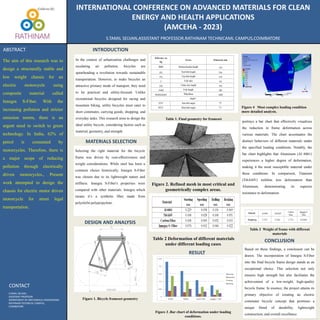
portrays a bar chart that effectively visualizes
the reduction in frame deformation across
various materials. The chart accentuates the
distinct behaviors of different materials under
the specified loading conditions. Notably, the
bar chart highlights that Aluminum (Al 6061)
experiences a higher degree of deformation,
making it the most susceptible material under
these conditions. In comparison, Titanium
(Ti6Al4V) exhibits less deformation than
Aluminum, demonstrating its superior
resistance to deformation.
Selecting the right material for the bicycle
frame was driven by cost-effectiveness and
weight considerations. While steel has been a
common choice historically, Innegra S-Fiber
was chosen due to its lightweight nature and
stiffness. Innegra S-Fiber's properties were
compared with other materials. Innegra which
means it’s a synthetic fiber made from
polyolefin polypropylene.
Based on these findings, a conclusion can be
drawn. The incorporation of Innegra S-Fiber
into the final bicycle frame design stands as an
exceptional choice. This selection not only
ensures high strength but also facilitates the
achievement of a low-weight, high-quality
bicycle frame. In essence, the project attains its
primary objective of creating an electric
commuter bicycle concept that promises a
unique blend of durability, lightweight
construction, and overall excellence.
In the context of urbanization challenges and
escalating air pollution, bicycles are
spearheading a revolution towards sustainable
transportation. However, to make bicycles an
attractive primary mode of transport, they need
to be practical and utility-focused. Unlike
recreational bicycles designed for racing and
mountain biking, utility bicycles must cater to
short commutes, carrying goods, shopping, and
everyday tasks. This research aims to design the
ideal utility bicycle, considering factors such as
material, geometry, and strength.
S.TAMIL SELVAN ,
ASSISTANT PROFESOR
DEPARTMENT OF MECHANICAL ENGINEERING
RATHINAM TECHNICAL CAMPUS,
COIMBATORE
Figure 2. Refined mesh in most critical and
geometrically complex areas.
Table 2 Deformation of different materials
under different loading cases.
DESIGN AND ANALYSIS
Table 1. Final geometry for frameset
Figure 1. Bicycle frameset geometry
Figure 4 Most complex loading condition
more detailed analysis.
Figure 3 .Bar chart of deformation under loading
conditions.
Table 3 Weight of frame with different
materials
CONCLUSION

EMT 111 NEW.pptx

  • 1.
    INTERNATIONAL CONFERENCE ONADVANCED MATERIALS FOR CLEAN ENERGY AND HEALTH APPLICATIONS (AMCEHA - 2023) S.TAMIL SELVAN,ASSISTANT PROFESSOR,RATHINAM TECHNICAML CAMPUS,COIMBATORE INTRODUCTION RESULT ABSTRACT MATERIALS SELECTION CONCLUSIONS REFERENCES CONTACT The aim of this research was to design a structurally stable and low weight chassis for an electric motorcycle using composite material called Innegra S-Fiber. With the increasing pollution and stricter emission norms, there is an urgent need to switch to green technology. In India, 62% of petrol is consumed by motorcycles. Therefore, there is a major scope of reducing pollution through electrically driven motorcycles., Present work attempted to design the chassis for electric motor driven motorcycle for street legal transportation. portrays a bar chart that effectively visualizes the reduction in frame deformation across various materials. The chart accentuates the distinct behaviors of different materials under the specified loading conditions. Notably, the bar chart highlights that Aluminum (Al 6061) experiences a higher degree of deformation, making it the most susceptible material under these conditions. In comparison, Titanium (Ti6Al4V) exhibits less deformation than Aluminum, demonstrating its superior resistance to deformation. Selecting the right material for the bicycle frame was driven by cost-effectiveness and weight considerations. While steel has been a common choice historically, Innegra S-Fiber was chosen due to its lightweight nature and stiffness. Innegra S-Fiber's properties were compared with other materials. Innegra which means it’s a synthetic fiber made from polyolefin polypropylene. Based on these findings, a conclusion can be drawn. The incorporation of Innegra S-Fiber into the final bicycle frame design stands as an exceptional choice. This selection not only ensures high strength but also facilitates the achievement of a low-weight, high-quality bicycle frame. In essence, the project attains its primary objective of creating an electric commuter bicycle concept that promises a unique blend of durability, lightweight construction, and overall excellence. In the context of urbanization challenges and escalating air pollution, bicycles are spearheading a revolution towards sustainable transportation. However, to make bicycles an attractive primary mode of transport, they need to be practical and utility-focused. Unlike recreational bicycles designed for racing and mountain biking, utility bicycles must cater to short commutes, carrying goods, shopping, and everyday tasks. This research aims to design the ideal utility bicycle, considering factors such as material, geometry, and strength. S.TAMIL SELVAN , ASSISTANT PROFESOR DEPARTMENT OF MECHANICAL ENGINEERING RATHINAM TECHNICAL CAMPUS, COIMBATORE Figure 2. Refined mesh in most critical and geometrically complex areas. Table 2 Deformation of different materials under different loading cases. DESIGN AND ANALYSIS Table 1. Final geometry for frameset Figure 1. Bicycle frameset geometry Figure 4 Most complex loading condition more detailed analysis. Figure 3 .Bar chart of deformation under loading conditions. Table 3 Weight of frame with different materials CONCLUSION