

Employability &
Personal Development
Contributing to a Team
Good teamwork
achieves results!!
“Teamwork is becoming more commonly
used & widely accepted as a way to
increase productivity in the workplace &
displaying these skills is crucial for
individuals searching for employment.”
Team Work
 Significance: Provides the diversity of skills & abilities
required to complete the task.
 Skills: The most important teamwork skill is the ability
to communicate effectively.
 Communication: Being an effective team member
starts & ends with communicating.
 Commitment: Another essential teamwork skill is the
ability & desire to commit to a shared team goal.
 Decision Making: The skill of effective, responsible
decision making is crucial because most group conflict
arises during the this process.
Team Work
Discussion Points
 The benefits of effective teamwork.
 Different types of teams.
 Working effectively as part of a team.
 Decision making.
 Understanding the different work roles & identifying the
impact they have on members of the team.
 Achieving the goals of the team.
 Working with others towards achieving shared objectives.
 Identify who to ask for help.
 Working co-operatively.
 Sharing views on progress with team.
 Evaluating contribution to the team & suggest improvements.
 Constructive criticism is an important part of the learning curve.
 Giving constructive criticism.
 ‘Receiving criticism is just as important as giving it’.
 Dealing with criticism constructively.
 Working safely.
Discussion Points
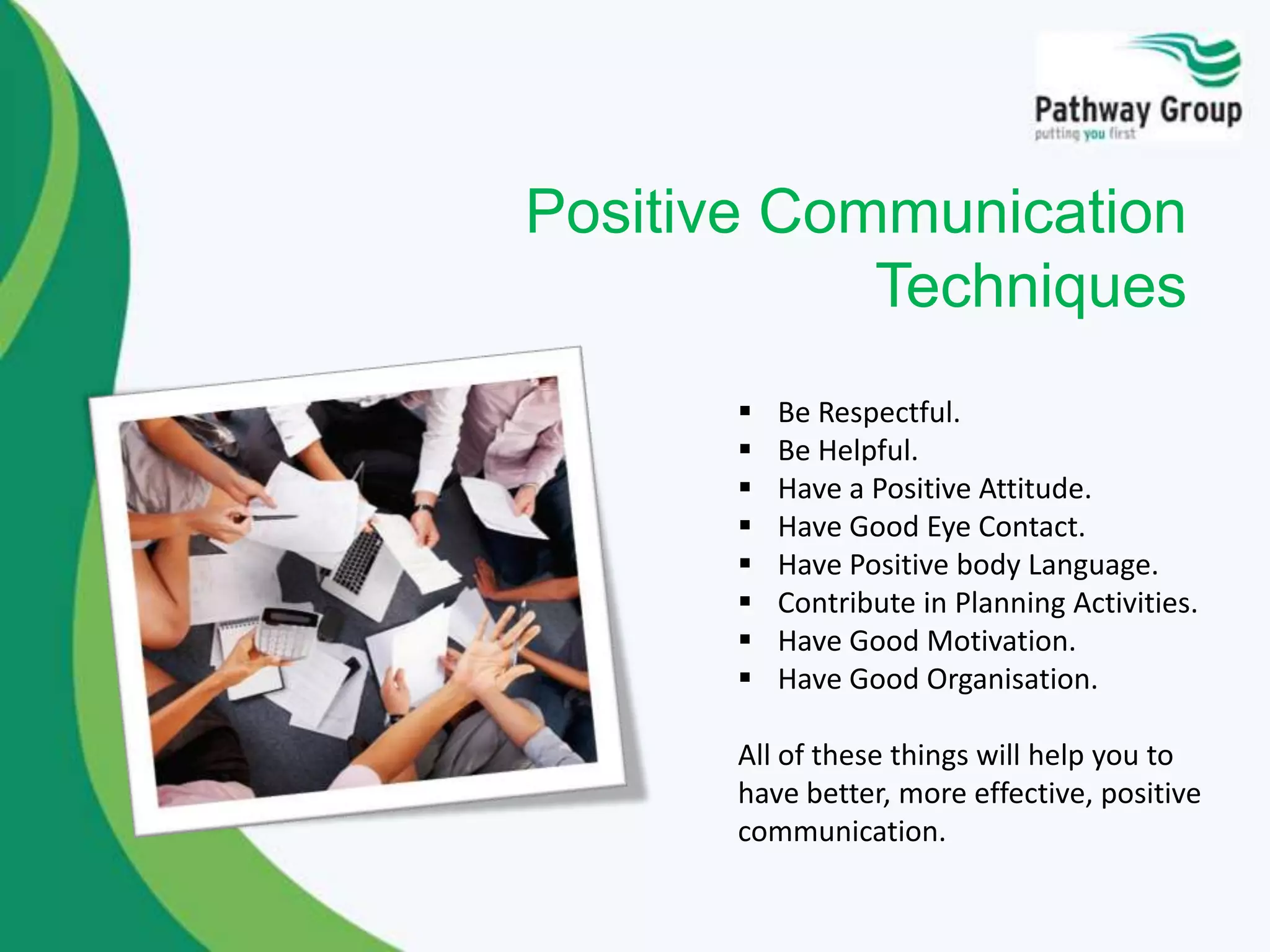
 Be Respectful.
 Be Helpful.
 Have a Positive Attitude.
 Have Good Eye Contact.
 Have Positive body Language.
 Contribute in Planning Activities.
 Have Good Motivation.
 Have Good Organisation.
All of these things will help you to
have better, more effective, positive
communication.
Positive Communication
Techniques
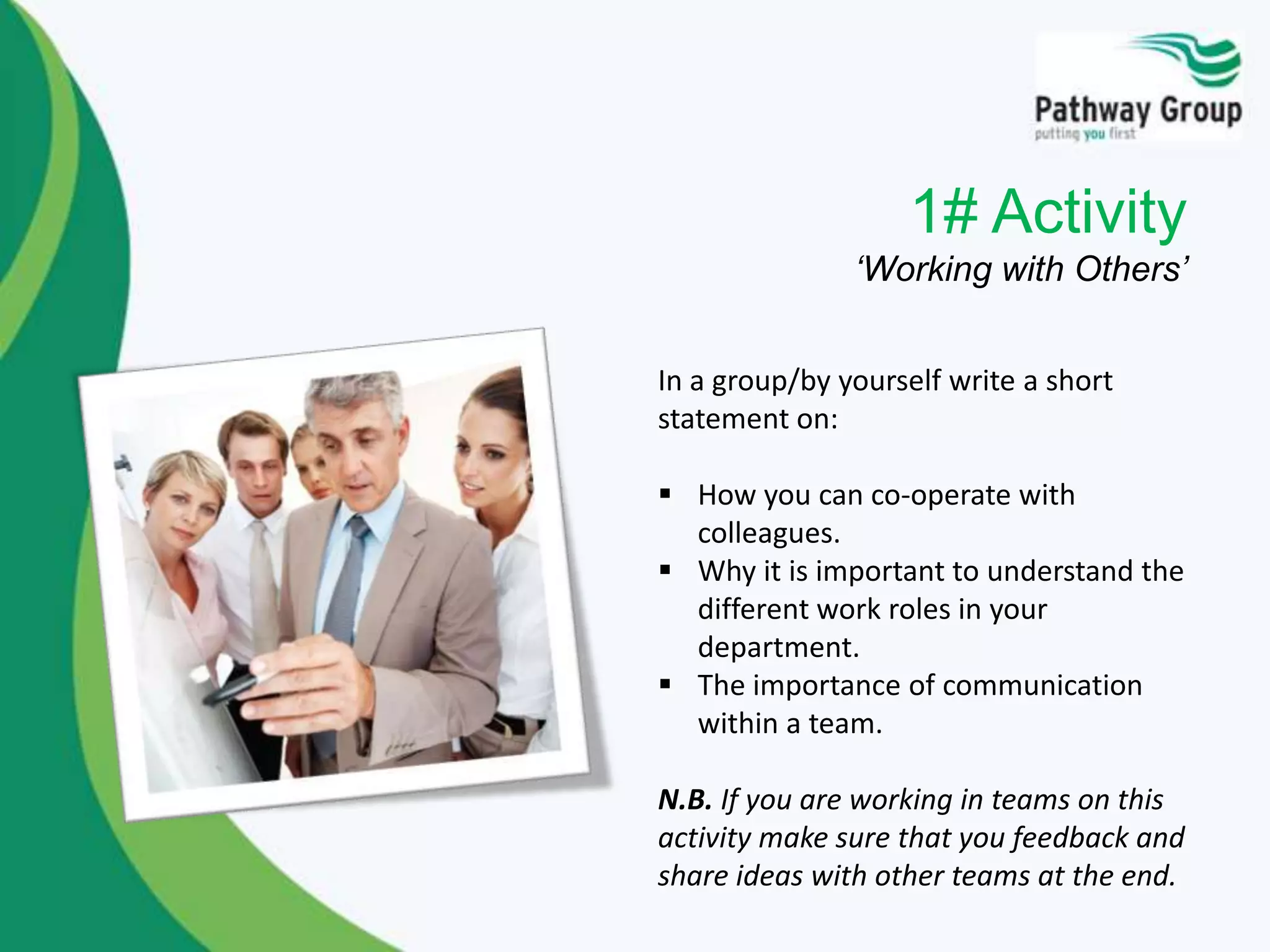
In a group/by yourself write a short
statement on:
 How you can co-operate with
colleagues.
 Why it is important to understand the
different work roles in your
department.
 The importance of communication
within a team.
N.B. If you are working in teams on this
activity make sure that you feedback and
share ideas with other teams at the end.
1# Activity
‘Working with Others’
2# Activity
‘Meeting Time’
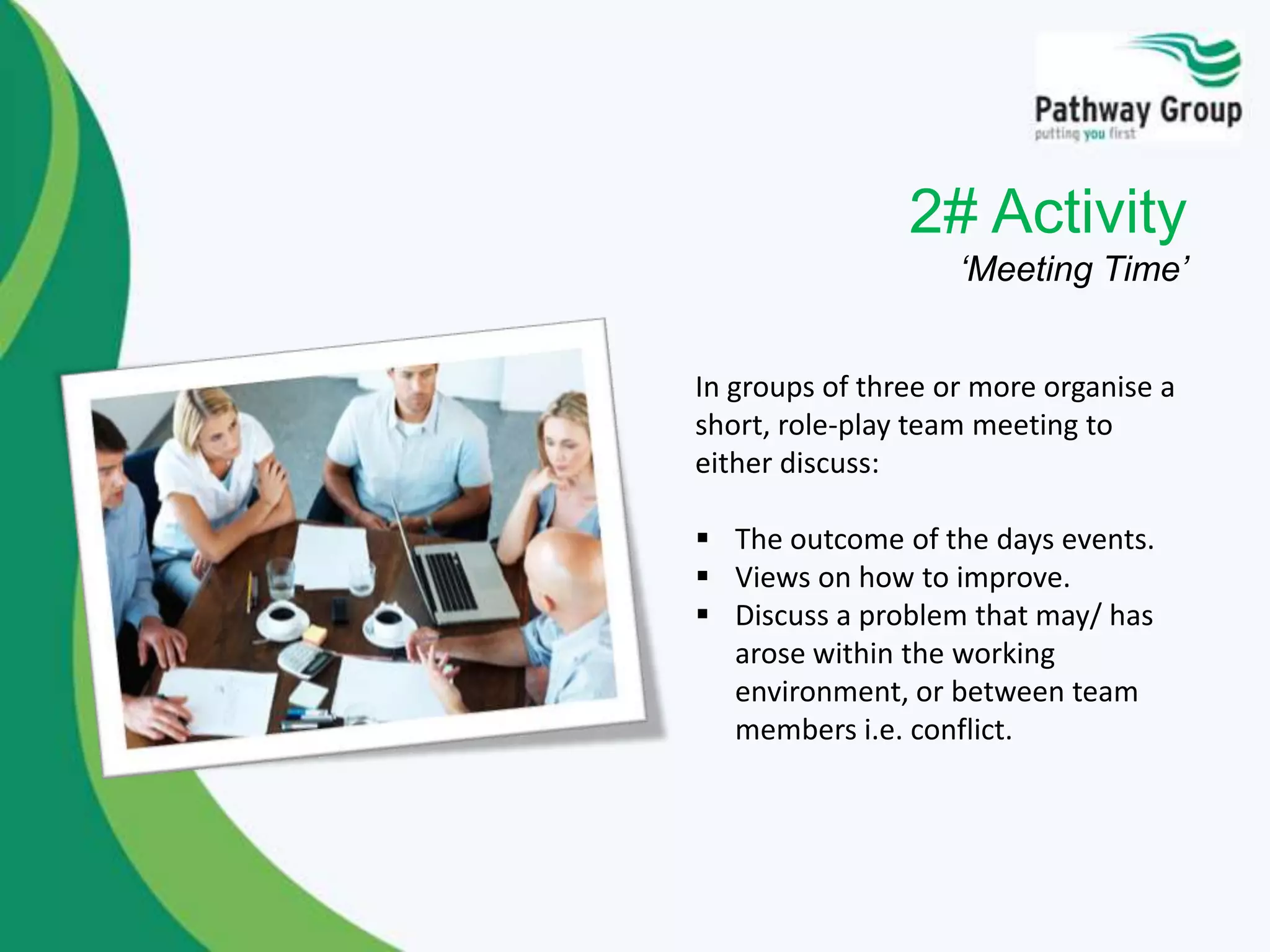
In groups of three or more organise a
short, role-play team meeting to
either discuss:
 The outcome of the days events.
 Views on how to improve.
 Discuss a problem that may/ has
arose within the working
environment, or between team
members i.e. conflict.
For more Information,
Advice & Guidance
or to contact us about Traineeships or Apprenticeships
Call: 0121 707 0550
E-mail: info@pathwaygroup.co.uk

Employability & Personal Development: Contributing to a Team

  • 1.
  • 2.
  • 3.
    “Teamwork is becomingmore commonly used & widely accepted as a way to increase productivity in the workplace & displaying these skills is crucial for individuals searching for employment.” Team Work
  • 4.
     Significance: Providesthe diversity of skills & abilities required to complete the task.  Skills: The most important teamwork skill is the ability to communicate effectively.  Communication: Being an effective team member starts & ends with communicating.  Commitment: Another essential teamwork skill is the ability & desire to commit to a shared team goal.  Decision Making: The skill of effective, responsible decision making is crucial because most group conflict arises during the this process. Team Work
  • 5.
    Discussion Points  Thebenefits of effective teamwork.  Different types of teams.  Working effectively as part of a team.  Decision making.  Understanding the different work roles & identifying the impact they have on members of the team.  Achieving the goals of the team.  Working with others towards achieving shared objectives.  Identify who to ask for help.  Working co-operatively.
  • 6.
     Sharing viewson progress with team.  Evaluating contribution to the team & suggest improvements.  Constructive criticism is an important part of the learning curve.  Giving constructive criticism.  ‘Receiving criticism is just as important as giving it’.  Dealing with criticism constructively.  Working safely. Discussion Points
  • 7.
     Be Respectful. Be Helpful.  Have a Positive Attitude.  Have Good Eye Contact.  Have Positive body Language.  Contribute in Planning Activities.  Have Good Motivation.  Have Good Organisation. All of these things will help you to have better, more effective, positive communication. Positive Communication Techniques
  • 8.
    In a group/byyourself write a short statement on:  How you can co-operate with colleagues.  Why it is important to understand the different work roles in your department.  The importance of communication within a team. N.B. If you are working in teams on this activity make sure that you feedback and share ideas with other teams at the end. 1# Activity ‘Working with Others’
  • 9.
    2# Activity ‘Meeting Time’ Ingroups of three or more organise a short, role-play team meeting to either discuss:  The outcome of the days events.  Views on how to improve.  Discuss a problem that may/ has arose within the working environment, or between team members i.e. conflict.
  • 10.
    For more Information, Advice& Guidance or to contact us about Traineeships or Apprenticeships Call: 0121 707 0550 E-mail: info@pathwaygroup.co.uk