Emotional Intelligence as a Predictor of
Resident Well-Being
Dana T Lin, MD, FACS, Cara A Liebert, MD, Jennifer Tran, BS, James N Lau, MD, FACS,
Arghavan Salles, MD, PhD
BACKGROUND: There is increasing recognition that physician wellness is critical; it not only benefits the pro-
vider, but also influences quality and patient care outcomes. Despite this, resident physicians
suffer from a high rate of burnout and personal distress. Individuals with higher emotional
intelligence (EI) are thought to perceive, process, and regulate emotions more effectively,
which can lead to enhanced well-being and less emotional disturbance. This study sought
to understand the relationship between EI and wellness among surgical residents.
STUDY DESIGN: Residents in a single general surgery residency program were surveyed on a voluntary basis.
Emotional intelligence was measured using the Trait Emotional Intelligence
Questionnaire-Short Form. Resident wellness was assessed with the Dupuy Psychological
General Well-Being Index, Maslach Burnout Inventory, and Beck Depression Inventory-
Short Form. Emotional intelligence and wellness parameters were correlated using Pearson
coefficients. Multivariate analysis was performed to identify factors predictive of well-being.
RESULTS: Seventy-three residents participated in the survey (response rate 63%). Emotional intelligence
scores correlated positively with psychological well-being (r ¼ 0.74; p < 0.001) and inversely
with depression (r ¼ À0.69, p < 0.001) and 2 burnout parameters, emotional exhaustion
(r ¼ À0.69; p < 0.001) and depersonalization (r ¼ À0.59; p < 0.001). In regression analyses
controlling for demographic factors such as sex, age, and relationship status, EI was strongly
predictive of well-being (b ¼ 0.76; p < 0.001), emotional exhaustion (b ¼ À0.63; p < 0.001),
depersonalization (b ¼ À0.48; p ¼ 0.002), and depression (b ¼ À0.60; p < 0.001).
CONCLUSIONS: Emotional intelligence is a strong predictor of resident well-being. Prospectively measuring EI
can identify those who are most likely to thrive in surgical residency. Interventions to increase
EI can be effective at optimizing the wellness of residents. (J Am Coll Surg 2016;223:
352e358. 2016 Published by Elsevier Inc. on behalf of the American College of Surgeons.)
There is increasing recognition that the well-being of
physicians is of vital importance. It is critical not only
for the sake of the providers, but also for the patients
they care for. On a personal level, unwell physicians can
experience stress, burnout, depression, relationship diffi-
culties, substance abuse, and even suicidal ideation.
In addition, unwell physicians can more broadly impact
the health care system and patient outcomes negatively.1,2
Such consequences include difficulties in recruitment and
retention, decreased productivity and efficiency, subopti-
mal quality of patient care, reduced patient adherence
and satisfaction, and an increased risk for medical errors.3
Resident physicians are especially vulnerable to psycho-
logical and personal distress, given the intense emotional,
social, cognitive, and physical demands of residency
training. Multiple studies have documented rates of
burnout as high as 75%.4-6
In a recent national survey,
more than half of residents screened positive for depres-
sion, with 8.1% reporting suicidal ideation in the last
12 months.7
A rash of resident suicides in 2014 has
brought the importance of physician mental health and
well-being to the forefront of not only the medical com-
munity, but also the general public.8-10
The concept of emotional intelligence (EI) was intro-
duced in the 1990s by Salovey and Mayer,11
who
described it as a type of social intelligence that captures
Disclosure Information: Nothing to disclose.
Presented orally at the American College of Surgeons 101st
Annual Clinical
Congress, Chicago, IL, October 2015.
Received March 30, 2016; Accepted April 28, 2016.
From the Goodman Surgical Education Center, Department of Surgery,
Stanford School of Medicine, Stanford, CA.
Correspondence address: Dana T Lin, MD, FACS, Goodman Surgical
Education Center, Department of Surgery, Stanford School of Medicine,
300 Pasteur Dr, H3552, Stanford, CA 94305. email: danalin@stanford.edu
352
ª 2016 Published by Elsevier Inc. on behalf of the American College of
Surgeons.
http://dx.doi.org/10.1016/j.jamcollsurg.2016.04.044
ISSN 1072-7515/16
an individual’s ability to perceive, process, and regulate
one’s own emotions and the emotions of others. It in-
forms how an individual internally manages emotional
and environmental stressors, as well as how one navigates
relationships with other people. Emotional intelligence
has been associated with less mood deterioration and
emotional reactivity after natural and laboratory
stressors.12
Given the potential for EI to moderate the effect of
stressors on an individual, we hypothesized that those
with higher EI are better equipped to handle the stressors
associated with residency. We therefore sought to explore
the relationship between EI and an individual’s sense of
wellness. Because surgical residencies are often character-
ized as being particularly arduous and demanding,
we elected to study this relationship in the setting of a
surgical residency.
METHODS
Procedure
This study investigated the relationship between EI and
well-being among general surgery residents. Surgery resi-
dents at a single institution during the academic years
2013 to 2014 and 2014 to 2015 (n ¼ 115) were invited
to participate in the study on a voluntary basis at 2
discrete time points (April 2013 and May 2014). Partici-
pants completed an electronic questionnaire composed of
established psychometric instruments evaluating EI,
psychological well-being, burnout, and depression, in
addition to a demographics survey. The following scales
were used: the Trait Emotional Intelligence Question-
naire (TEIQue)-Short Form, Dupuy Psychological Gen-
eral Well-Being Index (PGWBI), Maslach Burnout
Inventory (MBI), and Beck Depression Inventory-Short
Form (BDI-SF). The study protocol was approved by
the Stanford University IRB.
Materials
Trait Emotional Intelligence Questionnaire-Short
Form
Emotional intelligence was assessed using the validated
TEIQue-SF, a trait-based instrument designed to capture
personality facets and dispositions related to emotions.13
The TEIQue-SF is based on the long 153-item version
of the TEIQue and consists of 30 self-report items that
are answered on a 7-point Likert scale based on
how strongly the respondent agrees with the statement
(1 ¼ completely disagree; 7 ¼ completely agree). The
TEIQue was selected for this study from among the avail-
able EI instruments because it possesses the strongest asso-
ciations with mental health.14
Dupuy Psychological General Well-Being Index
Well-being was measured using the Psychological General
Well-Being Index.15,16
The PGWBI consists of 22 items,
rated on a 6-point scale, that assess psychological and
general well-being of respondents. The items are scored
to produce an overall total score for general well-being
that is commonly expressed on a range from 0 to 100.
Maslach Burnout Inventory
Burnout was assessed using the Maslach Burnout Inven-
tory, a scale designed to measure various aspects of
burnout in human service professionals.17
For the MBI,
an individual rates on a 7-point scale how often he
or she feels what is described in the 22-items listed
(1 ¼ never; 7 ¼ every day). It has 3 subscales to evaluate
each domain of burnout: emotional exhaustion, deper-
sonalization, and personal accomplishment. In keeping
with convention, analyses were focused on the deperson-
alization and emotional exhaustion subscales of the MBI,
as they are considered the key hallmarks of professional
burnout.18
Beck Depression Inventory-Short Form
The BDI-SF was used to measure depression.19,20
An
abridged version of the original 21-item BDI, the
BDI-SF features 13 items, each of which consists of
4 alternative statements graded in severity from 0 to 3.
Total score ranges from 0 to 39, and higher scores indi-
cate more depressed mood.
Data analysis
Standard univariate statistics were used to describe the
respondents. Descriptive statistics were computed for
the TEIQue-SF, PGWBI, MBI, and BDI-SF. Compari-
sons between sexes were conducted using a 2-tailed,
independent-samples t-test. Pearson’s product-moment
correlations were then used to examine relationships
between EI and well-being parameters. Multivariate linear
regression was performed to identify independent predic-
tors of the outcomes of psychological well-being, burnout,
and depression. All data were analyzed using SPSS soft-
ware, version 21.0 (SPSS Inc).
Abbreviations and Acronyms
BDI-SF ¼ Beck Depression Inventory-Short Form
EI ¼ emotional intelligence
MBI ¼ Maslach Burnout Inventory
PGWBS ¼ Psychological General Well-Being Index
TEIQue ¼ Trait Emotional Intelligence Questionnaire
Vol. 223, No. 2, August 2016 Lin et al Emotional Intelligence and Resident Wellness 353
RESULTS
Participants
Of the 115 residents invited to participate, a total of 73
residents completed the survey (63% response rate).
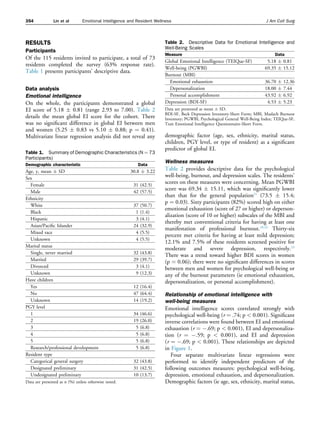
Table 1 presents participants’ descriptive data.
Data analysis
Emotional intelligence
On the whole, the participants demonstrated a global
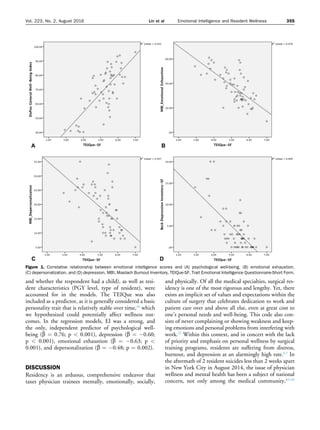
EI score of 5.18 Æ 0.81 (range 2.93 to 7.00). Table 2
details the mean global EI score for the cohort. There
was no significant difference in global EI between men
and women (5.25 Æ 0.83 vs 5.10 Æ 0.88; p ¼ 0.41).
Multivariate linear regression analysis did not reveal any demographic factor (age, sex, ethnicity, marital status,
children, PGY level, or type of resident) as a significant
predictor of global EI.
Wellness measures
Table 2 provides descriptive data for the psychological
well-being, burnout, and depression scales. The residents’
scores on these measures were concerning. Mean PGWBI
score was 69.34 Æ 15.11, which was significantly lower
than that for the general population21
(73.5 Æ 15.4;
p ¼ 0.03). Sixty participants (82%) scored high on either
emotional exhaustion (score of 27 or higher) or deperson-
alization (score of 10 or higher) subscales of the MBI and
thereby met conventional criteria for having at least one
manifestation of professional burnout.18,22
Thirty-six
percent met criteria for having at least mild depression;
12.1% and 7.5% of these residents screened positive for
moderate and severe depression, respectively.23
There was a trend toward higher BDI scores in women
(p ¼ 0.06); there were no significant differences in scores
between men and women for psychological well-being or
any of the burnout parameters (ie emotional exhaustion,
depersonalization, or personal accomplishment).
Relationship of emotional intelligence with
well-being measures
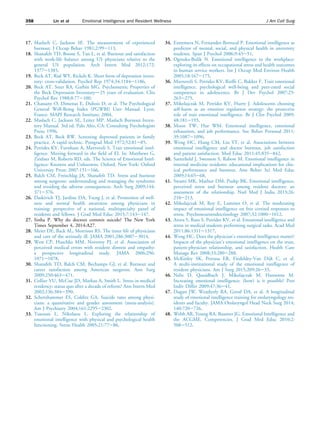
Emotional intelligence scores correlated strongly with
psychological well-being (r ¼ .74; p < 0.001). Significant
inverse correlations were found between EI and emotional
exhaustion (r ¼ À.69; p < 0.001), EI and depersonaliza-
tion (r ¼ À.59; p < 0.001), and EI and depression
(r ¼ À.69; p < 0.001). These relationships are depicted
in Figure 1.
Four separate multivariate linear regressions were
performed to identify independent predictors of the
following outcomes measures: psychological well-being,
depression, emotional exhaustion, and depersonalization.
Demographic factors (ie age, sex, ethnicity, marital status,
Table 1. Summary of Demographic Characteristics (N ¼ 73
Participants)
Demographic characteristic Data
Age, y, mean Æ SD 30.8 Æ 3.22
Sex
Female 31 (42.5)
Male 42 (57.5)
Ethnicity
White 37 (50.7)
Black 1 (1.4)
Hispanic 3 (4.1)
Asian/Pacific Islander 24 (32.9)
Mixed race 4 (5.5)
Unknown 4 (5.5)
Marital status
Single, never married 32 (43.8)
Married 29 (39.7)
Divorced 3 (4.1)
Unknown 9 (12.3)
Have children
Yes 12 (16.4)
No 47 (64.4)
Unknown 14 (19.2)
PGY level
1 34 (46.6)
2 19 (26.0)
3 5 (6.8)
4 5 (6.8)
5 5 (6.8)
Research/professional development 5 (6.8)
Resident type
Categorical general surgery 32 (43.8)
Designated preliminary 31 (42.5)
Undesignated preliminary 10 (13.7)
Data are presented as n (%) unless otherwise noted.
Table 2. Descriptive Data for Emotional Intelligence and
Well-Being Scales
Measure Data
Global Emotional Intelligence (TEIQue-SF) 5.18 Æ 0.81
Well-being (PGWBI) 69.35 Æ 15.12
Burnout (MBI)
Emotional exhaustion 36.70 Æ 12.36
Depersonalization 18.00 Æ 7.44
Personal accomplishment 43.92 Æ 6.92
Depression (BDI-SF) 4.53 Æ 5.23
Data are presented as mean Æ SD.
BDI-SF, Beck Depression Inventory-Short Form; MBI, Maslach Burnout
Inventory; PGWBI, Psychological General Well-Being Index; TEIQue-SF,
Trait Emotional Intelligence Questionnaire-Short Form.
354 Lin et al Emotional Intelligence and Resident Wellness J Am Coll Surg
and whether the respondent had a child), as well as resi-
dent characteristics (PGY level, type of resident), were
accounted for in the models. The TEIQue was also
included as a predictor, as it is generally considered a basic
personality trait that is relatively stable over time,24
which
we hypothesized could potentially affect wellness out-
comes. In the regression models, EI was a strong, and
the only, independent predictor of psychological well-
being (b ¼ 0.76; p < 0.001), depression (b ¼ À0.60;
p < 0.001), emotional exhaustion (b ¼ À0.63; p <
0.001), and depersonalization (b ¼ À0.48; p ¼ 0.002).
DISCUSSION
Residency is an arduous, comprehensive endeavor that
taxes physician trainees mentally, emotionally, socially,
and physically. Of all the medical specialties, surgical res-
idency is one of the most rigorous and lengthy. Yet, there
exists an implicit set of values and expectations within the
culture of surgery that celebrates dedication to work and
patient care over and above all else, even at great cost to
one’s personal needs and well-being. This code also con-
sists of never complaining or showing weakness and keep-
ing emotions and personal problems from interfering with
work.25
Within this context, and in concert with the lack
of priority and emphasis on personal wellness by surgical
training programs, residents are suffering from distress,
burnout, and depression at an alarmingly high rate.6,7
In
the aftermath of 2 resident suicides less than 2 weeks apart
in New York City in August 2014, the issue of physician
wellness and mental health has been a subject of national
concern, not only among the medical community,8,9,26
Figure 1. Correlative relationship between emotional intelligence scores and (A) psychological well-being, (B) emotional exhaustion,
(C) depersonalization, and (D) depression. MBI, Maslach Burnout Inventory, TEIQue-SF, Trait Emotional Intelligence Questionnaire-Short Form.
Vol. 223, No. 2, August 2016 Lin et al Emotional Intelligence and Resident Wellness 355
but also the lay public.10,27
This concern is justified, as not
only are the consequences potentially devastating to the
individual at a personal level, but there is also mounting
evidence that physician distress and burnout adversely
affect the quality of patient care and health care organiza-
tions at a broader level.3,4,28,29
Although the problem has been clearly articulated and
its importance well defended, there has been limited
empirical research into the relationship between demo-
graphic characteristics and wellness outcomes. There is
even less research dedicated to identifying significant pre-
dictors of well-being, burnout, and depression, or to the
effectiveness of interventions aimed at optimizing physi-
cian wellness. Several recent reports, including one issued
by the ACGME Council of Review Committee Residents,
have highlighted the need for additional research in this
field.25,26
This study provides data confirming the high preva-
lence of burnout and depression among surgical resi-
dents. The frequency and degree of burnout among
surgical residents are higher than those among residents
in other specialties. In a national survey, Dyrbye and col-
leagues7
reported a burnout rate of 60.3%, with a median
emotional exhaustion score of 24 and depersonalization
score of 10. Their cohort consisted of >1,700 residents
and fellows representing all major medical specialties,
of which 13.1% were surgical trainees. In our study of
only surgical residents, 82% met criteria for burnout; me-
dian scores for emotional exhaustion and depersonaliza-
tion were 35 and 17.5, respectively. This is
substantially higher than the reported burnout rates of
28% to 48% among surgeons in practice, which suggests
that the likelihood and extent of burnout can decrease af-
ter residency.25,30
Possible reasons for this include a more
favorable work environment and lifestyle after residency,
or a greater ability to cope with stress as one matures and
progresses through training. With regard to depression,
36% of surgical residents at our institution screened pos-
itive for at least mild depression. Our data fall within the
range of previously reported depression rates of 22% to
50% among physicians in training, as well as practicing
surgeons.7,30,31
The reality that one-third to one-half of
trainees suffer symptoms of depression cannot be ignored
in light of the recent resident tragedies and the known
fact that male and female physicians have a respective
1.5-fold to 3.8-fold and 3.7-fold to 4.5-fold risk of death
from suicide compared with sex- and age-matched peers
in the general population.25,32
Our data affirm the
growing body of evidence that burnout and depression
are occupational hazards for physicians, particularly for
those in residency, and even more so for the subset
training in surgery.
Our study also offers deeper insight into the relation-
ship between EI and the following wellness measures: psy-
chological well-being, burnout, and depression. Among
the various demographic and personal variables that can
potentially inform and influence resident wellness, EI
emerged as the only significant predictor of psychological
well-being, burnout, and depression. Emotional intelli-
gence is a construct that captures a variety of noncognitive
attributes that help individuals perceive and regulate emo-
tions and, in turn, cope effectively with emotive situations,
such as environmental stressors or interpersonal relation-
ships. A comprehensive meta-analysis by Martins and col-
leagues14
has demonstrated EI to be a predictor of both
mental and physical health in diverse test populations.
Available evidence suggests that EI can be seen as a factor
that protects individuals against mental health conditions,
such as depression and burnout.33-38
The few studies
related to EI and well-being among physicians have
focused on burnout and have similarly demonstrated an
inverse correlation between burnout and EI.39-41
Although
the mechanism by which EI influences these outcomes is
not entirely understood, some studies have shown higher
EI scores to be associated with significantly lower reactivity
to stress at both psychological and biological levels.12
Sub-
jects with high EI appear to secrete less salivary cortisol un-
der conditions of stress than those with low EI.42
One
study showed that although higher EI individuals
exhibited higher mean heart rates (experienced higher
levels of stress) when encountering stressful stimuli, they
also recovered faster than their peers with lower EI.43
Emotional intelligence can also affect behavioral responses
to stress; those with lower EI are more likely to adopt mal-
adaptive coping strategies and engage in self-harm
behaviors.37
That EI is a significant predictor of wellness outcomes
has practical implications. First, prospectively measuring
EI can enable program directors to discern which individ-
uals are at greatest risk for adverse wellness outcomes and
which are likely to thrive in surgical residency. Second, in-
terventions aiming to enhance EI can also result in greater
wellness among resident physicians. Although EI is gener-
ally thought to be relatively stable over time, some studies
suggest that EI can increase with age or be modified
through intensive training.44,45
Satterfield and colleagues40
reported an increase in the EI of internal medicine resi-
dents during the course of a single academic year; howev-
er, it is unclear what factors were responsible for the
change, whether it be normal maturation, medical
training, support groups, or targeted training on commu-
nication skills. Several studies have demonstrated a signif-
icant and sustained increase in EI after subjects completed
a robust EI training curriculum.46,47
These findings,
356 Lin et al Emotional Intelligence and Resident Wellness J Am Coll Surg
combined with ours, suggest that interventions directed at
increasing or optimizing EI might, in turn, improve the
wellness of residents. It should be noted that Webb and
colleagues48
attempted to measure the effect of formal
EI coaching in family medicine residents by implement-
ing training sessions by a certified EI coach. This interven-
tion was unsuccessful due to a lack of protected time for
the residents, rendering the authors unable to assess its
effect. This example emphasizes the importance of
designing and implementing programs in such a way as
to ensure full participation of the residents to attain the
maximal effect.
This study has several limitations. One limitation is
the overall response rate of 63% and relatively small
sample size. As participation was voluntary, it is
possible that the results might be biased by self-
selection. Also limiting generalizability is that partici-
pants were recruited from a single academic surgical
training program; study findings might not be represen-
tative of trainees of other specialties or institutions.
Among the study cohort, junior residents well outnum-
bered senior residents, reflecting the PGY composition
of the program. There was, however, strong participa-
tion of the residents in PGY levels 3 to 5 with a survey
completion rate of 83% for each upper class.
It is imperative to address physician wellness, not
only for the sake of the individual practitioners, but
also for that of the health care organizations to which
they belong and the patients they serve. Our findings
suggest that interventions and curricula designed to in-
crease EI can help lessen the prevalence and degree of
burnout and depression among physicians. Future
research endeavors to better generalize our findings
could start with broadening the test population to
include attending surgeons and physicians from other
specialties. The relationship between physician EI and
clinical performance and patient outcomes should be
also more fully explored. Implementing and measuring
the effect of an EI intervention on individual EI score,
well-being parameters, and clinical outcomes can yield
justification for investing in initiatives that cultivate
the EI of physicians.
Author Contributions
Study conception and design: Lin, Liebert, Lau, Salles
Acquisition of data: Lin, Liebert, Tran, Salles
Analysis and interpretation of data: Lin, Tran, Lau, Salles
Drafting of manuscript: Lin, Lau, Salles
Critical revision: Lin, Liebert, Tran, Lau, Salles
Acknowledgment: The authors would like to acknowledge
Ralph Greco, MD, and Claudia Mueller, MD, for their
collaboration and support as faculty champions of the
Balance in Life program, which promotes wellness among
the general surgery residents at Stanford.
REFERENCES
1. West CP, Tan AD, Habermann TM, et al. Association of resi-
dent fatigue and distress with perceived medical errors. JAMA
2009;302:1294e1300.
2. Shanafelt TD, Balch CM, Bechamps G, et al. Burnout and
medical errors among American surgeons. Ann Surg 2010;
251:995e1000.
3. Wallace JE, Lemaire JB, Ghali WA. Physician wellness: a
missing quality indicator. Lancet 2009;374[9702]:
1714e1721.
4. Shanafelt TD, Bradley KA, Wipf JE, Back AL. Burnout and
self-reported patient care in an internal medicine residency
program. Ann Intern Med 2002;136:358e367.
5. Gelfand DV, Podnos YD, Carmichael JC, et al. Effect of the
80-hour workweek on resident burnout. Arch Surg 2004;
139:933e938; discussion 938e940.
6. Ishak WW, Lederer S, Mandili C, et al. Burnout during resi-
dency training: a literature review. J Grad Med Educ 2009;1:
236e242.
7. Dyrbye LN, West CP, Satele D, et al. Burnout among
US medical students, residents, and early career physicians
relative to the general U.S. population. Acad Med 2014;89:
443e451.
8. Rubin R. Recent suicides highlight need to address depression
in medical students and residents. JAMA 2014;312:
1725e1727.
9. Salles A, Liebert CA, Greco RS. Promoting balance in the lives
of resident physicians: a call to action. JAMA Surg 2015;150:
607e608.
10. OaklanderM.Doctorsonlifesupport.Time2015(September7):
44e50.
11. Salovey P, Mayer JD. Emotional intelligence. Imagin Cogn
Pers 1990;9:185e211.
12. Mikolajczak M, Petrides KV, Coumans N, Luminet O. The
moderating effect of trait emotional intelligence on mood
deterioration following laboratory-induced stress. Int J Clin
Hlth Psyc 2009;9:455e477.
13. Petrides KV, Furnham A. The role of trait emotional intelli-
gence in a gender-specific model of organizational variables.
J Appl Soc Psychol 2006;36:552e569.
14. Martins A, Ramalho N, Morin E. A comprehensive meta-
analysis of the relationship between emotional Intelligence
and health. Pers Indiv Differ 2010;49:554e564.
15. Revicki DA, Leidy NK, Howland L. Evaluating the psycho-
metric characteristics of the Psychological General Well-
Being Index with a new response scale. Qual Life Res 1996;
5:419e425.
16. Dupuy HJ. The Psychological General Well-Being (PGWD)
Index. In: Wenger NK, Mattson ME, Furburg CD,
Elinson J, eds. Assessment of Quality of Life in Clinical Trials
of Cardiovascular Therapies. New York: Le Jacq Publishing;
1984:170e183.
Vol. 223, No. 2, August 2016 Lin et al Emotional Intelligence and Resident Wellness 357
17. Maslach C, Jackson SE. The measurement of experienced
burnout. J Occup Behav 1981;2:99e113.
18. Shanafelt TD, Boone S, Tan L, et al. Burnout and satisfaction
with work-life balance among US physicians relative to the
general US population. Arch Intern Med 2012;172:
1377e1385.
19. Beck AT, Rial WY, Rickels K. Short form of depression inven-
tory: cross-validation. Psychol Rep 1974;34:1184e1186.
20. Beck AT, Steer RA, Garbin MG. Psychometric Properties of
the Beck Depression Inventoryd25 years of evaluation. Clin
Psychol Rev 1988;8:77e100.
21. Chassany O, Dimenas E, Dubois D, et al. The Psychological
General Well-Being Index (PGWBI) User Manual. Lyon,
France: MAPI Research Institute; 2004.
22. Maslach C, Jackson SE, Leiter MP. Maslach Burnout Inven-
tory Manual. 3rd ed. Palo Alto, CA: Consulting Psychologists
Press; 1996.
23. Beck AT, Beck RW. Screening depressed patients in family
practice. A rapid technic. Postgrad Med 1972;52:81e85.
24. Petrides KV, Furnham A, Mavroveli S. Trait emotional intel-
ligence. Moving forward in the field of EI. In: Matthews G,
Zeidner M, Roberts RD, eds. The Science of Emotional Intel-
ligence: Knowns and Unknowns. Oxford, New York: Oxford
University Press; 2007:151e166.
25. Balch CM, Freischlag JA, Shanafelt TD. Stress and burnout
among surgeons: understanding and managing the syndrome
and avoiding the adverse consequences. Arch Surg 2009;144:
371e376.
26. Daskivich TJ, Jardine DA, Tseng J, et al. Promotion of well-
ness and mental health awareness among physicians in
training: perspective of a national, multispecialty panel of
residents and fellows. J Grad Med Educ 2015;7:143e147.
27. Sinha P. Why do doctors commit suicide? The New York
Times September 4, 2014:A27.
28. Meier DE, Back AL, Morrison RS. The inner life of physicians
and care of the seriously ill. JAMA 2001;286:3007e3014.
29. West CP, Huschka MM, Novotny PJ, et al. Association of
perceived medical errors with resident distress and empathy:
a prospective longitudinal study. JAMA 2006;296:
1071e1078.
30. Shanafelt TD, Balch CM, Bechamps GJ, et al. Burnout and
career satisfaction among American surgeons. Ann Surg
2009;250:463e471.
31. Collier VU, McCue JD, Markus A, Smith L. Stress in medical
residency: status quo after a decade of reform? Ann Intern Med
2002;136:384e390.
32. Schernhammer ES, Colditz GA. Suicide rates among physi-
cians: a quantitative and gender assessment (meta-analysis).
Am J Psychiatry 2004;161:2295e2302.
33. Tsaousis L, Nikolaou L. Exploring the relationship of
emotional intelligence with physical and psychological health
functioning. Stress Health 2005;21:77e86.
34. Extremera N, Fernandez-Berrocal P. Emotional intelligence as
predictor of mental, social, and physical health in university
students. Span J Psychol 2006;9:45e51.
35. Oginska-Bulik N. Emotional intelligence in the workplace:
exploring its effects on occupational stress and health outcomes
in human service workers. Int J Occup Med Environ Health
2005;18:167e175.
36. Mavroveli S, Petrides KV, Rieffe C, Bakker F. Trait emotional
intelligence, psychological well-being and peer-rated social
competence in adolescence. Br J Dev Psychol 2007;25:
263e275.
37. Mikolajczak M, Petrides KV, Hurry J. Adolescents choosing
self-harm as an emotion regulation strategy: the protective
role of trait emotional intelligence. Br J Clin Psychol 2009;
48:181e193.
38. Moon TW, Hur WM. Emotional intelligence, emotional
exhaustion, and job performance. Soc Behav Personal 2011;
39:1087e1096.
39. Weng HC, Hung CM, Liu YT, et al. Associations between
emotional intelligence and doctor burnout, job satisfaction
and patient satisfaction. Med Educ 2011;45:835e842.
40. Satterfield J, Swenson S, Rabow M. Emotional intelligence in
internal medicine residents: educational implications for clin-
ical performance and burnout. Ann Behav Sci Med Educ
2009;14:65e68.
41. Swami MK, Mathur DM, Pushp BK. Emotional intelligence,
perceived stress and burnout among resident doctors: an
assessment of the relationship. Natl Med J India 2013;26:
210e213.
42. Mikolajczak M, Roy E, Luminet O, et al. The moderating
impact of emotional intelligence on free cortisol responses to
stress. Psychoneuroendocrinology 2007;32:1000e1012.
43. Arora S, Russ S, Petrides KV, et al. Emotional intelligence and
stress in medical students performing surgical tasks. Acad Med
2011;86:1311e1317.
44. Weng HC. Does the physician’s emotional intelligence matter?
Impacts of the physician’s emotional intelligence on the trust,
patient-physician relationship, and satisfaction. Health Care
Manage Rev 2008;33:280e288.
45. McKinley SK, Petrusa ER, Fiedeldey-Van Dijk C, et al.
A multi-institutional study of the emotional intelligence of
resident physicians. Am J Surg 2015;209:26e33.
46. Nelis D, Quoidbach J, Mikolajczak M, Hansenne M.
Increasing emotional intelligence: (how) is it possible? Pers
Indiv Differ 2009;47:36e41.
47. Dugan JW, Weatherly RA, Girod DA, et al. A longitudinal
study of emotional intelligence training for otolaryngology res-
idents and faculty. JAMA Otolaryngol Head Neck Surg 2014;
140:720e726.
48. Webb AR, Young RA, Baumer JG. Emotional Intelligence and
the ACGME. Competencies. J Grad Med Educ 2010;2:
508e512.
358 Lin et al Emotional Intelligence and Resident Wellness J Am Coll Surg

Emotional Intelligence

  • 1.
    Emotional Intelligence asa Predictor of Resident Well-Being Dana T Lin, MD, FACS, Cara A Liebert, MD, Jennifer Tran, BS, James N Lau, MD, FACS, Arghavan Salles, MD, PhD BACKGROUND: There is increasing recognition that physician wellness is critical; it not only benefits the pro- vider, but also influences quality and patient care outcomes. Despite this, resident physicians suffer from a high rate of burnout and personal distress. Individuals with higher emotional intelligence (EI) are thought to perceive, process, and regulate emotions more effectively, which can lead to enhanced well-being and less emotional disturbance. This study sought to understand the relationship between EI and wellness among surgical residents. STUDY DESIGN: Residents in a single general surgery residency program were surveyed on a voluntary basis. Emotional intelligence was measured using the Trait Emotional Intelligence Questionnaire-Short Form. Resident wellness was assessed with the Dupuy Psychological General Well-Being Index, Maslach Burnout Inventory, and Beck Depression Inventory- Short Form. Emotional intelligence and wellness parameters were correlated using Pearson coefficients. Multivariate analysis was performed to identify factors predictive of well-being. RESULTS: Seventy-three residents participated in the survey (response rate 63%). Emotional intelligence scores correlated positively with psychological well-being (r ¼ 0.74; p < 0.001) and inversely with depression (r ¼ À0.69, p < 0.001) and 2 burnout parameters, emotional exhaustion (r ¼ À0.69; p < 0.001) and depersonalization (r ¼ À0.59; p < 0.001). In regression analyses controlling for demographic factors such as sex, age, and relationship status, EI was strongly predictive of well-being (b ¼ 0.76; p < 0.001), emotional exhaustion (b ¼ À0.63; p < 0.001), depersonalization (b ¼ À0.48; p ¼ 0.002), and depression (b ¼ À0.60; p < 0.001). CONCLUSIONS: Emotional intelligence is a strong predictor of resident well-being. Prospectively measuring EI can identify those who are most likely to thrive in surgical residency. Interventions to increase EI can be effective at optimizing the wellness of residents. (J Am Coll Surg 2016;223: 352e358. 2016 Published by Elsevier Inc. on behalf of the American College of Surgeons.) There is increasing recognition that the well-being of physicians is of vital importance. It is critical not only for the sake of the providers, but also for the patients they care for. On a personal level, unwell physicians can experience stress, burnout, depression, relationship diffi- culties, substance abuse, and even suicidal ideation. In addition, unwell physicians can more broadly impact the health care system and patient outcomes negatively.1,2 Such consequences include difficulties in recruitment and retention, decreased productivity and efficiency, subopti- mal quality of patient care, reduced patient adherence and satisfaction, and an increased risk for medical errors.3 Resident physicians are especially vulnerable to psycho- logical and personal distress, given the intense emotional, social, cognitive, and physical demands of residency training. Multiple studies have documented rates of burnout as high as 75%.4-6 In a recent national survey, more than half of residents screened positive for depres- sion, with 8.1% reporting suicidal ideation in the last 12 months.7 A rash of resident suicides in 2014 has brought the importance of physician mental health and well-being to the forefront of not only the medical com- munity, but also the general public.8-10 The concept of emotional intelligence (EI) was intro- duced in the 1990s by Salovey and Mayer,11 who described it as a type of social intelligence that captures Disclosure Information: Nothing to disclose. Presented orally at the American College of Surgeons 101st Annual Clinical Congress, Chicago, IL, October 2015. Received March 30, 2016; Accepted April 28, 2016. From the Goodman Surgical Education Center, Department of Surgery, Stanford School of Medicine, Stanford, CA. Correspondence address: Dana T Lin, MD, FACS, Goodman Surgical Education Center, Department of Surgery, Stanford School of Medicine, 300 Pasteur Dr, H3552, Stanford, CA 94305. email: danalin@stanford.edu 352 ª 2016 Published by Elsevier Inc. on behalf of the American College of Surgeons. http://dx.doi.org/10.1016/j.jamcollsurg.2016.04.044 ISSN 1072-7515/16
  • 2.
    an individual’s abilityto perceive, process, and regulate one’s own emotions and the emotions of others. It in- forms how an individual internally manages emotional and environmental stressors, as well as how one navigates relationships with other people. Emotional intelligence has been associated with less mood deterioration and emotional reactivity after natural and laboratory stressors.12 Given the potential for EI to moderate the effect of stressors on an individual, we hypothesized that those with higher EI are better equipped to handle the stressors associated with residency. We therefore sought to explore the relationship between EI and an individual’s sense of wellness. Because surgical residencies are often character- ized as being particularly arduous and demanding, we elected to study this relationship in the setting of a surgical residency. METHODS Procedure This study investigated the relationship between EI and well-being among general surgery residents. Surgery resi- dents at a single institution during the academic years 2013 to 2014 and 2014 to 2015 (n ¼ 115) were invited to participate in the study on a voluntary basis at 2 discrete time points (April 2013 and May 2014). Partici- pants completed an electronic questionnaire composed of established psychometric instruments evaluating EI, psychological well-being, burnout, and depression, in addition to a demographics survey. The following scales were used: the Trait Emotional Intelligence Question- naire (TEIQue)-Short Form, Dupuy Psychological Gen- eral Well-Being Index (PGWBI), Maslach Burnout Inventory (MBI), and Beck Depression Inventory-Short Form (BDI-SF). The study protocol was approved by the Stanford University IRB. Materials Trait Emotional Intelligence Questionnaire-Short Form Emotional intelligence was assessed using the validated TEIQue-SF, a trait-based instrument designed to capture personality facets and dispositions related to emotions.13 The TEIQue-SF is based on the long 153-item version of the TEIQue and consists of 30 self-report items that are answered on a 7-point Likert scale based on how strongly the respondent agrees with the statement (1 ¼ completely disagree; 7 ¼ completely agree). The TEIQue was selected for this study from among the avail- able EI instruments because it possesses the strongest asso- ciations with mental health.14 Dupuy Psychological General Well-Being Index Well-being was measured using the Psychological General Well-Being Index.15,16 The PGWBI consists of 22 items, rated on a 6-point scale, that assess psychological and general well-being of respondents. The items are scored to produce an overall total score for general well-being that is commonly expressed on a range from 0 to 100. Maslach Burnout Inventory Burnout was assessed using the Maslach Burnout Inven- tory, a scale designed to measure various aspects of burnout in human service professionals.17 For the MBI, an individual rates on a 7-point scale how often he or she feels what is described in the 22-items listed (1 ¼ never; 7 ¼ every day). It has 3 subscales to evaluate each domain of burnout: emotional exhaustion, deper- sonalization, and personal accomplishment. In keeping with convention, analyses were focused on the deperson- alization and emotional exhaustion subscales of the MBI, as they are considered the key hallmarks of professional burnout.18 Beck Depression Inventory-Short Form The BDI-SF was used to measure depression.19,20 An abridged version of the original 21-item BDI, the BDI-SF features 13 items, each of which consists of 4 alternative statements graded in severity from 0 to 3. Total score ranges from 0 to 39, and higher scores indi- cate more depressed mood. Data analysis Standard univariate statistics were used to describe the respondents. Descriptive statistics were computed for the TEIQue-SF, PGWBI, MBI, and BDI-SF. Compari- sons between sexes were conducted using a 2-tailed, independent-samples t-test. Pearson’s product-moment correlations were then used to examine relationships between EI and well-being parameters. Multivariate linear regression was performed to identify independent predic- tors of the outcomes of psychological well-being, burnout, and depression. All data were analyzed using SPSS soft- ware, version 21.0 (SPSS Inc). Abbreviations and Acronyms BDI-SF ¼ Beck Depression Inventory-Short Form EI ¼ emotional intelligence MBI ¼ Maslach Burnout Inventory PGWBS ¼ Psychological General Well-Being Index TEIQue ¼ Trait Emotional Intelligence Questionnaire Vol. 223, No. 2, August 2016 Lin et al Emotional Intelligence and Resident Wellness 353
  • 3.
    RESULTS Participants Of the 115residents invited to participate, a total of 73 residents completed the survey (63% response rate). Table 1 presents participants’ descriptive data. Data analysis Emotional intelligence On the whole, the participants demonstrated a global EI score of 5.18 Æ 0.81 (range 2.93 to 7.00). Table 2 details the mean global EI score for the cohort. There was no significant difference in global EI between men and women (5.25 Æ 0.83 vs 5.10 Æ 0.88; p ¼ 0.41). Multivariate linear regression analysis did not reveal any demographic factor (age, sex, ethnicity, marital status, children, PGY level, or type of resident) as a significant predictor of global EI. Wellness measures Table 2 provides descriptive data for the psychological well-being, burnout, and depression scales. The residents’ scores on these measures were concerning. Mean PGWBI score was 69.34 Æ 15.11, which was significantly lower than that for the general population21 (73.5 Æ 15.4; p ¼ 0.03). Sixty participants (82%) scored high on either emotional exhaustion (score of 27 or higher) or deperson- alization (score of 10 or higher) subscales of the MBI and thereby met conventional criteria for having at least one manifestation of professional burnout.18,22 Thirty-six percent met criteria for having at least mild depression; 12.1% and 7.5% of these residents screened positive for moderate and severe depression, respectively.23 There was a trend toward higher BDI scores in women (p ¼ 0.06); there were no significant differences in scores between men and women for psychological well-being or any of the burnout parameters (ie emotional exhaustion, depersonalization, or personal accomplishment). Relationship of emotional intelligence with well-being measures Emotional intelligence scores correlated strongly with psychological well-being (r ¼ .74; p < 0.001). Significant inverse correlations were found between EI and emotional exhaustion (r ¼ À.69; p < 0.001), EI and depersonaliza- tion (r ¼ À.59; p < 0.001), and EI and depression (r ¼ À.69; p < 0.001). These relationships are depicted in Figure 1. Four separate multivariate linear regressions were performed to identify independent predictors of the following outcomes measures: psychological well-being, depression, emotional exhaustion, and depersonalization. Demographic factors (ie age, sex, ethnicity, marital status, Table 1. Summary of Demographic Characteristics (N ¼ 73 Participants) Demographic characteristic Data Age, y, mean Æ SD 30.8 Æ 3.22 Sex Female 31 (42.5) Male 42 (57.5) Ethnicity White 37 (50.7) Black 1 (1.4) Hispanic 3 (4.1) Asian/Pacific Islander 24 (32.9) Mixed race 4 (5.5) Unknown 4 (5.5) Marital status Single, never married 32 (43.8) Married 29 (39.7) Divorced 3 (4.1) Unknown 9 (12.3) Have children Yes 12 (16.4) No 47 (64.4) Unknown 14 (19.2) PGY level 1 34 (46.6) 2 19 (26.0) 3 5 (6.8) 4 5 (6.8) 5 5 (6.8) Research/professional development 5 (6.8) Resident type Categorical general surgery 32 (43.8) Designated preliminary 31 (42.5) Undesignated preliminary 10 (13.7) Data are presented as n (%) unless otherwise noted. Table 2. Descriptive Data for Emotional Intelligence and Well-Being Scales Measure Data Global Emotional Intelligence (TEIQue-SF) 5.18 Æ 0.81 Well-being (PGWBI) 69.35 Æ 15.12 Burnout (MBI) Emotional exhaustion 36.70 Æ 12.36 Depersonalization 18.00 Æ 7.44 Personal accomplishment 43.92 Æ 6.92 Depression (BDI-SF) 4.53 Æ 5.23 Data are presented as mean Æ SD. BDI-SF, Beck Depression Inventory-Short Form; MBI, Maslach Burnout Inventory; PGWBI, Psychological General Well-Being Index; TEIQue-SF, Trait Emotional Intelligence Questionnaire-Short Form. 354 Lin et al Emotional Intelligence and Resident Wellness J Am Coll Surg
  • 4.
    and whether therespondent had a child), as well as resi- dent characteristics (PGY level, type of resident), were accounted for in the models. The TEIQue was also included as a predictor, as it is generally considered a basic personality trait that is relatively stable over time,24 which we hypothesized could potentially affect wellness out- comes. In the regression models, EI was a strong, and the only, independent predictor of psychological well- being (b ¼ 0.76; p < 0.001), depression (b ¼ À0.60; p < 0.001), emotional exhaustion (b ¼ À0.63; p < 0.001), and depersonalization (b ¼ À0.48; p ¼ 0.002). DISCUSSION Residency is an arduous, comprehensive endeavor that taxes physician trainees mentally, emotionally, socially, and physically. Of all the medical specialties, surgical res- idency is one of the most rigorous and lengthy. Yet, there exists an implicit set of values and expectations within the culture of surgery that celebrates dedication to work and patient care over and above all else, even at great cost to one’s personal needs and well-being. This code also con- sists of never complaining or showing weakness and keep- ing emotions and personal problems from interfering with work.25 Within this context, and in concert with the lack of priority and emphasis on personal wellness by surgical training programs, residents are suffering from distress, burnout, and depression at an alarmingly high rate.6,7 In the aftermath of 2 resident suicides less than 2 weeks apart in New York City in August 2014, the issue of physician wellness and mental health has been a subject of national concern, not only among the medical community,8,9,26 Figure 1. Correlative relationship between emotional intelligence scores and (A) psychological well-being, (B) emotional exhaustion, (C) depersonalization, and (D) depression. MBI, Maslach Burnout Inventory, TEIQue-SF, Trait Emotional Intelligence Questionnaire-Short Form. Vol. 223, No. 2, August 2016 Lin et al Emotional Intelligence and Resident Wellness 355
  • 5.
    but also thelay public.10,27 This concern is justified, as not only are the consequences potentially devastating to the individual at a personal level, but there is also mounting evidence that physician distress and burnout adversely affect the quality of patient care and health care organiza- tions at a broader level.3,4,28,29 Although the problem has been clearly articulated and its importance well defended, there has been limited empirical research into the relationship between demo- graphic characteristics and wellness outcomes. There is even less research dedicated to identifying significant pre- dictors of well-being, burnout, and depression, or to the effectiveness of interventions aimed at optimizing physi- cian wellness. Several recent reports, including one issued by the ACGME Council of Review Committee Residents, have highlighted the need for additional research in this field.25,26 This study provides data confirming the high preva- lence of burnout and depression among surgical resi- dents. The frequency and degree of burnout among surgical residents are higher than those among residents in other specialties. In a national survey, Dyrbye and col- leagues7 reported a burnout rate of 60.3%, with a median emotional exhaustion score of 24 and depersonalization score of 10. Their cohort consisted of >1,700 residents and fellows representing all major medical specialties, of which 13.1% were surgical trainees. In our study of only surgical residents, 82% met criteria for burnout; me- dian scores for emotional exhaustion and depersonaliza- tion were 35 and 17.5, respectively. This is substantially higher than the reported burnout rates of 28% to 48% among surgeons in practice, which suggests that the likelihood and extent of burnout can decrease af- ter residency.25,30 Possible reasons for this include a more favorable work environment and lifestyle after residency, or a greater ability to cope with stress as one matures and progresses through training. With regard to depression, 36% of surgical residents at our institution screened pos- itive for at least mild depression. Our data fall within the range of previously reported depression rates of 22% to 50% among physicians in training, as well as practicing surgeons.7,30,31 The reality that one-third to one-half of trainees suffer symptoms of depression cannot be ignored in light of the recent resident tragedies and the known fact that male and female physicians have a respective 1.5-fold to 3.8-fold and 3.7-fold to 4.5-fold risk of death from suicide compared with sex- and age-matched peers in the general population.25,32 Our data affirm the growing body of evidence that burnout and depression are occupational hazards for physicians, particularly for those in residency, and even more so for the subset training in surgery. Our study also offers deeper insight into the relation- ship between EI and the following wellness measures: psy- chological well-being, burnout, and depression. Among the various demographic and personal variables that can potentially inform and influence resident wellness, EI emerged as the only significant predictor of psychological well-being, burnout, and depression. Emotional intelli- gence is a construct that captures a variety of noncognitive attributes that help individuals perceive and regulate emo- tions and, in turn, cope effectively with emotive situations, such as environmental stressors or interpersonal relation- ships. A comprehensive meta-analysis by Martins and col- leagues14 has demonstrated EI to be a predictor of both mental and physical health in diverse test populations. Available evidence suggests that EI can be seen as a factor that protects individuals against mental health conditions, such as depression and burnout.33-38 The few studies related to EI and well-being among physicians have focused on burnout and have similarly demonstrated an inverse correlation between burnout and EI.39-41 Although the mechanism by which EI influences these outcomes is not entirely understood, some studies have shown higher EI scores to be associated with significantly lower reactivity to stress at both psychological and biological levels.12 Sub- jects with high EI appear to secrete less salivary cortisol un- der conditions of stress than those with low EI.42 One study showed that although higher EI individuals exhibited higher mean heart rates (experienced higher levels of stress) when encountering stressful stimuli, they also recovered faster than their peers with lower EI.43 Emotional intelligence can also affect behavioral responses to stress; those with lower EI are more likely to adopt mal- adaptive coping strategies and engage in self-harm behaviors.37 That EI is a significant predictor of wellness outcomes has practical implications. First, prospectively measuring EI can enable program directors to discern which individ- uals are at greatest risk for adverse wellness outcomes and which are likely to thrive in surgical residency. Second, in- terventions aiming to enhance EI can also result in greater wellness among resident physicians. Although EI is gener- ally thought to be relatively stable over time, some studies suggest that EI can increase with age or be modified through intensive training.44,45 Satterfield and colleagues40 reported an increase in the EI of internal medicine resi- dents during the course of a single academic year; howev- er, it is unclear what factors were responsible for the change, whether it be normal maturation, medical training, support groups, or targeted training on commu- nication skills. Several studies have demonstrated a signif- icant and sustained increase in EI after subjects completed a robust EI training curriculum.46,47 These findings, 356 Lin et al Emotional Intelligence and Resident Wellness J Am Coll Surg
  • 6.
    combined with ours,suggest that interventions directed at increasing or optimizing EI might, in turn, improve the wellness of residents. It should be noted that Webb and colleagues48 attempted to measure the effect of formal EI coaching in family medicine residents by implement- ing training sessions by a certified EI coach. This interven- tion was unsuccessful due to a lack of protected time for the residents, rendering the authors unable to assess its effect. This example emphasizes the importance of designing and implementing programs in such a way as to ensure full participation of the residents to attain the maximal effect. This study has several limitations. One limitation is the overall response rate of 63% and relatively small sample size. As participation was voluntary, it is possible that the results might be biased by self- selection. Also limiting generalizability is that partici- pants were recruited from a single academic surgical training program; study findings might not be represen- tative of trainees of other specialties or institutions. Among the study cohort, junior residents well outnum- bered senior residents, reflecting the PGY composition of the program. There was, however, strong participa- tion of the residents in PGY levels 3 to 5 with a survey completion rate of 83% for each upper class. It is imperative to address physician wellness, not only for the sake of the individual practitioners, but also for that of the health care organizations to which they belong and the patients they serve. Our findings suggest that interventions and curricula designed to in- crease EI can help lessen the prevalence and degree of burnout and depression among physicians. Future research endeavors to better generalize our findings could start with broadening the test population to include attending surgeons and physicians from other specialties. The relationship between physician EI and clinical performance and patient outcomes should be also more fully explored. Implementing and measuring the effect of an EI intervention on individual EI score, well-being parameters, and clinical outcomes can yield justification for investing in initiatives that cultivate the EI of physicians. Author Contributions Study conception and design: Lin, Liebert, Lau, Salles Acquisition of data: Lin, Liebert, Tran, Salles Analysis and interpretation of data: Lin, Tran, Lau, Salles Drafting of manuscript: Lin, Lau, Salles Critical revision: Lin, Liebert, Tran, Lau, Salles Acknowledgment: The authors would like to acknowledge Ralph Greco, MD, and Claudia Mueller, MD, for their collaboration and support as faculty champions of the Balance in Life program, which promotes wellness among the general surgery residents at Stanford. REFERENCES 1. West CP, Tan AD, Habermann TM, et al. Association of resi- dent fatigue and distress with perceived medical errors. JAMA 2009;302:1294e1300. 2. Shanafelt TD, Balch CM, Bechamps G, et al. Burnout and medical errors among American surgeons. Ann Surg 2010; 251:995e1000. 3. Wallace JE, Lemaire JB, Ghali WA. Physician wellness: a missing quality indicator. Lancet 2009;374[9702]: 1714e1721. 4. Shanafelt TD, Bradley KA, Wipf JE, Back AL. Burnout and self-reported patient care in an internal medicine residency program. Ann Intern Med 2002;136:358e367. 5. Gelfand DV, Podnos YD, Carmichael JC, et al. Effect of the 80-hour workweek on resident burnout. Arch Surg 2004; 139:933e938; discussion 938e940. 6. Ishak WW, Lederer S, Mandili C, et al. Burnout during resi- dency training: a literature review. J Grad Med Educ 2009;1: 236e242. 7. Dyrbye LN, West CP, Satele D, et al. Burnout among US medical students, residents, and early career physicians relative to the general U.S. population. Acad Med 2014;89: 443e451. 8. Rubin R. Recent suicides highlight need to address depression in medical students and residents. JAMA 2014;312: 1725e1727. 9. Salles A, Liebert CA, Greco RS. Promoting balance in the lives of resident physicians: a call to action. JAMA Surg 2015;150: 607e608. 10. OaklanderM.Doctorsonlifesupport.Time2015(September7): 44e50. 11. Salovey P, Mayer JD. Emotional intelligence. Imagin Cogn Pers 1990;9:185e211. 12. Mikolajczak M, Petrides KV, Coumans N, Luminet O. The moderating effect of trait emotional intelligence on mood deterioration following laboratory-induced stress. Int J Clin Hlth Psyc 2009;9:455e477. 13. Petrides KV, Furnham A. The role of trait emotional intelli- gence in a gender-specific model of organizational variables. J Appl Soc Psychol 2006;36:552e569. 14. Martins A, Ramalho N, Morin E. A comprehensive meta- analysis of the relationship between emotional Intelligence and health. Pers Indiv Differ 2010;49:554e564. 15. Revicki DA, Leidy NK, Howland L. Evaluating the psycho- metric characteristics of the Psychological General Well- Being Index with a new response scale. Qual Life Res 1996; 5:419e425. 16. Dupuy HJ. The Psychological General Well-Being (PGWD) Index. In: Wenger NK, Mattson ME, Furburg CD, Elinson J, eds. Assessment of Quality of Life in Clinical Trials of Cardiovascular Therapies. New York: Le Jacq Publishing; 1984:170e183. Vol. 223, No. 2, August 2016 Lin et al Emotional Intelligence and Resident Wellness 357
  • 7.
    17. Maslach C,Jackson SE. The measurement of experienced burnout. J Occup Behav 1981;2:99e113. 18. Shanafelt TD, Boone S, Tan L, et al. Burnout and satisfaction with work-life balance among US physicians relative to the general US population. Arch Intern Med 2012;172: 1377e1385. 19. Beck AT, Rial WY, Rickels K. Short form of depression inven- tory: cross-validation. Psychol Rep 1974;34:1184e1186. 20. Beck AT, Steer RA, Garbin MG. Psychometric Properties of the Beck Depression Inventoryd25 years of evaluation. Clin Psychol Rev 1988;8:77e100. 21. Chassany O, Dimenas E, Dubois D, et al. The Psychological General Well-Being Index (PGWBI) User Manual. Lyon, France: MAPI Research Institute; 2004. 22. Maslach C, Jackson SE, Leiter MP. Maslach Burnout Inven- tory Manual. 3rd ed. Palo Alto, CA: Consulting Psychologists Press; 1996. 23. Beck AT, Beck RW. Screening depressed patients in family practice. A rapid technic. Postgrad Med 1972;52:81e85. 24. Petrides KV, Furnham A, Mavroveli S. Trait emotional intel- ligence. Moving forward in the field of EI. In: Matthews G, Zeidner M, Roberts RD, eds. The Science of Emotional Intel- ligence: Knowns and Unknowns. Oxford, New York: Oxford University Press; 2007:151e166. 25. Balch CM, Freischlag JA, Shanafelt TD. Stress and burnout among surgeons: understanding and managing the syndrome and avoiding the adverse consequences. Arch Surg 2009;144: 371e376. 26. Daskivich TJ, Jardine DA, Tseng J, et al. Promotion of well- ness and mental health awareness among physicians in training: perspective of a national, multispecialty panel of residents and fellows. J Grad Med Educ 2015;7:143e147. 27. Sinha P. Why do doctors commit suicide? The New York Times September 4, 2014:A27. 28. Meier DE, Back AL, Morrison RS. The inner life of physicians and care of the seriously ill. JAMA 2001;286:3007e3014. 29. West CP, Huschka MM, Novotny PJ, et al. Association of perceived medical errors with resident distress and empathy: a prospective longitudinal study. JAMA 2006;296: 1071e1078. 30. Shanafelt TD, Balch CM, Bechamps GJ, et al. Burnout and career satisfaction among American surgeons. Ann Surg 2009;250:463e471. 31. Collier VU, McCue JD, Markus A, Smith L. Stress in medical residency: status quo after a decade of reform? Ann Intern Med 2002;136:384e390. 32. Schernhammer ES, Colditz GA. Suicide rates among physi- cians: a quantitative and gender assessment (meta-analysis). Am J Psychiatry 2004;161:2295e2302. 33. Tsaousis L, Nikolaou L. Exploring the relationship of emotional intelligence with physical and psychological health functioning. Stress Health 2005;21:77e86. 34. Extremera N, Fernandez-Berrocal P. Emotional intelligence as predictor of mental, social, and physical health in university students. Span J Psychol 2006;9:45e51. 35. Oginska-Bulik N. Emotional intelligence in the workplace: exploring its effects on occupational stress and health outcomes in human service workers. Int J Occup Med Environ Health 2005;18:167e175. 36. Mavroveli S, Petrides KV, Rieffe C, Bakker F. Trait emotional intelligence, psychological well-being and peer-rated social competence in adolescence. Br J Dev Psychol 2007;25: 263e275. 37. Mikolajczak M, Petrides KV, Hurry J. Adolescents choosing self-harm as an emotion regulation strategy: the protective role of trait emotional intelligence. Br J Clin Psychol 2009; 48:181e193. 38. Moon TW, Hur WM. Emotional intelligence, emotional exhaustion, and job performance. Soc Behav Personal 2011; 39:1087e1096. 39. Weng HC, Hung CM, Liu YT, et al. Associations between emotional intelligence and doctor burnout, job satisfaction and patient satisfaction. Med Educ 2011;45:835e842. 40. Satterfield J, Swenson S, Rabow M. Emotional intelligence in internal medicine residents: educational implications for clin- ical performance and burnout. Ann Behav Sci Med Educ 2009;14:65e68. 41. Swami MK, Mathur DM, Pushp BK. Emotional intelligence, perceived stress and burnout among resident doctors: an assessment of the relationship. Natl Med J India 2013;26: 210e213. 42. Mikolajczak M, Roy E, Luminet O, et al. The moderating impact of emotional intelligence on free cortisol responses to stress. Psychoneuroendocrinology 2007;32:1000e1012. 43. Arora S, Russ S, Petrides KV, et al. Emotional intelligence and stress in medical students performing surgical tasks. Acad Med 2011;86:1311e1317. 44. Weng HC. Does the physician’s emotional intelligence matter? Impacts of the physician’s emotional intelligence on the trust, patient-physician relationship, and satisfaction. Health Care Manage Rev 2008;33:280e288. 45. McKinley SK, Petrusa ER, Fiedeldey-Van Dijk C, et al. A multi-institutional study of the emotional intelligence of resident physicians. Am J Surg 2015;209:26e33. 46. Nelis D, Quoidbach J, Mikolajczak M, Hansenne M. Increasing emotional intelligence: (how) is it possible? Pers Indiv Differ 2009;47:36e41. 47. Dugan JW, Weatherly RA, Girod DA, et al. A longitudinal study of emotional intelligence training for otolaryngology res- idents and faculty. JAMA Otolaryngol Head Neck Surg 2014; 140:720e726. 48. Webb AR, Young RA, Baumer JG. Emotional Intelligence and the ACGME. Competencies. J Grad Med Educ 2010;2: 508e512. 358 Lin et al Emotional Intelligence and Resident Wellness J Am Coll Surg