Exploiting
Memory Overflows
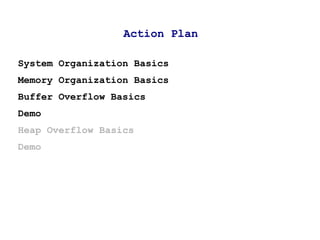
Action Plan

System Organization Basics
Memory Organization Basics
Buffer Overflow Basics
Demo
Heap Overflow Basics
Demo
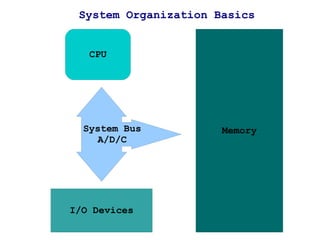
System Organization Basics


   CPU


  System Bus          Memory
    A/D/C


I/O Devices
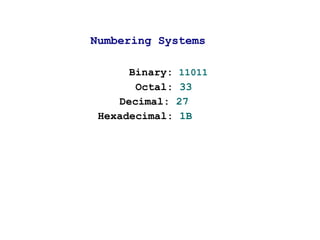
Numbering Systems

      Binary: 11011
       Octal: 33
    Decimal: 27
 Hexadecimal: 1B
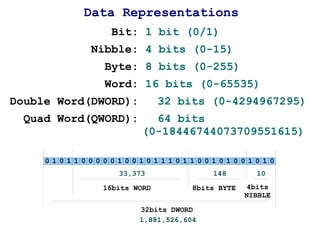
Data Representations
                 Bit: 1 bit (0/1)
             Nibble: 4 bits (0-15)
                Byte: 8 bits (0-255)
                Word: 16 bits (0-65535)
Double Word(DWORD):          32 bits (0-4294967295)
 Quad Word(QWORD):       64 bits
                       (0-18446744073709551615)

     0 10110000 01001011101100 1 0 1 0 0 1 0 1 0
                  33,373               148        10

               16bits WORD         8bits BYTE    4bits
                                                NIBBLE

                       32bits DWORD
                       1,881,526,604
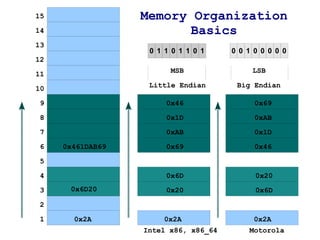
15                Memory Organization
14                       Basics
13
                   0 1 1 0 1 1 0 1    0 0 1 0 0 0 0 0
12

11                      MSB                LSB

10                 Little Endian       Big Endian

 9                     0x46                 0x69

 8                     0x1D                 0xAB

 7                     0xAB                 0x1D

 6   0x461DAB69
     0x461DAB69        0x69                 0x46

 5

 4                     0x6D                 0x20

 3    0x6D20           0x20                 0x6D

 2

 1     0x2A
       0x2A           0x2A                  0x2A
                  Intel x86, x86_64       Motorola
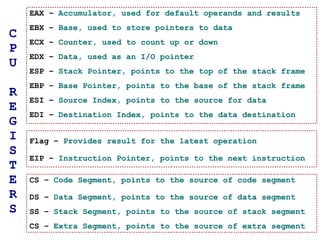
EAX – Accumulator, used for default operands and results
    EBX – Base, used to store pointers to data
C
    ECX – Counter, used to count up or down
P
    EDX – Data, used as an I/O pointer
U
    ESP – Stack Pointer, points to the top of the stack frame
    EBP – Base Pointer, points to the base of the stack frame
R
    ESI – Source Index, points to the source for data
E
    EDI – Destination Index, points to the data destination
G
I   Flag – Provides result for the latest operation
S
    EIP – Instruction Pointer, points to the next instruction
T
E   CS – Code Segment, points to the source of code segment
R   DS – Data Segment, points to the source of data segment
S   SS – Stack Segment, points to the source of stack segment
    CS – Extra Segment, points to the source of extra segment
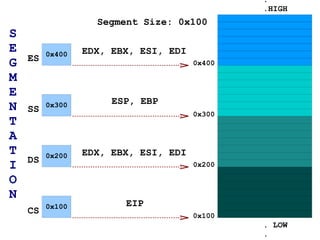
.
                                              .HIGH
                   Segment Size: 0x100
S
E        0x400   EDX, EBX, ESI, EDI
    ES
G                                     0x400

M
E
                      ESP, EBP
N   SS   0x300
                                      0x300
T
A
T        0x200   EDX, EBX, ESI, EDI
    DS
I                                     0x200

O
N
         0x100          EIP
    CS                                0x100
                                              . LOW
                                              .
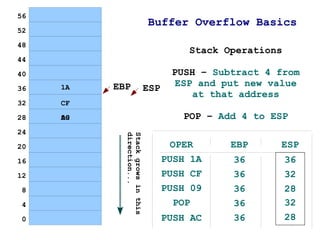
56
                                  Buffer Overflow Basics
52

48
                                            Stack Operations
44

40                                       PUSH – Subtract 4 from
36   1A   EBP                     ESP     ESP and put new value
                                             at that address
32   CF

28   09
     AC                                    POP – Add 4 to ESP
24
            direction...
            Stack grows in this
20                                        OPER     EBP     ESP
16                                      PUSH 1A    36          36
12                                      PUSH CF    36          32
 8                                      PUSH 09    36          28
 4                                         POP     36          32
 0                                      PUSH AC    36          28
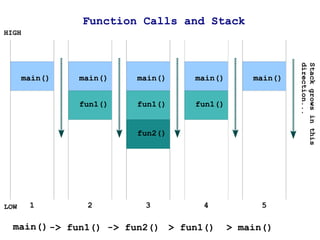
Function Calls and Stack
HIGH


                                                       direction...
                                                       Stack grows in this
      main()   main()   main()   main()       main()


               fun1()   fun1()   fun1()


                        fun2()


LOW    1        2        3         4            5

  main() -> fun1() -> fun2() > fun1()     > main()
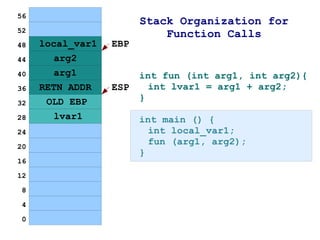
56
                        Stack Organization for
52
                            Function Calls
48   local_var1   EBP
44      arg2
40     arg1             int fun (int arg1, int arg2){
36   RETN ADDR    ESP     int lvar1 = arg1 + arg2;
      OLD EBP           }
32

28     lvar1            int main () {
24                        int local_var1;
20
                          fun (arg1, arg2);
                        }
16

12

 8

 4

 0
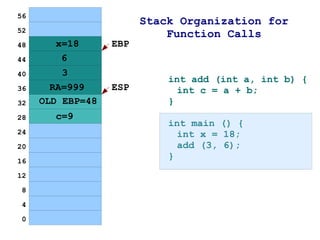
56
                        Stack Organization for
52
                            Function Calls
48     x=18       EBP
44      6
40       3
                            int add (int a, int b) {
36     RA=999     ESP         int c = a + b;
32   OLD EBP=48             }
28     c=9
                            int main () {
24                            int x = 18;
20                            add (3, 6);
16
                            }
12

 8

 4

 0
220                       Buffer Overflow Example
216
           x=6
212
        &argv[1]
208                          int vuln (char *argv) {
         RA=999                char buf[80];
204
      OLD EBP=212   EBP        int a = 9;
200
                               strcpy (buf, argv);
                             }

                             int main (int argc,
                                        char **argv) {
                               int x = 6;
       buf[80]                 vuln (argv[1]);
120
         a=9        ESP      }
116
112

108

104
220                       Buffer Overflow Example
216
          x=6                int vuln (char *argv) {
212
       &argv[1]                char buf[80];
208                            int a = 9;
        RA=999                 strcpy (buf, argv);
204
      OLD EBP=212   EBP      }
200
         AAAA
                             int main (int argc,
                                        char **argv) {
         ...                   int x = 6;
                               vuln (argv[1]);
                             }
         AAAA
120
         a=9        ESP
116
112
                          python -c 'print “A”*80'
108

104
220                    Buffer Overflow Example
216
        x=6               int vuln (char *argv) {
212
      &argv[1]              char buf[80];
208                         int a = 9;
       RA=999               strcpy (buf, argv);
204
        AAAA     EBP      }
200
        AAAA
                          int main (int argc,
                                     char **argv) {
        ...                 int x = 6;
                            vuln (argv[1]);
                          }
        AAAA
120
        a=9      ESP
116
112
                       python -c 'print “A”*84'
108

104
220                    Buffer Overflow Example
216
        x=6               int vuln (char *argv) {
212
      &argv[1]              char buf[80];
208                         int a = 9;
        AAAA                strcpy (buf, argv);
204
        AAAA     EBP      }
200
        AAAA
                          int main (int argc,
                                     char **argv) {
        ...                 int x = 6;
                            vuln (argv[1]);
                          }
        AAAA
120
        a=9      ESP
116
112
                       python -c 'print “A”*88'
108

104
So, you can overflow a buffer...
             now what?


      Sky is the limit...!


       Well, not really :)

     Let's just dig deep and
see what exactly the scope of such
        a vulnerability is
220                 EIP                  220

216              41414141                216
        x=6      SIGSEGV         x=6
212                                      212
      &argv[1]                &argv[1]
208                                      208
      41414141   RTN ADDR     00000120
204                                      204
      41414141                90909090
200                 EBP                  200
      41414141                6851C931
                              D0FF77C2
        ...                   93C7B854
                              90909090
      41414141                90909090
120                 ESP                  120
        a=9                      a=9
116                                      116
112                  EIP                 112

108               00000120               108

104
                 GAME OVER!              104
Finally, its time to witness
    some live action...!
That’s all folks!!!

Ready with your questions?
 Start firing them, now...

Emo-Exploitation

  • 1.
  • 2.
    Action Plan System OrganizationBasics Memory Organization Basics Buffer Overflow Basics Demo Heap Overflow Basics Demo
  • 3.
    System Organization Basics CPU System Bus Memory A/D/C I/O Devices
  • 4.
    Numbering Systems Binary: 11011 Octal: 33 Decimal: 27 Hexadecimal: 1B
  • 5.
    Data Representations Bit: 1 bit (0/1) Nibble: 4 bits (0-15) Byte: 8 bits (0-255) Word: 16 bits (0-65535) Double Word(DWORD): 32 bits (0-4294967295) Quad Word(QWORD): 64 bits (0-18446744073709551615) 0 10110000 01001011101100 1 0 1 0 0 1 0 1 0 33,373 148 10 16bits WORD 8bits BYTE 4bits NIBBLE 32bits DWORD 1,881,526,604
  • 6.
    15 Memory Organization 14 Basics 13 0 1 1 0 1 1 0 1 0 0 1 0 0 0 0 0 12 11 MSB LSB 10 Little Endian Big Endian 9 0x46 0x69 8 0x1D 0xAB 7 0xAB 0x1D 6 0x461DAB69 0x461DAB69 0x69 0x46 5 4 0x6D 0x20 3 0x6D20 0x20 0x6D 2 1 0x2A 0x2A 0x2A 0x2A Intel x86, x86_64 Motorola
  • 7.
    EAX – Accumulator,used for default operands and results EBX – Base, used to store pointers to data C ECX – Counter, used to count up or down P EDX – Data, used as an I/O pointer U ESP – Stack Pointer, points to the top of the stack frame EBP – Base Pointer, points to the base of the stack frame R ESI – Source Index, points to the source for data E EDI – Destination Index, points to the data destination G I Flag – Provides result for the latest operation S EIP – Instruction Pointer, points to the next instruction T E CS – Code Segment, points to the source of code segment R DS – Data Segment, points to the source of data segment S SS – Stack Segment, points to the source of stack segment CS – Extra Segment, points to the source of extra segment
  • 8.
    . .HIGH Segment Size: 0x100 S E 0x400 EDX, EBX, ESI, EDI ES G 0x400 M E ESP, EBP N SS 0x300 0x300 T A T 0x200 EDX, EBX, ESI, EDI DS I 0x200 O N 0x100 EIP CS 0x100 . LOW .
  • 9.
    56 Buffer Overflow Basics 52 48 Stack Operations 44 40 PUSH – Subtract 4 from 36 1A EBP ESP ESP and put new value at that address 32 CF 28 09 AC POP – Add 4 to ESP 24 direction... Stack grows in this 20 OPER EBP ESP 16 PUSH 1A 36 36 12 PUSH CF 36 32 8 PUSH 09 36 28 4 POP 36 32 0 PUSH AC 36 28
  • 10.
    Function Calls andStack HIGH direction... Stack grows in this main() main() main() main() main() fun1() fun1() fun1() fun2() LOW 1 2 3 4 5 main() -> fun1() -> fun2() > fun1() > main()
  • 11.
    56 Stack Organization for 52 Function Calls 48 local_var1 EBP 44 arg2 40 arg1 int fun (int arg1, int arg2){ 36 RETN ADDR ESP int lvar1 = arg1 + arg2; OLD EBP } 32 28 lvar1 int main () { 24 int local_var1; 20 fun (arg1, arg2); } 16 12 8 4 0
  • 12.
    56 Stack Organization for 52 Function Calls 48 x=18 EBP 44 6 40 3 int add (int a, int b) { 36 RA=999 ESP int c = a + b; 32 OLD EBP=48 } 28 c=9 int main () { 24 int x = 18; 20 add (3, 6); 16 } 12 8 4 0
  • 13.
    220 Buffer Overflow Example 216 x=6 212 &argv[1] 208 int vuln (char *argv) { RA=999 char buf[80]; 204 OLD EBP=212 EBP int a = 9; 200 strcpy (buf, argv); } int main (int argc, char **argv) { int x = 6; buf[80] vuln (argv[1]); 120 a=9 ESP } 116 112 108 104
  • 14.
    220 Buffer Overflow Example 216 x=6 int vuln (char *argv) { 212 &argv[1] char buf[80]; 208 int a = 9; RA=999 strcpy (buf, argv); 204 OLD EBP=212 EBP } 200 AAAA int main (int argc, char **argv) { ... int x = 6; vuln (argv[1]); } AAAA 120 a=9 ESP 116 112 python -c 'print “A”*80' 108 104
  • 15.
    220 Buffer Overflow Example 216 x=6 int vuln (char *argv) { 212 &argv[1] char buf[80]; 208 int a = 9; RA=999 strcpy (buf, argv); 204 AAAA EBP } 200 AAAA int main (int argc, char **argv) { ... int x = 6; vuln (argv[1]); } AAAA 120 a=9 ESP 116 112 python -c 'print “A”*84' 108 104
  • 16.
    220 Buffer Overflow Example 216 x=6 int vuln (char *argv) { 212 &argv[1] char buf[80]; 208 int a = 9; AAAA strcpy (buf, argv); 204 AAAA EBP } 200 AAAA int main (int argc, char **argv) { ... int x = 6; vuln (argv[1]); } AAAA 120 a=9 ESP 116 112 python -c 'print “A”*88' 108 104
  • 17.
    So, you canoverflow a buffer... now what? Sky is the limit...! Well, not really :) Let's just dig deep and see what exactly the scope of such a vulnerability is
  • 18.
    220 EIP 220 216 41414141 216 x=6 SIGSEGV x=6 212 212 &argv[1] &argv[1] 208 208 41414141 RTN ADDR 00000120 204 204 41414141 90909090 200 EBP 200 41414141 6851C931 D0FF77C2 ... 93C7B854 90909090 41414141 90909090 120 ESP 120 a=9 a=9 116 116 112 EIP 112 108 00000120 108 104 GAME OVER! 104
  • 19.
    Finally, its timeto witness some live action...!
  • 20.
    That’s all folks!!! Readywith your questions? Start firing them, now...