“PRESENTATION TITLE”

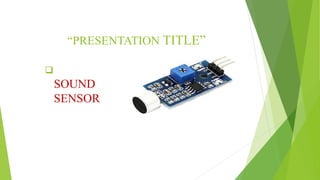
SOUND
SENSOR
 GROUP MEMBERS NAME :
 (1) ALI ABBAS FA20-BEE-066
 (2) TALHA MUHAMMAD FA20-BEE-088
 (3) AWAIS RAZZAQ FA20-BEE-080
 (4) MUHAMMAD AMMAR FA20-BEE-177
What is sound Sensor ?
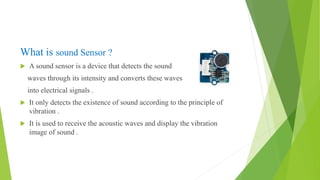
 A sound sensor is a device that detects the sound
waves through its intensity and converts these waves
into electrical signals .
 It only detects the existence of sound according to the principle of
vibration .
 It is used to receive the acoustic waves and display the vibration
image of sound .
TYPES OF SENSORS OR
MICROPHONE :
 There are Three Types of Sound Sensor:
Carbon Microphone:
 it is type of microphone that convert Sounds into Electrical Audio
Signals. Consists of two metals plates seperated by granules of Carbon.
Ribbon Microphone:
 It converts sound waves via electromagnetic induction .It have
conductive ribbons like diaphragm and simple circuitry.
Dynamic Microphone:
 This sound sensor type is widely used for stage, musical performances
and other applications. It is one of the most widely used forms of free
standing microphones. It has a simple design and offers cost effective
microphones.
 SOUND SENSOR HISTORY:
 The sound sensor was not invented by only
one person.
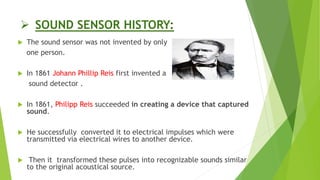
 In 1861 Johann Phillip Reis first invented a
sound detector .
 In 1861, Philipp Reis succeeded in creating a device that captured
sound.
 He successfully converted it to electrical impulses which were
transmitted via electrical wires to another device.
 Then it transformed these pulses into recognizable sounds similar
to the original acoustical source.
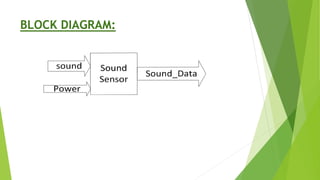
BLOCK DIAGRAM:
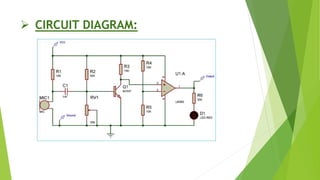
 CIRCUIT DIAGRAM:
 WORKING :
 The working principle of this sensor is similar to Human ears.
Because human ear includes a diaphragm and the main function
of this diaphragm is, it uses the vibrations and changes into
signals.
 Audio devices uses the sound sensors to convert sound into electric
signal such as MICROPHONES .
 Sound sensor has a thin piece of material that is known as diaphragm
that vibrates when hit by sound waves
 These vibrations are converted by the sensor in to the electric signal
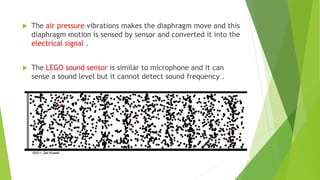
 The air pressure vibrations makes the diaphragm move and this
diaphragm motion is sensed by sensor and converted it into the
electrical signal .
 The LEGO sound sensor is similar to microphone and it can
sense a sound level but it cannot detect sound frequency .
 Sound Sensor Module
Pin Diagram:
Pin Number Pin Name Description
1 VCC +5 v power supply
2 GND Ground (-) power supply
3 OUT Digital Output (0 or 1)
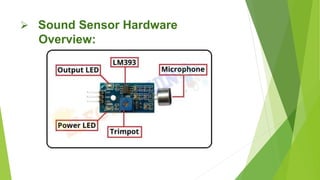
 Sound Sensor Hardware
Overview:
 Features
The features of the sound sensor include the following
 These sensors are very simple to use
 It gives analog output signal.
 Simply incorporates using logic modules on the input area
 APPLICATIONS :
 They are used for the security systems .
 It is easy to manipulate sound in real time .
 They are easily affordable .
 Wireless sound sensors provide great freedom while speaking .It
does not need cabling as compared to wired mic .
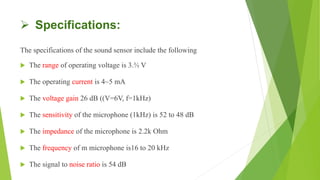
 Specifications:
The specifications of the sound sensor include the following
 The range of operating voltage is 3.⅗ V
 The operating current is 4~5 mA
 The voltage gain 26 dB ((V=6V, f=1kHz)
 The sensitivity of the microphone (1kHz) is 52 to 48 dB
 The impedance of the microphone is 2.2k Ohm
 The frequency of m microphone is16 to 20 kHz
 The signal to noise ratio is 54 dB
EMI Presentation about sound sensor.pptx

EMI Presentation about sound sensor.pptx

  • 2.
  • 3.
     GROUP MEMBERSNAME :  (1) ALI ABBAS FA20-BEE-066  (2) TALHA MUHAMMAD FA20-BEE-088  (3) AWAIS RAZZAQ FA20-BEE-080  (4) MUHAMMAD AMMAR FA20-BEE-177
  • 4.
    What is soundSensor ?  A sound sensor is a device that detects the sound waves through its intensity and converts these waves into electrical signals .  It only detects the existence of sound according to the principle of vibration .  It is used to receive the acoustic waves and display the vibration image of sound .
  • 5.
    TYPES OF SENSORSOR MICROPHONE :  There are Three Types of Sound Sensor: Carbon Microphone:  it is type of microphone that convert Sounds into Electrical Audio Signals. Consists of two metals plates seperated by granules of Carbon. Ribbon Microphone:  It converts sound waves via electromagnetic induction .It have conductive ribbons like diaphragm and simple circuitry.
  • 6.
    Dynamic Microphone:  Thissound sensor type is widely used for stage, musical performances and other applications. It is one of the most widely used forms of free standing microphones. It has a simple design and offers cost effective microphones.
  • 7.
     SOUND SENSORHISTORY:  The sound sensor was not invented by only one person.  In 1861 Johann Phillip Reis first invented a sound detector .  In 1861, Philipp Reis succeeded in creating a device that captured sound.  He successfully converted it to electrical impulses which were transmitted via electrical wires to another device.  Then it transformed these pulses into recognizable sounds similar to the original acoustical source.
  • 8.
  • 9.
  • 10.
     WORKING : The working principle of this sensor is similar to Human ears. Because human ear includes a diaphragm and the main function of this diaphragm is, it uses the vibrations and changes into signals.  Audio devices uses the sound sensors to convert sound into electric signal such as MICROPHONES .  Sound sensor has a thin piece of material that is known as diaphragm that vibrates when hit by sound waves  These vibrations are converted by the sensor in to the electric signal
  • 11.
     The airpressure vibrations makes the diaphragm move and this diaphragm motion is sensed by sensor and converted it into the electrical signal .  The LEGO sound sensor is similar to microphone and it can sense a sound level but it cannot detect sound frequency .
  • 12.
     Sound SensorModule Pin Diagram:
  • 13.
    Pin Number PinName Description 1 VCC +5 v power supply 2 GND Ground (-) power supply 3 OUT Digital Output (0 or 1)
  • 14.
     Sound SensorHardware Overview:
  • 15.
     Features The featuresof the sound sensor include the following  These sensors are very simple to use  It gives analog output signal.  Simply incorporates using logic modules on the input area
  • 16.
     APPLICATIONS : They are used for the security systems .  It is easy to manipulate sound in real time .  They are easily affordable .  Wireless sound sensors provide great freedom while speaking .It does not need cabling as compared to wired mic .
  • 17.
     Specifications: The specificationsof the sound sensor include the following  The range of operating voltage is 3.⅗ V  The operating current is 4~5 mA  The voltage gain 26 dB ((V=6V, f=1kHz)  The sensitivity of the microphone (1kHz) is 52 to 48 dB  The impedance of the microphone is 2.2k Ohm  The frequency of m microphone is16 to 20 kHz  The signal to noise ratio is 54 dB