EMERGENCE OBSTETRICAL AND
NEONATAL CARE
By Jean Bosco HENRI
Definition
• Package of medical interventions
– To treat life-treatening complications during
pregnancy and Child birth
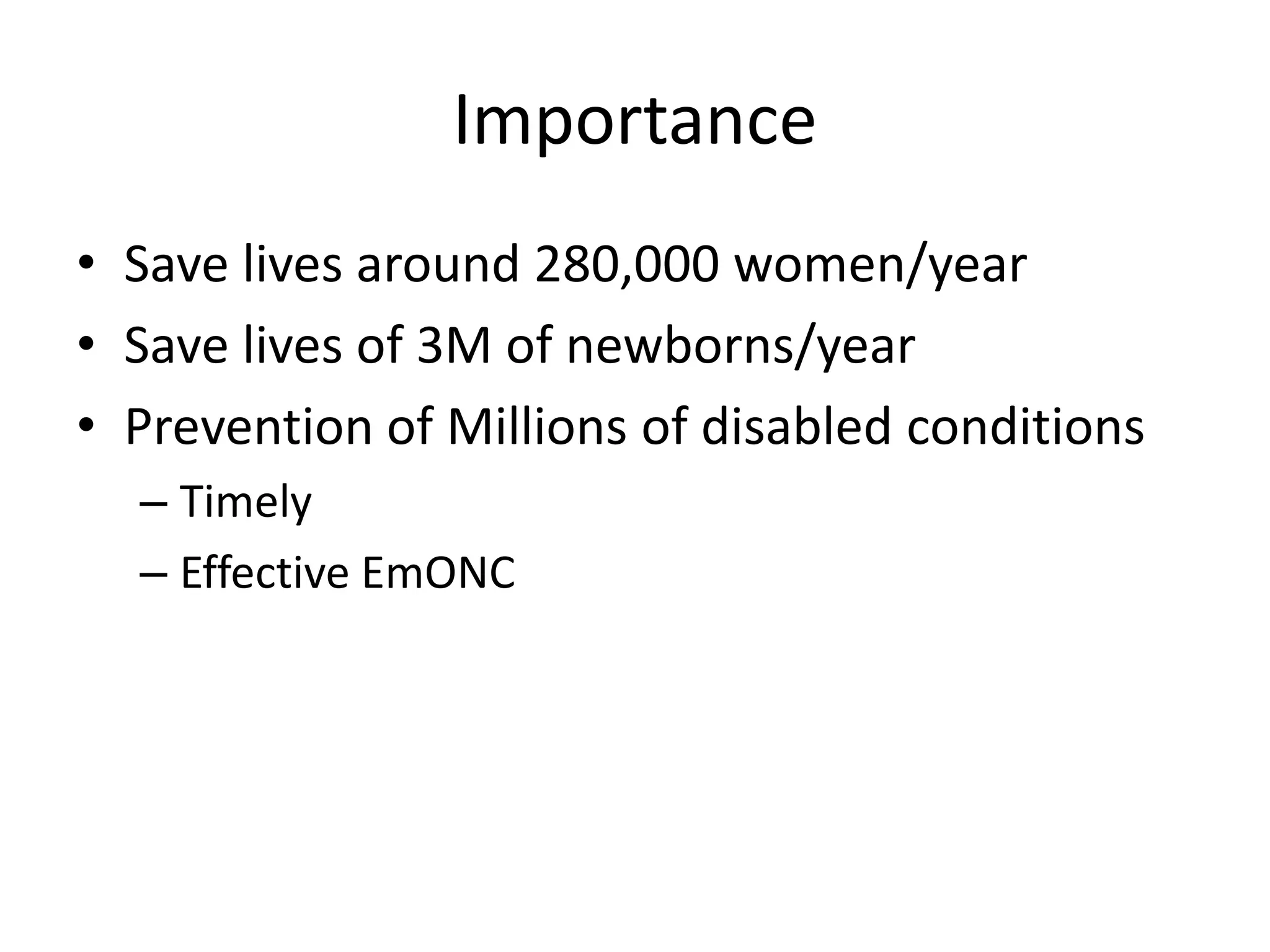
Importance
• Save lives around 280,000 women/year
• Save lives of 3M of newborns/year
• Prevention of Millions of disabled conditions
– Timely
– Effective EmONC
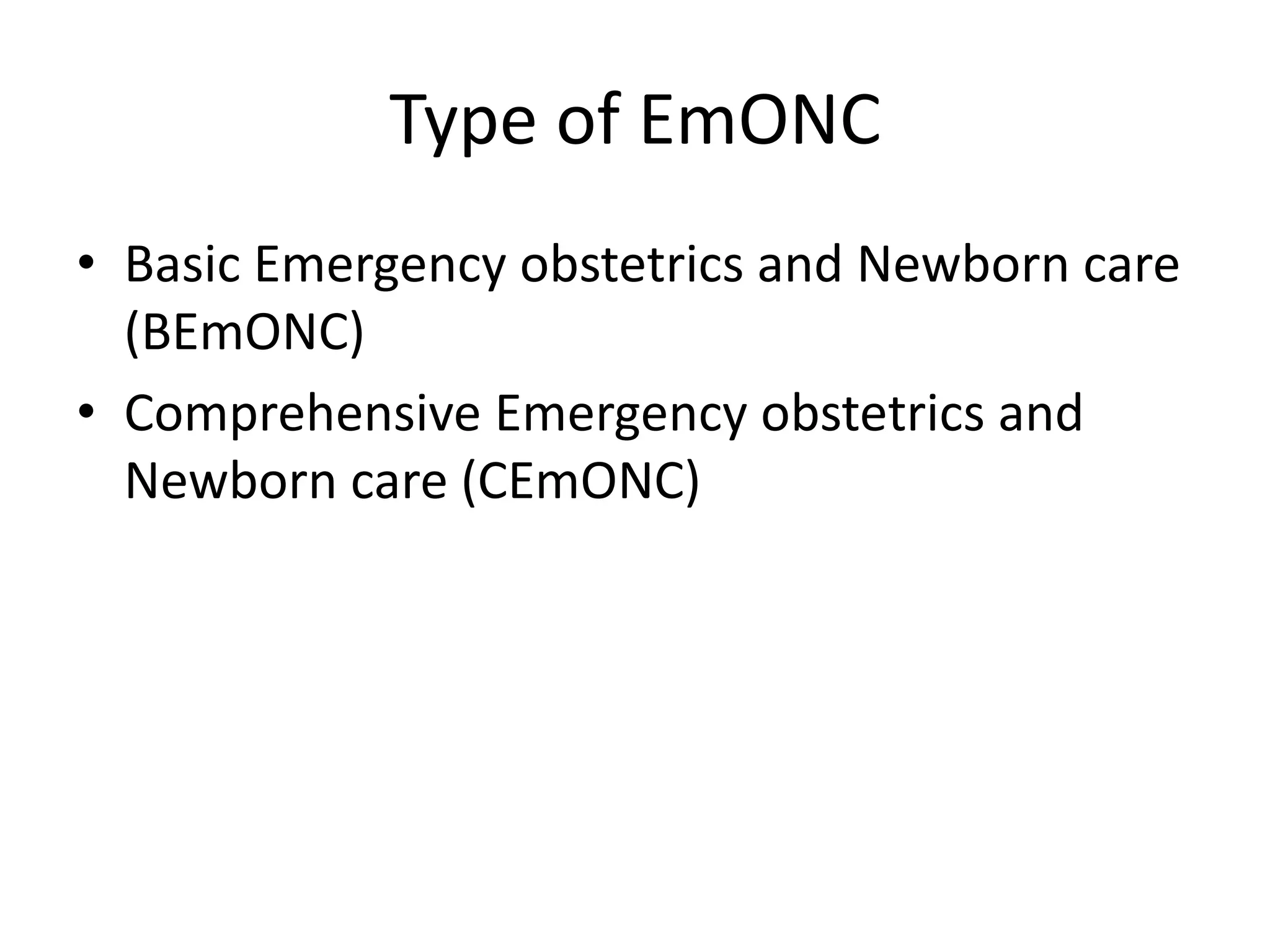
Type of EmONC
• Basic Emergency obstetrics and Newborn care
(BEmONC)
• Comprehensive Emergency obstetrics and
Newborn care (CEmONC)
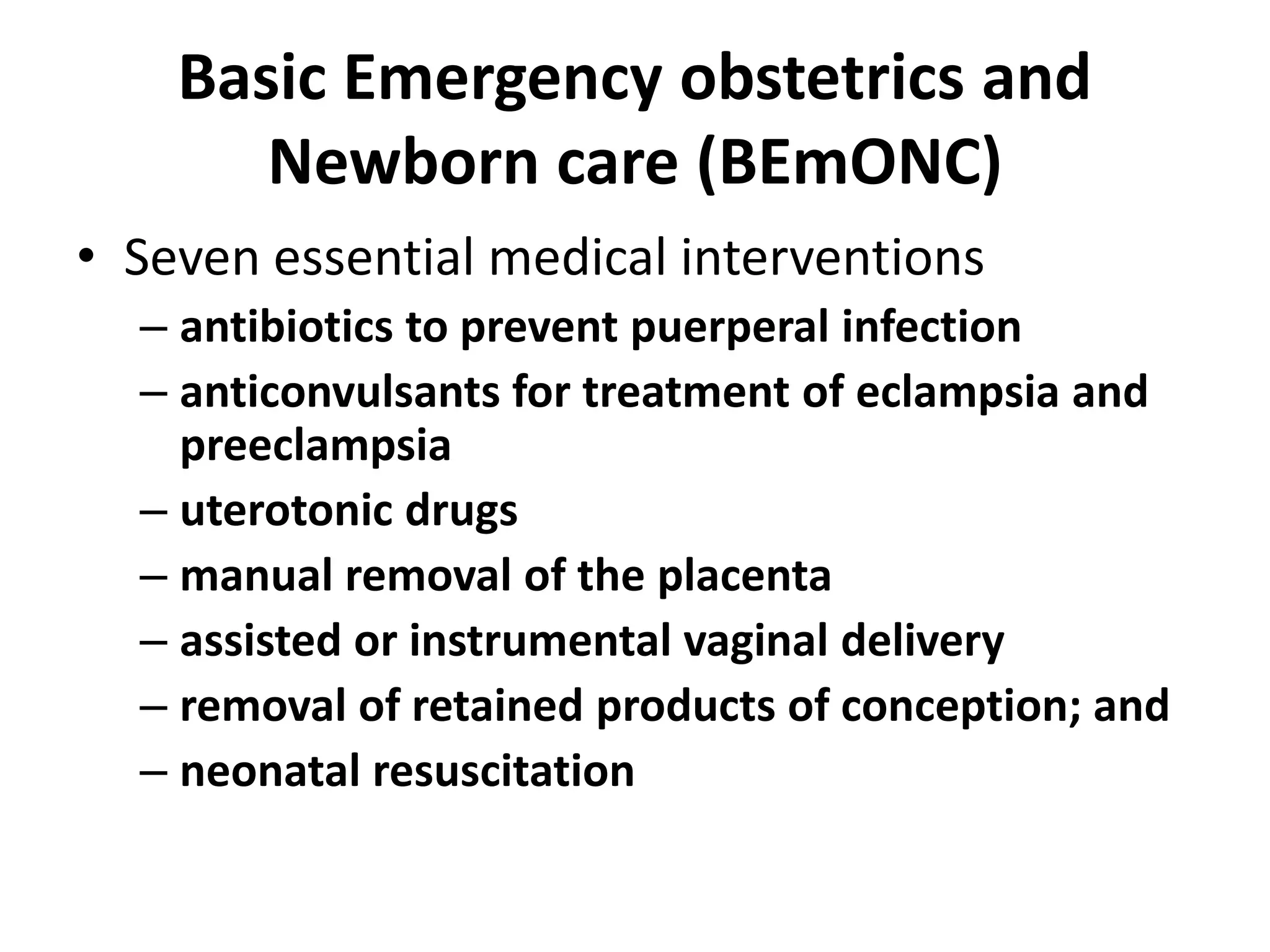
Basic Emergency obstetrics and
Newborn care (BEmONC)
• Seven essential medical interventions
– antibiotics to prevent puerperal infection
– anticonvulsants for treatment of eclampsia and
preeclampsia
– uterotonic drugs
– manual removal of the placenta
– assisted or instrumental vaginal delivery
– removal of retained products of conception; and
– neonatal resuscitation
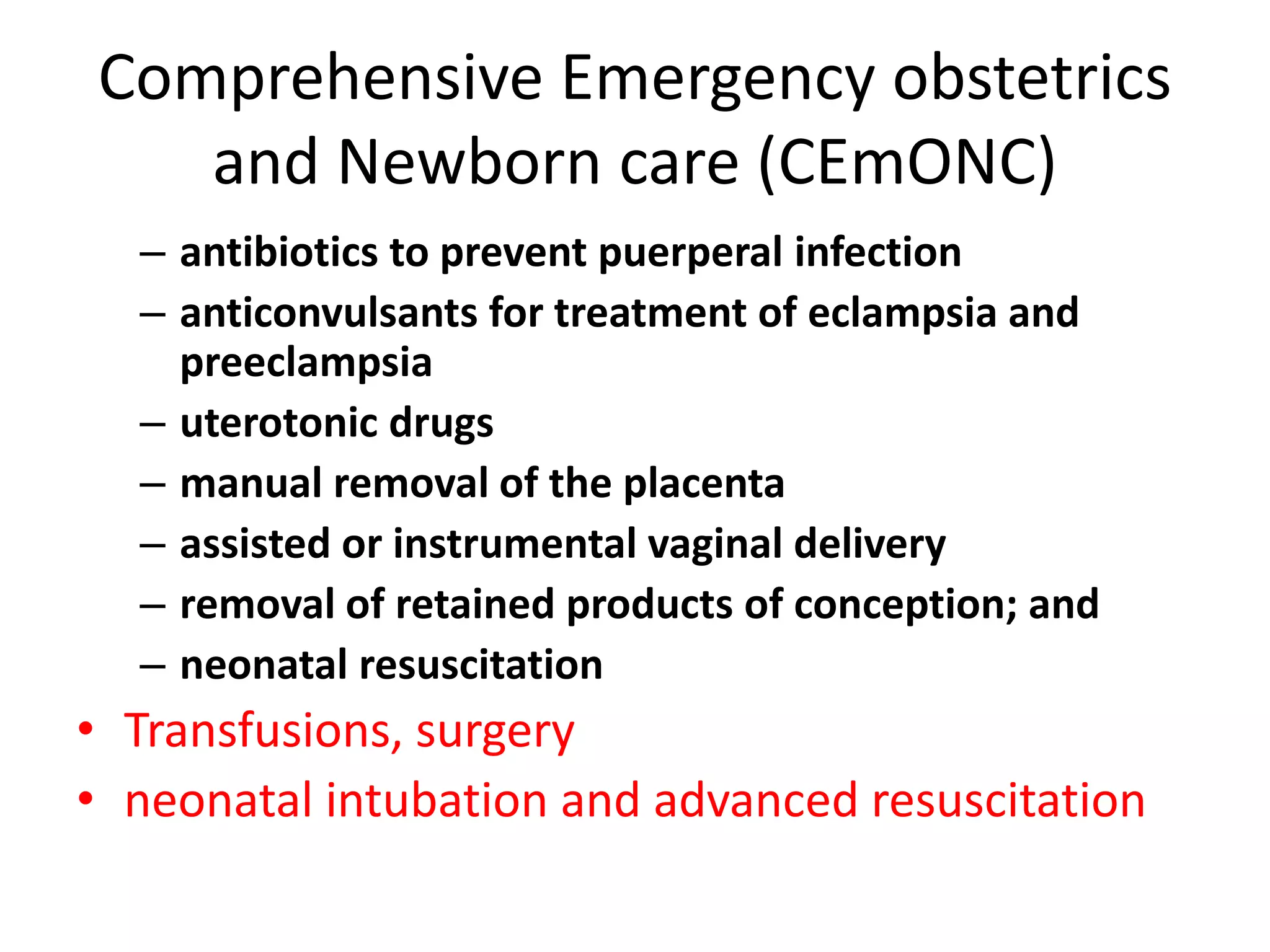
Comprehensive Emergency obstetrics
and Newborn care (CEmONC)
– antibiotics to prevent puerperal infection
– anticonvulsants for treatment of eclampsia and
preeclampsia
– uterotonic drugs
– manual removal of the placenta
– assisted or instrumental vaginal delivery
– removal of retained products of conception; and
– neonatal resuscitation
• Transfusions, surgery
• neonatal intubation and advanced resuscitation
PREVALENCE
• accessible in developed countries for decades
• in low-income countries, where 99% of
maternal and neonatal deaths occur, health
systems may not have the capacity to provide
such emergency services
BARRIERS
• inadequate training/skills mix to deliver high-quality
EmONC
• drug procurement challenges and logistical problems in
health facilities
• personnel shortages and lack of equipment
• particularly to deliver CEmONC
• Referral coordination from multiple sectors with
competing interests
• health systems
• infrastructure and public works
• transportation, information and communication
technologies
• marginalized women’s health and rights through restrictive
policies
FURTHER READINGS
• 1. Berlac JF, Hartwell D, Skovlund CW, Langhoff-Roos J,
Lidegaard Ø. Endometriosis increases the risk of obstetrical
and neonatal complications. Acta Obstet Gynecol Scand.
2017;96(6):751–60.
• 2. Hutchinson K, Bryant M, Bachman DeSilva M, Price D,
Sabin L, Bryson L, et al. Delayed access to emergency
obstetrical care among preeclamptic and non-preeclamptic
women in Port-Au-Prince, Haiti. BMC Pregnancy Childbirth.
2018;18(1):1–9.
• 3. Ameh CA, Mdegela M, White S, Van Den Broek N. The
effectiveness of training in emergency obstetric care: A
systematic literature review. Health Policy Plan.
2019;34(4):257–70.

EMERGENCY OBSTETRICS AND NEONATAL CARE .pptx

  • 1.
    EMERGENCE OBSTETRICAL AND NEONATALCARE By Jean Bosco HENRI
  • 2.
    Definition • Package ofmedical interventions – To treat life-treatening complications during pregnancy and Child birth
  • 3.
    Importance • Save livesaround 280,000 women/year • Save lives of 3M of newborns/year • Prevention of Millions of disabled conditions – Timely – Effective EmONC
  • 4.
    Type of EmONC •Basic Emergency obstetrics and Newborn care (BEmONC) • Comprehensive Emergency obstetrics and Newborn care (CEmONC)
  • 5.
    Basic Emergency obstetricsand Newborn care (BEmONC) • Seven essential medical interventions – antibiotics to prevent puerperal infection – anticonvulsants for treatment of eclampsia and preeclampsia – uterotonic drugs – manual removal of the placenta – assisted or instrumental vaginal delivery – removal of retained products of conception; and – neonatal resuscitation
  • 6.
    Comprehensive Emergency obstetrics andNewborn care (CEmONC) – antibiotics to prevent puerperal infection – anticonvulsants for treatment of eclampsia and preeclampsia – uterotonic drugs – manual removal of the placenta – assisted or instrumental vaginal delivery – removal of retained products of conception; and – neonatal resuscitation • Transfusions, surgery • neonatal intubation and advanced resuscitation
  • 7.
    PREVALENCE • accessible indeveloped countries for decades • in low-income countries, where 99% of maternal and neonatal deaths occur, health systems may not have the capacity to provide such emergency services
  • 8.
    BARRIERS • inadequate training/skillsmix to deliver high-quality EmONC • drug procurement challenges and logistical problems in health facilities • personnel shortages and lack of equipment • particularly to deliver CEmONC • Referral coordination from multiple sectors with competing interests • health systems • infrastructure and public works • transportation, information and communication technologies • marginalized women’s health and rights through restrictive policies
  • 9.
    FURTHER READINGS • 1.Berlac JF, Hartwell D, Skovlund CW, Langhoff-Roos J, Lidegaard Ø. Endometriosis increases the risk of obstetrical and neonatal complications. Acta Obstet Gynecol Scand. 2017;96(6):751–60. • 2. Hutchinson K, Bryant M, Bachman DeSilva M, Price D, Sabin L, Bryson L, et al. Delayed access to emergency obstetrical care among preeclamptic and non-preeclamptic women in Port-Au-Prince, Haiti. BMC Pregnancy Childbirth. 2018;18(1):1–9. • 3. Ameh CA, Mdegela M, White S, Van Den Broek N. The effectiveness of training in emergency obstetric care: A systematic literature review. Health Policy Plan. 2019;34(4):257–70.