10 Most Common Mistakes That Beginner
Embroidery Digitizers Should Avoid
Recent advancements in digitizing software have simplified embroidery digitizing to the next level.
Given the fact that the digitizing mechanism in embroidery is a complex thing that involves a
plethora of fundamentals, mere advancements could not annihilate the complexities involved in
digitizing mechanisms. This is the process that a digitizer has to learn through hours of practice and
experience.
Embroidery digitizing is all about finding the right balance between the potential of innovations and
the physical characteristics of a digitizer. Combining these two elements at their best produces great
results in the artwork. Newbie digitizers with limited knowledge about the process are more likely to
make some common mistakes in embroidery digitizing that affect the overall quality of the final
embroidery design.
The 10 Most Common Mistakes That Beginner Embroidery
Digitizers Should Avoid
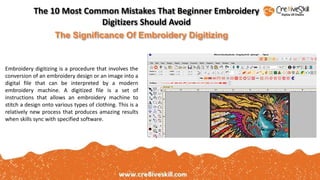
Embroidery digitizing is a procedure that involves the
conversion of an embroidery design or an image into a
digital file that can be interpreted by a modern
embroidery machine. A digitized file is a set of
instructions that allows an embroidery machine to
stitch a design onto various types of clothing. This is a
relatively new process that produces amazing results
when skills sync with specified software.
The Significance Of Embroidery Digitizing
Digitizing is a highly detailed process in which a digitizer needs to be meticulous about every aspect of the
process. A digitizer has to consider every aspect of the design before embroidery digitizing. Newbie digitizers
with limited knowledge about the process are more likely to make certain mistakes frequently in the digitizing
process. Here are the 12 most common mistakes that beginners make in embroidery digitizing.
Mistakes That Affect The Quality Of Digitizing Adversely
1. Improper Planning
A detailed plan is a must before starting a new embroidery digitizing project. It has frequently been observed
that the majority of inexperienced digitizers skip the planning part and as a result, they end up with messy and
poor designs.
To bring excellence in embroidery artwork, a digitizer must first understand the requirements of the particular
digitizing project and then plan accordingly. The digitizer must first analyze the nature of the artwork, which
includes outlining, resizing as well as determining the best stitching sequence for the size and type of fabric.
2. Neglecting The Fabric Details
The type of fabric used for digitizing matters a lot. Some of
the most commonly used woven fabric types named
quilter’s cotton, terrycloth, hanky linen, linen, silk and
knitted fabric type such as fleece, lycra, etc and on each
type of fabric, an embroidery machine stitches differently.
Additional fabric details such as the texture, content of the
fabric, weave, and weight of the fabric are vital to consider
before digitizing a design. Based on the details of the fabric,
the digitizing has to be adjusted. Often, new digitizers
neglect the details of the fabric, which affect the final
embroidery product.
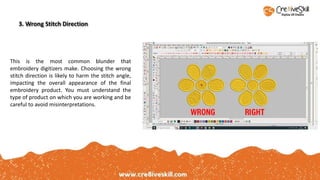
This is the most common blunder that
embroidery digitizers make. Choosing the wrong
stitch direction is likely to harm the stitch angle,
impacting the overall appearance of the final
embroidery product. You must understand the
type of product on which you are working and be
careful to avoid misinterpretations.
3. Wrong Stitch Direction
4. Inaccurate Uses Of Underlay Stitches
It is vital to use the right underlay stitches, especially when using multiple garment types like fleece, wool, and
corduroy. Underlay stitches create a smooth surface on which a machine can embroider directly, preserving the
quality of overall embroidery. In addition to quality aspects, an appropriate number of stitches also makes sure
the garment remains stable.
From the standpoint of a beginner, this is the most difficult thing you have to learn. You should invest some
time in learning to determine which underlay type is best for the stitch type. The more you practice digitizing,
the better you will become in this aspect.
Fills are important in embroidery digitizing as they bring visual variations to the designs. A novice
digitizer must have a good understanding of the various fill types and how they create effects on
the embroidery designs. Knowing which fill types to use helps elevate the quality of the
embroidery.
5. Wrong Fill Type
Erroneous understandings of density ruin designs and
could cause a lot of problems for embroidered
products. Being too thin or too thick is a sign of
trouble, as both harm the final product's quality. Many
newcomers frequently use incorrect density in the
digitizing process; this is a huge blunder.
6. Incorrect Density
7. Incorrect Length Of The Stitch
It is very important to use the correct stitch length, as this can cause the underlay to stick out from the
sides of the letters that you are using in embroidery digitizing, and the issue gets worse with small letters.
This lowers the overall design quality and is also the cause of many other issues. Hence, it is vital to use the
correct length of the stitch to finish digitizing properly.
8. Wrong Design Application
Often, newcomers fail to understand the proper applications of embroidery digitizing. This is one of the
most common issues associated with embroidery digitizing and a digitizer must take the necessary steps to
resolve it.
Understanding the key aspects and applications of the embroidery digitizing process such as colour
selection, proper punching, and the design size is imperative and minor misunderstandings of any of these
could lead to disaster in the final output. It is also important to use the proper stitch type to achieve the
desired results.
When it comes to digitizing products such as hats, it is important to know the requirements of the
materials you are going to work with. Sewing from the centre is a crucial aspect to get the right
push in each direction for a great finish.
9. Neglecting The Significance Of Sewing Out From The Centre
10. Neglecting Digitizing Aspects
There is a very high probability of mistakes in embroidery digitizing designs, especially on products like
hats and band t-shirts. This is primarily due to push and pull compensation that can take place if a flat
frame is different from the curved substrate. Overlooking the difference could cause a blunder in
embroidery digitizing.
With the growth of the textile and fashion industries, the demand for embroidery digitization services is also
burgeoning. If you look at the embroidery industry, you will notice that thousands of inexperienced digitizers have
been hired to create efficiency that syncs with demand in the industry. However, the outcomes have not met
expectations due to frequent errors made during the digitizing process, particularly by newcomers.
It is time to ratify the aspects that are incorrectly followed in embroidery digitizing.
Preventive measures and precautions are key to averting negligence and minimizing production delays and losses
in the embroidery digitizing business.
Conclusion
Source: https://www.cre8iveskill.com/blog/10-most-common-mistakes-that-beginner-embroidery-digitizers-
should-avoid
Embroidery Digitizing Guide: Top 10 Mistakes Beginners Must Avoid

Embroidery Digitizing Guide: Top 10 Mistakes Beginners Must Avoid

  • 1.
    10 Most CommonMistakes That Beginner Embroidery Digitizers Should Avoid
  • 2.
    Recent advancements indigitizing software have simplified embroidery digitizing to the next level. Given the fact that the digitizing mechanism in embroidery is a complex thing that involves a plethora of fundamentals, mere advancements could not annihilate the complexities involved in digitizing mechanisms. This is the process that a digitizer has to learn through hours of practice and experience. Embroidery digitizing is all about finding the right balance between the potential of innovations and the physical characteristics of a digitizer. Combining these two elements at their best produces great results in the artwork. Newbie digitizers with limited knowledge about the process are more likely to make some common mistakes in embroidery digitizing that affect the overall quality of the final embroidery design.
  • 3.
    The 10 MostCommon Mistakes That Beginner Embroidery Digitizers Should Avoid Embroidery digitizing is a procedure that involves the conversion of an embroidery design or an image into a digital file that can be interpreted by a modern embroidery machine. A digitized file is a set of instructions that allows an embroidery machine to stitch a design onto various types of clothing. This is a relatively new process that produces amazing results when skills sync with specified software. The Significance Of Embroidery Digitizing
  • 4.
    Digitizing is ahighly detailed process in which a digitizer needs to be meticulous about every aspect of the process. A digitizer has to consider every aspect of the design before embroidery digitizing. Newbie digitizers with limited knowledge about the process are more likely to make certain mistakes frequently in the digitizing process. Here are the 12 most common mistakes that beginners make in embroidery digitizing. Mistakes That Affect The Quality Of Digitizing Adversely 1. Improper Planning A detailed plan is a must before starting a new embroidery digitizing project. It has frequently been observed that the majority of inexperienced digitizers skip the planning part and as a result, they end up with messy and poor designs. To bring excellence in embroidery artwork, a digitizer must first understand the requirements of the particular digitizing project and then plan accordingly. The digitizer must first analyze the nature of the artwork, which includes outlining, resizing as well as determining the best stitching sequence for the size and type of fabric.
  • 5.
    2. Neglecting TheFabric Details The type of fabric used for digitizing matters a lot. Some of the most commonly used woven fabric types named quilter’s cotton, terrycloth, hanky linen, linen, silk and knitted fabric type such as fleece, lycra, etc and on each type of fabric, an embroidery machine stitches differently. Additional fabric details such as the texture, content of the fabric, weave, and weight of the fabric are vital to consider before digitizing a design. Based on the details of the fabric, the digitizing has to be adjusted. Often, new digitizers neglect the details of the fabric, which affect the final embroidery product.
  • 6.
    This is themost common blunder that embroidery digitizers make. Choosing the wrong stitch direction is likely to harm the stitch angle, impacting the overall appearance of the final embroidery product. You must understand the type of product on which you are working and be careful to avoid misinterpretations. 3. Wrong Stitch Direction
  • 7.
    4. Inaccurate UsesOf Underlay Stitches It is vital to use the right underlay stitches, especially when using multiple garment types like fleece, wool, and corduroy. Underlay stitches create a smooth surface on which a machine can embroider directly, preserving the quality of overall embroidery. In addition to quality aspects, an appropriate number of stitches also makes sure the garment remains stable. From the standpoint of a beginner, this is the most difficult thing you have to learn. You should invest some time in learning to determine which underlay type is best for the stitch type. The more you practice digitizing, the better you will become in this aspect.
  • 8.
    Fills are importantin embroidery digitizing as they bring visual variations to the designs. A novice digitizer must have a good understanding of the various fill types and how they create effects on the embroidery designs. Knowing which fill types to use helps elevate the quality of the embroidery. 5. Wrong Fill Type
  • 9.
    Erroneous understandings ofdensity ruin designs and could cause a lot of problems for embroidered products. Being too thin or too thick is a sign of trouble, as both harm the final product's quality. Many newcomers frequently use incorrect density in the digitizing process; this is a huge blunder. 6. Incorrect Density
  • 10.
    7. Incorrect LengthOf The Stitch It is very important to use the correct stitch length, as this can cause the underlay to stick out from the sides of the letters that you are using in embroidery digitizing, and the issue gets worse with small letters. This lowers the overall design quality and is also the cause of many other issues. Hence, it is vital to use the correct length of the stitch to finish digitizing properly. 8. Wrong Design Application Often, newcomers fail to understand the proper applications of embroidery digitizing. This is one of the most common issues associated with embroidery digitizing and a digitizer must take the necessary steps to resolve it. Understanding the key aspects and applications of the embroidery digitizing process such as colour selection, proper punching, and the design size is imperative and minor misunderstandings of any of these could lead to disaster in the final output. It is also important to use the proper stitch type to achieve the desired results.
  • 11.
    When it comesto digitizing products such as hats, it is important to know the requirements of the materials you are going to work with. Sewing from the centre is a crucial aspect to get the right push in each direction for a great finish. 9. Neglecting The Significance Of Sewing Out From The Centre 10. Neglecting Digitizing Aspects There is a very high probability of mistakes in embroidery digitizing designs, especially on products like hats and band t-shirts. This is primarily due to push and pull compensation that can take place if a flat frame is different from the curved substrate. Overlooking the difference could cause a blunder in embroidery digitizing.
  • 12.
    With the growthof the textile and fashion industries, the demand for embroidery digitization services is also burgeoning. If you look at the embroidery industry, you will notice that thousands of inexperienced digitizers have been hired to create efficiency that syncs with demand in the industry. However, the outcomes have not met expectations due to frequent errors made during the digitizing process, particularly by newcomers. It is time to ratify the aspects that are incorrectly followed in embroidery digitizing. Preventive measures and precautions are key to averting negligence and minimizing production delays and losses in the embroidery digitizing business. Conclusion Source: https://www.cre8iveskill.com/blog/10-most-common-mistakes-that-beginner-embroidery-digitizers- should-avoid