Embedded System Design
(IV B.Tech I Sem ETE)
Faculty
Mr. A. Chandra Shaker
Asst. Professor
2 March 2024 Embedded System Design 1
Embedded System Design
Unit I
Introduction to Embedded Systems
Mr. A.Chandra Shaker, Asst. Professor
Dept. of Electronics and Telematics Engg.
GNITS, Hyderabad
2 March 2024 Embedded System Design 2
Introduction to Embedded Systems
Unit I
• Definition of Embedded System
• Embedded Systems Vs General Computing Systems
• History of Embedded Systems
• Classification of Embedded Systems
• Major Application Areas of Embedded Systems
• Purpose of Embedded Systems
• Characteristics of Embedded Systems
• Quality Attributes of Embedded Systems
2 March 2024 Embedded System Design 3
Introduction to Embedded Systems
Characteristics of Embedded Systems
Each Embedded System possess a set of characteristics which are unique to it.
Some important characteristics of embedded systems are:
 Application & Domain Specific
 Reactive & Real Time
 Operates in ‘harsh’ environment
 Distributed
 Small size and Weight
 Power Concerns
2 March 2024 Embedded System Design 4
Introduction to Embedded Systems
Quality Attributes of Embedded Systems
Represent the non-functional requirements that needs to be addressed in the
design of an embedded system. The various quality attributes that needs to be
addressed in any embedded system development are broadly classified into:
 Operational Quality Attributes
Refers to the relevant quality attributes related to tan embedded system when it
is in the operational mode or ‘online’ mode.
 Non-Operational Quality Attributes
The Quality attributes that needs to be addressed for the product ‘not’ on the
basis of operational aspects are grouped under this category.
2 March 2024 Embedded System Design 5
Introduction to Embedded Systems
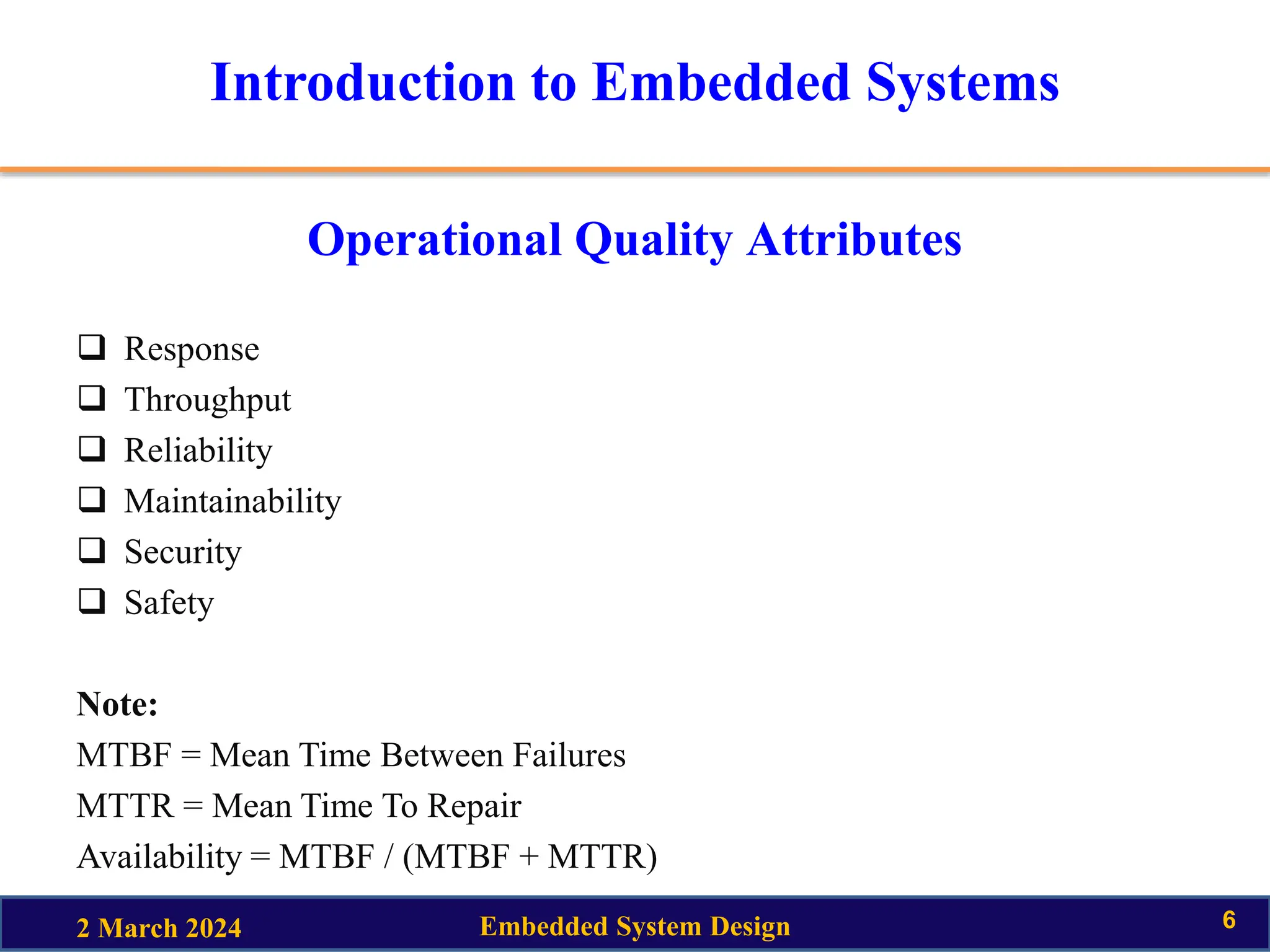
Operational Quality Attributes
 Response
 Throughput
 Reliability
 Maintainability
 Security
 Safety
Note:
MTBF = Mean Time Between Failures
MTTR = Mean Time To Repair
Availability = MTBF / (MTBF + MTTR)
2 March 2024 Embedded System Design 6
Introduction to Embedded Systems
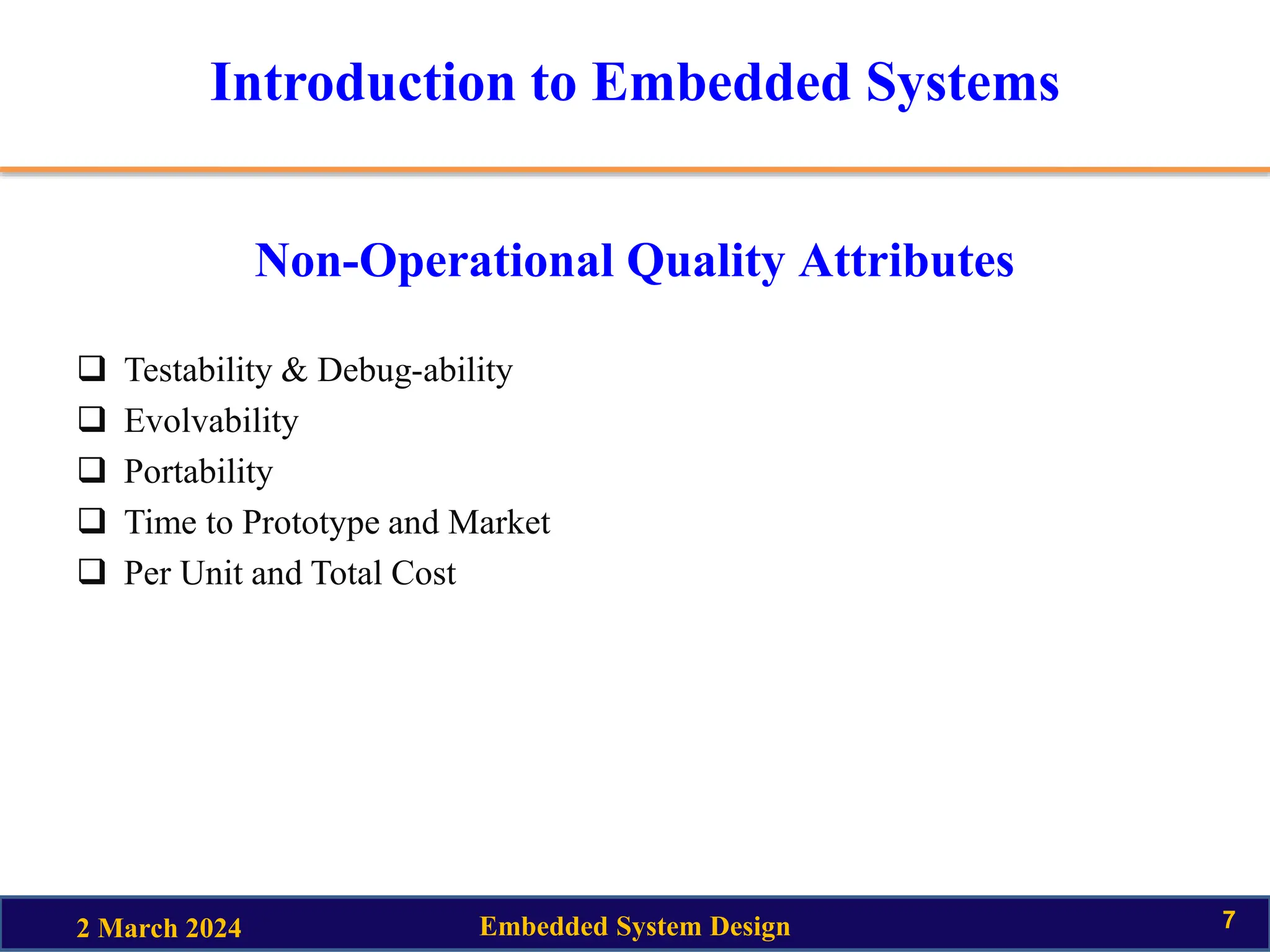
Non-Operational Quality Attributes
 Testability & Debug-ability
 Evolvability
 Portability
 Time to Prototype and Market
 Per Unit and Total Cost
2 March 2024 Embedded System Design 7
Introduction to Embedded Systems
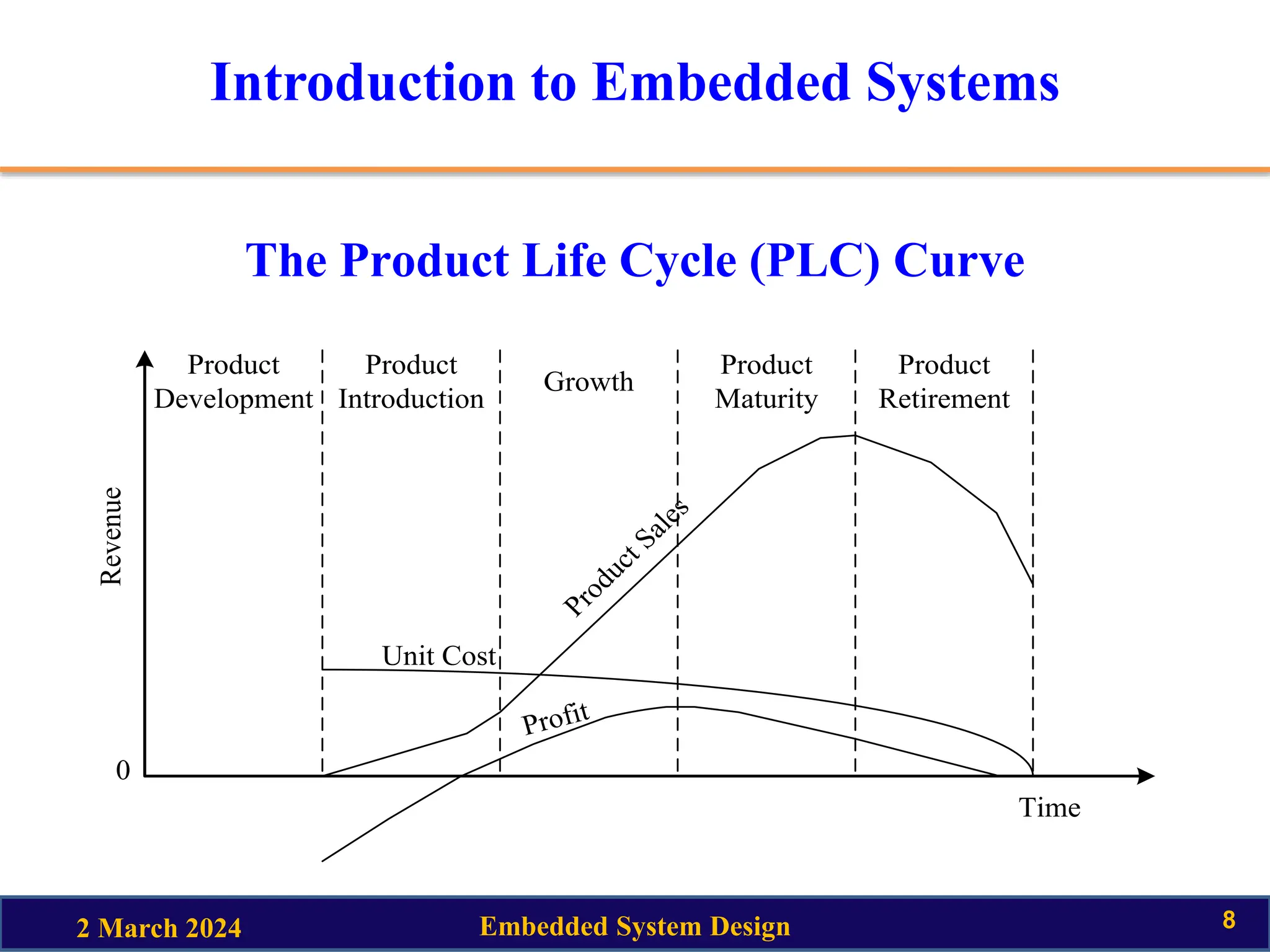
The Product Life Cycle (PLC) Curve
2 March 2024 Embedded System Design 8
Time
Revenue
Product
Development
Product
Introduction
Growth
Product
Maturity
Product
Retirement
Product Sales
Unit Cost
Profit
0
Introduction to Embedded Systems
‘Smart’ running shoes from Adidas – The Innovative
bonding of Life Style with Embedded Technology
2 March 2024 Embedded System Design 9
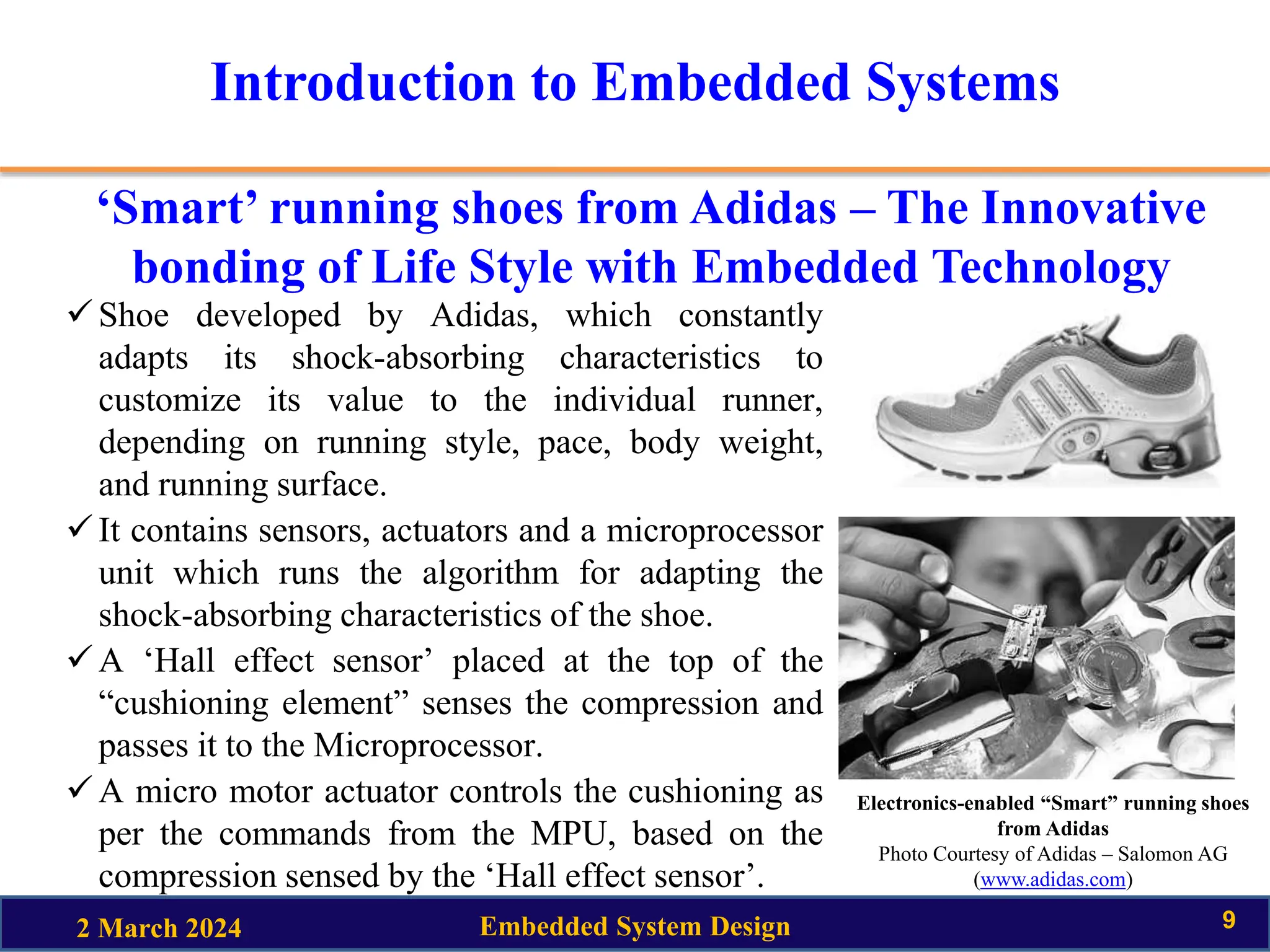
Shoe developed by Adidas, which constantly
adapts its shock-absorbing characteristics to
customize its value to the individual runner,
depending on running style, pace, body weight,
and running surface.
It contains sensors, actuators and a microprocessor
unit which runs the algorithm for adapting the
shock-absorbing characteristics of the shoe.
A ‘Hall effect sensor’ placed at the top of the
“cushioning element” senses the compression and
passes it to the Microprocessor.
A micro motor actuator controls the cushioning as
per the commands from the MPU, based on the
compression sensed by the ‘Hall effect sensor’.
Electronics-enabled “Smart” running shoes
from Adidas
Photo Courtesy of Adidas – Salomon AG
(www.adidas.com)

Embedded systems unit 3 gggggggggggggggg

  • 1.
    Embedded System Design (IVB.Tech I Sem ETE) Faculty Mr. A. Chandra Shaker Asst. Professor 2 March 2024 Embedded System Design 1
  • 2.
    Embedded System Design UnitI Introduction to Embedded Systems Mr. A.Chandra Shaker, Asst. Professor Dept. of Electronics and Telematics Engg. GNITS, Hyderabad 2 March 2024 Embedded System Design 2
  • 3.
    Introduction to EmbeddedSystems Unit I • Definition of Embedded System • Embedded Systems Vs General Computing Systems • History of Embedded Systems • Classification of Embedded Systems • Major Application Areas of Embedded Systems • Purpose of Embedded Systems • Characteristics of Embedded Systems • Quality Attributes of Embedded Systems 2 March 2024 Embedded System Design 3
  • 4.
    Introduction to EmbeddedSystems Characteristics of Embedded Systems Each Embedded System possess a set of characteristics which are unique to it. Some important characteristics of embedded systems are:  Application & Domain Specific  Reactive & Real Time  Operates in ‘harsh’ environment  Distributed  Small size and Weight  Power Concerns 2 March 2024 Embedded System Design 4
  • 5.
    Introduction to EmbeddedSystems Quality Attributes of Embedded Systems Represent the non-functional requirements that needs to be addressed in the design of an embedded system. The various quality attributes that needs to be addressed in any embedded system development are broadly classified into:  Operational Quality Attributes Refers to the relevant quality attributes related to tan embedded system when it is in the operational mode or ‘online’ mode.  Non-Operational Quality Attributes The Quality attributes that needs to be addressed for the product ‘not’ on the basis of operational aspects are grouped under this category. 2 March 2024 Embedded System Design 5
  • 6.
    Introduction to EmbeddedSystems Operational Quality Attributes  Response  Throughput  Reliability  Maintainability  Security  Safety Note: MTBF = Mean Time Between Failures MTTR = Mean Time To Repair Availability = MTBF / (MTBF + MTTR) 2 March 2024 Embedded System Design 6
  • 7.
    Introduction to EmbeddedSystems Non-Operational Quality Attributes  Testability & Debug-ability  Evolvability  Portability  Time to Prototype and Market  Per Unit and Total Cost 2 March 2024 Embedded System Design 7
  • 8.
    Introduction to EmbeddedSystems The Product Life Cycle (PLC) Curve 2 March 2024 Embedded System Design 8 Time Revenue Product Development Product Introduction Growth Product Maturity Product Retirement Product Sales Unit Cost Profit 0
  • 9.
    Introduction to EmbeddedSystems ‘Smart’ running shoes from Adidas – The Innovative bonding of Life Style with Embedded Technology 2 March 2024 Embedded System Design 9 Shoe developed by Adidas, which constantly adapts its shock-absorbing characteristics to customize its value to the individual runner, depending on running style, pace, body weight, and running surface. It contains sensors, actuators and a microprocessor unit which runs the algorithm for adapting the shock-absorbing characteristics of the shoe. A ‘Hall effect sensor’ placed at the top of the “cushioning element” senses the compression and passes it to the Microprocessor. A micro motor actuator controls the cushioning as per the commands from the MPU, based on the compression sensed by the ‘Hall effect sensor’. Electronics-enabled “Smart” running shoes from Adidas Photo Courtesy of Adidas – Salomon AG (www.adidas.com)