 When we need to relay a short
amount of information quickly.
 When reply can be as brief as the
original message.
 When we need to get in touch with
someone you don’t see on a daily
basis.
 When we need to set up an
appointment or meeting.
 We interact more and more with
the written word all the time
 With large, impersonal lectures it
becomes harder to discuss
questions or problems with
teachers
 Without immediate feedback from
the reader, it’s easy to be
misunderstood
 Never send a professional
email without one.
 Give a brief and specific
description of your reason for
writing.
Thanks,
Thanks very much,
 Best,
Sincerely,
 Basics
 Tone
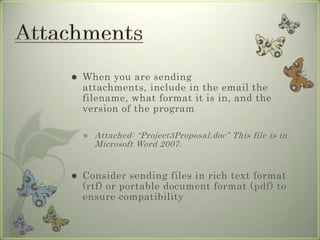
 Attachments
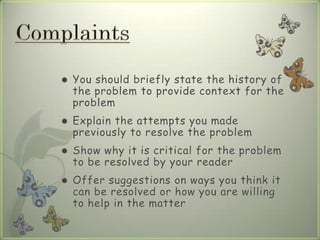
 Complaints
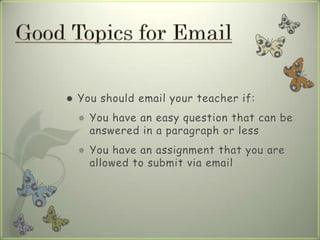
 Good topics for email
 Bad topics for email
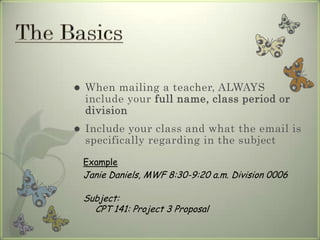
 When mailing a teacher, ALWAYS
include your full name, class period or
division
 Include your class and what the email is
specifically regarding in the subject
Example
Janie Daniels, MWF 8:30-9:20 a.m. Division 0006
Subject:
CPT 141: Project 3 Proposal
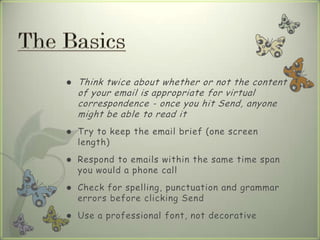
 Think twice about whether or not the content
of your email is appropriate for virtual
correspondence - once you hit Send, anyone
might be able to read it
 Try to keep the email brief (one screen
length)
 Respond to emails within the same time span
you would a phone call
 Check for spelling, punctuation and grammar
errors before clicking Send
 Use a professional font, not decorative
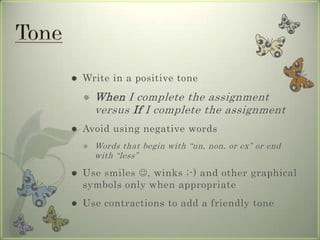
 Write in a positive tone
 When I complete the assignment
versus If I complete the assignment
 Avoid using negative words
 Words that begin with “un, non, or ex” or end
with “less”
 Use smiles , winks ;-) and other graphical
symbols only when appropriate
 Use contractions to add a friendly tone
 When you are sending
attachments, include in the email the
filename, what format it is in, and the
version of the program
 Attached: “Project3Proposal.doc” This file is in
Microsoft Word 2007.
 Consider sending files in rich text format
(rtf) or portable document format (pdf) to
ensure compatibility
 You should briefly state the history of
the problem to provide context for the
problem
 Explain the attempts you made
previously to resolve the problem
 Show why it is critical for the problem
to be resolved by your reader
 Offer suggestions on ways you think it
can be resolved or how you are willing
to help in the matter
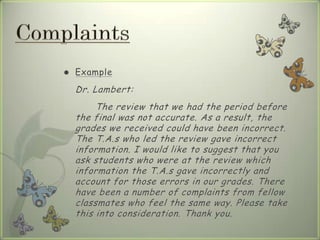
 Example
Dr. Lambert:
The review that we had the period before
the final was not accurate. As a result, the
grades we received could have been incorrect.
The T.A.s who led the review gave incorrect
information. I would like to suggest that you
ask students who were at the review which
information the T.A.s gave incorrectly and
account for those errors in our grades. There
have been a number of complaints from fellow
classmates who feel the same way. Please take
this into consideration. Thank you.
 You should email your teacher if:
 You have an easy question that can be
answered in a paragraph or less
 You have an assignment that you are
allowed to submit via email
 There are some rules that it’s best to
follow, such as:
 Don’t try to turn in an assignment through
email if your teacher has specified against
it
 If you have to get an extension for an
assignment, do it in person
 Don’t bring up any topic that will require
continuous conversation
 If things become heated, there is a large
risk for misunderstanding, so it’s best to
talk face-to-face

Email Etiquette

  • 2.
     When weneed to relay a short amount of information quickly.  When reply can be as brief as the original message.  When we need to get in touch with someone you don’t see on a daily basis.  When we need to set up an appointment or meeting.
  • 3.
     We interactmore and more with the written word all the time  With large, impersonal lectures it becomes harder to discuss questions or problems with teachers  Without immediate feedback from the reader, it’s easy to be misunderstood
  • 4.
     Never senda professional email without one.  Give a brief and specific description of your reason for writing.
  • 5.
  • 6.
     Basics  Tone Attachments  Complaints  Good topics for email  Bad topics for email
  • 7.
     When mailinga teacher, ALWAYS include your full name, class period or division  Include your class and what the email is specifically regarding in the subject Example Janie Daniels, MWF 8:30-9:20 a.m. Division 0006 Subject: CPT 141: Project 3 Proposal
  • 8.
     Think twiceabout whether or not the content of your email is appropriate for virtual correspondence - once you hit Send, anyone might be able to read it  Try to keep the email brief (one screen length)  Respond to emails within the same time span you would a phone call  Check for spelling, punctuation and grammar errors before clicking Send  Use a professional font, not decorative
  • 9.
     Write ina positive tone  When I complete the assignment versus If I complete the assignment  Avoid using negative words  Words that begin with “un, non, or ex” or end with “less”  Use smiles , winks ;-) and other graphical symbols only when appropriate  Use contractions to add a friendly tone
  • 10.
     When youare sending attachments, include in the email the filename, what format it is in, and the version of the program  Attached: “Project3Proposal.doc” This file is in Microsoft Word 2007.  Consider sending files in rich text format (rtf) or portable document format (pdf) to ensure compatibility
  • 11.
     You shouldbriefly state the history of the problem to provide context for the problem  Explain the attempts you made previously to resolve the problem  Show why it is critical for the problem to be resolved by your reader  Offer suggestions on ways you think it can be resolved or how you are willing to help in the matter
  • 12.
     Example Dr. Lambert: Thereview that we had the period before the final was not accurate. As a result, the grades we received could have been incorrect. The T.A.s who led the review gave incorrect information. I would like to suggest that you ask students who were at the review which information the T.A.s gave incorrectly and account for those errors in our grades. There have been a number of complaints from fellow classmates who feel the same way. Please take this into consideration. Thank you.
  • 13.
     You shouldemail your teacher if:  You have an easy question that can be answered in a paragraph or less  You have an assignment that you are allowed to submit via email
  • 14.
     There aresome rules that it’s best to follow, such as:  Don’t try to turn in an assignment through email if your teacher has specified against it  If you have to get an extension for an assignment, do it in person  Don’t bring up any topic that will require continuous conversation  If things become heated, there is a large risk for misunderstanding, so it’s best to talk face-to-face