ELEMENTS OF ENERGY EFFICIENT
BUILDINGS
B U I L D I N G S D E S I G N E D T O P R O V I D E A S I G N I F I C A N T
R E D U C T I O N O F T H E E N E R G Y N E E D F O R H E A T I N G ,
C O O L I N G , L I G H T E N I N G E T C . C A N B E A C H I E V E D
T H R O U G H F O L L O W I N G E L E M E N T S :
1]Bioclimatic architecture: shape and orientation of the building,
Solar protections, passive solar systems.
2]High performing building envelope: thorough insulation, high performing glazing
And windows, air-sealed construction, avoidance of thermal bridges.
3]High performance controlled ventilation: mechanical insulation, heat recovery.
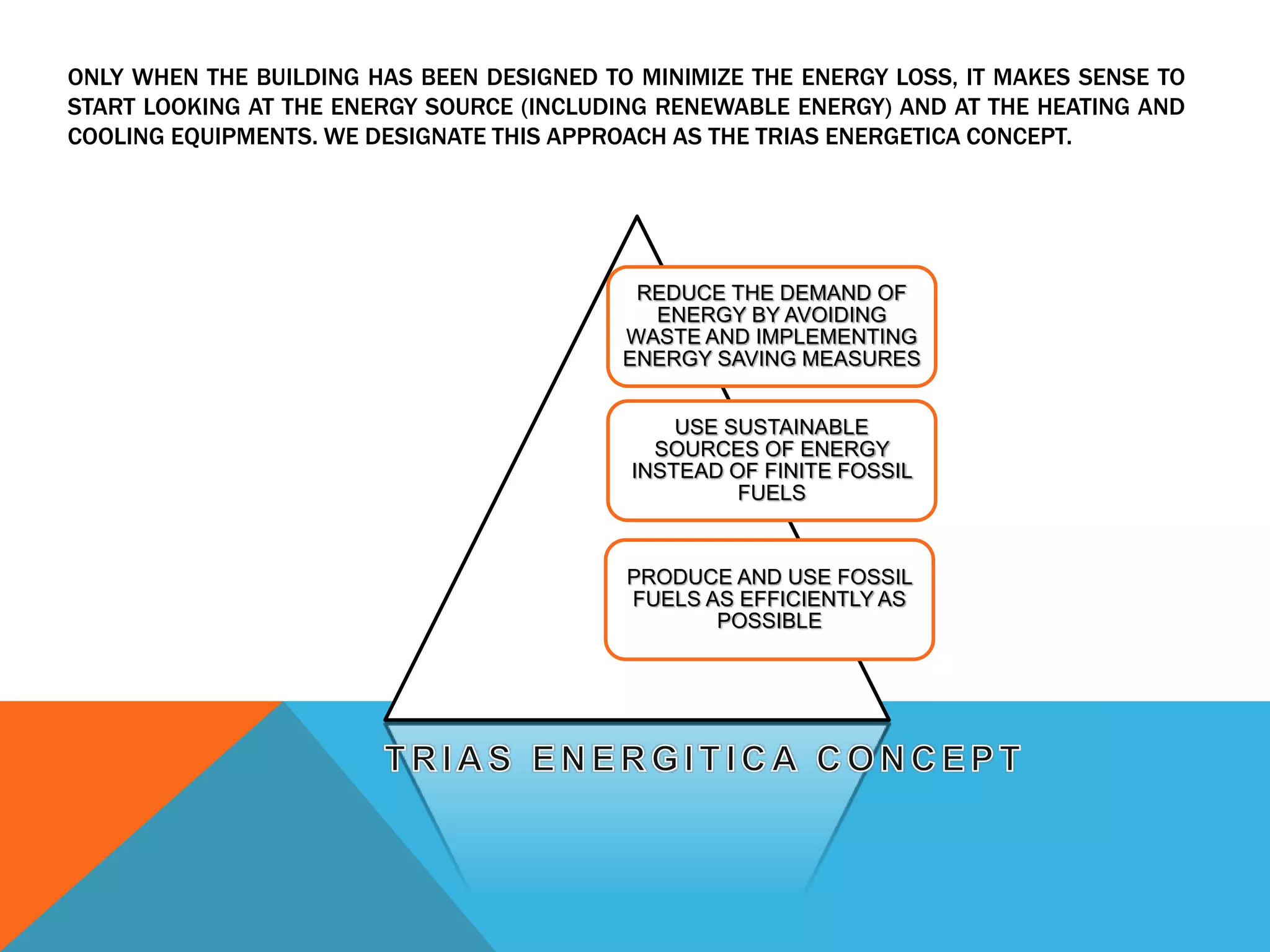
ONLY WHEN THE BUILDING HAS BEEN DESIGNED TO MINIMIZE THE ENERGY LOSS, IT MAKES SENSE TO
START LOOKING AT THE ENERGY SOURCE (INCLUDING RENEWABLE ENERGY) AND AT THE HEATING AND
COOLING EQUIPMENTS. WE DESIGNATE THIS APPROACH AS THE TRIAS ENERGETICA CONCEPT.
REDUCE THE DEMAND OF
ENERGY BY AVOIDING
WASTE AND IMPLEMENTING
ENERGY SAVING MEASURES
USE SUSTAINABLE
SOURCES OF ENERGY
INSTEAD OF FINITE FOSSIL
FUELS
PRODUCE AND USE FOSSIL
FUELS AS EFFICIENTLY AS
POSSIBLE
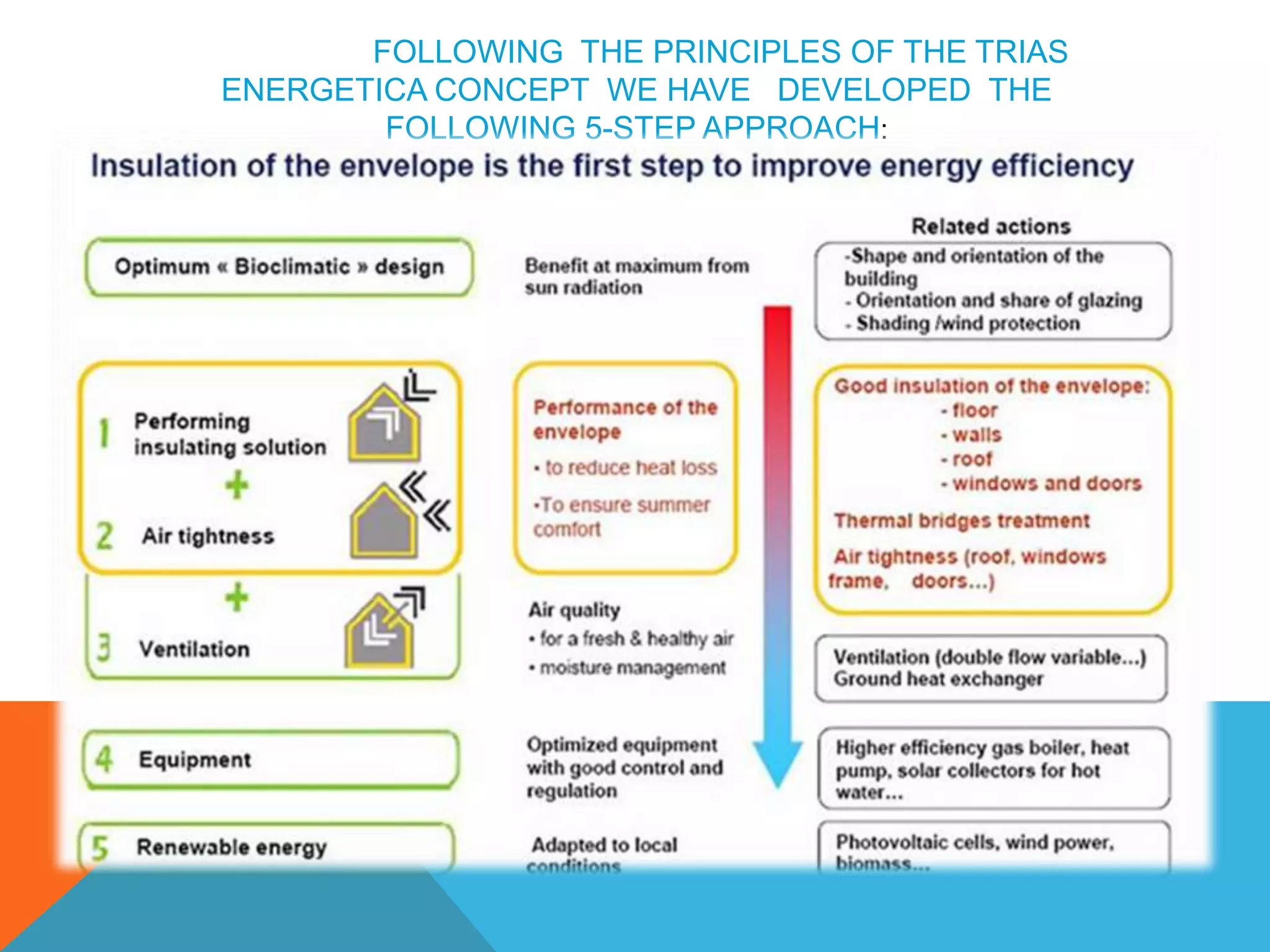
FOLLOWING THE PRINCIPLES OF THE TRIAS
ENERGETICA CONCEPT WE HAVE DEVELOPED THE
FOLLOWING 5-STEP APPROACH:
MORE ABOUT ELEMENTS OF EFFICIENT
BUILDING
Bioclimatic architecture takes into account climate and environmental conditions
to help achieve thermal and visual comfort inside. Bioclimatic design takes
into account the local climate to make the best possible use of solar energy and
other environmental sources, rather than working against them
Thermal insulation is a low-cost, widely available, proven technology that begins
saving energy and money, and reducing emissions the moment it is installed.
Air tightness reduces air leakage – the uncontrolled flow of air through gaps and
cracks in the construction (sometimes referred to as infiltration, exfiltration or
draughts)
Ventilation is the intended and controlled ingress and egress of air through
buildings, delivering fresh air, and exhausting stale air through purpose-built
ventilators in combination with the designed heating system and humidity
control, and the fabric of the building itself.

Elements of energy efficient buildings

  • 1.
    ELEMENTS OF ENERGYEFFICIENT BUILDINGS B U I L D I N G S D E S I G N E D T O P R O V I D E A S I G N I F I C A N T R E D U C T I O N O F T H E E N E R G Y N E E D F O R H E A T I N G , C O O L I N G , L I G H T E N I N G E T C . C A N B E A C H I E V E D T H R O U G H F O L L O W I N G E L E M E N T S : 1]Bioclimatic architecture: shape and orientation of the building, Solar protections, passive solar systems. 2]High performing building envelope: thorough insulation, high performing glazing And windows, air-sealed construction, avoidance of thermal bridges. 3]High performance controlled ventilation: mechanical insulation, heat recovery.
  • 2.
    ONLY WHEN THEBUILDING HAS BEEN DESIGNED TO MINIMIZE THE ENERGY LOSS, IT MAKES SENSE TO START LOOKING AT THE ENERGY SOURCE (INCLUDING RENEWABLE ENERGY) AND AT THE HEATING AND COOLING EQUIPMENTS. WE DESIGNATE THIS APPROACH AS THE TRIAS ENERGETICA CONCEPT. REDUCE THE DEMAND OF ENERGY BY AVOIDING WASTE AND IMPLEMENTING ENERGY SAVING MEASURES USE SUSTAINABLE SOURCES OF ENERGY INSTEAD OF FINITE FOSSIL FUELS PRODUCE AND USE FOSSIL FUELS AS EFFICIENTLY AS POSSIBLE
  • 3.
    FOLLOWING THE PRINCIPLESOF THE TRIAS ENERGETICA CONCEPT WE HAVE DEVELOPED THE FOLLOWING 5-STEP APPROACH:
  • 4.
    MORE ABOUT ELEMENTSOF EFFICIENT BUILDING Bioclimatic architecture takes into account climate and environmental conditions to help achieve thermal and visual comfort inside. Bioclimatic design takes into account the local climate to make the best possible use of solar energy and other environmental sources, rather than working against them Thermal insulation is a low-cost, widely available, proven technology that begins saving energy and money, and reducing emissions the moment it is installed. Air tightness reduces air leakage – the uncontrolled flow of air through gaps and cracks in the construction (sometimes referred to as infiltration, exfiltration or draughts) Ventilation is the intended and controlled ingress and egress of air through buildings, delivering fresh air, and exhausting stale air through purpose-built ventilators in combination with the designed heating system and humidity control, and the fabric of the building itself.