How substances differ from
mixtures?
All substances are
homogeneous
Some mixtures are also
homogeneous
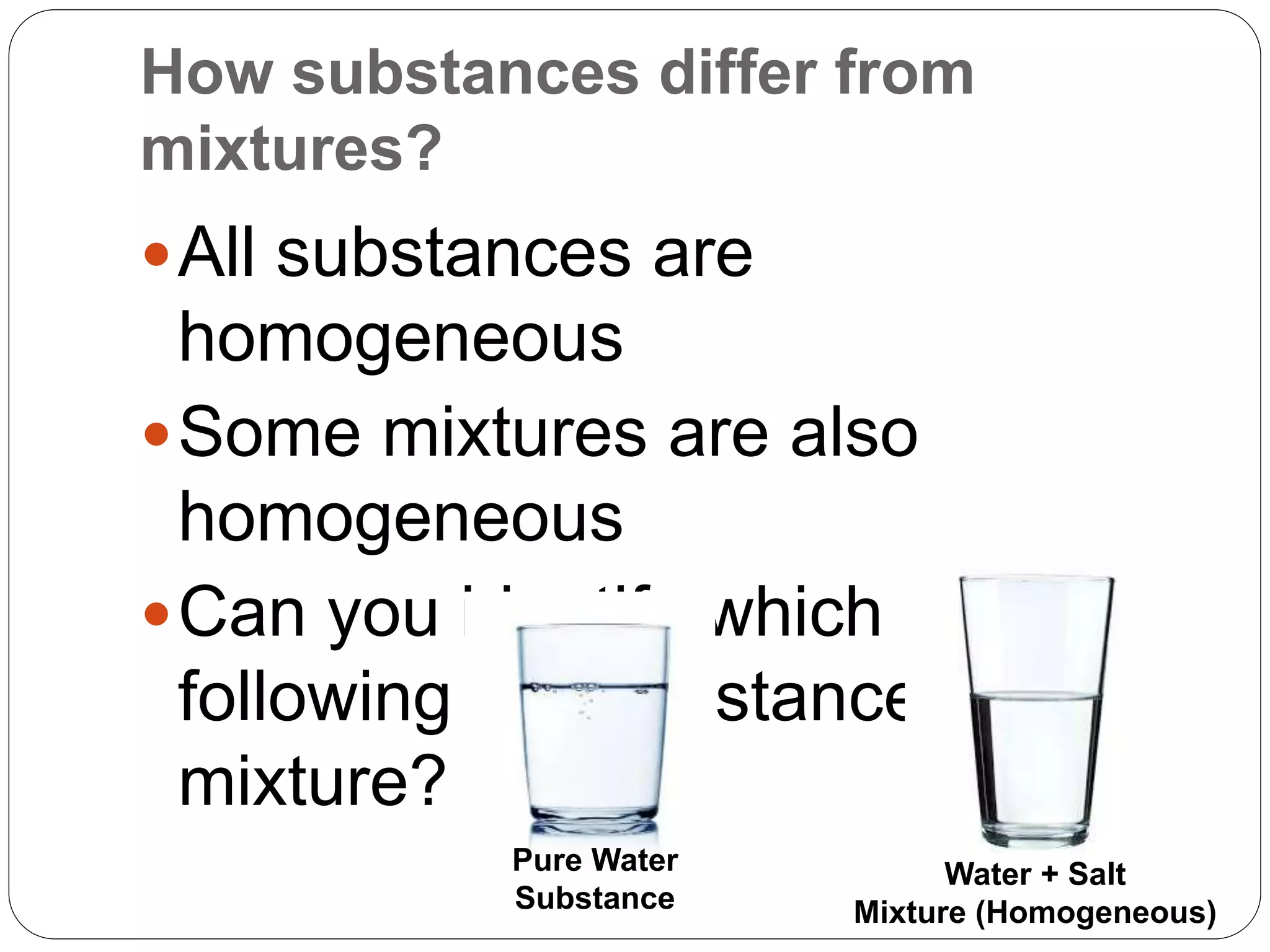
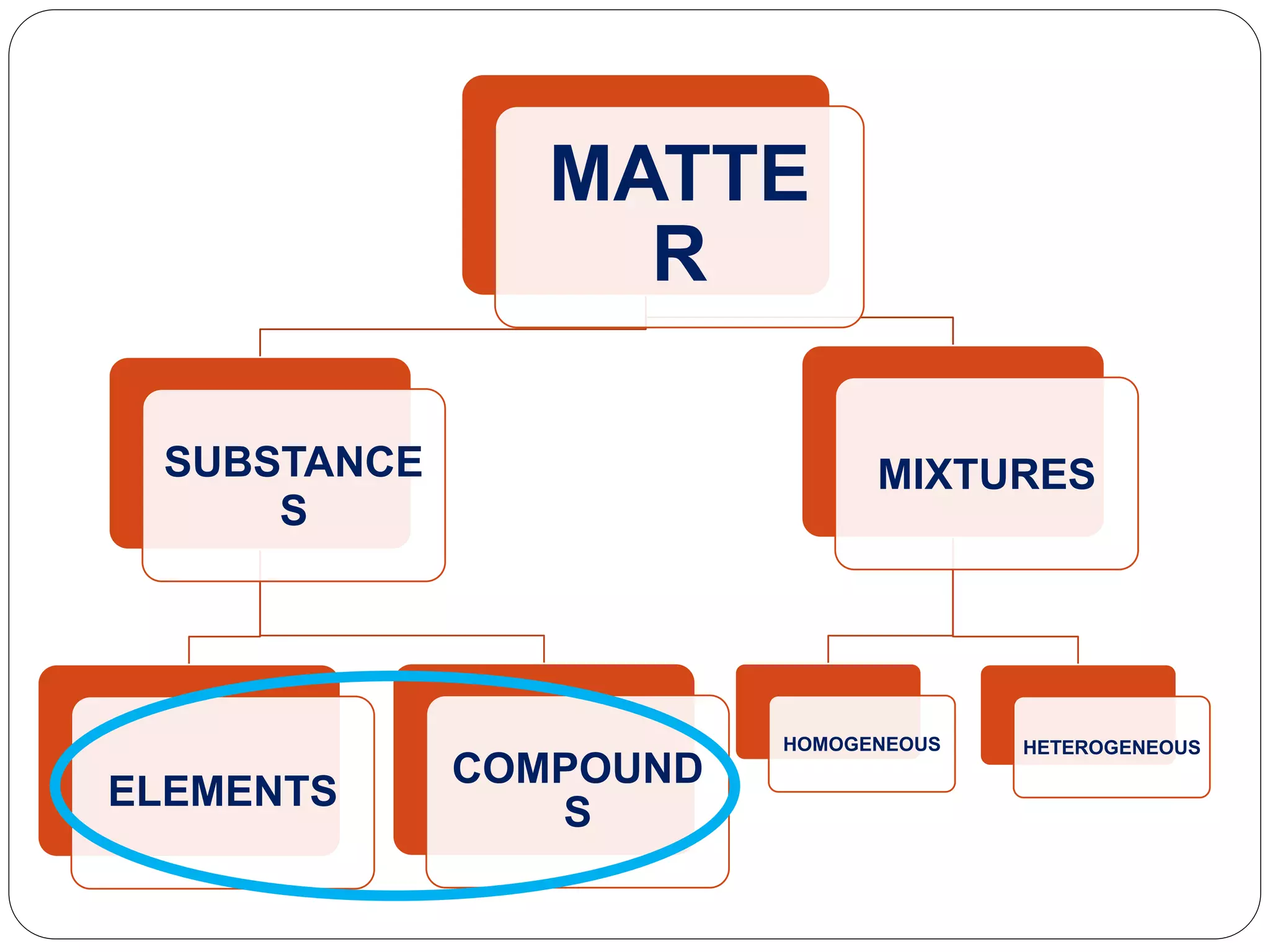
Can you identify which of the
following is a substance or a
mixture?
Pure Water
Substance
Water + Salt
Mixture (Homogeneous)
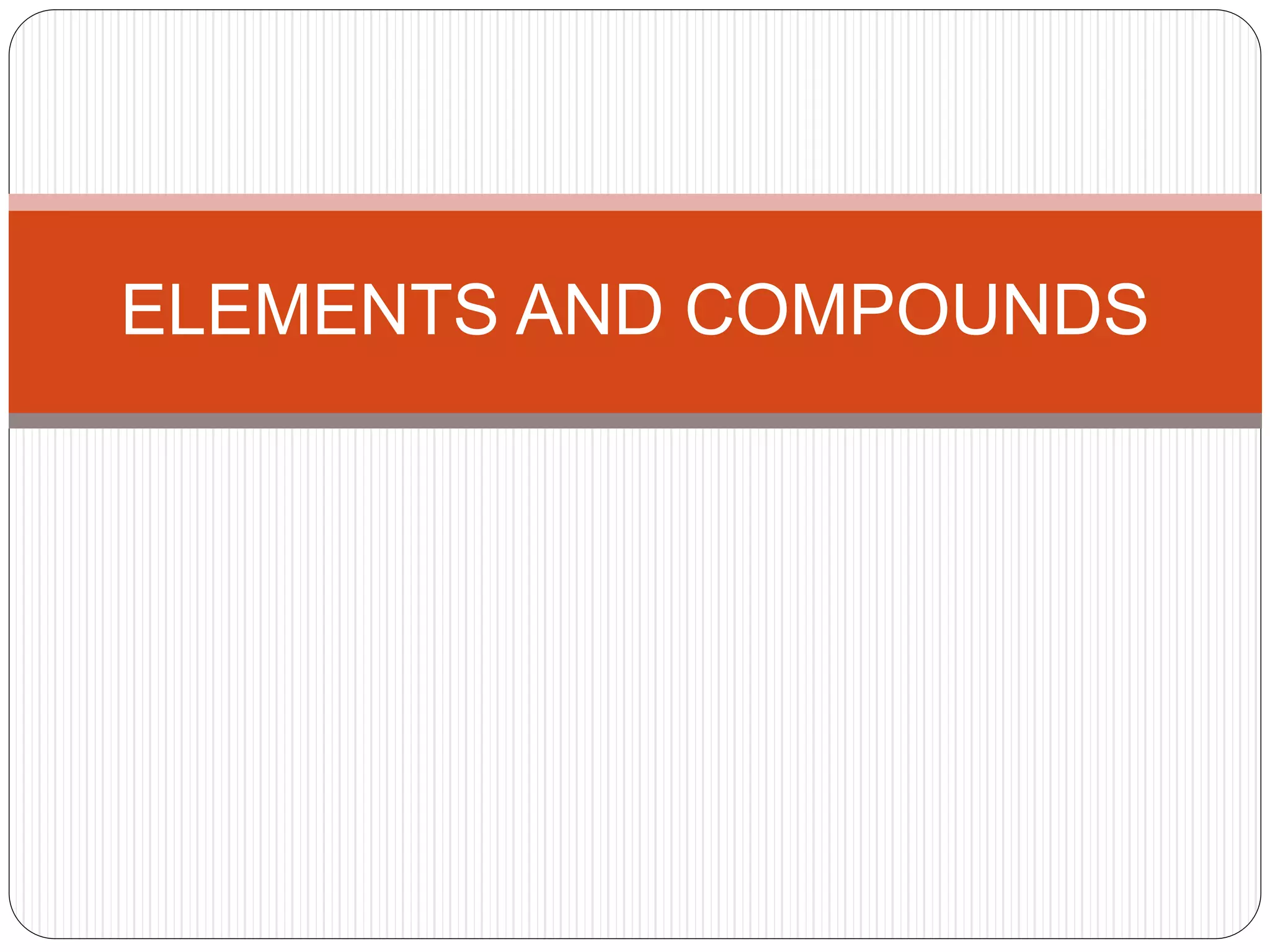
MATTE
R
SUBSTANCE
S
ELEMENTS
COMPOUND
S
MIXTURES
HOMOGENEOUS HETEROGENEOUS
ELEMENTS AND COMPOUNDS
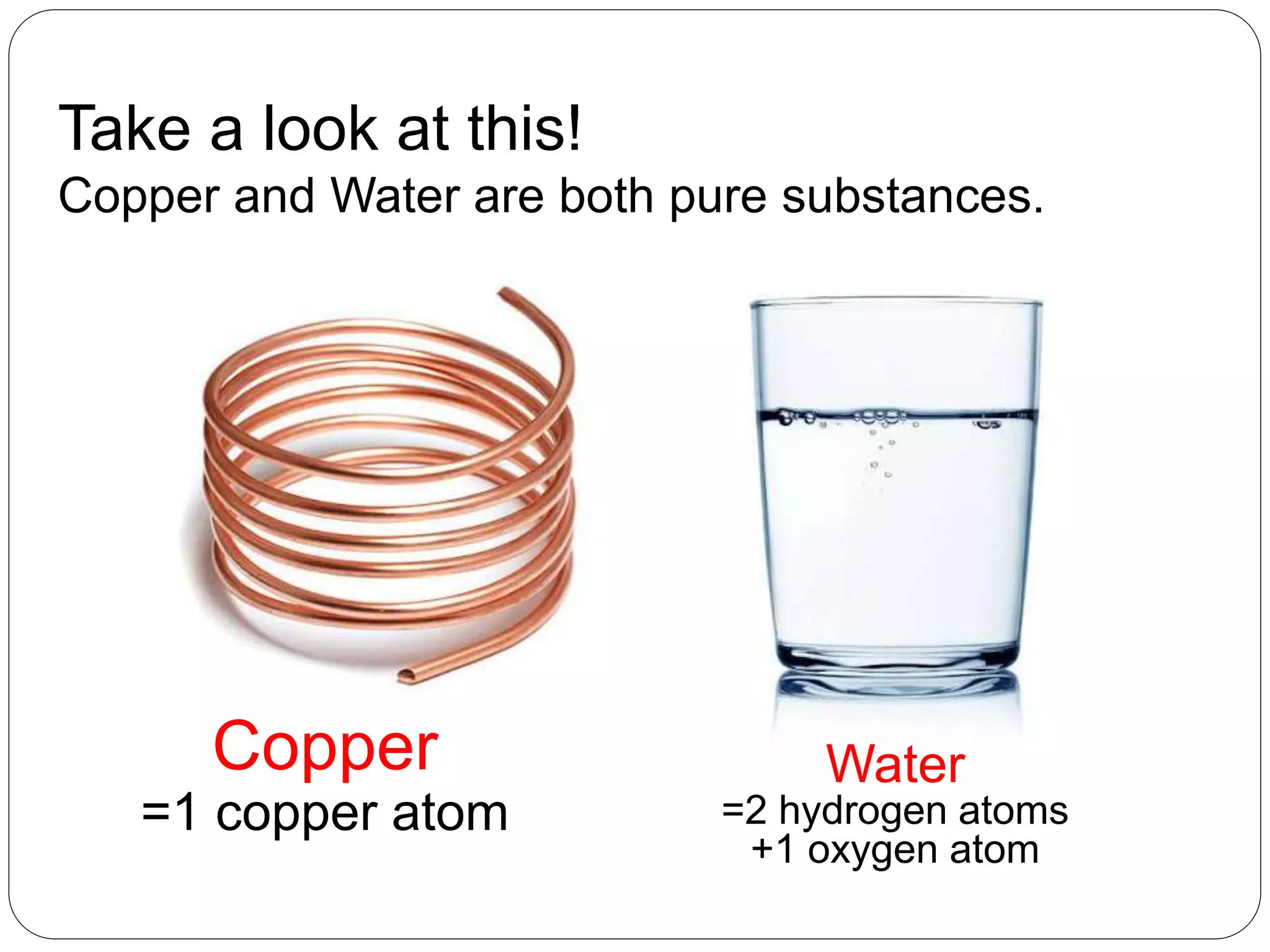
Take a look at this!
Copper and Water are both pure substances.
Copper
=1 copper atom
Water
=2 hydrogen atoms
+1 oxygen atom
Elements
Are said to be the building blocks of
matter.
These cannot be broken down into
simpler substances simply because
it is the simplest form of matter.
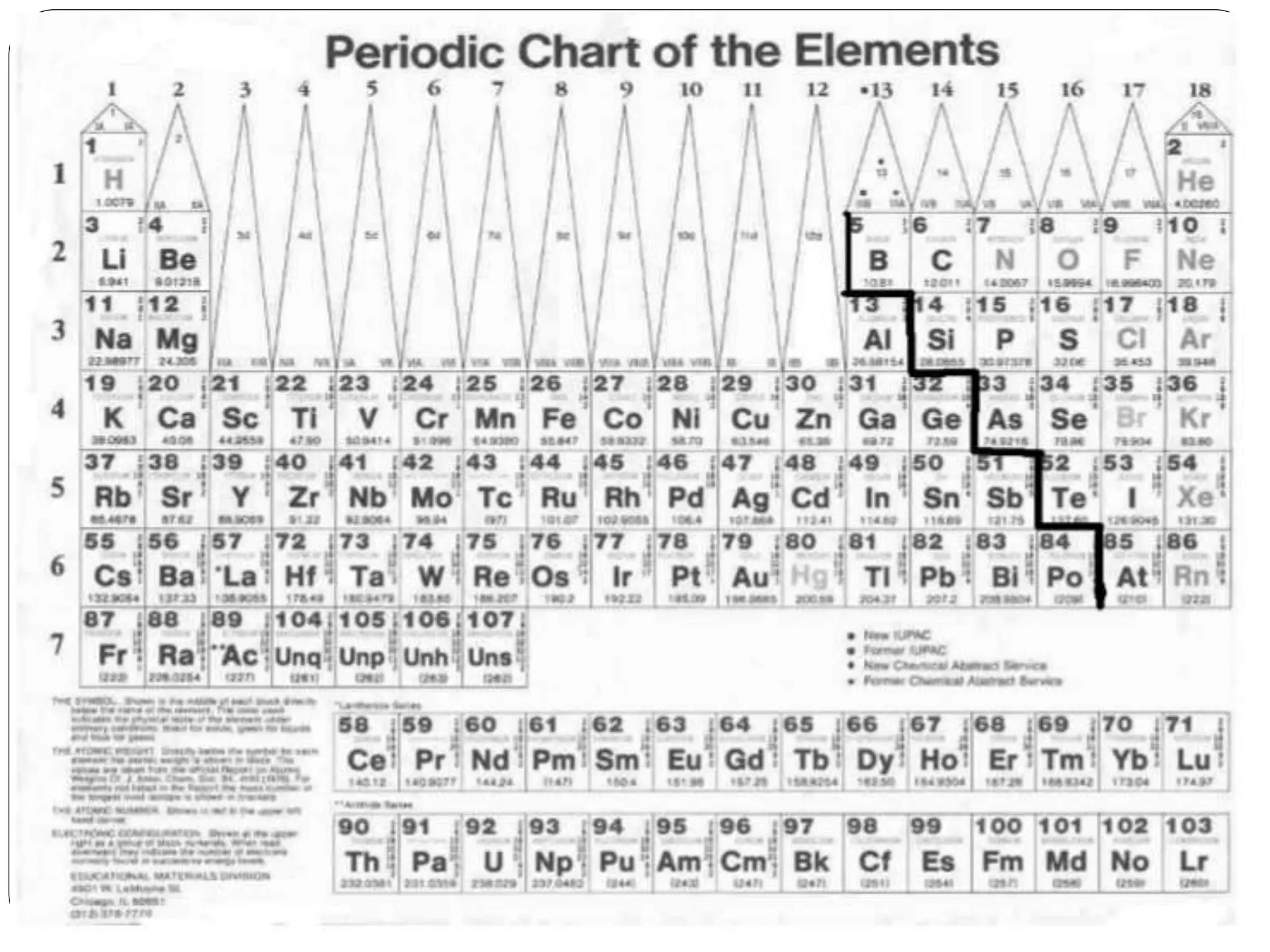
There are about 118 elements.
Most of these elements are
naturally occurring and only a small
percentage of elements are man-
Types of Elements
Metal
Non-metal
Metalloids
Compounds
A compound is a combination of
elements.
 But remember that a compound is
a chemical combination of two or
more elements.
A chemical combination results to a
formation of a new substance.
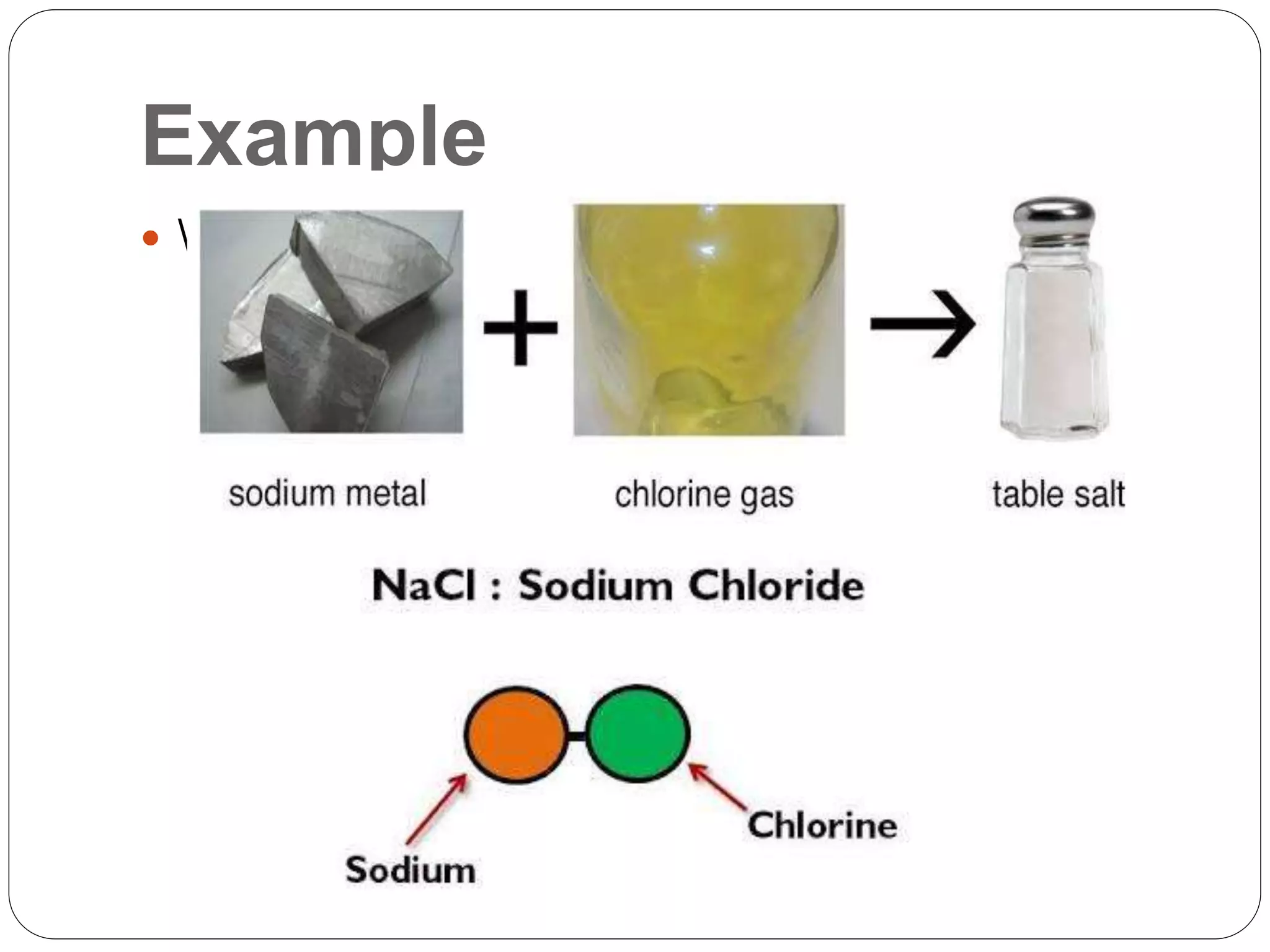
Example

Does the combination of an element plus
an element always result to a
compound?
No, it doesn’t!
Why?
If two metals are just
physically combined, it will
result to the formation of an
alloy.
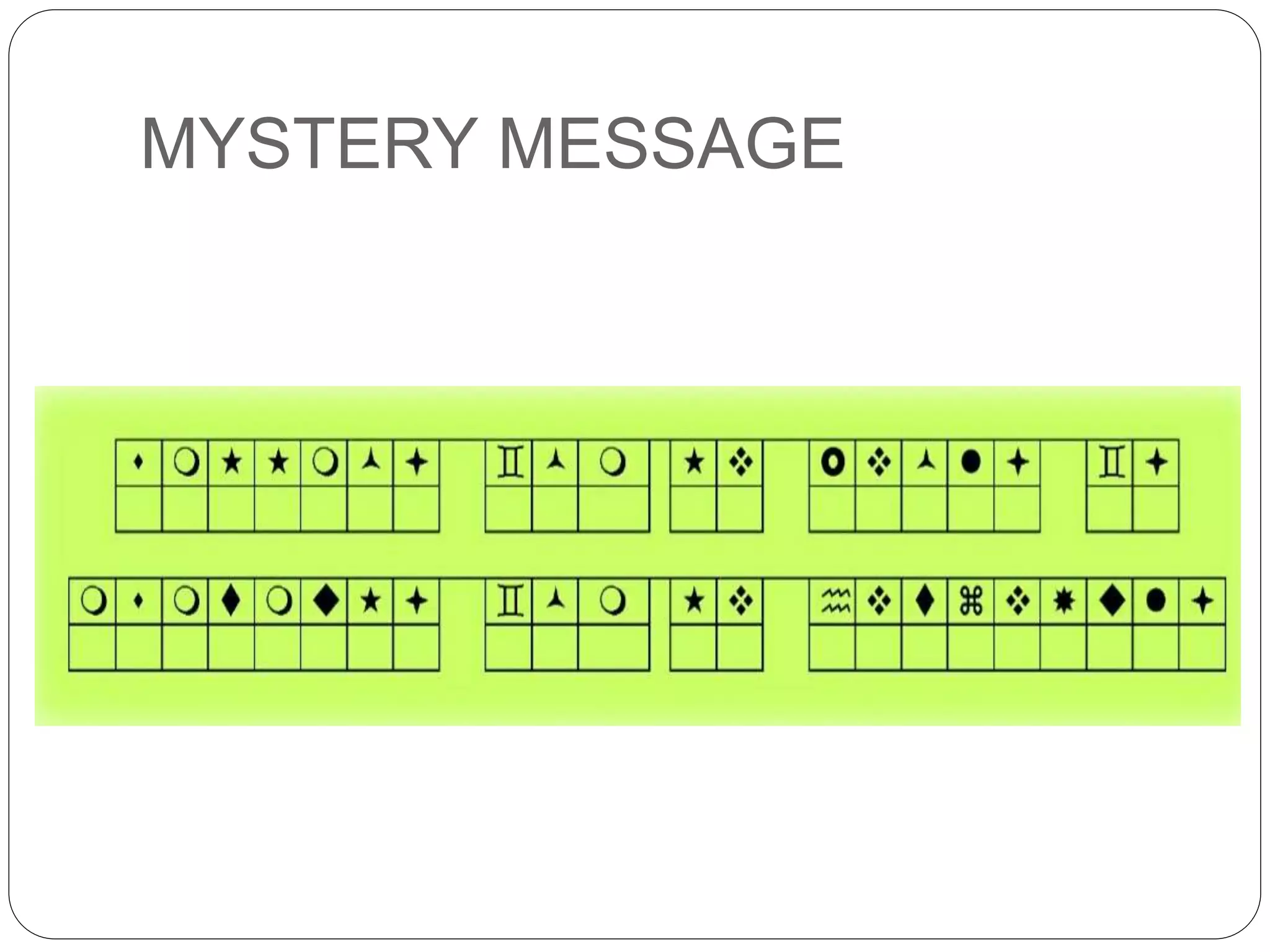
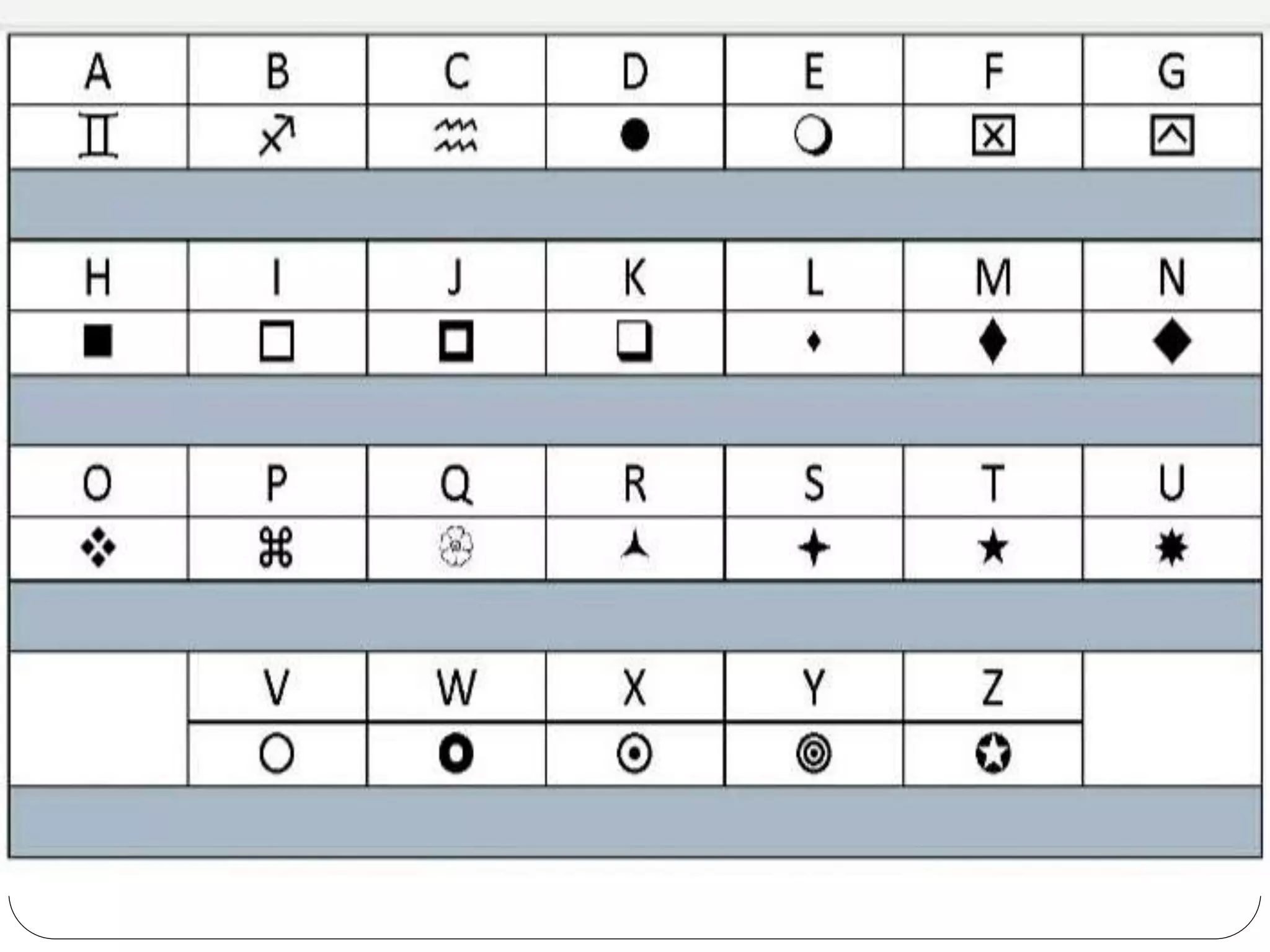
MYSTERY MESSAGE
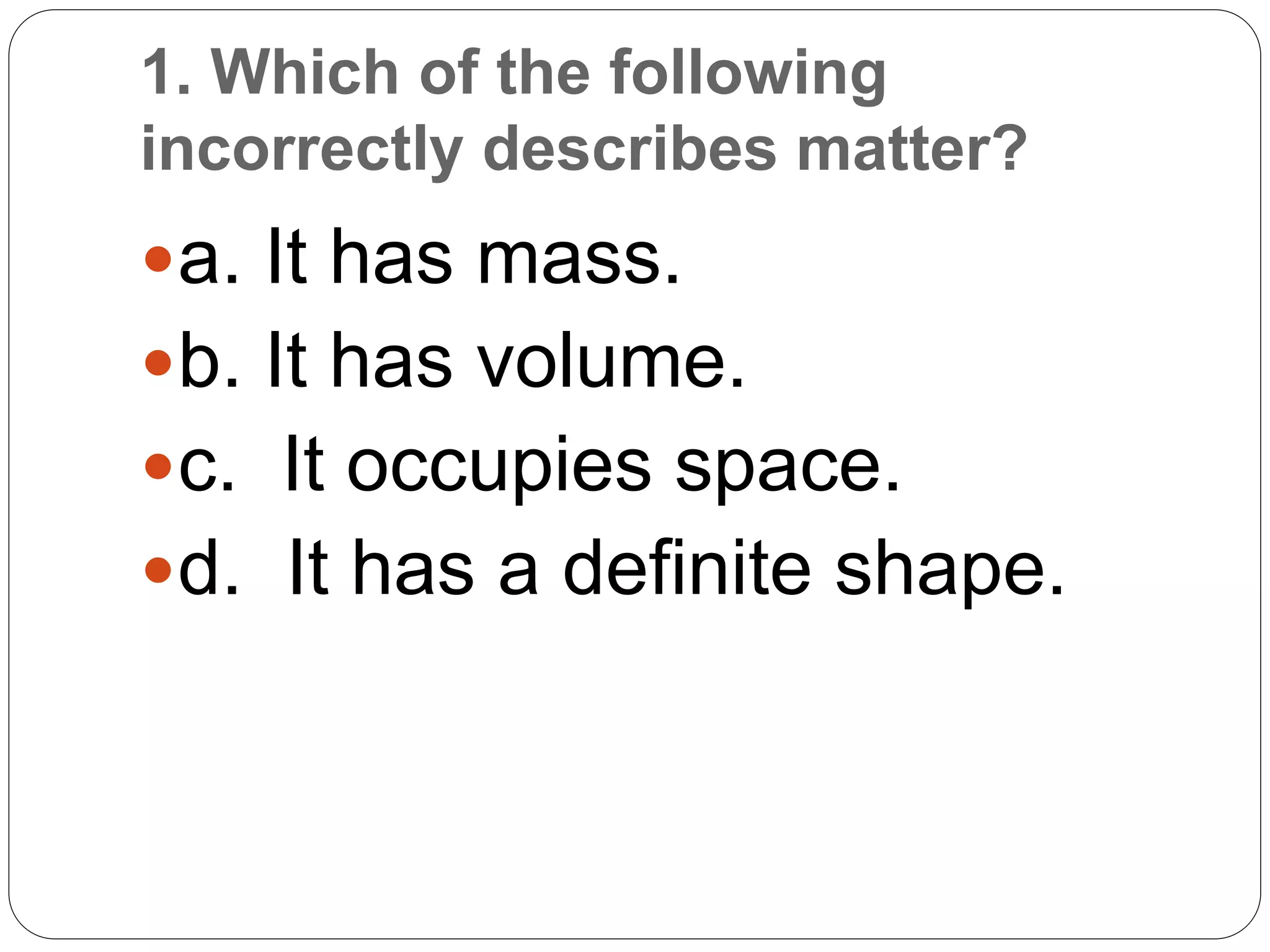
1. Which of the following
incorrectly describes matter?
a. It has mass.
b. It has volume.
c. It occupies space.
d. It has a definite shape.
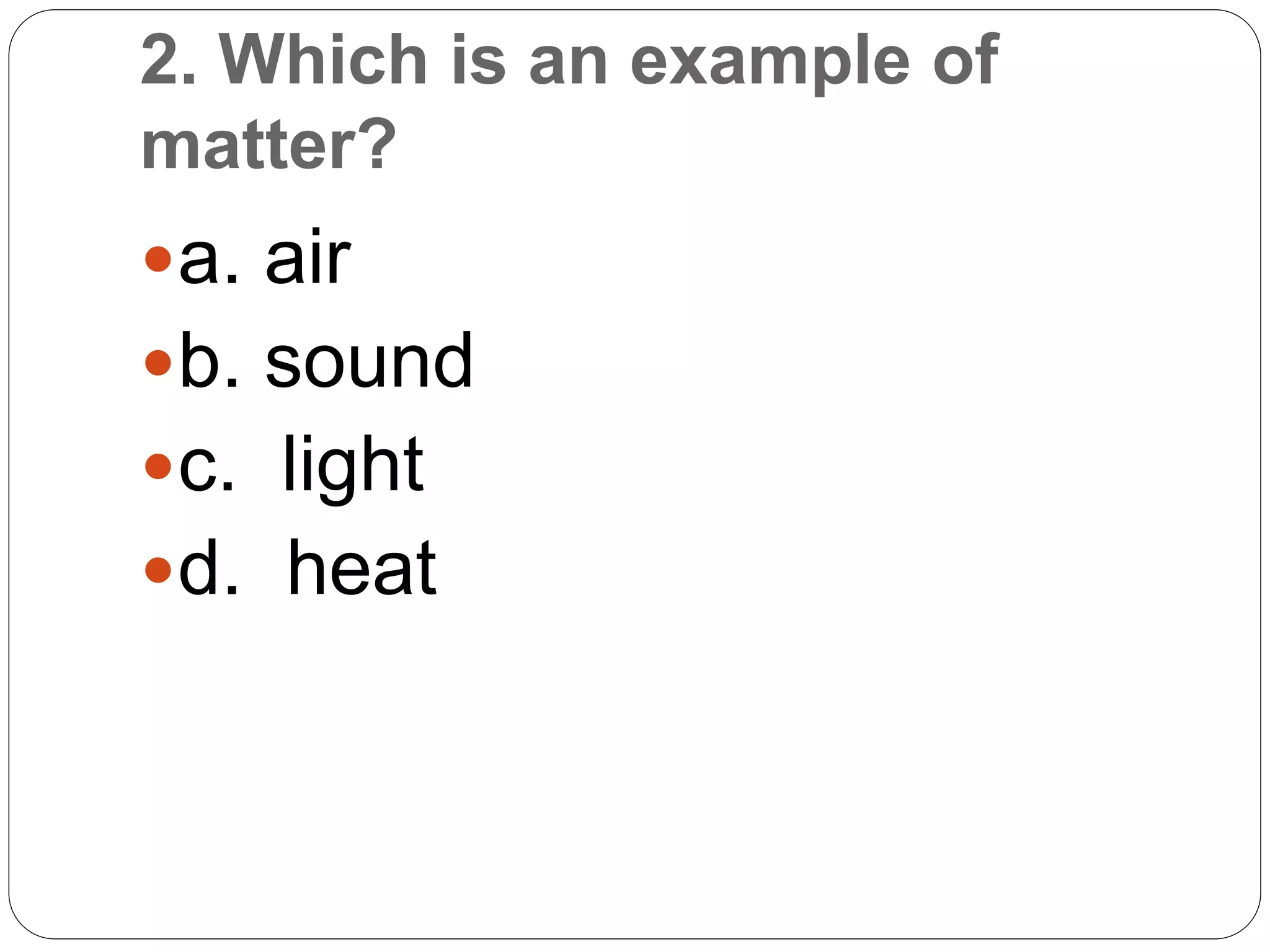
2. Which is an example of
matter?
a. air
b. sound
c. light
d. heat
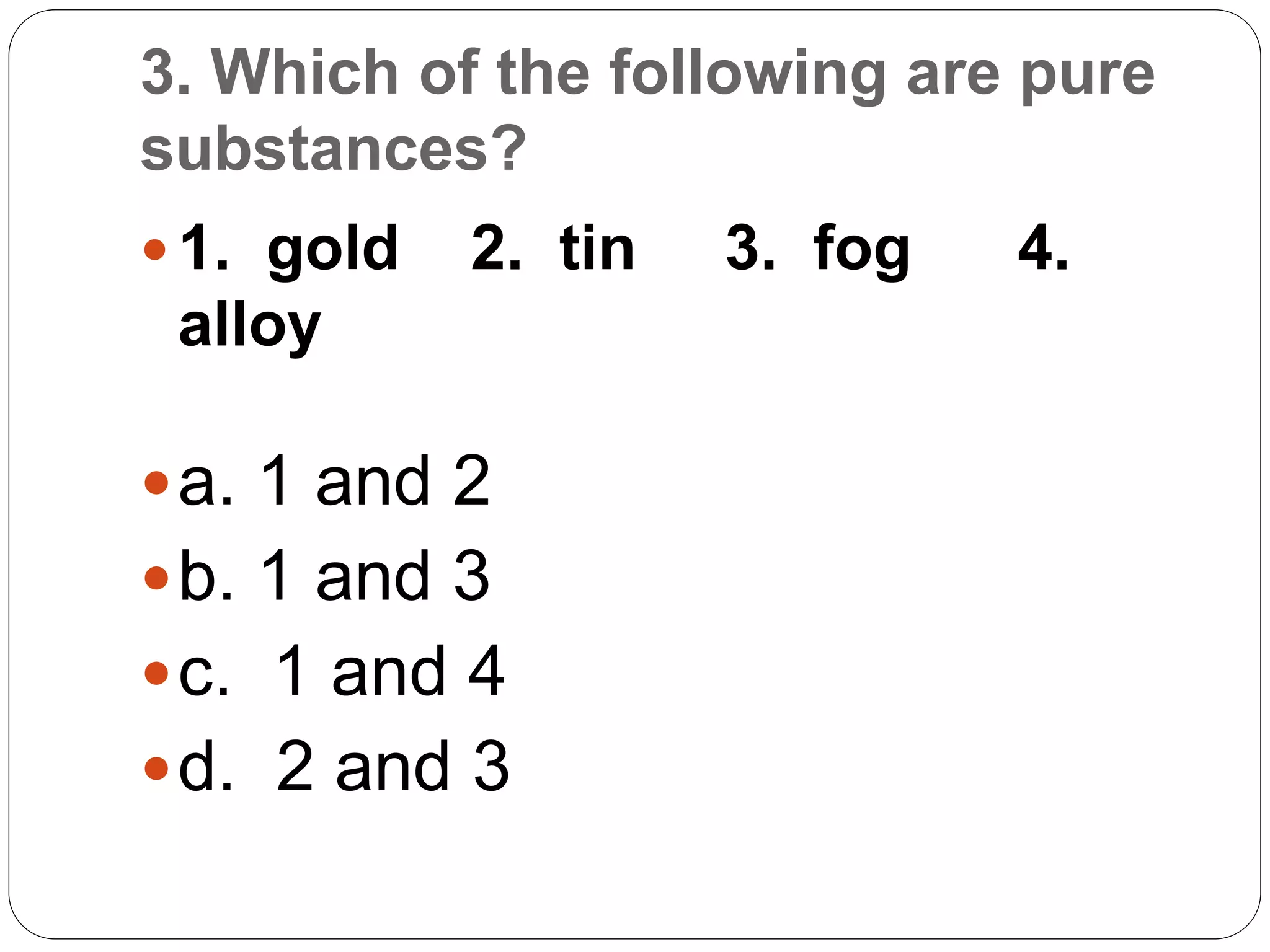
3. Which of the following are pure
substances?
 1. gold 2. tin 3. fog 4.
alloy
a. 1 and 2
b. 1 and 3
c. 1 and 4
d. 2 and 3
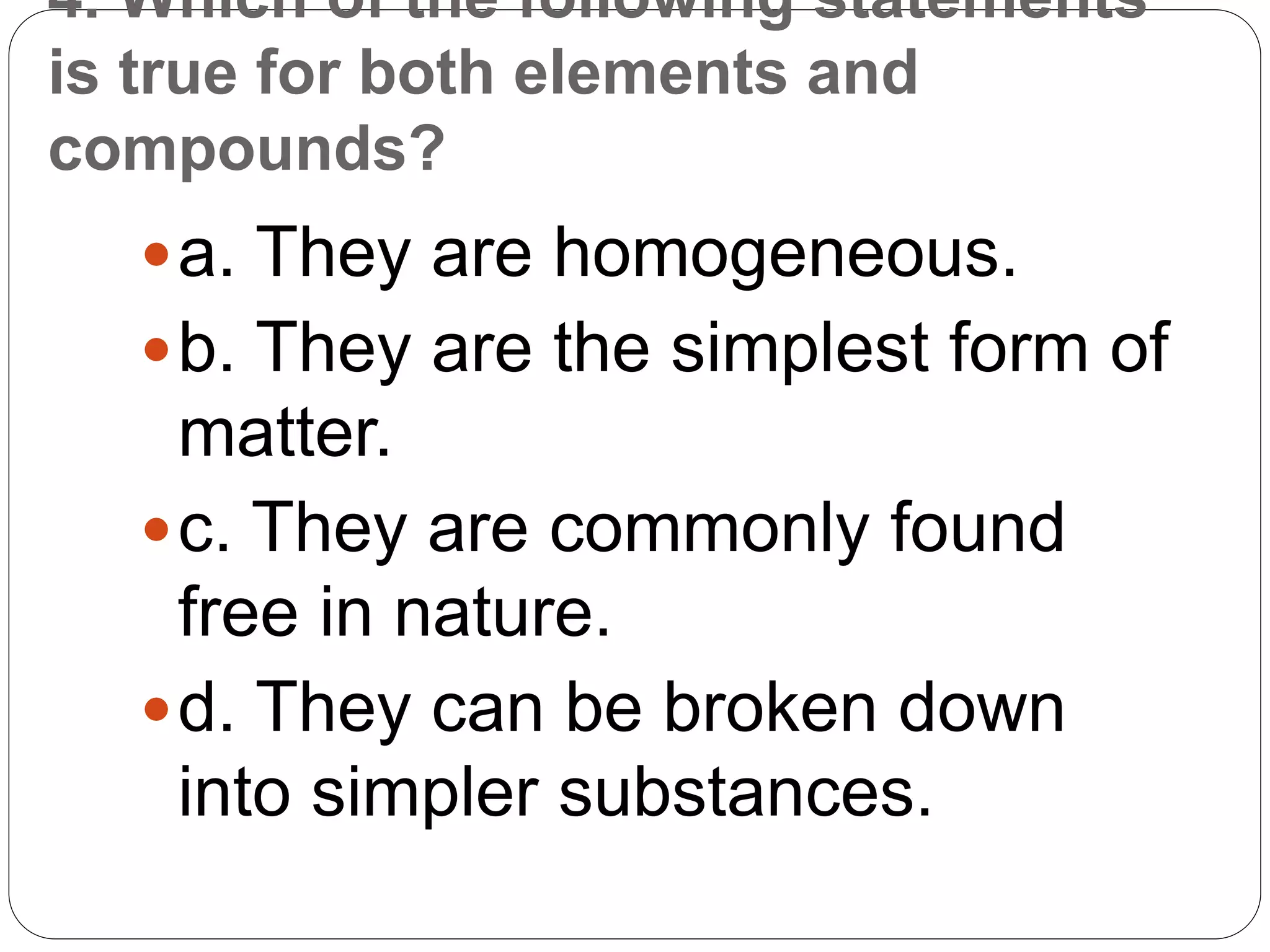
4. Which of the following statements
is true for both elements and
compounds?
a. They are homogeneous.
b. They are the simplest form of
matter.
c. They are commonly found
free in nature.
d. They can be broken down
into simpler substances.
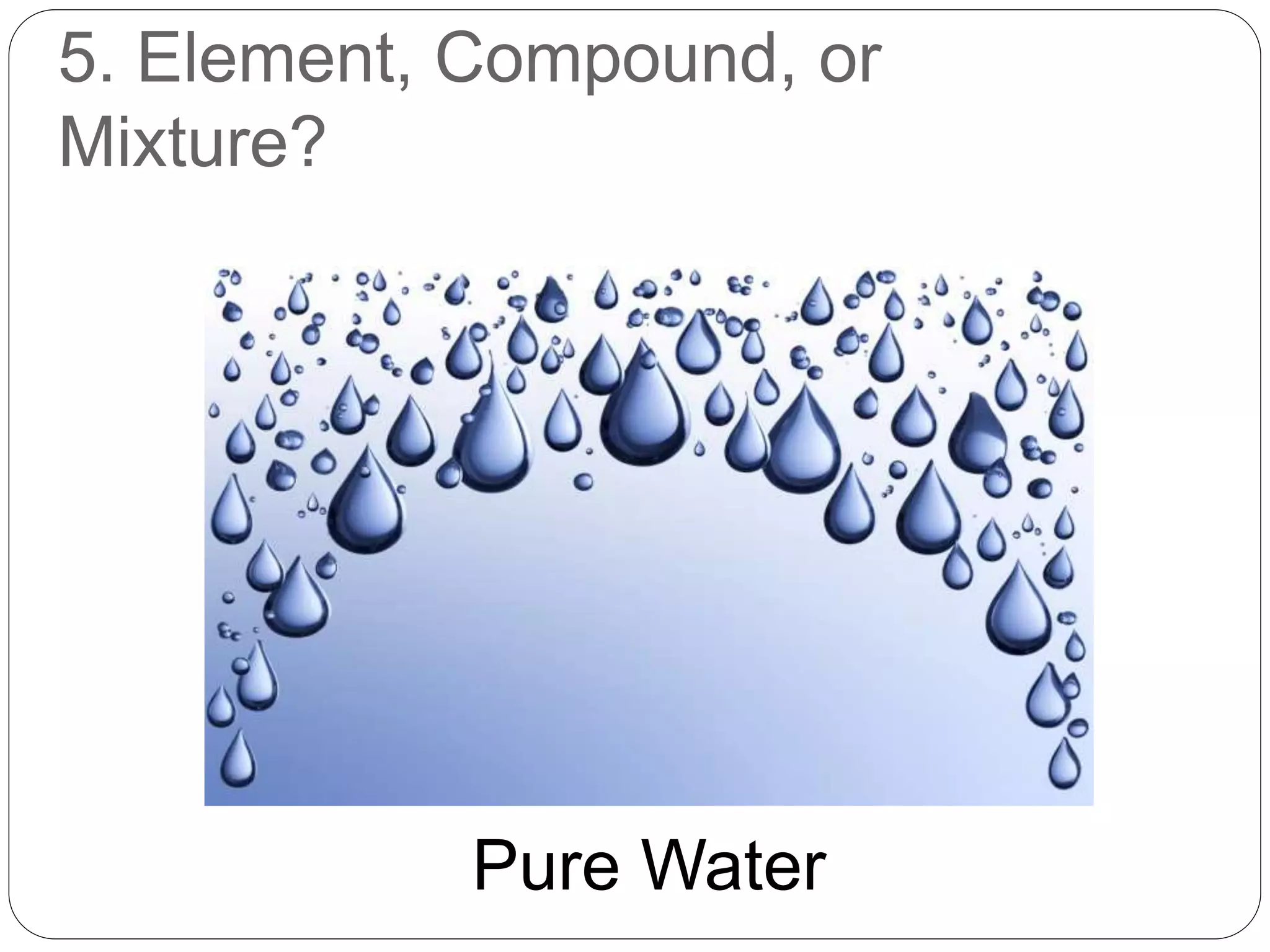
5. Element, Compound, or
Mixture?
Pure Water
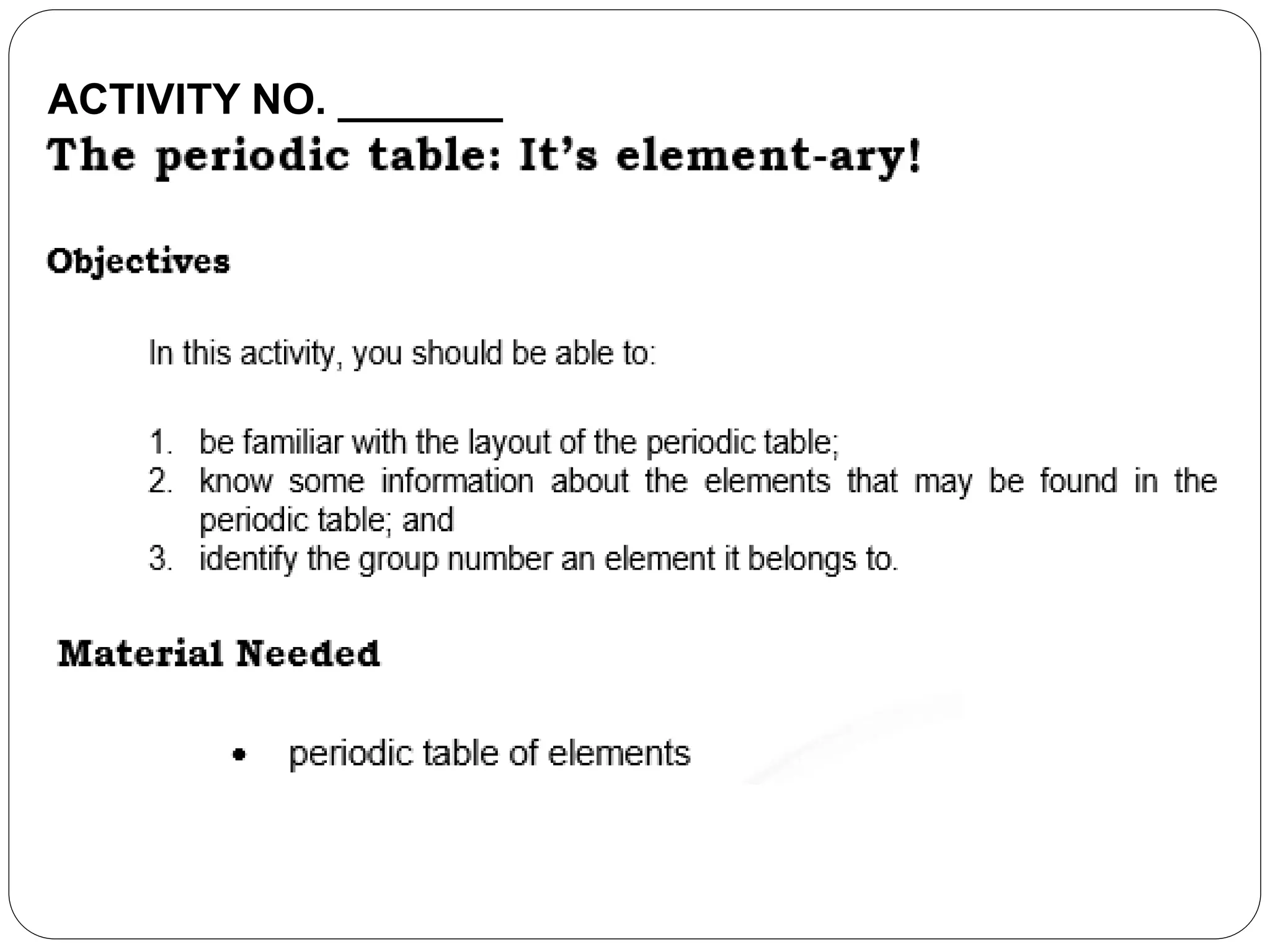
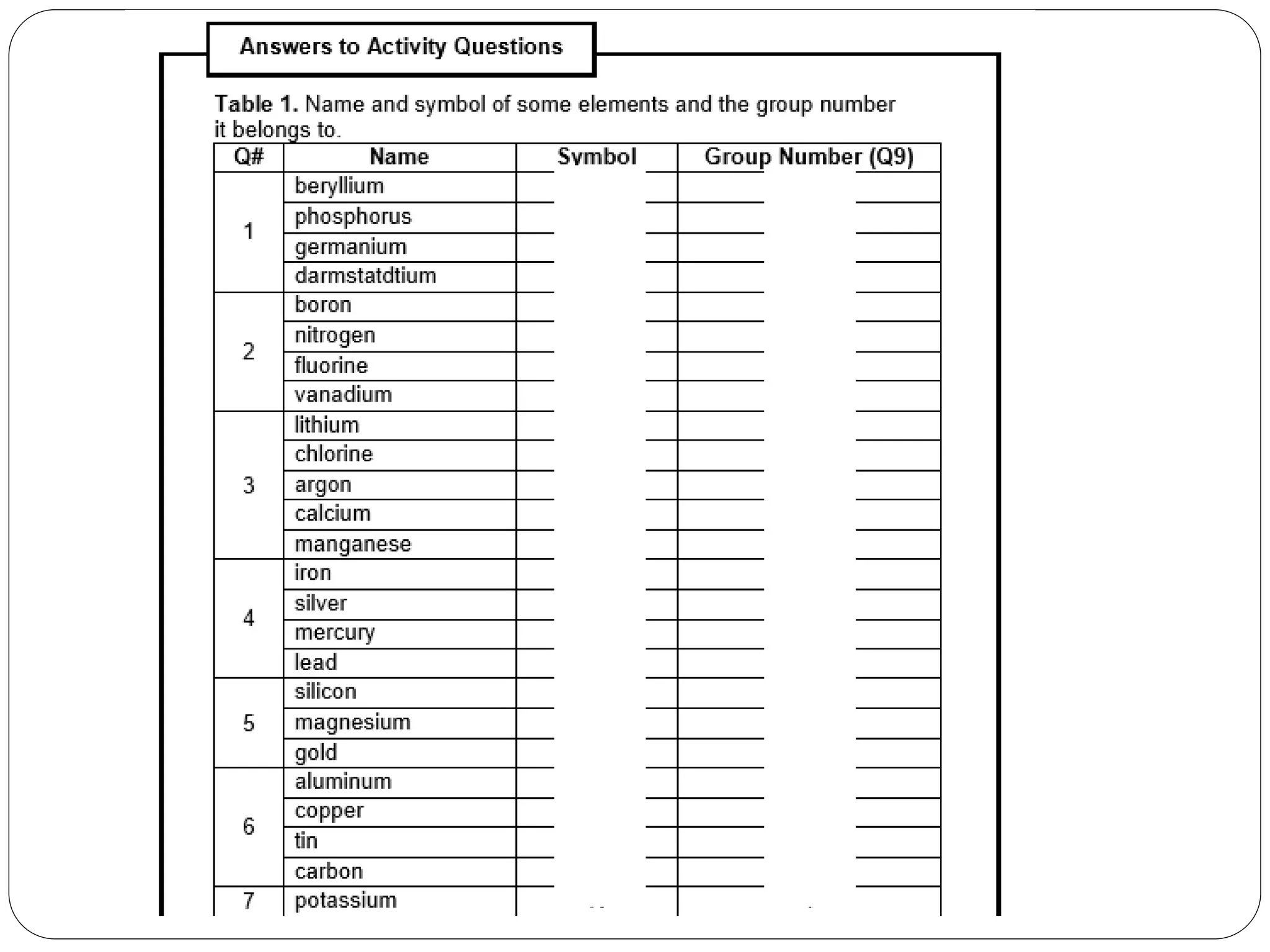
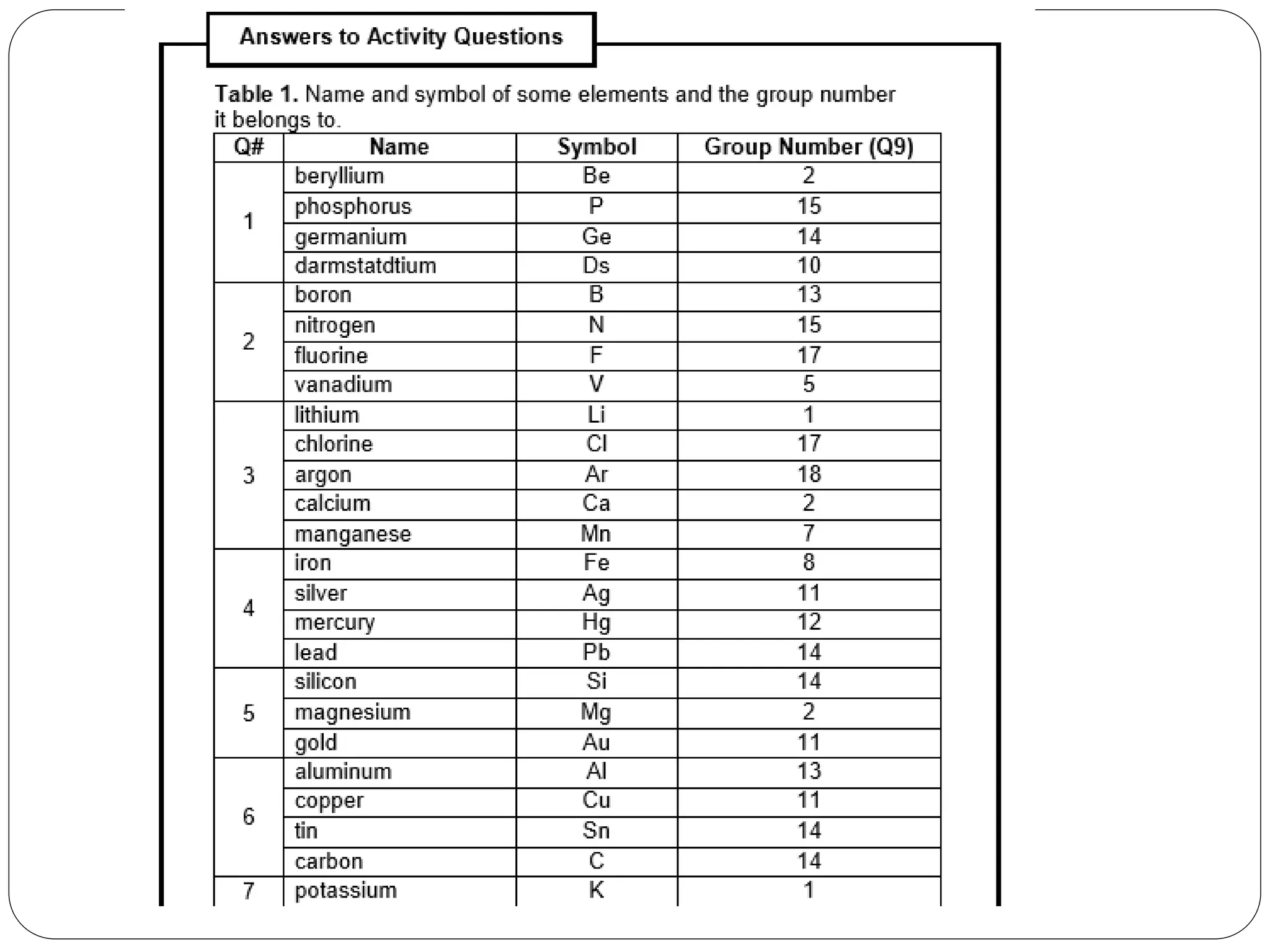
ACTIVITY NO. _______
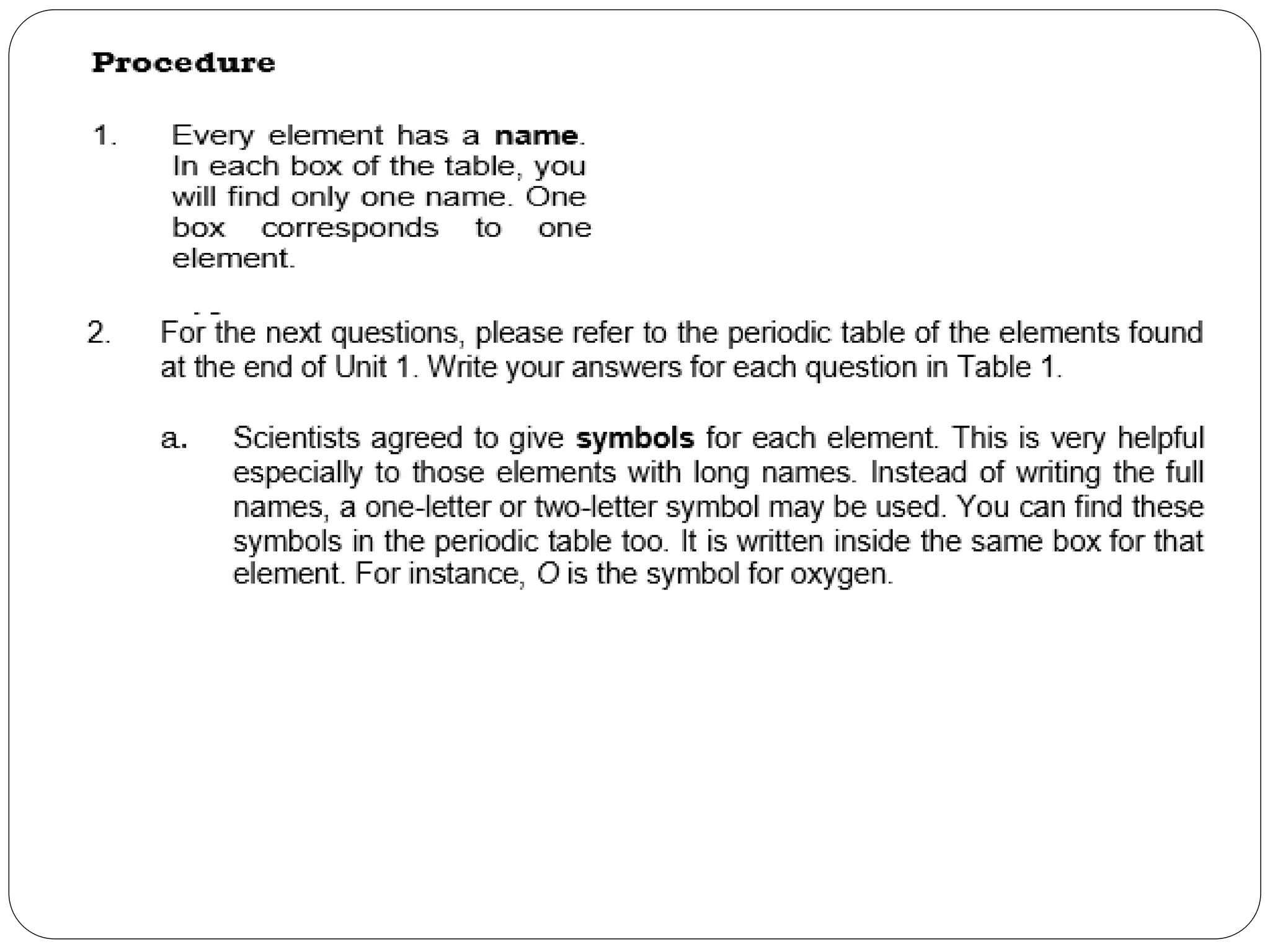
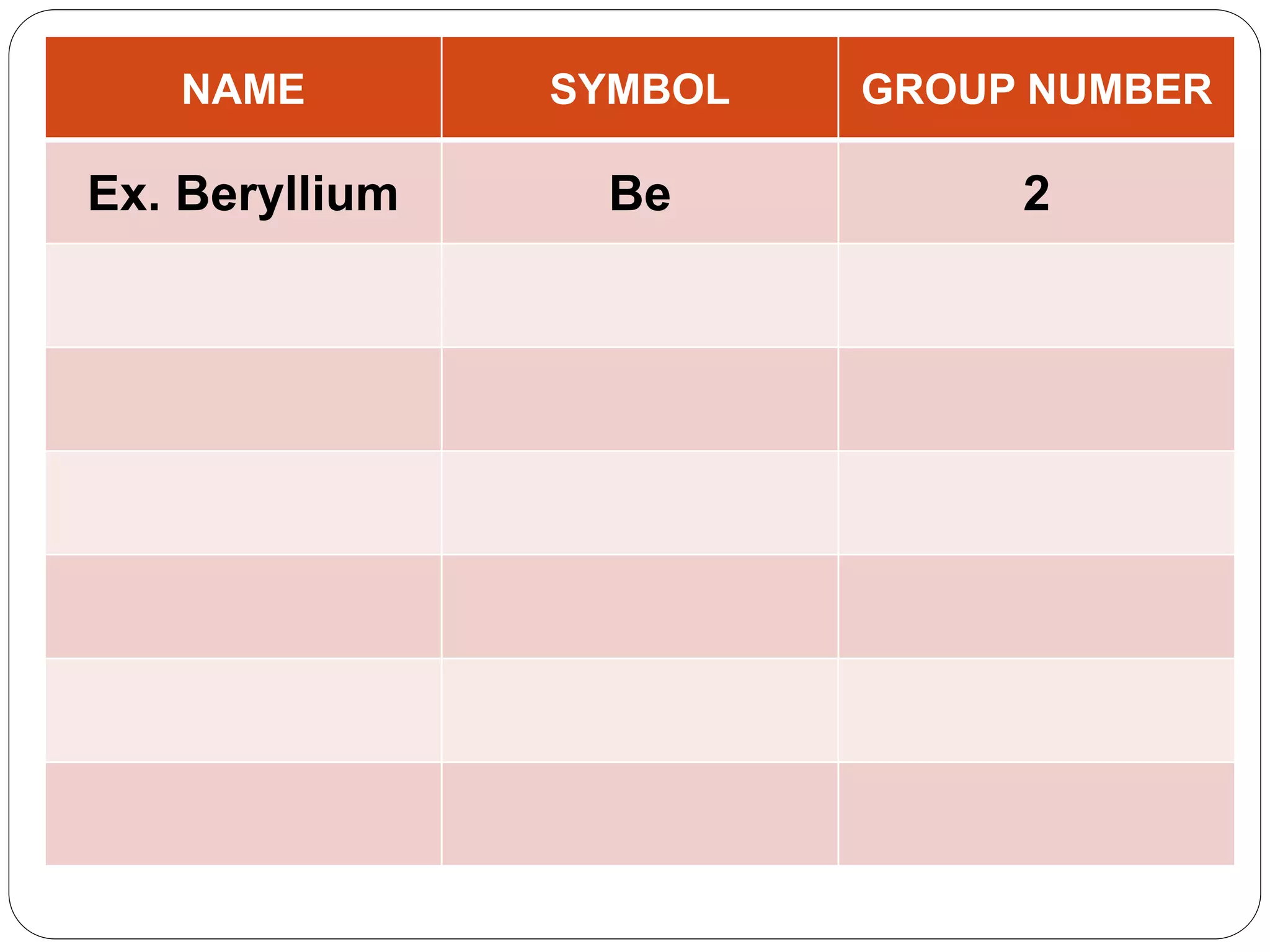
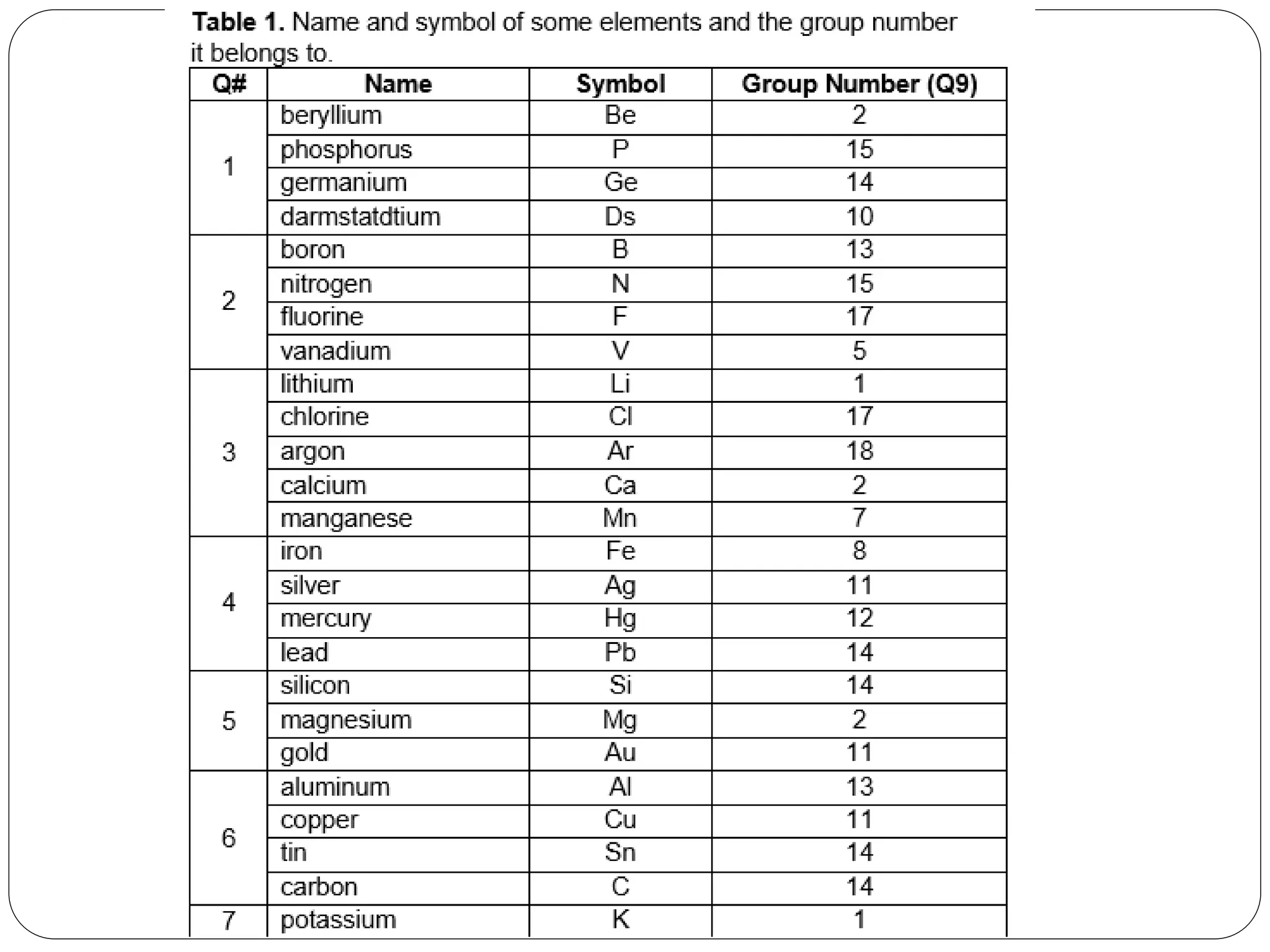
NAME SYMBOL GROUP NUMBER
Ex. Beryllium Be 2
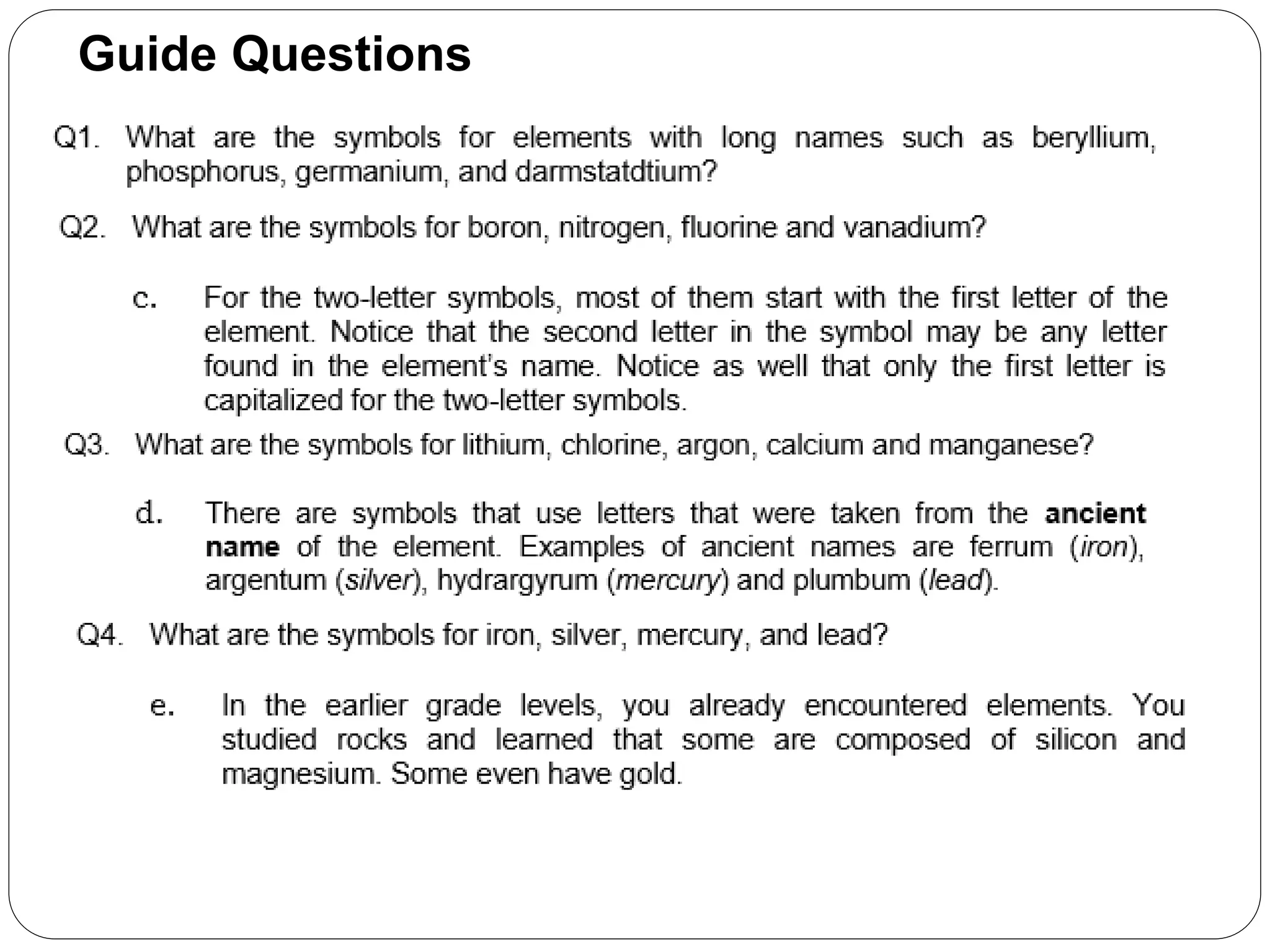
Guide Questions
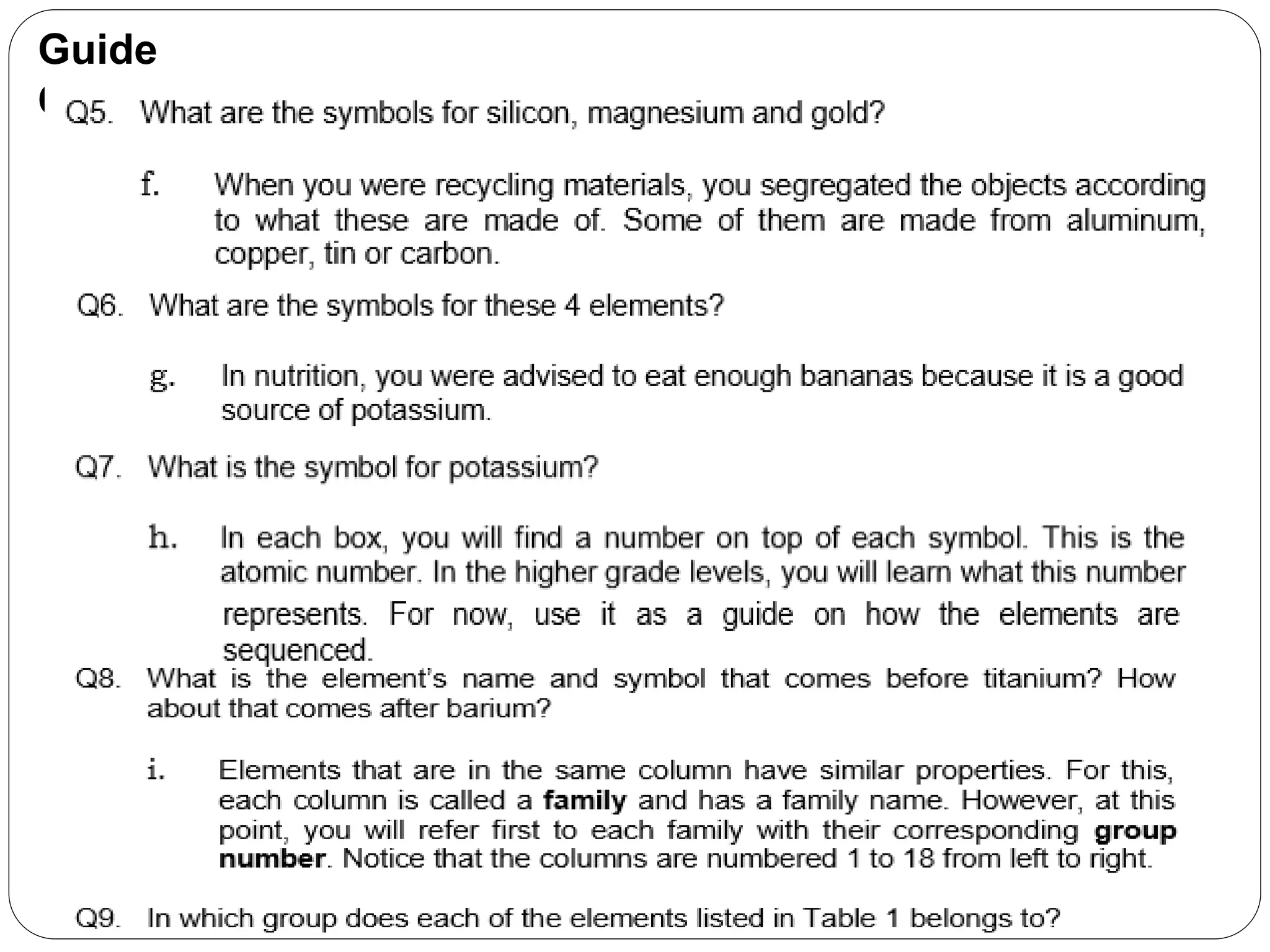
Guide
Questions
THANK YOU FOR LISTENING!
ELEMENTS AND COMPOUNDS.pptx

ELEMENTS AND COMPOUNDS.pptx