Electronic Fuel
Injection
By : Prashant Chandra Pujari
B.Tech 1st Year
Mechanical Engg.
Delhi Technological University
Conventional Fuel System
Disadvantage
 1.Camshaft actuated fuel systems plunger velocities are low at slow engine
speeds. Poor pressurization and atomization results.
 2. Timing and rate control are fixed in camshaft geometry.
 3. It produces a considerable amount pollutants which include unburnt
hydrocarbons and carbon monoxide, which are harmful to human beings.
 4. There is a strong need to develop a kind of new technology which
could minimize pollution from these engines.
Direct fuel injection
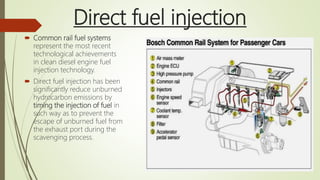
 Common rail fuel systems
represent the most recent
technological achievements
in clean diesel engine fuel
injection technology.
 Direct fuel injection has been
significantly reduce unburned
hydrocarbon emissions by
timing the injection of fuel in
such way as to prevent the
escape of unburned fuel from
the exhaust port during the
scavenging process.
Fuel injection and valve timing
Electronic Injection
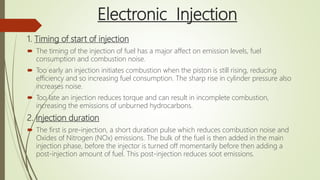
1. Timing of start of injection
 The timing of the injection of fuel has a major affect on emission levels, fuel
consumption and combustion noise.
 Too early an injection initiates combustion when the piston is still rising, reducing
efficiency and so increasing fuel consumption. The sharp rise in cylinder pressure also
increases noise.
 Too late an injection reduces torque and can result in incomplete combustion,
increasing the emissions of unburned hydrocarbons.
2. Injection duration
 The first is pre-injection, a short duration pulse which reduces combustion noise and
Oxides of Nitrogen (NOx) emissions. The bulk of the fuel is then added in the main
injection phase, before the injector is turned off momentarily before then adding a
post-injection amount of fuel. This post-injection reduces soot emissions.
Thank
you

Electronic fuel injection

  • 1.
    Electronic Fuel Injection By :Prashant Chandra Pujari B.Tech 1st Year Mechanical Engg. Delhi Technological University
  • 2.
    Conventional Fuel System Disadvantage 1.Camshaft actuated fuel systems plunger velocities are low at slow engine speeds. Poor pressurization and atomization results.  2. Timing and rate control are fixed in camshaft geometry.  3. It produces a considerable amount pollutants which include unburnt hydrocarbons and carbon monoxide, which are harmful to human beings.  4. There is a strong need to develop a kind of new technology which could minimize pollution from these engines.
  • 3.
    Direct fuel injection Common rail fuel systems represent the most recent technological achievements in clean diesel engine fuel injection technology.  Direct fuel injection has been significantly reduce unburned hydrocarbon emissions by timing the injection of fuel in such way as to prevent the escape of unburned fuel from the exhaust port during the scavenging process.
  • 4.
    Fuel injection andvalve timing
  • 5.
    Electronic Injection 1. Timingof start of injection  The timing of the injection of fuel has a major affect on emission levels, fuel consumption and combustion noise.  Too early an injection initiates combustion when the piston is still rising, reducing efficiency and so increasing fuel consumption. The sharp rise in cylinder pressure also increases noise.  Too late an injection reduces torque and can result in incomplete combustion, increasing the emissions of unburned hydrocarbons. 2. Injection duration  The first is pre-injection, a short duration pulse which reduces combustion noise and Oxides of Nitrogen (NOx) emissions. The bulk of the fuel is then added in the main injection phase, before the injector is turned off momentarily before then adding a post-injection amount of fuel. This post-injection reduces soot emissions.
  • 6.