An Introduction to Electroanalytical Chemistry
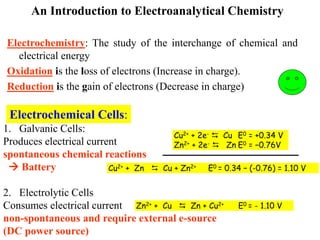
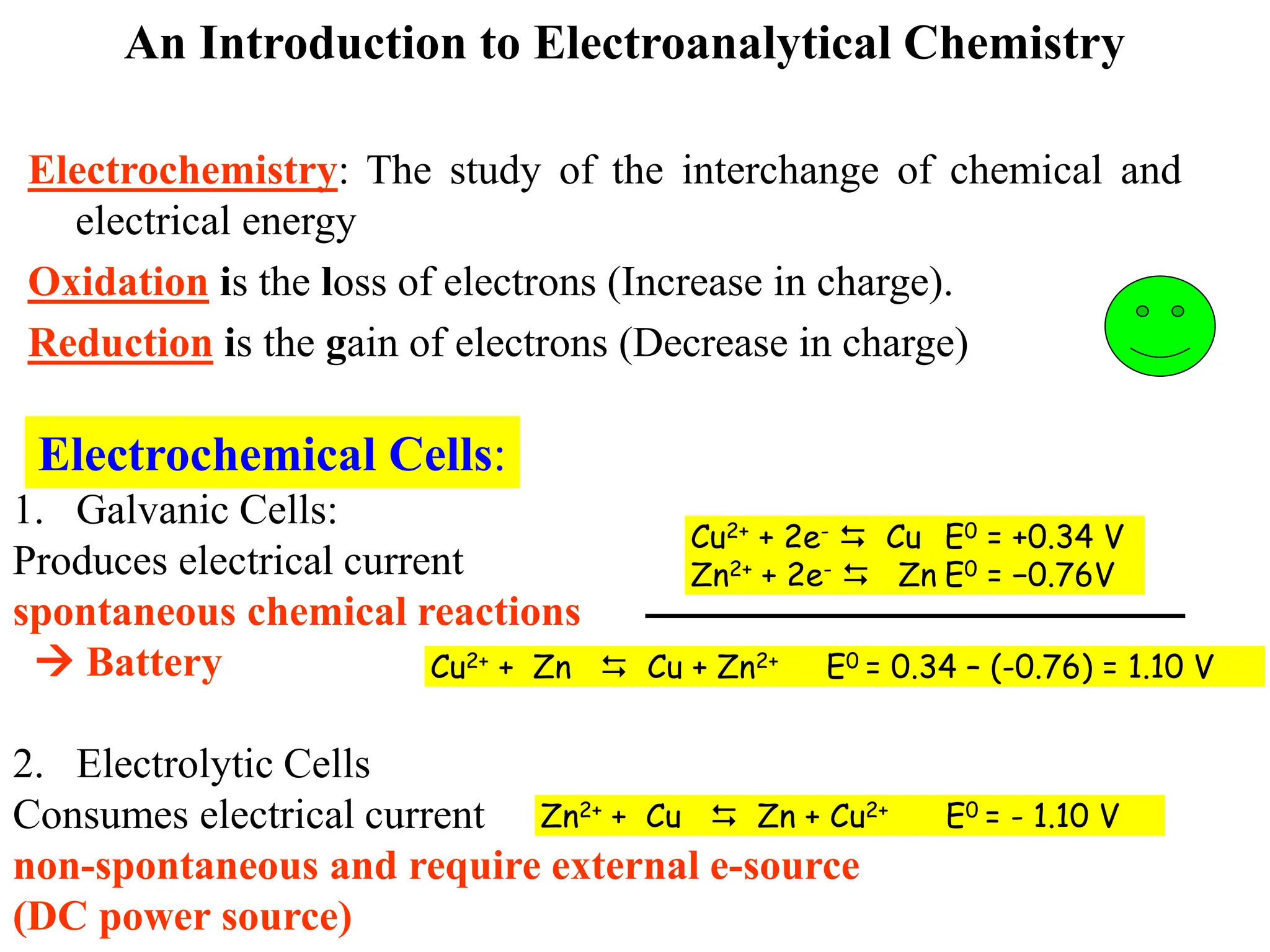
Electrochemistry: The study of the interchange of chemical and
electrical energy
Oxidation is the loss of electrons (Increase in charge).
Reduction is the gain of electrons (Decrease in charge)
Electrochemical Cells:
1. Galvanic Cells:
Produces electrical current
spontaneous chemical reactions
 Battery
2. Electrolytic Cells
Consumes electrical current
non-spontaneous and require external e-source
(DC power source)
Cu2+ + 2e-  Cu E0 = +0.34 V
Zn2+ + 2e-  Zn E0 = −0.76V
Cu2+ + Zn  Cu + Zn2+ E0 = 0.34 – (-0.76) = 1.10 V
Zn2+ + Cu  Zn + Cu2+ E0 = - 1.10 V
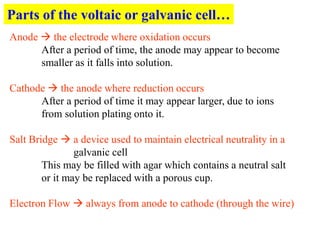
Parts of the voltaic or galvanic cell…
Anode  the electrode where oxidation occurs
After a period of time, the anode may appear to become
smaller as it falls into solution.
Cathode  the anode where reduction occurs
After a period of time it may appear larger, due to ions
from solution plating onto it.
Salt Bridge  a device used to maintain electrical neutrality in a
galvanic cell
This may be filled with agar which contains a neutral salt
or it may be replaced with a porous cup.
Electron Flow  always from anode to cathode (through the wire)
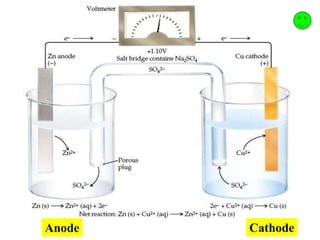
Anode Cathode
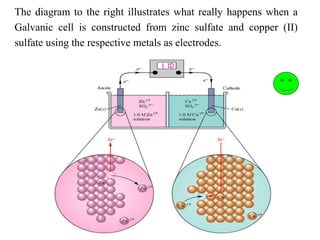
The diagram to the right illustrates what really happens when a
Galvanic cell is constructed from zinc sulfate and copper (II)
sulfate using the respective metals as electrodes.
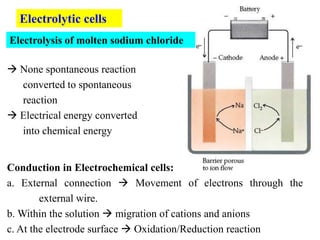
Electrolysis of molten sodium chloride
Electrolytic cells
 None spontaneous reaction
converted to spontaneous
reaction
 Electrical energy converted
into chemical energy
Conduction in Electrochemical cells:
a. External connection  Movement of electrons through the
external wire.
b. Within the solution  migration of cations and anions
c. At the electrode surface  Oxidation/Reduction reaction
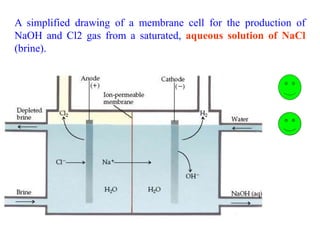
A simplified drawing of a membrane cell for the production of
NaOH and Cl2 gas from a saturated, aqueous solution of NaCl
(brine).
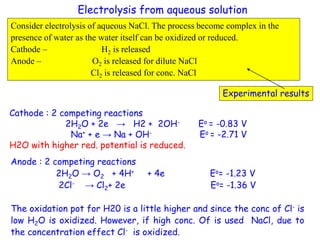
Electrolysis from aqueous solution
Cathode : 2 competing reactions
2H2O + 2e → H2 + 2OH- Eo = -0.83 V
Na+ + e → Na + OH- Eo = -2.71 V
H2O with higher red. potential is reduced.
Anode : 2 competing reactions
2H2O → O2 + 4H+ + 4e Eo= -1.23 V
2Cl- → Cl2+ 2e Eo= -1.36 V
The oxidation pot for H20 is a little higher and since the conc of Cl- is
low H2O is oxidized. However, if high conc. Of is used NaCl, due to
the concentration effect Cl- is oxidized.
Consider electrolysis of aqueous NaCl. The process become complex in the
presence of water as the water itself can be oxidized or reduced.
Cathode – H2 is released
Anode – O2 is released for dilute NaCl
Cl2 is released for conc. NaCl
Experimental results
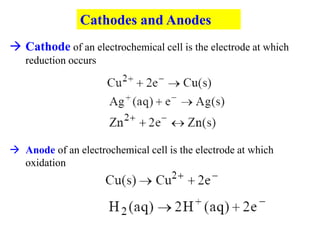
Cathodes and Anodes
 Cathode of an electrochemical cell is the electrode at which
reduction occurs
 Anode of an electrochemical cell is the electrode at which
oxidation
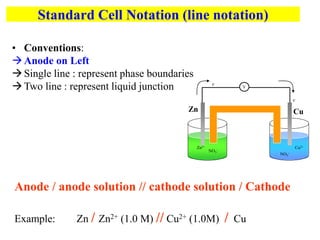
Standard Cell Notation (line notation)
• Conventions:
Anode on Left
Single line : represent phase boundaries
Two line : represent liquid junction
Cu2+
V
NO3
-
Zn2+
NO3
-
Cu
Zn
e-
e-
Anode / anode solution // cathode solution / Cathode
Example: Zn / Zn2+ (1.0 M) // Cu2+ (1.0M) / Cu

Electrochemistry Introduction electrochemical cells

  • 1.
    An Introduction toElectroanalytical Chemistry Electrochemistry: The study of the interchange of chemical and electrical energy Oxidation is the loss of electrons (Increase in charge). Reduction is the gain of electrons (Decrease in charge) Electrochemical Cells: 1. Galvanic Cells: Produces electrical current spontaneous chemical reactions  Battery 2. Electrolytic Cells Consumes electrical current non-spontaneous and require external e-source (DC power source) Cu2+ + 2e-  Cu E0 = +0.34 V Zn2+ + 2e-  Zn E0 = −0.76V Cu2+ + Zn  Cu + Zn2+ E0 = 0.34 – (-0.76) = 1.10 V Zn2+ + Cu  Zn + Cu2+ E0 = - 1.10 V
  • 2.
    Parts of thevoltaic or galvanic cell… Anode  the electrode where oxidation occurs After a period of time, the anode may appear to become smaller as it falls into solution. Cathode  the anode where reduction occurs After a period of time it may appear larger, due to ions from solution plating onto it. Salt Bridge  a device used to maintain electrical neutrality in a galvanic cell This may be filled with agar which contains a neutral salt or it may be replaced with a porous cup. Electron Flow  always from anode to cathode (through the wire)
  • 3.
  • 4.
    The diagram tothe right illustrates what really happens when a Galvanic cell is constructed from zinc sulfate and copper (II) sulfate using the respective metals as electrodes.
  • 5.
    Electrolysis of moltensodium chloride Electrolytic cells  None spontaneous reaction converted to spontaneous reaction  Electrical energy converted into chemical energy Conduction in Electrochemical cells: a. External connection  Movement of electrons through the external wire. b. Within the solution  migration of cations and anions c. At the electrode surface  Oxidation/Reduction reaction
  • 6.
    A simplified drawingof a membrane cell for the production of NaOH and Cl2 gas from a saturated, aqueous solution of NaCl (brine).
  • 7.
    Electrolysis from aqueoussolution Cathode : 2 competing reactions 2H2O + 2e → H2 + 2OH- Eo = -0.83 V Na+ + e → Na + OH- Eo = -2.71 V H2O with higher red. potential is reduced. Anode : 2 competing reactions 2H2O → O2 + 4H+ + 4e Eo= -1.23 V 2Cl- → Cl2+ 2e Eo= -1.36 V The oxidation pot for H20 is a little higher and since the conc of Cl- is low H2O is oxidized. However, if high conc. Of is used NaCl, due to the concentration effect Cl- is oxidized. Consider electrolysis of aqueous NaCl. The process become complex in the presence of water as the water itself can be oxidized or reduced. Cathode – H2 is released Anode – O2 is released for dilute NaCl Cl2 is released for conc. NaCl Experimental results
  • 8.
    Cathodes and Anodes Cathode of an electrochemical cell is the electrode at which reduction occurs  Anode of an electrochemical cell is the electrode at which oxidation
  • 9.
    Standard Cell Notation(line notation) • Conventions: Anode on Left Single line : represent phase boundaries Two line : represent liquid junction Cu2+ V NO3 - Zn2+ NO3 - Cu Zn e- e- Anode / anode solution // cathode solution / Cathode Example: Zn / Zn2+ (1.0 M) // Cu2+ (1.0M) / Cu