Electrify Responsibly
with Passive House Plus
Topics
• Our Motivation to Electrify
• The Context of the Project
• The Process of Electri
fi
cation
• Considerations for Electri
fi
cation
• Data
• Challenges of Electri
fi
cation
• Successes
• Experiences
• Opportunities
Motivation
Climate
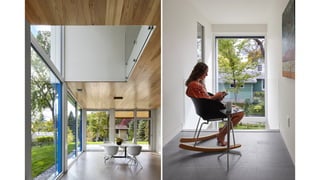
Comfort
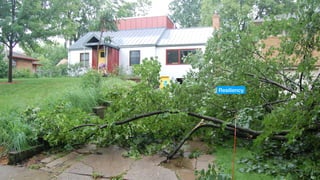
Resiliency
#GoodEnergyHaus
goodenergyhaus.com
@testudioarch
testudio.com
First certi
fi
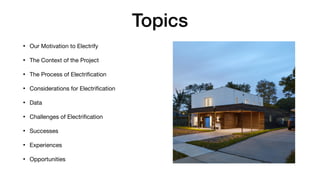
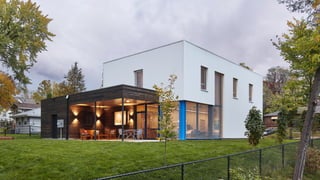
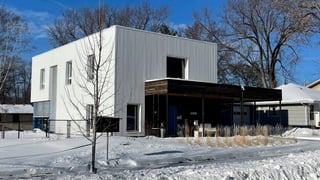
ed Passive House Plus new construction home in Minneapolis.
Why Electrify Everything?
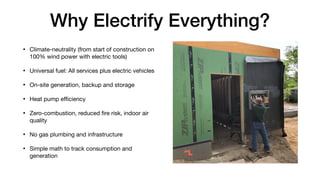
• Climate-neutrality (from start of construction on
100% wind power with electric tools)
• Universal fuel: All services plus electric vehicles
• On-site generation, backup and storage
• Heat pump e
ffi
ciency
• Zero-combustion, reduced
fi
re risk, indoor air
quality
• No gas plumbing and infrastructure
• Simple math to track consumption and
generation
Context
Minneapolis, Minnesota, USA
US Climate Zone 6 (very cold)
About 8,000 HDD
Design temp: -31º C [-24º F]
richardleonardschultz.com
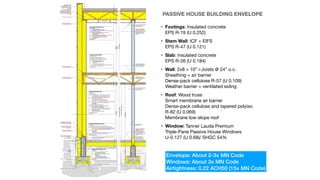
PASSIVE HOUSE BUILDING ENVELOPE
• Footings: Insulated concrete
EPS R-19 (U 0.252)
• Stem Wall: ICF + EIFS
EPS R-47 (U 0.121)
• Slab: Insulated concrete
EPS R-26 (U 0.184)
• Wall: 2x8 + 10” i-Joists @ 24” o.c.
Sheathing = air barrier
Dense-pack cellulose R-57 (U 0.109)
Weather barrier + ventilated siding
• Roof: Wood truss
Smart membrane air barrier
Dense-pack cellulose and tapered polyiso
R-82 (U 0.069)
Membrane low-slope roof
• Window: Tanner Lauda Premium
Triple-Pane Passive House Windows
U-0.127 (U 0.68)/ SHGC 54%
8"
4"
9'-6"
INTERIOR
WALL
FRAMING
1'-8"
3/4"
9'
WALL
FRAMING
1'-6"
3/4"
9'-4
1/8"
FIN
CLG
HT
1/2"
1/2"
7/8"
4"
4"
10"
FTG.
TYP.
3'-4"
STEM
WALL,
V.I.F.
6"
9'
EXTERIOR
WALL
FRAMING
4"
4"
10"
FTG.
TYP.
1'-10"
CTR
STEM
WALL,
V.I.F.
10'-6"
WALL
FRAMING
3"
2"
CLEAR
3"
CLEAR
MIN.
6"
7/8"
3"
LAP SOIL GAS BARRIER UP AND OVER STEM WALL, TAPE
TO EXTERIOR WALL SHEATHING
SLOPE ADJACENT SURFACE
AWAY FROM BUILDING MIN.
1/4" PER 1'-0"
WRB CONNECTION:
LAP ROOFING WRB UP AND
OVER PARAPET WALL AND
CONNECT WITH EXTERIOR
WALL WRB
AIRTIGHT CONNECTION:
CONTINUOUS SILL-SEAL AT
BOTTOM PLATE
LEVEL, COMPACTED BASE
PER STRUCTURAL ENGINEER
INSULATION
MINERAL WOOL BATT, OR NET AND DENSE-PACK
#4 @ 48" O.C.
6X6 - W1.4 X W1.4 W.W.F.
2X8 CONT. PLATE, 1/2" DIA.
ANCHOR BOLT (+ HOOK) @ 48"
O.C. EMBED 7" INTO CONC.
#4 @ 48" O.C.
8" HORIZ.
3'-0" VERT.
#4 CONT. TOP & BOT.
TYP. GRAVEL STRIP
6" CONC.
#4 CONT. TOP & BOT.
(2) #4 CONT.
2X6 CONT. PLATE,
1/2" DIA. ANCHOR BOLT
(+ HOOK) @ 48" O.C.
EMBED 7" INTO CONC.
TYPICAL CONCRETE SLAB, R-26
> INTERIOR
- 4" CONCRETE SLAB, SMOOTH ARCHITECTURAL FINISH
- SCHEDULED AIR, VAPOR AND WEATHER RESISTANT BARRIER
AIR AND VAPOR BARRIER, WEATHER RESISTANT BARRIER
SEAL JOINTS AND PROTRUSIONS AIRTHERTIGHTLY
- 8" EPS FOAM BOARD
INSULATION
TYPE AND COMPRESSION STRENGTH PER STRUC. ENG.
- COMPACTED AND LEVEL BASE PER STRUC. ENG.
> UNDISTURBED SOIL
TYPICAL WOOD WALL, R-57
> INTERIOR
- 5/8" WALLBOARD
- 2X8 STUD WALL @ 24" O.C. (ADVANCED STICK FRAMING)
WITH DENSE-PACK CELLULOSE INSULATION
STRUCTURE AND INSULATION, SERVICE CAVITY
- 7/16" HUBER ZIP WALL SHEATHING
AIR BARRIER AND VAPOR RETARDER
SEAL JOINTS AND PROTRUSIONS AIRTIGHT
- 9-1/2" I-JOIST @ 24" O.C. (CONTINUOUS, HUNG FROM STRUCTURE)
WITH DENSE-PACK CELLULOSE INSULATION
INSULATION
- 1/2" WOOD FIBER BOARD SHEATHING
- SCHEDULED WIND-WASH BARRIER (CONTINUOUS)
WEATHER RESISTANT BARRIER
SEAL JOINTS AND PROTRUSIONS WEATHERTIGHT
- 1X FURR FRAMING PER MANUF. SPECS. HORIZONTAL
VENTILATION CAVITY
SPACE FOR SCHEDULED SIDING
- SCHEDULED SIDING
> EXTERIOR
TYPICAL FLOOR SYSTEM
> SECOND FLOOR
- SCHEDULED FLOATING FLOOR
- 3/8" AKOUSTIK RUBBER UNDERLAYMENT
- 3/4" HUBER ADVANTECH SUBFLOOR, GLUED
- 20" OPEN WEB TRUSSES @ 24" O.C.
STRUCTURE, SERVICE CAVITY
- 7/8" HAT CHANNEL
WITH 3-1/2" FIBER INSULATION
- 1/2" WOOD FIBER BOARD SOUND ATTENUATION SHEATHING
- 1/2" SCHEDULED PLYWOOD CEILING
> FIRST FLOOR
HOT, LOW-SLOPE ROOF, R-67
> EXTERIOR
- TPO MEMBRANE SYSTEM
WEATHER RESISTANT BARRIER
- TAPER BOARD: MIN. 1/2" @ 1/4" PER 1'-0" SLOPE TO SCUPPERS
- 3/4" PLYWOOD ROOF DECK
- 18" OPEN WEB TRUSSES @ 24" O.C.: STRUCTURE
WITH DENSE-PACK CELLULOSE
INSULATION
- SCHEDULED AIR BARRIER AND SMART VAPOR RETARDER
AIR BARRIER AND VAPOR RETARDER
- 2X FURR FRAMING (ROOM BY ROOM) @ 24" O.C.
SERVICE CAVITY
- 5/8" WALLBOARD
> INTERIOR
PERIMETER STEM WALL, R-47
> INTERIOR
- 11" ICF: 2.5" EPS, 6" CONCRETE, 2.5" EPS
STRUCTURE & INSULATION
- 6" EPS EXTERIOR INSULATION FINISH SYSTEM
INSULATION
SOURCE-DRAINED SYSTEM
WEATHER RESISTANT BARRIER
- DIMPLE MAT AROUND PERIMETER OF BUILDING
> EXTERIOR
SET
FLUSH
SCHEDULED SERVICE
CAVITY
CONTINUOUS CAPILLARY
BREAK,
WEATHER RESISTANT
BARRIER
4" EPS "FORMWORK"
FINISH SYSTEM TO BOTTOM
OF FOOTING
3/8"
3/4"
8'-4
3/4"
FIN
CLG
HT
VARIES
5/8"
5
1/2"
1'-2"
3"
CLEAR
AIRTIGHT CONNECTION
ACOUSTICAL SEALANT
AIRTIGHT CONNECTION
ACOUSTICAL SEALANT
AIRTIGHT CONNECTION
ACOUSTICAL SEALANT
AIRTIGHT CONNECTION
ACOUSTICAL SEALANT
BOTTOM CHORD-BEARING
AT CENTER LOAD-
BEARING WALL, TYP.
BOTTOM CHORD-BEARING
AT CENTER LOAD-
BEARING WALL, TYP.
2X6 CENTER LOAD-
BEARING WALL
AIRTIGHT CONNECTION
SANDWICH AIR BARRIER AND
VAPOR RETARDER BETWEEN
TOP PLATE AND TRUSSES FOR
LATER ATTACHMENT TO FIELD
SHEETS
CONCRETE FOOTING, SEE S-1.1 PLAN,
BOT. OF FOOTING MIN. 3'-6" BELOW ADJACENT GRADE,
OR HARDSCAPE
AIRTIGHT CONNECTION
SANDWICH AIR BARRIER
AND VAPOR RETARDER
BETWEEN TOP PLATE AND
TRUSSES FOR LATER
ATTACHMENT TO FIELD
SHEETS
AIRTIGHT CONNECTION
SANDWICH SOIL GAS
BARRIER BETWEEN
BOTTOM PLATE AND ICF
FOR LATER ATTACHMENT
TO FIELD SHEETS;
CONTINOUS SILL SEAL AT
PLATE
SEPARATE "QUIET"
ROOMS IN TRUSS CAVITY
WITH BATT INSULATION
CAULK WALL BOARD TO
PERIMETER FRAMING OF
"QUIET" ROOMS WITH
ACOUSTICAL SEALANT
"H3" ANCHOR, EA. TRUSS
#4 @ 48" O.C.,
PROVIDE 8"
HOOK IN FTG.
(2) #4 CONT.
82
Envelope: About 2-3x MN Code
Windows: About 3x MN Code
Airtightness: 0.22 ACH50 (15x MN Code)
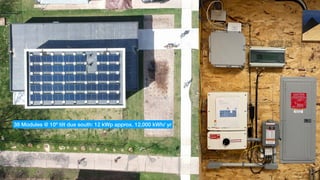
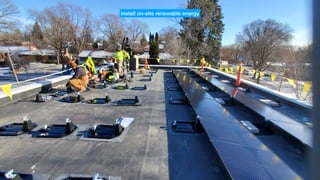
38 Modules @ 10º tilt due south: 12 kWp approx. 12,000 kWh/ yr
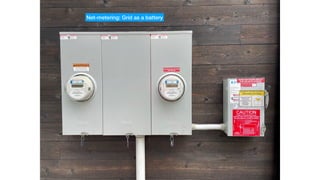
Net-metering: Grid as a battery
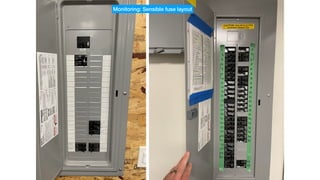
Monitoring: Sensible fuse layout
Monitoring
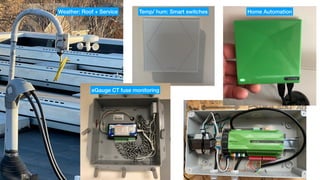
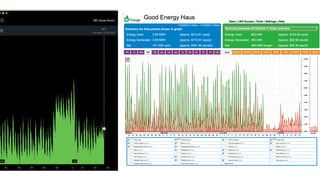
• Energy: 19 circuits and total consumption plus production (eGauge)
• Temperature, humidity: 5 locations (Loxone system)
• Weather: Online service and rooftop weather station (Loxone system)
• Indoor Air Quality: 1 location (Airthings)
Weather: Roof + Service Temp/ hum: Smart switches Home Automation
eGauge CT fuse monitoring
Process
Process
• Orientation and site development
• Passive House
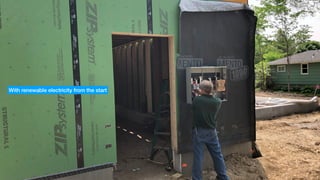
• Electric grid connection (from start of construction)
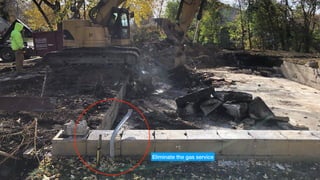
• Elimination of gas service
• Solar PV installation
• Heat Pump (heating), heat pump (cooling), heat pump (hot water), heat pump (clothes dryer), heat
pump (refrigerator)
• Plug-in hybrid replaced 2023 with EV (with heat pump)
• Hybrid car replaced 2024 with EV (with heat pump)
COVERED FONT PORCH
COVERED PATIO
PATIO
IMPERVIOUS TOTAL 3
PERVIOUS TOTAL 6
A. Review Project Schedules fo
B. Locate house per project ori
field
C. Erosion control silt fence at p
D. Construction area: Protect e
1. Curb cut
2. Drive – concrete paver
3. Front porch – concrete paver
4. Patio – concrete paver
5. Rock maintenance strip, 18” wid
6. Electric meter, verify with utility
7. Rain garden
8. No-mow turf restoration
9. 12” catch basin, below gutter do
10.4” drain pipe solid
11.Pipe outlet with rock riprap
12.Rock construction entrance, pro
13.Construction staging area, any
erosion control
14.Protect tree during construction
15.Staging area, existing asphalt d
16.Existing curb cut
17.Continuous erosion control at p
boulevard; already in place at ti
18.Heat pump, outdoor unit
Rotate new home 90 degrees versus previous home
Build garage as buffer on north side
Build a certi
fi
ed Passive House
With renewable electricity from the start
Eliminate the gas service
Install on-site renewable energy
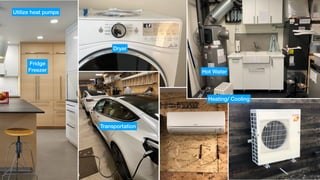
Why Heat Pumps?
• Tried and true technology
• Reliable, even in a very cold climate zone (they do not quit!)
• Coe
ffi
cient of productivity is always better than 1, e.g. better than electric
resistance heating, or combustion
• Ability of modern heat pumps to match varying loads
• Ability to shift loads, and/ or do multiple jobs at once (i.e. water heater
dehumidi
fi
es home)
• Universally available for refrigeration, heating/ cooling, hot water heating, clothes
drying and in vehicles
Utilize heat pumps
Fridge
Freezer
Dryer
Hot Water
Heating/ Cooling
Transportation
Data
Analysis by
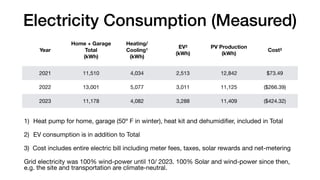
Electricity Consumption (Measured)
Year
Home + Garage
Total
(kWh)
Heating/
Cooling1
(kWh)
EV2
(kWh)
PV Production
(kWh)
Cost3
2021 11,510 4,034 2,513 12,842 $73.49
2022 13,001 5,077 3,011 11,125 ($266.39)
2023 11,178 4,082 3,288 11,409 ($424.32)
1) Heat pump for home, garage (50º F in winter), heat kit and dehumidi
fi
er, included in Total
2) EV consumption is in addition to Total
3) Cost includes entire electric bill including meter fees, taxes, solar rewards and net-metering
Grid electricity was 100% wind-power until 10/ 2023. 100% Solar and wind-power since then,
e.g. the site and transportation are climate-neutral.
Challenging Measurements
Analysis by
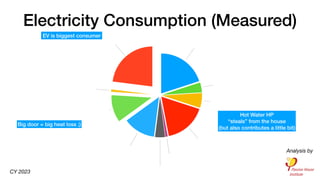
Electricity Consumption (Measured)
EV
23%
Garage
1%
Heat/ Cool Garage
11%
Appliances
13%
Network
4%
Dehumidi
fi
1%
Heat/ Cool House
17%
Hot Water HP
6%
Ventilation
4%
Plug Loads, Lights
20%
Analysis by
EV is biggest consumer
CY 2023
Big door = big heat loss ;)
Hot Water HP
“steals” from the house
(but also contributes a little bit)
Electricity Consumption (Home)
Electricity
[kWh/
a]
0
500
1000
1500
2000
2500
3000
2023 - Consumer
Dehumidi
fi
er Network Ventilation Hot Water HP Appliances Heat/ Cool House Plugs, Lights
1,961
2,417
1,901
813
546
633
74
4.1 kWh/ m2 a
12.4 kWh/ m2 a
Analysis by
CY 2023
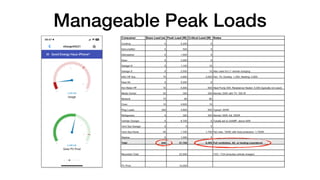
Manageable Peak Loads
Consumer Base Load (w) Peak Load (W) Critical Load (W) Notes
Cooktop 5 5,200 5
Dehumidifier 5 500 5
Dishwasher 5 1,500 5
Dryer 5 3,000 5
Garage N 5 1,100 10
Garage S 5 2,500 10 Also used for L1 vehicle charging
HAC HP Sys 75 4,900 3,000 Fan: 75; Cooling: 1,350; Heating: 2,600
Heat Kit 0 5,000 0
Hot Water HP 10 5,500 500 Heat Pump 500; Resistance Heater: 5,000 (typically not used)
Media Center 25 350 350 Normal: 25W; with TV: 350 W
Network 75 80 80
Oven 10 4,600 10
Plug Loads 350 4,800 500 Typical: 350W
Refrigerator 5 300 300 Normal: 55W; full: 300W
Vehicle Charger 5 9,700 5 Tyically set to 24AMP, about 5kW
Vent Sys Garage 5 5 5
Vent Sys Home 45 1,700 1,700 Fan max: 150W; with frost protection: 1,700W
Washer 5 1,050 5
Total 640 51,785 6,495 Full ventilation, AC, or heating considered
Recorded Total 22,500 7/23 - 7/24 (includes vehicle charger)
PV Prod 10,000
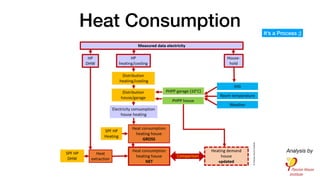
PHPP Balance for the Heating Demand
Analysis by
Key In
fl
uencers: Weather and thermostat set point
(typical for high-performance buildings)
Heat Consumption
Analysis by
It’s a Process ;)
Space Heating - Useful Energy
Analysis by
The value of 16.5 to 22.0 kWh/
(m²a) includes about 7.6 kWh/
(m²a) heat extraction by the
hot water heat pump.
Consequently, without the
in
fl
uence of the hot water heat
pump, about 9 to 14.5 kWh/
(m²a) remain for space
heating.
Thus a very good result is
achieved, even with the
slightly higher indoor
temperature (21.5°C).
😱
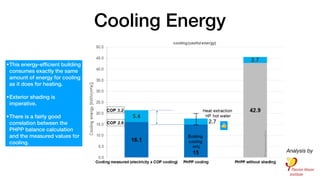
Cooling Energy
Analysis by
•This energy-ef
fi
cient building
consumes exactly the same
amount of energy for cooling
as it does for heating.
•Exterior shading is
imperative.
•There is a fairly good
correlation between the
PHPP balance calculation
and the measured values for
cooling.
👍
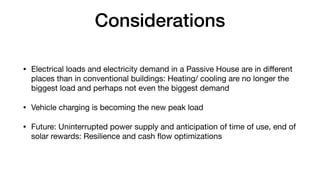
Considerations
• Electrical loads and electricity demand in a Passive House are in di
ff
erent
places than in conventional buildings: Heating/ cooling are no longer the
biggest load and perhaps not even the biggest demand
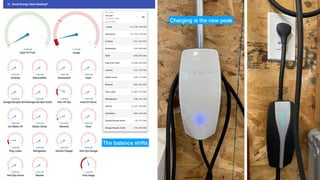
• Vehicle charging is becoming the new peak load
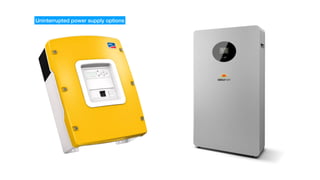
• Future: Uninterrupted power supply and anticipation of time of use, end of
solar rewards: Resilience and cash
fl
ow optimizations
The balance shifts
Charging is the new peak
Uninterrupted power supply options
Challenges
• Calculating heat pumps that combine loads, or share extraction spaces is really hard
• The clean grid matters (subscribe to renewable energy plan)
• Seasonal load shifting “Hill-Valley” issue (production vs. consumption) cannot yet be overcome with technology, yet
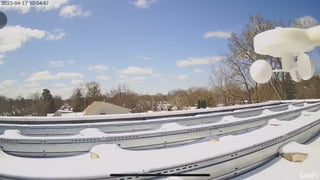
• Snow, sun angles, daylight hours, grid uptime a
ff
ect PV production and not all of this can yet be overcome with technology:
Snow = 0kWh, Power outage = 0kWh, Winter day = 15kWh, Summer Day 85kWh
• Power outages take everything down, although that is also true with gas appliances as most rely on an electrical connection as
well
• Gas disconnect (utility not prepared but not an issue)
• Grid regulation and incentives can in
fl
uence, or upset targets (PV system size, system setup, batteries, etc.)
• Gas is way too cheap in Minneapolis (less than 3 cents/ kWh); unless the home is a Passive House, the swap to all-electric
does not make
fi
scal sense in our market
• We need more
fl
exibility (low load equipment) and transparency (standardized performance data for PHPP) for heat pumps but
we can make work what’s available today
Successes
• Electri
fi
cation just works with a Passive House; no cop-out: All loads are accounted for!
• Home has been net-zero annually since move-in (but not on any given day)
• Even some EV charging can be fueled from own PV system
• All-electric Passive House is easy to live with but still a
ff
ected by power outages.
However, that can be more easily solved with technology (battery backup)
• Low consumption and incentive programs mean zero energy bill, and small annual
surplus to help pay back cost for PV system (about 1/3 of system cost over 10 years)
• Passive House puts a cap on peak loads that is more compatible with grid-capacity
than business as usual buildings
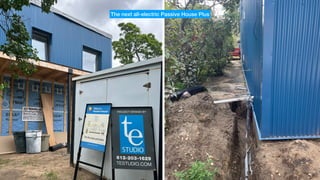
The next all-electric Passive House Plus
Experiences
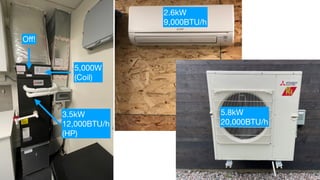
• Cold Climate Air Source Heat Pump
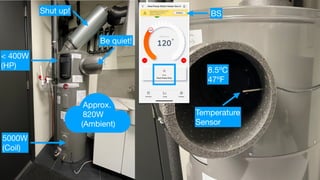
• Air-to-water hot water heater
3.5kW
12,000BTU/h
(HP)
5.8kW
20,000BTU/h
2.6kW
9,000BTU/h
5,000W
(Coil)
O
ff
!
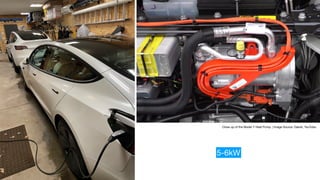
Close up of the Model Y Heat Pump. | Image Source: Daerik, YouTube.
5-6kW
< 400W
(HP)
5000W
(Coil)
Approx.
820W
(Ambient)
Shut up!
Be quiet!
Temperature
Sensor
BS
8.5ºC
47ºF
Opportunities
• Di
ff
erent wiring and location for panels based on new peak consumers
and loads
• DC and low-voltage wiring as well as on-site storage will become more
“normal” in the future
• On-site production and storage will shape the economics of energy cost
and/ or revenue, as well as resilience
Thank you.
@testudioarch
testudio.com
Special thanks to the PHI
- Søren Peper
- Jürgen Schnieders
- Jessica Grove-Smith

Electrify Responsibly with Passive House Plus

  • 1.
  • 2.
    Topics • Our Motivationto Electrify • The Context of the Project • The Process of Electri fi cation • Considerations for Electri fi cation • Data • Challenges of Electri fi cation • Successes • Experiences • Opportunities
  • 3.
  • 4.
  • 5.
  • 6.
  • 7.
  • 8.
    Why Electrify Everything? •Climate-neutrality (from start of construction on 100% wind power with electric tools) • Universal fuel: All services plus electric vehicles • On-site generation, backup and storage • Heat pump e ffi ciency • Zero-combustion, reduced fi re risk, indoor air quality • No gas plumbing and infrastructure • Simple math to track consumption and generation
  • 9.
  • 10.
    Minneapolis, Minnesota, USA USClimate Zone 6 (very cold) About 8,000 HDD Design temp: -31º C [-24º F] richardleonardschultz.com
  • 12.
    PASSIVE HOUSE BUILDINGENVELOPE • Footings: Insulated concrete EPS R-19 (U 0.252) • Stem Wall: ICF + EIFS EPS R-47 (U 0.121) • Slab: Insulated concrete EPS R-26 (U 0.184) • Wall: 2x8 + 10” i-Joists @ 24” o.c. Sheathing = air barrier Dense-pack cellulose R-57 (U 0.109) Weather barrier + ventilated siding • Roof: Wood truss Smart membrane air barrier Dense-pack cellulose and tapered polyiso R-82 (U 0.069) Membrane low-slope roof • Window: Tanner Lauda Premium Triple-Pane Passive House Windows U-0.127 (U 0.68)/ SHGC 54% 8" 4" 9'-6" INTERIOR WALL FRAMING 1'-8" 3/4" 9' WALL FRAMING 1'-6" 3/4" 9'-4 1/8" FIN CLG HT 1/2" 1/2" 7/8" 4" 4" 10" FTG. TYP. 3'-4" STEM WALL, V.I.F. 6" 9' EXTERIOR WALL FRAMING 4" 4" 10" FTG. TYP. 1'-10" CTR STEM WALL, V.I.F. 10'-6" WALL FRAMING 3" 2" CLEAR 3" CLEAR MIN. 6" 7/8" 3" LAP SOIL GAS BARRIER UP AND OVER STEM WALL, TAPE TO EXTERIOR WALL SHEATHING SLOPE ADJACENT SURFACE AWAY FROM BUILDING MIN. 1/4" PER 1'-0" WRB CONNECTION: LAP ROOFING WRB UP AND OVER PARAPET WALL AND CONNECT WITH EXTERIOR WALL WRB AIRTIGHT CONNECTION: CONTINUOUS SILL-SEAL AT BOTTOM PLATE LEVEL, COMPACTED BASE PER STRUCTURAL ENGINEER INSULATION MINERAL WOOL BATT, OR NET AND DENSE-PACK #4 @ 48" O.C. 6X6 - W1.4 X W1.4 W.W.F. 2X8 CONT. PLATE, 1/2" DIA. ANCHOR BOLT (+ HOOK) @ 48" O.C. EMBED 7" INTO CONC. #4 @ 48" O.C. 8" HORIZ. 3'-0" VERT. #4 CONT. TOP & BOT. TYP. GRAVEL STRIP 6" CONC. #4 CONT. TOP & BOT. (2) #4 CONT. 2X6 CONT. PLATE, 1/2" DIA. ANCHOR BOLT (+ HOOK) @ 48" O.C. EMBED 7" INTO CONC. TYPICAL CONCRETE SLAB, R-26 > INTERIOR - 4" CONCRETE SLAB, SMOOTH ARCHITECTURAL FINISH - SCHEDULED AIR, VAPOR AND WEATHER RESISTANT BARRIER AIR AND VAPOR BARRIER, WEATHER RESISTANT BARRIER SEAL JOINTS AND PROTRUSIONS AIRTHERTIGHTLY - 8" EPS FOAM BOARD INSULATION TYPE AND COMPRESSION STRENGTH PER STRUC. ENG. - COMPACTED AND LEVEL BASE PER STRUC. ENG. > UNDISTURBED SOIL TYPICAL WOOD WALL, R-57 > INTERIOR - 5/8" WALLBOARD - 2X8 STUD WALL @ 24" O.C. (ADVANCED STICK FRAMING) WITH DENSE-PACK CELLULOSE INSULATION STRUCTURE AND INSULATION, SERVICE CAVITY - 7/16" HUBER ZIP WALL SHEATHING AIR BARRIER AND VAPOR RETARDER SEAL JOINTS AND PROTRUSIONS AIRTIGHT - 9-1/2" I-JOIST @ 24" O.C. (CONTINUOUS, HUNG FROM STRUCTURE) WITH DENSE-PACK CELLULOSE INSULATION INSULATION - 1/2" WOOD FIBER BOARD SHEATHING - SCHEDULED WIND-WASH BARRIER (CONTINUOUS) WEATHER RESISTANT BARRIER SEAL JOINTS AND PROTRUSIONS WEATHERTIGHT - 1X FURR FRAMING PER MANUF. SPECS. HORIZONTAL VENTILATION CAVITY SPACE FOR SCHEDULED SIDING - SCHEDULED SIDING > EXTERIOR TYPICAL FLOOR SYSTEM > SECOND FLOOR - SCHEDULED FLOATING FLOOR - 3/8" AKOUSTIK RUBBER UNDERLAYMENT - 3/4" HUBER ADVANTECH SUBFLOOR, GLUED - 20" OPEN WEB TRUSSES @ 24" O.C. STRUCTURE, SERVICE CAVITY - 7/8" HAT CHANNEL WITH 3-1/2" FIBER INSULATION - 1/2" WOOD FIBER BOARD SOUND ATTENUATION SHEATHING - 1/2" SCHEDULED PLYWOOD CEILING > FIRST FLOOR HOT, LOW-SLOPE ROOF, R-67 > EXTERIOR - TPO MEMBRANE SYSTEM WEATHER RESISTANT BARRIER - TAPER BOARD: MIN. 1/2" @ 1/4" PER 1'-0" SLOPE TO SCUPPERS - 3/4" PLYWOOD ROOF DECK - 18" OPEN WEB TRUSSES @ 24" O.C.: STRUCTURE WITH DENSE-PACK CELLULOSE INSULATION - SCHEDULED AIR BARRIER AND SMART VAPOR RETARDER AIR BARRIER AND VAPOR RETARDER - 2X FURR FRAMING (ROOM BY ROOM) @ 24" O.C. SERVICE CAVITY - 5/8" WALLBOARD > INTERIOR PERIMETER STEM WALL, R-47 > INTERIOR - 11" ICF: 2.5" EPS, 6" CONCRETE, 2.5" EPS STRUCTURE & INSULATION - 6" EPS EXTERIOR INSULATION FINISH SYSTEM INSULATION SOURCE-DRAINED SYSTEM WEATHER RESISTANT BARRIER - DIMPLE MAT AROUND PERIMETER OF BUILDING > EXTERIOR SET FLUSH SCHEDULED SERVICE CAVITY CONTINUOUS CAPILLARY BREAK, WEATHER RESISTANT BARRIER 4" EPS "FORMWORK" FINISH SYSTEM TO BOTTOM OF FOOTING 3/8" 3/4" 8'-4 3/4" FIN CLG HT VARIES 5/8" 5 1/2" 1'-2" 3" CLEAR AIRTIGHT CONNECTION ACOUSTICAL SEALANT AIRTIGHT CONNECTION ACOUSTICAL SEALANT AIRTIGHT CONNECTION ACOUSTICAL SEALANT AIRTIGHT CONNECTION ACOUSTICAL SEALANT BOTTOM CHORD-BEARING AT CENTER LOAD- BEARING WALL, TYP. BOTTOM CHORD-BEARING AT CENTER LOAD- BEARING WALL, TYP. 2X6 CENTER LOAD- BEARING WALL AIRTIGHT CONNECTION SANDWICH AIR BARRIER AND VAPOR RETARDER BETWEEN TOP PLATE AND TRUSSES FOR LATER ATTACHMENT TO FIELD SHEETS CONCRETE FOOTING, SEE S-1.1 PLAN, BOT. OF FOOTING MIN. 3'-6" BELOW ADJACENT GRADE, OR HARDSCAPE AIRTIGHT CONNECTION SANDWICH AIR BARRIER AND VAPOR RETARDER BETWEEN TOP PLATE AND TRUSSES FOR LATER ATTACHMENT TO FIELD SHEETS AIRTIGHT CONNECTION SANDWICH SOIL GAS BARRIER BETWEEN BOTTOM PLATE AND ICF FOR LATER ATTACHMENT TO FIELD SHEETS; CONTINOUS SILL SEAL AT PLATE SEPARATE "QUIET" ROOMS IN TRUSS CAVITY WITH BATT INSULATION CAULK WALL BOARD TO PERIMETER FRAMING OF "QUIET" ROOMS WITH ACOUSTICAL SEALANT "H3" ANCHOR, EA. TRUSS #4 @ 48" O.C., PROVIDE 8" HOOK IN FTG. (2) #4 CONT. 82 Envelope: About 2-3x MN Code Windows: About 3x MN Code Airtightness: 0.22 ACH50 (15x MN Code)
  • 18.
    38 Modules @10º tilt due south: 12 kWp approx. 12,000 kWh/ yr
  • 19.
  • 20.
  • 21.
    Monitoring • Energy: 19circuits and total consumption plus production (eGauge) • Temperature, humidity: 5 locations (Loxone system) • Weather: Online service and rooftop weather station (Loxone system) • Indoor Air Quality: 1 location (Airthings)
  • 22.
    Weather: Roof +Service Temp/ hum: Smart switches Home Automation eGauge CT fuse monitoring
  • 24.
  • 25.
    Process • Orientation andsite development • Passive House • Electric grid connection (from start of construction) • Elimination of gas service • Solar PV installation • Heat Pump (heating), heat pump (cooling), heat pump (hot water), heat pump (clothes dryer), heat pump (refrigerator) • Plug-in hybrid replaced 2023 with EV (with heat pump) • Hybrid car replaced 2024 with EV (with heat pump)
  • 26.
    COVERED FONT PORCH COVEREDPATIO PATIO IMPERVIOUS TOTAL 3 PERVIOUS TOTAL 6 A. Review Project Schedules fo B. Locate house per project ori field C. Erosion control silt fence at p D. Construction area: Protect e 1. Curb cut 2. Drive – concrete paver 3. Front porch – concrete paver 4. Patio – concrete paver 5. Rock maintenance strip, 18” wid 6. Electric meter, verify with utility 7. Rain garden 8. No-mow turf restoration 9. 12” catch basin, below gutter do 10.4” drain pipe solid 11.Pipe outlet with rock riprap 12.Rock construction entrance, pro 13.Construction staging area, any erosion control 14.Protect tree during construction 15.Staging area, existing asphalt d 16.Existing curb cut 17.Continuous erosion control at p boulevard; already in place at ti 18.Heat pump, outdoor unit Rotate new home 90 degrees versus previous home Build garage as buffer on north side
  • 27.
    Build a certi fi edPassive House
  • 28.
  • 29.
  • 30.
  • 31.
    Why Heat Pumps? •Tried and true technology • Reliable, even in a very cold climate zone (they do not quit!) • Coe ffi cient of productivity is always better than 1, e.g. better than electric resistance heating, or combustion • Ability of modern heat pumps to match varying loads • Ability to shift loads, and/ or do multiple jobs at once (i.e. water heater dehumidi fi es home) • Universally available for refrigeration, heating/ cooling, hot water heating, clothes drying and in vehicles
  • 32.
    Utilize heat pumps Fridge Freezer Dryer HotWater Heating/ Cooling Transportation
  • 33.
  • 34.
    Electricity Consumption (Measured) Year Home+ Garage Total (kWh) Heating/ Cooling1 (kWh) EV2 (kWh) PV Production (kWh) Cost3 2021 11,510 4,034 2,513 12,842 $73.49 2022 13,001 5,077 3,011 11,125 ($266.39) 2023 11,178 4,082 3,288 11,409 ($424.32) 1) Heat pump for home, garage (50º F in winter), heat kit and dehumidi fi er, included in Total 2) EV consumption is in addition to Total 3) Cost includes entire electric bill including meter fees, taxes, solar rewards and net-metering Grid electricity was 100% wind-power until 10/ 2023. 100% Solar and wind-power since then, e.g. the site and transportation are climate-neutral.
  • 35.
  • 36.
    Electricity Consumption (Measured) EV 23% Garage 1% Heat/Cool Garage 11% Appliances 13% Network 4% Dehumidi fi 1% Heat/ Cool House 17% Hot Water HP 6% Ventilation 4% Plug Loads, Lights 20% Analysis by EV is biggest consumer CY 2023 Big door = big heat loss ;) Hot Water HP “steals” from the house (but also contributes a little bit)
  • 37.
    Electricity Consumption (Home) Electricity [kWh/ a] 0 500 1000 1500 2000 2500 3000 2023- Consumer Dehumidi fi er Network Ventilation Hot Water HP Appliances Heat/ Cool House Plugs, Lights 1,961 2,417 1,901 813 546 633 74 4.1 kWh/ m2 a 12.4 kWh/ m2 a Analysis by CY 2023
  • 38.
    Manageable Peak Loads ConsumerBase Load (w) Peak Load (W) Critical Load (W) Notes Cooktop 5 5,200 5 Dehumidifier 5 500 5 Dishwasher 5 1,500 5 Dryer 5 3,000 5 Garage N 5 1,100 10 Garage S 5 2,500 10 Also used for L1 vehicle charging HAC HP Sys 75 4,900 3,000 Fan: 75; Cooling: 1,350; Heating: 2,600 Heat Kit 0 5,000 0 Hot Water HP 10 5,500 500 Heat Pump 500; Resistance Heater: 5,000 (typically not used) Media Center 25 350 350 Normal: 25W; with TV: 350 W Network 75 80 80 Oven 10 4,600 10 Plug Loads 350 4,800 500 Typical: 350W Refrigerator 5 300 300 Normal: 55W; full: 300W Vehicle Charger 5 9,700 5 Tyically set to 24AMP, about 5kW Vent Sys Garage 5 5 5 Vent Sys Home 45 1,700 1,700 Fan max: 150W; with frost protection: 1,700W Washer 5 1,050 5 Total 640 51,785 6,495 Full ventilation, AC, or heating considered Recorded Total 22,500 7/23 - 7/24 (includes vehicle charger) PV Prod 10,000
  • 39.
    PHPP Balance forthe Heating Demand Analysis by Key In fl uencers: Weather and thermostat set point (typical for high-performance buildings)
  • 40.
  • 41.
    Space Heating -Useful Energy Analysis by The value of 16.5 to 22.0 kWh/ (m²a) includes about 7.6 kWh/ (m²a) heat extraction by the hot water heat pump. Consequently, without the in fl uence of the hot water heat pump, about 9 to 14.5 kWh/ (m²a) remain for space heating. Thus a very good result is achieved, even with the slightly higher indoor temperature (21.5°C). 😱
  • 42.
    Cooling Energy Analysis by •Thisenergy-ef fi cient building consumes exactly the same amount of energy for cooling as it does for heating. •Exterior shading is imperative. •There is a fairly good correlation between the PHPP balance calculation and the measured values for cooling. 👍
  • 43.
    Considerations • Electrical loadsand electricity demand in a Passive House are in di ff erent places than in conventional buildings: Heating/ cooling are no longer the biggest load and perhaps not even the biggest demand • Vehicle charging is becoming the new peak load • Future: Uninterrupted power supply and anticipation of time of use, end of solar rewards: Resilience and cash fl ow optimizations
  • 44.
  • 45.
  • 46.
    Challenges • Calculating heatpumps that combine loads, or share extraction spaces is really hard • The clean grid matters (subscribe to renewable energy plan) • Seasonal load shifting “Hill-Valley” issue (production vs. consumption) cannot yet be overcome with technology, yet • Snow, sun angles, daylight hours, grid uptime a ff ect PV production and not all of this can yet be overcome with technology: Snow = 0kWh, Power outage = 0kWh, Winter day = 15kWh, Summer Day 85kWh • Power outages take everything down, although that is also true with gas appliances as most rely on an electrical connection as well • Gas disconnect (utility not prepared but not an issue) • Grid regulation and incentives can in fl uence, or upset targets (PV system size, system setup, batteries, etc.) • Gas is way too cheap in Minneapolis (less than 3 cents/ kWh); unless the home is a Passive House, the swap to all-electric does not make fi scal sense in our market • We need more fl exibility (low load equipment) and transparency (standardized performance data for PHPP) for heat pumps but we can make work what’s available today
  • 49.
    Successes • Electri fi cation justworks with a Passive House; no cop-out: All loads are accounted for! • Home has been net-zero annually since move-in (but not on any given day) • Even some EV charging can be fueled from own PV system • All-electric Passive House is easy to live with but still a ff ected by power outages. However, that can be more easily solved with technology (battery backup) • Low consumption and incentive programs mean zero energy bill, and small annual surplus to help pay back cost for PV system (about 1/3 of system cost over 10 years) • Passive House puts a cap on peak loads that is more compatible with grid-capacity than business as usual buildings
  • 50.
    The next all-electricPassive House Plus
  • 51.
    Experiences • Cold ClimateAir Source Heat Pump • Air-to-water hot water heater
  • 52.
  • 53.
    Close up ofthe Model Y Heat Pump. | Image Source: Daerik, YouTube. 5-6kW
  • 54.
    < 400W (HP) 5000W (Coil) Approx. 820W (Ambient) Shut up! Bequiet! Temperature Sensor BS 8.5ºC 47ºF
  • 55.
    Opportunities • Di ff erent wiringand location for panels based on new peak consumers and loads • DC and low-voltage wiring as well as on-site storage will become more “normal” in the future • On-site production and storage will shape the economics of energy cost and/ or revenue, as well as resilience
  • 56.
    Thank you. @testudioarch testudio.com Special thanksto the PHI - Søren Peper - Jürgen Schnieders - Jessica Grove-Smith