Electricity
and
Magnetism
Targets
Explain the basic properties of
magnets.
01
Identify factors that influence
the strength of a magnetic force.
02
Demonstrate how magnets
interact through magnetic
fields.
03
Engage
What do you know
about magnets?
Why do some objects stick to
magnets while others don’t?
Which of the items on the
right do you believe will stick
to a magnet?
01
02
03
Defining Magnet
A magnet is an object that can pull
certain materials, like iron or steel,
toward itself.
Magnets have two special ends called
poles: a north pole and a south pole.
They can attract or repel other
magnets depending on how their poles
are aligned.
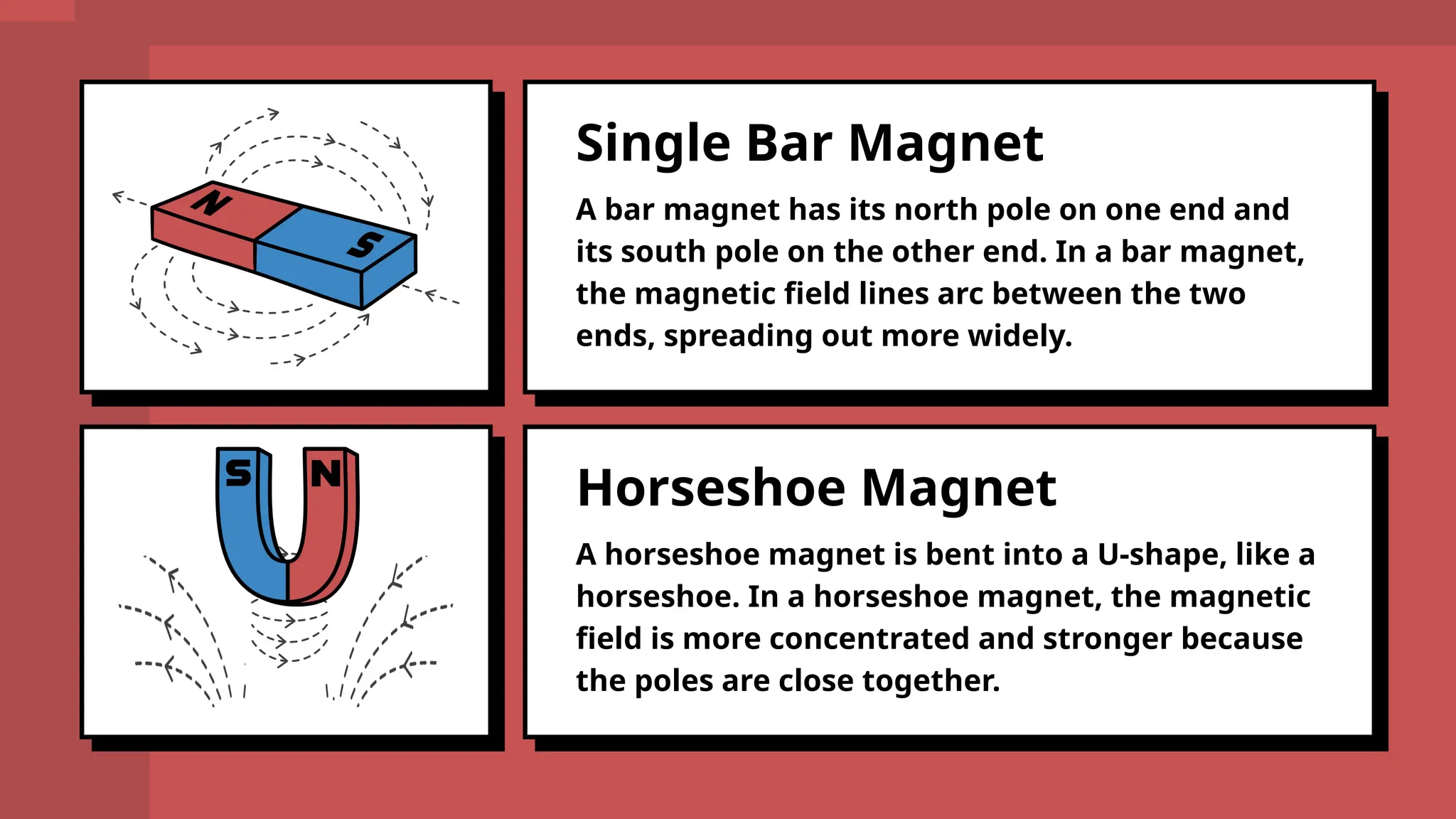
Single Bar Magnet
A bar magnet has its north pole on one end and
its south pole on the other end. In a bar magnet,
the magnetic field lines arc between the two
ends, spreading out more widely.
Horseshoe Magnet
A horseshoe magnet is bent into a U-shape, like a
horseshoe. In a horseshoe magnet, the magnetic
field is more concentrated and stronger because
the poles are close together.
Magnetic Force
Magnetic force is the invisible push or
pull that a magnet creates. It’s what
makes paper clips stick to a magnet or
lets two magnets push away from each
other.
This force comes from a magnetic field,
which is the area around a magnet
where its power works.
Attract or Repel
Opposites Attract
When you bring the north pole of one magnet close
to the south pole of another magnet, the two poles
pull toward each other. This is called attraction.
The attraction happens because opposite poles
create a force that pulls them together. This force
allows the magnets to stick to each other.
Attract or Repel
Likes Repel
If you bring two north poles or two south poles of
magnets close together, they push away from each
other. This is called repulsion.
The magnetic force between like poles is in the
opposite direction, so they don’t want to connect.
It’s as if the magnets are saying, “I need space!”
Permanent
Magnets
A permanent magnet is a material that keeps its
magnetic properties for a long time without
needing electricity or any external force. It can
attract certain materials like iron, nickel, and
cobalt and generate a consistent magnetic field.
Magnetic
Objects
Magnetic objects are materials that are attracted to
magnets. These objects contain magnetic materials,
such as iron, nickel, cobalt, or alloys like steel. The
reason these materials are magnetic is that their
atoms can easily align to form magnetic domains
Non-Magnetic
Non-magnetic objects are materials that do not
get attracted to magnets. They are made of
materials like plastic, wood, glass, or some
metals (like aluminum and copper) that cannot
form magnetic domains.
Magnetic Earth
Earth's magnetic field is like a
giant magnet that surrounds our
planet and extends into space.
The magnetic field lines around
Earth spread from the south
magnetic pole, curve around the
planet, and enter through the
north magnetic pole.
Maglev (Magnetic Levitation) trains work using
magnets to lift and move the train. Powerful magnets
on the train and the track create magnetic forces
that levitate the train above the track, eliminating
friction.
This allows the train to float and move smoothly at
high speeds. The magnets are also used to propel the
train forward by pushing and pulling it along the
track.
Maglev Train

Electricity and Magnetism- Grade7 ICSEpptx

  • 1.
  • 2.
    Targets Explain the basicproperties of magnets. 01 Identify factors that influence the strength of a magnetic force. 02 Demonstrate how magnets interact through magnetic fields. 03
  • 3.
    Engage What do youknow about magnets? Why do some objects stick to magnets while others don’t? Which of the items on the right do you believe will stick to a magnet? 01 02 03
  • 4.
    Defining Magnet A magnetis an object that can pull certain materials, like iron or steel, toward itself. Magnets have two special ends called poles: a north pole and a south pole. They can attract or repel other magnets depending on how their poles are aligned.
  • 5.
    Single Bar Magnet Abar magnet has its north pole on one end and its south pole on the other end. In a bar magnet, the magnetic field lines arc between the two ends, spreading out more widely. Horseshoe Magnet A horseshoe magnet is bent into a U-shape, like a horseshoe. In a horseshoe magnet, the magnetic field is more concentrated and stronger because the poles are close together.
  • 6.
    Magnetic Force Magnetic forceis the invisible push or pull that a magnet creates. It’s what makes paper clips stick to a magnet or lets two magnets push away from each other. This force comes from a magnetic field, which is the area around a magnet where its power works.
  • 7.
    Attract or Repel OppositesAttract When you bring the north pole of one magnet close to the south pole of another magnet, the two poles pull toward each other. This is called attraction. The attraction happens because opposite poles create a force that pulls them together. This force allows the magnets to stick to each other.
  • 8.
    Attract or Repel LikesRepel If you bring two north poles or two south poles of magnets close together, they push away from each other. This is called repulsion. The magnetic force between like poles is in the opposite direction, so they don’t want to connect. It’s as if the magnets are saying, “I need space!”
  • 9.
    Permanent Magnets A permanent magnetis a material that keeps its magnetic properties for a long time without needing electricity or any external force. It can attract certain materials like iron, nickel, and cobalt and generate a consistent magnetic field.
  • 10.
    Magnetic Objects Magnetic objects arematerials that are attracted to magnets. These objects contain magnetic materials, such as iron, nickel, cobalt, or alloys like steel. The reason these materials are magnetic is that their atoms can easily align to form magnetic domains
  • 11.
    Non-Magnetic Non-magnetic objects arematerials that do not get attracted to magnets. They are made of materials like plastic, wood, glass, or some metals (like aluminum and copper) that cannot form magnetic domains.
  • 12.
    Magnetic Earth Earth's magneticfield is like a giant magnet that surrounds our planet and extends into space. The magnetic field lines around Earth spread from the south magnetic pole, curve around the planet, and enter through the north magnetic pole.
  • 13.
    Maglev (Magnetic Levitation)trains work using magnets to lift and move the train. Powerful magnets on the train and the track create magnetic forces that levitate the train above the track, eliminating friction. This allows the train to float and move smoothly at high speeds. The magnets are also used to propel the train forward by pushing and pulling it along the track. Maglev Train