What do we
already
know?
Understand that some materials are
attracted to magnets
What the characteristics of magnets are
That magnets can repel and attract each
other
How magnets behave
What happens when you put two magnets
together
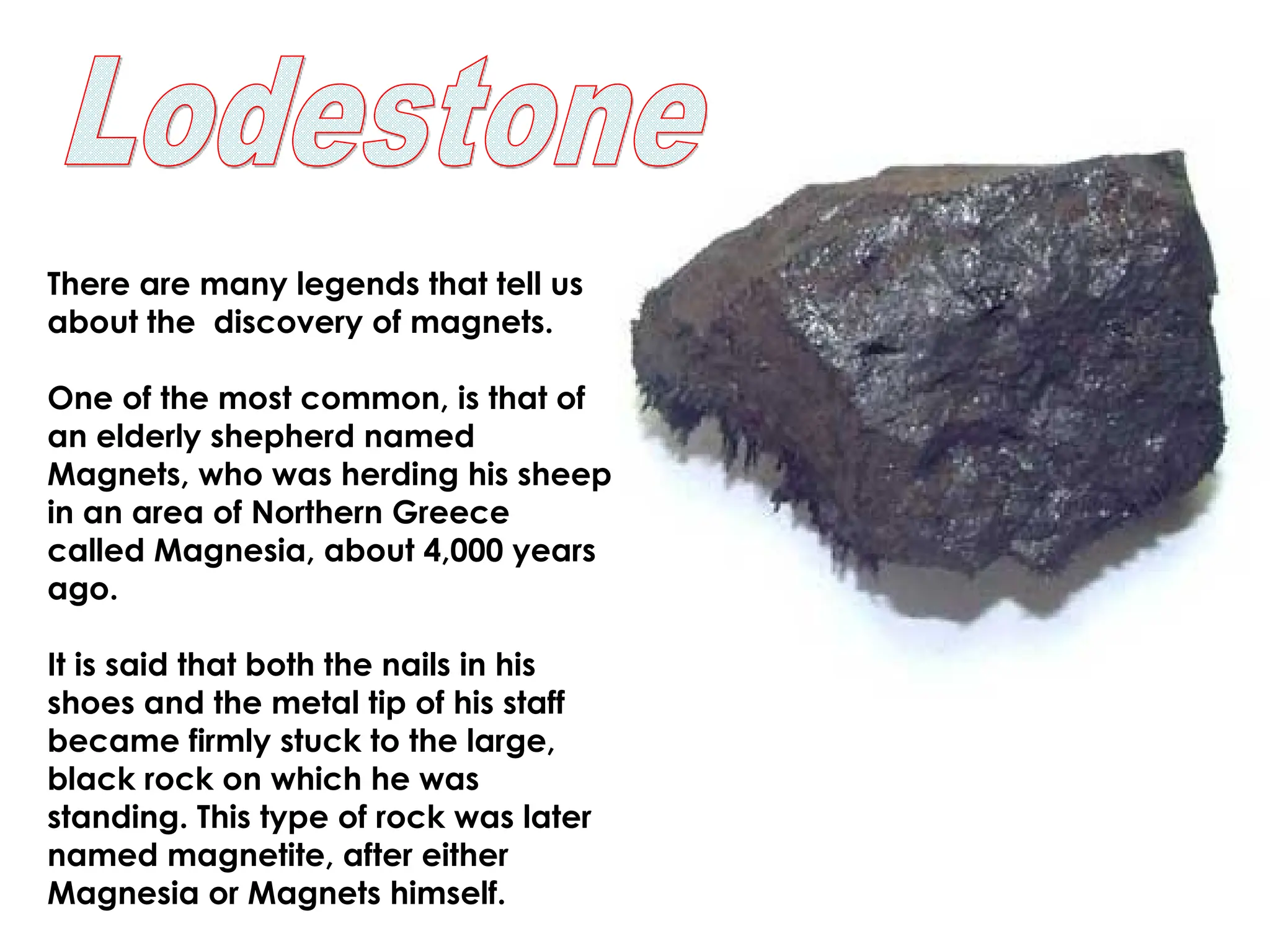
There are many legends that tell us
about the discovery of magnets.
One of the most common, is that of
an elderly shepherd named
Magnets, who was herding his sheep
in an area of Northern Greece
called Magnesia, about 4,000 years
ago.
It is said that both the nails in his
shoes and the metal tip of his staff
became firmly stuck to the large,
black rock on which he was
standing. This type of rock was later
named magnetite, after either
Magnesia or Magnets himself.
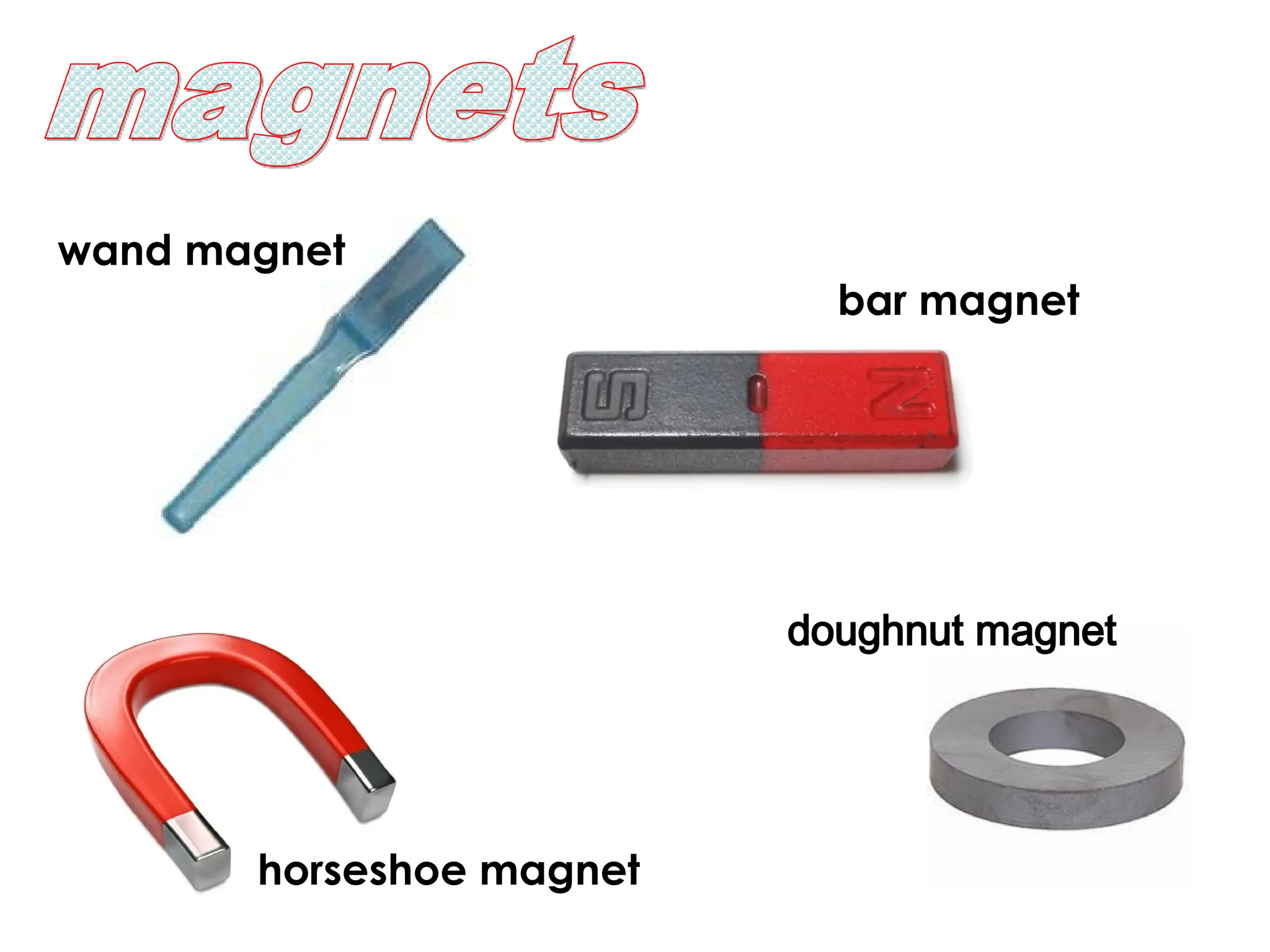
horseshoe magnet
bar magnet
doughnut magnet
wand magnet
Magnets are in most electronic devices, in fact,
anything that has a motor uses a magnet.
Televisions,
computers, and
microwave ovens
all operate with
magnets.
Magnets are used
to keep refrigerator
doors closed.
Magnets are even
placed in the
stomachs of cows
to catch metals!
They are used to slow
down roller coasters
and subways.
More uses of magnets are found every day!
They can
attract
some
materials.
They can
also
repel other
magnets.
They are usually
made of iron.
They have two
ends called
magnetic
poles.
• Magnet
A stone or a piece of metal that attracts some
other metal.
• Attract
To pull towards each other.
• Repel
To push away from each other.
• Poles
The ends of a magnet.
The blue end of a magnet is usually
the south pole.
The red end of a magnet is usually the
north pole.
Every magnet
has at least
one north
pole and one
south pole.
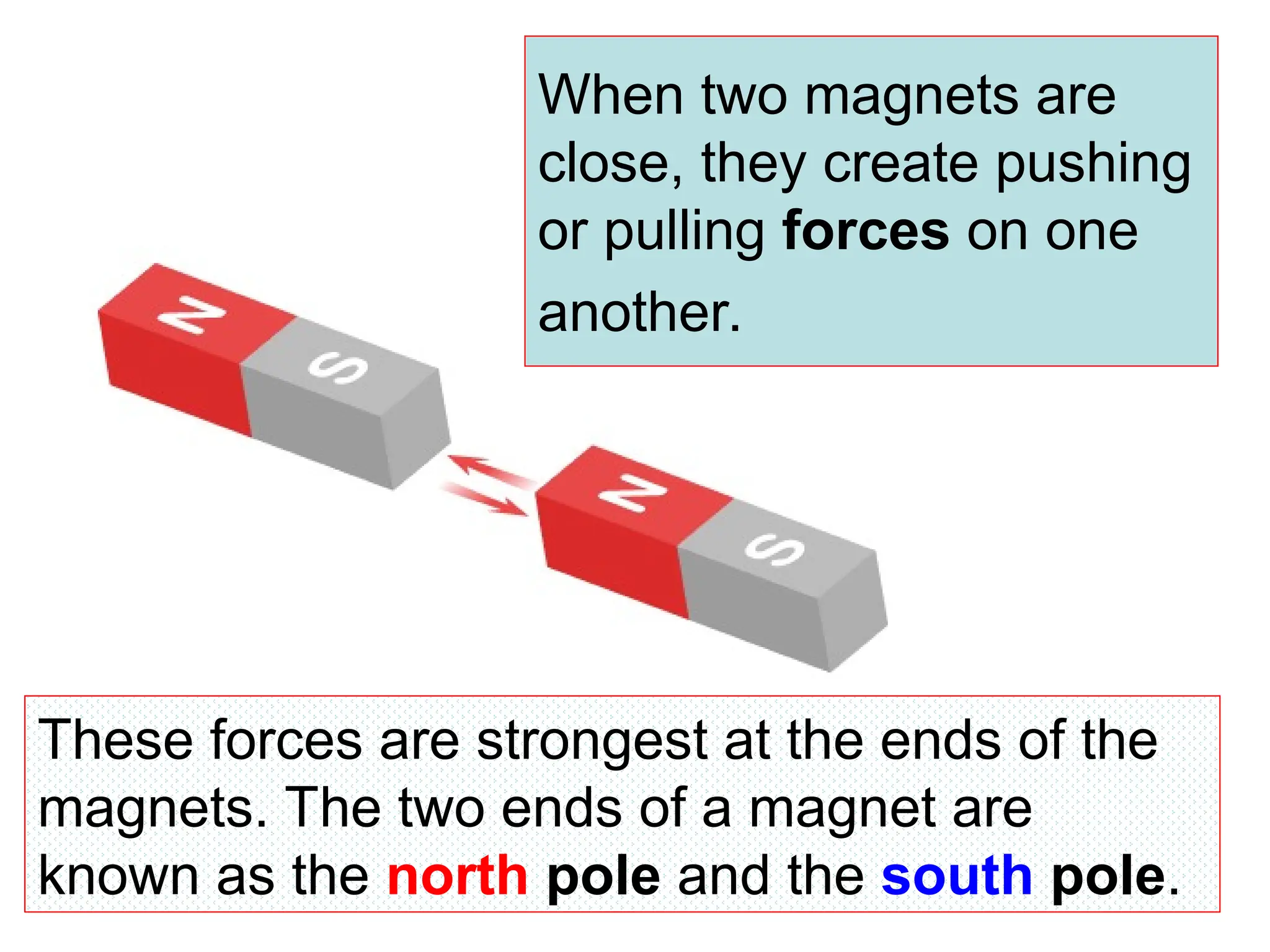
When two magnets are
close, they create pushing
or pulling forces on one
another.
These forces are strongest at the ends of the
magnets. The two ends of a magnet are
known as the north pole and the south pole.
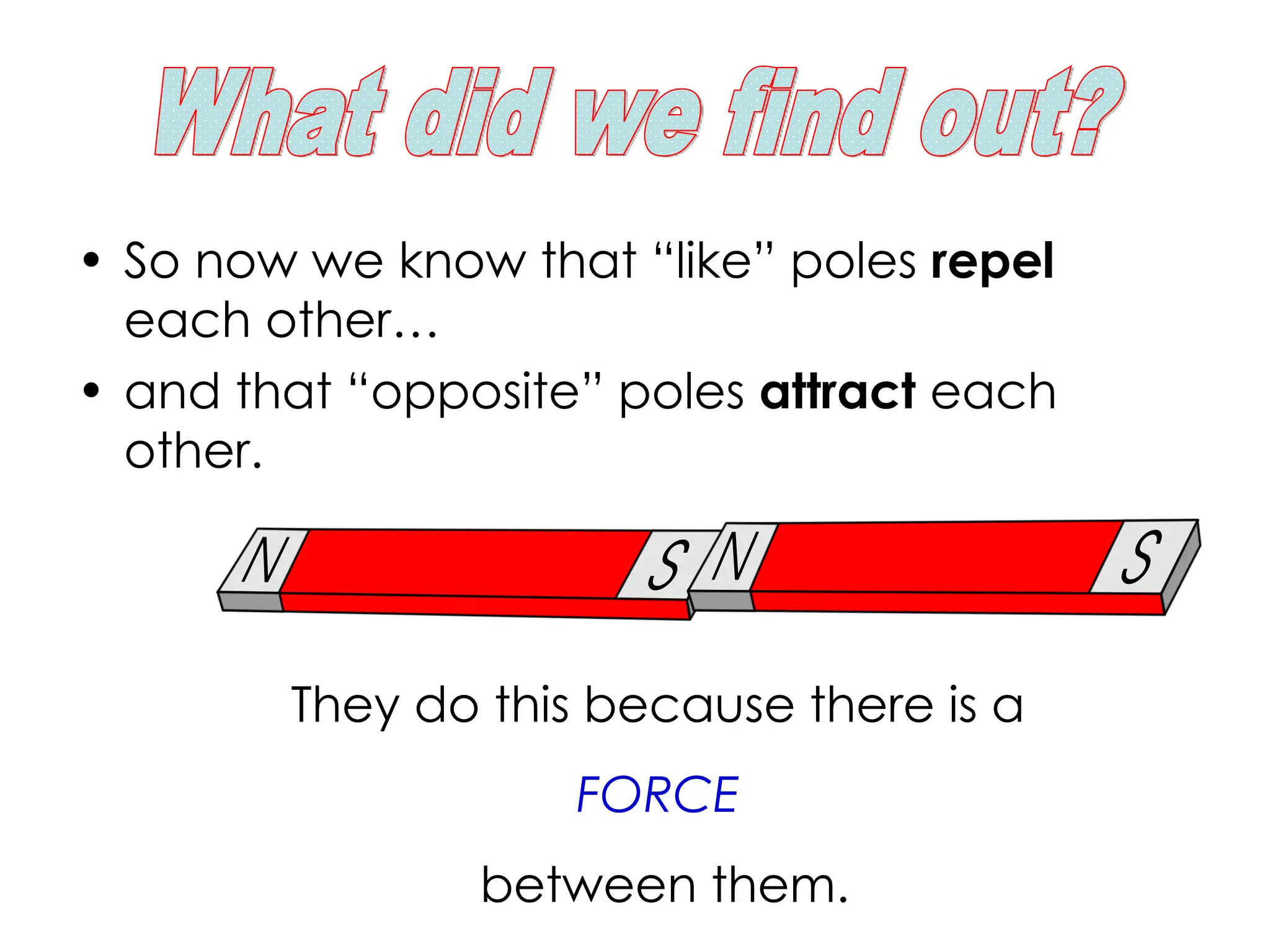
• So now we know that “like” poles repel
each other…
• and that “opposite” poles attract each
other.
They do this because there is a
FORCE
between them.
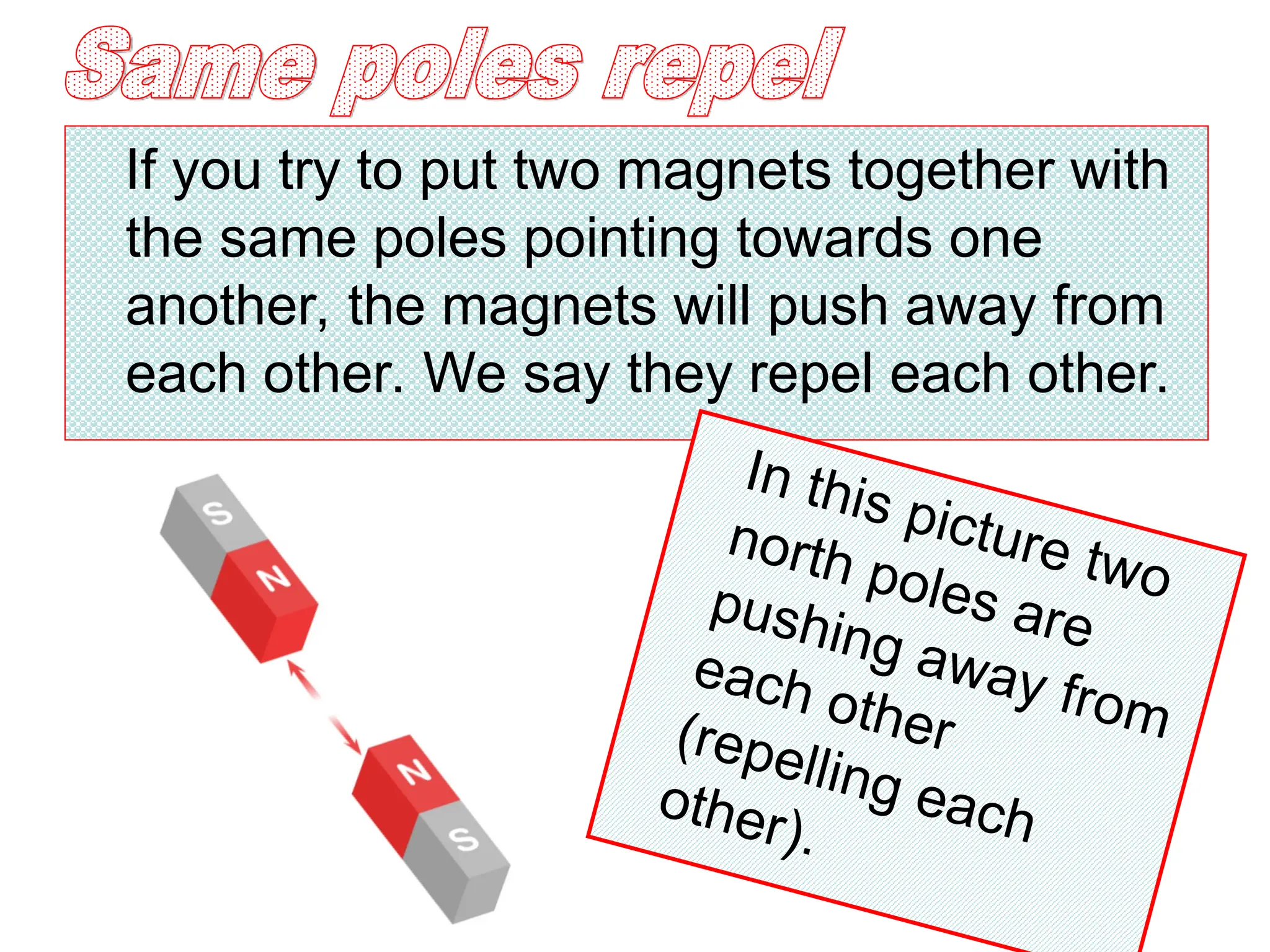
If you try to put two magnets together with
the same poles pointing towards one
another, the magnets will push away from
each other. We say they repel each other.
In this picture two
north poles are
pushing away from
each other
(repelling each
other).
If you put two magnets together with
different poles pointing towards one
another, the magnets will pull towards
each other. We say they attract each
other.
In this picture a north and a south pole are
pulling towards each other (attracting
each other).
Magnets can
attract other
magnets but they
can also attract
magnetic materials.
Magnetic
materials are
always metals
but only a few
metals are
magnetic.
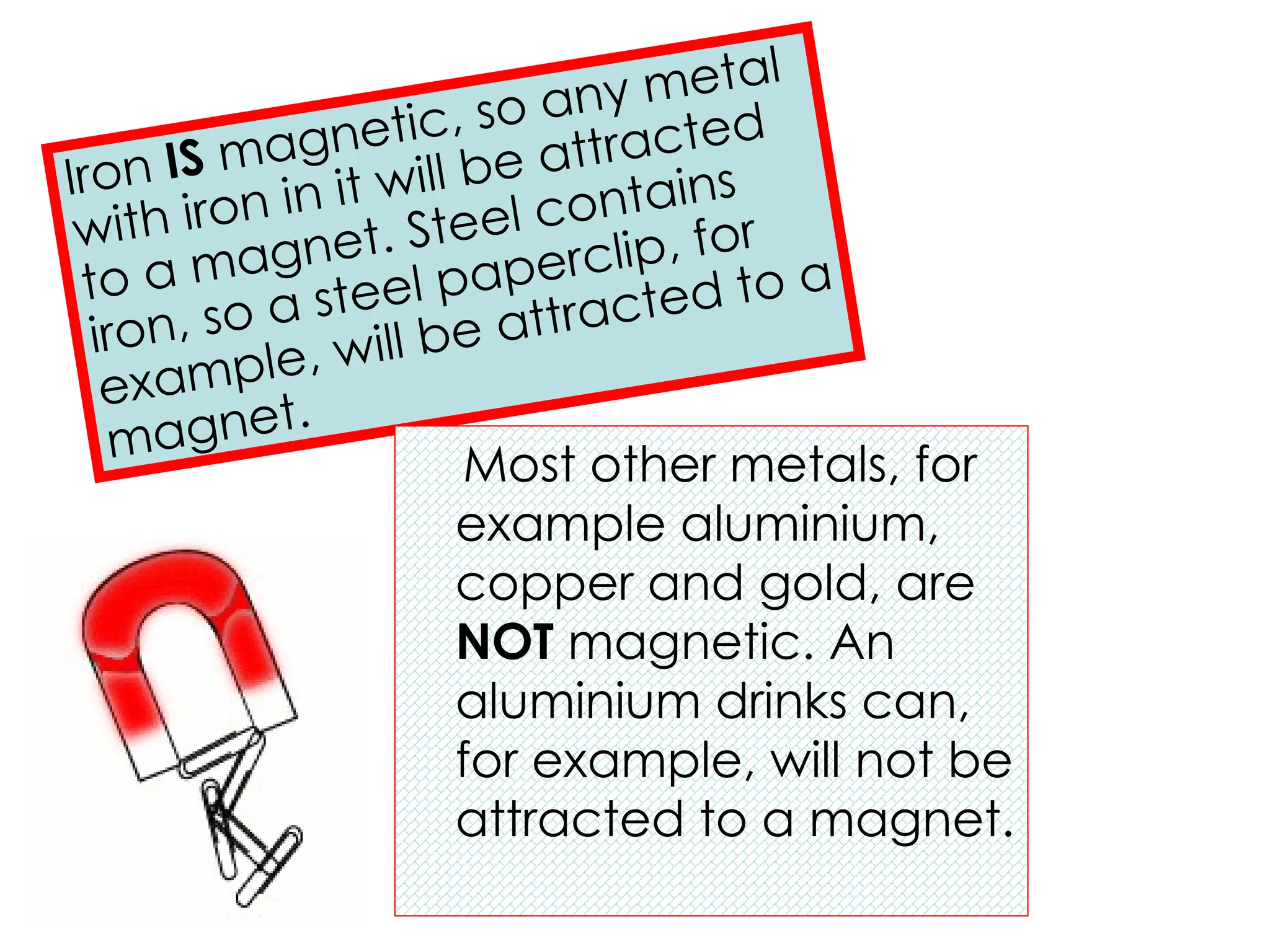
Iron IS magnetic, so any metal
with iron in it will be attracted
to a magnet. Steel contains
iron, so a steel paperclip, for
example, will be attracted to a
magnet.
Most other metals, for
example aluminium,
copper and gold, are
NOT magnetic. An
aluminium drinks can,
for example, will not be
attracted to a magnet.
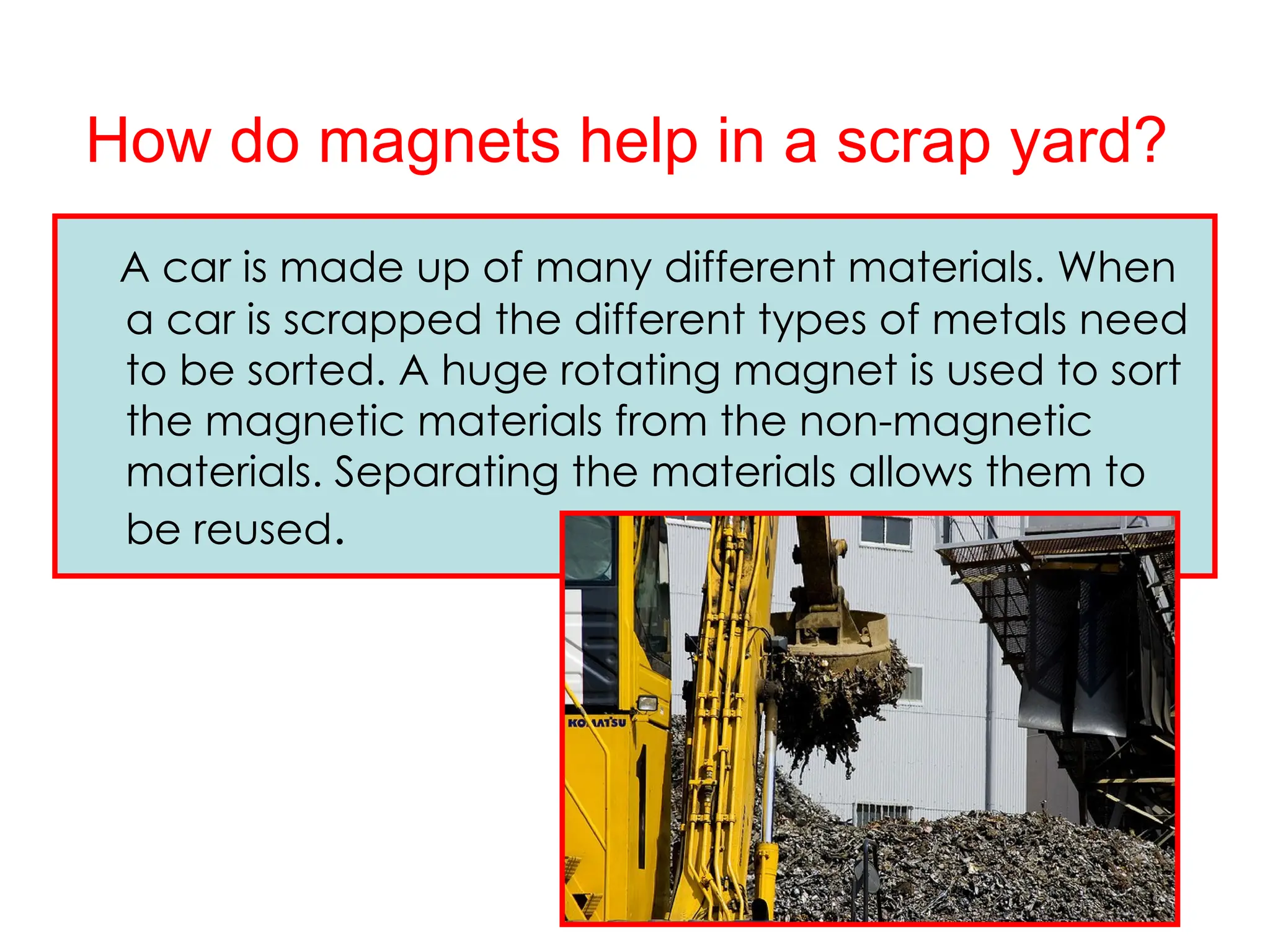
How do magnets help in a scrap yard?
A car is made up of many different materials. When
a car is scrapped the different types of metals need
to be sorted. A huge rotating magnet is used to sort
the magnetic materials from the non-magnetic
materials. Separating the materials allows them to
be reused.
magnetism magnet
magnetic non-magnetic
force poles
push pull
repel attract
north south

magnetism and its applications in daily lives

  • 2.
  • 3.
    Understand that somematerials are attracted to magnets What the characteristics of magnets are That magnets can repel and attract each other How magnets behave What happens when you put two magnets together
  • 4.
    There are manylegends that tell us about the discovery of magnets. One of the most common, is that of an elderly shepherd named Magnets, who was herding his sheep in an area of Northern Greece called Magnesia, about 4,000 years ago. It is said that both the nails in his shoes and the metal tip of his staff became firmly stuck to the large, black rock on which he was standing. This type of rock was later named magnetite, after either Magnesia or Magnets himself.
  • 5.
  • 6.
    Magnets are inmost electronic devices, in fact, anything that has a motor uses a magnet. Televisions, computers, and microwave ovens all operate with magnets. Magnets are used to keep refrigerator doors closed. Magnets are even placed in the stomachs of cows to catch metals! They are used to slow down roller coasters and subways. More uses of magnets are found every day!
  • 7.
    They can attract some materials. They can also repelother magnets. They are usually made of iron. They have two ends called magnetic poles.
  • 8.
    • Magnet A stoneor a piece of metal that attracts some other metal. • Attract To pull towards each other. • Repel To push away from each other. • Poles The ends of a magnet.
  • 9.
    The blue endof a magnet is usually the south pole. The red end of a magnet is usually the north pole. Every magnet has at least one north pole and one south pole.
  • 10.
    When two magnetsare close, they create pushing or pulling forces on one another. These forces are strongest at the ends of the magnets. The two ends of a magnet are known as the north pole and the south pole.
  • 11.
    • So nowwe know that “like” poles repel each other… • and that “opposite” poles attract each other. They do this because there is a FORCE between them.
  • 12.
    If you tryto put two magnets together with the same poles pointing towards one another, the magnets will push away from each other. We say they repel each other. In this picture two north poles are pushing away from each other (repelling each other).
  • 13.
    If you puttwo magnets together with different poles pointing towards one another, the magnets will pull towards each other. We say they attract each other. In this picture a north and a south pole are pulling towards each other (attracting each other).
  • 14.
    Magnets can attract other magnetsbut they can also attract magnetic materials. Magnetic materials are always metals but only a few metals are magnetic.
  • 15.
    Iron IS magnetic,so any metal with iron in it will be attracted to a magnet. Steel contains iron, so a steel paperclip, for example, will be attracted to a magnet. Most other metals, for example aluminium, copper and gold, are NOT magnetic. An aluminium drinks can, for example, will not be attracted to a magnet.
  • 16.
    How do magnetshelp in a scrap yard? A car is made up of many different materials. When a car is scrapped the different types of metals need to be sorted. A huge rotating magnet is used to sort the magnetic materials from the non-magnetic materials. Separating the materials allows them to be reused.
  • 17.
    magnetism magnet magnetic non-magnetic forcepoles push pull repel attract north south