Electrical Safety
SN 1
Agenda
1
2
Introduction
Hazards
3 Control Measures
4 Legal Requirements
5 Site Practices
SN 2
An Important Quote…
Concern for Man Himself and
for His Safety must always from
the chief interest of all technical
endeavor.
SN 3
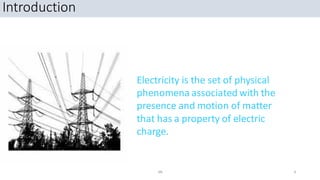
Introduction
Electricity is the set of physical
phenomena associated with the
presence and motion of matter
that has a property of electric
charge.
SN 4
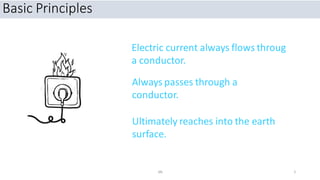
Basic Principles
Electric current always flows throug
a conductor.
Always passes through a
conductor.
Ultimately reaches into the earth
surface.
SN 5
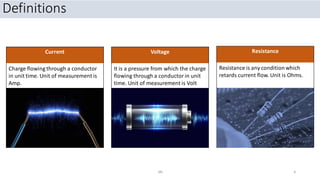
Definitions
Current
Charge flowing through a conductor
in unit time. Unit of measurement is
Amp.
Voltage
It is a pressure from which the charge
flowing through a conductor in unit
time. Unit of measurement is Volt
Resistance
Resistance is any conditionwhich
retards current flow. Unit is Ohms.
SN 6
Hazards of Electricity
• Electrical shock
• Electrical fire
• Flash over
• Radiation
• Explosion
• Indirect effects
SN 7
Hazards of Electricity
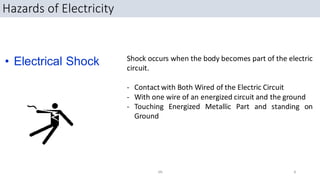
• Electrical Shock Shock occurs when the body becomes part of the electric
circuit.
- Contact with Both Wired of the Electric Circuit
- With one wire of an energized circuit and the ground
- Touching Energized Metallic Part and standing on
Ground
SN 8
Hazards of Electricity
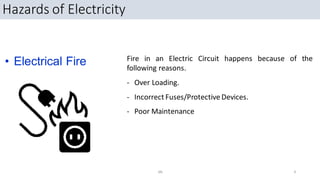
• Electrical Fire Fire in an Electric Circuit happens because of the
following reasons.
- Over Loading.
- Incorrect Fuses/Protective Devices.
- Poor Maintenance
SN 9
Hazards of Electricity
• Explosion Electricity does not explode in itself but aids in causing
explosion if;
- Presence of explosive fumes/vapours.
- Presence of flammable gas cylinders in the vicinity of
the flames/arcs
SN 10
Hazards of Electricity
• Flash over
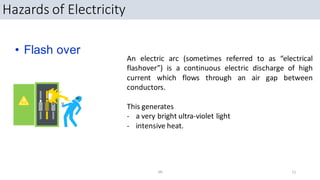
An electric arc (sometimes referred to as “electrical
flashover”) is a continuous electric discharge of high
current which flows through an air gap between
conductors.
This generates
- a very bright ultra-violet light
- intensive heat.
SN 11
Hazards of Electricity
• Indirect effects
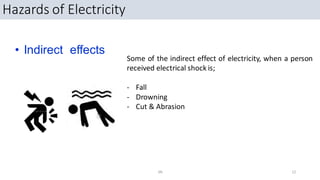
Some of the indirect effect of electricity, when a person
received electrical shock is;
- Fall
- Drowning
- Cut & Abrasion
SN 12
Ohm’s Law
SN 13
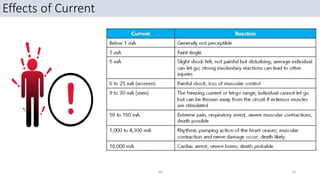
Effects of Current
SN 14
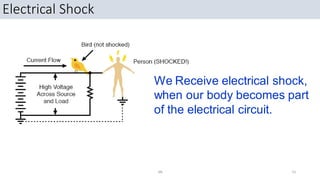
Electrical Shock
We Receive electrical shock,
when our body becomes part
of the electrical circuit.
SN 15
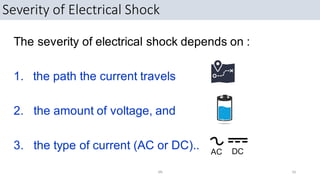
Severity of Electrical Shock
The severity of electrical shock depends on :
1. the path the current travels
2. the amount of voltage, and
3. the type of current (AC or DC)..
SN 16
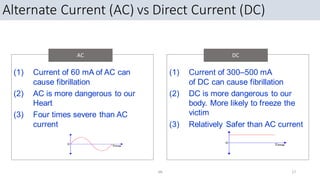
Alternate Current (AC) vs Direct Current (DC)
(1) Current of 60 mA of AC can
cause fibrillation
(2) AC is more dangerous to our
Heart
(3) Four times severe than AC
current
(1) Current of 300–500 mA
of DC can cause fibrillation
(2) DC is more dangerous to our
body. More likely to freeze the
victim
(3) Relatively Safer than AC current
AC DC
SN 17
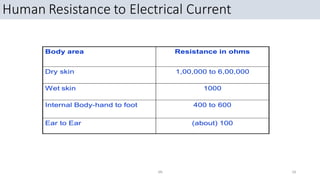
Human Resistance to Electrical Current
SN 18
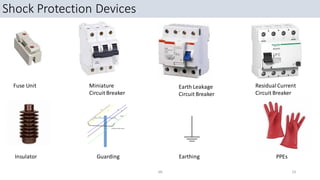
Shock Protection Devices
Fuse Unit Miniature
Circuit Breaker
Earth Leakage
Circuit Breaker
ResidualCurrent
Circuit Breaker
Insulator Guarding Earthing PPEs
SN 19
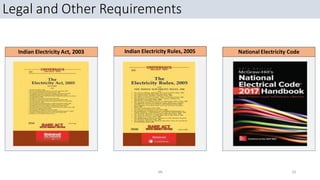
Legal and Other Requirements
Indian Electricity Act, 2003 Indian Electricity Rules, 2005 National Electricity Code
SN 20
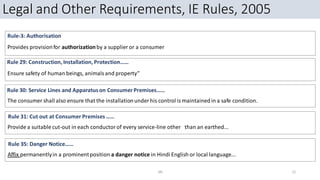
Legal and Other Requirements, IE Rules, 2005
Rule-3: Authorisation
Provides provisionfor authorizationby a supplier or a consumer
Rule 29: Construction, Installation, Protection……
Ensure safety of human beings, animalsand property”
The consumer shall also ensure that the installationunder his control is maintainedin a safe condition.
Rule 30: Service Lines and Apparatuson ConsumerPremises……
Rule 31: Cut out at Consumer Premises……
Provide a suitable cut-out in each conductorof every service-line other than an earthed...
Rule 35: Danger Notice……
Affix permanentlyin a prominentposition a danger notice in Hindi English or local language...
SN 21
Legal and Other Requirements, IE Rules, 2005
Rule-36: Handling of Electrical Supply Lines
Stipulatesto ensure adequatesafety precautions before handlingof electric supply lines and apparatus
Rule 41: Distinction of DifferentCircuits……
Meansof indication of permanent nature.
Requirementof affixinginstructions for restorationof persons suffering from electric shock
Rule 44: Instruction on Restorationof Personsreceiving electrical shocks……
Rule 44A: Notification of Accidents
Information shall send to the Inspector a telegraphic report within 24 hours
Rule 45: Precautions to be adopted by Consumer
Measures to be adoptedby consumers, Owners, occupiers, electrical contractors, electrical workmen and suppliers…
SN 22
Clearances to be maintained…..
SN 23
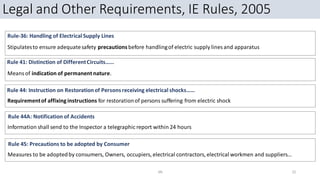
Site Practices
SN 24
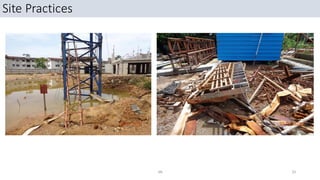
Site Practices
SN 25
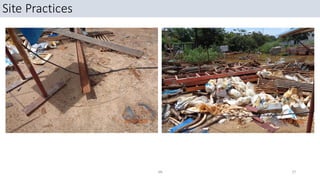
Site Practices
SN 26
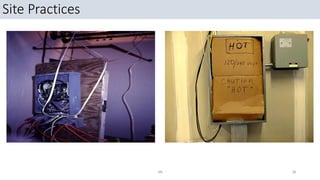
Site Practices
SN 27
Site Practices
SN 28
Site Practices
SN 29
And Finally…
Make it a good Servant
Not a Bad Master
SN 30

Electrical safety - Hazards and Controls

  • 1.
  • 2.
    Agenda 1 2 Introduction Hazards 3 Control Measures 4Legal Requirements 5 Site Practices SN 2
  • 3.
    An Important Quote… Concernfor Man Himself and for His Safety must always from the chief interest of all technical endeavor. SN 3
  • 4.
    Introduction Electricity is theset of physical phenomena associated with the presence and motion of matter that has a property of electric charge. SN 4
  • 5.
    Basic Principles Electric currentalways flows throug a conductor. Always passes through a conductor. Ultimately reaches into the earth surface. SN 5
  • 6.
    Definitions Current Charge flowing througha conductor in unit time. Unit of measurement is Amp. Voltage It is a pressure from which the charge flowing through a conductor in unit time. Unit of measurement is Volt Resistance Resistance is any conditionwhich retards current flow. Unit is Ohms. SN 6
  • 7.
    Hazards of Electricity •Electrical shock • Electrical fire • Flash over • Radiation • Explosion • Indirect effects SN 7
  • 8.
    Hazards of Electricity •Electrical Shock Shock occurs when the body becomes part of the electric circuit. - Contact with Both Wired of the Electric Circuit - With one wire of an energized circuit and the ground - Touching Energized Metallic Part and standing on Ground SN 8
  • 9.
    Hazards of Electricity •Electrical Fire Fire in an Electric Circuit happens because of the following reasons. - Over Loading. - Incorrect Fuses/Protective Devices. - Poor Maintenance SN 9
  • 10.
    Hazards of Electricity •Explosion Electricity does not explode in itself but aids in causing explosion if; - Presence of explosive fumes/vapours. - Presence of flammable gas cylinders in the vicinity of the flames/arcs SN 10
  • 11.
    Hazards of Electricity •Flash over An electric arc (sometimes referred to as “electrical flashover”) is a continuous electric discharge of high current which flows through an air gap between conductors. This generates - a very bright ultra-violet light - intensive heat. SN 11
  • 12.
    Hazards of Electricity •Indirect effects Some of the indirect effect of electricity, when a person received electrical shock is; - Fall - Drowning - Cut & Abrasion SN 12
  • 13.
  • 14.
  • 15.
    Electrical Shock We Receiveelectrical shock, when our body becomes part of the electrical circuit. SN 15
  • 16.
    Severity of ElectricalShock The severity of electrical shock depends on : 1. the path the current travels 2. the amount of voltage, and 3. the type of current (AC or DC).. SN 16
  • 17.
    Alternate Current (AC)vs Direct Current (DC) (1) Current of 60 mA of AC can cause fibrillation (2) AC is more dangerous to our Heart (3) Four times severe than AC current (1) Current of 300–500 mA of DC can cause fibrillation (2) DC is more dangerous to our body. More likely to freeze the victim (3) Relatively Safer than AC current AC DC SN 17
  • 18.
    Human Resistance toElectrical Current SN 18
  • 19.
    Shock Protection Devices FuseUnit Miniature Circuit Breaker Earth Leakage Circuit Breaker ResidualCurrent Circuit Breaker Insulator Guarding Earthing PPEs SN 19
  • 20.
    Legal and OtherRequirements Indian Electricity Act, 2003 Indian Electricity Rules, 2005 National Electricity Code SN 20
  • 21.
    Legal and OtherRequirements, IE Rules, 2005 Rule-3: Authorisation Provides provisionfor authorizationby a supplier or a consumer Rule 29: Construction, Installation, Protection…… Ensure safety of human beings, animalsand property” The consumer shall also ensure that the installationunder his control is maintainedin a safe condition. Rule 30: Service Lines and Apparatuson ConsumerPremises…… Rule 31: Cut out at Consumer Premises…… Provide a suitable cut-out in each conductorof every service-line other than an earthed... Rule 35: Danger Notice…… Affix permanentlyin a prominentposition a danger notice in Hindi English or local language... SN 21
  • 22.
    Legal and OtherRequirements, IE Rules, 2005 Rule-36: Handling of Electrical Supply Lines Stipulatesto ensure adequatesafety precautions before handlingof electric supply lines and apparatus Rule 41: Distinction of DifferentCircuits…… Meansof indication of permanent nature. Requirementof affixinginstructions for restorationof persons suffering from electric shock Rule 44: Instruction on Restorationof Personsreceiving electrical shocks…… Rule 44A: Notification of Accidents Information shall send to the Inspector a telegraphic report within 24 hours Rule 45: Precautions to be adopted by Consumer Measures to be adoptedby consumers, Owners, occupiers, electrical contractors, electrical workmen and suppliers… SN 22
  • 23.
    Clearances to bemaintained….. SN 23
  • 24.
  • 25.
  • 26.
  • 27.
  • 28.
  • 29.
  • 30.
    And Finally… Make ita good Servant Not a Bad Master SN 30