El Niño
El Niño means The Little Boy, or Christ Child in
Spanish.
El Niño was originally recognized by fishermen off
the coast of South America in the 1600s, with the
appearance of unusually warm water in the Pacific
Ocean.
The name was chosen based on the time of year
(around December) during which these warm waters
events tended to occur.
 The event occurred during the Christmas time so
named after it.
• The El Niño-Southern Oscillation (ENSO) is a
naturally occurring phenomenon that involves
fluctuating ocean temperatures in the equatorial
Pacific.
• El Niño is a condition that sometimes occurs in
the Pacific Ocean, but it is so big that it affects
weather all over the world.
• Weather depends a lot on ocean temperatures.
Where the ocean is warm, more clouds form, and
more rain falls in that part of the world. In the
Pacific Ocean, near the equator, the Sun makes
the water especially warm on the surface.
• Normally, strong winds along the equator push
the warm surface water near South America
westward toward Indonesia. When this happens,
the cooler water underneath rises up toward the
surface of the ocean near South America.
• However, sometimes these winds are weaker than
usual. Sometimes they actually blow the other
way (toward South America instead of Indonesia).
In that case, the warm surface water along the
equator piles up along the coast of South America.
• Many fish that live in the normally cooler waters
off the coast of South America move away or die.
The fishermen call this condition of warm coastal
waters and poor fishing "El Niño“.
• An El Niño in the Pacific Ocean affects weather
patterns all over the world. One effect is that El
Niño causes wind conditions in the upper
atmosphere that slow down developing storms in
the Atlantic Ocean
In most years, the trade winds blow across the Pacific from east to west.
They push warm surface water toward Australia and Indonesia, allowing
the colder, deeper water to rise up. The colder water carries more nutrients
for fish than the warm water does.
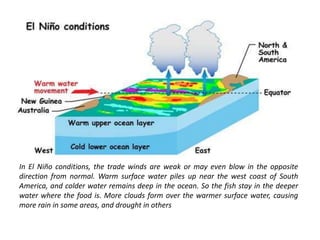
In El Niño conditions, the trade winds are weak or may even blow in the opposite
direction from normal. Warm surface water piles up near the west coast of South
America, and colder water remains deep in the ocean. So the fish stay in the deeper
water where the food is. More clouds form over the warmer surface water, causing
more rain in some areas, and drought in others

El Niño.pptx

  • 1.
    El Niño El Niñomeans The Little Boy, or Christ Child in Spanish. El Niño was originally recognized by fishermen off the coast of South America in the 1600s, with the appearance of unusually warm water in the Pacific Ocean. The name was chosen based on the time of year (around December) during which these warm waters events tended to occur.  The event occurred during the Christmas time so named after it.
  • 2.
    • The ElNiño-Southern Oscillation (ENSO) is a naturally occurring phenomenon that involves fluctuating ocean temperatures in the equatorial Pacific. • El Niño is a condition that sometimes occurs in the Pacific Ocean, but it is so big that it affects weather all over the world. • Weather depends a lot on ocean temperatures. Where the ocean is warm, more clouds form, and more rain falls in that part of the world. In the Pacific Ocean, near the equator, the Sun makes the water especially warm on the surface.
  • 3.
    • Normally, strongwinds along the equator push the warm surface water near South America westward toward Indonesia. When this happens, the cooler water underneath rises up toward the surface of the ocean near South America. • However, sometimes these winds are weaker than usual. Sometimes they actually blow the other way (toward South America instead of Indonesia). In that case, the warm surface water along the equator piles up along the coast of South America.
  • 4.
    • Many fishthat live in the normally cooler waters off the coast of South America move away or die. The fishermen call this condition of warm coastal waters and poor fishing "El Niño“. • An El Niño in the Pacific Ocean affects weather patterns all over the world. One effect is that El Niño causes wind conditions in the upper atmosphere that slow down developing storms in the Atlantic Ocean
  • 5.
    In most years,the trade winds blow across the Pacific from east to west. They push warm surface water toward Australia and Indonesia, allowing the colder, deeper water to rise up. The colder water carries more nutrients for fish than the warm water does.
  • 6.
    In El Niñoconditions, the trade winds are weak or may even blow in the opposite direction from normal. Warm surface water piles up near the west coast of South America, and colder water remains deep in the ocean. So the fish stay in the deeper water where the food is. More clouds form over the warmer surface water, causing more rain in some areas, and drought in others