EICOSANOIDS
Dr. Asiimwe Anthony MPS
10/28/2023 Dr. ASIIMWE ANTHONY MPS 1
What are eicosanoids?
• Eicosanoids are signalling molecules derived from polyunsaturated 20-
carbon fatty acids:
• Δ8,11,14 eicosatrienoic acid
• arachidonic acid (Δ5,8,11,14-eicosatetraenoic acid
• Δ5,8,11,14,17-eicosapentaenoic acid
• Arachidonic acid is the most important because it is the most abundant.
10/28/2023 Dr. ASIIMWE ANTHONY MPS 2
Families of eicosanoids
• The eicosanoids consist of the
1. Prostaglandins (PG),
2. Prostacyclins (PGI2)
3. Thromboxanes (TX),
4. Leukotrienes (LT)
5. Lipoxins (LX) – non-classic eicosanoids
10/28/2023 Dr. ASIIMWE ANTHONY MPS 3
EICOSANOIDS
Eicosanoids are considered "local hormones."
 They function in diverse physiological systems and pathological processes
 Are not stored in cells; they are synthesized when needed
 They have specific effects on target cells close to their site of formation.
 They are rapidly degraded, so they are not transported to distal sites within
the body
10/28/2023 Dr. ASIIMWE ANTHONY MPS 4
Eicosanoids (cont’d)
• PGs and TXs are collectively known as prostanoids
Origin:
• First in prostate gland (prostaglandins)
• Thromboxanes from platelets (thrombocytes)
• Leukotrienes from leukocytes, hence the derivation of their names
10/28/2023 Dr. ASIIMWE ANTHONY MPS 5
Lipoxins
• Are specialized pro resolving mediator eicosanoids (anti-
inflammatory eicosanoids)
• Synthesized through lipoxygenase interactions
10/28/2023 Dr. ASIIMWE ANTHONY MPS 6
Eicosanoids (cont’d)
• All mammalian cells except erythrocytes synthesize eicosanoids
• They cause profound physiological effects at very dilute
concentrations
• All eicosanoids function locally at the site of synthesis
• Their actions are mediated through receptor-mediated G-protein
linked signaling pathways.
10/28/2023 Dr. ASIIMWE ANTHONY MPS 7
Biological effects of eicosanoids
• Induce or inhibit inflammatory responses (predominantly those of the joints,
skin and eyes)
• Determine the intensity and duration of pain and fever
• Reproductive function (including the induction of labor and regulation of
abortion).
10/28/2023 Dr. ASIIMWE ANTHONY MPS 8
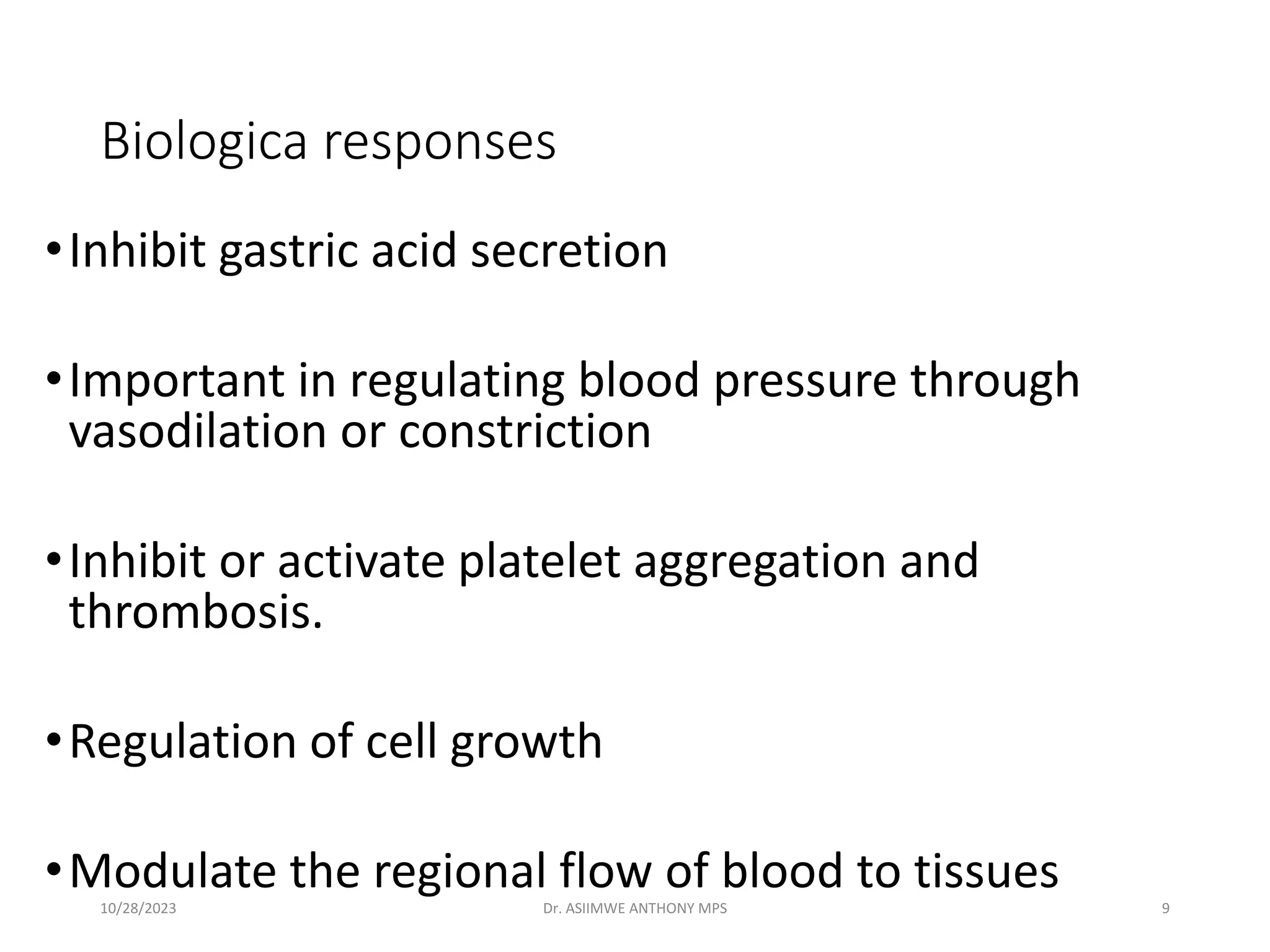
Biologica responses
•Inhibit gastric acid secretion
•Important in regulating blood pressure through
vasodilation or constriction
•Inhibit or activate platelet aggregation and
thrombosis.
•Regulation of cell growth
•Modulate the regional flow of blood to tissues
10/28/2023 Dr. ASIIMWE ANTHONY MPS 9
Roles …
They have roles in:
• Immune system modulation
• Regulation of sleep/wake cycle.
10/28/2023 Dr. ASIIMWE ANTHONY MPS 10
Nomenclature
• Majority of biologically active prostaglandins and thromboxanes are series 2
molecules
• due to the presence of two double bonds.
• Predominant leukotrienes are series 4 molecules (have four double bonds).
• Prostaglandins (PG), followed with an additional capital letter and a numeric
subscript
• Numeric subscript = no. of double bonds outside the ring
• 7 kinds of substituents on the ring are found in natural PGs: A, B, D, E, F, G,
and I.
10/28/2023 Dr. ASIIMWE ANTHONY MPS 11
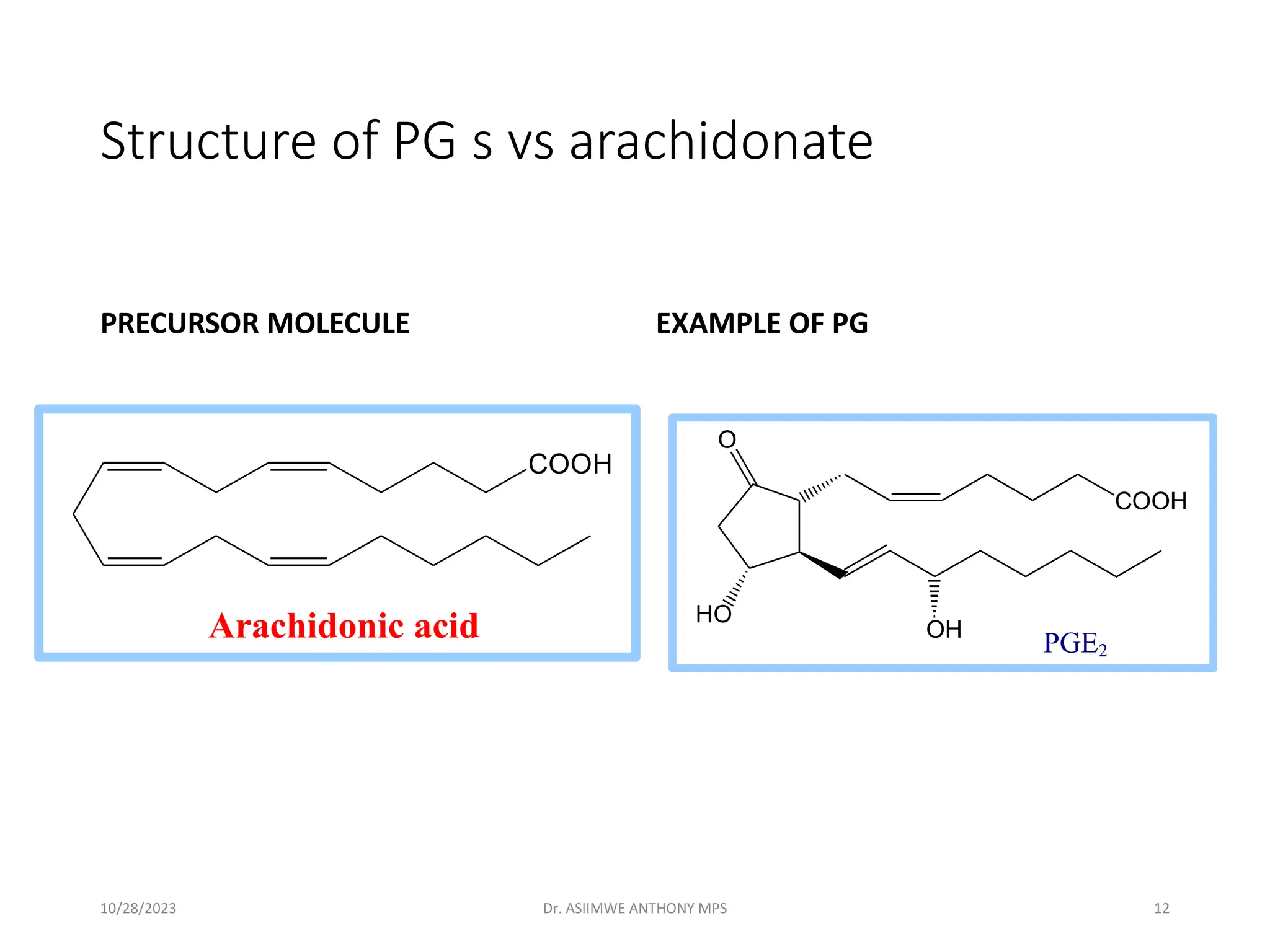
Structure of PG s vs arachidonate
PRECURSOR MOLECULE
Arachidonic acid
COOH
EXAMPLE OF PG
COOH
O
HO
OH
PGE2
10/28/2023 Dr. ASIIMWE ANTHONY MPS 12
Prostaglandin-structure
• Contains a 5-carbon ring
• Has a OH group at C15 projecting
below the plane of the ring
10/28/2023 Dr. ASIIMWE ANTHONY MPS 13
Synthesis of Eicosanoids
• Is from cell membrane and nuclear membrane lipids
• Occurs when a cell is activated by mechanical trauma, ischemia,
other physical perturbations, attack by pathogens; or stimuli made by
nearby cells, tissues, or pathogens such as chemotactic
factors, cytokines, growth factors, and even certain eicosanoids.
10/28/2023 Dr. ASIIMWE ANTHONY MPS 14
Synthesis (cont’d)
• The immediate dietary precursor of arachidonate is linoleic acid.
• Synthesis of arachidonate from linoleate requires a desaturase
enzyme
10/28/2023 Dr. ASIIMWE ANTHONY MPS 15
Biosynthesis of eicosanoids
• There are 2 pathways:
1. PG and TBX are synthesized by the cyclic pathway
2. Leukotrienes by the linear pathway.
• Synthesis begins with activation of PLA2
10/28/2023 Dr. ASIIMWE ANTHONY MPS 16
Various stimuli: Activation of
Hormones, autacoids, etc. Membrane-bound
Receptors
Ca+2
PLA2
Activity
10/28/2023 Dr. ASIIMWE ANTHONY MPS 17
Synthesis of clinically relevant PGs and TXs
Arachidonate release
and eicosanoid
synthesis
are important
mediators of tissue
injury and
inflammation
Bradykinin works on
blood vessels
through
the release of
prostacyclin
Synthesis (cont’d)
• Stimuli (e.g. epinephrine, thrombin and bradykinin etc) activate PLA2
• PLA2 hydrolyzes arachidonate from membrane phospholipids
• Prostaglandin PGI2 (prostacyclin) and PGE2 are synthesized from PGH2
• PGD2 synthase forms PGD2 from PGH2.
• Prostaglandin F synthase (PGFS) converts PGH2 to PGF2α or PGD2 to
9α,11β-PGF2α,β.
10/28/2023 Dr. ASIIMWE ANTHONY MPS 18
Thromboxanes
 Are active metabolites of PGG2 and PGH2 that have a cyclopentane ring
replaced by a 6-membered oxygen containing (oxane) ring
 Have a thrombus-forming potential
 Are produced in plateletes
 Cause contraction of arteries and trigger platelet aggregation
10/28/2023 Dr. ASIIMWE ANTHONY MPS 19
Thromboxane A2
•The two major TXs
are TXA2 and TXB2.
• Thromboxane is
• a vasoconstrictor
• a potent
hypertensive agent
10/28/2023 Dr. ASIIMWE ANTHONY MPS 20
Prostanoids in physiological processes
• TXA2 facilitates platelet aggregation
• PGD2 (the principal COX product of the mast cells and the nervous system)
• it inhibits platelet aggregation)
• PGE2 and PGI2 are vasodilators in endothelial cells
• PGE2 in gastric mucosa suppresses gastric acid secretion
• Reduces the risk of gastric damage-gastric and duodenal ulcer
• PGE2 and PGF2α in the endomentrium induce uterine contraction
• Can be used for induction of abortion
10/28/2023 Dr. ASIIMWE ANTHONY MPS 21
Cyclooxygenase
• There are two forms of cyclooxygenase:
1. COX -1 – (“good COX”)
• It is constitutively expressed in gastric mucosa, kidney, platelets, and vascular
endothelial cells.
2. COX -2 – inducible (“bad” COX):
• expressed in macrophages and monocytes in response to injury, inflammation and growth
factors.
• primary triggers are: platelet-activating factor (PAF) & IL-1
• others are growth factors, other cytokines, & endotoxins
10/28/2023 Dr. ASIIMWE ANTHONY MPS 22
Cyclooxygenase...
• NB: Both COX-1 and COX-2 catalyze the 2-step conversion of arachidonic
acid to PGG2 and then to PGH2.
10/28/2023 Dr. ASIIMWE ANTHONY MPS 23
10/28/2023 Dr. ASIIMWE ANTHONY MPS 24
Steroids inhibit
Cyclooxygenases …
• COX-2 expression is increased in some cancer cells.
• Angiogenesis (blood vessel development), which is essential to tumor
growth, requires COX-2.
• Over-expression of COX-2 leads to increased expression of vascular endothelial
growth factor.
• Regular use of NSAIDs has been shown to decrease the risk of developing colorectal
cancer.
10/28/2023 Dr. ASIIMWE ANTHONY MPS 25
Inhibition of COX
• Non-steroidal anti-inflammatory drugs (NSAIDs) e.g aspirin, ibuprofen,
diclofenac, indomethacin, naproxen, and phenylbutazone all inhibit both
COX-1 and COX-2.
• Aspirin relieves pain (analgesia),
• has an anti-inflammatory
• is a heart protective drug but its actions are not solely due to its ability to inhibit COX
activity
10/28/2023 Dr. ASIIMWE ANTHONY MPS 26
NSAID
• They inhibit formation of prostaglandins involved in fever, pain, &
inflammation.
• They inhibit blood clotting by blocking thromboxane formation in
blood platelets.
• Many people take a daily aspirin for its anti-clotting effect.
• Ibuprofen and related compounds block the hydrophobic channel by
which arachidonate enters the cyclooxygenase active site.
10/28/2023 Dr. ASIIMWE ANTHONY MPS 27
COX-2 selective inhibitors
• Why?
• Because inhibition of COX-1 activity in the gut is associated with NSAID-induced
ulcerations
• Examples of drugs which selectively inhibit COX-2: Celebrex® (celecoxib) and
Prexige® (lumiracoxib)
NB: These drugs do not induce the synthesis of anti-inflammatory lipids
(lipoxins).
10/28/2023 Dr. ASIIMWE ANTHONY MPS 28
Glucocorticoids
• Corticosteroids are anti-inflammatory because they prevent inducible
PLA2 expression, reducing arachidonate release.
• Glucocorticoids and IL-4 block COX-2 expression
• Oral or inhaled glucocorticoids are used to suppress various allergic,
inflammatory, and autoimmune disorders.
• Inhaled glucocorticoids are the second-line treatment for asthma.
10/28/2023 Dr. ASIIMWE ANTHONY MPS 29
Biosynthesis of leukotrienes
10/28/2023 Dr. ASIIMWE ANTHONY MPS 30
Synthesis of leukotrienes
• Numerous stimuli lead to activation of PLA2
• Arachidonate is hydrolyzed from membrane phospholipids.
• Enzyme 5-lipoxygenase (5-LOX) with the protein, 5-LOX activating
protein (FLAP), catalyzes the conversion of arachidonic acid, to 5-
hydroperoxyeicosatetraenoic acid (5-HPETE)
• The pathway is active in leukocytes, mast cells, neutrophils, eosinophils,
monocytes
10/28/2023 Dr. ASIIMWE ANTHONY MPS 31
LTs
• Production of LTs usually accompanies production of histamine
• LTC4, LTD4 and LTE4 are components of slow-reacting substance of
anaphylaxis (SRSA).
• LTs, particularly LTD4 trigger contractions in the smooth muscles lining the
trachea
• Are produced in blood vessel walls as part of the pathology of
atherosclerosis
• Overproduction of LTs is a major cause of inflammation in asthma and
allergic rhinitis
10/28/2023 Dr. ASIIMWE ANTHONY MPS 32
LTs
• Cysteinyl-LT act on target cells to:
• contract bronchial and vascular smooth muscle
• increase permeability of small blood vessels
• enhance secretion of mucus in the airway and gut
• recruit leukocytes to sites of inflammation.
• Anti-asthma medications include:
• Inhibitors of 5-Lipoxygenase, e.g., Zyflo (zileuton)
• Drugs that block leukotriene-receptor interactions. E.g. Singulair (montelukast) &
Accolate (zafirlukast)
10/28/2023 Dr. ASIIMWE ANTHONY MPS 33
Lipoxins
• Are anti-inflammatory eicosanoids.
• Their appearance in inflammation signals the resolution of inflammation.
• Biosynthesis is by 3 pathways:
1. “Classic” pathway: Involves 5-LOX activity in leukocytes followed by 12-LOX
action in platelets.
2. The action of 15-LOX in epithelial cell (such as in the airway) followed by 5-LOX
action in leukocytes
3. Aspirin triggered lipoxins, formed through the action of aspirin on COX-2
10/28/2023 Dr. ASIIMWE ANTHONY MPS 34
Lipoxins (cont’d)
• Are synthesized through lipooxygenase interactions of
• 15-LOX , followed by 5-LOX in leukocytes or
• Through the actions of 5-LOX in leukocytes followed by 12-LOX action in platelets.
• Aspirin-triggered lipoxins are generated by interactions between 5-LO
and aspirin-acetylated cyclooxygenase-2
• Lipoxins inhibit the inflammatory function of leukotrienes & PGs
10/28/2023 Dr. ASIIMWE ANTHONY MPS 35
10/28/2023 Dr. ASIIMWE ANTHONY MPS 36
10/28/2023 Dr. ASIIMWE ANTHONY MPS 37

Eicosanoids.pptx

  • 1.
    EICOSANOIDS Dr. Asiimwe AnthonyMPS 10/28/2023 Dr. ASIIMWE ANTHONY MPS 1
  • 2.
    What are eicosanoids? •Eicosanoids are signalling molecules derived from polyunsaturated 20- carbon fatty acids: • Δ8,11,14 eicosatrienoic acid • arachidonic acid (Δ5,8,11,14-eicosatetraenoic acid • Δ5,8,11,14,17-eicosapentaenoic acid • Arachidonic acid is the most important because it is the most abundant. 10/28/2023 Dr. ASIIMWE ANTHONY MPS 2
  • 3.
    Families of eicosanoids •The eicosanoids consist of the 1. Prostaglandins (PG), 2. Prostacyclins (PGI2) 3. Thromboxanes (TX), 4. Leukotrienes (LT) 5. Lipoxins (LX) – non-classic eicosanoids 10/28/2023 Dr. ASIIMWE ANTHONY MPS 3
  • 4.
    EICOSANOIDS Eicosanoids are considered"local hormones."  They function in diverse physiological systems and pathological processes  Are not stored in cells; they are synthesized when needed  They have specific effects on target cells close to their site of formation.  They are rapidly degraded, so they are not transported to distal sites within the body 10/28/2023 Dr. ASIIMWE ANTHONY MPS 4
  • 5.
    Eicosanoids (cont’d) • PGsand TXs are collectively known as prostanoids Origin: • First in prostate gland (prostaglandins) • Thromboxanes from platelets (thrombocytes) • Leukotrienes from leukocytes, hence the derivation of their names 10/28/2023 Dr. ASIIMWE ANTHONY MPS 5
  • 6.
    Lipoxins • Are specializedpro resolving mediator eicosanoids (anti- inflammatory eicosanoids) • Synthesized through lipoxygenase interactions 10/28/2023 Dr. ASIIMWE ANTHONY MPS 6
  • 7.
    Eicosanoids (cont’d) • Allmammalian cells except erythrocytes synthesize eicosanoids • They cause profound physiological effects at very dilute concentrations • All eicosanoids function locally at the site of synthesis • Their actions are mediated through receptor-mediated G-protein linked signaling pathways. 10/28/2023 Dr. ASIIMWE ANTHONY MPS 7
  • 8.
    Biological effects ofeicosanoids • Induce or inhibit inflammatory responses (predominantly those of the joints, skin and eyes) • Determine the intensity and duration of pain and fever • Reproductive function (including the induction of labor and regulation of abortion). 10/28/2023 Dr. ASIIMWE ANTHONY MPS 8
  • 9.
    Biologica responses •Inhibit gastricacid secretion •Important in regulating blood pressure through vasodilation or constriction •Inhibit or activate platelet aggregation and thrombosis. •Regulation of cell growth •Modulate the regional flow of blood to tissues 10/28/2023 Dr. ASIIMWE ANTHONY MPS 9
  • 10.
    Roles … They haveroles in: • Immune system modulation • Regulation of sleep/wake cycle. 10/28/2023 Dr. ASIIMWE ANTHONY MPS 10
  • 11.
    Nomenclature • Majority ofbiologically active prostaglandins and thromboxanes are series 2 molecules • due to the presence of two double bonds. • Predominant leukotrienes are series 4 molecules (have four double bonds). • Prostaglandins (PG), followed with an additional capital letter and a numeric subscript • Numeric subscript = no. of double bonds outside the ring • 7 kinds of substituents on the ring are found in natural PGs: A, B, D, E, F, G, and I. 10/28/2023 Dr. ASIIMWE ANTHONY MPS 11
  • 12.
    Structure of PGs vs arachidonate PRECURSOR MOLECULE Arachidonic acid COOH EXAMPLE OF PG COOH O HO OH PGE2 10/28/2023 Dr. ASIIMWE ANTHONY MPS 12
  • 13.
    Prostaglandin-structure • Contains a5-carbon ring • Has a OH group at C15 projecting below the plane of the ring 10/28/2023 Dr. ASIIMWE ANTHONY MPS 13
  • 14.
    Synthesis of Eicosanoids •Is from cell membrane and nuclear membrane lipids • Occurs when a cell is activated by mechanical trauma, ischemia, other physical perturbations, attack by pathogens; or stimuli made by nearby cells, tissues, or pathogens such as chemotactic factors, cytokines, growth factors, and even certain eicosanoids. 10/28/2023 Dr. ASIIMWE ANTHONY MPS 14
  • 15.
    Synthesis (cont’d) • Theimmediate dietary precursor of arachidonate is linoleic acid. • Synthesis of arachidonate from linoleate requires a desaturase enzyme 10/28/2023 Dr. ASIIMWE ANTHONY MPS 15
  • 16.
    Biosynthesis of eicosanoids •There are 2 pathways: 1. PG and TBX are synthesized by the cyclic pathway 2. Leukotrienes by the linear pathway. • Synthesis begins with activation of PLA2 10/28/2023 Dr. ASIIMWE ANTHONY MPS 16 Various stimuli: Activation of Hormones, autacoids, etc. Membrane-bound Receptors Ca+2 PLA2 Activity
  • 17.
    10/28/2023 Dr. ASIIMWEANTHONY MPS 17 Synthesis of clinically relevant PGs and TXs Arachidonate release and eicosanoid synthesis are important mediators of tissue injury and inflammation Bradykinin works on blood vessels through the release of prostacyclin
  • 18.
    Synthesis (cont’d) • Stimuli(e.g. epinephrine, thrombin and bradykinin etc) activate PLA2 • PLA2 hydrolyzes arachidonate from membrane phospholipids • Prostaglandin PGI2 (prostacyclin) and PGE2 are synthesized from PGH2 • PGD2 synthase forms PGD2 from PGH2. • Prostaglandin F synthase (PGFS) converts PGH2 to PGF2α or PGD2 to 9α,11β-PGF2α,β. 10/28/2023 Dr. ASIIMWE ANTHONY MPS 18
  • 19.
    Thromboxanes  Are activemetabolites of PGG2 and PGH2 that have a cyclopentane ring replaced by a 6-membered oxygen containing (oxane) ring  Have a thrombus-forming potential  Are produced in plateletes  Cause contraction of arteries and trigger platelet aggregation 10/28/2023 Dr. ASIIMWE ANTHONY MPS 19
  • 20.
    Thromboxane A2 •The twomajor TXs are TXA2 and TXB2. • Thromboxane is • a vasoconstrictor • a potent hypertensive agent 10/28/2023 Dr. ASIIMWE ANTHONY MPS 20
  • 21.
    Prostanoids in physiologicalprocesses • TXA2 facilitates platelet aggregation • PGD2 (the principal COX product of the mast cells and the nervous system) • it inhibits platelet aggregation) • PGE2 and PGI2 are vasodilators in endothelial cells • PGE2 in gastric mucosa suppresses gastric acid secretion • Reduces the risk of gastric damage-gastric and duodenal ulcer • PGE2 and PGF2α in the endomentrium induce uterine contraction • Can be used for induction of abortion 10/28/2023 Dr. ASIIMWE ANTHONY MPS 21
  • 22.
    Cyclooxygenase • There aretwo forms of cyclooxygenase: 1. COX -1 – (“good COX”) • It is constitutively expressed in gastric mucosa, kidney, platelets, and vascular endothelial cells. 2. COX -2 – inducible (“bad” COX): • expressed in macrophages and monocytes in response to injury, inflammation and growth factors. • primary triggers are: platelet-activating factor (PAF) & IL-1 • others are growth factors, other cytokines, & endotoxins 10/28/2023 Dr. ASIIMWE ANTHONY MPS 22
  • 23.
    Cyclooxygenase... • NB: BothCOX-1 and COX-2 catalyze the 2-step conversion of arachidonic acid to PGG2 and then to PGH2. 10/28/2023 Dr. ASIIMWE ANTHONY MPS 23
  • 24.
    10/28/2023 Dr. ASIIMWEANTHONY MPS 24 Steroids inhibit
  • 25.
    Cyclooxygenases … • COX-2expression is increased in some cancer cells. • Angiogenesis (blood vessel development), which is essential to tumor growth, requires COX-2. • Over-expression of COX-2 leads to increased expression of vascular endothelial growth factor. • Regular use of NSAIDs has been shown to decrease the risk of developing colorectal cancer. 10/28/2023 Dr. ASIIMWE ANTHONY MPS 25
  • 26.
    Inhibition of COX •Non-steroidal anti-inflammatory drugs (NSAIDs) e.g aspirin, ibuprofen, diclofenac, indomethacin, naproxen, and phenylbutazone all inhibit both COX-1 and COX-2. • Aspirin relieves pain (analgesia), • has an anti-inflammatory • is a heart protective drug but its actions are not solely due to its ability to inhibit COX activity 10/28/2023 Dr. ASIIMWE ANTHONY MPS 26
  • 27.
    NSAID • They inhibitformation of prostaglandins involved in fever, pain, & inflammation. • They inhibit blood clotting by blocking thromboxane formation in blood platelets. • Many people take a daily aspirin for its anti-clotting effect. • Ibuprofen and related compounds block the hydrophobic channel by which arachidonate enters the cyclooxygenase active site. 10/28/2023 Dr. ASIIMWE ANTHONY MPS 27
  • 28.
    COX-2 selective inhibitors •Why? • Because inhibition of COX-1 activity in the gut is associated with NSAID-induced ulcerations • Examples of drugs which selectively inhibit COX-2: Celebrex® (celecoxib) and Prexige® (lumiracoxib) NB: These drugs do not induce the synthesis of anti-inflammatory lipids (lipoxins). 10/28/2023 Dr. ASIIMWE ANTHONY MPS 28
  • 29.
    Glucocorticoids • Corticosteroids areanti-inflammatory because they prevent inducible PLA2 expression, reducing arachidonate release. • Glucocorticoids and IL-4 block COX-2 expression • Oral or inhaled glucocorticoids are used to suppress various allergic, inflammatory, and autoimmune disorders. • Inhaled glucocorticoids are the second-line treatment for asthma. 10/28/2023 Dr. ASIIMWE ANTHONY MPS 29
  • 30.
    Biosynthesis of leukotrienes 10/28/2023Dr. ASIIMWE ANTHONY MPS 30
  • 31.
    Synthesis of leukotrienes •Numerous stimuli lead to activation of PLA2 • Arachidonate is hydrolyzed from membrane phospholipids. • Enzyme 5-lipoxygenase (5-LOX) with the protein, 5-LOX activating protein (FLAP), catalyzes the conversion of arachidonic acid, to 5- hydroperoxyeicosatetraenoic acid (5-HPETE) • The pathway is active in leukocytes, mast cells, neutrophils, eosinophils, monocytes 10/28/2023 Dr. ASIIMWE ANTHONY MPS 31
  • 32.
    LTs • Production ofLTs usually accompanies production of histamine • LTC4, LTD4 and LTE4 are components of slow-reacting substance of anaphylaxis (SRSA). • LTs, particularly LTD4 trigger contractions in the smooth muscles lining the trachea • Are produced in blood vessel walls as part of the pathology of atherosclerosis • Overproduction of LTs is a major cause of inflammation in asthma and allergic rhinitis 10/28/2023 Dr. ASIIMWE ANTHONY MPS 32
  • 33.
    LTs • Cysteinyl-LT acton target cells to: • contract bronchial and vascular smooth muscle • increase permeability of small blood vessels • enhance secretion of mucus in the airway and gut • recruit leukocytes to sites of inflammation. • Anti-asthma medications include: • Inhibitors of 5-Lipoxygenase, e.g., Zyflo (zileuton) • Drugs that block leukotriene-receptor interactions. E.g. Singulair (montelukast) & Accolate (zafirlukast) 10/28/2023 Dr. ASIIMWE ANTHONY MPS 33
  • 34.
    Lipoxins • Are anti-inflammatoryeicosanoids. • Their appearance in inflammation signals the resolution of inflammation. • Biosynthesis is by 3 pathways: 1. “Classic” pathway: Involves 5-LOX activity in leukocytes followed by 12-LOX action in platelets. 2. The action of 15-LOX in epithelial cell (such as in the airway) followed by 5-LOX action in leukocytes 3. Aspirin triggered lipoxins, formed through the action of aspirin on COX-2 10/28/2023 Dr. ASIIMWE ANTHONY MPS 34
  • 35.
    Lipoxins (cont’d) • Aresynthesized through lipooxygenase interactions of • 15-LOX , followed by 5-LOX in leukocytes or • Through the actions of 5-LOX in leukocytes followed by 12-LOX action in platelets. • Aspirin-triggered lipoxins are generated by interactions between 5-LO and aspirin-acetylated cyclooxygenase-2 • Lipoxins inhibit the inflammatory function of leukotrienes & PGs 10/28/2023 Dr. ASIIMWE ANTHONY MPS 35
  • 36.
    10/28/2023 Dr. ASIIMWEANTHONY MPS 36
  • 37.
    10/28/2023 Dr. ASIIMWEANTHONY MPS 37

Editor's Notes

  • #3 Signaling molecules are ligands produced by signaling cells and act as chemical signals that travel to target cells to coordinate responses. They interact with specific receptors either on the cell surface or in the interior of the target cell
  • #6 Many of the prostanoids mediate local symptoms of inflammation: vasoconstriction or vasodilation, coagulation, pain, and fever. Prostanoids also activate members of the steroid/thyroid family of nuclear hormone receptors, and directly influence gene transcription. Prostanoids are relevant to clinical medicine as evidence by the use of their more stable pharmacological analogs e.g. dinoprostone (PGE2 ) type used to induce labor; carboprost (PGF2α) for labor induction; iloprost (PGI2 analog) used to manage pulmonary artery hypertension.
  • #18 PGH2 is metabolized through five enzyme systems to yield different products.