Areej Arif
roll n0 # 07
EFFERVESCENCE
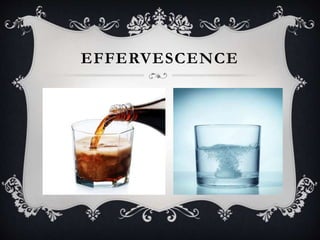
EFFERVESCENCE
 The term comes from the Latin verb fervere, which means "to
boil."
 In chemistry, effervescence is when gas bubbles form from a
chemical reaction in a liquid substance.
 The most common gas released in effervescence is carbon
dioxide; however nitrogen gas may be dissolved in liquids to
produce smaller bubbles
EXAMPLES OF
EFFERVESCENCE
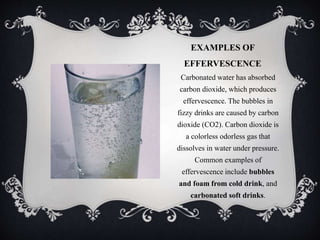
Carbonated water has absorbed
carbon dioxide, which produces
effervescence. The bubbles in
fizzy drinks are caused by carbon
dioxide (CO2). Carbon dioxide is
a colorless odorless gas that
dissolves in water under pressure.
Common examples of
effervescence include bubbles
and foam from cold drink, and
carbonated soft drinks.
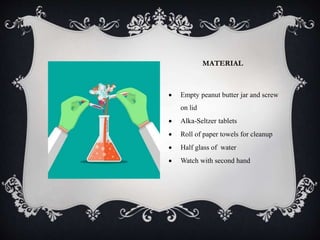
MATERIAL
 Empty peanut butter jar and screw
on lid
 Alka-Seltzer tablets
 Roll of paper towels for cleanup
 Half glass of water
 Watch with second hand
Put an Alka-Seltzer tablet in the
water. After the tablet dissolves in
the clear jar, observe the size and
number of bubbles within the
water. Shake the jar energetically.
The chemical reaction began when
the sodium bicarbonate tablet
mixed with water. The chemical
reaction released carbon dioxide.
The gas was contained in the
bubbles seen in the water.

effervescence

  • 1.
  • 2.
  • 3.
    EFFERVESCENCE  The termcomes from the Latin verb fervere, which means "to boil."  In chemistry, effervescence is when gas bubbles form from a chemical reaction in a liquid substance.  The most common gas released in effervescence is carbon dioxide; however nitrogen gas may be dissolved in liquids to produce smaller bubbles
  • 4.
    EXAMPLES OF EFFERVESCENCE Carbonated waterhas absorbed carbon dioxide, which produces effervescence. The bubbles in fizzy drinks are caused by carbon dioxide (CO2). Carbon dioxide is a colorless odorless gas that dissolves in water under pressure. Common examples of effervescence include bubbles and foam from cold drink, and carbonated soft drinks.
  • 5.
    MATERIAL  Empty peanutbutter jar and screw on lid  Alka-Seltzer tablets  Roll of paper towels for cleanup  Half glass of water  Watch with second hand
  • 6.
    Put an Alka-Seltzertablet in the water. After the tablet dissolves in the clear jar, observe the size and number of bubbles within the water. Shake the jar energetically. The chemical reaction began when the sodium bicarbonate tablet mixed with water. The chemical reaction released carbon dioxide. The gas was contained in the bubbles seen in the water.