Active Classroom Communication
Topics we’ll explore
Definition Benefits
Types Strategies
01
03
02
04
01 – What is Active
Communication?
The process of exchanging ideas, thoughts, opinions,
knowledge, and data so that the message is received
and understood with clarity and purpose.
02 - Benefits
Improved student engagement with material
Typical lecturing styles are a one-way conversation – leads to boredom
Teachers who create interactive classes, facilitate open discussions, and offer real-time feedback
are more likely to interest students in the material.
when students see that you’re trying to cultivate a positive relationship with them and between
them, they’re more likely to respond.
So, to make the classroom more dynamic, encourage more active communication methods like
collaborative discussions or hands-on projects.
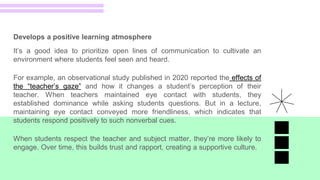
Develops a positive learning atmosphere
It’s a good idea to prioritize open lines of communication to cultivate an
environment where students feel seen and heard.
For example, an observational study published in 2020 reported the effects of
the “teacher’s gaze” and how it changes a student’s perception of their
teacher. When teachers maintained eye contact with students, they
established dominance while asking students questions. But in a lecture,
maintaining eye contact conveyed more friendliness, which indicates that
students respond positively to such nonverbal cues.
When students respect the teacher and subject matter, they’re more likely to
engage. Over time, this builds trust and rapport, creating a supportive culture.
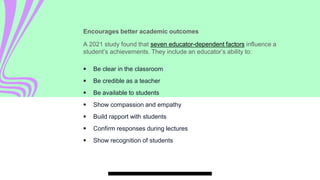
Encourages better academic outcomes
A 2021 study found that seven educator-dependent factors influence a
student’s achievements. They include an educator’s ability to:
 Be clear in the classroom
 Be credible as a teacher
 Be available to students
 Show compassion and empathy
 Build rapport with students
 Confirm responses during lectures
 Show recognition of students
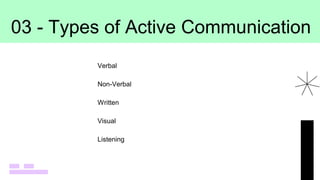
03 - Types of Active Communication
Verbal
Non-Verbal
Written
Visual
Listening
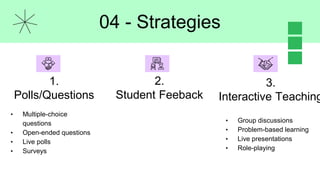
• Multiple-choice
questions
• Open-ended questions
• Live polls
• Surveys
1.
Polls/Questions
04 - Strategies
2.
Student Feeback
• Group discussions
• Problem-based learning
• Live presentations
• Role-playing
3.
Interactive Teaching
4. Make it easy for
students to ask questions
Implement clear guidelines such as when to ask questions,
participate in class discussions, and respond when a peer
asks a question.
For example, either allocate time at the end of the session
or let students raise their hands to ask questions during the
lecture.
5. Discourage negative behaviors with appropriate
measures
6. Talk Less and make your students talk more. How….
 Give children a moment to think after you’ve posed a question
 Don’t just repeat and correct something a child says if it’s wrong – allow them to
reflect on and improve what they’ve said
 Use think, pair, share – ask a question and then let children discuss answers or
ideas with their talk partners before sharing with the class
 Promote genuine class discussions – encourage pupils to challenge or build on
what children have said
7. Promote Collaboration
Thank You!

Effective classroom communication in the class room

  • 1.
  • 2.
    Topics we’ll explore DefinitionBenefits Types Strategies 01 03 02 04
  • 3.
    01 – Whatis Active Communication? The process of exchanging ideas, thoughts, opinions, knowledge, and data so that the message is received and understood with clarity and purpose.
  • 4.
    02 - Benefits Improvedstudent engagement with material Typical lecturing styles are a one-way conversation – leads to boredom Teachers who create interactive classes, facilitate open discussions, and offer real-time feedback are more likely to interest students in the material. when students see that you’re trying to cultivate a positive relationship with them and between them, they’re more likely to respond. So, to make the classroom more dynamic, encourage more active communication methods like collaborative discussions or hands-on projects.
  • 5.
    Develops a positivelearning atmosphere It’s a good idea to prioritize open lines of communication to cultivate an environment where students feel seen and heard. For example, an observational study published in 2020 reported the effects of the “teacher’s gaze” and how it changes a student’s perception of their teacher. When teachers maintained eye contact with students, they established dominance while asking students questions. But in a lecture, maintaining eye contact conveyed more friendliness, which indicates that students respond positively to such nonverbal cues. When students respect the teacher and subject matter, they’re more likely to engage. Over time, this builds trust and rapport, creating a supportive culture.
  • 6.
    Encourages better academicoutcomes A 2021 study found that seven educator-dependent factors influence a student’s achievements. They include an educator’s ability to:  Be clear in the classroom  Be credible as a teacher  Be available to students  Show compassion and empathy  Build rapport with students  Confirm responses during lectures  Show recognition of students
  • 7.
    03 - Typesof Active Communication Verbal Non-Verbal Written Visual Listening
  • 8.
    • Multiple-choice questions • Open-endedquestions • Live polls • Surveys 1. Polls/Questions 04 - Strategies 2. Student Feeback • Group discussions • Problem-based learning • Live presentations • Role-playing 3. Interactive Teaching
  • 9.
    4. Make iteasy for students to ask questions Implement clear guidelines such as when to ask questions, participate in class discussions, and respond when a peer asks a question. For example, either allocate time at the end of the session or let students raise their hands to ask questions during the lecture.
  • 10.
    5. Discourage negativebehaviors with appropriate measures 6. Talk Less and make your students talk more. How….  Give children a moment to think after you’ve posed a question  Don’t just repeat and correct something a child says if it’s wrong – allow them to reflect on and improve what they’ve said  Use think, pair, share – ask a question and then let children discuss answers or ideas with their talk partners before sharing with the class  Promote genuine class discussions – encourage pupils to challenge or build on what children have said 7. Promote Collaboration
  • 11.